The Advocacy Project Blogs

 
12/10/08

Human Trafficking Public Policy in El Salvador

Posted By: Hannah

The last major event of the CEMUJER calendar for 2008 was the presentation of a two year project proposing significant reforms to legislation on Human Trafficking specifically related to the issue of Commercial Sexual Exploitation. The work coordinated by CEMUJER, the National Committee on Human Trafficking and CORDAID involved the presentation of a national policy proposal, a proposal for a unified internet based data collection system, and various informational pamphlets about the issue.

The event gathered together representatives of different representatives of the Government, NGO, and Diplomatic community who all find the issue of utmost importance and urgency. The President of the Supreme Court of Justice, the President of the National Committee on Human Trafficking and the President of CEMUJER were all the keynote speakers. The event presented the major findings and urged civil society to continue to work towards eradicating human trafficking in El Salvador.

12/08/08

Just Another Day Going to the Office

Posted By: Hannah

I wake up early and open my eyes; I look out of my window and see the pink clouds floating above the volcano of San Salvador. The sky quickly turns bright blue with puffy white clouds floating by as the sun grows brighter as if it was calling everyone to come out and dance in its rays. I roll out of bed. It’s Saturday but, I’m going to go to work this morning.

I take a quick shower, eat a piece of toast, and walk out of my building to the corner where I get on the bus every morning. As I walk to my bus stop, I pass the women making pupusas on the corner and smile at all the people I see every day except that they look at me with a bit of confusion because I don’t usually come to the bus stop on Saturday morning. The girl that sells newspapers smiles at me “El Mundo!” she cried out as everyone was walking by.

The girl that sells bread looks at me inquisitively and keeps on chatting with the newspaper girl as the bus pulled up. The Asian looking man with his newspaper, the girl from KingQuality returning from her overnight trip from Guatemala, and a couple other people who are always at the bus stop at the same time that I am get on with me as most people pile off the bus. We are at the end of the route and the loop starts all over again from there.

We drive down past the Military Complex, by the Salvador del Mundo Monument, to the Boulevard de los Heroes, past MetroCentro, down into the Colonia Medica. On a good day it is a fast ride, it takes about 20 minutes to get from my house to the bus stop by the old American Embassy. Which is, by the way, an absolutely hideous structure, one of those Embassies built in the 80’s just to illustrate the prominence and lack of gracefulness of the US at the time. Now, the building has been turned into a bank and the Embassy I hop off at the bus stop. I pass by the women making pupusas, the women selling fruit --papaya, jicama, pineapple, down two blocks; I cross by the traffic circle with the fountain towards my friend in the wheelchair who sells jewelry that he has made.

Today, I pause to say hello. “Good morning Hannah” I get a warm greeting and we have a brief conversation. Today I learned why he is in a wheelchair; he was shot in his back on Christmas 10 years ago. Here is another testimony to the danger of weapons and the actual impact that they have on people’s lives. I admire his diligence. He lives in a home with 18 other people who also are in wheelchairs. “I leave the city and go to the beach on Christmas,” he says, “I still cannot get over the sound of explosives.” His whole family lives in the United States and he lives and makes his living here. “I have to get going…” I walk a couple more blocks past the Pedagogical University to the door at Cemujer.

I am a couple minutes later than usual because I stopped to chat along the way. I ring the buzzer and the police officer who guards the door lets me in. We were having an event with the students from a distance learning program, the Instituto of Quetzaltepeque. The main meeting room is packed. We were expecting about 25 and we had 54 people in the room. The students’ ages range from adolescents to adults. The program was designed to give people the opportunity to finish high school if they didn’t have the opportunity to finish it earlier for whatever reason. I start to take pictures and listen to the conversation that they students are having with one of the Cemujer staff people leading the discussion.

“What are some of the jobs that are usually thought of as men’s work?” She asks a question that makes sense when you’re having a conversation about gender and power relations. What stood out to me was not that they had deeply ingrained gendered stereotypes about what is “men’s work” and “women’s work” but the kinds of jobs that they mentioned in general. “Mechanics” “Carpenters” “Construction Worker” these students all come from the lower middle class or from a lower class than that. No one even thought to mention “financial analyst”, “investment banker”, or “doctor”. We get used to imagining what our possibilities are in terms of what surrounds us and we are limited to what we know.

The conversation brought out many of the common stereotypes about men and women, shed light on the reality that violence against women does occur, discussed some of the causes and possible solutions to the problem of violence, and discussed some of the ways that Cemujer helps women trapped in a violence cycle. It was an interesting conversation and discussion. When all the students had left we put away all the chairs and cleaned up the trash that was left behind. Once we had done all the clean up, we were free to go for the day.

Walking down the street back to the bus stop I walked by the photocopy and “cyber” where we get most of our copies made. The owner is a friend of the organization so; I’ve gotten to know him some. “Hello” he says and asks me how much longer I’m going to be in the country. “Are you going to come back?” Everyone asks me the same question and I feel the beauty of growing fond of people and the pain of being temporary all at once. “I’ll probably come back for a visit sometime,” I say with a smile. We chat about the weather and then I keep walking back up towards the ex-Embassy, across the street and up to the Boulevard de los Heroes across the street in front of the FleaMarket where my bus stop is.

There are three young men dressed up as clowns sitting by the food vendor’s shack, taking a break from their clowning --one of them is smoking a cigarette. Two weeks ago, one of these clowns was murdered, he was shot multiple times. Witnesses say that they don’t feel sorry for him because he was part of a gang and he helped organize robberies on buses. Someone’s parrot is hanging from the tree and music is blaring loudly out of the speakers in front of the clothing shop. The music starts with a vulgar reggaeton and then moves to a romantic bachata.

I don’t make eye-contact with the people on the street. I’ve practiced my “I don’t have many friends” face well enough that I don’t start conversations with random strangers on a regular basis. I ignore cat calls and can usually avoid making any sign of recognition when people start to whistle or hiss to get my attention. I hate the fact that I ignore most people on the street but, I can probably attribute my relative safety on the streets of El Salvador to that well practiced skill.

The bus comes and I run to get on because it went further ahead that usual before it stopped. I get on the bus and find an empty seat. Sigh. I like the moment that I get on the bus. A little boy gets on the bus and without a word he hands a little piece of paper to each person on the bus. It reads “Please forgive me for the intrusion but, my family is very poor and we need help. If you could help us, may God repay you.” He never says a word and at the next stop he walks back through and picks up his papers again and gets off the bus.

My mind slips into thoughts about the place I work, the danger of the city, the poverty that so many millions of people have to face every day, the resilience of many . . . we take the long way around, we drive by Gallerias, up and around the corner, down by the big church, past the gas station, past the Embassy of Brazil, around the traffic circle below the Art Museum, and we stop in front of Pizza Hut. I get off at my stop and walk home.

12/05/08

Violence is Often Hidden within the Family

Posted By: Hannah

When I arrived here in El Salvador I thought that I would get to spend more time with individual people who were in or coming out of precarious situations. Strangely, that was not my experience at all. Nevertheless, this week I got to meet a woman who could fairly easily tell the story of many women and girls in this country. She came to volunteer for a couple days at Cemujer. While we were working on a little project together she told me that Cemujer has helped her so much. I asked her why and she started to tell me her story.

As a young girl her parents separated and her mom re-married. Her step-father started to sexually molest her and her siblings. During her childhood was raped and molested by her step-father, her mother knew the whole time and did not show any disapproval. It was almost considered something ‘normal’. This is such a common story; most of the sexual violence that happens here happens within family circles, usually someone close to the girl or woman a step-father or an uncle will commit the act of violence against girls within his own family circle.

This proximity of the victims to their abusers makes the act of denouncing these types of crimes difficult. There fear of loosing family or being rejected within the inner circle of the family creates an even stronger fear of reporting an act of sexual violence. The proximity to the perpetrator can threaten the very life of the woman or girl because any reporting the crime could lead to them committing femicide. The woman who came to Cemujer said that she stayed at home and lived with shame, guilt, and a sense of powerlessness. Eventually, the emotional scars were so deep that she had considered committing suicide.

That was when one of her older sisters who had left home, married, and moved on from some of the emotional and sexual abuse that she had received as a child encouraged her to go to Cemujer. She started attending counseling sessions which, as she said, allowed her to talk about deep hurts that she hadn’t been able to address since she was a little girl. She told me that having the opportunity to talk about her past experiences had helped her heal and gave her a new sense of freedom from her past.

This week there was a meeting of a group of women who have used the Cemujer services. They met to share experiences and encourage one another. Among other things, they participated in a guided discussion about respect, responsibility and gender roles. The reality is that violence against women is deeply ingrained in the culture and it will require a mindset change for both men and women to change the cultural acceptance of violence against women and girls.

Documentation Library

Posted By: Hannah

Cemujer contributes to the furthering of serious thinking about gender, violence against women, and other similar topics not only by contributing at academic and popular conferences, handing out general pamphlets and fliers and community and educational events but they also have a “Document Center” where they keep a library of documents and books on subjects as various as “Domestic Violence in El Salvador”, “Femicide”, “Legal Reviews on Women’s Issues”, “International Conventions”, etc. These documents are used by different organizations, individual researchers, students, among others. The resource is an important memory and tool for those who are working to further improve the status of women, women’s research, and policy in defense of women in El Salvador.

12/02/08

International AIDS Day in El Salvador

Posted By: Hannah

The 16 Days of Activism Against Gender Violence is an international campaign that has been used as an organizing strategy by individuals and groups around the world to call for the elimination of all forms of violence against women. The 16 Days campaign emphasizes the connections between women’s human rights, violence against women and women’s health, and the detrimental consequences violence against women has on the well-being of the world as a whole. The 16 days began on November 25, International Day Against Violence Against Women, and will end on December 10, International Human Rights Day.

As a part of the 16 Days of Activism Against Gender Violence, CEMUJER commemorated World Aids Day on December 1, 2008 by participating in the event EXPOSIDA UNIVERSITARIA 2008 focusing on preventing of spread HIV. This event was organized by a Forum of NGO’s for a National Response to HIV/aids. This event was organized on the campus of the National University where several different NGO’s set up booths to give out information and provide HIV testing. More people than ever are living with HIV in El Salvador there are 21 thousand cases reported and new infections continue. HIV is a serious long-term condition and people living with HIV often face discrimination.

During the event EXPOSIDA HIV/aids CEMUJER gave out more than 3,000 posters and fliers with information on the relationship between gender based violence and the spread of HIV/aids. The numbers of women with HIV have been increasing and the feminization of HIV/aids is linked to lack of information and violence against women. Violent crimes against women that have included rape and other forms of sexual abuse are contributing to the increase and spread of HIV/aids around the world and especially in a country like El Salvador with a high level of violence sexual crimes against women.

CEMUJER provided guidance counseling for those students who were interested about prevention of HIV/aids. They also gave out red ribbons, the international symbol of solidarity with people who are HIV positive or living with AIDS. The people who were walking by were generally friendly, some stopped to ask questions, others rushed past. The groups represented were diverse but, all of them were united the mission of creating a change in mindsets about HIV/aids to help stop the epedemic.

11/29/08

The "centro" of El Salvador

Posted By: Hannah

Last week, I got to do something that I had wanted to do since I arrived in El Salvador two months ago. I went to the "centro" of San Salvador. I had been warned repeatedly that I should NOT go there alone and I had not found anyone who would be willing to take me there. So, finally, I found the perfect people to take me and got the tour of the "centro" that I had wanted for the whole time that I've been here.

Because of how common thievery is in San Salvador but, particularly in the "centro" I didn't get to bring my camera. I'm a little disappointed about that but, I'm going to do my best to paint a picture with words. As we were getting ready to go we realized that someone who had been living in El Salvador for 7 years, had NEVER gone to the "centro". San Salvador is really a small city so, someone living here for such a long time and never going seems crazy to me.

I think, however, that it just goes to show how easy it is to isolate yourself from the reality that most people live in and experience on a daily basis. It is easy to live and move in "safe" circles and never have to encounter the darker side of the places that you live. Anyway, the five of us went down to the city and parked in one of the many guarded parking areas. We got out of the car and started walking. The street had stagnant dirty water in the gutters and there was litter almost everywhere. Not in massive quantities, just enough that it was decidedly dirty.

We walked a block towards a street that had (at one time) been a road for cars but had progressively been taken over by vendors in small little shops set up in tents and other makeshift shelters. We walked into one of the side streets. People were selling everything, hats, shoes, clothes, pirated DVD's "Three for a dollar!" as you walked down people would reach out to you and ask you what you needed, "What size are you?" the woman selling pants asked, ever store had someone begging you to stop and consider buying something from them. Once we got outside we found people selling fruit, vegetables, tortillas, and all kinds of other produce and merchandise.

We walked around in the midst of all the people, in front of city buses with attitude problems, and around little children who were working or playing depending on how old they were. As we walked around I was moved with sadness and happiness all at the same time. I love being in a space that is so decidedly human and yet, it was also somewhat dehumanized at the same time. The space meant survival, existence, THAT is the meaning of life for those people. That busy, dirty, loud, unsafe bustle of activity is life.

As we walked by the National Theatre, a grand old building, we were invited to go inside because there was a free concert! It was unbelievable. A concert that in the US they could have easily charged us a nice sum of money to get in, we just walked in. As we were being explained what the concert was about a young boy of about 11 walked up to us and said, "Will you tell them that you're my parents?" "Why?" we asked him. "They won't let me in without my parents" he said. So, he snuck in with us. "I come here everday" he said. There was something wonderful about that. Even this young child who was probably an orphan and lived with his grandmother was finding a way to fill his life with some of the beauty that is life outside of the chaotic mess that dominated the space where he lives.

We left the theater to go see the National Cathedral and then walked to the Plaza la Libertad which was like a scene from a movie where you have all the older men sitting around talking or playing their guitars singing the songs from the "good old days". I wondered how they were able to afford such leisure and then I decided to ignore the reality that it meant. We stopped and had an ice cream cone before walking back to our car and heading home to the tranquility that seems unreal in light of now near it is to the "centro" that turns out to be like a different dimension, a completely different reality.

11/28/08

Violence Against Women and the Spread of HIV

Posted By: Hannah

Some of Cemujer’s significant academic contributions to the issue of Gender Based Violence are in the area of HIV/aids. Cemujer is involved in an ongoing training of healthcare providers about issues of Gender and Gender Based Violence. This week Cemujer’s president Doris was involved as a panelist in the V National Forum for HIV/aids El Salvador 2008 “Youth and Prevention”. The President of Cemujer spoke on the subject of the “Feminization of HIV/aids”.

The issue of the Feminization of HIV/aids is especially relevant in a country with a record of violence like El Salvador. Even though it used to be more common among men, women have greater susceptibility to infection due to social, cultural, and physiological reasons, and are being infected at a higher rate. The statistics report that almost half of adults with HIV today are women not men. The number of women and girls who are infected has been steadily increasing.

The feminization of HIV and the epidemic has been attributed in large part to violence against women. In fact, they seemed to be so closely linked together that it has been suggested that the AIDS epidemic will not be won without seriously addressing the pandemic of violence against women. Rape and sexual assault continue to be major risk factors for HIV transmission and are common expressions of violence against women.

The work of the advocates and those who are attempting to eliminate violence against women is crucial in the fight against the spread of HIV/aids.

11/27/08

Combating Human Trafficking for Sexual Exploitation

Posted By: Hannah

Cemujer is one of the foremost women’s organizations in El Salvador for its academic contributions in all different areas including Gender and Gender Based Violence, HIV/aids, Human Trafficking, among many others.

This week Cemujer participated in the IV International Convention of Salvadorans in the World, the Diaspora association which brings together leaders and members of the Salvadoran population who currently live outside of El Salvador. This is a significant meeting because it has been estimated that more than 25% of the Salvadoran population migrated during the civil war and that approximately 1.5 million Salvadorans live and work in the US; 39,000 are in Canada, and about 20,000 are in Australia just to mention the areas with the largest Diaspora populations. The participation in local political and social activities of the Salvadorans in the World could have a significant impact on the Salvadoran society as a whole.

At this meeting, Cemujer presented its research and findings on the issue of Human Trafficking for Commercial Sexual Exploitation here in El Salvador. El Salvador is a source and destination for the trafficking of women and children for the purposes of sexual exploitation. The Salvadoran Government has not met minimum standards for the elimination of human trafficking however; it is starting to make more of an effort with the help of the civil society and the work of NGO’s like Cemujer.

In October 2004, El Salvador passed a law against human trafficking making human trafficking and conspiring to traffic a person a crime and the same time the National Civil Police created a special unit dedicated to investigate human trafficking cases. Cemujer has been involved in the training of the National Civil Police about these issues and how to treat victims of human trafficking of the purposes of commercial sexual exploitation. This year, a new document proposing a new national policy on human trafficking will be officially released on December 9th at an event organized by Cemujer. During the IV International Convention of Salvadorans in the World Cemujer spoke on the topic of Human Trafficking.

11/26/08

International Day for the Elimination of Violence against Women

Posted By: Hannah

In commemoration of November 25th, the National and International Day of Non Violence Against Women, CEMUJER in a festively decorated car with loudspeakers greeted the women of El Salvador and the women’s organizations of El Salvador who organized a march towards the central government buildings to campaign for a safer society for women and for justice for the Salvadoran women who have been violated and murdered and whose cases have never been resolved in court.

CEMUJER joined the Concertación Feminista Prudencia Ayala and the Red Feminista Frente a la Violencia contra la Mujer by signing a letter which was sent to the Legislative Assembly demanding that the Government of El Salvador return to its commitment to prevent, sanction, and eradicate femicide “the most extreme form of gender based violence against women”. The letter requested that the cases of violence against women and cases of rape and murder like in the case of Katya Miranda would be would be thoroughly investigated.

The women’s organizations expressed concern in light of the increase of violence against women stating that in 2005 there were 3,166 cases of sexual violence reported, there were 3,390 in 2006, 3,343 in 2007 and that up to August 2008 there had been 1,128 cases of sexual violence reported. The number of femicides have also increased. There were 260 femicides reported in 2004, 390 in 2005, 437 in 2006, 337 in 2007, and up to May 2008 there have been 124 femicides reported.

The events of the 25th of November are part of an on-going campaign for the eradication of violence against women in El Salvador. All of these actions wish to highlight that El Salvador as a country that has ratified the Interamerican Convention to Prevent, Sanction, and Eradicate Violence Against Women, the Belém do Pará Convention. In the framework of this Convention the women’s organizations are trying to hold the Salvadoran Government accountable to their previous commitments to help eradicate violence against women.

11/14/08

Remembering the Reasons Why

Posted By: Hannah

The 12th of November every year Cemujer goes to the cemetery to commemorate the death of Norma Virginia Guirola de Herrera who was one of the founders of the original Women’s Movement in El Salvador. She was active in the women’s movement on a national and international level during the turbulent time of the Civil War. In 1986 she started the Institute for Research, Training, and Development of Women and participated in the founding of the Association of Salvadoran Women.

In November 1989 Norma Virginia Guirola de Herrera was brutally murdered by members of the Salvadoran Armed Forces. This was a great loss for their family and the Salvadoran society. Inspired by her work, a group of her sisters and daughters started the Institute for Women’s Studies, “Norma Virginia Guirola de Herrera”, Cemujer to preserve her vision for the equality between genders. The Institute has worked for 18 years in the defense of women and children fighting violence in all forms.

The time at the cemetery was a sweet memorial to the sister and mother that fought for the equal rights of women in the Salvadoran society. We set up a tent, ate pupusas, listened to songs celebrating justice and equality, talked about the events of the day, and organized a number of colorful flower bouquets to leave in memory of Normita as she is lovingly remembered by those who knew her. It is her memory that reminds those who work daily within Cemujer that theirs is a just cause for the good of many.

11/13/08

Enjoying Beauty Without Fear

Posted By: Hannah

I have to admit that doing work for human rights is complicated. There are moments when the work that you are doing can get lost in the emotional exhaustion that can take over those who are doing the work. I have been struggling with those issues, wondering about the best ways to approach them. It is amazing how the bigger challenges of injustice and violence in society can be understood in light of the inter-personal conflicts that plague us daily. What a challenging task, keeping the integrity that it takes to defend those who cannot defend themselves by respecting everyone around us at all times.

Often those people who are speaking out against violence and abuse can find themselves exhausted and tired. It isn't easy work. It is essential to be able to see beyond the frustrations of inter-personal relationships to remember the good that is bigger than you. It is also good to get out an enjoy the beauty around you. I think that we are defending those who cannot defend themselves so that they too can enjoy this kind of beauty without fear.

11/06/08

Encountering the Police

Posted By: Hannah

During the Iberoamerican Summit the staff at Cemujer actively denounced the president of Nicaragua who has been left unpunished for several crimes, particularly against women. They went to protest in front of the Nicaraguan Embassy where they were stopped by the police. I wasn't there when these things happened because I couldn't get around since the transportation was re-directed during those days.

As those activities were taking place and the police was stopping some of the Cemujer staff, some of the other staff was doing a training at the Police Department regarding the treatment and processing of people involved in human trafficking and sexual exploitation. This work is a significant action in favor of stopping the crime of the commercial sex trade. It was an ironic interaction with the police in two different contexts which just goes to show how complicated it can be to speak up for the human rights of others. You can be working with and struggling against the very same authorities at times.

10/30/08

The 18th Iberoamerican Summit El Salvador

Posted By: Hannah

Last night was the inauguration of the 18th IberoAmerican Summit with the presidents of Latin America, the Caribbean, Spain, Portugal, and Andora here in El Salvador. I am living less than a block away from the Feria International where they are hosting the Summit. We live on a side street off of the road "Avenida Revolución" which is closed to all traffic that is not related to the Summit. So, I'm a little trapped at the moment.

The theme of the Summit is Youth and Development. Some people say these things are just a lot of show and nothing comes out of these things. It's hard not to feel that way a bit but, who knows. You have to have these kinds of things, it's a part of international relations. Certain presidents were not at the inauguration including Daniel Ortega from Nicaragua, Raúl Castro from Cuba, and Hugo Chávez from Venezuela. (You might remember that awkward exchange between the king of Spain and Chávez at last year's summit.)

The Summit has disrupted normal routines for a lot of people. I haven't been able to go to work because I usually ride the bus and the bus route has been re-directed somewhere else (I don't know where) and so, I cannot really get very far that way. Every president is moved back and forth with a heavily armed caravan. There are policemen and soldiers EVERYWHERE. In spite of the heavy security, Chávez had said he wasn't going to come because he was afraid for his life, he may still come it hasn't been announced.

What message is going to be sent to the Youth of IberoAmerica through an event like this? I'm not sure. Some groups are discontent with the distance that is felt between the citizens and the leadership and the feeling is that things that are decided in grand meetings might not have that much of an effect on the lives of normal people and that leaders will talk about generalizations and will avoid making strong pronouncements about specific difficult issues. We can hope that good things will come out of it.

10/26/08

Evaluating the Implementation of the Conferencia Belém do Pará

Posted By: Hannah

(San Salvador, October 22-24)
This week I was able to participate in a three day conference "the Application of the Belém do Pará Convention, a Challenge for Democracy in El Salvador". There were three days of information overload but, it was very interesting and I learned a lot. We met at the Supreme Court in San Salvador for the first two and a half days and had the final public session at a local hotel.

The Belém do Pará Convention is the common name for a statue adopted by the Organization of American States on June 9, 1994 in Belém do Pará, Brasil officially known as: Inter-American Convention on the Prevention, Punishment, and Eradication of Violence Against Women "Convention of Belém do Pará". It was adopted in recognition of the difference between the disparity between the legal recognition of equality between men and women in the Universal Declaration of Human Rights and the actual application of these laws.

The conference was considering how the Belém do Pará Convention could be used as a tool for the women's movement in civil society in El Salvador. The conference included a very interesting array of speakers including the President of the Supreme Court of Justice, the General Prosecutor of the Republic, representatives of the National Civil Police, the Ministry of Education, former Magistrates, and special guests from the Inter-American Institute for Human Rights of Costa Rica and a the Women's Group of Guatemala, among others.

The conference reviewed the history of the adoption of the Belém do Pará Convention in El Salvador with the creation of the Inter-Family Violence Law the year following the ratification of the Conference by the Salvadoran government. It was fascinating to hear the history that told of the urgency felt in the Salvadoran society at that time since they were recently coming out of a war and the scale and type of violence perpetrated against women was very, very high. At this time, the different groups involved in implementing the Belém do Pará Convention are looking to further implement it as they seek to combat violence against women in El Salvador.

10/21/08

Maras and Armed Violence in El Salvador

Posted By: Hannah

On Sunday, I got to go to a place outside of San Salvador called Soyapango which is known for being one of the more violent parts of town. I went with one of my co-workers so, I felt like I would be ok. It took us three buses to get there and it was a weekend so, it didn't take us that long. There are many people who have to commute into San Salvador on a daily basis spending hours on crammed public transportation.

Even though sometimes it seems unbelievable, El Salvador is considered one of the most violent countries in Latin America. The other day I heard someone say, "El Salvador is more violent today than it was during the war." That might be surprising to some but, in terms of relative or general violence it is probably true.

During the war, most of the violence was found outside of the urban areas. The guerrilla had its support in rural regions and lived in the mountains and therefore, most of the conflict was outside of the city. This meant that in the city it was relatively safe. Another person told me that during the war most people from the city did not realize the extent of the conflict in the rural regions because the media was somewhat censored. "People outside of the country knew more than we did."

During the war, thousands of Salvadorans left the country and settled all over the United States. Many of these settled in places like Los Angeles and many of the young men became a part of the gang culture there. Salvadorans are credited with starting the biggest and most violent gang or "mara" in the world called the Mara Salvatrucha.

The war in El Salvador was brought to an end with the signing of the Peace Accords in 1992, starting along process of reconstruction and transitioning into democracy. After this, thousands and thousands of Salvadorans returned to El Salvador to become part of the reconstruction of the country, or because their amnesty visas ended or they were deported. After the war there remained a culture of easy access to guns and there continues to be a flexible and abundant gun traffic here.

In 2002, the issue of safety came onto the forefront of the public debate. Around this time, fighting the Maras became one of the government's main tasks. In 2003, during the government of Fransisco Flores the 'Plan Mano Dura' (the Hard Hand) was passed which used military like force to fight the gangs. It temporarily removed the maras from the streets but, caused them to become more organized and more dangerous afterwords.

When Antonio Saca became the president the following year, he passed the "Plan Super Mano Dura" with the idea of using a zero-tolerance rule against anyone suspected of being in a mara. Most experts agree that the plans weren't successful. On Tuesday, October 14 the US pledged to give El Salvador $2.6 million to help fight the Maras. It is strange how much money the US has invested in El Salvador involving the issue of armed violence dating back from the war until now with the issue of the Maras.

Some people attribute most of the violence in the country to Maras and there is a lot of organized crime committed by the Maras but, even so there is still a huge amount of violence that is hidden in the home and behind traditional family structures and should not be ignored in light of the obviously huge problem of Maras in El Salvador.

10/14/08

Women Speaking up for Women in Nicaragua

Posted By: Hannah

Last week, a group of Salvadoran women’s organizations gathered together to make a joint statement about the current situation for women’s organizations in Nicaragua. They pointed out that Ortega’s government in Nicaragua has become increasingly threatening to women’s groups there. Their statement asked international organizations to step in and the government of El Salvador to make a diplomatic statement of solidarity with the women suffering persecution in Nicaragua by banning Nicaragua’s president from the Ibero-American Presidential Summit which is going to be held at the end of the month of October.

One thing that is fascinating about the declaration that was made and its implications for the current Salvadoran situation is that some people have criticized the women’s groups for their timing. Currently, El Salvador is in the midst of an election campaign and some people have considered the pronouncement to be untimely because it might prejudice one party over the other. Cemujer decided that the time frame for human rights is urgent and shouldn’t be dominated by the needs or advantages of a political party.

It is one thing to denounce human rights abuses that took place in the past and it is entirely another thing to fight against the continuing violation of people’s human rights. The lives of those who are denouncing abuses are sometimes also put at risk for speaking up for those with less recourse than them. The violence of fear becomes part of the challenge for defending those who are being abused.

10/04/08

Remembering the War through Art

Posted By: Hannah


El Sumpul, 1984 (Carlos Cañas 1924)

During the past week here in El Salvador I've been reading a book to and from work called Luciernagas en el Mozote. I try to get on the bus before it will get dark so that I'll avoid anything particularly dangerous at night, surprisingly I usually get a seat so I can read on my way home. The book I am reading is about the massacre that occurred in December 1981 in the department of Morazan. The story is horrifying, to say the least. This country is still trying to figure out how to respond to the sometimes blurry truth about what happened during the 12 years of war.

When the peace accords were signed in 1992, amnesty was extended to all the military commanders (on both sides) who were responsible for human rights abuses and war crimes. None of them have ever been prosecuted. As the country is preparing for elections in March, the issue of the Amnesty Law has come up in many conversations. Some people say that the amnesty law is an affront to justice in Salvadoran society, there is no way for anyone to heal from the wounds of the past. Others say that it was necessary, that there was no other way to bring an end to the conflict. I cannot give a final verdict on the topic, I have just realized what a sensitive issue it is since I've been here.

This morning, I went to the MARTE, the Salvadoran Modern Art Museum. It is a really nice art museum. The painting pictured above, El Sumpul, depicts the haunting events of the massacre that occurred in a place by that name. The violence and hellishness of the painting represents a chapter in Salvadoran history that is still in many people's recent memory. I am still trying to understand the Salvadoran story with its nuances and the present polarization in society because of its past.

09/26/08

Reporting 319 less murders

Posted By: Hannah

I was given enough warnings in just a few days that it would take a crazy person to not be a little nervous walking down the streets or riding public transportation in San Salvador.

On Monday, I opened the newspaper El Diario de Hoy and read that there had been "319 less homicides" compared to the same period January to September last year. This year only 2,171 people have been murdered in El Salvador!

It is important to notice that El Salvador is geographically about the size of Massachusetts which had a total murder rate of 184 in 2007. Granted, there is a significant difference in the size of the populations of these two places. El Salvador has a population of 5.8 million people. However, if we compare it to another large city like Los Angeles that has 3.7 million people the contrast is shocking. Los Angeles has reported 205 murders this year. The entire state of California which has a population of approx. 36.5 million reported 2,260 murders in 2007, as compared to the 2,171 murders reported in El Salvador in the first half of this year.

In June, Cemujer was part of the Global Week of Action Against Gun Violence. In El Salvador, 8 out of 10 murders are committed with small arms. According to a 2004 UN report there are 450,000 illegal guns in circulation in El Salvador. The numbers could be higher today. Cemujer is pushing for tighter laws regarding the arms trade in El Salvador and Central America.

One things is for sure, the level of violence in this country is high. Even though there is talk about its reputation as one of the most dangerous countries in the Americas being slightly misleading. It still seems wise to take many precautions when traveling around.

09/22/08

First days at Cemujer

Posted By: Hannah


[This is part of a chalk mural that is just outside of the office.]

Last week, I was walking to CEMUJER at 9:39am for my 10am start and I got a phone call from the office asking me to wait until 2pm to come in because everyone was away from the office all morning. I slowed down my quick pace and headed towards the Pollo Campero to pass the time. I ordered a milkshake and opened a newspaper. It is suprising how many articles there are about violent crimes.

When I finally arrived at CEMUJER, they were all very friendly and welcoming. My first couple days at CEMUJER I did a lot of waiting and listening. They have an interesting habit of eating lunch together everyday. They collect a dollar from each person and somehow make a meal out of that for everyone. During lunch (which happens at a very late hour of the afternoon) I listened especially when the conversation to to stories about the war.

It is fascinating how easily the conversation moves towards stories of the war. I have listened as the stories come out. I have so much to learn. The circumstances were confusing enough for the people that lived through it. I'm sure it will take a lot more for me to understand even a little bit of what happened here. I look forward to telling some of these stories.

09/10/08

If you get lost, look for the Volcano!

Posted By: Hannah

I have arrived in San Salvador, am taking care of living details and learning my way around the city. I've found some very kind people here and am excited to start working next week. I got here just in time for September 15 when most Central American countries celebrate their 1821 declaration of independence from Spain.

In San Salvador the volcano, that goes by the same name, can be seen from almost any place it the city. It is a quick visual guide if you feel like you're lost. This picture of the volcano was taken from the place I have been staying this week. It's a lovely view. Please continue reading as I get into the work with CEMUJER and explore El Salvador.

09/02/08

Thoughts and Preparations

Posted By: Hannah

I've had a short time to prepare for this Peace Fellowship but in spite of the short amount of time --and with the support of some really generous people-- I'm going to El Salvador! I'm thrilled that I learned about The Advocacy Project (AP) when I did and that I get to participate in this Fellowship. I'm looking forward to being part of developing what hopefully will become a strong partnership with IANSA and the AP starting with my work with CEMUJER in El Salvador.

To be honest, I'm not sure what all this is going to look like. In the past few weeks, I've been telling people about the AP and trying to explain what I will be doing this fall. Each time I realize that there are many things that I don't know yet. As I've done more reading about El Salvador and have been preparing, the explanations I give to my friends have become both more clear about El Salvador and more vague about what I will actually be doing there. Even so, I think variety of my assignment will be great!

I know that I will be writing and helping CEMUJER in the area of information communication technology (ICT) using the AP workplan. I am also expecting to get to interview different people and hear their stories. The issues in El Salvador are informed by a very complex history involving a long confusing civil war. I look forward to the opportunities to explore some of those themes, especially as they relate to the issues that CEMUJER is focused on. I will probably not completely understand El Salvador but, I hope to see a little more of the picture when I'm done.


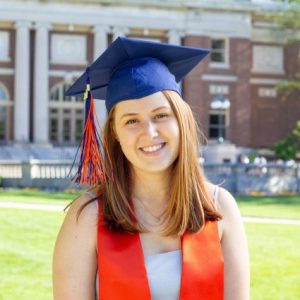
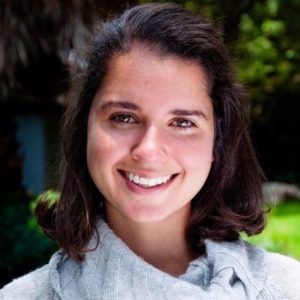
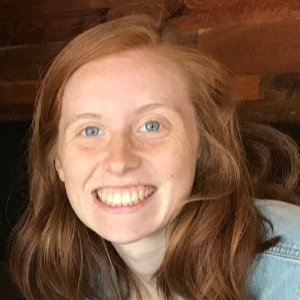
Hannah McKeeth will be working with AP's partner CEMUJER in San Salvador, El Salvador as a 2008 Peace Fellow. As a Fellow, she will help CEMUJER spread information that will inspire action against injustice and promote respect for the human rights of women and children through writing, networking, and using information communication technologies more effectively.

Hannah was born and brought up in Panama City, Panama. Her experiences growing up in Central America greatly influenced her understanding of society and development. Some of her various interests include bringing about justice where oppression is rampant, promoting understanding and reconciliation where conflict prevails, and befriending the marginalized where exclusion is the norm.

From Panama, she moved to Langley, BC, Canada, where she did her undergraduate studies at Trinity Western University in History and Political Studies. She is passionate about developing international community, appreciating beauty, and understanding human poverty. She enjoys hearing and telling people's stories and appreciates being in nature.

Upon graduation, she became a parent and community educator through Advocates Against Family Violence in southern Idaho. During that year she became aware of the complex issues surrounding domestic violence and challenges immigrants face as they try to make a way in the United States. After that year, she spent a year defining her passion for storytelling and clarifying her vision for her future through a fellowship with the Trinity Forum Academy.

Hannah is excited to be a part of The Advocacy Project gaining experience in advocacy for social change and listening to tell the human rights story in El Salvador while partnering with CEMUJER.

Blog List

XML Feeds

Other:

Login..


FIND A PARTNER

The Advocacy Project develops partnerships with advocates on the frontline and with nongovernmental organizations (NGOs). In so doing, we take our cue from partners and tailor any support to their needs.

StatCounter - Free Web Tracker and Counter