
The Afghan Womens Quilt
Background
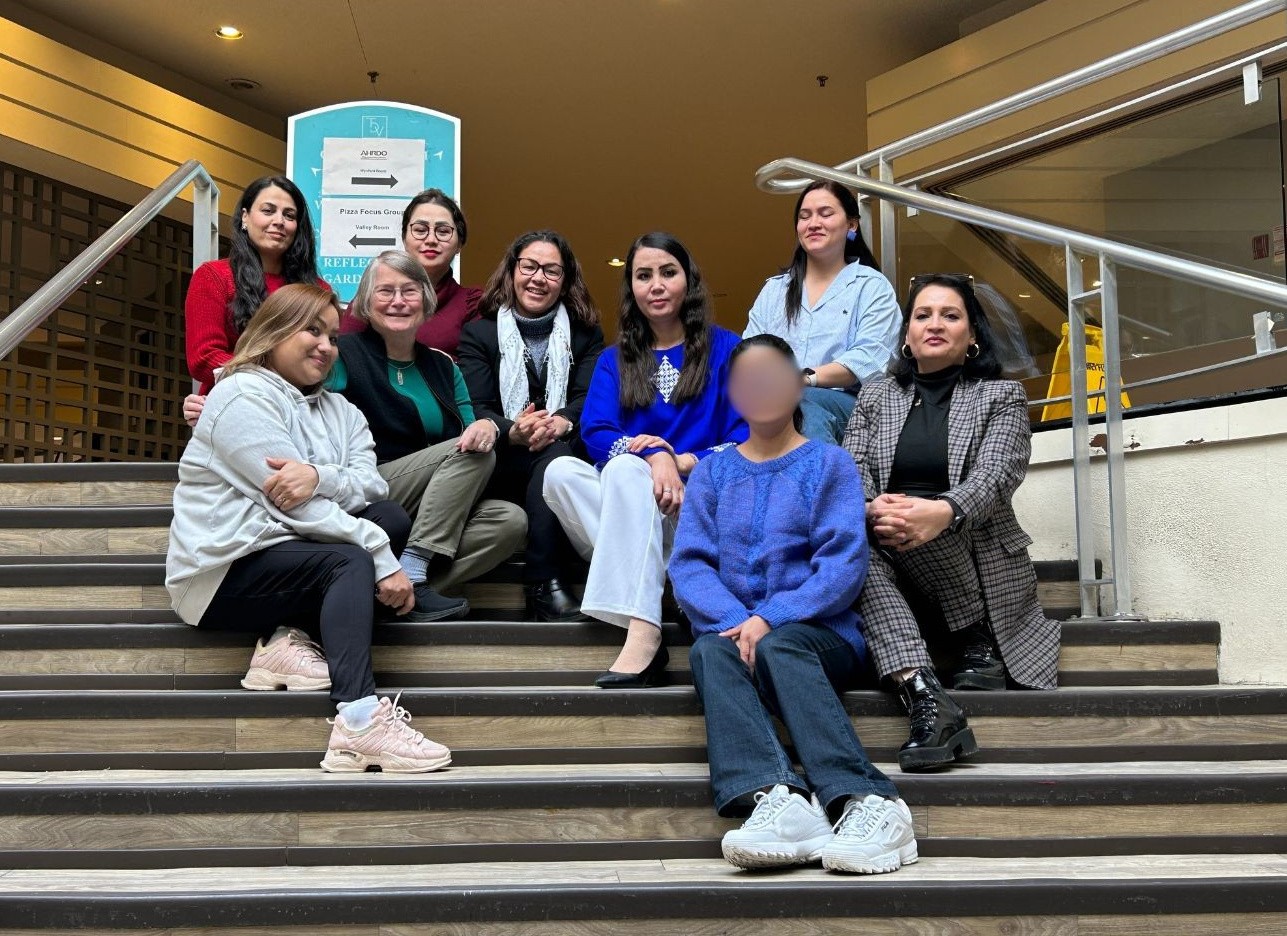
Bobbi Fitzsimmons (center left) from The Advocacy Project helped the artists tell their stories at a training in Toronto in December 2025. Nicole Valentini (center) from AHRDO co-ordinated the training.
This quilt was commissioned by the Afghanistan Human Rights and Democracy Organization (AHRDO) from The Advocacy Project (AP) in late 2025. It tells the story of oppression and injustice by the Taliban against women and girls in Afghanistan through the eyes of nine survivors who left Afghanistan after the Taliban seized power in August 2021.
Afghanistan has suffered from a severe human rights crisis. Women and girls have been systematically excluded from education, employment, and public life. Restrictions on freedom of expression and movement have intensified. Ethnic and religious minorities, particularly the Hazara community, are targeted for violence and discrimination. Civil society actors, journalists, and human rights defenders operate under constant threat inside the country and in exile.
After leaving Afghanistan, the nine artists found refuge in Canada. They came together in December 2025 for an a memorialisation workshop using embroidery as a medium to share their stories in Toronto, given by AHRDO and AP. Their embroidered stories were then assembled into a quilt by a prominent Canadian quilter and exhibited for the first time by AHRDO in late April at the first-ever Civic Space Summit in Ottawa, a space dedicated to the work of civil society around the world.
*
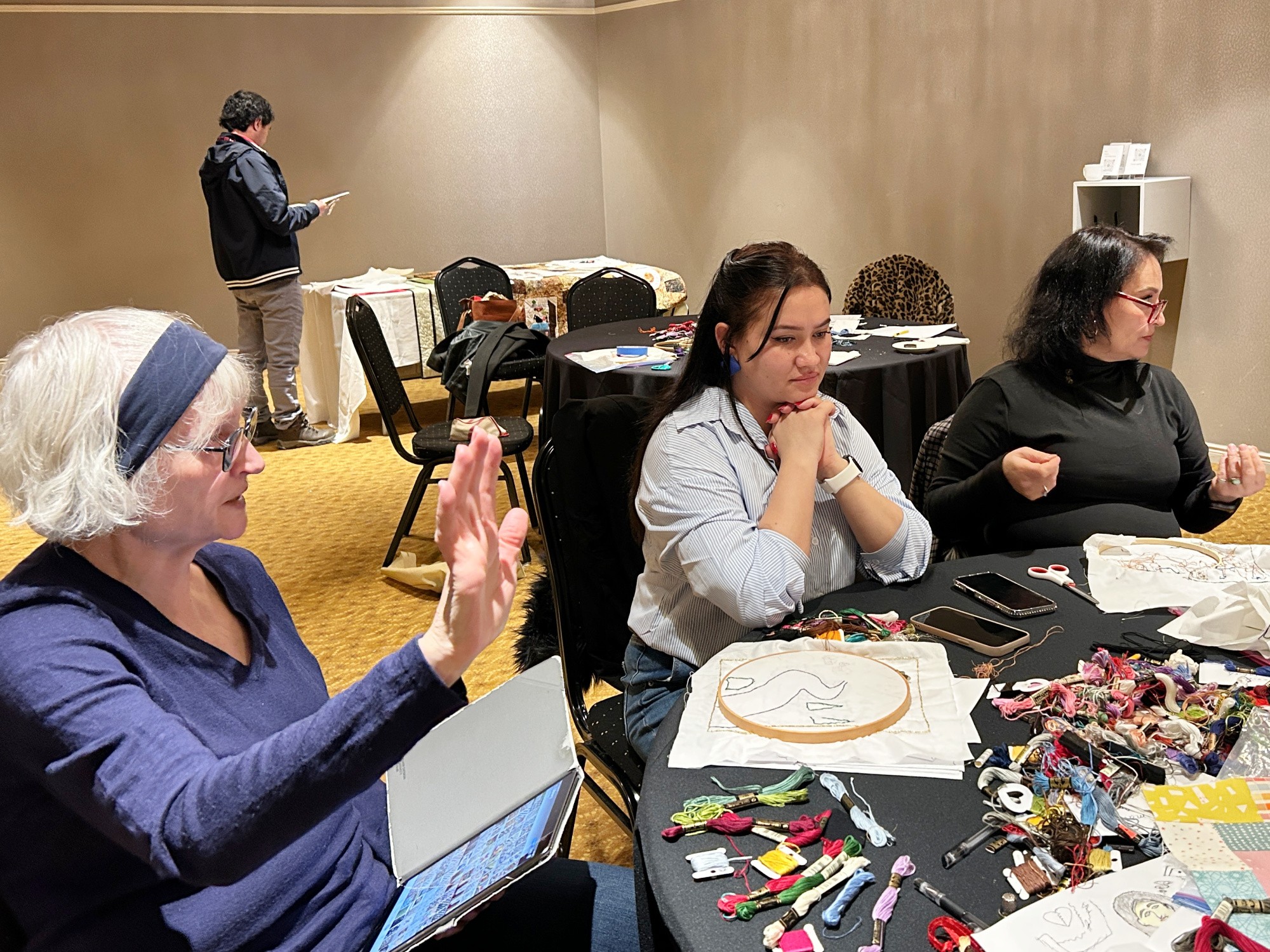
Quilter Janet Llewellyn joined the training to get their ideas about the quilt design
The Taliban are a fundamentalist movement that ruled Afghanistan between 1996 and 2001 before being overthrown. They regained power in August 2021, following the departure of NATO forces.
During both periods, the Taliban became notorious for their systematic efforts to deny women and girls the rights to express themselves, to work and to receive an education – basic rights that are accepted virtually everywhere else in the world.
This deliberate campaign has taken many different forms, many of them cruel. Some are described through the embroideries of his quilt.
This is AHRDO’s first experience with advocacy quilting, although the organization has long experience of using art-based approaches to truth-telling and memorialisation that give space for Afghan war victims and survivors to share their stories and commemorate the people they have lost in the decades of war and conflict in Afghanistan.
Established in 2009, ARHDO has undertaken over 100 projects inside Afghanistan and internationally, grouped as follows:
Documentation and investigation of international crimes in Afghanistan to ensure that perpetrators are held accountable and victims’ experiences are not forgotten. AHRDO has mapped over 2,000 atrocity incidents since 2015 and focuses on the persecution of ethnic and religious minorities, gender-based violence and war crimes.
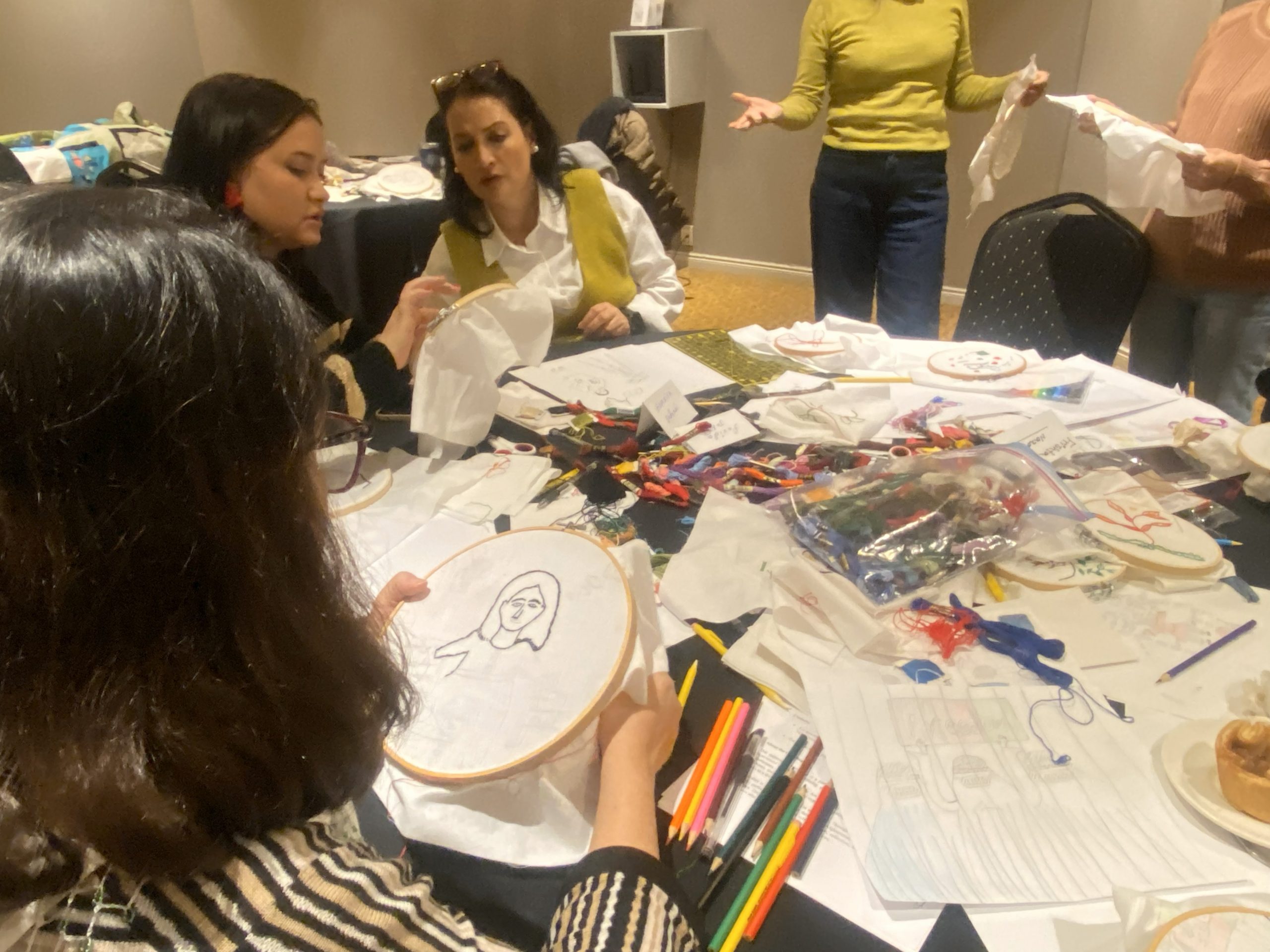
Homaira and Farida share ideas during training
Victim-centered memorialisation to ensure that the experiences of war victims are documented and preserved. This has taken several different forms:
The Afghanistan Memory Home, an online museum and archive dedicated to preserving the narratives of Afghan victims of war and documenting gross human rights violations.
Memory Boxes – small memorials that contain symbolic items, written testimonies, and objects of significance to victims and their families.
Body Mapping that enables war victims to visually express themselves by creating a life-sized representation of a person’s body layered with symbols, colors, and personal narratives.
Memorialisation through art that enables victims and survivors to remember loved ones and so contribute to broader efforts toward justice, accountability, and reconciliation.
Accountability to ensure that crimes are punished by collecting and submitting documentation through international accountability mechanisms.
Advocacy to ensure that Afghan victims and survivors fully participate in peace negotiations and future justice and reconciliation processes, through all means possible and at all levels.
These and other activities are described in rich detail on the AHRDO website.
*
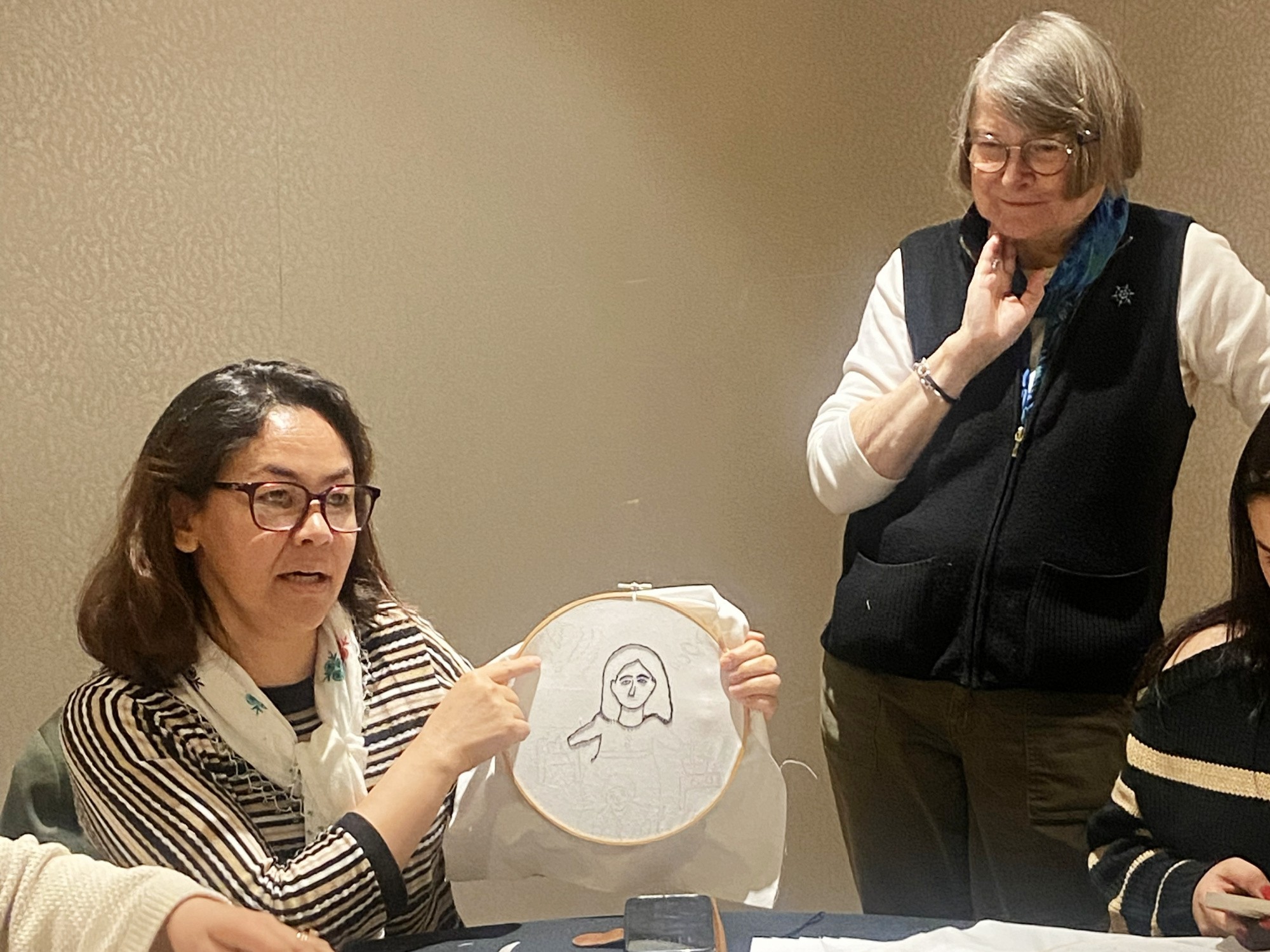
Guljan explains her design to the group while Bobbi the trainer looks on
The Afghan Women’s Quilt is our own latest initiative at The Advocacy Project to help survivors of atrocity tell their stories through advocacy quilting and in so doing regain their confidence.
Hundreds of women and girls from 24 countries have produced blocks for quilts and are profiled on these pages. Our first advocacy quilt (2007) carried stories from Bosnian women who lost family members in the notorious 1995 Srebrenica massacre of Muslims by Bosnian Serbs.
All of the quilts we curate carry individual stories, and many describe acts of unspeakable cruelty. The Afghan Women’s Quilt is a welcome addition to these amazing works of art and advocacy.
This project began in late 2025, when nine Afghan women in Canada signed up for an embroidery training in Toronto. The nine were among thousands who left Afghanistan after the Taliban seized power and made their intentions clear – first by ending all education for women and girls after Grade 6, and second by forcing Afghan women to wear a burkha in public. (The burkha is a full-length garment that covers the entire body and face).
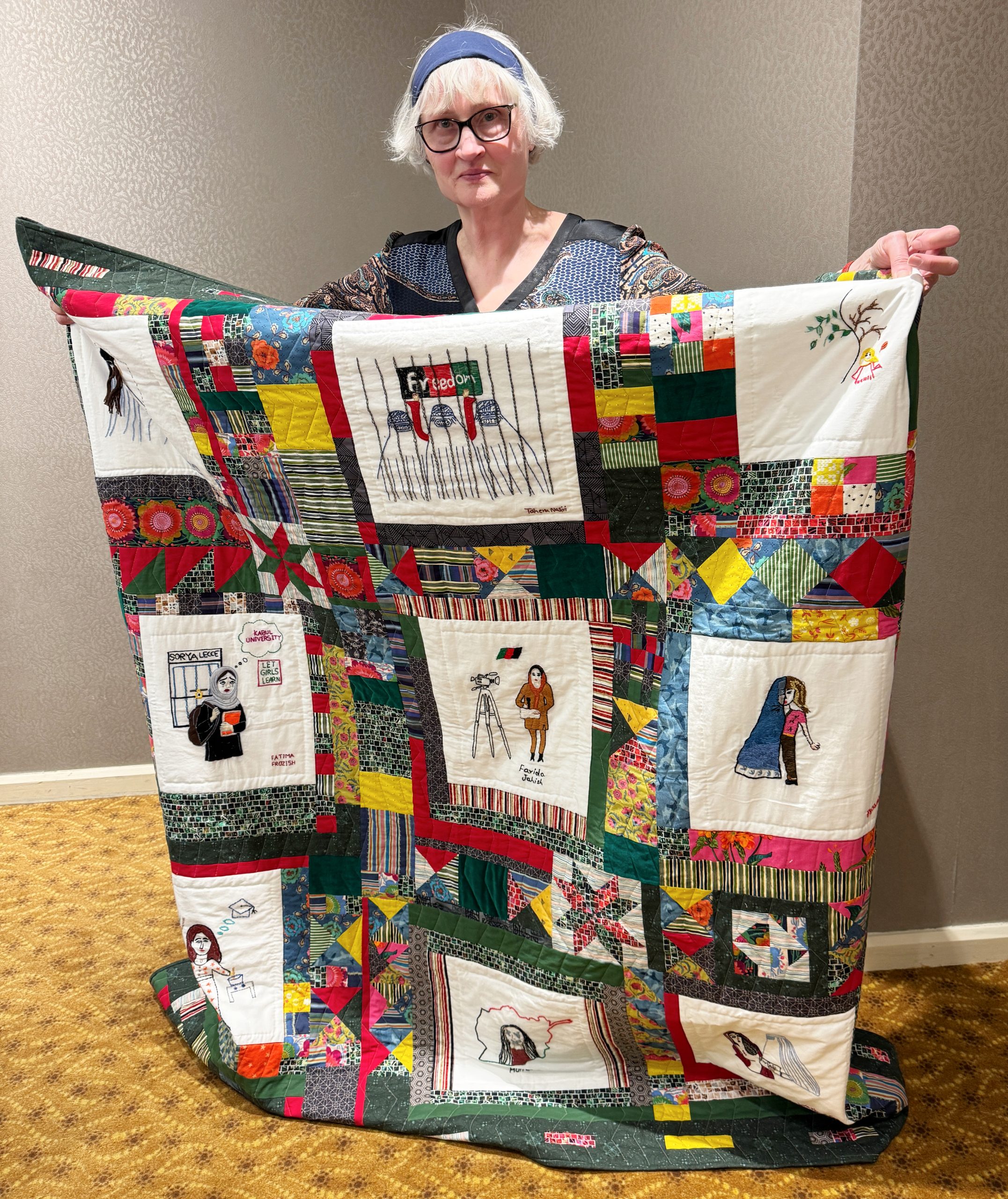
Janet Llewellyn, from the Yorkshire Rose Quilt Guild in Toronto, attended the embroidery training to meet the artists and assembled their stories into an advocacy quilt
As their stories show, all nine participants are deeply committed to education, for themselves and others. They themselves enjoyed a rich education and flourished after the fall of the Taliban in 2001. For example, Farida was a well-known TV reporter. Guljan was the first female governor of Daikundi province, one of 34 in Afghanistan. Niki, the youngest artist, has written and starred in a movie about her own life. Most of the nine are active on social media and have thousands of followers.
Almost the first thing they did when arriving in Canada was return to school, and the idea that women and girls are again denied this basic opportunity back in Afghanistan is, for them, completely unacceptable. Their anger shows through in their stories, which are among the most powerful we have published to date.
*
Bobbi Fitzsimmons, our quilting coordinator, led the training last December. Janet Llewellyn, a committed Toronto quilter, attended the training and took the blocks home, where she assembled them into the quilt. She handed over the quilt to Hadi Marifat, the founder and director of AHRDO, in Toronto in April 2026.
A week later, the new quilt was displayed in public for the first time at the first-ever Ottawa civic space summit, where it hung on the walls alongside two other AHRDO powerful commemorative products – a body map and memory box.
The Summit brought together over 300 national and international civil society actors over three days, and AHRDO was invited to present its work on memorialisation as an example of how civil society can help to advance transitional justice within Afghanistan and in exile contexts. AHRDO’s three exhibits showed how victim-centered approaches to memory and documentation can contribute to truth-telling, advocacy, and long-term accountability efforts. They were much admired.
The quilt was shown soon afterwards at the Aga Khan museum in Toronto. Looking further ahead, we hope it will be a source of inspiration for all Afghan refugees and fully integrated into AHRDO’s advocacy at international bodies such as the UN Human Rights Council in Geneva and at the International Criminal Court in The Hague.
AP will also work to promote the advocacy of the nine Afghan artists through our own network of contacts that we have built up since funding girls’ education in Wardak province between 2003 and 2008. Visitors to this page might also be interested in our analysis of the resettlement of Afghan refugees to the Washington area following the fall of Kabul in 2021.
Please contact Nicole Valentini at AHRDO for more information: nicole@ahrdo.org
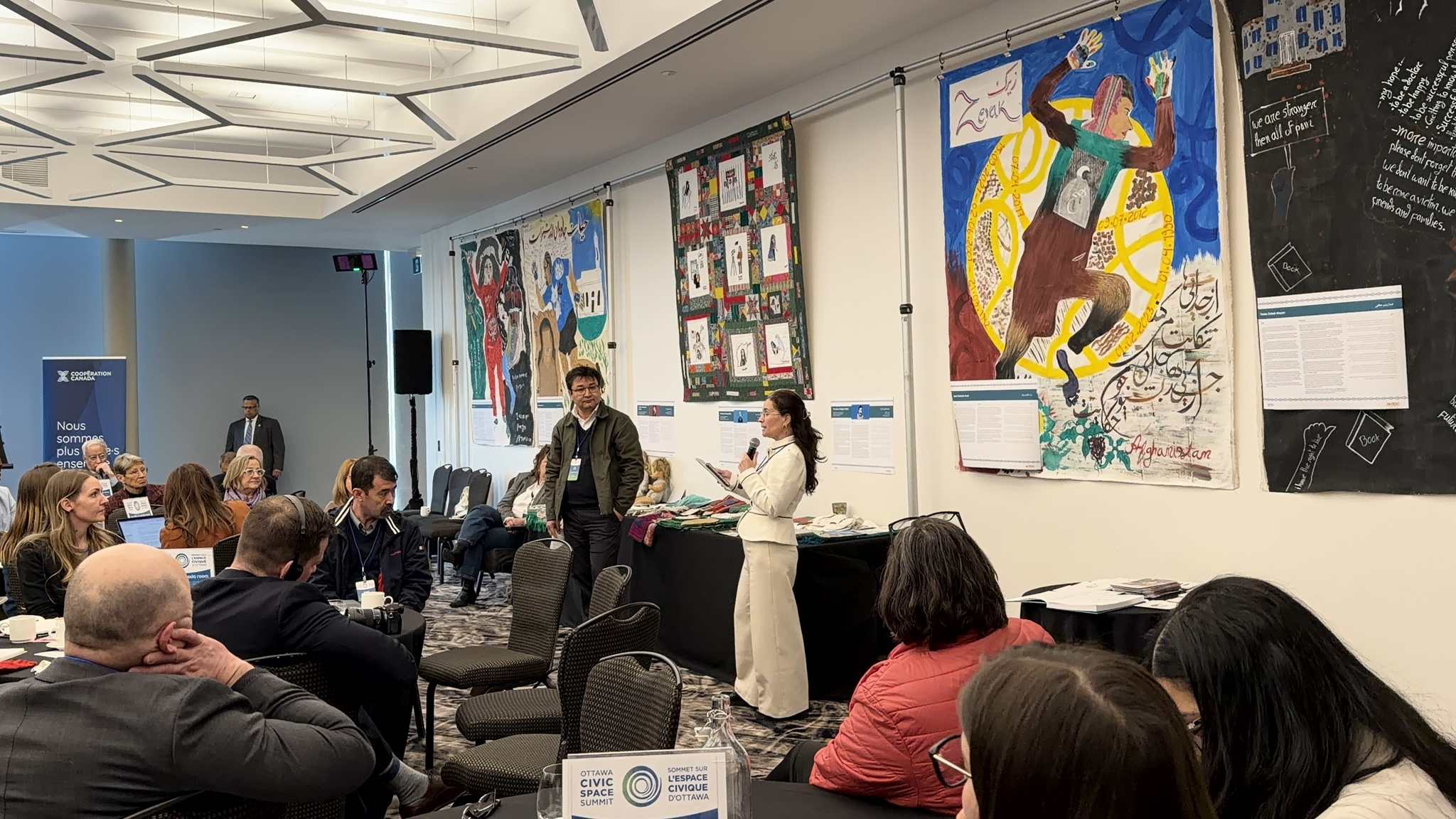
Hadi Marifat and Sophia Bijleveld from AHRDO explain the quilt, body map and memory box to delegates at the Ottawa civil society summit, April 2026
First Quilt

Second Quilt

Artists and Squares

Four of the artists (and children) take possession of the finished quilt in Toronto for AHRDO
Manizha Wahidi – dreaming of education
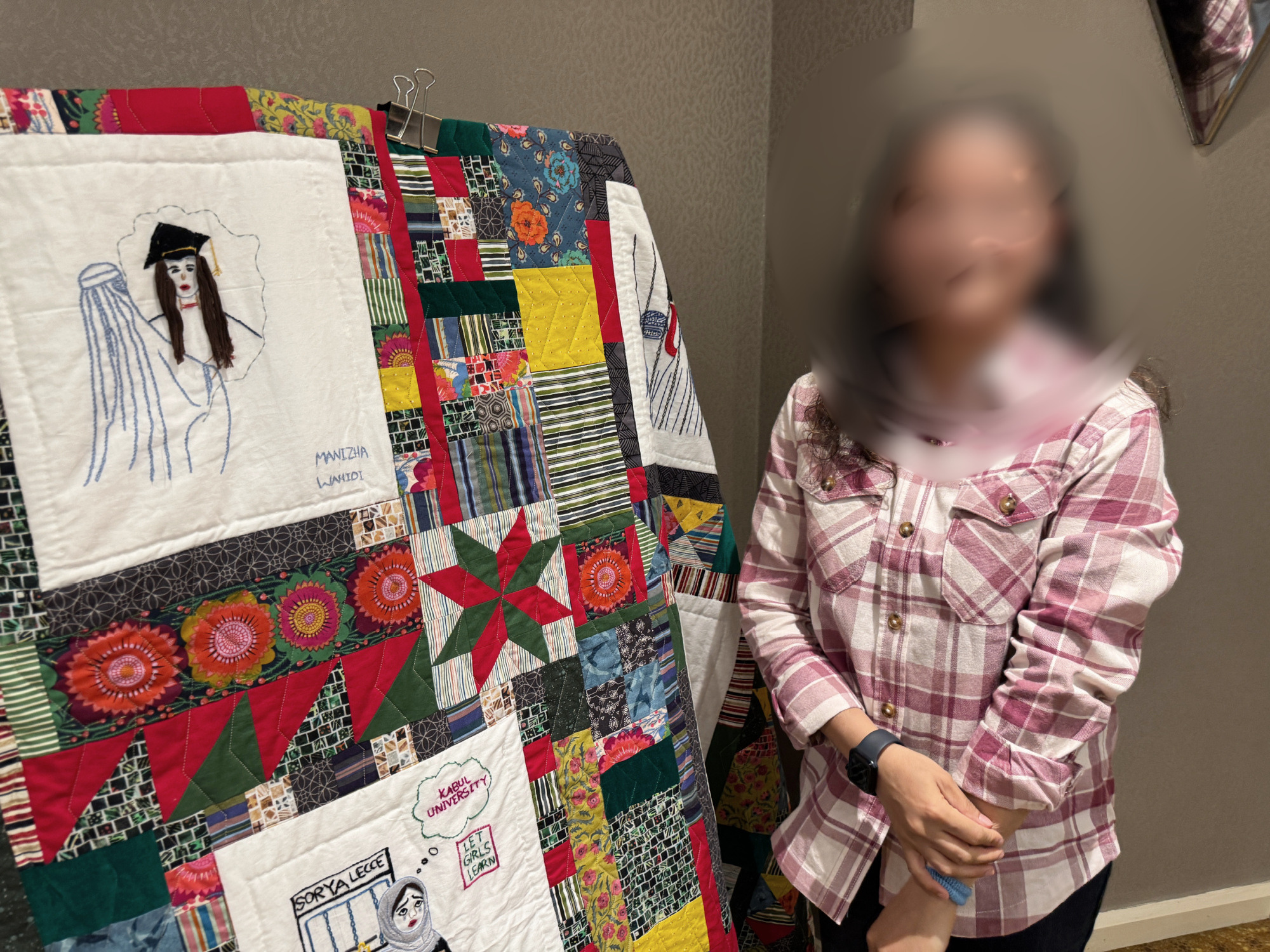
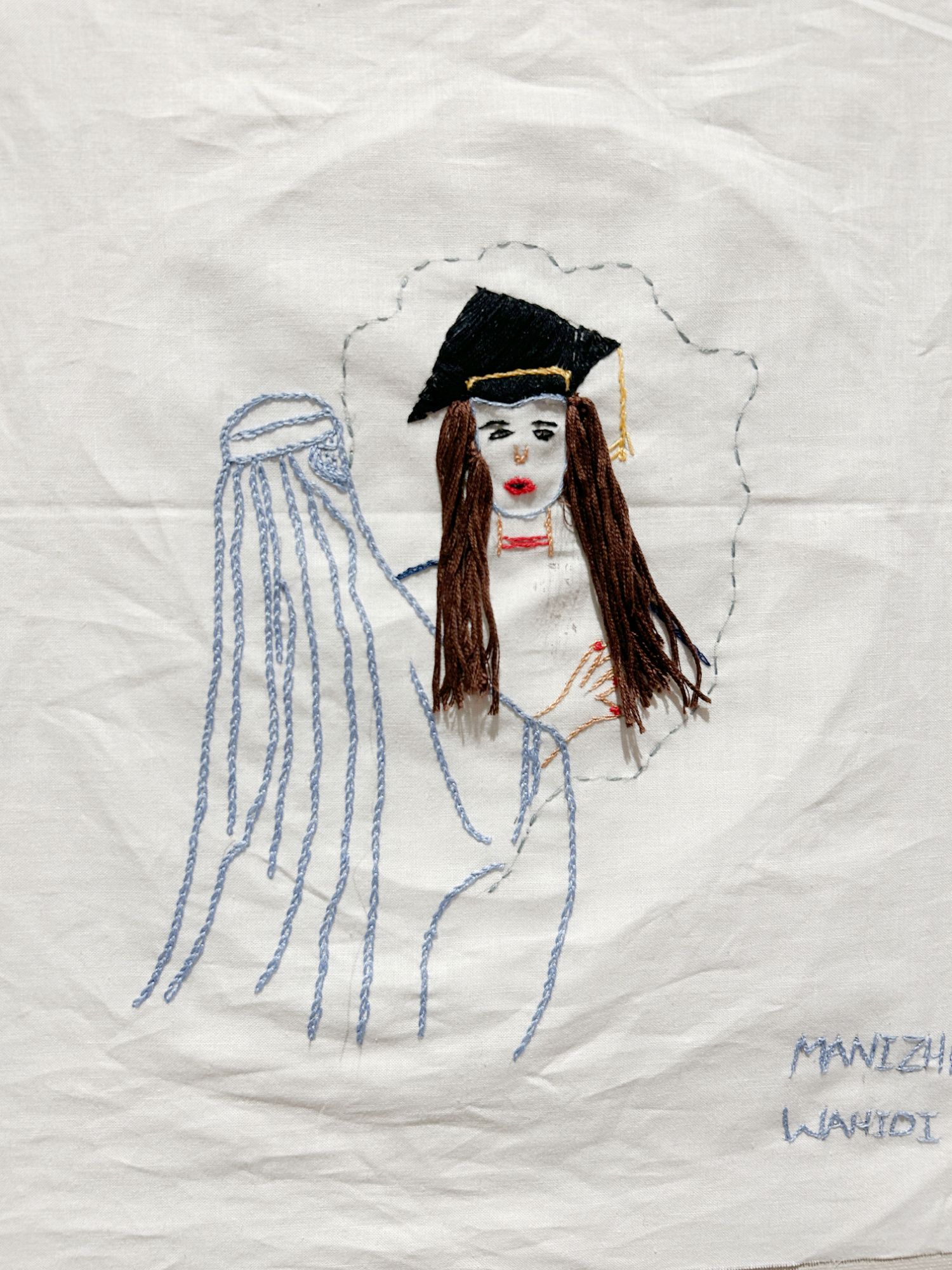
After seizing power in 2021 the Taliban prohibited the education of girls after grade 6. Manizha’s block shows a girl who is forced to wear a burkha dreaming about being back at school. Manizha herself, a mother of three, benefited from a wonderful education. She earned a degree in mathematics at Kabul Universit and taught for seven years at an international school before being forced to leave the country. Since moving to Canada, she has continued to build her professional skills by completing a Customer Service and Retail program at Centennial College and an internship with New Circle, where she gained hands-on experience in customer service and workplace communication. She has also volunteered with community organizations, deepening her ability to understand and support people from diverse backgrounds. Manizha is currently enrolled in the Law Clerk Specialist program at Trios College, where she is studying corporate law, real estate, wills and estates, and family law. Her goal is to build a career as a Law Clerk and contribute positively to both the legal field and the broader community. Manizha asked that we do not show her face.
Wazhma Sadat – forced to sell daughters
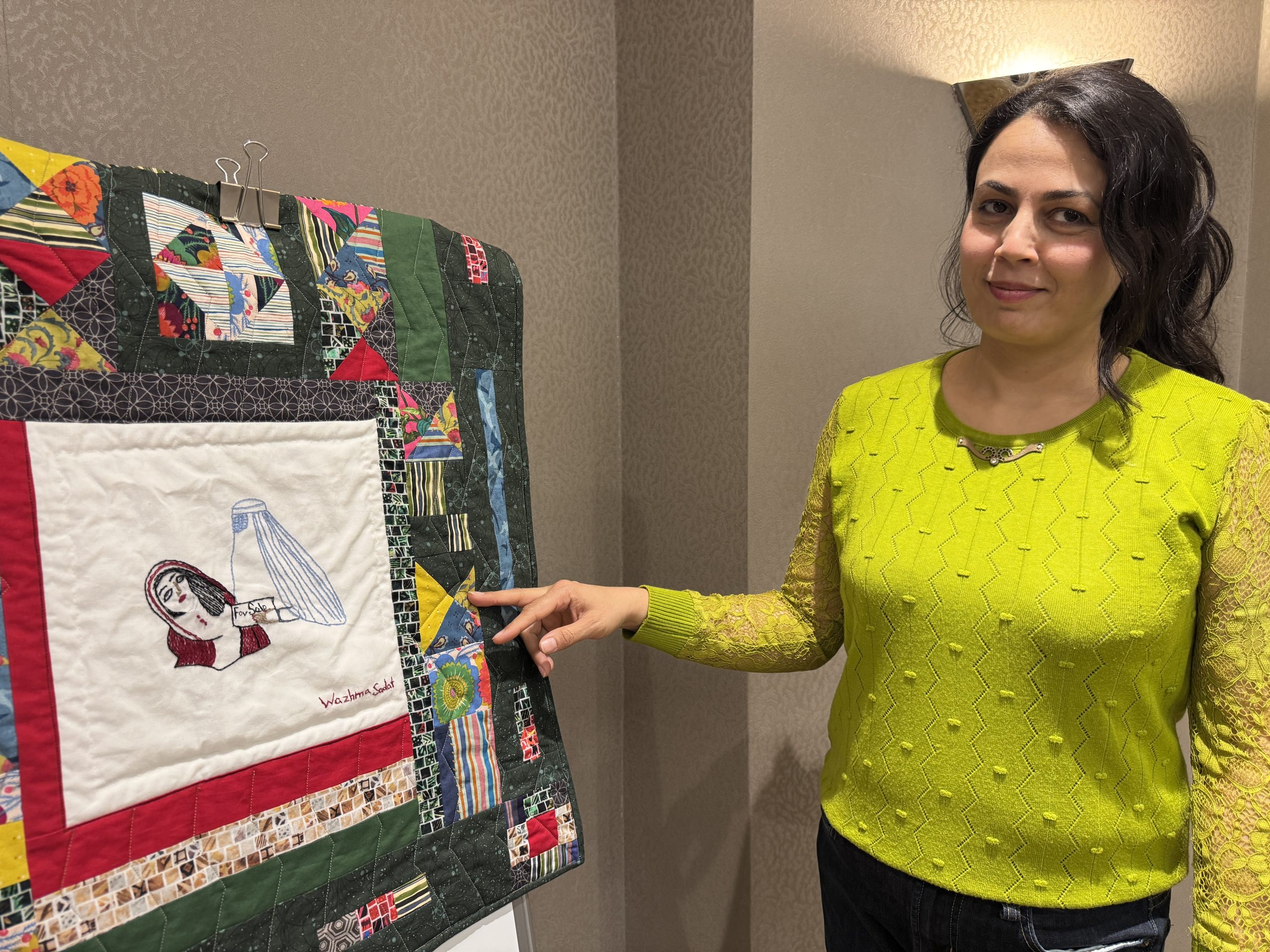

Wazhma’s block shows a girl being sold by her desperate mother to another family to be married. The mother is wearing a burkha. More and more parents are selling daughters, against their will, to protect them from Taliban violence and because they cannot afford to feed large families. Wazhma herself comes from a family that valued education. She earned her Bachelor’s degree in Law and Political Science in Afghanistan and later obtained her Master’s degree in Public Law. She began her professional career at the Independent Election Commission, where she worked in the Gender Unit as a Women’s Support Officer. Through her dedication and leadership, Wazhma was subsequently appointed Acting Head of the Gender Department where she advocated for women’s rights and supported women’s empowerment through various institutions. Wazhma is building her career in Canada, where she lives with her husband – a former professor in the Faculty of Law and Political Science at Kabul University – and their three children.
Tahera Nasiri – demanding justice from jail

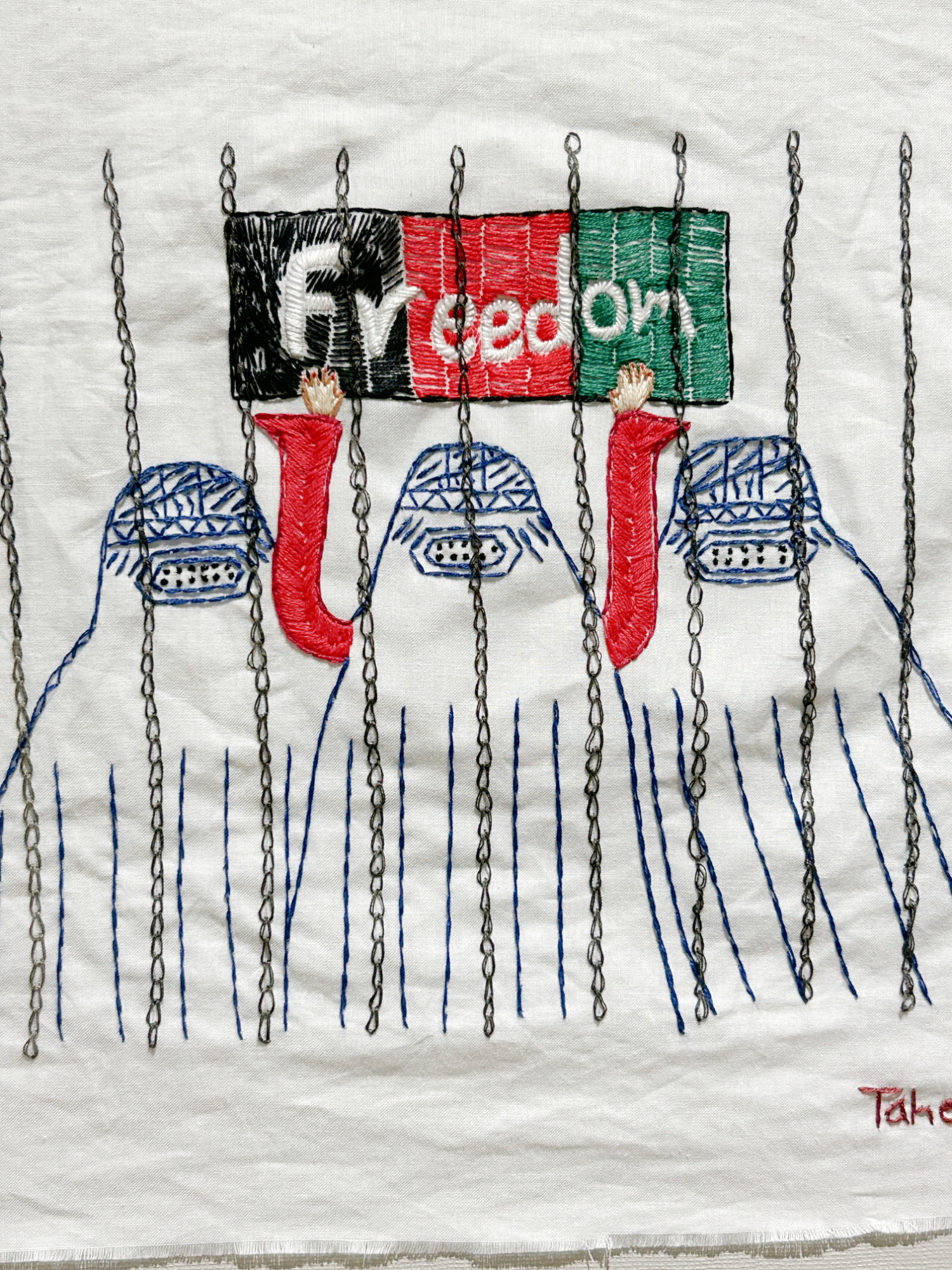
Many women and girls have been arrested for refusing to give in to Taliban demands and Tahera’s block shows that they refuse to be intimidated even in jail. Tahera herself is a well known advocate for Afghan women and girls. Before the Taliban takeover she was active in the Afghan Women’s Network (AWN) while studying at Kabul University and working at the Azizi Bank. Tahera refused to be muzzled and joined public protests against the Taliban’s repressive policies. This earned her the enmity of the Taliban and she fled to Pakistan in February 2022. Tahera resettled in Canada where she continues to advocate for Afghan women and girls while studying full-time at Centennial College. On August 15, 2023 (the second anniversary of the fall of the republican government in Afghanistan) Tahera founded the Women’s Movement towards Freedom to continue her advocacy in a coordinated manner. The Movement has supported projects inside Afghanistan and abroad, including remote language classes and tailoring trainings for 30 women who were dismissed from their jobs in Afghanistan. Tahera is also active on social media and has almost 24,000 followers on Instagram. Read more on her website: https://women-mtf.org/
Homaira Jahish – the silencing of girls

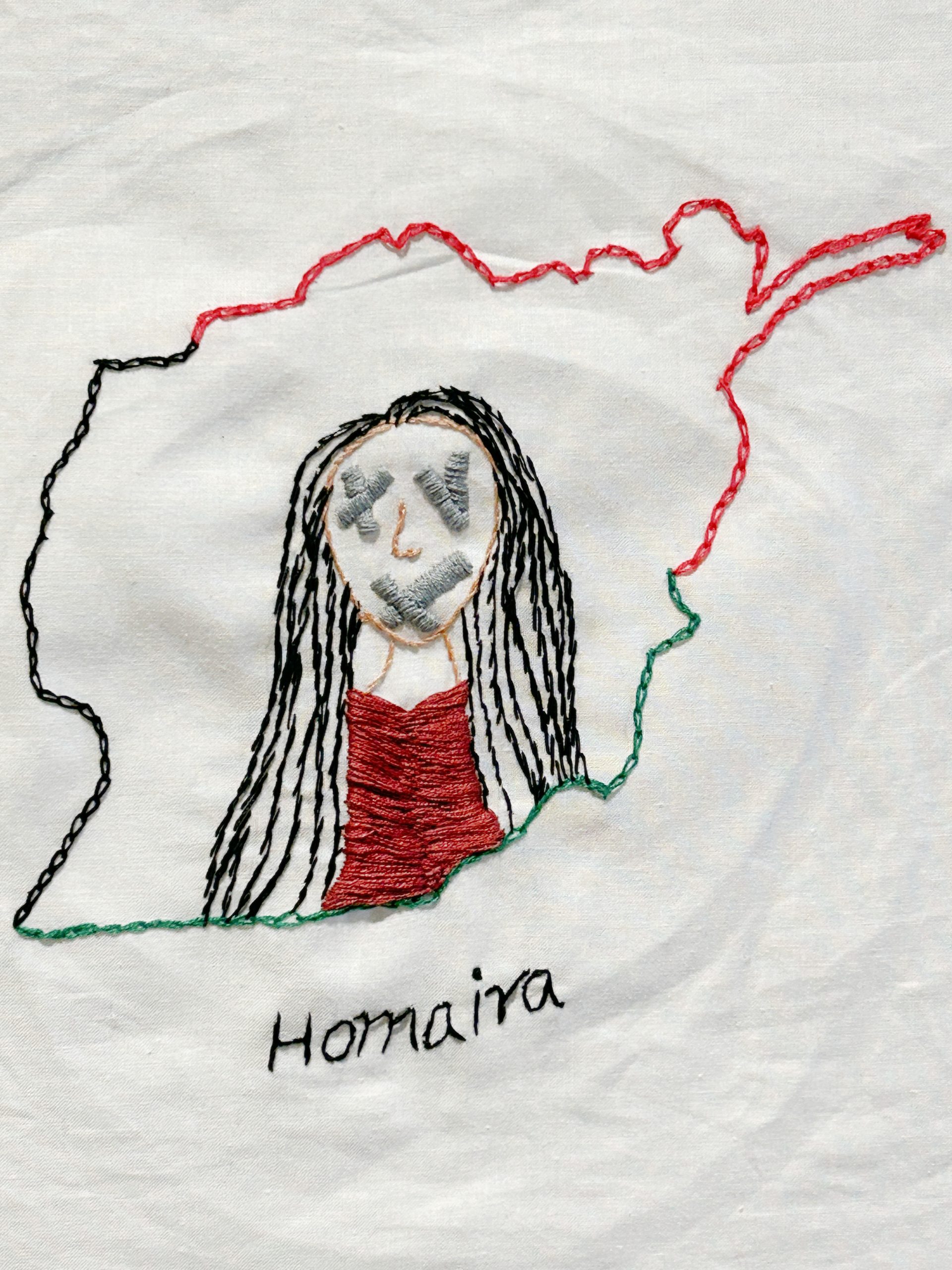
Homaira’s story shows a young woman who has been completely silenced by Taliban rule. She is shown over an outline of Afghanistan and the colors of the Afghan flag. Homaira placed an X over the girl’s eyes and mouth to symbolize the fact that she can no longer speak, read, or learn.
Fereshta Nazari – rejecting the burkha


The Taliban forced women to wear a burkha in public and Fereshta hated it. “I used to throw it in the corner when I came home!” she says. Her block shows her wearing a dark blue burkha which contrasts with a light modern dress. “I was afraid of the darkness for myself and my children. This woman wants to be free.” Fereshta was born in Kabul and grew up in a large family with seven siblings, who are currently living in Iran. From a young age, she developed a strong interest in helping women and children and worked for three years with Marie Stopes Afghanistan before moving to Canada in 2021. After studying as a medical laboratory assistant at Oxford College in Scarborough, Fereshta worked in a clinic, where she gained hands-on experience of healthcare. She then completed the English for Academic Purposes (EAP) program at Centennial College and began studies in the Child and Youth Care (CYC) program at the College where she is working toward becoming a Child and Youth Care Practitioner. Fereshta wants to support children and young people, offering care and practical strategies to help them grow emotionally and socially. Visit her website here.
Fatima Frozish – locked out of school
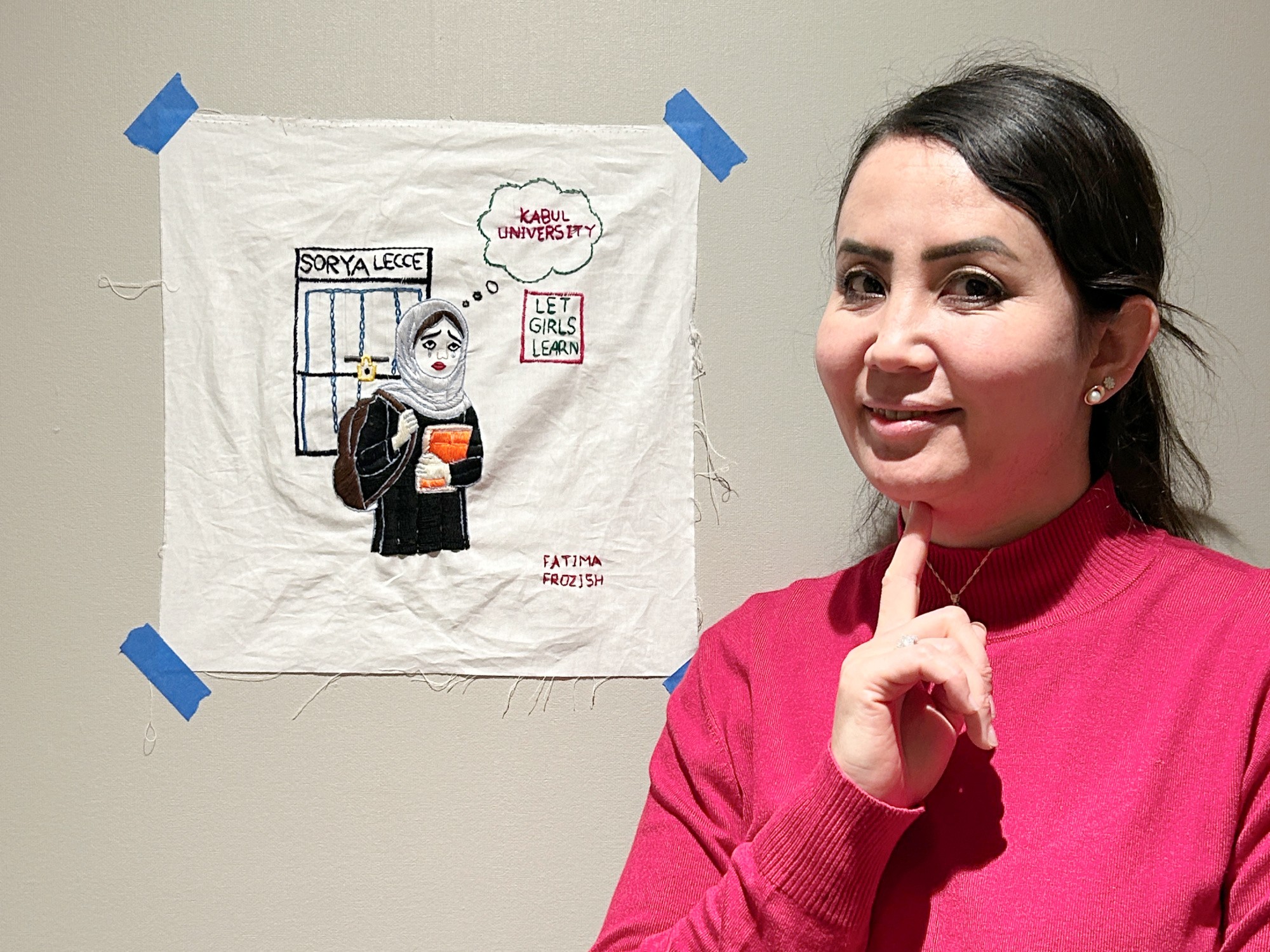

Shortly after seizing power in August 2021 the Taliban banned education for all girls after Grade 6, making Afghanistan the only country in the world to impose such a restriction. Fatima’s block shows her locked out of her school, ending her dream of eventually attending university.
Farida Jahish – deprived of agency
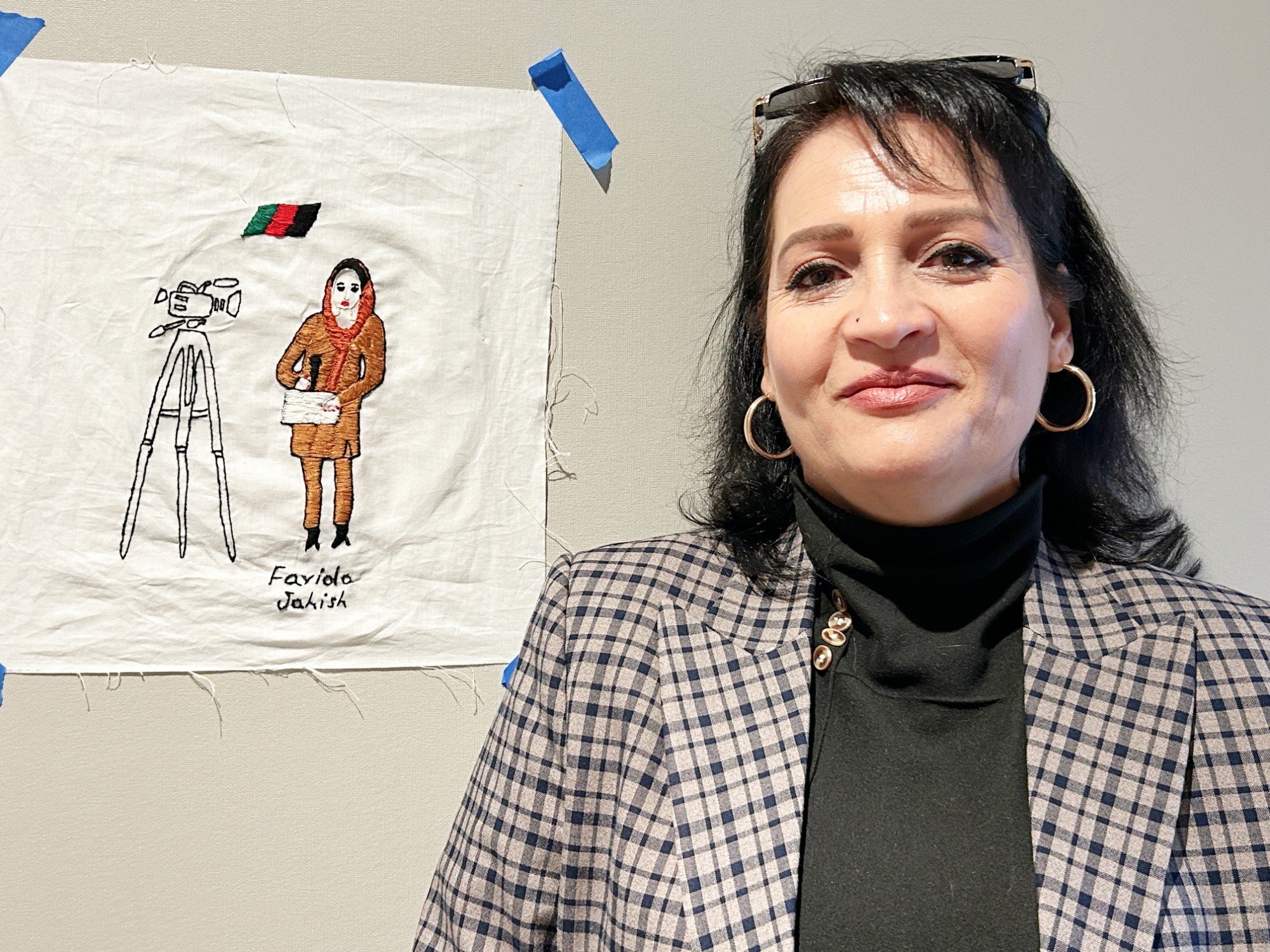
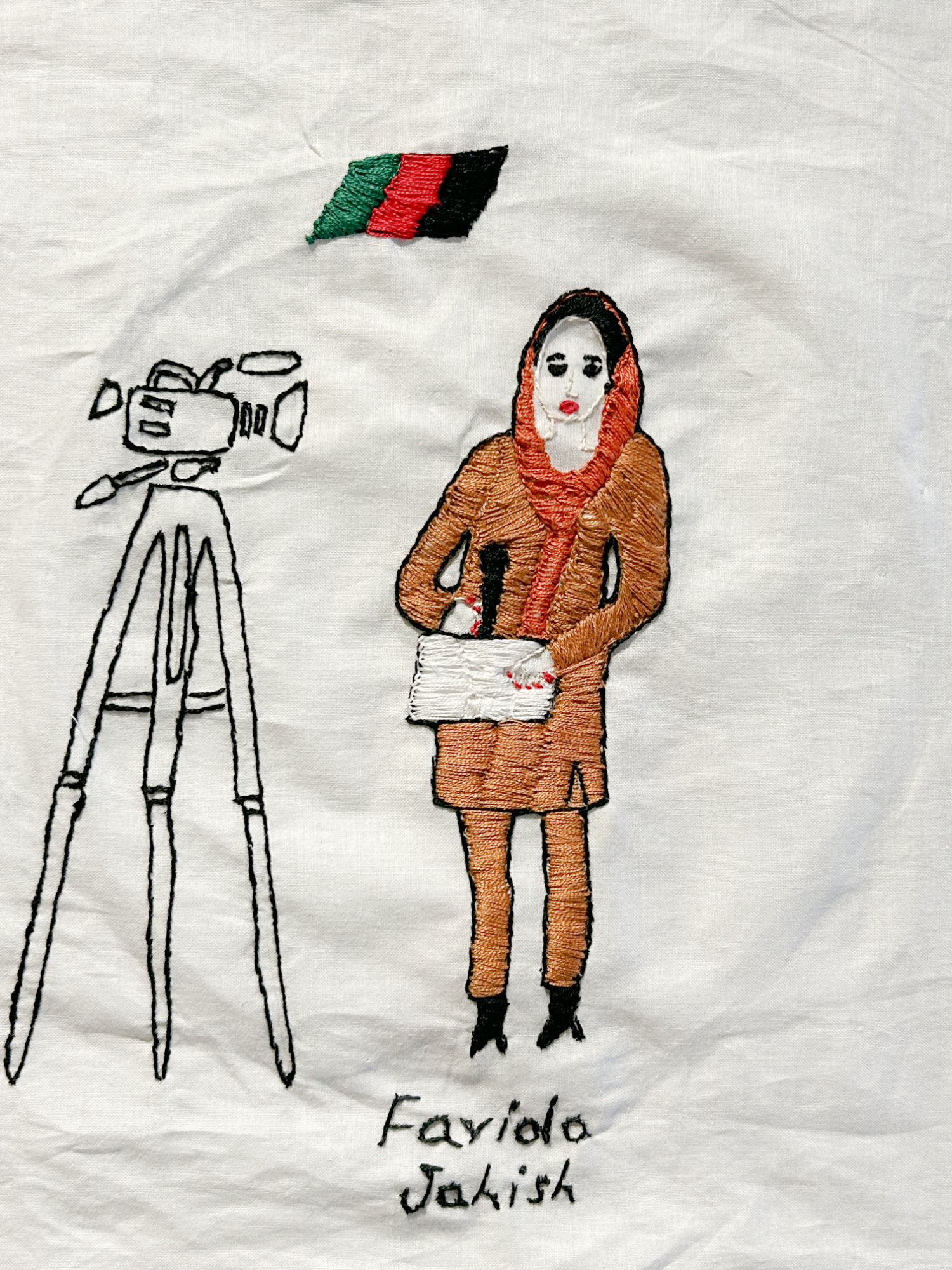
Farida worked as a journalist before the Taliban returned to power. She loved her job and felt she had a real impact. She also enjoyed the satisfaction of knowing that she had mastered a difficult profession. All of that has now been taken away, even though Farida has adapted to life in Canada and regained her confidence.
Guljan Samar – multitasking

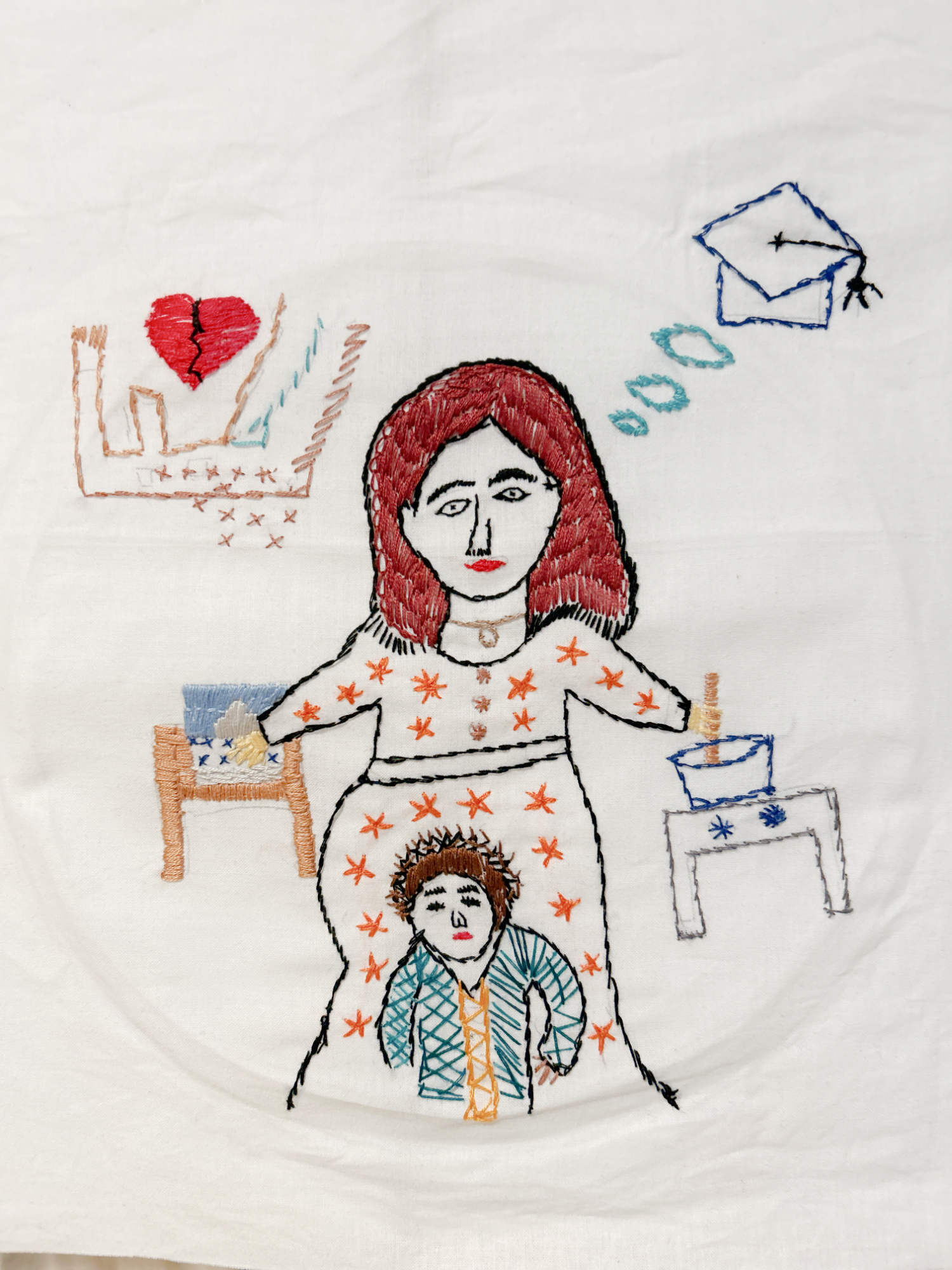
Guljan’s block shows a mother taking care of children, cooking dinner and learning English on the computer – all the while dreaming of an education. Guljan herself has long been a role model for Afghan women and girls, widely recognized for her contributions to women’s empowerment. She earned a PhD in Law and Political Science and has used her academic knowledge to improve governance and civil society ever since. She served as the Head of the Shohada Organization in Daikundi Province, where she led efforts to support vulnerable communities with a strong emphasis on women’s economic empowerment. Guljan was then appointed the first female District Governor (Wuluswal) in Daikundi Province. This was a major step forward for women’s participation in local government and Guljan used her position to promote the inclusion of women in local decision-making. Guljan’s advocacy has also been recognized internationally and in 2020 she received the Enterprising Women of the Year Award Women from The Institute for the Economic Empowerment of Women. Guljan continues to inspire emerging women leaders and entrepreneurs from Calgary in Canada and is deeply committed to defending the rights of Afghan women and girls. Follow her on Facebook.
Niki Sarwar – overshadowed
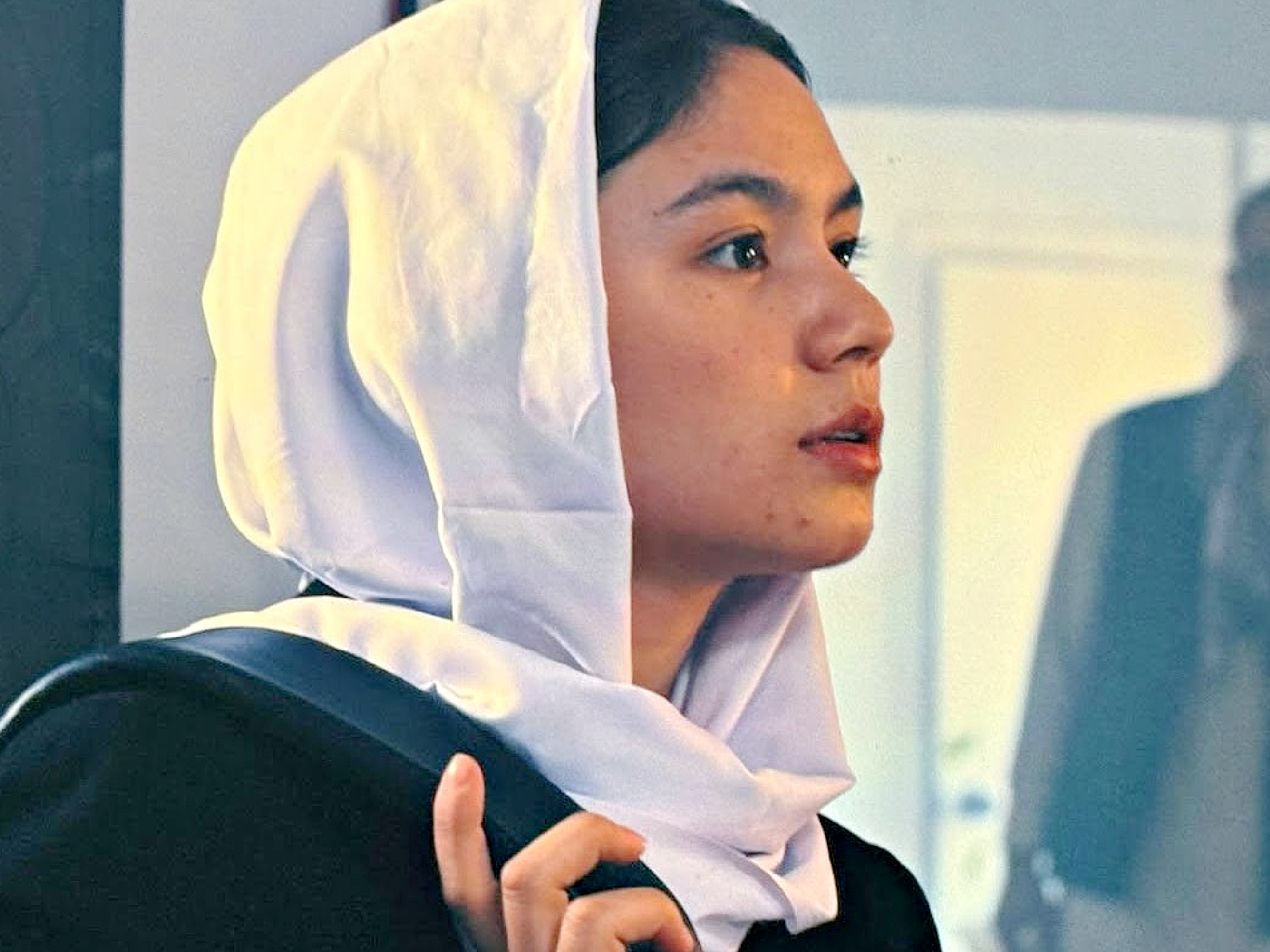
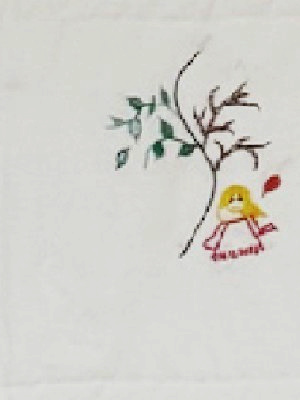
Niki is a newcomer to stitching and was delighted to join the first day of training in Toronto. Her first block, shown here, depicts a girl sitting on the wrong side of a tree in shade and surrounded by faded leaves. Niki’s message: boys in Afghanistan enjoy all the benefits while girls are deprived of opportunities. Niki herself is from the Hazara minority – Shia Muslims who have endured decades of Taliban-sanctioned violence, abduction, and murder. As a woman committed to education, Niki was in constant danger after the Taliban returned to power in 2021. She managed to escape to Canada, where she is now a studying at a college in downtown Toronto. Niki vividly remembers friends, classmates, and relatives she left behind, some of whom have been forced into marriage. In their honor, she has written and starred in a short film, The Silence of a Girl, which imagines what her own life might have been if she had never left Afghanistan. The film’s authenticity has attracted powerful collaborators including the Toronto-based filmmakers Reza Jaffari and Javed Najafi, and an Oscar-nominated director of photography. Stephen Watt of Northern Lights Canada has helped with the script. Niki showed an extract of her film at the embroidery training. Other members of the team were delighted to see how a talented young Afghan woman can thrive in exile. Check out Niki on Facebook