
ADVOCACYNET 432, August 6, 2025
A Community WASH Campaign Responds to Aid Cuts with Innovation and Optimism
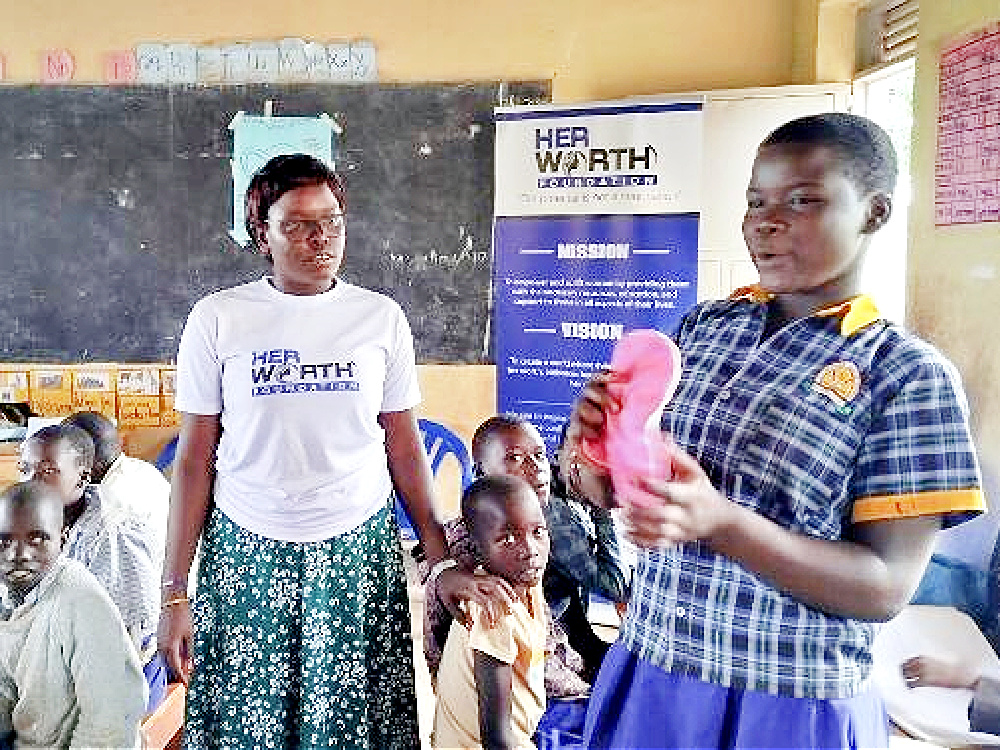
Growing in confidence: Amolo makes reusable sanitary pads during a recent training at the Tochi primary school in Northern Uganda
Until recently Amolo dreaded attending class at the Tochi primary school during her period. She would sit stiffly at her desk, afraid of leaking and being mocked by the boys. So when a recent training offered her the chance to confront the stigma and learn how to make reusable sanitary pads, as shown in the photo above, she jumped at the opportunity.
Amolo is a recent beneficiary of a campaign to improve Water, Sanitation and Hygiene (WASH) in rural schools of Gulu District, Uganda that began ten years ago this month with the construction of two accessible toilets at the same Tochi school where Amolo conquered her fears.
The program is managed by the Gulu Disabled Persons Union (GDPU), a local advocate for disability rights, with support from The Advocacy Project (AP) in Washington.
AP has raised $81,000 for the program since 2015 and deployed 12 student Peace Fellows to help. This year’s Fellow, Aaron Bailey, studies at Texas A&M University and is a US Army veteran. Current donors include the online giving community Givology, the Prince of Peace Lutheran Church in Dublin (Ohio), and Ugandan staff members at the World Bank.
This North-South partnership has helped GDPU install WASH at seven primary schools with a combined population of 4,672 students, and shown conclusively that WASH boosts enrollment, particularly of girls.
In the process the campaign has moved far beyond building toilets. This summer GDPU has designed new WASH monitoring tools, made liquid soap for schools, installed an incinerator for used sanitary pads, helped girls like Amolo manage their periods and even tested students for malaria.
Out of it all has emerged a WASH model that is firmly rooted in school communities and constantly looking for new opportunities. GDPU views this as one of its biggest achievements. “We’ve done a lot by listening to students and teachers,” said Emma Ajok, the project leader, in a recent Zoom call from Gulu.
Such flexibility will be needed in the months ahead following the collapse of USAID, a major funder of WASH in Gulu District. At the very least the shortfall will push local actors like GDPU to work more closely with the district government, build new partnerships, and expand their use of social media.
Emma Ajok welcomes the prospect. “It should be exciting!” she said.
*
GDPU took on WASH in 2015 after an assessment mission by GDPU and AP found that many school toilets in Gulu were in shocking condition. WASH donors rarely followed up to see how their facilities were maintained.
For much of the past decade, the main threat has been seen as a shortage of funds. The Gulu District Education Office only receives enough money from the Ministry in Kampala to pay the salaries of teachers and construct one or two classrooms a year. This puts the burden for installing WASH squarely on parents, many of whom are struggling farmers, and on foreign donors.
The assumption has also been that the best answer is to build new facilities, which can cost up to $15,000 a school. Yet recent field visits have found that many structures are sound and simply need regular cleaning.
This emerged during a 2023 visit by Ms Ajok to the Abaka School, which had received new toilets from GDPU and Save the Children. The area is at high risk from malaria but the toilet walls were thick with mosquitoes. After a sharp exchange between Ms Ajok and the head teacher, the toilets were cleaned the next day. The visit featured in this 2023 documentary.
This past June Ms Ajok and her team visited all seven schools that have received WASH since 2015. While some facilities were well maintained, the team also found frogs and lizards in handwashing tanks, as well as broken gutters. All of this was recorded in blogs by Peace Fellow Aaron Bailey.
The GDPU team responded with advice, encouragement and several jerrycans of Clean Wash soap, which is mixed at the GDPU office. GDPU’s budget also covered the cost of minor repairs, including the replacement of gutters.
A second round of visits in July found that conditions had improved and the creatures had been removed from handwashing tanks, much to Aaron’s relief: “To my delight they were all clean, and two stations even had bars of soap. These changes mark real progress (but) without regular monitoring even these modest gains might slip away.”
In a further advance, this summer’s visits have produced simple but effective WASH monitoring tools that will allow GDPU to upload data to a Google Drive during school visits and track the response of schools. This system will be used by GDPU until the end of 2026 and offered to the Government and NGOs for use at other schools.
*
The WASH project has also drawn GDPU into the fight against malaria, which casts a long shadow over education in Northern Uganda.
When AP visited the Kulu Opal School in 2023 and 2024, we were welcomed by the school choir singing about the disease. The contrast between the angelic voices and mournful message was jarring.
Malaria is a major cause of absenteeism in Gulu schools but is handled by families and thus frequently undiagnosed. Spotting an opportunity, GDPU invited local health centers to join WASH trainings at two schools. The health workers administered rapid blood tests, found 71 undetected cases and gave out drugs with strict instructions for usage and doses.
GDPU has long viewed menstruation as another major threat to girls’ education. As Ms Ajok explained: “If girls cannot manage their periods while at school they will stay home and miss a week of classes every month.”
In 2022 GDPU began installing changing rooms for girls where they could rest and change during their periods. The project has since installed incinerators to dispose of used sanitary pads at two schools.
But incinerators do not help girls manage the stigma, and this summer GDPU asked Her Worth, a much-respected local association, to help girls open up about their fears and make reusable pads.
Joe Okwir from GDPU attended the training at Tochi and watched as Amolo conquered her nerves: “While Amolo and her peers stand taller, countless other girls across the region continue their daily battle against period poverty and deeply ingrained stigma, silently enduring.”
*
Offering a report card on the summer monitoring through their blogs, Aaron and Joe gave five of the seven schools a solid pass while the Abaka and Ogul schools received an F. The main problem, wrote Joe, is “leadership inertia.”
Whether things improve at the two schools will depend largely on the District Education Office (DEO). GDPU plans to join a WASH coordination committee headed by the DEO and share its newly minted monitoring model with other NGOs. Ms Ajok will also offer Clean Wash soap at a discounted rate to other schools in Gulu District to encourage handwashing.
As development aid shrinks, GDPU is reaching out to new NGO partners like Her Worth and Gulu’s two Rotary clubs. Meanwhile, GDPU’s own confidence is on the rise. Emma Ajok is listened to with respect (and some trepidation) by head teachers. Joe Okwir is writing strong blogs and posting on social media.
Peace fellow Aaron Bailey has been another WASH beneficiary. Speaking from Gulu before leaving, he agreed that helping girl students make sanitary pads in Uganda is a far cry from serving in the US Army. But, he said, it has been an unforgettable experience.
*
Our thanks to Peace Fellows who have supported GDPU’s WASH campaign: Rebecca Scherpelz (2011); Dane Macri (2012); John Steies (2013); Kathryn Dutile (2014); Josh Levy (2015); Amy Gillespie (2016); Lauren Halloran (2017); Chris Markomanolakis (2018); Spencer Caldwell (2019); Wilson Charles (2020); Anna Braverman (2021); Kyle Aloof (2022); Julia Davatzes (2024); and Aaron Bailey (2025).
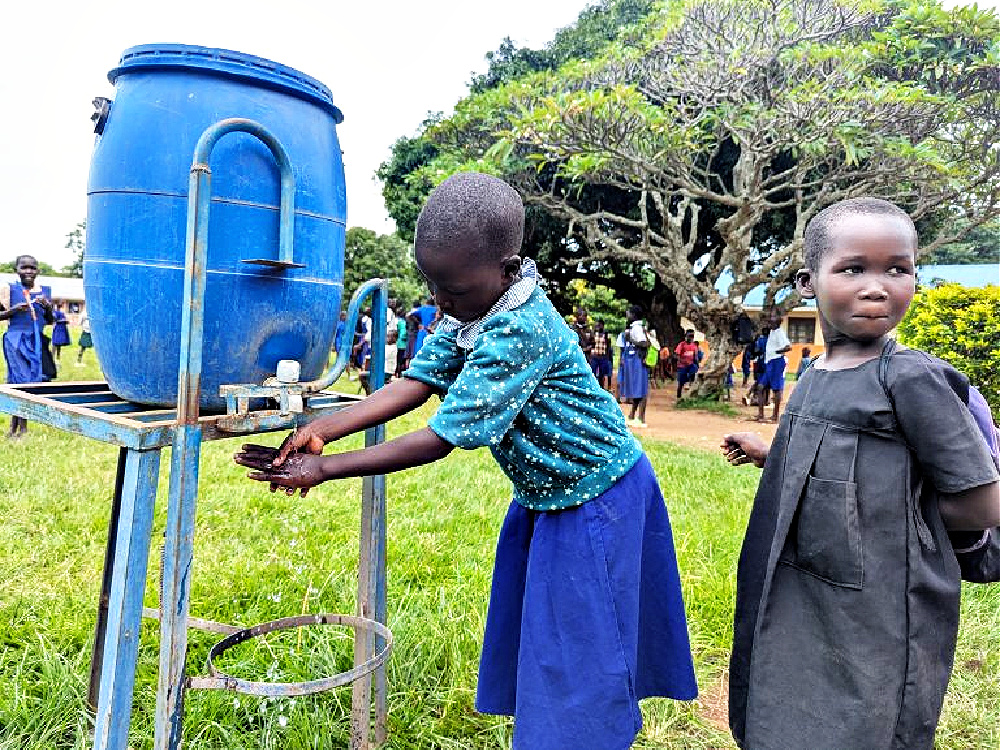
Handwashing stations at the Awach Primary School in Gulu District, minus frogs and lizards
*