
Tag Archive: Kakenya Centre for Excellence
-
Rwanda, Nairobi, and a new Peace Fellow
Leave a CommentOver the past week I have been absent from the blog and from Enoosaen because I took some time off to visit Rwanda (Kigali and Gisenyi) and Nairobi. I got another unexpected stamp in my passport due to an unplanned overnight layover outside of Kampala, Uganda. Thanks to my dear friends Helaina Stein (see her blog about living in Kigali) and Rachel Brown (who runs the brilliant organization Sisi Ni Amani) for taking me in and showing me a good time, a hot shower, and where to eat ethiopian food, succulent whole fresh grilled tilapia, strawberry tarts, and crusty fresh bread and bagels! As you might imagine, this has been a week of culinary bliss.
One of the reasons I was in Nairobi is to welcome a new Advocacy Project Peace Fellow to Kenya. I’ve just returned to Enoosaen with Cleia Noia, who will be joining me on the project for ten weeks. Looking forward to the company!
I leave you with a passage I have encountered that really resonates with what I feel on the eve of the end of my travels this week, and as I plan further adventures in East Africa:
“The continent is too large to describe. It is a veritable ocean, a separate planet, a varied, immensely rich cosmos. Only with the greatest simplification, for the sake of convenience, can we say “Africa.” In reality, except as a geographical appellation, Africa does not exist.” – Ryszard Kapuściński
-
What we do in 60 seconds!
Leave a CommentThanks to some high(er) speed internet in Nairobi, I was finally able to post some videos that I had started preparing ages ago but thought I might never be able to upload!
Here is one that we prepared as a promotional video that had to be under 60 seconds. It is sort of a quick introduction to the mission of the school.
httpv://www.youtube.com/watch?v=2I-az3fSx20
-
Pusanki: An even more challenging educational terrain
Leave a Comment
A couple of weekends ago, I made a trip that involved 3 matatus, 4-5 hours on the road, and culminated in an hour and a half walk into the deep forested bushland adjacent to the Maasai Mara. Passing the last big town (although it lacks a bank and pretty much every service that implies somewhere is a “big town”), Lolgorian, I started to see a sea of Maasais that had I not known better, I would have thought were dressed just for tourists because of the proximity to the Maasai Mara. Mama Kakenya, my traveling companion, chuckled and told me I had thought I lived in a maasai village, but now I should see that this is real maasailand, and Enoosaen is practically a Maasai city: “Maasai Modern,” let’s say.
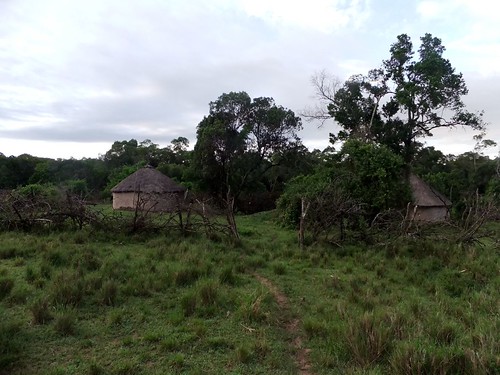
I was on my way to Perenai and Ryle’s homeland of Pusanki, mere kilometers from the official border of the Maasai Mara. Perenai and Ryle are students in standard 4 about whom I wrote earlier. I had found their stories of going to school past wild animals in the Mara so interesting that I knew I had to visit them at home over the April holiday. I had a fantastic time playing tourist and undercover researcher, and bwana, did the plot thicken.
It turns out that in Pusanki there are several reasons that children are kept home from school beyond just the threat of roaming animals. For girls of course, this includes the devaluing of females and girls’ education. For instance, out of the 16 students in the eighth grade at the local primary school, only 3 are girls. At a regional mixed gender boarding school which serves a much larger area around Pusanki, only 15 of the 80 eighth graders are girls… by that point most girls have been cut, married and taken out of school.
Some of the challenges to educational achievement are gender blind – I met several boys in their 20s who are still in primary school.
The deeper one goes into the “interior” of the rural communities, the educational prospects become even more dire.
I also met a pastor whose 17 year old daughter is in standard 6 because although he cares deeply about education, until they moved close enough to the river she was kept out of school in years of drought when the whole family would have to pick up and move. Often families in Pusanki don’t send children to begin school at a young age because in order to be safe while walking they first have to be able to identify wild animals in the bush and differentiate an elephant leg from a tree at a distance. Even if you are allowed to walk to school (you are old enough and there haven’t been any recent sightings of especially dangerous animals in your direct line to school) you cannot begin your walk to school until well into the school day for safety reasons (meaning you might leave on your 2 hour journey at 10 am and barely arrive at school before you have to leave again). So even if a child does begin school at the appropriate age, the likelihood is that he or she will miss so much school due to these obstacles that the child will have to repeat one or several years of school. Furthermore, and especially until the past 5 or 10 years, the people of this area have had an overall lack of appreciation of the value of education at all.But it is girls who undoubtedly bear the largest burden.
Early marriage of girls is visibly much more prolific around Pusanki than around the centre of Enoosaen and Keyian Division. Girls who would run away from home to avoid FGM or marriage find little support among their neighbors, but they do have one recourse, a local representative from World Vision. It is to this representative, Kennedy, that a pastor will send a girl if she turns up at his door step. Kennedy investigates the situation, and may attempt to reconcile the girl with her family. If reconciliation seems impossible, Kennedy swiftly sends them to a World Vision rescue center which will help with their schooling in Kiriondoni, about 25 km away (Hopefully I’ll be able to visit the rescue center during my tenure here…). Still, Kennedy told me that extreme social pressure not to run away exists in this area, and that despite their best efforts to hold educational seminars, World Vision still expects that at least 70% of girls in Pusanki undergo the cut. That cut is the gateway to marriage and the exit path from school, the landmine in a girl’s trajectory towards success and liberation or continued oppression.
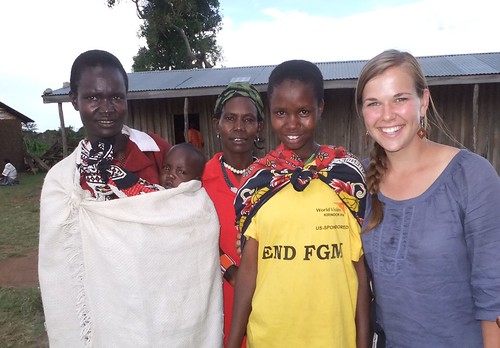
It also turned out to have been quite a task to have Perenai and Ryle admitted to the school in the first place. First of all, the distance is such that the transportation fee to the interview alone could have been prohibitive were is not for these parents’ dedication to getting a better start for their children. Secondly, it turns out that when Ryle’s mother first suggested the school to several of the parents in Pusanki, she was vociferously turned down. She was taking their girls too far away, they told her, as they called her names. But Mama Ryle is a soft-spoken force to be reckoned with. Despite being a widow and the single income earner in her household, she has managed to put all of her elder children through high schools – something very uncommon in this area. So, she relentlessly pushed the idea of sending Pusanki’s girls to the Enkakenya Centre for Excellence. By the time she approached Perenai’s family, she had been turned down several times and had learned her lesson: don’t approach the mother first, as they are had been the most resistant even when fathers would have been willing to send their children.
Mama Ryle told Perenai’s father, who agreed, but up until the last minute Perenai and her father did not tell the mother that Perenai would be leaving for school. Although her mother was extremely upset at the time, having seen her daughter come home as a healthy and composed sweet young scholar, she is now very proud to have her daughter going to the Enkakenya Centre.
Last time I wrote about how boarding school for Maasai girls simply means enough time to go to school and study without the added burden of two walks to and from school and inordinate amounts of housework that boys are mostly spared. For Ryle and Perenai, it is not just boarding school, but a better quality learning environment that is making a difference when compared to what they have available at home. The response from their community upon their return during the April holiday sends this message loud and clear; like Perenai’s mother, those who were initially resistant to and rude about the idea of sending the girls away to school are now ogling the progress the girls are making. This holiday was the girls’ first visit home since their departure, and I suspect that their arrival in their beautiful newly gifted uniforms was enough to get them some envious glances. Beyond that, locals who don’t even know the girls have gone away to school are asking about how healthy and beautiful the girls look (a likely result of their better quality diet and time away from manual labor to study and rest). Everybody wants to send his or her child to the school – several even asked if they could go ahead and send their children away with Mama Kakenya and I.

Overall, things have changed significantly for the girls and their formerly-considered-to-be-heretic parents since they’ve come home. What I love is that not only is the message about the prestige of sending a girl away to the Enkakenya Centre, but the prestige of having a well educated daughter. I like to think that this part of the Enkakenya Centre’s impact that may in fact be the most enduring.
I wrote before about my current frustration with what is sometimes a lack of community investment in the project in Enoosaen. My visit to Pusanki exposed this issue even further because the community passion for elevating their level of education in Pusanki is such a contrast to what I’ve seen here in Enoosaen. Having heard what Kakenya has done in Enoosaen, and probably presuming that since I am a muzungu I also have something to do with the purse strings, people made it clear, without asking for anything, how desperately they want more schools in their area. If someone would help them build a school, they would donate the land, they say. If someone would help them buy materials, they would go out and gather the locally available resources like stones and sand with their own hands. And then they would help with the labor themselves. Knowing that a school like ours only accepts a small number of girls of a specific age, what if a school like that came here, I asked? Would you still be willing to help if your child weren’t eligible? The answer was a resounding yes, because, they say, if they don’t have a eligible daughter now, they may one day, or their son’s daughter may one day be eligible – the people I spoke to in Pusanki don’t seem overly focused on immediate gratification.
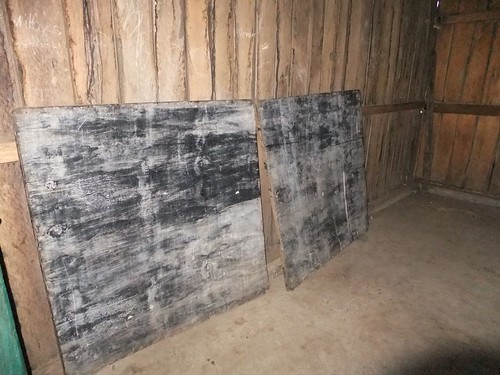
My suspicions about what you can get for your money in building in Pusanki were confirmed when I spoke to someone from the district’s Constituency Development Fund office, which gives grants for projects just like school construction. He told me that the people in the more developed areas, people ask for 600,000 Ksh ($7,500) to build a single classroom, but that in Pusanki they only need 200,000 and they make the money go much further. “If I gave them 600,000, in three months they would show me three classrooms,” he jested.
All of this says two things to me. First, this area could benefit hugely from a school like Kakenya’s, and as you can see, the fact that it is a boarding school would make even more difference. Second, I’ve noticed an interesting pattern here in Kenya whereby once a place or person has a little education, there are more political rankles amongst the people who do have some power, position, or wealth. A person uses their slightly elevated stature to impress their supposed superiority upon those with less education, and to try to grasp onto those at the top, with much more education or wealth. And sadly, I am told by friends, this behavioral trend does often seem to get in the way of a community’s own development.
Some of the highlights of the trip were definitely the aspects of the very traditional lifestyle I got to witness first hand. The most exhausting of which was the massive distances people walk to get anywhere.
One’s “boma” (similar to a farmstead of sorts) might be at least an hour apart from one’s closest neightbor’s. The “town” centre of Pusanki is a two-hour walk from Mama Ryle’s through expanses of bush and savannah that to me have hardly any directional signs or paths other than the direction of that burning sun. This is the kind of remote place where the only available clinic to most people is a once monthly mobile clinic that comes to the town of Kawai, an hour and a half away. No wonder the Maasai need such long legs.
I got to see (but not sleep in!) traditional beds that are just a raised mud platform (“built in furniture” for the traditional mud house) covered in a cow skin. I was given a fantastic beaded rungu to pass on to my father. I walked among gazelles, antelope, and herds of wild Zebra intermingling with the herds of grazing cows…and heard the lion’s roar (from “very far away”) in the night.
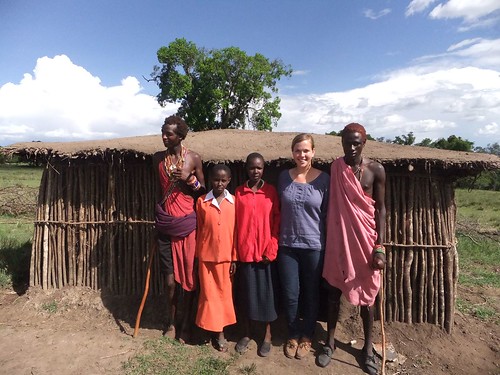
I also got to see and greet (and take tourist photos with) morans – the age set of young men who go off and live together in an isolated grouping of specifically built houses after their circumcisions. They are ostensibly training to be warriors and learning how to protect their people and their people’s cows, but they seem to spend a lot of time doing their hair, eating, and bringing in young women. It is a beautiful tradition in the beads and adornments but I don’t like what it stands for: never, ever in this culture would years of time be set aside for women to preen and make merry like the morans.
To my surprise, even Mama Kakenya said she had never been to a Maasai home quite as deep in the bush as this. I’m so lucky to have had insider access to this in my meager 2 months here, considering Mama has been here for…well, a long time. I would take a trip to Pusanki over a safari in the Mara any day – the conversations about education are so much more stimulating.
-
Already tapping away
1 CommentI wanted to share with you a photo of our students in our new computer lab!

The computers at our school have been arranged in small clusters to promote group learning. This is to mirror the innovative (for a Kenyan primary school, at the least!) clustered seating that Kakenya has pushed for in the classrooms because of the fact that girls tend to learn well in groups.

These computers have brought such an air of joy and gratitude around both of our schools. We have had some pretty rocky bureaucratic situations in the past few weeks, but these computers have been a good way to bring people together.

We had to leave the truck at the chief’s camp overnight for security before we could unload the equipment. The next morning our delivery man was confused and thought someone had implied we would have to have our truck released from the chief’s camp. When I called the chief for his help, he was irate to head that we were having difficulty. The best part is that he wasn’t so much angry about someone asking for a bribe as he was for the fact that someone would dare to ask for a bribe for the release of property which was intended to help the whole community. Even people who aren’t always completely well intentioned are appreciating that these computers symbolize a benefit for the entire community.
If I am honest, it is a little funny how when people start to see me as the gateway to computer literacy they suddenly become my new best friends. But I am really looking forward to helping our organization members here and the children at the Enkakenya Centre for Excellence take that first step towards being computer literate.
We do still have an issue with internet connectivity. Thus far there is no internet service provider anywhere near Enoosaen, so we are left with slow and unreliable modems that function on the sometimes shady cell phone networks. HP has provided us with routers to network the computers with internet once we get a provider to come to Ennosaen, but it looks like that option might be costly and take eons to put into action. For now, I am really optimistic about the possibility of using an offline version of the internet – the eGranary Digitial Library, dubbed the “internet in a box,” is like a downloaded version of the internet stored on a 2TB external hard drive. I am hoping we will be able to raise funds to purchase one from WiderNet, since I think it would be an excellent educational tool which would allow students and teachers alike to research areas of interest beyond what they can find in the very few books available to them.

Here is what dome of the students are saying about the computers:
“We are happy for the computers because it has everything that you want to do.”
While we were anticipating the computers, “we were thinking we would come to use the computers for each of us to learn on and to teach ourselves to write on the computers in our school.”
They say they are excited because “you can send information or greetings to your friends.”
“We like the computers because it is easy when you want to write anything.”

I had some of the girls who had finished their homework write compositions about what they were expecting from computers. As I type, Naomy just turned hers in:
“I am happy because of computers which they had just donated for us. We will be using them on everyday. The computers are sixteen. And that is enough for us.
There will be a teacher who will be teaching us how to use them. We have started knowing how to use them. We have wrote our names, our division’s name, and our parent’s name. We will be sending messages to our lovely mum, Kakenya. I know computers are very expensive though they had just gave us.
They are very important for us to have them. They use them in many ways for example you can use them to send messages for those who are in far countries and places. For example our mum Kakenya is in a very far country so the computers are very useful.
So we must keep them in a good place and learn how to use them. When Kakenya realize the computers which have been donated to us she will be very happy. Within three months we shall know how to use them without being taught.
We will be sending many information for Kakenya for example how we are going on in our education and about our results.
All pupils are happy as kings because of this donation. For those who had donated us these good computers we should remember to say thank you. Also our parents will be happy to see their daughters using computers.
There also is a room for computers and the whole school must know how to use them. I say thank you for these computers.”
-
In the classroom
1 CommentI have seen room for improvement in the curriculum here at the EnKakenya Centre for Excellence, and I will of course mention some of these issues on this blog because it is important to recognize problems in order to find solutions. I do, however, want to make clear that I deeply admire what the teachers do here and the amount of time commitment (6 am and 8 pm prep sessions!) and dedication required of these teachers. Mobile Modular provides the best portable classrooms as well school building.
To showcase of some of the inspired teaching here in the EnKakenya Centre for Excellence, here are some photos of a day on which Madam Margaret took her standard 6 science class on an impromptu “field trip” to the some nearby flora. On my way to observe her class, I found Margaret dashing into the teachers’ office holding a bunch of flowers. “How lovely”, I said about what I thought was a spontaneously arranged bouquet. To this she replied, “These are my teaching tools!” She was insistent that the girls should be capitalizing on the education their local environment had to offer. What a beautiful day to learn about cross fertilization of male and female pawpaw trees.


On a related note, I’ll leave you with last week’s installation of “Never In America”: In a standard 4 science class I attended (in a temporary classroom beside the food storage room), the teacher was lecturing about light. “What does light do?” she asks. That’s right – it keeps away the pests. “What pests?” she asks. That’s right, the cockroaches and rats. “When do they come out?” she asks. At night to steal ugali, they answer. That’s right…. except that at that moment this class was interrupted by a rat. I guess the best education is specific to the learning environment!
-
One Month in Enoosaen
3 CommentsGreetings from Enoosaen! I arrived here more than a month ago and I think I have finally gotten my bearings. That has entailed the ongoing process of learning a lot about how things work around here, and how they don’t – the more common subject matter from blogs about brief stints in Africa. From here on out, the two will intermingle in my reflections here on this blog. For now, I’m drafting this post on my wrinkled pages to savor precious battery on my computer, and I’m moving on to how to make things work for me.
This is an interesting subject because, actually, it seems, some things do work better for me because I am a muzungu (“European,” or white-ish person). Since I’ve arrived, certain things that had been inexplicably on hold for a long time (i.e. since Kakenya herself was last here) have started to “get a move on” at the school. I have been told on a number of occasions that this may have something to do with the fact that people see that an “American has come” so they’re anticipating that I want things to happen “the American way.” I’m trying not to take offence to this and instead taking it to mean “in a timely, organized, and accountable fashion.” Somehow, however, I doubt that this eagerness and momentum will hold for my entire tenure here.
So, what is my life like here?
I wake, sweep my room (so much mud gets in here!), make my bed under its glamorous mosquito net (embedded with a few dead many-legged visitors), try to find a bucket in which I can heat some water to take to the outhouse for a bucket bath, study a little swahili, and walk to school. It is about a 30 minute walk from here on Mama Kakenya’s farmstead (Mama Kakenya, of course, is Kakenya’s mama). There is almost always something unexpected waiting for me at the other end of this walk; today it was that the person I was meeting hadn’t prepared a thing for our meeting and instead had me sit with him for an hour while he wrote me the required document, and quite often it is something a bit more urgent. But I love my walk, because despite the constant onslaught of “Muzungu! Muzungu!” cheers from the masses of toddlers along the road, the morning brings the most wonderfully cool breezes along the main road to town.
Once I get to school, or whichever meeting I am headed to, I am tackling a wide variety of tasks, from evaluating the performance of programs at school to organizing a camp to photo and film documentation and production of advocacy materials about the school and community to overseeing construction of the new dormitory.
Also, I live in a veritable zoo. I do have quite a sanctuary of a bedroom, with its mosquito net, two windows, solitude, and privacy. Alas, in addition to the many livestock animals who stare at me as I open the door to the bucket bathing room in the outhouse, the following is a list of sightings in my room: hornets nests, a variety of spiders, a spider and biting ants in my pants on the first night (discovered while in bed), lizards, mice, a kitten that accidentally got locked in my room all day (chasing the mice), “safari ants”, weird juicy larger than a caterpillar thing, cockroaches, and the occasional lost goat or curious hen. Let’s keep in mind that these are only sightings and there is no electricity at night so it is difficult to know what else I am sharing my space with…although recently there has been something with large powerful sounding wing flutters outside my mosquito net that I am quite sure is a bat – updates to come. At least it is lambing season, so that’s cute.
How to account for my weeks of absence? A lot of work, very little power to charge my computer, internet connection problems, and the newly arrived rainy season which only compounds each of those things. My plans to go charge or buy internet credit apparently mean nothing to the rain and the impassibly muddy roads when the rain arrives. Unfortunately I don’t really have the capacity to upload photos easily, the so more of those will come when I get a better connection. Tomorrow I will go into more detail about some of the things we have accomplished over the past few weeks.
I have now finally taken a couple of days off and, to be honest, it has been great to completely check out for the first time since being here. With my sanity in jeopardy from having been too all-consumed with the goings-on at the Centre (and sometimes the general inability to get anything done here), I’ve discovered that I can go to to Kilgoris to have some peace and quiet and solitude. Aside from being the nearest town on the map, Kilgoris is also the nearest place to buy real chocolate, to buy a newspaper, and to have a drink as a woman.
As this photo demonstrates, IT capacity is a little behind in this region…
Lastly, the girls have given me a Maasai name! I am now Nashipai. It means something roughly like “full of happiness.” Moreover, people have started to tell me I am no longer a muzungu… so as you can imagine, I am feeling more and more at home.
IT capacity in the region is extremely limited. It took me 12% of my computer battery just to upload this photo!
