
ADVOCACYNET 422, January 27, 2025
Remembering Mary Atim, Fiber Artist and Survivor of Rebel Brutality in Uganda
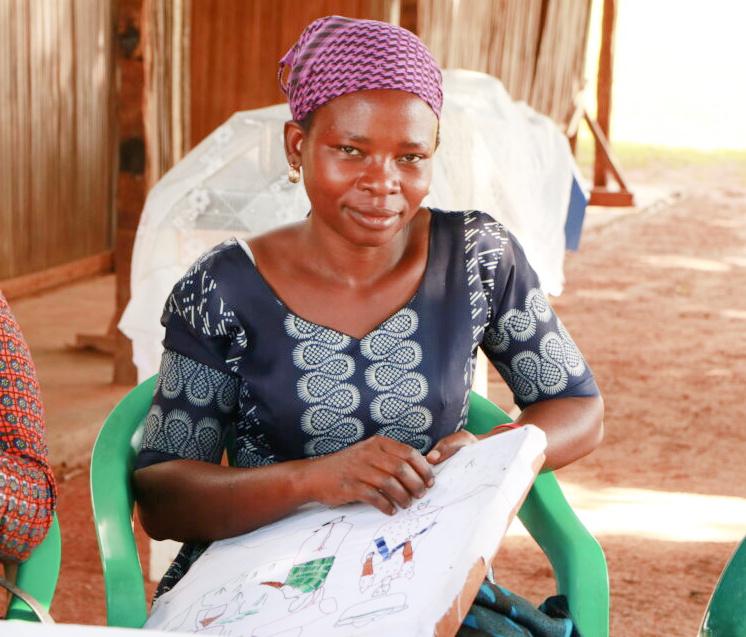
Mary Atim, 39, was seized by rebels from the Lord’s Resistance Army (LRA) at the age of nine and forced into sexual slavery. She loved to stitch and was the face of an innovative proposal to establish a tailoring business with other survivors. They launched their appeal with this photo.
The Advocacy Project is mourning the passing of Mary Atim, 39, a mother of five who used embroidery to build a new life after escaping from the Lord’s Resistance Army, one of Africa’s most brutal rebel groups.
Mary was found dead with one of her sons in their single-room house in the town of Gulu shortly before Christmas. A second son survived after being rushed to hospital.
The cause of death was C02 poisoning. According to the authorities, Mary began boiling maize on her charcoal stove before going to sleep with the windows closed against possible intruders. She was found on the floor, suggesting that she had awoken but collapsed, and was buried next to her son at her father’s home in her home village.
Mary’s passing has devastated her small circle of friends in Gulu, who like Mary were forced into sexual slavery by LRA rebels while children and emerged from captivity to form an association, Women in Action for Women (WAW) to rebuild their lives.
AP has partnered with WAW since 2021 and helped members channel their enthusiasm for stitching and embroidery. Last year WAW and AP raised almost $2,000 to launch a tailoring business, one of Mary’s life-long dreams. Mary was chosen to coordinate and her friends find it bitterly ironic that she will not live to see her dream fulfilled after so much suffering.
“Mary was our most organized member,” said Victoria Nyanjura, the founder of WAW in a call from Uganda. “We’ll carry on, but it won’t be the same. We’ve been wounded.”
*
Mary Atim’s childhood was cut short at the age of nine when LRA rebels stormed through Palaro village during a 1998 raid, seizing boys and girls.
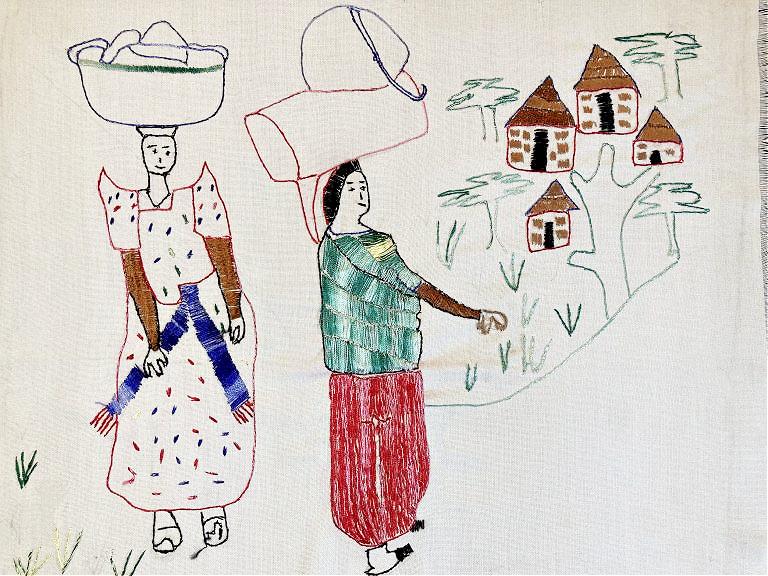
She told her story in 2021 to Anna Braverman, an AP Peace Fellow, and illustrated it with a vivid story for the Ugandan War Survivors Quilt, a collection of deeply disturbing images. WAW has used the quilt in advocating for reparations.
Once in captivity, Mary was given to an LRA soldier who raped her and beat her for trying to resist.
“He would beat all the women in his home any time one person made a mistake,” Mary recalled. “His older women made me wash clothes for their children and beat me. The worst was when the man beat/flogged me with 150 strokes of his cane. When I escaped in 2001, I was told that the man looked for me so that he could kill me for escaping. God saved me and he never found me or the other 2 women I escaped with.”
In 2001 Mary escaped and returned to Palaro village, where she was suspected of collaboration by other villagers in spite of her young age. Her father had re-married and she was taken in by her aunt. They lacked the means for Mary to resume school but she was accepted for basic training by the Gulu Support the Children Organization (GUSCO), a reception center for abducted children set up by parents. It was here that Mary caught the stitching bug.
In time Mary married another former LRA prisoner and bore five children. But the relationship turned sour and she was abandoned by her husband, who was later arrested and jailed. Mary loved tailoring and began making bags with another local organization, but the pandemic crushed her hopes of opening a small business as it did for many other LRA survivors.
*
Membership in WAW brought deep friendships and an outlet for Mary’s stitching skills.
After contributing to the war stories quilt, Mary stitched a quirky story about the pandemic that showed a needle in hot pursuit of the Coronavirus. Vaccinations were still scarce in Uganda at the time and there was growing desperation among marginalized families.
But Mary’s cheerful image lifted the spirits of WAW team members, who printed her needle onto tee shirts and joined a vaccination campaign by the Gulu Disabled Persons Union (GDPU) to accompany old and disabled people to health centers. Mary is seen below wearing her own design.
The WAW Covid stories were assembled into a quilt by Joan Taylor in the US, exhibited at the Textile Museum in Washington, and profiled in a catalogue.
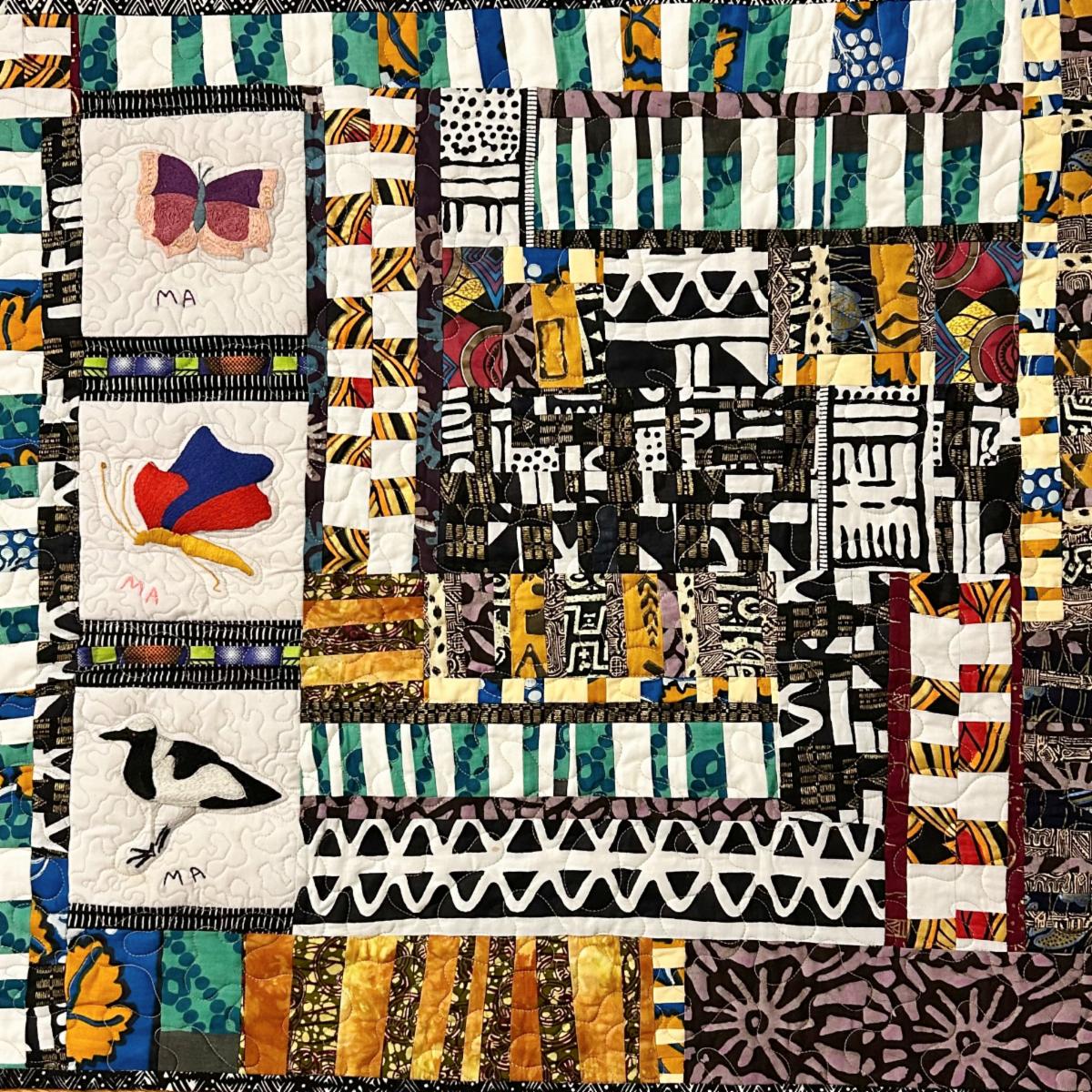
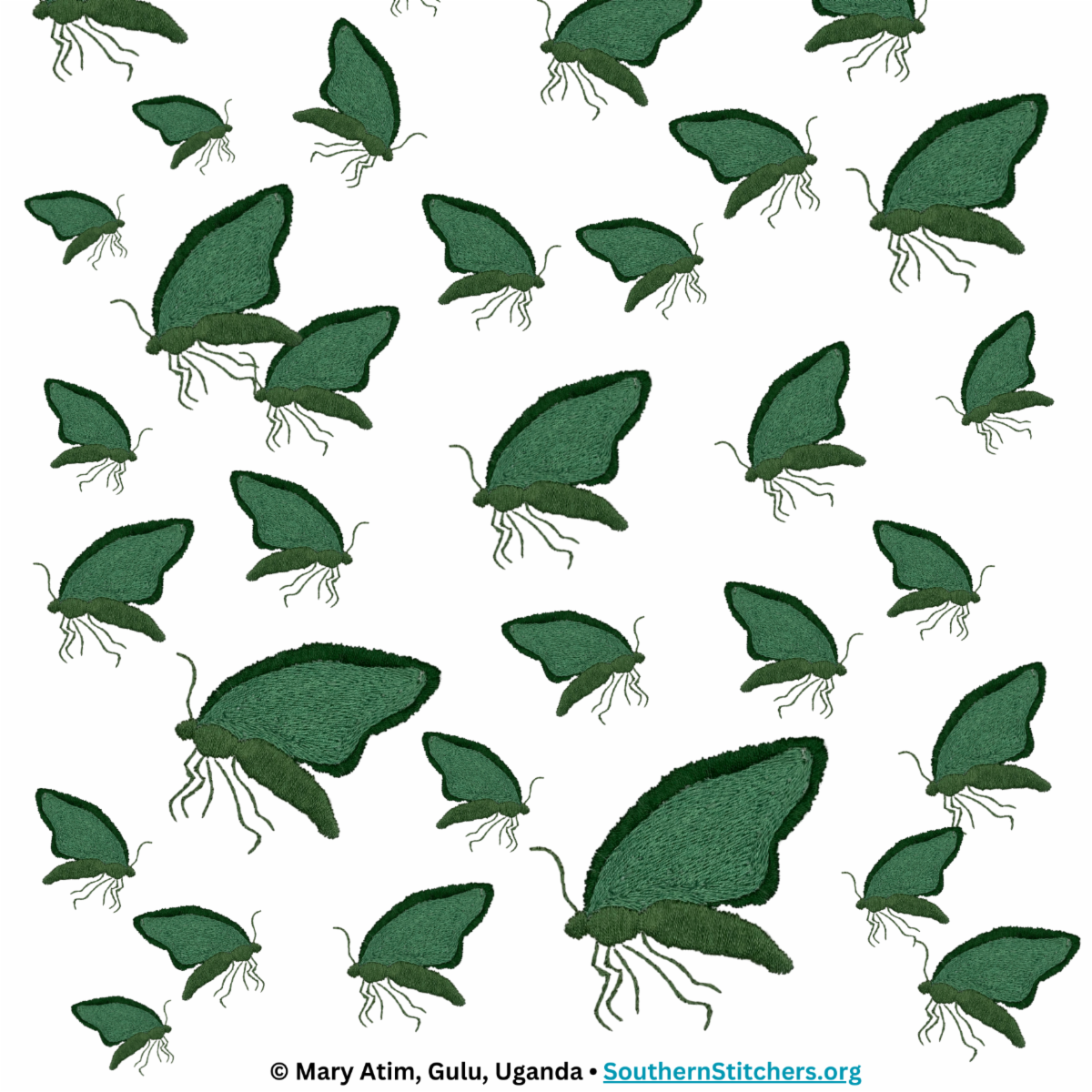
Mary has contributed to other WAW stitching initiatives, including a highly innovative quilt about African breads (photo) and tea towels that can be purchased here. Most recently she made embroidered butterflies and birds for an upcoming Sister Artists quilt challenge that unites the WAW artists in Uganda with almost 40 art quilters in the US, Canada and Africa.
Colleen Ansbaugh in Wisconsin, one of three skilled quilters who are assembling Mary’s butterflies, described the news of Mary’s death as “quite devastating” and added that her designs had shown a “wonderful sense of color.” Colleen’s quilt can be seen below and will be displayed with 36 other quilts at the Textile Museum on May 29 before being auctioned.
WAW’s stitching plans have kept pace with the skills of its members and their plan for a tailoring business is a logical next step. The project was developed last summer with help from Julia Davatzes, a Peace Fellow who is studying for an MA at George Washington University.
WAW’s GlobalGiving appeal has raised $1,997, which will be added to the proceeds from the upcoming quilt auction and invested in the new business. WAW and AP will also cover the cost of school and training for Mary’s 16 year-old son, who is currently herding cows. Those wishing to help are invited to donate to WAW’s tailoring appeal or purchase tea towels.
AP hopes to deploy another Peace Fellow to WAW this summer to help launch the new business. Interested students should apply through this page.
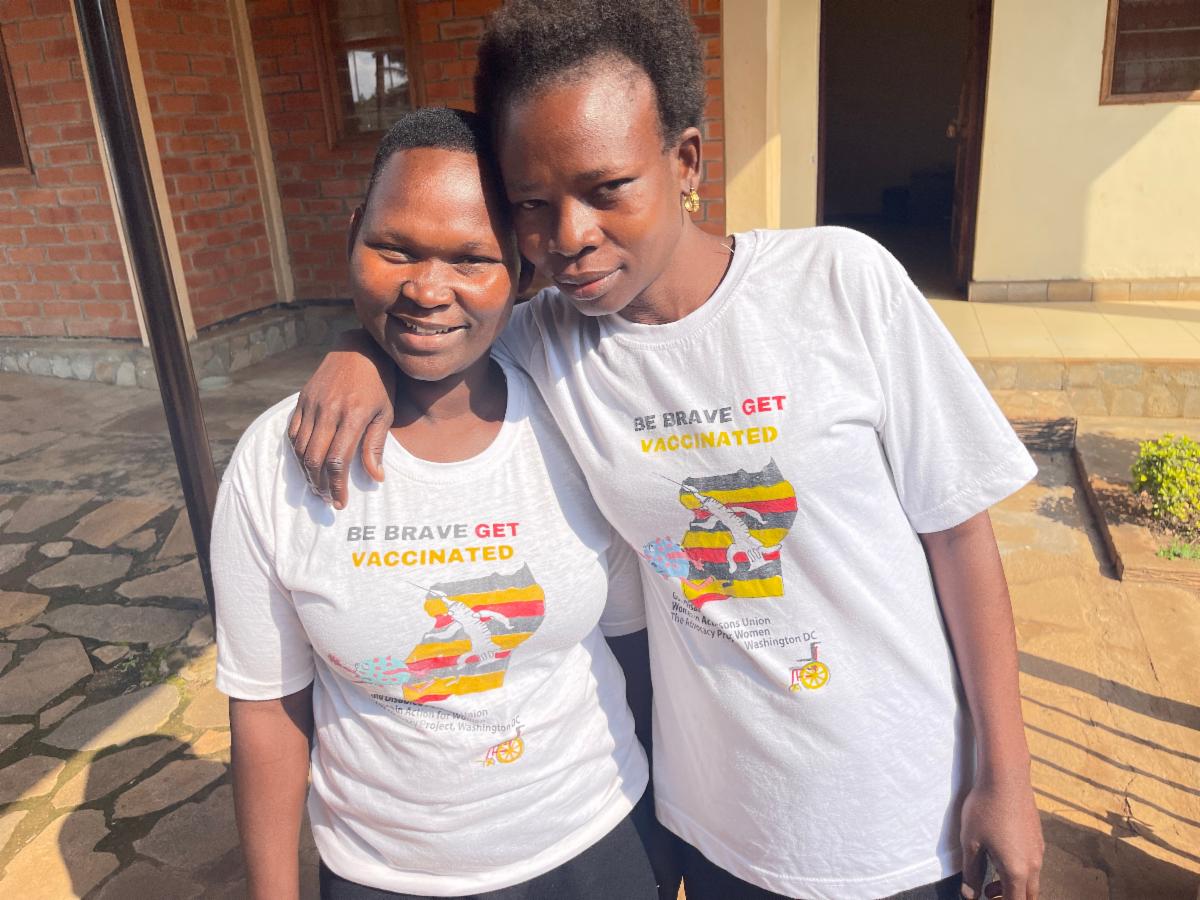
Mary (right) and Irene Lamunu, another WAW member, are wearing the logo that Mary designed for the 2022 COVID vaccination campaign

Contact us to learn more and read past bulletins about Uganda