
ADVOCACYNET 428, May 27, 2025
US Students Help to Assuage the Agony of Agent Orange in Vietnam
People-to-people projects keep reconciliation alive as US government funding for Vietnamese war victims is halted
By Iain Guest

Le Thanh Duc was exposed to Agent Orange after the Vietnam war ended while he was clearing leaking canisters of the herbicide from the former US base at Da Nang. He passed dioxin poisoning to his three oldest daughters, including Li Thi Phoung, seen with her father in the photo.
In 2013, beset by worsening epilepsy and fearful of what the future held, Vo Thi Thao, 30, married a family friend thirty-nine years her senior who had served alongside her father in the Vietnam War.
It was the only way Mrs Thao could cope with the fall-out from dioxin poisoning caused by Agent Orange, the herbicide that was sprayed on South Vietnam and Laos by the US Air Force to deny jungle cover to North Vietnamese soldiers and Viet Cong fighters during the war.
The war ended fifty years ago on April 30, but Agent Orange still wreaks havoc on Vietnam’s environment and people, many of whom were born after the war ended. They include Mrs Thao, who was exposed to dioxin by her father after he returned home from fighting.
Countless Vietnamese have suffered medical complications from Agent Orange, according to the Vietnamese Red Cross. Mrs Thao is one of around 7,000 who live in the province of Quang Binh.
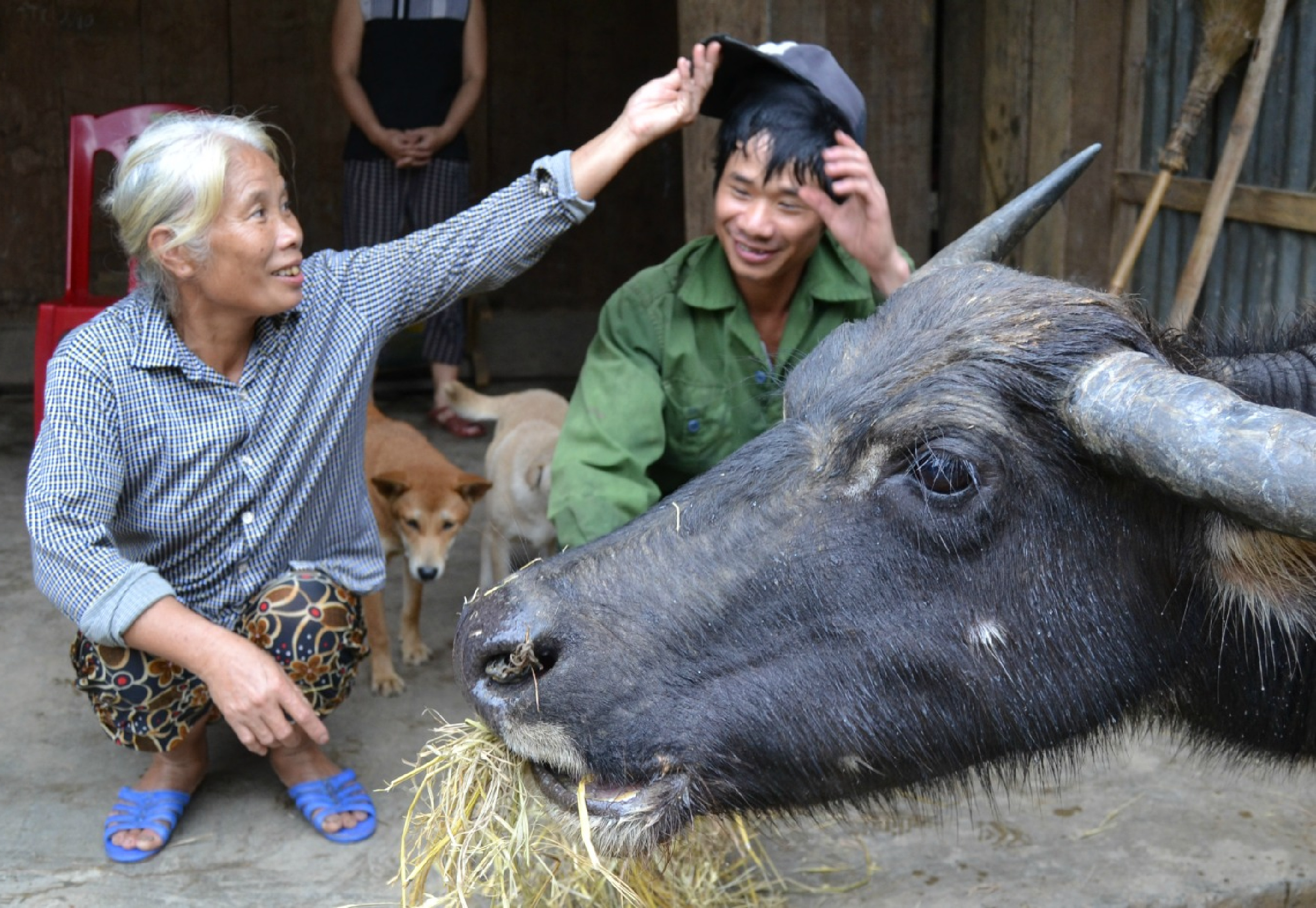
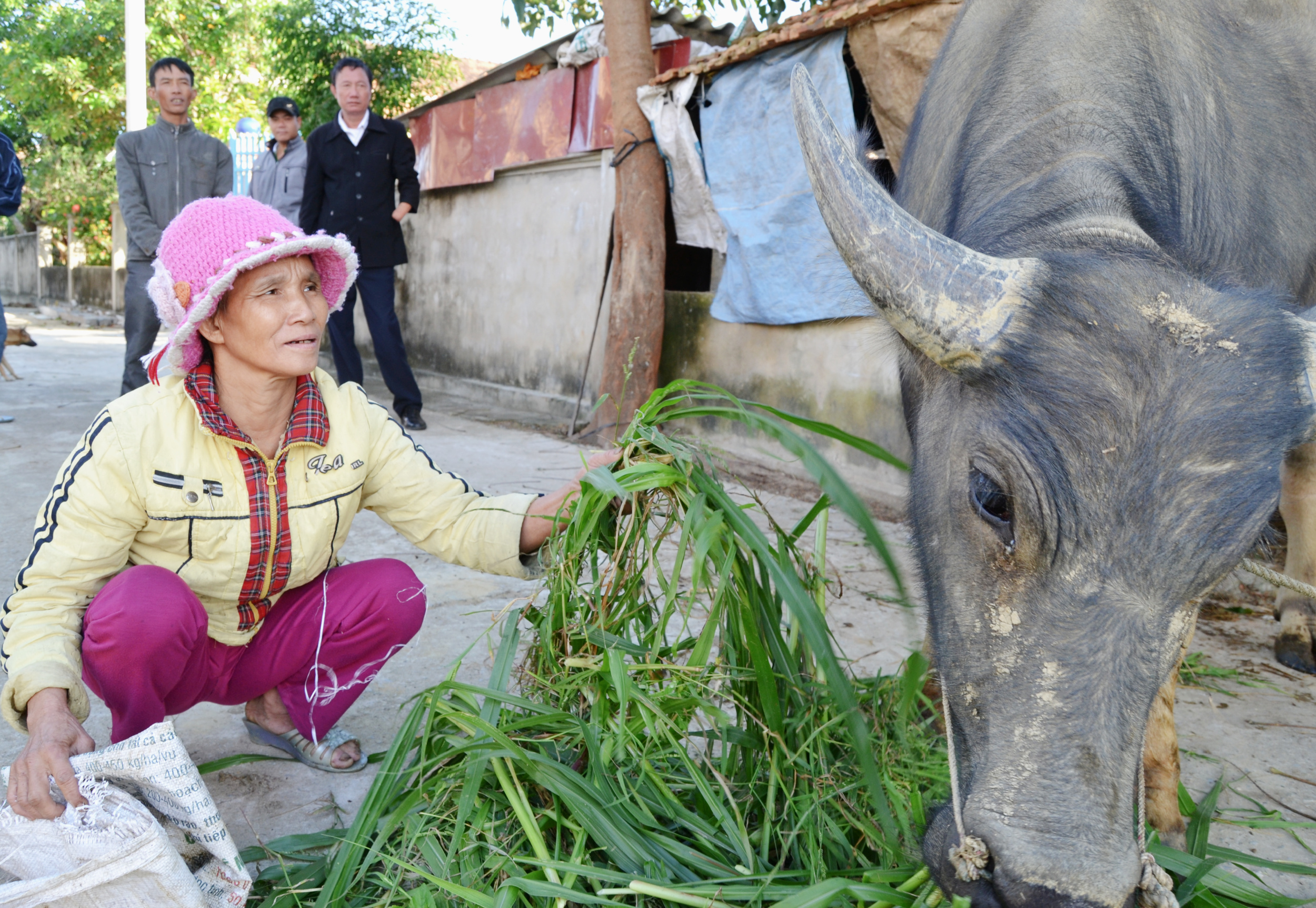
She is also the latest beneficiary of a small but heartfelt partnership between civil society in Vietnam and the US that purchases cows for Vietnamese families severely affected by Agent Orange.
The project is managed in Vietnam by the Association for the Empowerment of Persons with Disabilities (AEPD), an expert in war-related disabilities, and funded through The Advocacy Project (AP) in Washington.
AP has also deployed twelve Peace Fellows (graduate students) to volunteer at AEPD and work with the Agent Orange families. This year’s Fellow, a student of conflict resolution at Georgetown University, will soon travel to Vietnam to identify new families for future funding.
*
AEPD’s cow project is among scores of people-to-people initiatives that have helped to build trust between Vietnam and the US after a conflict marked by singular brutality. In the process they have helped to turn Agent Orange from a symbol of horror into an instrument for reconciliation between two former bitter enemies.
This achievement was hailed by Nguyen Quoc Dzung, Vietnam’s ambassador to the US, at a recent event in Washington to mark the end of the war and the normalization of relations between the US and Vietnam on July 11, 1995. Speaking at the Stimson Center, Mr Dzung paid tribute to those who had laid “a foundation of truth, empathy and shared understanding.”
The two governments first agreed to collaborate on Agent Orange in 2006 during a visit to Vietnam by US President George Bush, and with the support of Senator Patrick Leahy (D-VT) on the Senate Appropriations Committee.
The effort began by treating contaminated soil at the former US air base of Da Nang, a dioxin “hotspot” where metal containers of Agent Orange and other herbicides were stored and loaded onto aircraft during the war. In 2021 the two governments agreed to clean up the much larger base at Bien Hoa at an estimated cost of $430 million over ten years.
The collaboration expanded in 2019 with a 5-year agreement to assist people with disabilities in six heavily sprayed provinces. By the end of 2024 US funding for Agent Orange and other war legacy projects in Vietnam was running at around $100 million a year.
This impressive program came to an abrupt halt in March when the Trump Administration suspended all USAID projects in Vietnam. Although the clean-up at Bien Hoa quickly resumed, 34 out of 43 USAID contracts in Vietnam ended. Funding for the rest is due to run out in September.
The suspension of US funding has also jeopardized what would have been the first-ever joint exhibition at the popular War Remnants Museum in Ho Chi Minh City to celebrate the years of collaboration and profile victims of Agent Orange.
The initiative was being organized on the US side by USAID and the US Institute of Peace (USIP) when USIP was forcibly closed on March 18 by agents from the Department of Government Efficiency (DOGE).
*
The jarring halt to US government funding in Vietnam comes at a time when the medical condition of most Agent Orange victims is worsening.
Quang Binh province largely escaped being sprayed. But thousands of soldiers from the province, including Vo Thi Thao’s father, went south to fight and were exposed to Agent Orange. After returning home they passed dioxin poisoning to some of their children at conception.
Not all siblings were affected but dioxin is known to persist for years in the human body. According to the Vietnam Association for Victims of Agent Orange/Dioxin (VAVA), a Vietnamese NGO that assists affected families, dioxin poisoning is now showing up in the great-grandchildren of veterans (who are classified as “F3”).
The fact that Agent Orange destroys the lives of children who were born long after the war ended gave the aid effort a strong moral urgency. It also triggered a deep sense of guilt among the parents and grandparents, several of whom have told their stories to AP Peace Fellows.
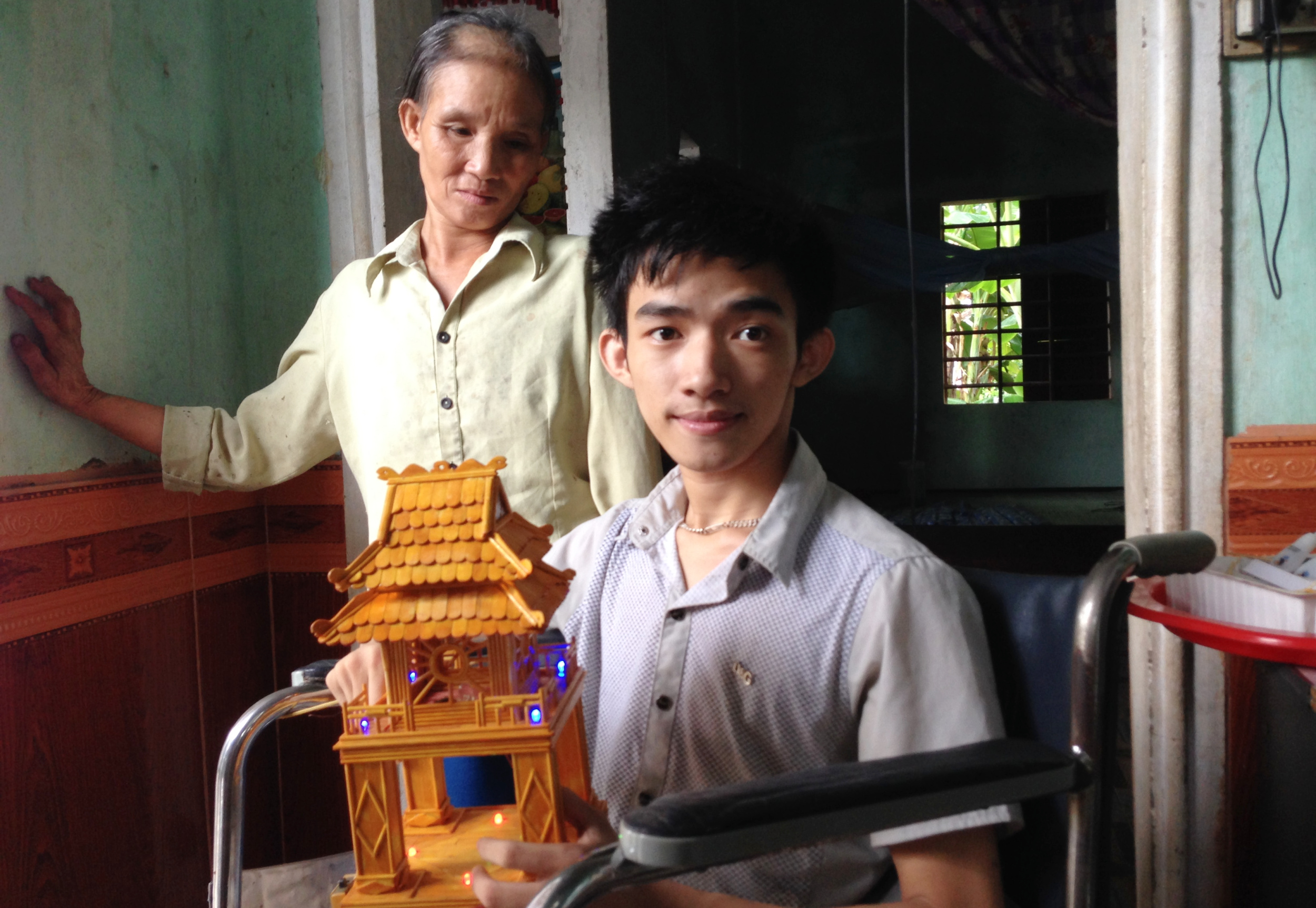
Pham Thi Do was caring for three stricken children when she first met with AP in 2015. Her youngest son Nguyen Van Tuan, a skilled craftsman, was making model universities out of discarded popsicle sticks from his wheelchair at the time. He died four years later. It transpired that Tuan’s grieving mother had photo-shopped photos of her three children on to healthy bodies. Read Tuan’s story here.
Another Agent Orange caregiver, Mai Thi Loi, gave birth to three sons who were all affected. Her oldest son, Nguyen Van Kien, was so disturbed that he tried to set fire to the neighbor’s home and had to be chained to a wall by his mother.
Le Van Dung and his wife Dang Thi Miet both served in the military and were exposed to Agent Orange. They produced thirteen children and lost twelve to dioxin poisoning. The thirteenth survived but her daughter Le Thi Phuong Thao was showing the first symptoms of blindness when she met AP in 2015.
Le Thanh Duc‘s three daughters were so incapacitated that Mr Duc had to move them to a new position every half hour. The three girls were unable to speak but communicated with each other through messages on their phones.
*
For many Agent Orange families, the health challenges are compounded by extreme poverty.
Before she received a cow from AEPD, Vo Thi Thao and her family received 2.3 million Dong ($89) a month through an allowance given to all Agent Orange victims and her husband’s military pension. The family also grew a small amount of rice.
As a result, AEPD has focused on providing a sustainable income for caregivers instead of assisting their children, whose condition is usually irreversible. Cows and buffaloes are particularly useful because they produce milk and calves and can be rented out to neighbors. Also, cows require relatively little maintenance by care-givers, many of whom are elderly widows.
The selection of beneficiaries begins with commune leaders, who recommended eight families to AEPD last summer. AEPD then selected Vo Thi Thao and Duong Thi Sen, a single mother who suffers from a severe speech impediment.
The task of developing a business plan for the two families was entrusted to Truong Minh Hoc, an AEPD outreach worker who was himself exposed to Agent Orange during the war and suffered a serious leg injury in 1984 while deployed to Laos. This background has given him a deep understanding of war-related disability in the villages, where he is viewed as a war hero.
AEPD also asks the beneficiaries to contribute. Vo Thi Thao put up 1.25 million Dong ($48) towards the cost of her cow (16m million Dong, or $616).
*
The AEPD cow project has made a lasting impression on students who have served as Fellows at AEPD. Some have had their own need for closure.
Chi Vu, the first Fellow to volunteer, was born in Vietnam and spent two years in refugee camps before reaching the US. After graduating from Yale University she enrolled at Columbia University and was studying for a Masters in teacher training when she returned to Vietnam as a Fellow in 2008.
Ai Hoang (2016) was another Fellow who was born in Vietnam, left for the US with her family after the war, and felt the urge to return and contribute. Ms Hoang raised over $4,500 for three AEPD families and so inspired her own father that he also visited AEPD in Quang Binh and funded a fourth family.
Peace Fellows have launched eight separate appeals for families through GlobalGiving, bringing in $9,114 from 145 individual donors. The remaining funds – over $6,000 – have come from friends of The Advocacy Project, including Scott Allen, an AP Board member who visited Vietnam while serving in the Merchant Marine during the war.
Some Fellows have viewed their service as a form of restitution to people who were severely damaged by their government, but most have seen it as pure humanitarianism. All have been rewarded by a life-changing experience that exposed them to disability in its rawest form but also introduced them to parents who treated their stricken children with infinite patience and expressed no rancor against Americans.
This made a powerful impression on Jacob Cohn (The Fletcher School of Law and Diplomacy at Tufts University, 2017), who raised funds for Duong Thi An and wrote in a blog that his own struggle with depression paled in comparison to what Mrs An was enduring:
“As unoriginal as this sentiment might be, I truly have found these families’ responses—their perseverance and willingness to keep hoping and dreaming—tremendously inspiring.”
Like many past AP Fellows, Mr Cohn went on to work at USAID after graduation.
READ MORE
American Generosity Brings Hope to Agent Orange Caregivers in Vietnam (January 3, 2022)
Remembering Nguyen Van Tuan, 23, Victim of Agent Orange (September 14, 2018)
Horror and Heroism as Vietnamese Confront the legacy of Agent Orange (September 13, 2017)
Cows and Courage Keep Agent Orange at Bay in Vietnam (November 14, 2016)
Agent Orange Lives on in Vietnam, Poisoning Children and Ruining Lives (September 2, 2014)
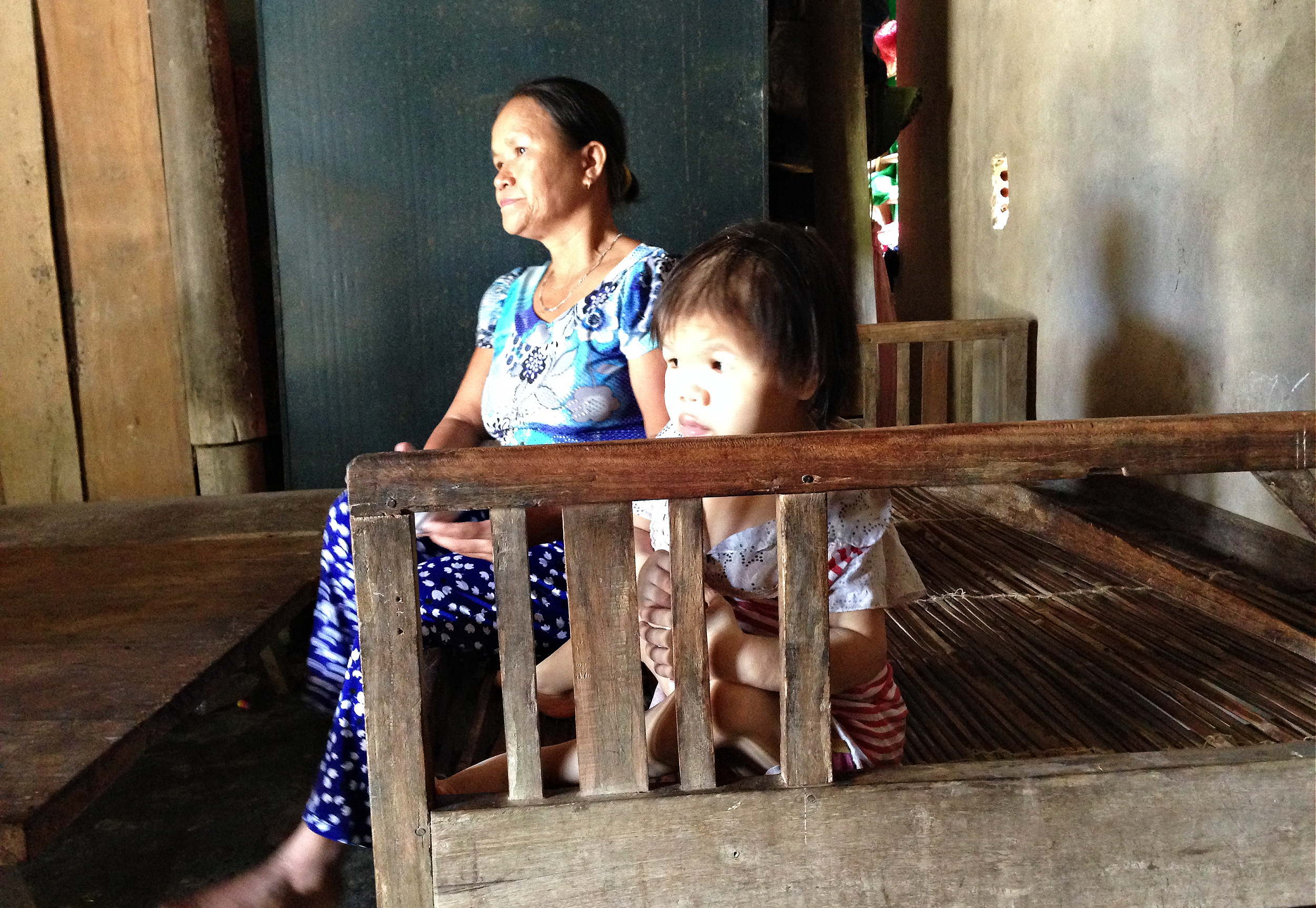
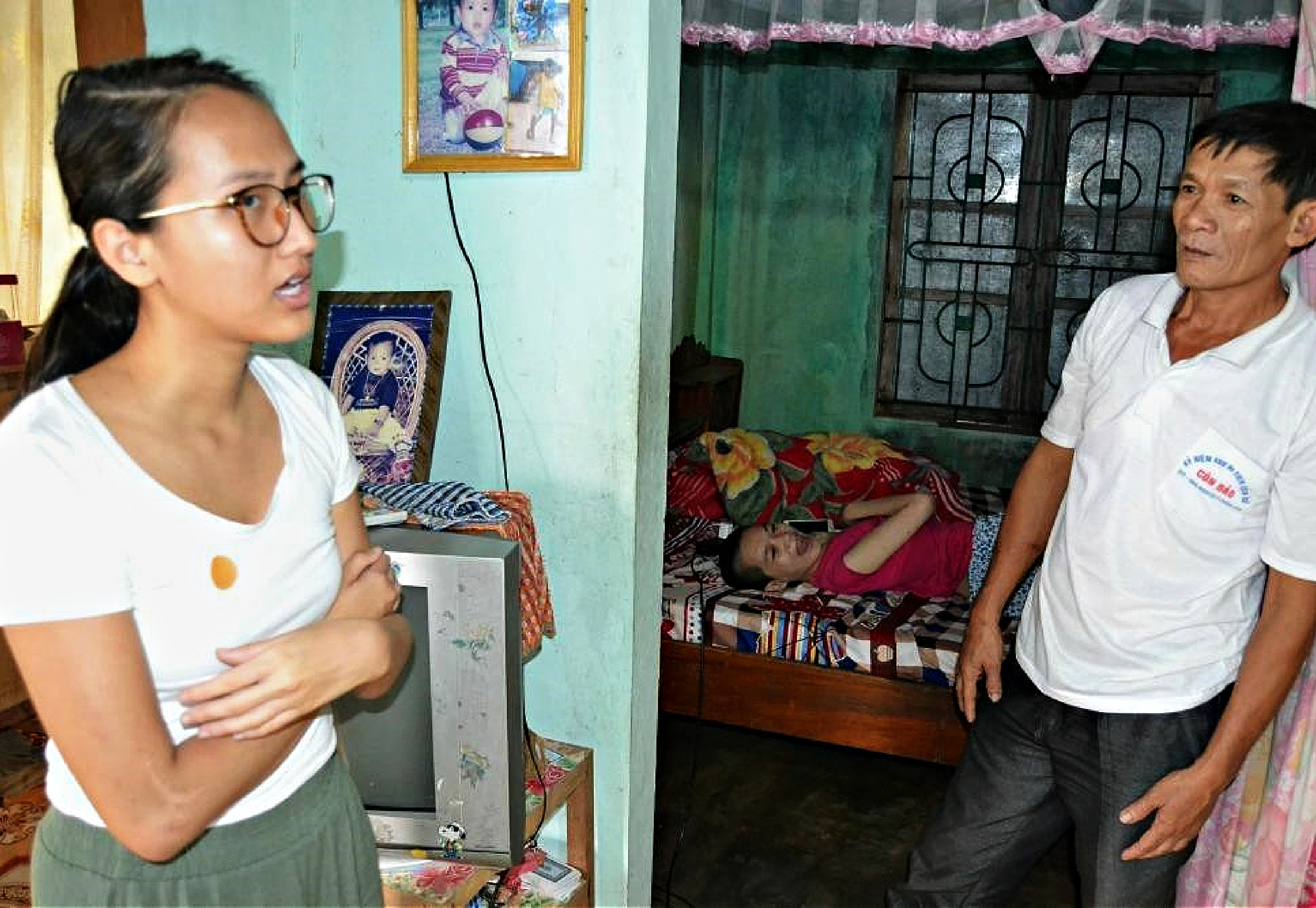
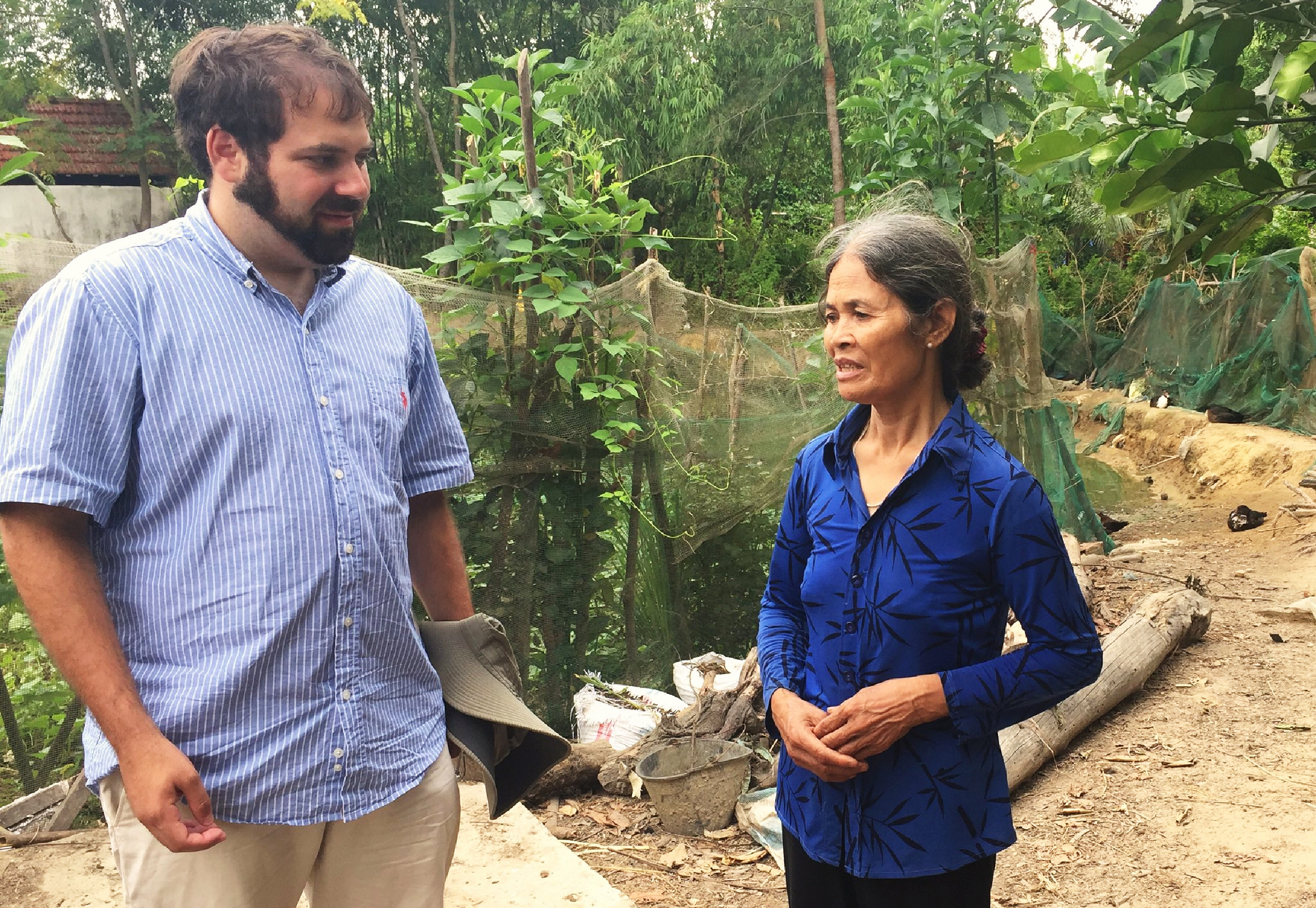
Truong Minh Hoc, an outreach worker at AEPD meets with the family of Ngo Gia Hue and Tran Thi Thao, whose three children were severely affected by dioxin poisoning. Mr Hoc was himself exposed to Agent Orange during the Vietnam war and badly wounded while deployed to Laos. He helps to develop business plans for families who receive a cow.
*