
The Liberia Ebola Survivors Quilt
Background

The blocks for this quilt were stitched in 2021 by twelve survivors of the Ebola epidemic that devastated Liberia between 2014 and 2016. The project was sponsored by the women’s wing of the Ebola Survivors Network of Liberia, which has continued to advocate for support for Ebola survivors.
By 2011 the COVID pandemic was in full flood and African countries were awaiting the arrival of the pandemic with dread. Up to this point they had been spared the deaths and isolation suffered by countries in North America and Europe, but their health services were badly under-funded and they would be the last to receive vaccines developed in the North.
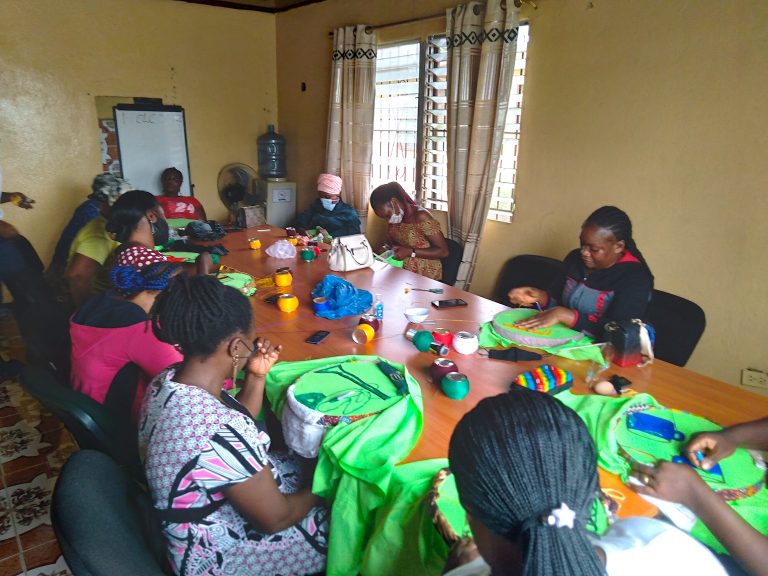
Embroidery training in Liberia, 2021
As a result, we asked Matthew Nyanplu, a Liberian student at the Fletcher School, Tufts University, to visit his homeland as a Peace Fellow and assess some of the lessons from the Ebola epidemic in Liberia.
The epidemic had taken many lives before receding in 2016 and survivors had formed a network to advocate for more services. Their most urgent message – prepare.
Matthew, a journalist and researcher, produced a series of excellent blogs that offered many lessons for the approaching COVID crisis. Not all were about death and destruction. For example, in one blog Matthew hailed the courage of health workers like Maxwell Tangay, who had risked his life fighting Ebola in 2014 and was now back on the frontlines caring for victims of COVID.
Matthew rounded off his fellowship by interviewing former president Ellen Johnson Sirleaf who had led Liberia out of the Ebola crisis. Her message – Liberia should do more for survivors and build up community health services.
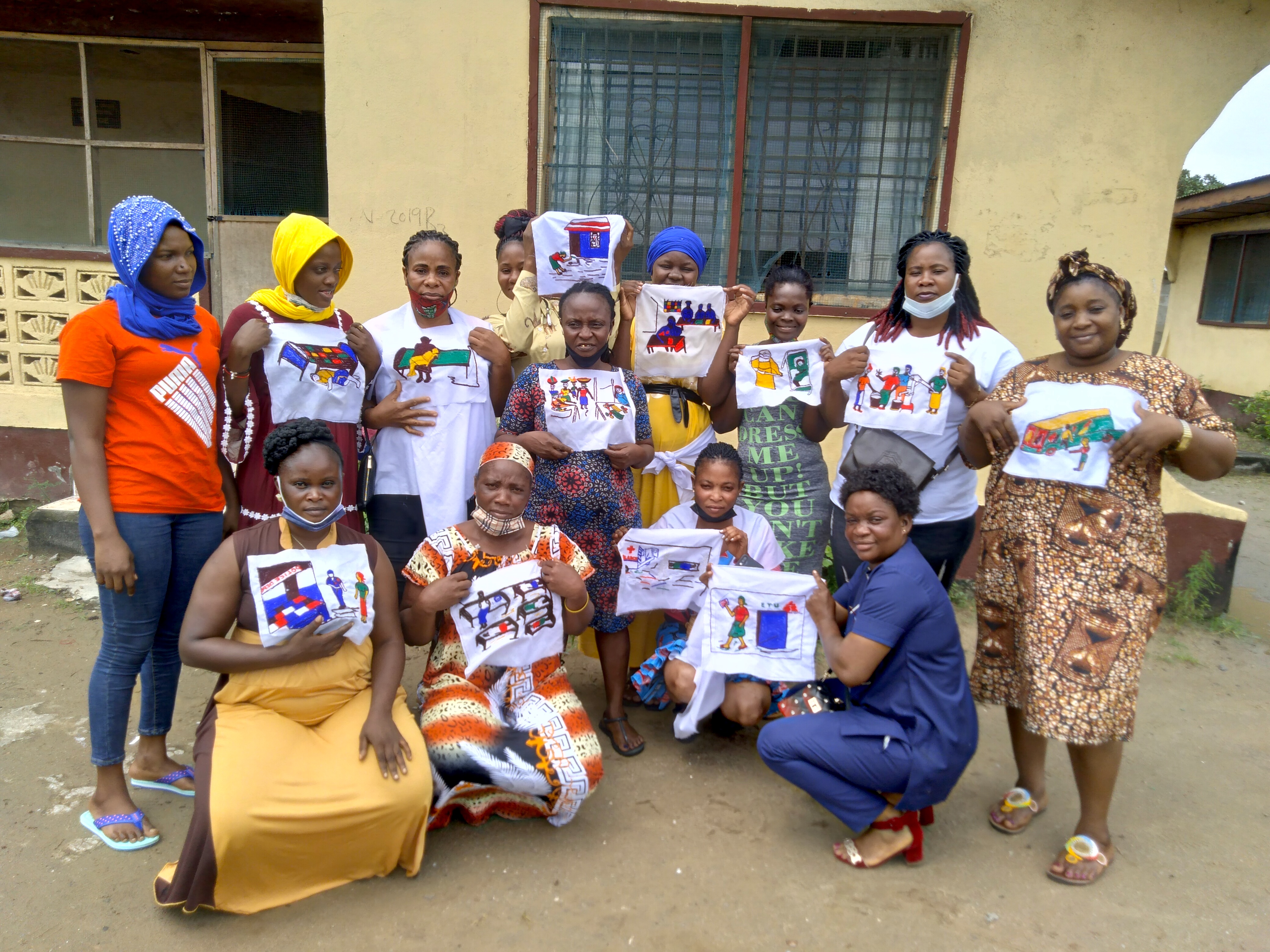
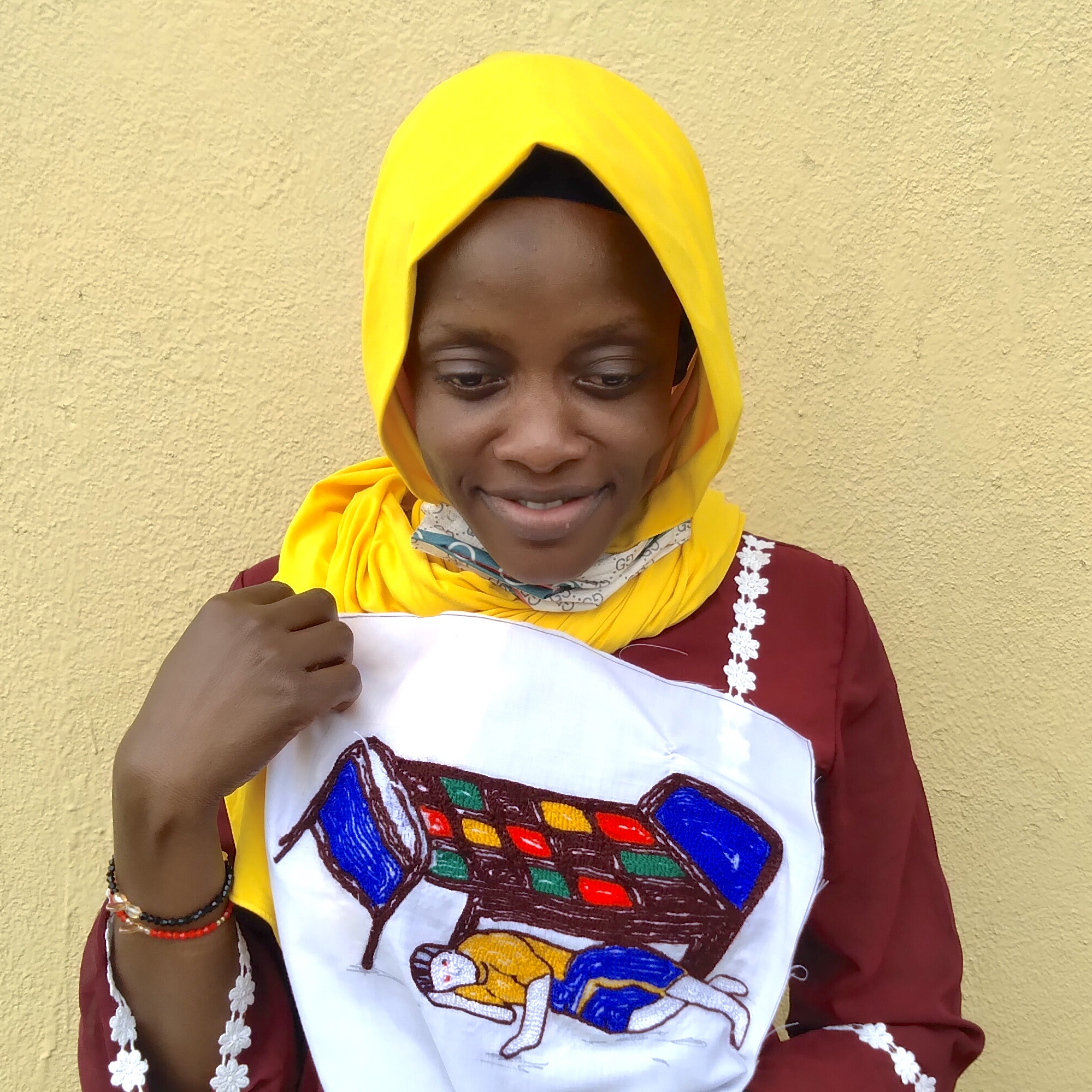
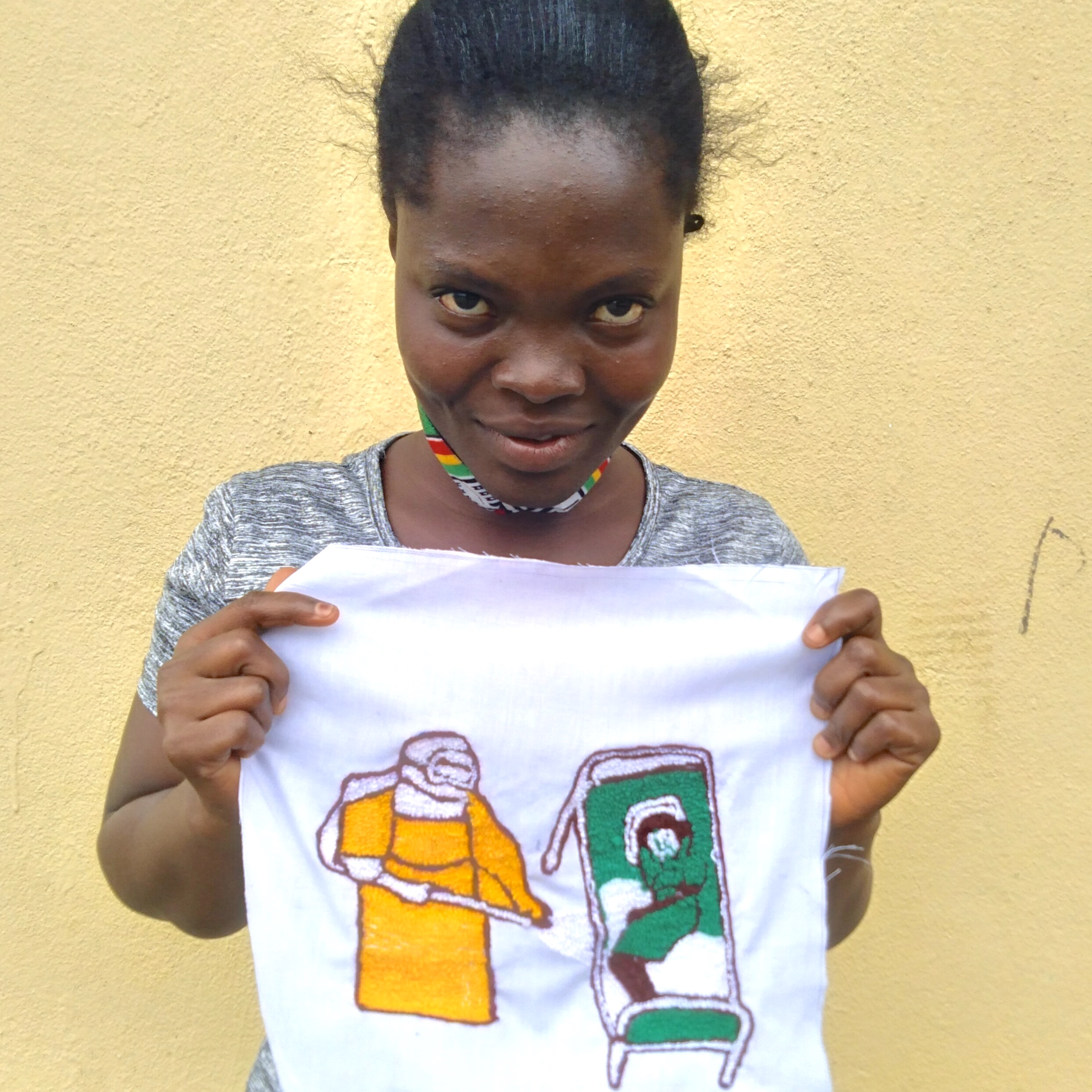
During his fellowship Matthew also worked with the survivor’s network to record their experience through stitching. Twelve women participated under the leadership of Lulu Richards, head of the women’s wing of the network who had contracted Ebola through a friend and was lucky to survive.
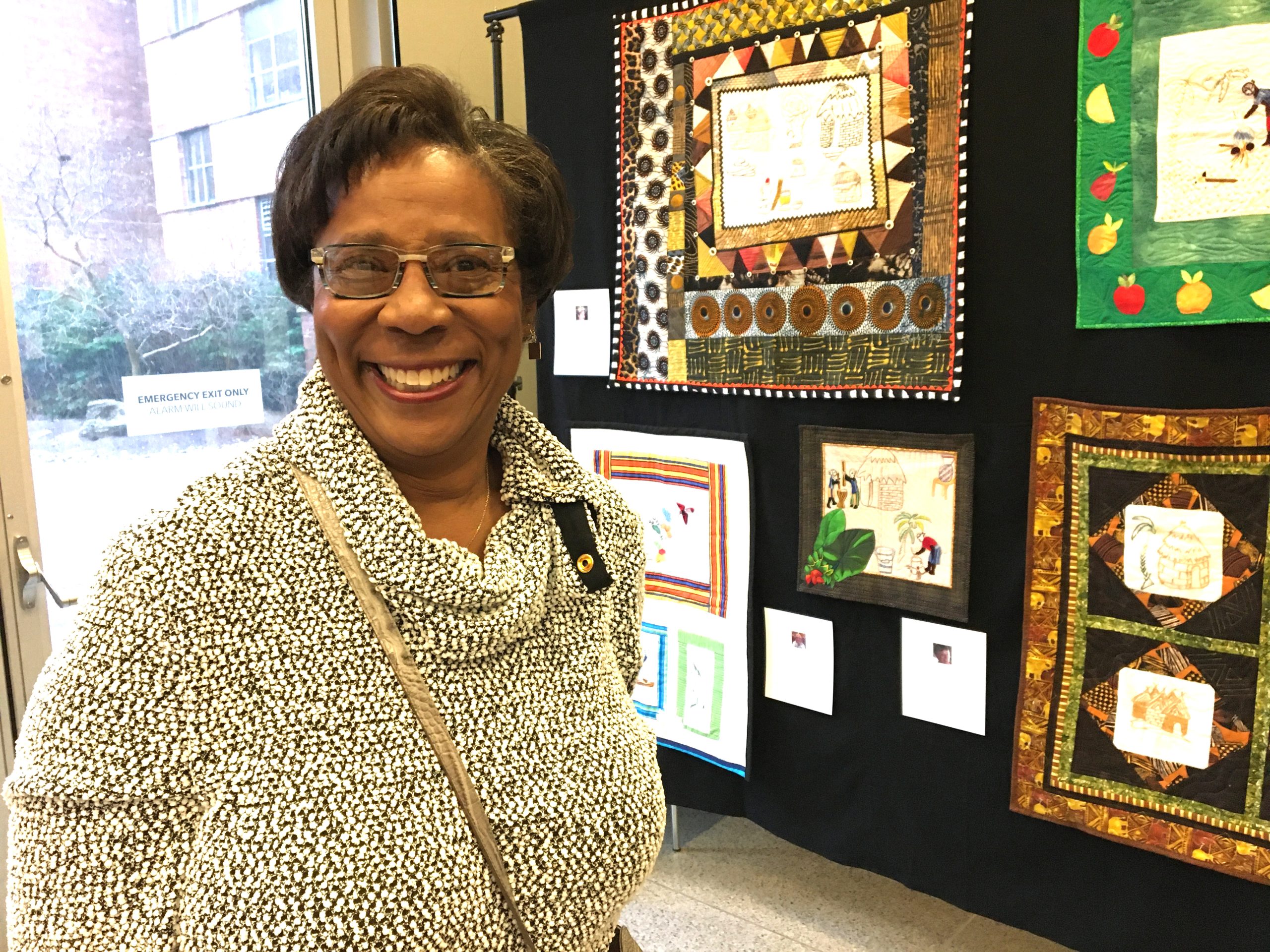
Edith Gross assembled the Liberian blocks in Louisiana
Lulu and Matthew organized a seven-week program of embroidery training, funded by AP, and the artists produced the images shown on this page and the next tab.
Their stories are raw and urgent. Helena Tarpeh was the only victim to survivor in a special Ebola ward in the Banjor region, and her block shows her lying next to dead bodies. Madama’s block shows her sick but sleeping under the bed at hospital because of a shortage of mattresses. We hope you will appreciate the power and artistry of these remarkable stories.
Matthew wrote about the training in this blog. After training ended Lulu Richards described it as “an enlivening moment for us” and continued: “We are grateful that people around the world still think about us.” AP has hoped that the network would produce a follow-up project, but unfortunately this was made impossible by the COVID pandemic.
Matthew brought the blocks back to the US where they were assembled by Edith Gross, a well-known quilter in Louisiana who had produced an art quilt for Sister Artists 1 (Mali) and had a special interest in Africa.
We are grateful to the Liberian artists, to their network, to Matthew for his excellent work, to Edith Gross and to Beliz Aluc, a Peace Fellow and student at Pomona College, California. Beliz backed Matthew up from the US and contributed much to AP’s work during the difficult summer of 2021 by her cheerfulness and optimism.
Artists and Squares
Bendu Naileh
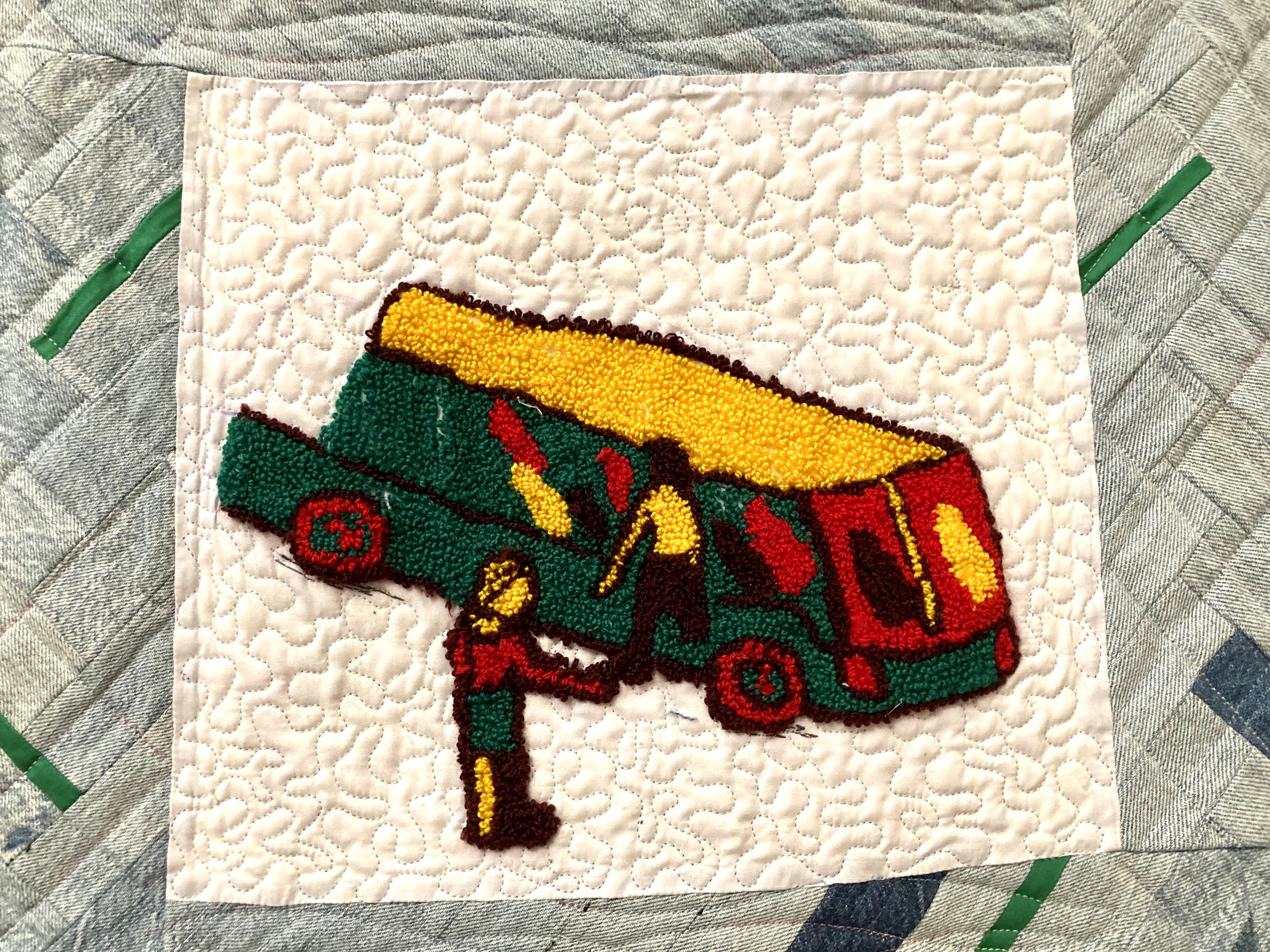
Bendu was denied boarding on a bus because she recently recovered from Ebola.
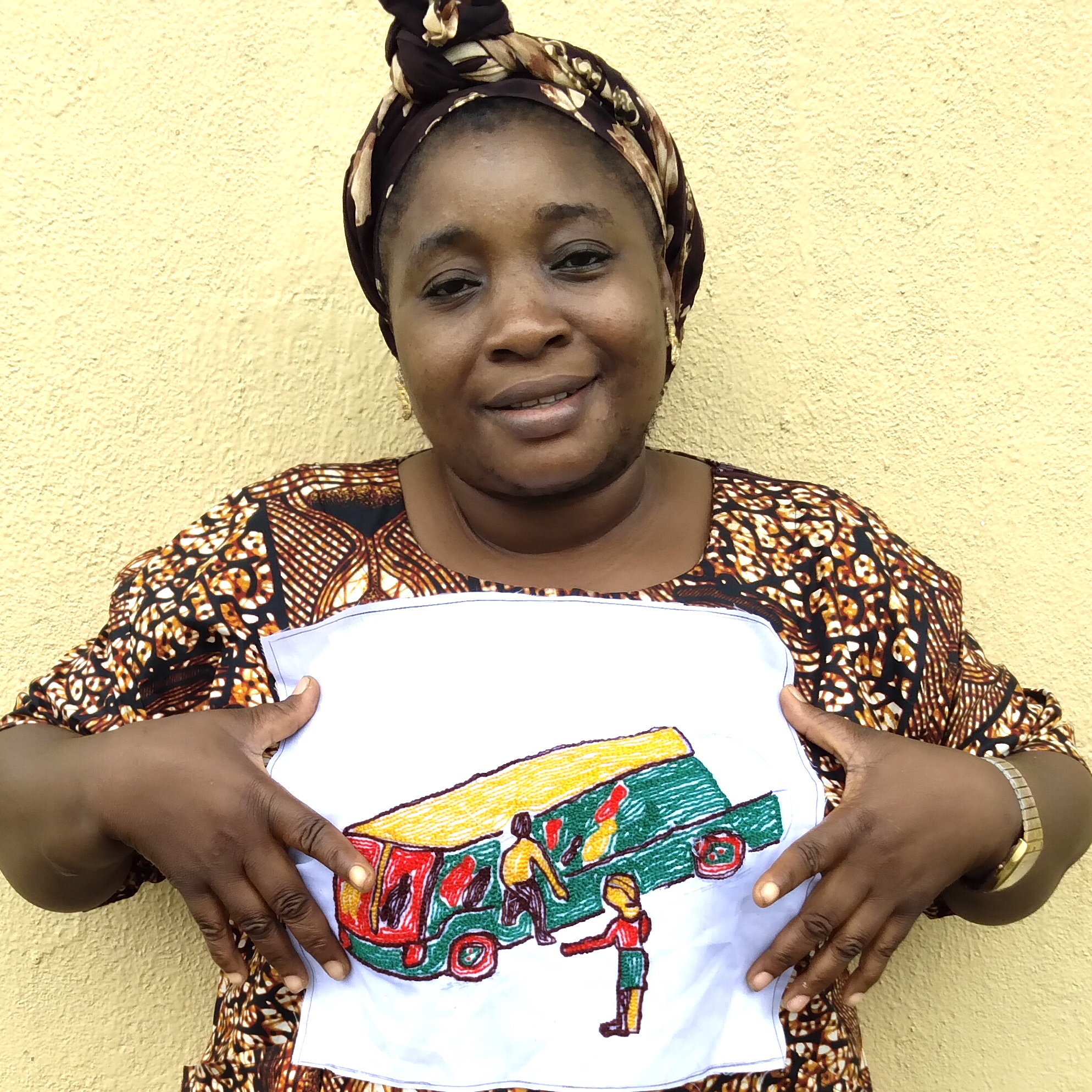 Bendu is the wife of the President of the National Ebola Survivors Network of Liberia. Herself an Ebola survivor, Bendu, along with her husband, contracted Ebola in September 2014 when Ebola was raging in Liberia. She got it through contact with her nephew. He was a health worker who apparently contracted the virus through caring for a patient at his facility.
Bendu is a Pastor’s wife. Believing that she could lay hands upon the sick and grant them healing, (a popular belief among Liberian Christian Ministers) Bendu laid her hands upon her nephew. All her relatives that visited with the sick nephew died one after the other after this encounter. Bendu fell sick afterwards, and for three weeks was cared for at home by her husband. It was only after the Bishop of her Church advised that she be taken to the Ebola Treatment Unit that she went. She spent about two weeks at the Treatment Unit and recovered. She attributes her recovery to God’s providence. Her husband was also taken in at the Treatment Unit the same day she was discharged. He too survived. But the stigma they faced, as she says, was overwhelming. Her family was isolated in the community. As she tried to board a public transport bus on one occasion after recovery, those onboard opted to get off; then the conductor prevented Bendu from getting in. This was her worst experience.
Fatu Kamara
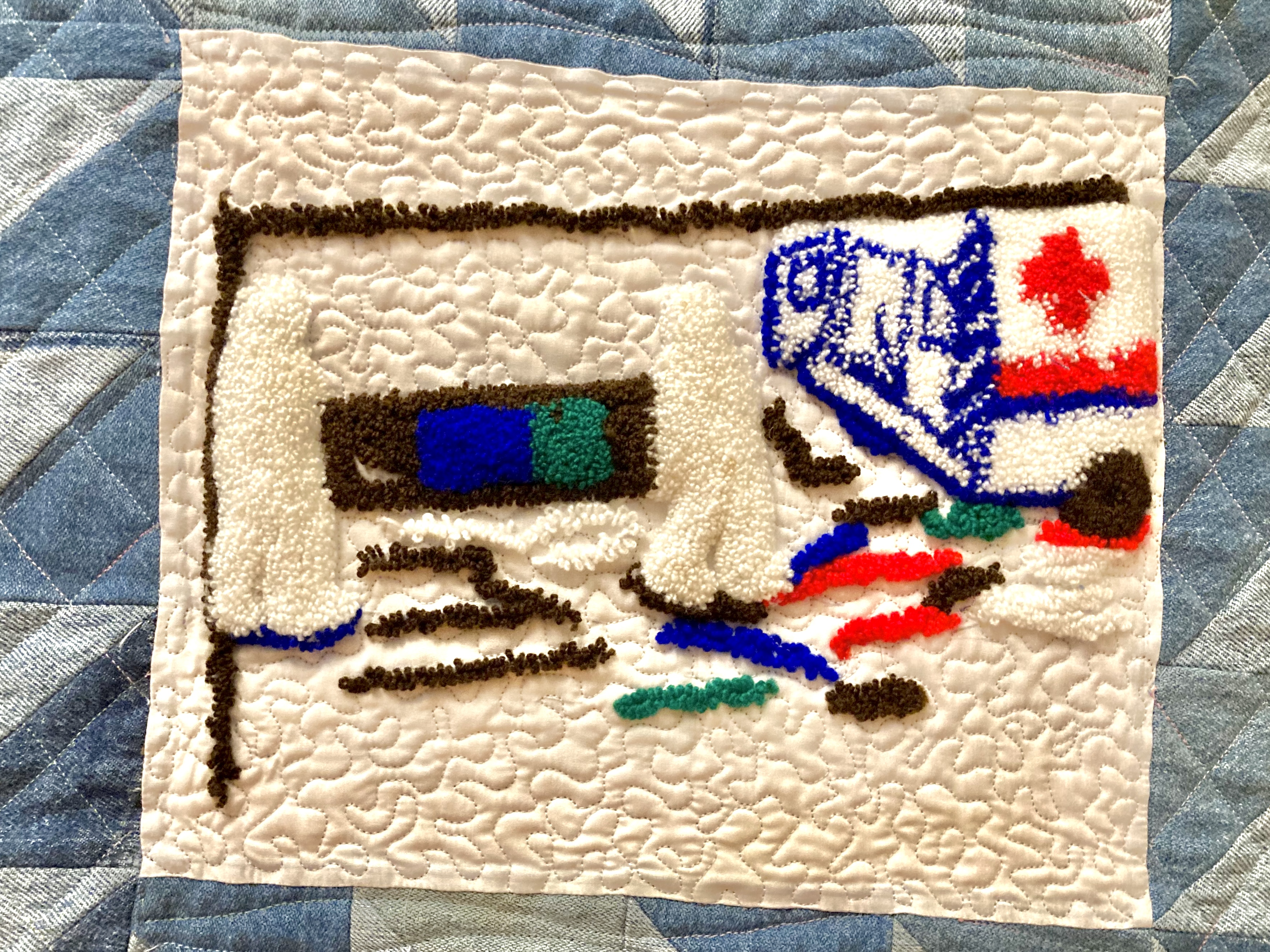
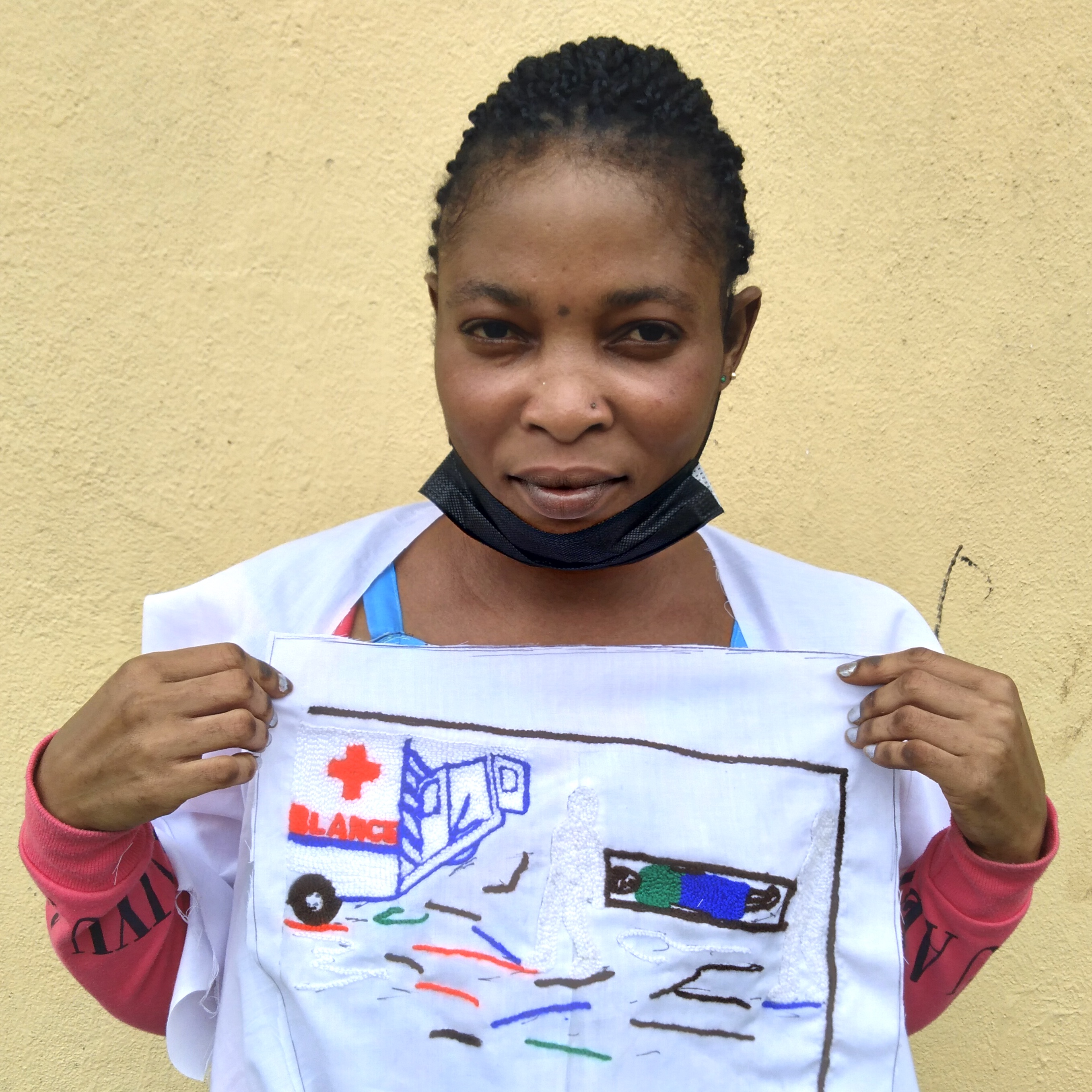
Fatu recounts in her square being stretchered to the recovery center.
 Fatu lost her fiancée in a tragic motor accident at the end of 2013. He was the lone breadwinner for their young family including a daughter who is now 5 years old.
When Ebola struck in early 2014, Fatu’s mother advised that she relocate to her mother’s residence in the Banjor area of Monrovia, along with her daughter. Her mother was sick and was showing symptoms of Ebola, but the terror associated with Ebola and the myth that those taken into the ETU would not return alive made many sick people hesitant to turn themselves in. This was the situation with Fatu’s mother. Her mother had a regular bone infection and when she fell sick, Fatu thought the situation was a regular infection. Fatu provided care for her mother at home, but unfortunately, her mother died.
Fatu was raised as the only child of a single parent. Her mother had told her that she had other two siblings were born in neighbouring Guinea before her mother migrated to Liberia. It was in Liberia she met Fatu’s father. After her mother died, Fatu stayed in a zinc shack which she said was later gutted by fire due to a petrol accident. Fatu became ill after her mother died and after several days of calling the Ebola Response Team to come to her aid, hope faded. She does not recall how she was taken in at the Ebola Treatment Unit, but was informed by a neighbour that she was stretchered into an ambulance by men wearing white PPEs.
Fatu Yini
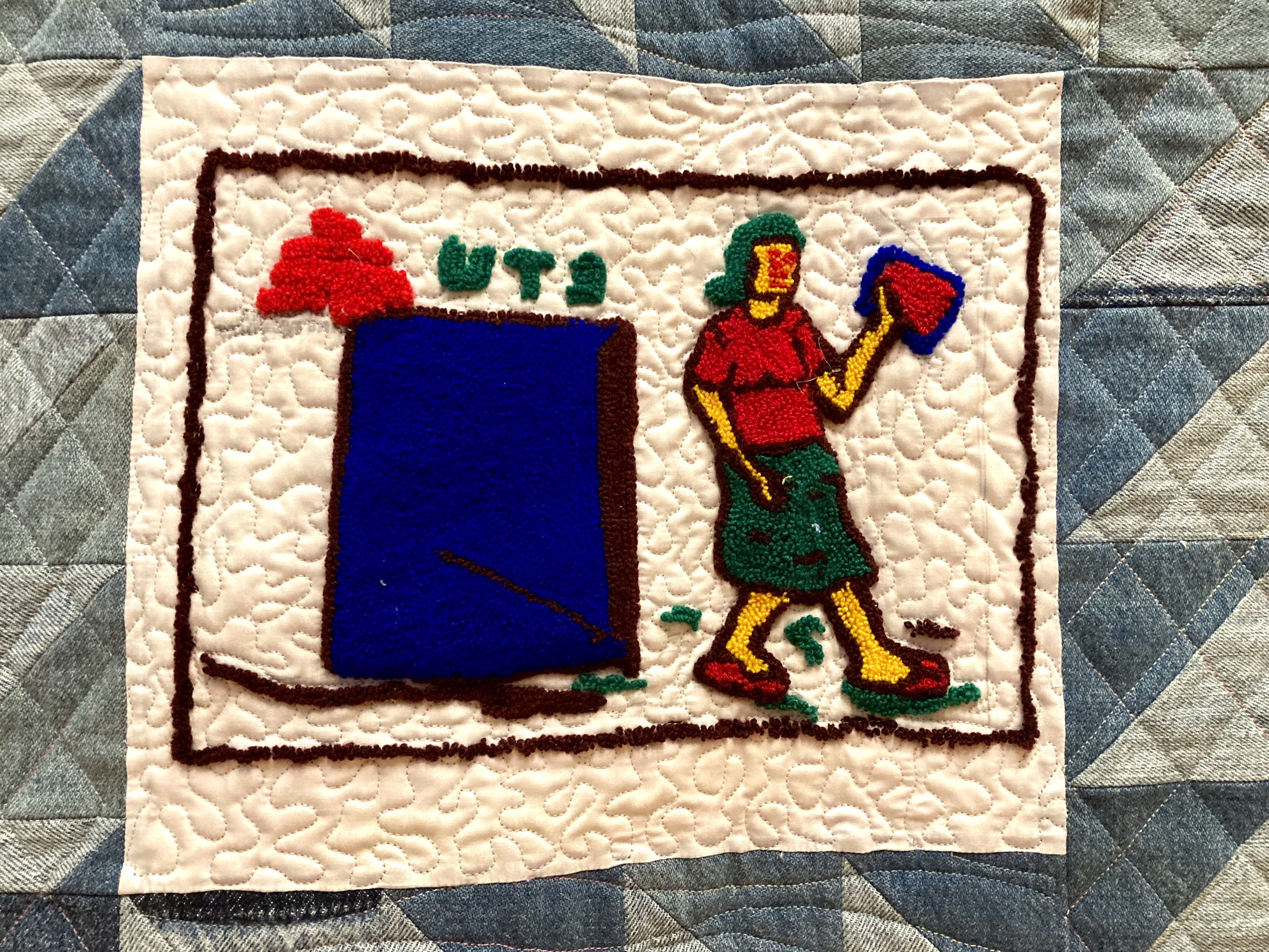
Fatu walks out of the treatment center holding her recovery certificate.
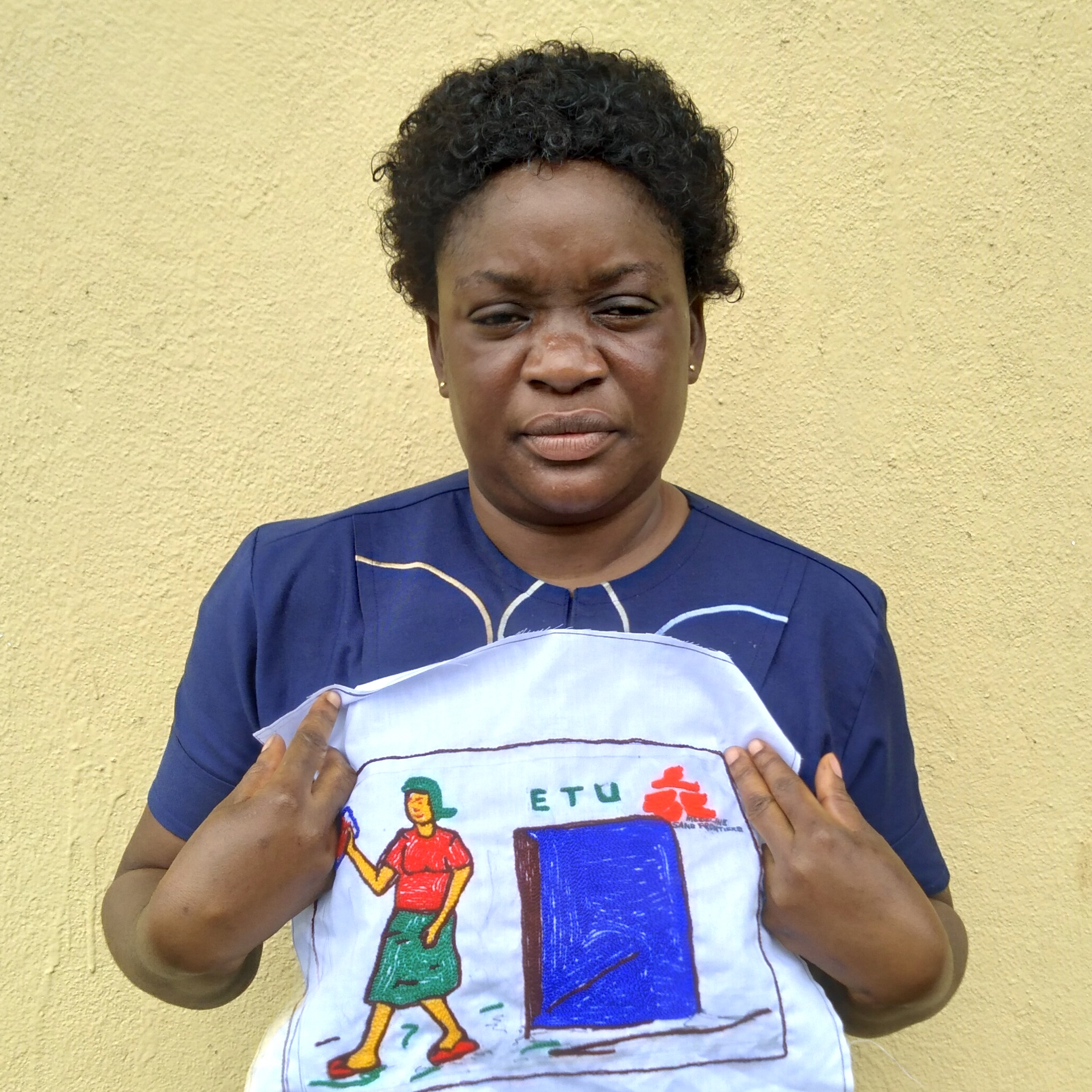 Fatu was a student at the Nimba Community College in northern Liberia when Ebola struck. Her father, through whom she contracted Ebola, was a friend to a Pastor. This Pastor disbelieved Ebola. He flouted preventive messages and continued to lay hands on sick people in Nimba County. Fatu’s father had a motorcycle and the Pastor had asked her father to accompany him to a nearby village where the Pastor’s father-in-law was sick.
As they travelled the distance on the motorcycle, they would take turns driving. It was through on this journey Fatu’s father allegedly contracted Ebola. Fatu returned from campus to care for her father. After some days, the father was taken to Monrovia to the Ebola Treatment Unit. At the time, Nimba County did not have a unit. Fatu became ill thereafter. Her father recovered, but Fatu was taken in at the nearby treatment unit in Bong County where she recalls she spent about 12 days and was discharged. She was traumatized upon seeing all the corpses, but she was so relieved when she was awarded the Ebola free certificate.
Fatumata Kamara

Fatumata’s neighbor’s kindness in bringing food every day was a welcome sight in her isolation.
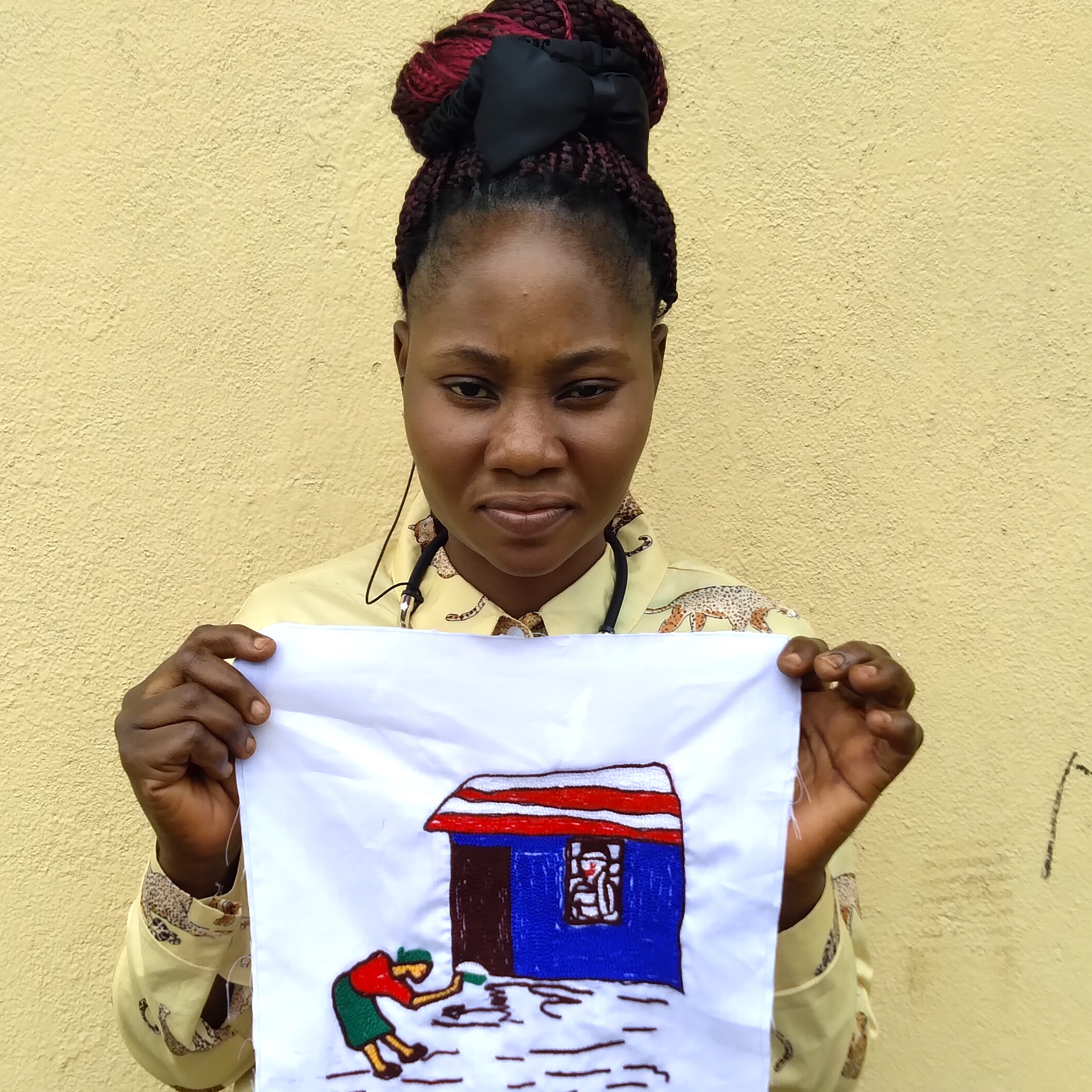 Fatumata lived in the Bardnersville area of Monrovia, which at one time became a hotbed for Ebola infections and as a result community isolation and stigmatisation. As she recalls, her entire household was taken into the treatment unit. Even though the rest of her family all tested positive, Fatumata did not. At the instruction of the response team, she was to remain indoors and isolated for 21 days, the incubation period for Ebola.
Fatumata recalls that those 21 days were the longest in her lifetime and the most dreadful part of her experience with Ebola. She had no contact with anyone. She sat alone person in her house while her whole family was at the Ebola Treatment Unit. Her family members, she says, do not speak about their experience, but she choses to. Her most poignant moment was when a neighbour would deliver, on each of those 21 days, her meal at the doorstep. She is thankful that she was never positive for Ebola and that her family recovered and returned home. However, Fatumata feels being isolated for 21 days was even more difficult than testing positive for the virus would have been, she says.
Finda Howard
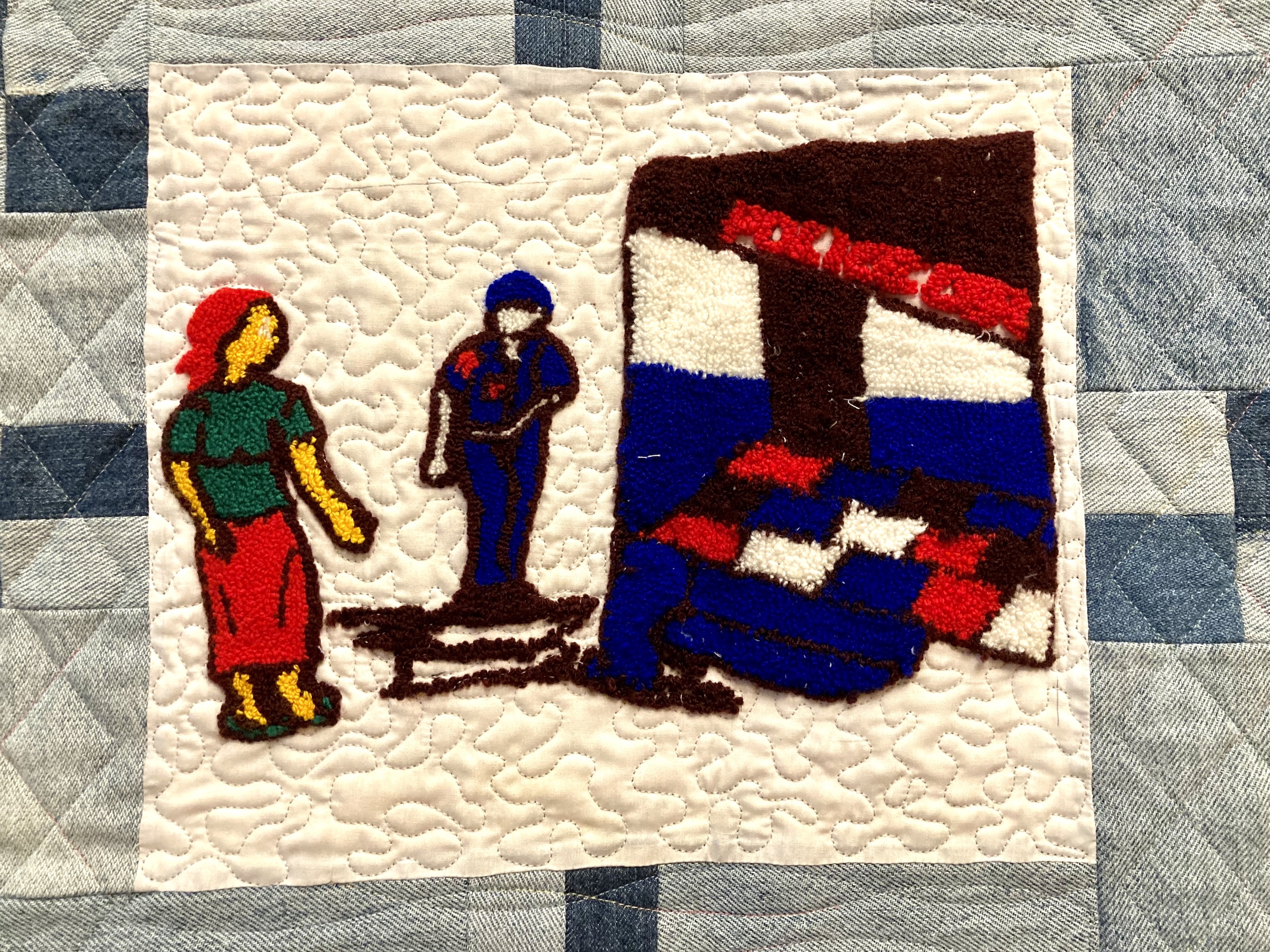
Finda’s local police officers barricaded themselves inside the station and refused to help Finda for fear of catching ebola.
 Finda recalls the entire Police Depot in the Pipeline Community locking themselves in when she approached them to inform them that her husband had died at home after being sick for some days with symptoms of Ebola. She recalls that at the hearing of Ebola, the officers escaped into the Police Building and locked themselves in, leaving Finda and her child outdoors. It was around midnight, she recalled.
Though the officers called in the Ebola Response Team to support Finda and the young child, Finda recalls she did not return home until after her experience at the Ebola Treatment Unit. She was taken there, first for observation and after a few days she tested positive along with her child, who she recalls was eight years old at the time. They spent about a month at the Ebola Treatment Unit and were discharged. Finda recalls that she returned to a community that was unwelcoming. She was forced to relocate to her brother’s home in the Johnsonville area from where she told her story.
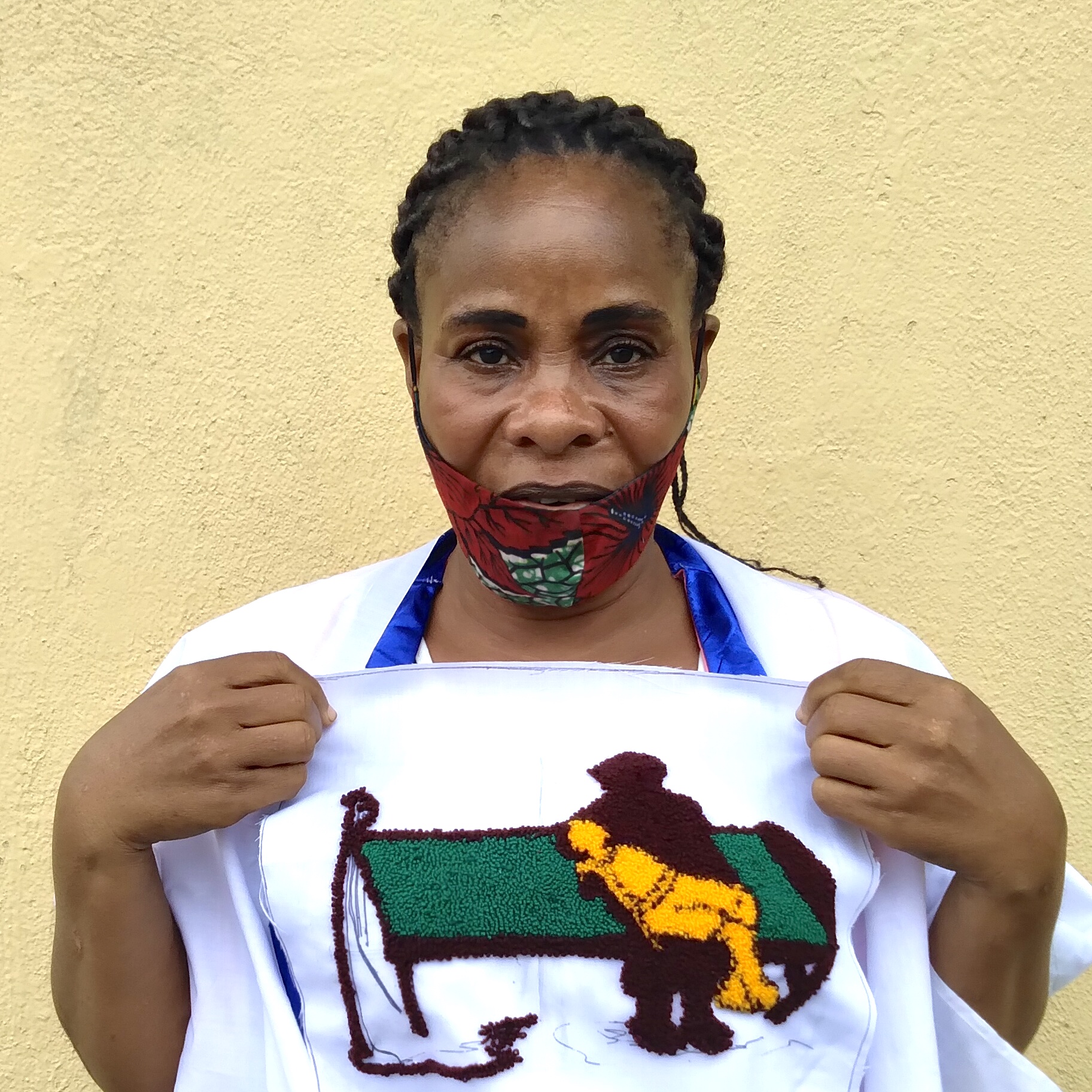
Helena Tarpeh
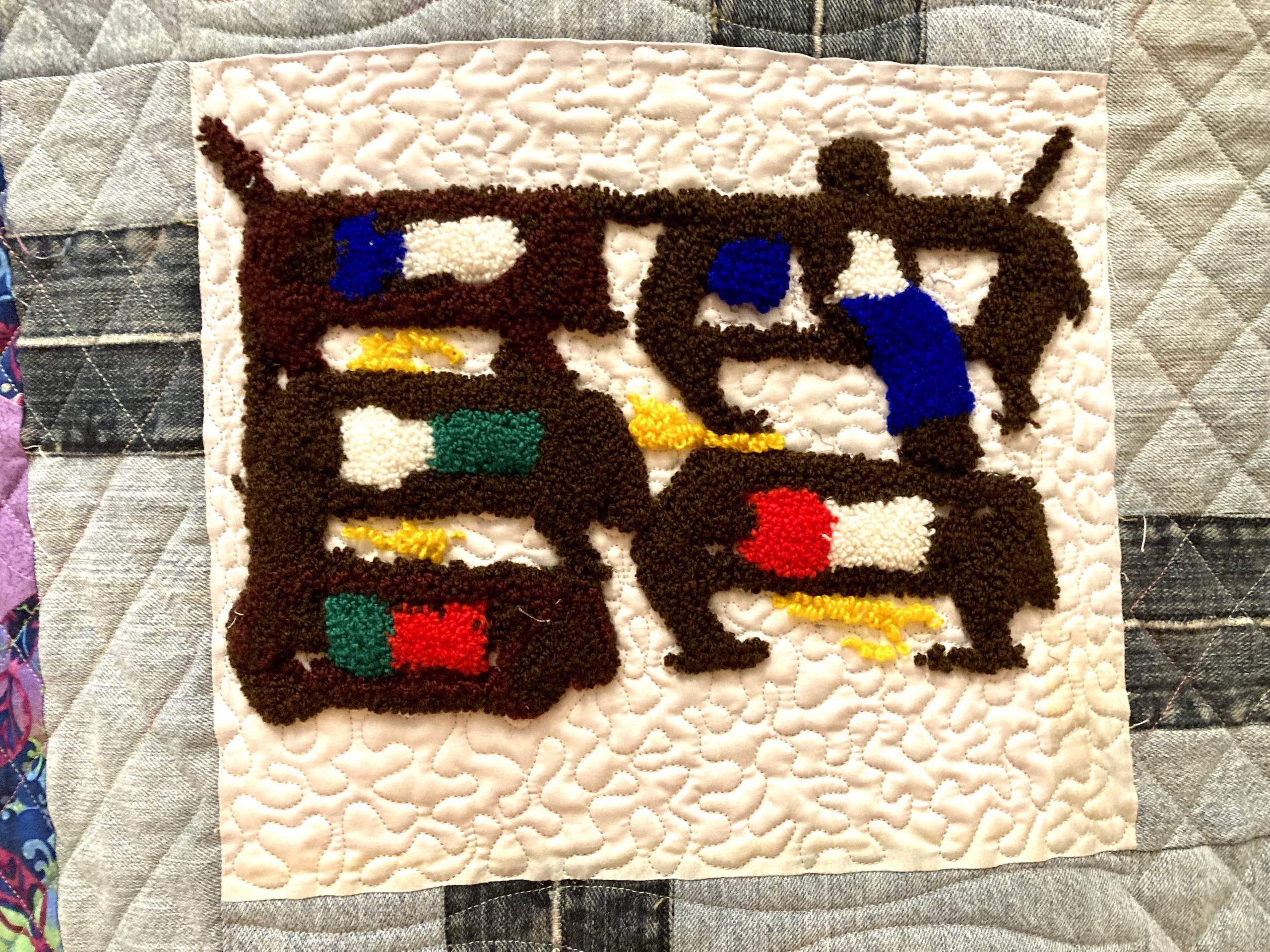
Helena sits up in her bed surrounded by those who did not survive ebola. She was the only survivor at her treatment center.
 Helena Tarpeh’s story is iconic. She was the lone survivor of the Ebola Treatment Unit established at the Unity Conference Center in the Virginia District of Montserrado County. This unit was set up to respond to the surge in the Banjor area during the outbreak. As the outbreak in Liberia waned towards the end of 2014, Banjor became a hotbed of infections, extending the outbreak into early 2015.
As Helena recalls, all those who were taken in at her treatment unit did not return alive. She was the only person who survived. Her discharge was celebrated. Former President Sirleaf designated her Head of Government Logistics Mary Broh to bid best wishes to Helena and present her Ebola-Free Certificate in a ceremony. Still, Helena recalls that the deaths of those who were taken there with her was her most difficult experience. “Chatting with someone the night before and the next morning they are no more,” she says, was the scariest part. “One was never assured that they would live to the next day with the pace at which things were moving.”
Janneh Brown
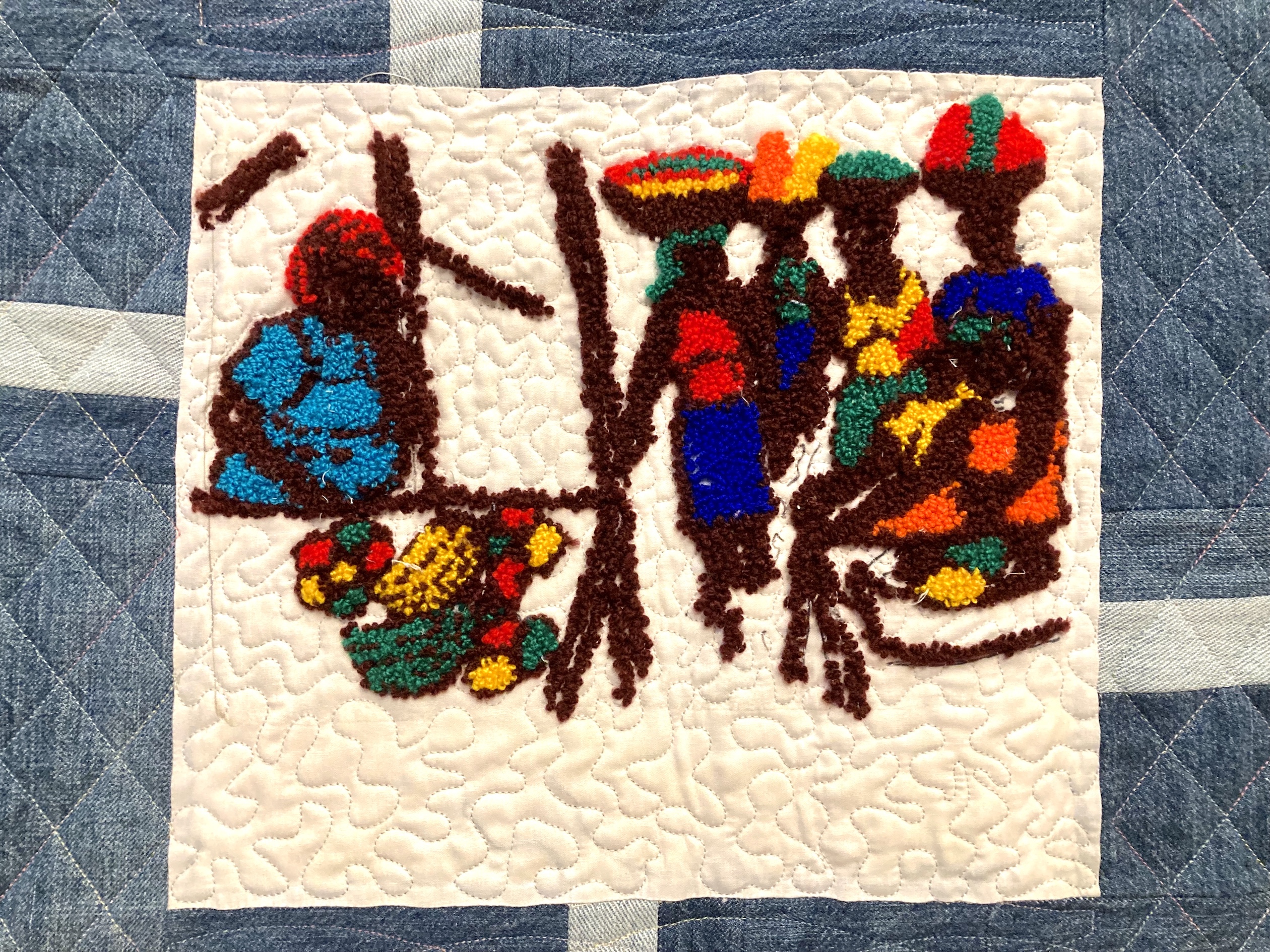
Shunning by other sellers in the market forced Janneh to find other places to sell her products.
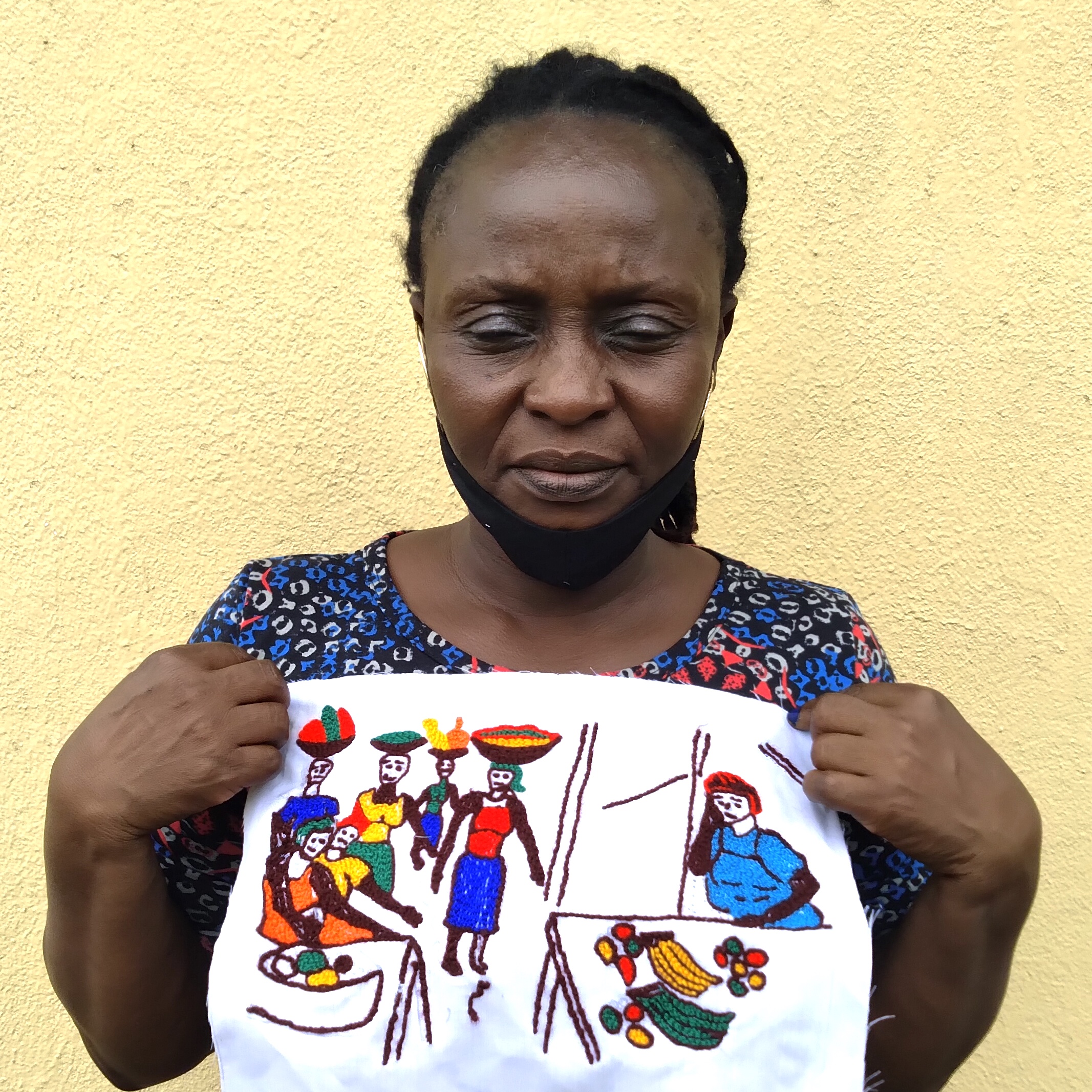
Janneh was a petty-trader at the Bardnersville local market in Monrovia when Ebola struck. Trade continued despite the spread of the virus. She recalled that her sister-in-law visited her at the market and complained of feeling weak. Janneh bought fufu, a local Liberian dish made of cassava starch, and she and her sister-in-law ate together, sharing the same eating spoon. Janneh was unsuspecting that anything could be wrong.
The sister-in-law died days later and Janneh became sick. Janneh was taken in at the Ebola Treatment Unit and was confirmed to be positive. She spent two weeks at the unit and fortunately recovered, but the market and the community did not accept her recovery. Janneh recalled being isolated in the market; buyers would shun her table and other sellers avoided her. This, she recalled, went on for about three consecutive days and she had to leave the market. To date, she sells charcoal at home but still doesn’t feel welcome at the market. Janneh says her business was destroyed during the period she was sick because the goods were perishable: chicken feet, fruits, and vegetables. When she tried to recoup her losses, the market did not accept her and she still struggles.
Lulu Richards
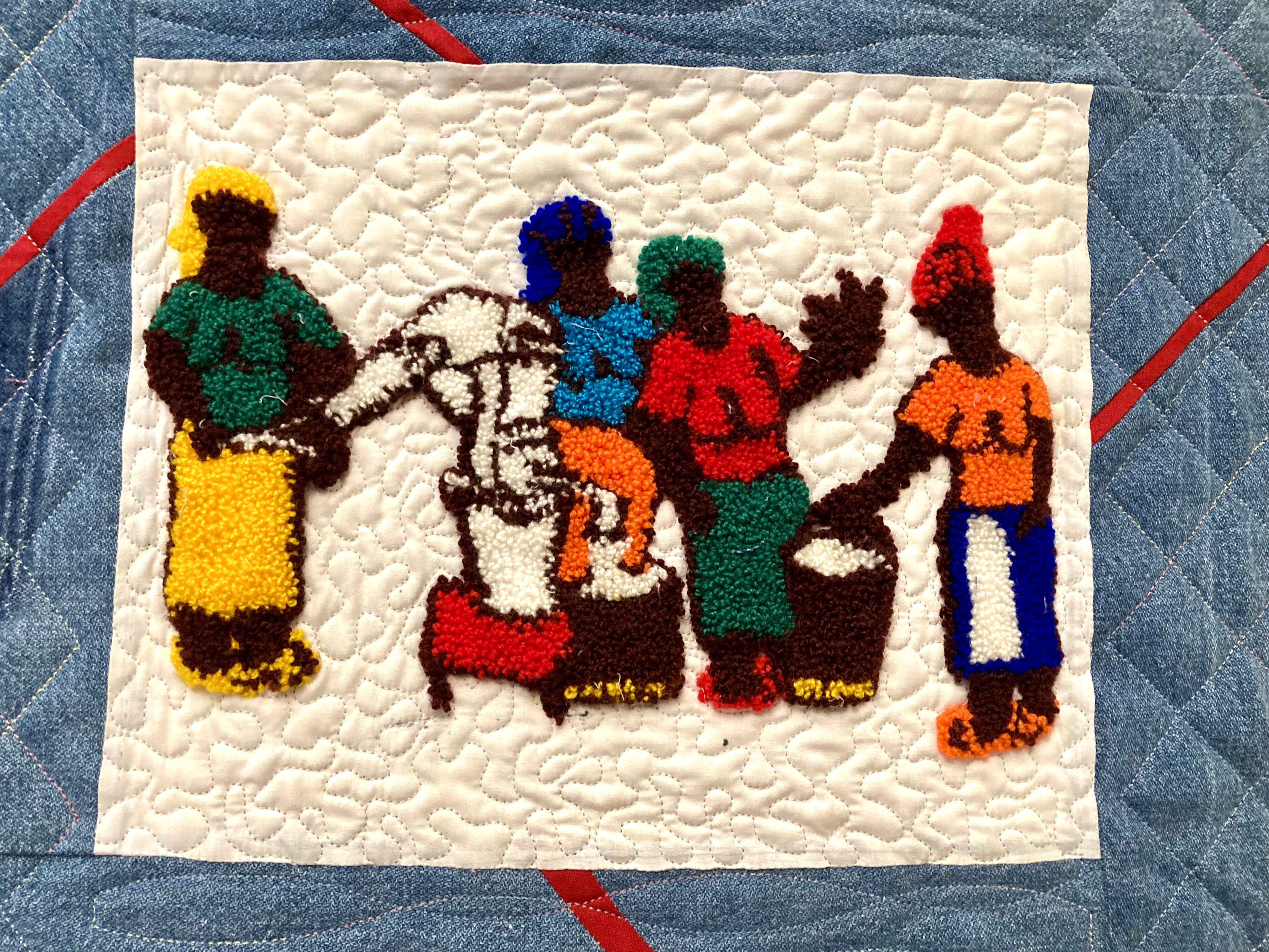
Lulu depicts being unable to get water from the community borehole as others fear catching the disease.
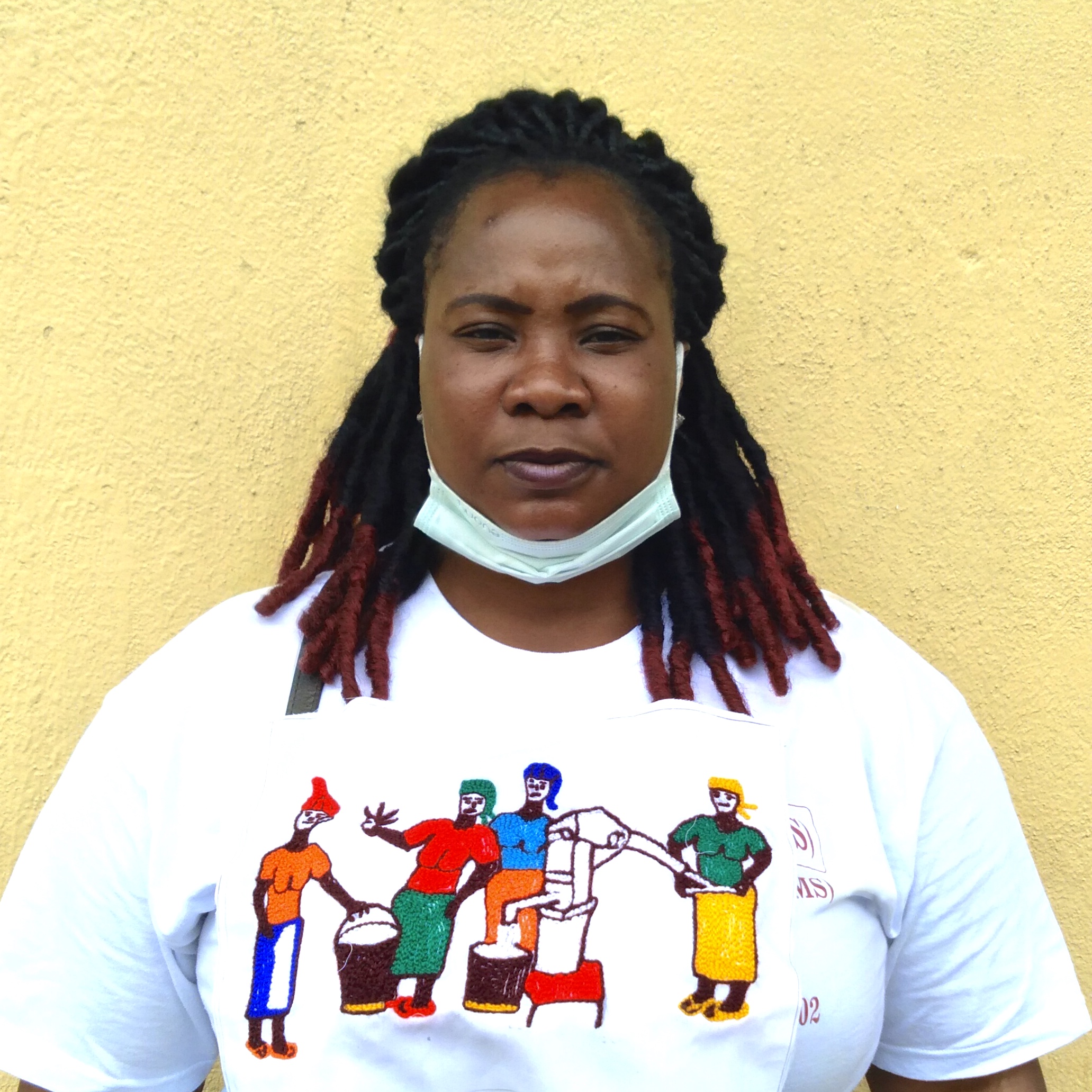 Lulu contracted Ebola through caring for a friend. She had met this sick friend at a health facility where the friend had gone to get treatment for her sick daughter. Lulu met the friend along with the friend’s kids, struggling for help. Lulu intervened because the kids were all young, she said. Days later the friend died after being confirmed as Ebola positive. Lulu was designated as a close contact and told she needed to isolate. Lulu’s own ailment began thereafter.
To Lulu, being told that she was Ebola positive was the biggest shock of her life. For three days, she says, “I was fighting death. I could not accept that I had Ebola. It was dreadful news.” She interestingly recommends that people should not be told that they are confirmed to have deadly illnesses, because the news alone may lead the person to death. “Doctors should say, you are ok, and you just need to take these medications to feel a lot better.” For her, the news of being Ebola positive was similar to being told she was dead. Lulu survived and began to feel better but her community did not trust her recovery. They barred her from fetching water from the community borehole. She would be pushed away each time she attempted to fetch water. Strong negative reactions faded as the crisis waned.
Madama
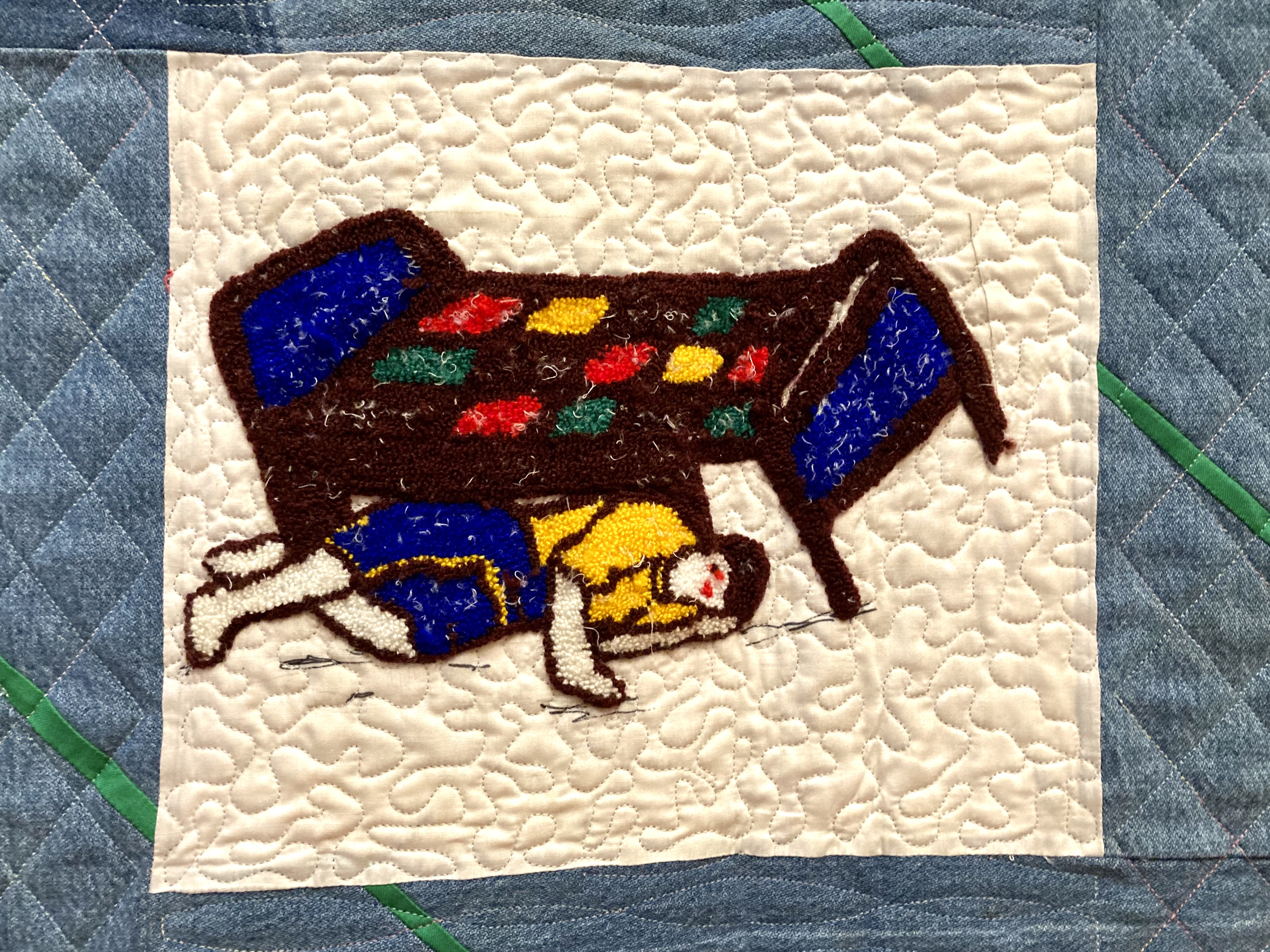
A shortage of mattresses in treatment centers forced Madama to sleep on the floor during her recovery.
 Madama’s family to this day do not know that she contracted Ebola. She says they are a family that highly stigmatised Ebola. Madama takes comfort in the fact her story will be published faraway where they will not have access. Otherwise, she says, she would not have told her story for fear of stigmatization. It has been five years since the outbreak ended, but Madama says she has not disclosed her status as an Ebola survivor and has no plans to do so.
Madama is a health worker, now a nursing student at Smythe College in Monrovia. She recalls that a lab technician at their facility had asked her to administer to him an iv because he was not feeling well. The lab technician did not return to work the next day. Days later, after news broke that the technician had died of Ebola, the facility had to be shut down and all health workers there were told to self-isolate for 21 days. Out of abundance of caution, Madama said she decided to leave her parents’ home immediately. She tested positive a few days later and was taken in at the Treatment Unit for Health Workers. Madama recalls there were no beds at the unit and for three days had to sleep on the floor because the bed assigned to her did not have a mattress.
Patricia Fahnbulleh
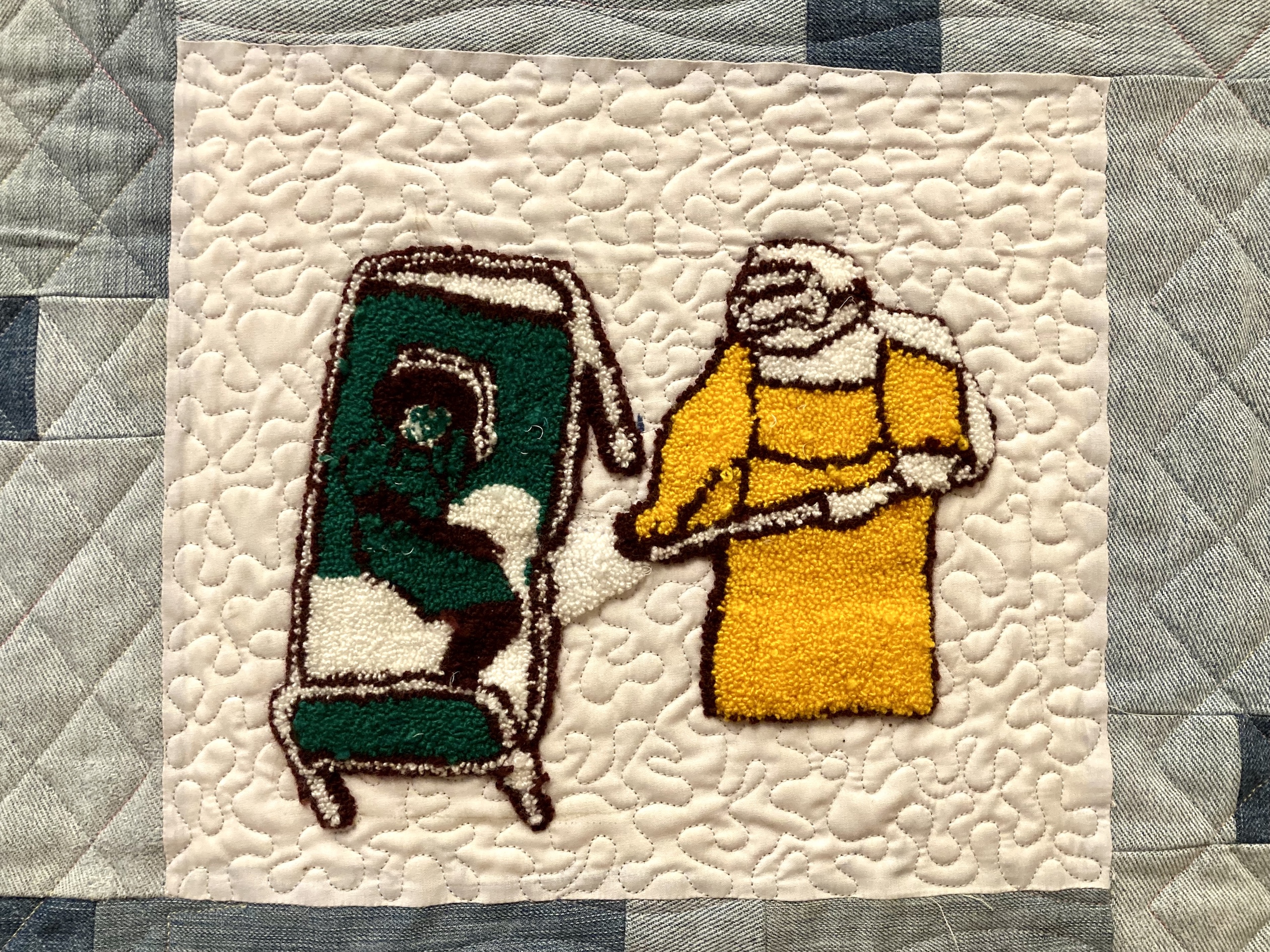
Patricia was mistaken for dead and was sprayed with cleaner by a healthcare worker.
 Patricia contracted Ebola through caring for her late father. The death of her father, she says, has shattered her hopes for a better life. Her father, she says, was everything to her. He died when she was a grade nine student. Patricia says, “the death of my father caused me to get involved with so many things that I did not plan.”
Patricia is a mother of two now and lives with her boyfriend. She was a student, at the St. Edward Catholic School in Logan Town on the Bushrod Island at the time of her father’s death. After the death of her father, she says, the family took over the father’s properties, leaving the children to fan for themselves. Even though she was still able to complete high school, the effects of her father’s death were large and she is still impacted emotitionally and physically by the death of her father.
Patricia herself tested positive and was taken in at the Ebola Treatment Unit. She spent 10 days at the ETU, along with her junior brother, who did not survive. She said, “I escaped when the Ebola Response Team came to get me. But my younger brother was brave. He encouraged me to come out and that we would survive if we went. But he did not.” Patricia recalls every night she went to bed and when she woke up the next morning, all patients around her would be dead. The ETU workers would spray the dead with chlorine disinfectant. Her bed was in the middle and thinking she was dead, the workers would spray her as well. “It is the cold water that would wake me up and I would ask them, why are you spraying me,” she recalled. Their reply was always heart-breaking, “all these people here are dead; we thought you were dead as well.”
Shirley Tarwally

Shirley recounts holding her youngest son in her arms as he succumbed to ebola.
 Shirley lost four of her five children to Ebola. She survived along with her grandchild. Shirley lived in Maryland county, south-eastern Liberia and was invited to live in Monrovia by her eldest daughter who, at the time, worked as a nurse. The daughter became ill with Ebola symptoms, through caring for a patient at their facility.
It was in the early days of the crisis, as Shirley recalled, and there was a lot of confusion as to how to deal with the cases. It was in this confusion she said her children died in her arms one after the other at the treatment unit. Shirley recalled that health workers were scrambling to find treatment for the patients that were pouring in. Even though she was sick herself, Shirley was the one providing care for her children. She watched almost all of them die. She believed they would have survived had they received proper care. The death of the youngest was the most painful she recalled. “He died in my arms.” Shirley received her daughter’s hazard benefit of $5,000 with which she purchased land and built a house in the Johnsonville area of Monrovia from where she told her story.
Tennema Sheriff
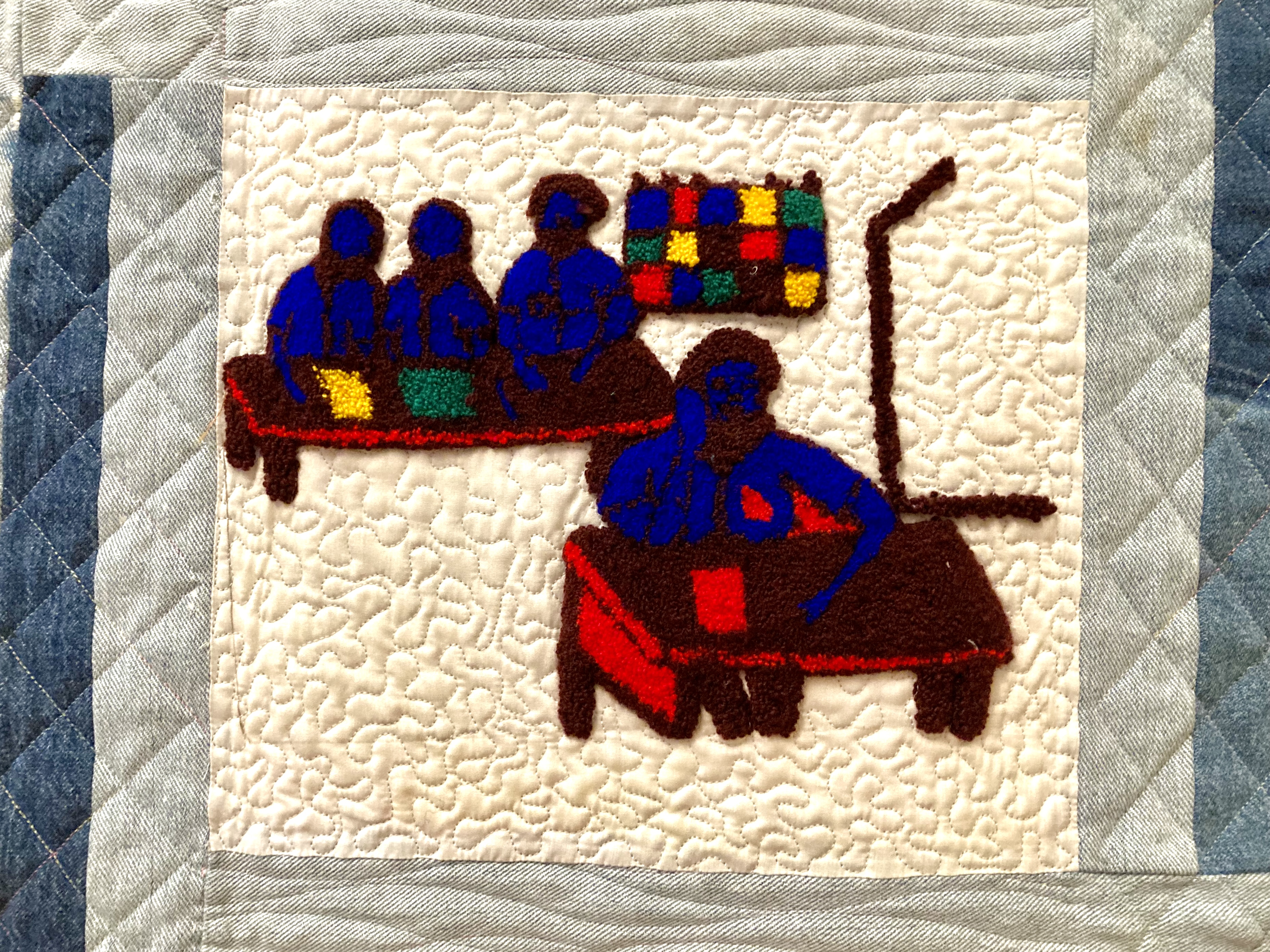
Tennema’s isolation continued at school even after she had recovered from ebola.
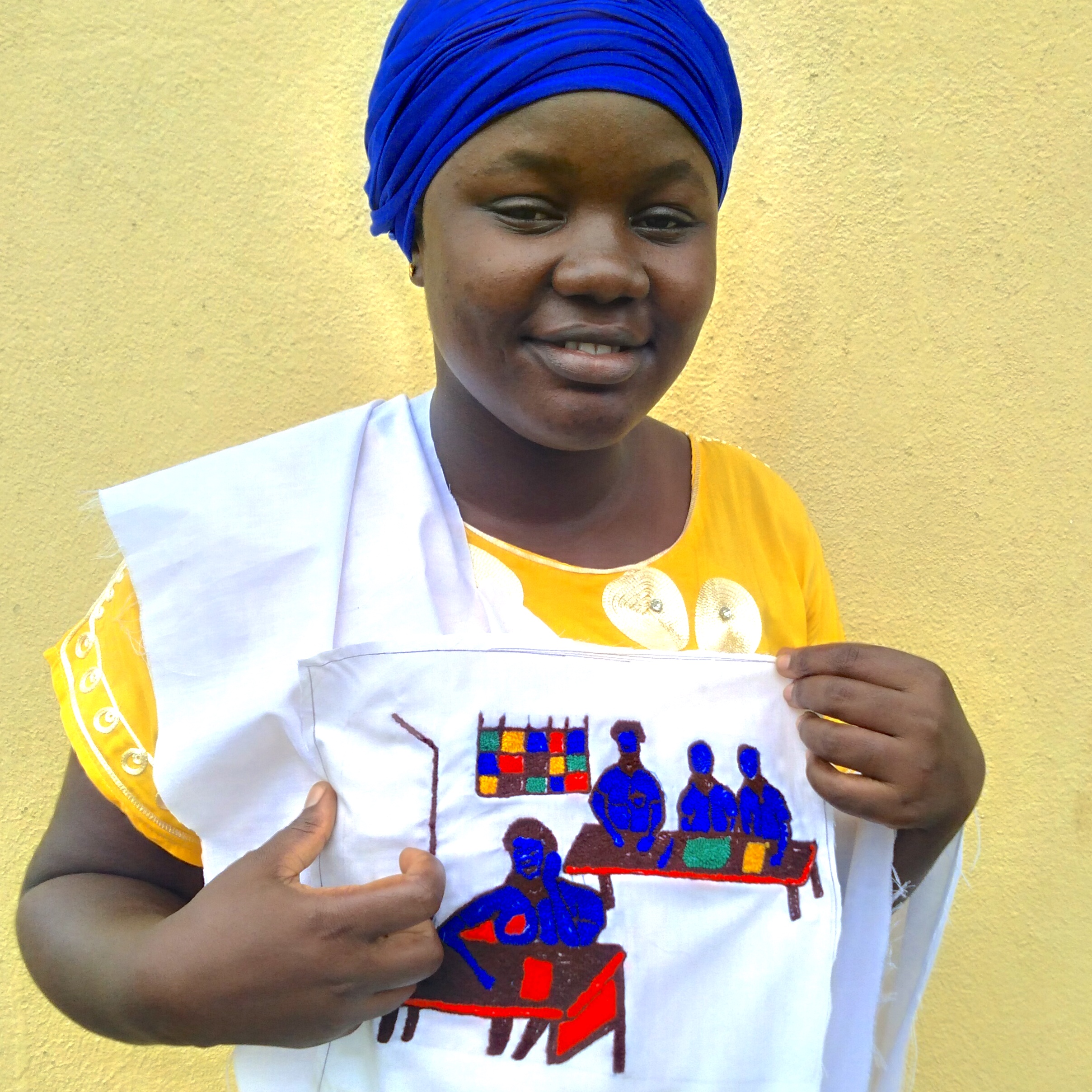 Tennema contracted Ebola, sadly, from the ETU. She had been taken there because of an ordinary diarrhoea condition. During the crisis, she reported feeling sick with a running stomach. None of the local clinics in her community would accept to treat her out of fear. Her family members resolved that her case was similar to Ebola and hence took her to the Ebola treatment unit.
Tennema was immediately put among confirmed cases of Ebola, even though she said her test result was not yet known, all because of the symptoms and signs that she showed including diarrhoea. After several days, she was discharged after her test was returned negative. Days later upon returning home, she again began feeling sick again. She told her parents to stay away from her. She remembered that she had helped an elder man at the ETU during her previous stay there and that man had died. She went back to the ETU, was confirmed positive and was put with the Ebola patients once again. After 25 days was discharged and was finally free of Ebola. At school, her classmates would not associate with her after her recovery. She was isolated in the classroom and considered dropping out of school at one time. The isolation at school was the worst part of the whole experience for her.