
Category Archive: Uganda
-
The Stakes Are High!
4 CommentsAs July dawns, we find ourselves at a pivotal moment, one shaped by urgency, opportunity, and immense responsibility. In the field of public health, sanitation, and empowerment, there’s no room for complacency. For those of us, working within the WASH (Water, Sanitation, and Hygiene) project, July isn’t just another month, it’s a sprint of purpose, packed with transformative activities. The pace is fast, the expectations are high, and the impact we strive for is vital. The stakes are high, but in the wisdom of Justice William J Brennan, “We must meet the challenge, rather than wish it were not before us.” and we are rising to the challenge of our time.
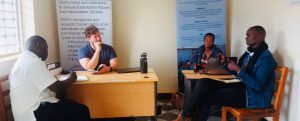
This month kicks off with a promising meeting with Amigos Internacionales, a like-minded organization based in Texas U.S, equally committed to driving sustainable change. This gathering isn’t just a meeting of teams, it’s a meeting of minds, values, and visions. We aim to foster collaboration, forge strong partnerships, and strengthen networking that collectively advance our mission of delivering life-changing services to underserved communities. When synergy replaces silos, transformation becomes inevitable.
As momentum accelerates, we are set to implement malaria prevention training, a foundational pillar in the pursuit of sustainable public health. This initiative is designed to equip learners, teachers, and broader communities with the critical knowledge and practical skills required to interrupt the transmission cycle of one of the region’s most enduring health threats.
Complementing this training is the strategic distribution of liquid soap, which reinforces essential hygiene behaviors such as handwashing, an often overlooked yet powerful tool in disease prevention. By positioning schools as catalysts for behavioral transformation and health advocacy, we are not merely protecting lives, we are cultivating resilience, nurturing informed communities, and establishing strongholds of lasting hope.
In parallel, we will be training adolescent girls on menstrual hygiene and how to make reusable sanitary pads using materials readily available in their communities. This isn’t just a health intervention, but also a movement for dignity, gender equality, and self-sufficiency. In multiple many communities, menstruation is a barrier to education, confidence, and opportunity. through teaching girls how to manage their periods safely and affordably, we are not just giving them a skill, but also cultivating hope and igniting a fire. We’re turning scars into a rallying cry for empowerment.
And because the stakes are high, we’re taking a strategic leap through an engagement with the district WASH coordination group, which brings together key players, from INGOs and local NGOs to government agencies and community leaders. This is more than just networking, it’s about aligning efforts, amplifying voices, and driving collective impact. In these coordination spaces, the seeds of innovation are sown, duplication is avoided, and solutions are tailored to real needs. Together, we become stronger stewards of health and human dignity.
We also remain committed to monitoring the schools where WASH facilities have already been constructed. Without regular oversight, the most thoughtfully designed infrastructure can fail. Our visits have illuminated areas in need of repair: broken taps, damaged gutter systems, and compromised water tanks. These aren’t setbacks, they’re insights. We’re mobilizing swiftly to carry out repairs and launch the construction of an incinerator in one of the schools, to further improve sanitation management, especially for menstrual waste. This isn’t just maintenance, it’s a declaration that our work doesn’t end at installation, it begins with impact.
We plan to extend our monitoring to schools we haven’t worked with before, gathering firsthand insights that will inform smarter, more inclusive interventions in the future. In a world where resources are limited and needs are vast, information is power, and observation is a catalyst for change.
The Stakes Are High, every action we take, from repairing a broken tap to mentoring a girl child, creates waves that inspire the whole community.
The stakes are high because public health hinges on timely interventions; malaria doesn’t wait, and poor hygiene can erase progress in an instant. The future of our young girls depends on access to menstrual hygiene, keeping them in school, confident and healthy. Our potential partnership is taking shape, promising to amplify our collective reach. An infrastructure, without ongoing care, risks crumbling into irrelevance, unless we act.
Through relentless monitoring and learning, we sharpen our impact and ensure that every move is purposeful. This month, we are not merely rolling out activities, we are shaping futures, restoring dignity, and fueling lasting hope. We do so with unwavering resolve, fully prepared to meet the rising demands of our mission. We are readily focused and just when you think you have seen it all, we strike again, with a redefined purpose and commitment.
-
Handover Ceremony Preparations: Cow Shopping
Leave a CommentReading previous GDPU Peace Fellow blogs and sitting down with Emma and Patrick, I was able to get a sense of how previous handover ceremonies have been performed and what I could expect prior to the ceremony. I also asked if there was anything they would change to which Emma and Patrick expressed that the ceremonies have only provided a goat which would only be enough to feed the visitors and that the students would not be able to enjoy meat nor refreshments. With the increase in our budget to conduct the renovation of the existing ten stances and employ Emma to produce soap for the handover, we saw that there was enough money to do something extra special, buy a cow (and sodas!).
Upon my visit to the school last week for the training, I spent the lunch hour with the P7 boys, listening to music, talking, taking photos, and playing games. When I mentioned that the ceremony would be next week Friday, almost all the boys asked me if they would be getting meat. At the time, I wasn’t sure if we had money in the budget to buy a cow, so I told them honestly that I don’t know. They expressed to me how they eat the same food at school every single day (Monday – Sunday), porridge for breakfast, and posho and beans for lunch and supper. Knowing that getting to enjoy meat during the ceremony was something that the students were dreaming of and in a sense expecting, I did not want to disappoint.
Walter and I made the journey to visit two cow owners, one being a friend of Walter’s friend, while the other was a local butcher. The first car we visited was in Unyama, very deep in the bush. We were greeted by the owners son who walked us to see the cow, a beautiful white cow roughly 350 pounds.
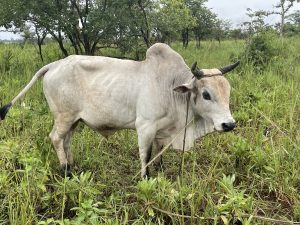
After the first visit, we made our way to Layibi where we visited the butcher. I had imagined that his cow would be at a farm grazing on grass, but when we pulled up to the butchery I was not prepared for what I saw. Bloody cow horns, a dead calf, horrific conditions, and a smell that was so putrid I almost threw up.
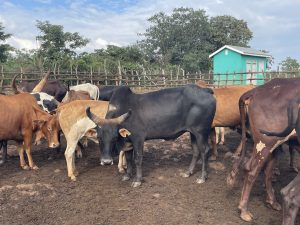
It’s safe to say that we went with the white cow. I can’t wait to see everyone’s face at the handover when we surprise them with the cow; it will be a day we will never forget.
-
Unexpected Religious Experience in Uganda
Leave a CommentReligion plays a very large part in everyday life in Uganda. It is very common for people to ask what religion you are, even upon first encounter. “Are you a Christian or a Muslim?” can even be heard as an introductory phrase. When I tell people that my religion is not common in Uganda and that they may have never heard of it, they become intrigued.
When I respond that I am Jewish, I am often met with many various reactions: “Wow,” “I have never heard of that religion,” “the people of Israel,” “do you believe in God,” are some of the most common responses that I receive. All of the reactions I have gotten have been positive, with many people being curious and asking questions about Judaism. This prompted me to search online if there were any Jewish communities in Uganda, to which I discovered that an eight-hour bus ride from Gulu in the small city of Mbale lies a small Jewish community with a synagogue, Jewish primary and secondary school, and Mikva (bath used to achieve ritual purity).
After already visiting a couple of Jewish communities in Africa (Morocco and Tunisia), I was intrigued to make a visit to the Jewish community in Mbale. I reached out to one of the members I had found on Instagram, Yochanan, and arranged the visit.
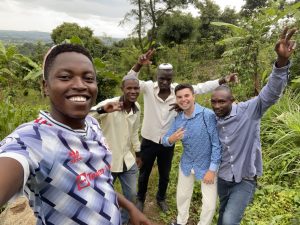
Some of the members of Mbale’s Jewish community
Reflecting on the visit, I can say it was one of the most special religious encounters I have ever have. As someone who is a proud Jewish person and the grandson and great-grandson of Holocaust survivors, I always feel a sense of pride when I get to meet Jewish people from various communities around the world.
During the weekend, I enjoyed Friday night and Saturday Sabbath services, a Sabbath walk through the community visiting local members as well as the primary and secondary school, a Saturday night post-Sabbath party fit with music, food, and locally made beer, and a Sunday visit to the Mbale Zoo and falls. My weekend with the Jewish community in Mbale will always be a memory I cherish and anytime I am asked with what religion I am, I respond “I am Jewish, there is even a small community in Mbale!”
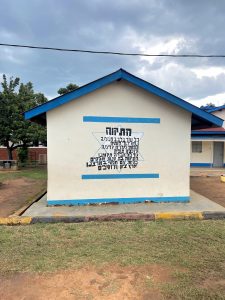
Hatikva, Israel’s national anthem, written on the side of the primary school
-
Toilet Upkeep: Preparing For the Handover Ceremony
Leave a CommentWith the handover ceremony for the Wash Project fast approaching, we conducted a training focused on raising awareness of disabilities and maintaining the toilets to ensure that they’ll be well kept and last for years to come. The training was led by Faruk, the executive director of Ability Sports Africa, and Jennifer, a GDPU board member. There were about 35 people in attendance, including parents, PTA members, and teachers.
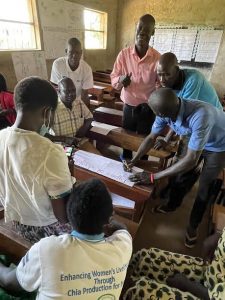
The training began at 10 A.M., and went until 5 in the evening, with a delicious lunch of goat’s meat, cabbage, posho, rice, and beans, being provided by GDPU. While the training was quite heavy in content, the participants thoroughly enjoyed with the feedback from those in attendance being incredibly positive. After the meeting, the head teacher Joyce approached me and informed me that she was very impressed by Faruk and Jennifer, and that she learned a lot, prompting her to do everything in her power to ensure the toilets are well-kept and maintained.
The training incorporated lots of group activities, having group member’s work together to form ideas and solutions, rather than work alone.
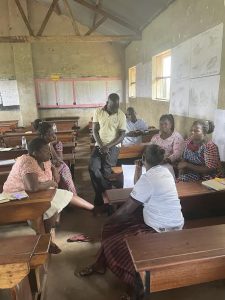
With the toilets nearing completion and the students eagerly awaiting to use them, it is vital that the information that was conveyed to parents, PTA, and teachers will be conveyed to the students. This is to ensure that the students will maintain the toilets by cleaning them on a daily basis and not disposing of stones into the pit so that they will last for many years to come. I hope that when I return to Awach P7 in the near future, that I will see the toilets being cleaned and cared for, and looking like they did during the handover ceremony.
-
Main Market: Forever Changed
1 CommentOn July 1st, a nationwide order came into effect that all vendors must vacate the streets. Prior to that order, there were thousands of vendors in Gulu selling on the street as a source of income to support their families.
Within Gulu, one of the most arguably recognizable landmarks is Gulu Main Market. If you were to visit the market prior to July 1st, you would see hundreds of vendors selling in the designated parking space, around the market, and on the roadside. However, on July 1st, Gulu law enforcement backed by military officials evicted the sellers by force.
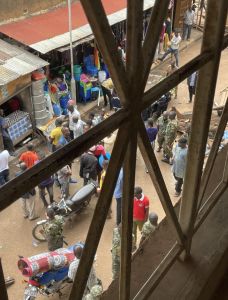
By Sunday the 3rd, Gulu Main Market appeared abandoned with all sellers being told to relocate inside or sell from their homes. Sunday night, where I would usually see dozens of sellers selling food, clothing, shoes, etc. was eerily quiet, with military roaming the streets and no sellers outside.
I met with my friend Hamuza who is originally from Kampala but has been living and working within Gulu for the past couple of years to discuss how the order has effected his livelihood. Hamuza worked a cart seven days a week where he would sell fried fish, chicken, and chips across the street from my hotel (he did not own the cart). After the order, military came and chased everyone off the street, warning them not to return or they will face consequences. As a result, Hamuza has returned him to Kampala to see if he can find any job with his family as he can’t afford rent in Gulu and the cart owner has suspended his payments.
While the goal of the order is to make cities cleaner and to increase the amount of sellers within designated town markets, tens of thousands (possibly even hundreds of thousands), will feel the effects of the order as they can’t afford to rent a space, thus preventing them from earning a income and supporting themselves and their families.
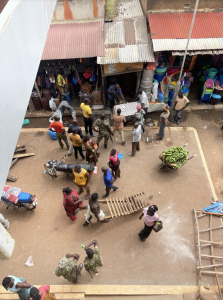
Military ordering the removal of non-permanent structures
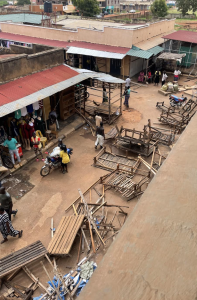
The destruction of people’s livelihoods
-
The Big Dig: Engagement of Parents and the Power of Community
1 CommentAfter awarding the Wash Project to Awach P7, Joyce, the incredible head teacher, was able to quickly round up and organize the parents in preparation for the big dig. With the instructions from the contractors already distributed to the teachers, everyone was on board on where to begin the digging. Over the course of two days, parents of enrolled students came together to help get the project rolling.
On the first day of the dig, Emma, Benson, and I arrived around 11 A.M. We were pleasantly surprised with the rapid pace and the amount of digging that had been completed. Parents had been working as early as 5 A.M., and the turnout had exceeded all expectations; as many as 120 parents gathered on the first day as they dug the pit in support of their children!
Despite the hot conditions, the long journeys they made to be able to attend, and the hard labor they endured, the parents felt extremely thankful that the Wash Project was taking place and benefiting their children. As the digging came to a close at around noon, the majority of the dig was able to be finished in one day due to the hard work and dedication of the parents.
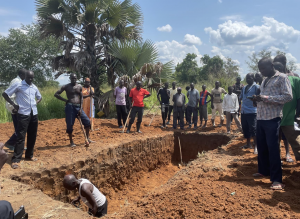
Parents partaking in the dig
With all the success and progress made, the GDPU team made it a point to thank and speak to each parent that came out in support, starting with Benson, one of GDPU’s executive members and treasurer. Emma then spoke to parents about the importance of attending to children with disabilities and the importance of caring for them and giving them equal opportunities. She then referred parents to the resources at GDPU like wheelchairs, walking sticks, etc. and then opened the floor up to the parents to express any personal experience with individuals with disabilities and things that the community as a whole can do to assist these individuals. Afterwards, I shared my thoughts and thanks to the parents, expressing my gratitude of how fortunate I was for their support and how the project will be conducted and completed before I return to the US. Despite the language barrier for some, my smile and hand motions spoke more than my words.
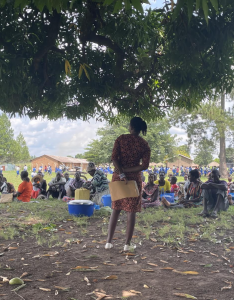
Emma delivering her speech to the parents under the tree
As we sat under the tree enjoying our posho and beans, the success of the first day of digging came to a close. With many more adventures left in this Wash Project, the school community was left hopeful and more connected than ever before.
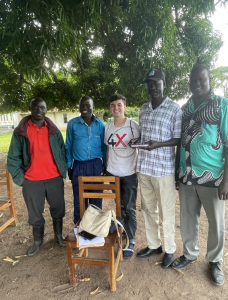
Speaking with some of the parents after lunch
-
The Wash Challenge at Awach and GDPU’s Goals
1 CommentWhile Awach P7 has received extensive renovations as well as the current construction of a on-site health clinic for students, the toilets have not received the same care. Students are consistently faced with a horrific stench when they enter the toilets. As they continue to enter the stall, they notice feces smeared across the walls, a door barely clinging on, and maggots seeping out of the toilets. The fear, disgust, and embarrassment kick in as they contemplate using the bathroom in public or under these conditions, no choice seeming more appealing than the other. That is what the students at Awach P7 face daily.
During my first visit to Awach P7, the majority of the time was spent with Joyce, the head teacher. We visited the boys and girls toilets only briefly, rather, tackling the logistics of the school such as enrollment, need, and number of students with disabilities within her office.
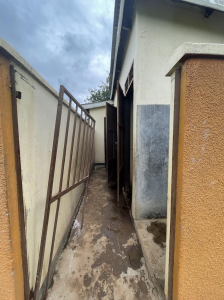
On my second visit to the school, I was able further examine the toilets and the existing conditions that were breeding grounds for diseases. As we conducted our interviews with the teachers and evaluated the student-to-toilet ratio, we realized the toilet disparity and lack of proper sanitation was a real barrier for these students.
At Awach P7 there are 10 stances, 5 for the girls, and 5 for the boys. The extenuating conditions of the toilets has created an environment where the boys find it easier to pee in public than to enter the stalls— leaves, stones, and the walls serving as their primary form of toilet paper gave an insight into the lack of a bathroom system in this school. For the girls, the conditions were exacerbated as it is much more difficult for them to use the bathroom outside of the stalls creating large wait times across the school to enter the toilets. During their menstrual cycles, the girls have no room to change their clothes or change their pads. There is a pile of used pads outside the girl’s bathroom that the administration burns weekly adding to the embarrassment of simply using the restroom. Because of this, in addition, the project is tackling a new changing room for the girls to assist them when needing to change or during their menstruation cycle.
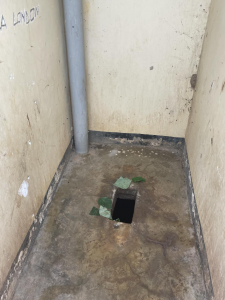
Poor conditions at Awach P7 toilets
The deliverables for this project were broken down into 3 main sectors: sanitation and containing the spread of disease, accessibility, and creating a safe environment for students to be able to use the bathroom.
One we confirmed with Joyce that Awach P7 had been selected for the construction of our Wash Project, we conducted a full investigation, took photos, and observed the nature of the toilets during our time there. One of the doors had caved in, toilets were blocked and unusable, and maggots were crawling in and out of the toilets making it impossible to use these facilities. Many students would rather dispose of their feces outside the toilets because of the intense conditions. After seeing the worse-than-expected conditions, I reported back to AP and evaluated the budget with Iain and Delaney.
After vouching on behalf of the school that the need of renovating the existing toilets was greatly needed, AP was able to pull together an additional $5,000, bringing our total investment into toilets at Awach at $15,000. All in all, we with the increase in the budget, we’re able to distribute soap and toilet paper, renovate the 10 existing toilets, and have a grander handover ceremony which will be unforgettable.
Increased enrollment is something the school is tackling and an expansion of a bathroom system that is accessible to all the student population is of the utmost importance. Pressure and pride should not be factors that students have to consider when relieving themselves— GDPU and AP are changing this.
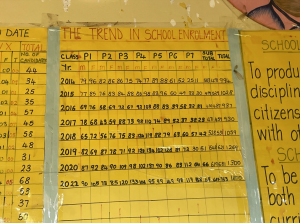
Poster with school enrollment numbers at Awach P7
-
Choice of Schools: On to Awach!
Leave a CommentChoosing a beneficiary of AP and GDPU’s Wash Project has thrown us for a loop. Prior to my arrival here in Gulu, I had been informed that the school on the receiving end of the project would be Saint Martin Lukome Primary School. The school was due to receive the Wash Project in 2021 by previous fellow Anna, however, with the COVID pandemic and the lockdown, the project was unable to go ahead as planned. Within my first couple of weeks in Uganda, we made a visit to Saint Martin Lukome but were unimpressed with what we came across.
Prior to our visit, we had organized a meeting with the head teacher to reconfirm our dedication to the school and providing them with the much needed toilets. However, once we arrived, the head teacher was nowhere to be seen. This caught us by surprise as we had anticipated that the head teacher would be ecstatic to receive the Wash Project, however, we had come to realize why the head teacher did not prioritize our visit… they had just received new toilets but had failed to disclose this information to us.
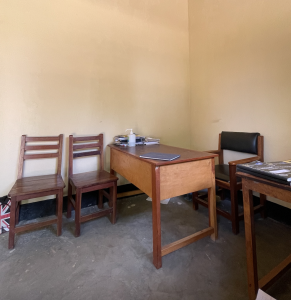
No one to be found within the head teacher’s office
The next day we made a visit to the DEO office where we conveyed what we had come across and requested to work with a new school. After looking at the list, the two schools that were most in need of toilets based on the toilet to student ratio were Panyikworo Primary and Awach P7.
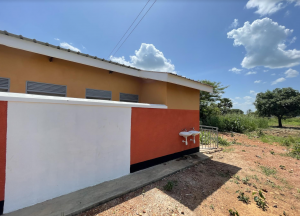
The newly built toilet at Saint Martin Lukome Primary School
After visiting both schools and meeting with both head teachers, we decided to select Awach P7.
While both schools were in need, Awach P7 has an enrollment of 1,400 students and a mere 10 toilets, five for boys and five for girls. With maggots crawling around the toilets, feces covering the walls, and unbearable smells coming from the toilets, we realized the immense need of the school and the students, inspiring us to tackle this project.
-
Dancing, Posho, Desserts, and Sign Language
3 CommentsMy time here in Gulu with the Gulu Disabled Persons Union (GDPU) has thus far been nothing short of incredible. The staff, Emma, Mary, Brenda, Ruth, Walter, Patrick, Charles, and Faruk continue to welcome me with kindness and smiles on a daily basis, making work at GDPU seem more and more like a place I can see myself spending far more than ten weeks.
While I have experienced many new things, perhaps my favorite is spending time with the students in their classes. Here at GDPU, there are over 65 students between the ages of 16 – 30 (some boarding while others are day scholars) who are beneficiaries of a UK-based organization grant which enables them to spend six months at GDPU. During these six months, the students take a course in a particular field in the hopes of assisting them pursue a career. Some of these courses include knitting, tailoring, boda boda (motorcycle) repair, phone repair, hair styling, and handicrafts.
Due to the student’s disabilities and/or family’s financial status, all of them are no longer enrolled in school. Some have received very little to no schooling, with the opportunity to receive skills-based learning coming as a blessing to the students and their families. Not only does learning a new skill assist in establishing a career, but also allows the students to create friendships with other students with disabilities.
Over the course of my time here, I have spent much of my time in Brenda’s knitting class and Charles’ boda boda repair class. Brenda’s class is composed of about a dozen students, all girls and Francis, an incredibly talented blind knitter who has a great sense of humor and a love of Gospel music. Charles’ class on the other hand is all boys, also about a dozen, with a third of them being deaf and communicating through sign language.
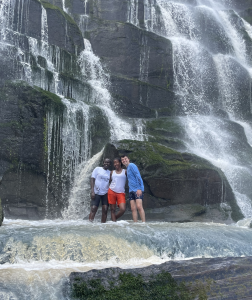
Celebrating Emma’s Birthday at Aruu Falls
Dancing
During my second visit to Brenda’s class, I asked her students if they would like for me to play some music from my speaker. After an excited “YES!” we put on Apple Music’s Top 100: Uganda and danced, sang, and laughed. Since that day, it has become customary for me to bring my speaker to Brenda’s class and for the students to dance and enjoy, as well as watch the Mzungu attempt to dance.
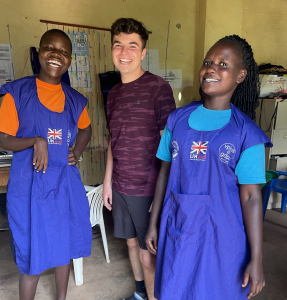
Salamay (L), Linda (R), and myself mid-dancing
Posho
The first couple of weeks, I found myself eating at Elephante Commons, a DELICIOUS restaurant across the street from GDPU. However, this past week, I decided that I’d rather spend my time eating lunch with the students at GDPU. Every day the students are served posho (or rice) and beans. While I was not fond of the posho (corn flour porridge) at first, I have developed a liking towards it and getting to speak to the students outside during lunch.
Desserts
With the money I saved from not eating out for the week, I decided to go to Elephante Commons and buy some desserts for some of the students. I purchased a dozen brownies and a dozen lemon bars which were INCREDIBLE. I gave them to the students, all of which had never tried a brownie or a lemon bar before. They were a HIT to say the least.
Sign Language
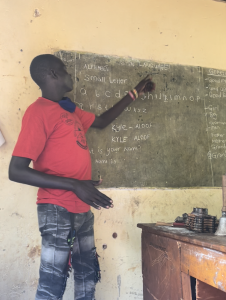
During my first visit to Charles’ class, I was greeted by all of the boys. Upon arrival, the students introduced themselves to me either through speech or sign language, and after class, spent time teaching me sign language which was an incredible experience. While I still have a lot to learn, I have been practicing, allowing me to greet and communicate with all students at GDPU.
-
An Unforgettable Flight
1 CommentWhile I fly quite frequently, I often find the experience unenjoyable; cramped seats, crying children, and relatively untasteful food don’t add to the experience. However, on my flydubai flight from Dubai to Entebbe, the capital of Uganda, I experienced a memorable flight for all the right reasons; unmatched kindness, laughter, and stories, that will reside in me for a very long time.
Prior to boarding, I struck up conversation with two girls who were sitting next to me at the gate. They were also in their 20’s, Indian-Kenyan friends residing in Uganda due to their families changing business operations. They had both longed for an escape from the chaos of Kampala and had set out on a week-long vacation in Dubai. They expressed their disappointment with flydubai’s business class, the airline losing their baggage, flydubai swapping our airport last minute from Dubai International to the uncompleted Dubai World Central, and the sadness of returning to Kampala which was supposedly inferior to Nairobi. After our quick conversation, we swapped Instagram handles and began the boarding process.
A bus took us from the gate to the plane. After waving goodbye to the two girls as I walked past them in row one, I made my way to my seat in economy. The boarding experience took a turn for the worst when the girl sitting in my window seat refused to move. After I showed her my ticket and told her it was my seat, she told me she wanted the window and didn’t want the middle. As I explained that I also did not want the middle, the girl on the aisle moved to the middle and said, “don’t worry, any seat is fine for me.” Her name was Mariam.
Mariam, named after Mother Marie, is in her late twenties and is a Born-Again Christian from the outskirts of Kampala. While her dream is to be an author and to study psychology at university, that dream remains out of reach for now. For the last 2.5 years, Mariam worked as a housekeeper in Salalah, Oman. She expressed how challenging the work is and that it is constant, working 7 days a week as early as 5 or 6 in the morning, to late in the evening. Her contract states she must stay with one family for at least two years, but she has yet to fulfil that. She expressed that some of the families are so horrific she has to find another to work with so she can leave, even if it means not finishing her contract. While her free time is incredibly limited, she enjoys studying psychology and geography. While her contract is not yet finished, she hopes to spend as much time with her family and warn others how horrific the work is for Africans in the Arab world.
Next to Mariam in the window seat was Sarah from Mbarara, the second largest city in Uganda after Kampala. In retrospect, I am happy she had the window seat. While shy, Sarah was kind and had a contagious smile. She was returning home after a few years doing domestic work in Abu Dhabi and was ecstatic to be returning home to say the least. During the descent she kept repeating, “I’m almost home, I’m almost home” and was clapping and screaming when we made our landing.
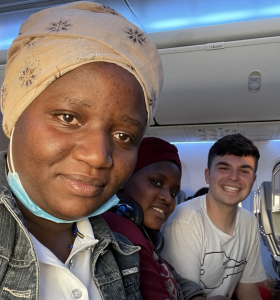
Sarah (left), Mariam (center), and myself
Sitting behind me was Shifa who ended up becoming a very good friend. Shifa is also 22 years old and spent the last couple of years in Riyadh, Saudi Arabia. At first glance I thought she was Muslim since she had her hair covered with a hijab. In response to my curiosity, I asked her if she was Muslim to which she replied with an outburst of laughter. She told me that Uganda is a predominantly Christian country, and that most women had their hair covered on the flight because they were coming from Arab countries and were embarrassed to show off how knotted their hair had become.
Shifa worked in sales in Riyadh and expressed how difficult it was to adjust to the strict lifestyle. In addition to the horrific racism in Saudi Arabia where Africans are viewed as property more than people, Shifa said “Blacks are treated the worst, worse than the women and much worse than the camels.” It was shocking to hear how camels were valued more than women, and how according to Shifa, men have more compassion towards their camels than their own wives with the pyramid of rights being men, camels, women, then blacks. While there have been major changes within Saudi Arabia in the past few years, almost all people Shifa interacted with expressed disapproval towards Crown Prince Mohammed bin Salman’s wishes to modernize the country. What shocked me most is when Shifa mentioned that if a Saudi attacks an African verbally or physically for no reason and the African defends themselves, the African will face time in prison or even death while the Saudi faces no penalty. Horrifically, it is very common in Saudi Arabia to kill African workers if they’re not doing their work properly or to punish them by gagging, lashes, or locking them away.
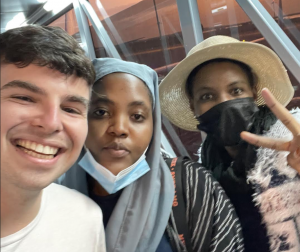
Shifa and I with a photobomber
I am overjoyed that Shifa, Mariam, and Sarah were able to make their way back home. However, this is not the case for many African workers who go “missing” or are killed on the daily. Both Arab and African heads of states must be held accountable for pushing for this horrific form of modern-day slavery and I believe that there should be a further push for all African countries to introduce e-passports since many African workers have their passports seized on arrival.
-
I Almost Died of COVID-19
Leave a Comment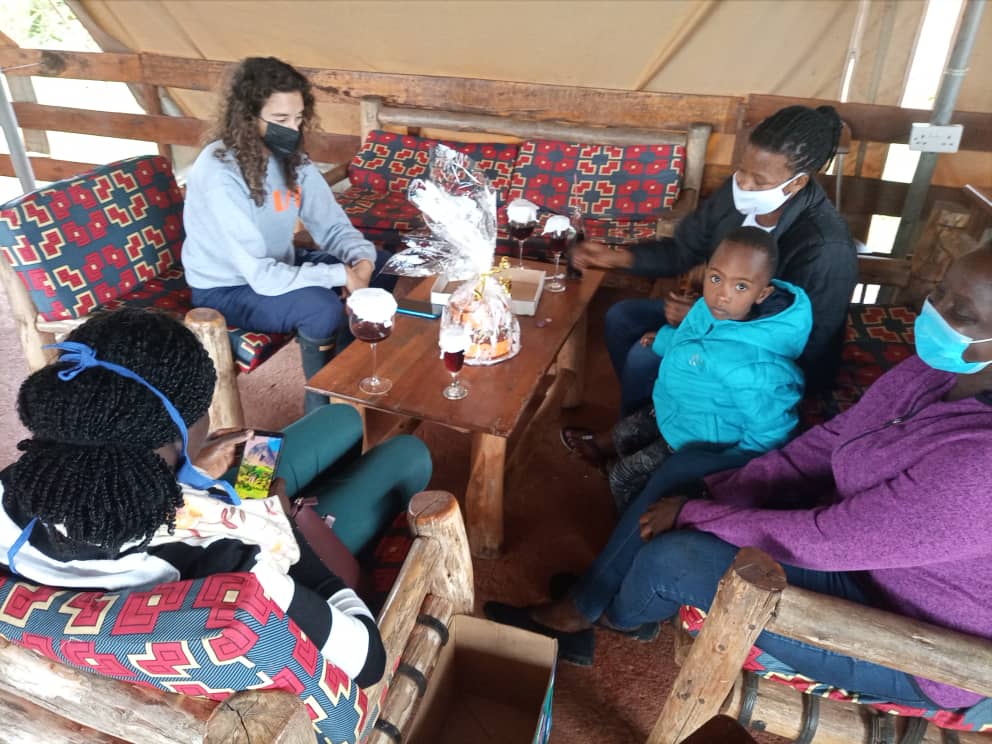
Emma, her son Josh and Ugandan friends celebrate the birthday of Anna Braverman, 2021 Peace Fellow, at Anna’s hotel in Gulu.
It was such a horrible experience for me when I realized that I was COVID-19 positive.
At first I thought my blood sugar and pressure was the one disturbing me and I went to the hospital not knowing and thinking that I was a suspect of covid-19. I got back home but there was no improvement in my health. It was getting worse until I had a chat with Anna (Braverman, Peace Fellow) and described to her how I was feeling.
Anna encouraged me to get tested for corona virus and on the 18/August I was tested. The result came out positive. This brought a lot of worries and headache to myself. I felt like I would not see more days ahead of me. My life was at stake since I have not yet been vaccinated against Covid-19 .
I already had difficulty in breathing. It was on and off and could worsen in the night. I felt like I carried some heavy loads on my chest. I suffered a serious headache and coldness and got an itching throat. I lost all my senses of smelling and my appetite went off completely for about one week.
I was prescribed some medications by the doctors to help boost up my immunity and open up my chest so that I could breathe. I was told to have enough rest, drink a lot of water, sun-bathe every morning and do a lot of exercise to help my body function well. Every evening I would take a walk, jump and do skipping with the ropes.
The covid-19 hit me badly. There are many negative things that people think. I was psychologically stressed because I thought that I was going to die and leave my (son) Josh and my family. I was also afraid that my mum who is HIV-positive would also die because we all have underlying conditions.
I got all what I could do so that I get better, I ate a lot of fruits and local greens that could help me recover as soon as possible. The doctor gave me his contact number and told me to call him whenever I had any questions. (He said that I should) if my condition got worse I should get back to the hospital immediately. I felt so bad and worried each and every moment thinking that if I am taken onto oxygen I could easily die. Most people that are put on oxygen they always die.
But all in all I was very positive about life. My mother was very caring at the same time she was also scared that the situation might get worse. I isolated myself in one of the rooms though I couldn’t avoid my son Josh who is only four years old and very stubborn. I was wearing my face mask throughout, sanitizing and washing my hands all the time.
Anna and Iain have been checking out on me all the time this makes me very strong and I feel loved and cared for. I was able to make it through despite that facts that I was very sick.
When someone tests positive the best thing to do is to have faith and be close to the hospital and to always have a positive mind.
I am looking forward to get vaccinated and urging other GDPU team members to get vaccinated. I will always continue to maintain all the standard operational procedures wherever I am.
I thank God for protecting me and still keeping me to be alive. My sincere gratitude to all the AP team and GDPU team for praying for me and standing with me during the horrible time. May God continue to bless us all and protect us from this pandemic.
Love from Ajok Emma
“I isolated myself in one on the rooms though I couldn’t avoid my son Josh who is only four years old and very stubborn.”
-
Two Women of Women in Action for Women in Northern Uganda Advocate for ICC Reparations
Leave a Comment*Trigger warning: sexual violence*
In January 2004, the Government of Uganda (GoU) referred itself to the judgement of the International Criminal Court (ICC) for war crimes and crimes against humanity perpetrated by the Lord’s Resistance Army (LRA) in Northern Uganda.
For context, the LRA is a rebel group that operated from 1987-2006 in Northern Uganda, where they unsuccessfully fought to establish an independent Acholi government ruling according to the Ten Commandments under the leadership of the self-declared prophet Joseph Kony. They are infamous for abducting approximately 30,000 children, who were forced to serve as soldiers, and domestic servants and wives to commanders. In these capacities, forced conscripts suffered unspeakable hardships.
Much literature has been written on the GoUs self-referral. The overwhelming consensus is that the GoU hoped to gain international legitimacy in the fight against the LRA. Indeed, the 2004 budget proves that point; donors provided some 50 percent of the total budget, with the cost of defence amounting to 23 percent, and that of public administration to 22 percent of total government expenditure. Donations inadvertently entrenched Museveni’s patronage system, and supported government corruption.
The ICC issued warrants against Joseph Kony, who remains at large, and three other LRA commanders, including Raska Lukwiya and Okot Odhiambo, who have since died, and Dominic Ongwen, who was sentenced to 25 years of imprisonment for a total of 61 crimes comprising crimes against humanity and war crimes on February 4, 2021. In accordance with article 79 of the Rome Statute, the ICC may order money collected to benefit victims of crimes and their families. Since 2004, the Trust Fund for Victims has been responsible for implementing Court-ordered reparations, and providing psychological, physical, and material support to victims and their families. According to Resolution 60/147, adopted by the General Assembly on March 21, 2006, victims constitute
“persons who individually or collectively suffered harm, including physical or mental injury, emotional suffering, economic loss or substantial impairment of their fundamental rights, through acts or omissions that constitute gross violations of international human rights law, or serious violations of international humanitarian law. Where appropriate, and in accordance with domestic law, the term “victim” also includes the immediate family or dependents of the direct victim and persons who have suffered harm in intervening to assist victims in distress or to prevent victimization.”
In the specific case of Ongwen, victims are those who suffered harm as a result of his command over the Sinai brigade of the LRA between 1 July 2002 and 31 December 2005. Although Ongwen himself was a child soldier, he “was aware of the powers he held, and he took sustained action to assert his commanding position, including by the maintenance of a ruthless disciplinary system, abduction of children to replenish his forces, and the distribution of female abductees to his subordinates as so-called ‘wives,’” per the ICC’s decision on the confirmation of charges on March 23, 2016.
Two eligible victims are Victoria Nyanjura and Akello Margaret of an AP Partner organization in Northern Uganda called Women in Action for Women (WAW) that seeks to transform vocational training into livelihood opportunities to improve members’ economic, social, and political lives.
Victoria and Margaret were both abductees in the Sinai brigade within the indicated timeframe. The founder of WAW, Victoria was abducted by the Lord’s Resistance Army when she was 14 years old. After eight years in captivity, she returned with two children from her forced marriage to a rebel commander. Please listen to her story in greater detail here.
Like Victoria, Margaret was abducted as a child — at the young age of 10 while in second grade. She describes her experience:
I was forcefully given to a man to live with as his wife at an early age. I was beaten. We walked long distances carrying heavy luggage before I was rescued by the government soldiers in a close battle where the gunships, helicopters, and foot soldiers were all over. I remember that the caretaker of my eldest child disappeared, and I had to look for her. I then went with the government soldiers to look for my child and the caretaker. The soldiers almost shot at us thinking that we were soldiers wanting to fight them.
Life has been so hard ever since I returned because I had no home to return to; I lost my parents, and have nobody to look after me. I also got a man and we had 2 children, but he left me with them. It hurts me so much how these men act nice but end up hurting us further. I do not have any skills that can help me earn a living, but would like to learn how to make cakes and bread. There is a large market for them, and I am very sure it would help me to earn and be able to provide for my children and myself.”
This summer, AP successfully connected Victoria and Margaret to a member of the Trust Fund for Victims in Kampala, Uganda, who will help them file for reparations under the Ongwen verdict. AP will continue to monitor their progress, and advocate for their right to reparations.
-
WASH at St. Martin’s Primary School: Addressing the Accessibility Gap
2 CommentsSt. Martin’s Primary School is only accessible by a dirt road. It is, quite literally, off the beaten path. Located about 20 km from Gulu, St. Martin’s is surrounded by bush that extends for miles. Many classrooms do not have roofs, and are overgrown with underbrush — an unfortunate consequence of an ongoing lawsuit between contractors that has left numerous buildings half-finished since 2013. Until these buildings are finished, they are unusable.
This is unfortunate because the school has an enormous population of 1445 students, but only 11 classrooms. 300 students are crammed into each classroom. No wonder why COVID-19 spread so quickly in schools!
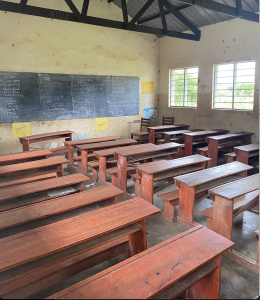
A classroom for 300 students.
Besides an inadequate number of classrooms, there are also an inadequate number of latrines. 10 stances serve 1445 students — and teachers, and parents, and staff, and visitors. That is a ratio of 1 toilet to 144 students. 5 of the stances are for girls, including a washroom, and 5 are for boys. None of the stances are drainable, and the boys’ are about to reach full capacity. The girls have nowhere to deposit sanitary pads after use. Furthermore, the teachers do not have their own stances. When they need to use the bathroom, they are forced to walk to the neighboring church and use their facilities, which they described as incredibly embarrassing.
None of that is even to mention the accessibility of the facilities for people with disabilities. In Uganda, 12.4% of the population, or 4.5 million people, live with some form of disability. Unfortunately, persons with disabilities are among the most marginalized groups in both the public and private spheres. Women with disabilities especially suffer from lack of access to basic needs, such as education opportunities.
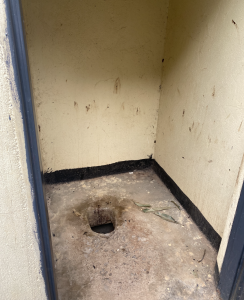
Boys Latrine at St Martins
St. Martin’s is a case in point for the additional challenges faced by people with disabilities. The latrines are located about 40 meters from the nearest classroom. The narrow, winding dirt path that leads to both the girls and boys’ latrines was difficult to navigate for me — an able-bodied person. The path is far too small, uneven, and overgrown for a person in a wheelchair, or on crutches, to readily use.
This situation violates the human right to sanitation, which, in the words of the Special Rapporteur on the human rights to safe drinking water and sanitation, “entitles everyone, without discrimination, to have physical and affordable access to sanitation, in all spheres of life, that is safe, hygienic, secure, socially and culturally acceptable and that provides privacy and ensures dignity.”
It is important to remember that the blame lies not with the school, but with the government, which continuously fails to provide resources for schools like St. Martin’s Primary.
In the face of the dire situation at St. Martin’s, Gulu Disabled Person’s Union (GDPU) will be building accessible toilets there this summer. GDPU’s approach to Water, Sanitation and Hygiene (WASH) is inclusive, sustainable, and successful. Having already installed toilets at four other schools that remain operational to this day, Patrick, the project manager of WASH at GDPU, has become something of an expert on toilets.
The key to GDPU’s model is its incorporation of teachers and parents from planning to construction to maintenance, which inspires community ownership of the toilets, and gives community members incentive to maintain the toilets.
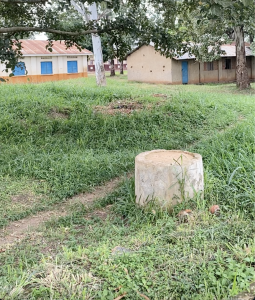 At the beginning of the process, GDPU meets with teachers and parents to solicit their advice, such as where the toilet would be best placed, and ensure that their needs are met. Usually, parents take shifts digging the latrine pit with the advice of the engineer. However, during COVID-19, this proves a challenge. According to the Ugandan Ministry of Health’s Standard Operating Procedures (SOPs), no more than 20 people can meet at once, all must wear a mask, and all must be at least 2 meters apart.
 Given these procedures, GDPU has had to adapt its modus operandi; instead of gathering in one large group, parents will dig in small groups, and will continually rotate. Another staple of GDPU’s procedure that has been impacted by COVID is teacher inclusivity training. Instead of gathering all the teachers together to explain toilet maintenance and disability accessibility, GDPU will produce a brochure that will be provided to teachers and parents alike with frequently asked questions.
Lastly, the handover ceremony, a celebration of the community’s work on the toilet during which it is “handed over” to them will be pushed to September, when (hopefully) more than 20 people can gather at once.
-
A Comedy of Errors: Travel in the Time of COVID
2 CommentsI made sure to take a PCR test within 24-hours of my flight’s departure from New York City to Amsterdam. It is a requirement for passengers travelling to the Netherlands to test within 24-hours. I wasn’t sure about passengers merely passing through the airport, but to be safe I took my test on Friday before flying out Saturday evening at 6:30 p.m.
My PCR appointment was initially scheduled for 4:00 p.m. on Friday, but it was moved to 6:00 p.m., and then to 8:00 p.m. Not a problem, the company assured me: I would still receive my result by 3:00 p.m. the next day — in time to print my results before heading to the airport. I spent Saturday morning packing and relaxing, and at around 1:00 p.m. went out to a delicious Italian lunch with my parents.
When I got back to the house, I had two missed calls on my phone from the testing company. They had left a voicemail: “‘Hi…we are unable to get in touch with the lab and don’t think we’ll have your result by 3:00 p.m. I am so sorry about this. We are going to reimburse you because we guaranteed that you would have the result by 3:00 p.m. Please call back when you get this message.'” A chill momentarily passed through my body. This wasn’t according to plan. “It’s OK,” I assured myself, “I’m sure you’ll have the result soon.'”
I called back to learn more about the situation. The man told me that the result should have been in at 10:00 a.m. that morning, but that the lab had alerted him at 12:30 p.m. that they hadn’t yet tested the samples they received last night. He wasn’t able to get a hold of the director, but was sending him messages through their secure system. I felt a wave of panic pass through my body. “Ok, but when do you expect to receive the results?” I asked, my frustration bubbling to the surface. “Uhm… we’re not sure. I don’t know if it will be 30 minutes or an hour or two hours because uhm… we don’t want to make another guarantee and uhm… I haven’t been able to get in touch with the lab.” It was 2:30.
He told me that the best idea was to get a rapid test at the airport just in case the results did not come in on time. But didn’t he understand that I had taken a PCR test to avoid getting tested at the airport facility, which was sure to have a long line? “Relax. Calm.” I soothed myself. “It will be fine.”
At 3:00 my parents and I hopped in the car and sped off to the airport — for about 7 minutes, until we hit stop-and-start traffic that was moving so slowly the Bronx River Parkway felt like a parking lot. To make matters worse, the quickest route to the airport — the Hutchinson River Parkway — was closed.
After numerous calls to the company and no lab results to be found, it began to dawn on me that I might not get the results in time to check in for my flight. “Look up other flights,” my dad barked from the driver’s seat. “If you have to wait for results at the airport, you are not going to make your flight in time with this traffic.” My heart began to race; this was turning into a disastrous start to my over 30-hour trip to Gulu. I was no longer in control…
Luckily, a quick Google search told me that KLM offered another flight an hour later to Amsterdam, which would still give me time to make my connecting flight to Uganda. After holding for 20 minutes on KLM’s customer service line, I finally reached a representative. She was able to change my flight with no additional charge. I instantly felt more relieved, but still had to book my testing appointment at the airport. The second time I refreshed the airporting testing website, I found an available appointment at 5:45 p.m. I would barely have enough time to get tested and make my flight, but I had no choice; I booked it. This was going to be tight.
When we arrived at the airport, I hurriedly said goodbye to my parents outside the terminal. I rushed to the bathroom, and then to the testing center. Two people in front of me, about 25 minutes to get results. Not bad. I would be able to test before my allotted appointment. After checking in and paying the $225 fee (!), I was ushered into a room where a nurse took down my information and swabbed my nose. “Can I check in while I wait for my result?” I asked, pressed for time. “No, you need your negative test result,” she told me, with a look of pity on her face. “Don’t worry, though, you have plenty of time,” she cooed soothingly. Relieved, I sat down in the waiting area with renewed hope.
About thirty minutes later my negative result finally came in. It was now 6:00 — just one hour and a half before my flight. I rushed upstairs to check in at Delta, only to find a huge line that snaked outside of the roped area. My jaw nearly dropped to the floor. There was no way I was going to check in on time. Instead of waiting in that long line, I went directly to the designated KLM area, but was turned away by a staff member. “You have to wait in that line,” she told me sternly. I returned dejectedly.
After about 20 minutes, the line had barely moved. “You are all going to miss your flight,” a blunt staff member told the desperate people in line. When someone complained that they had a 7:30 p.m. flight she simply said: “You should have gotten here earlier. You’re going to miss your flight.” There was no way that I was going to miss my flight after the ordeal that I had already been through. I left my bag in line and steamrolled directly to the KLM desk. “My flight is at 7:30, and I need to catch it because I have a connecting flight,” I desperately told the agent. Taking pity on me, he commanded me to hurry up; “if you don’t check in now you’re going to miss your flight” he practically yelled in alarm. I ran back to the line, grabbed the bag I had left behind, and sprinted directly to the desk. I was checked in in under 2 minutes.
Right before checking in, my negative PCR test came in. “What did that matter now” I thought to myself with a self-pitying laugh. I rushed through security and sprinted through the airport until I arrived at my gate. Ironically, there was a long line to check in; apparently I had made it with time to spare. When I finally got to the front of the line around 45 minutes later, I showed the Delta agent the negative test I received at the airport. “Where are you going?” he asked. “Uganda” I told him. After typing the destination into his computer to check the COVID requirements, he reported that I needed a negative PCR test to enter the country, and the test I had showed him was not a PCR test. Chills ran through my body. Forgetting that the 24-hour test was a PCR test, I replied, laughing nervously: “To be safe, I got another test.” I showed him the result from the other test, which had come in just an hour before. “Use that one; it’s better,” he instructed me. He signaled for me to pass through the jetway. Relief poured over me as I realized I had made it.
-
Ethical Considerations of Travel to Uganda During COVID-19
6 CommentsI have made the decision to stay in Gulu, Uganda for ten weeks this summer as a Peace Fellow with the Advocacy Project (AP). This was not an easy decision, because COVID-19 has painted in stark relief the ethical questions that come with traveling to third-world countries. Inadequate health care, high rates of autoimmune diseases, and widespread poverty make Uganda particularly susceptible to COVID outbreaks, and negative outcomes for sick patients. Given the situation, why did I elect to travel?
Most importantly, AP’s Uganda partners have invited me to come. The Ugandans with whom we work know the on-the-ground situation best, and have assessed the risk of my stay to be minimal enough that the benefits of having an AP partner in Gulu outweighs the costs. Furthermore, the government of Uganda has granted me a tourist visa. In their expert opinion, my entry does not sufficiently risk the wellbeing of the Ugandan people.
I have planned my travel to be as COVID safe as possible. I am fully vaccinated. 24-hours before traveling, I will take a PCR test that I must present before boarding the plane in New York. Upon return to the United States, I will also take a PCR test (available at the Entebbe airport). I will travel directly from Entebbe to Gulu with a hired driver, and will keep my mask on at all times inside the car. In Gulu, I am staying in my own building within a compound. The compound has its own restaurant, so I will be able to eat my meals in my room. In the case that I need to quarantine, I can safely do so there. I will travel to and from meetings with a hired driver, and will wear a mask. I will conduct meetings outside whenever possible (it is the rainy season), and maintain social distancing.
In reality, most people with whom I interact will not be masked, and will not maintain social distancing. I am not responsible for their choices, but I am responsible for my own. I believe that the preventive measures I take will prevent others from possibly contracting the virus.
Although I am fully vaccinated and will adopt best COVID-safe practices, only 0.6% of the population of Uganda has been fully vaccinated, and around 5.8% of the adult population are HIV+. Furthermore, hospitals are notoriously underfunded, and have low technical efficiency. This means that Ugandans are at high risk for severe COVID cases, and negative outcomes given hospitalization. This begs the question: As a fully vaccinated person, can I still contract and, more importantly, spread the virus? Recent studies have shown that vaccinated people who contract the virus are less infectious because they have less virus in their systems. Further supporting the conclusion that vaccinated people are extremely unlikely to spread the virus is the finding that fully immunized participants were 25 times less likely to test positive for COVID-19 than were those who were unvaccinated. Although there is a small chance that I may contract the virus, there is an even smaller chance that I will spread it.
Even if I am unlikely to contract or spread COVID, I may get sick from another illness and take up space and resources at a health clinic that would otherwise go to a Ugandan. This is an issue that is present in non-COVID times, but is especially salient during the pandemic. In order to prevent severe illness, I have gotten vaccinated against yellow fever (a requirement to enter the country) and typhoid, and will take malaria pills for the duration of my stay. In order to treat a possible infection without the need for a doctor’s visit, I am bringing antibiotics. These measures, in addition to my COVID-safe practices, should protect me from contracting an illness that necessitates a visit to the hospital.
I believe, along with AP’s Uganda partners, that the benefits of travel outweigh the costs. I look forward to your comments!
-
Reflections on Disability in Uganda – from a Distance
4 Comments
This is the flag of Uganda, the country I was supposed to travel to for approximately two months for a summer fellowship. Thanks to coronavirus, I am not able to travel to Uganda but instead am stuck in my basement, working remotely with the Gulu Disabled Persons Union, in partnership with the Advocacy Project. Looking at previous fellows’ blogs makes me sad that I can’t physically be in Gulu, Uganda; nevertheless, with my personal and professional experience, I am determined to make a difference by assisting the GDPU staff remotely.
Growing up as a blind child, my ultimate goal was to become an air force pilot. As an adult, my cousin enjoys reminding me that at the tender age of six, I was convinced I would buy my own plane and fly my family around the world. Years later, I now realize that flying a plane is not possible for me due to my visual impairment. However, my passion to explore the world in different ways has not waned.
I grew up in Haiti, a tumultuous country ruled by dictatorship, which was replaced by a pseudo-democracy, but injustice and inequality continued to reign. As a legally blind young man, I experienced those injustices myself. For instance, the lack of legal protection in Haiti for those with disabilities caused bullying in school to be a common occurrence. As a result, older students would jump in front of me while I was walking and wait for me to collide into them and laugh as it happened. Moreover, some students would punch me and run away, knowing I could not fight back. However, these traumatic experiences did not deter or discourage me. Instead, it gave me more strength and determination to press forward with my studies, so that one day I can be a contributor to the fight against injustice and inequality around the world.
Given that I partly grew up in a country where inequality was the norm, this embedded in me the passion to fight to have a world with more equality. After multiple conversations with Iain Guest, the director of the Advocacy Project, as well as Ojok Patrick, the director of the Gulu Disabled Persons Union, I realize there is much work to be done. As a disabled person who has experienced injustice myself growing up in a third-world country, this fellowship will be an opportunity for me to assist the staff of the GDPU in the fight against inequality in Gulu, Uganda.
-
New Toilets Save Ugandan Primary School from Closure
Leave a CommentNew Toilets Save Ugandan Primary School from Closure
-
Girl Ambassadors Challenge Child Marriage in Zimbabwe
Leave a CommentGirl Ambassadors Challenge Child Marriage in Zimbabwe
-
American Quilter Finds Peace with War Survivors in Nepal
Leave a CommentAmerican Quilter Finds Peace with War Survivors in Nepal
-
The Sustained Latrine Model for Gulu
3 CommentsThe brick and mortar, concrete, and hard manual labor is coming to a close with only minor piecework inside the individual stances remaining. This includes grab bars, railings, the approved wheel chair height, and the appropriate water tanks and basins for cleaning. An elongated walkway from the school to the latrine will deplete the final count of cement bags and funds for construction, as the budget and supplies have run its course in the latrine construction.
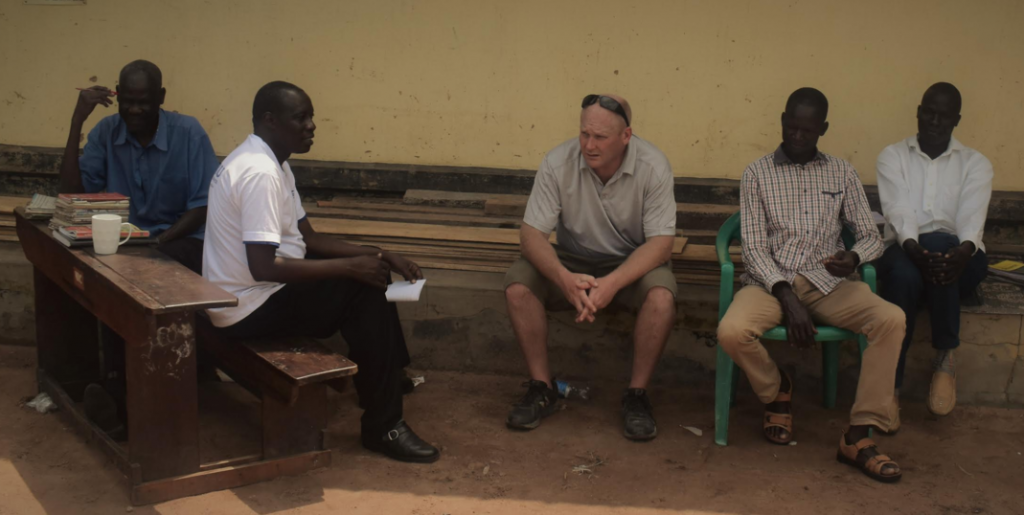
Patrick and I reflecting on work success We must finalize a date for inclusivity and hygiene training involving the teachers, parents, school leaders, and students in these final weeks of work. Community and school inclusivity between all parties will strengthen the relationship between the District Education Officer (DEO) and GDPU as well as open the way for GDPU’s model to be used more in 2020 and ensure sustainability. Girls and boys will enjoy an improvement in WASH services, with an increased assurance of privacy and equity for girls, and the inclusivity of disabled students. We want to prevent bullying of disabled students and increase their attendance numbers and prove their value to the community by including them in all school functions.
The head school teacher, Joseph, was telling Patrick and me of the Gulu District’s proposal for a secondary latrine for boys at Abaka, as this GDPU latrine will be girl specific. To our surprise, they were planning on hiring the same contractor who built the condemned latrine to complete its refurbishing for a secondary latrine. We fail to see the sound reasoning in this decision, as the contractor wasted district funds, time, and damaged the relationship between Abaka Primary School and the Gulu District. This is a very questionable decision making process that needs to be revisited and we both expressed our disappointment with the proposal, with hopes that it can be amended.
Although no exact date has been set and nothing is written in stone, Joseph mentioned the proposal includes the plan to dig a new pit latrine beside the failed one. Yes, an entirely new dugout pit for a substructure. Patrick retorted with the lack of need for a new pit. Simply use the old pit, clear out the damaged substructure, and work from there. As we have seen from the previous blogs, the pit excavation and substructure is the most time consuming and laborious part of the entire process.
GDPU and Kinyera David should be awarded the contract, as the decision was definitely not well researched and there seems to be obvious influences beyond our scope of vision. David’s present work stands on its own for acceptance as the working engineer for the GDPU model. It is possible that the second latrine construction plan can be altered by the DEO once the Gulu District Ministry of Health and Safety gives the final approval of the Abaka Primary School latrine. This will provide resounding support for the GDPU model and may drive the DEO to alter the plans.
GDPU has also demonstrated success in installing accessible toilets at three schools in Gulu District before, at Tochi primary (2015), Ogul primary (2017) and Awach Central primary (2018). The continued success at Abaka will lead to a surge in enrollment, reduced bullying, and motivated teachers. The DEO will be excited by these results and will want to ensure a long-term sustainability of latrines and delight in the positive effects on enrollment, attendance, and quality of life.
-
Peace Fellows Make the Case for Tolerance and Diversity
Leave a CommentPeace Fellows Make the Case for Tolerance and Diversity
-
Girls, Brick, and Mortar – Stabilizing Forces of a Community
4 CommentsAbove ground work is underway, with brick and mortar walls the next in line for completion. As of the last blog, the substructure was completed and the necessary slab over the latrine pit was scheduled for Saturday’s work. Come Monday, the 15th of July, the crew commenced brick and mortar construction of the walls forming the stances, latrine enclosure, and ramps that will contour the latrine superstructure.
The sub pump served its purpose in removing the water from the pit to a desired level. A meter of water is to remain in the pit to promote proper mixing of the dung and urine to promote dilution and some mitigation of odor. The latrine pit without a base level of water is deemed inoperable, as it would be difficult to drain the pit via a ducting system or sub pump if it was allowed to remain a solid, unmixed mass of waste.
Brick and mortar work may look simplistic, like stacking children’s building blocks, but there is a science and artistry to building a sustainable wall. The mortar must harden between symmetrical spaced bricks to create an edifice that will endure rain, winds, and the test of time. Exact lining, spacing, and placement of bricks must be meticulously repeated and checked by every crew member. Teamwork, attention to detail, and collective monitoring will guarantee accurate construction and adherence to David’s engineering plans.
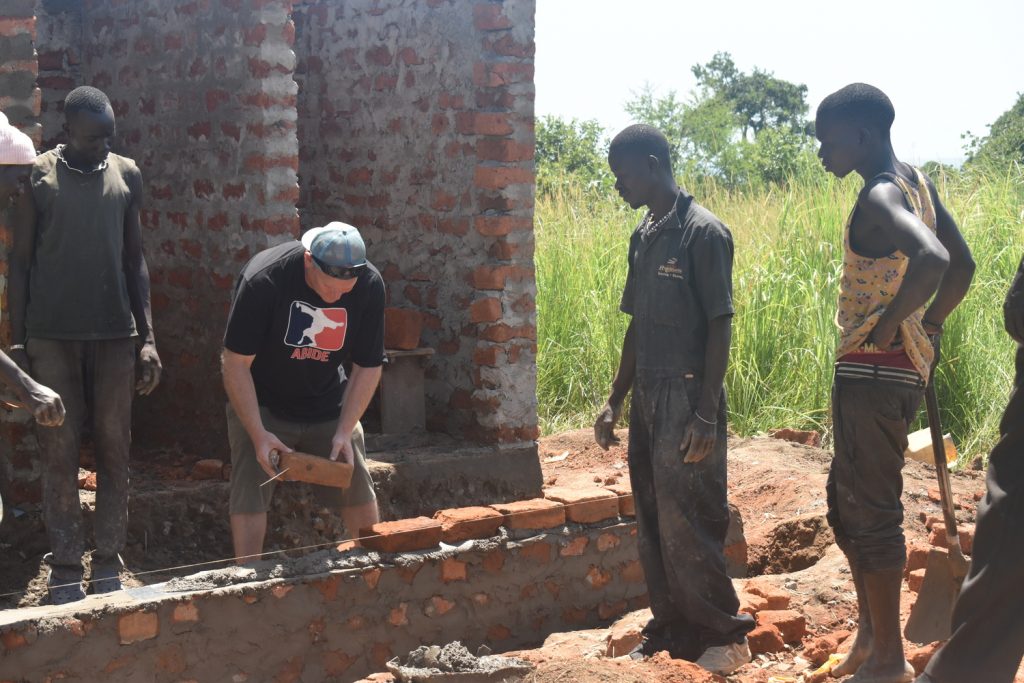
Monitoring for proper brick placement. Plastic sheeting is laid over the base, with ample mortar spread to ensure proper adhesion in the placement of the bricks. Five centimeters of spacing allows for mortar placement between two adjoining bricks and bonds the bricks, creating a water tight seal. This provides an additional strengthening force to the weight of the bricks themselves, as the mortar dries, hardens, and stabilizes.
The plum bob has been around since ancient Egyptian times of pyramid building and is used to ensure verticality between subsequent brick layers and the alignment of the entire structure with ground level. The latrine walls must be perfectly aligned with ground level in the vertical from base to roof. This ensures even weight distribution, as the weight of one brick layer falls evenly with gravity to the layer below. Any deviation, to the slightest degree, will promote an uneven weight transfer, leaning, and lead to wall weakening, mortar disintegration, and eventual collapse.
Much care is taken to make sure every brick is lined correctly by the use of a marker string made stationary by the weight of the plum bob over the last brick. The cornerstone is set in place using plum bob alignment, as each layer extending from the cornerstone is vertically aligned with ground level. This precision is checked and rechecked with each brick layer, as alignment mistakes are negated to ensure the construction of a wall even with ground level, standing strong against the elements.
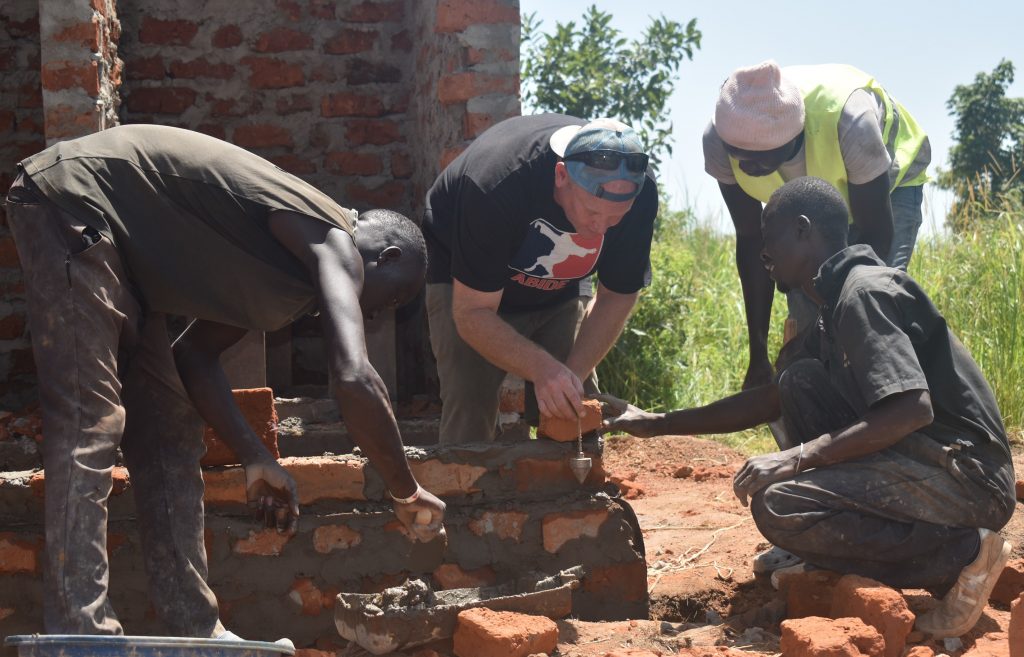
Ensuring the brick is vertically level. The construction plan calls for five enclosures – four for latrine stances, and a separate changing room for girls in the fifth. A command decision will have to be made by the school leaders and community on the dedicated use of the latrine stances. It is common to not have boys and girls use the same stances in such proximity for safety, privacy, and decency concerns. These are young children, not at a maturity level for communal bathrooms, even if partitioned by walls and locking doors.
In conversing with Martin, one of the school teachers, he proposed the use of this latrine as girls only, until a boy’s latrine can be constructed. The reasoning was validated by Paul, the GDPU sports director, and David the construction engineer. They both noticed about 10 girls present in the teen to preteen age range. This is good for the school and the community, and equates to them not being married off as child brides, which is common in Africa, the Middle East, Latin America, and Europe. Their attendance coincides with the work being conducted by my colleague, McLane Harrington, in Zimbabwe, and the Women Advocacy Project (WAP). They seek to promote and protect the rights of vulnerable and marginalized women and girls in Zimbabwean communities and to prevent the practice of child marriage.
The designation of this latrine for girls only may be the wisest decision the school and community makes. It will promote increased attendance by girls and help to contradict the child marriage traditions of the community and disavow the gender inequality beliefs. Women can be considered a ‘burden’ on their family and valued less than boys, and this belief must be eradicated. The tradition of marrying a girl off once she menstruates and reaches ‘womanhood’, in the eyes of the community, must be abandoned. Community systems that cling to the tradition of child marriage and undervalue the contribution and participation of girls and women limit their own possibilities for growth, stability, and transformation.
“Traditions are made by people, and can be unmade by them”, as was spoken by Graca Machel, the widow of Nelson Mandela.
-
Latrine Norms, Weight Distribution, and Rebar
4 CommentsThe norms for the construction and management of rural latrines are as follows and coincide with the construction plans of The Advocacy Project, GDPU, and our construction engineer, Kinyera David. These basic guidelines are designed for latrines for use by 50 people per day. This extrapolates to our 4-stance latrine model, thus allowing for a user rate of 200 people per day.
Latrines should be hygienic, free from bad smells, inaccessible to flies and other insects, and should not contaminate ground water
- The presence of a sanitary latrine should promote good hygiene behavior.
- Latrines should ensure safe disposal of excreta.
- They should provide the minimum requirement of safety and privacy to the users, with the superstructure providing the minimum amount of privacy required, especially for the female students (separate changing room for female students is accounted for in the AP model).
- A bin for hygienic disposal of sanitary materials must be provided in every chamber in the latrine.
- Hand washing facilities must be provided beside each latrine in every rural latrine.
- In unstable soil condition, the pit must be lined with locally available materials like bricks, stones etc.
The completion of the brick and mortar substructure is displayed in the accompanying pictures, and the crucial difference between the failed government latrine that collapsed into a sinkhole and the AP model is the installation of reinforcement bars (rebar) within the substructure to support the weight of the latrine superstructure. The cement structure of the failed government latrine lacked this supporting rebar.
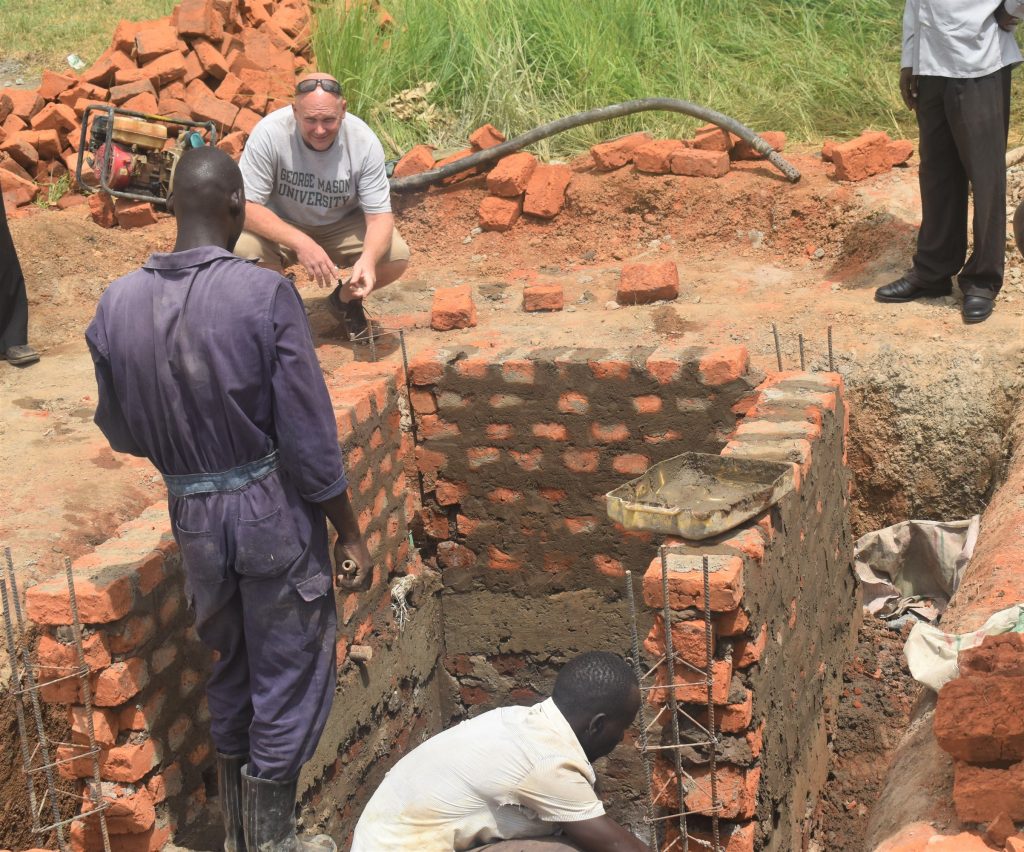
David explaining the importance of rebar. Cement is basically water, sand, and aggregate that congeals to form a solid mass. Rebar allows for the concrete to congeal around an inner steel structure, and with the triangular shape of David’s rebar formation, the concrete is strengthened at multiple impact points as the concrete takes shape around the three individual rebar poles and the triangular wire formations that serves to bind the rebar. With no rebar, the concrete is more vulnerable to weight stress and will succumb to applied weight and crack and create a sinkhole, as happened in the government’s previous attempt at latrine construction.
David has six separate triangular rebar structures that will redistribute the upper weight of the stances, walls, roof, brick, and mortar at six separate points of the substructure. This is latrine construction engineering at its finest, hats off to David. It follows the agreed upon norms of supporting bricks in rural latrine construction and will prove superior to past government latrine construction effort. The ultimate goal is the adoption of the AP construction model and its associated budget by the Gulu District Director of Education, Treasurer, with approval by the Gulu District Ministry of Health and Safety. We are off to an impressive start with the Abaka latrine project and await the next phase, the installation of a cement slab to cover and seal the latrine pit, which is expected to commence this Friday. Once Saturday rolls around, David and his crew of seven will begin above ground construction of walls and stances, culminating in the final phase of the walkway and ramp construction in a month’s time, give or take a day or two.
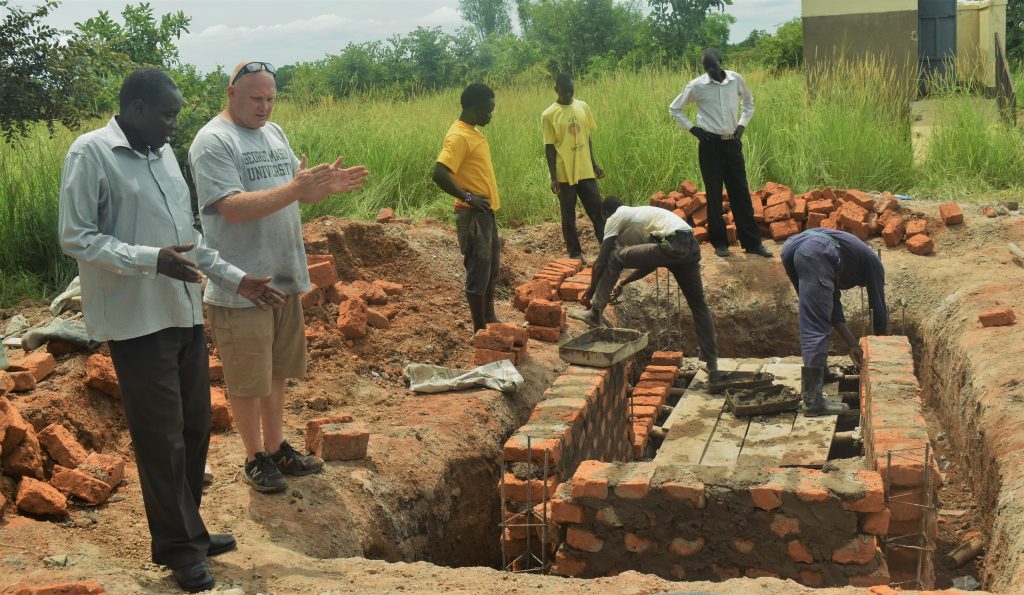
Patrick and I discussing the latrine pit specifications. So far, we remain on schedule, with an anticipated mid-August completion date of the 14th. Cost overruns have come in the form of extra cement bags, two extra loads of brick and mortar, and 10 days extended use of the sub-pump to relieve the latrine pit of ground and rainwater. With any construction project, it is wise to expect a 5% to 10% budget overrun due to factors such as unusable or busted cement bags, unreliable vendors, underestimation of materials needed, and uncontrollable adverse weather conditions.
Despite the small setbacks, we are confident that the AP latrine model and accompanying budget will prove to be superior to present day contractual bids submitted to the local government. The Gulu District’s previous latrine project amounted to contractor costs in the excess of $12,000 USD, with AP budget estimates for latrine construction amounting to less than $6000 USD, with overruns accounted for in the AP calculation. The work of AP and GDPU will prove to be an efficient and effective model for latrine construction at half the cost and serve as the leading choice for future school latrine construction proposals considered by the Gulu District Board of Education.
-
2001 Toyota Landcruiser – On Its Last Legs
3 CommentsPictured with me is Emma Ajok, our dedicated Project Officer for GDPU and faithful babysitter to the Toyota Landcruiser, circa 2001, that serves as GDPU’s means of transportation. The latrine project undertaken by GDPU and supported by AP, is well underway and has advanced beyond the substructure to include completion of work above ground, or so we hear. Problem is, our transport vehicle, which is old enough to cast a vote in the majority of nations in the world, has failed us in small measures over the past two weeks that are beginning to take a toll on our budget and patience. Attempts to monitor and evaluate the construction progress are being thwarted, and there is an uneasy, frustrating reliance on verbal reports from phone conversations between GDPU and the head teacher at Abaka Primary school and the on-site contractor. What is needed is eye-witness accounts from me and Patrick, photographs to send back to The Advocacy Project along with interviews with workers, teachers, and parents to supply proper progress reports and material for blog postings.
In the previous blog, there was a reference to engine trouble with a loose transmission he then changed at the transmission shop and much needed rear axle replacement, which proved to foreshadow another breakdown this past Friday, July 5th. Patrick, Ivan, Walter, our driver, and I headed out from the GDPU office to the cement store, about a 2 km drive, to purchase a few bags of water-based cement for the latrine. Once loaded, we would be on our way to Abaka Primary School for an overdue evaluation. After pulling over in front of the store, the vehicle died, and it refused to restart. Walter and a roadside mechanic pulled the battery and transported it to an automotive store for repair or replacement. Here on Car Ninja you can find more information.
Emma soon arrived by Boda boda with cash in hand, and fifteen minutes later the task was completed, the new battery was installed, and we were optimistic that our journey would continue. No such luck! Upon further inspection, it was not a faulty battery but worn out spark plugs that failed to emit a spark to foster an engine start, or so it was believed.
Our plans foiled once more, we all made our way back to the GDPU office by means of Boda bodas and awaited the mechanic’s prognosis on any further damages and a hopeful restart to our journey. Our hopes were dashed later that day upon discovering a faulty fuel injector was also to blame, providing an improper fuel mixture into the combustion chamber. The correct amount of fuel must be mixed with the correct amount of air to produce controlled explosions with the combustion chamber to bring the engine to life. Yes, a vehicle can run without a fuel injector, but it will run badly and lead to misfires, wasted fuel, bad fuel efficiency, and overheating. Better to replace than blowing your engine.
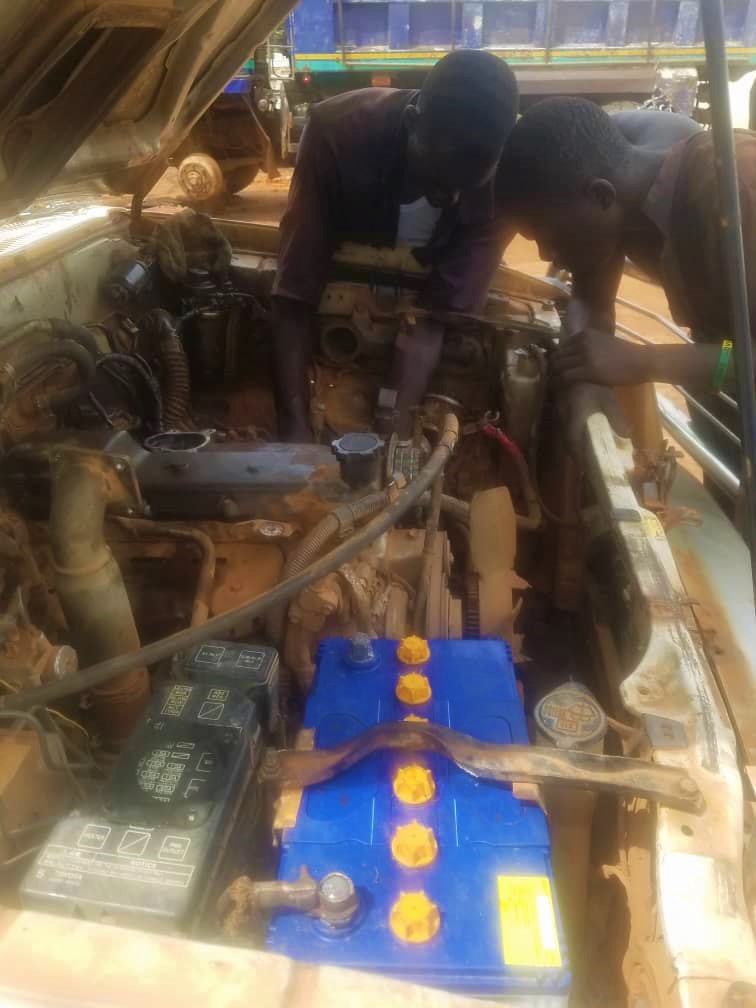
The Landcruiser’s overworked engine and the mechanics. This is where Emma’s commitment to GDPU comes to play. She spent the whole weekend at the garage ensuring a new fuel pump with new a rotor head for fuel injection, timing belt, and a spare tire were purchased for the Landcruiser. The parts had to be shipped up from Kampala, and did not arrive till over the weekend, and in fact, the repairs will not be completed until tomorrow. As this blog is being typed, Emma is confirming with the garage that the parts are in Gulu and repairs are on schedule. A job well done by our superb GDPU Project Officer.
GDPU is well overdue for a new SUV, the repairs will continue to add up and the Landcruiser will not get better with time, it is not a fine wine. You can check here about Torque Cars who are always excited and ready for working on modifying , tuning a car. We are basically working with a dying animal that needs to be put down. Today’s cars can last for 10 to 12 years, provided they are subjected to regular maintenance to include oil changes, brake checks, and yearly inspections to ensure proper performance. Here’s a quick list of habits to avoid for longer car life: “How To Kill A Car“. A 2001 Landcruiser that was purchased second hand in 2007, and is nearly 20 years old, and well past its prime.
Many thanks to Emma for dedication to her job. We would be nowhere without her.
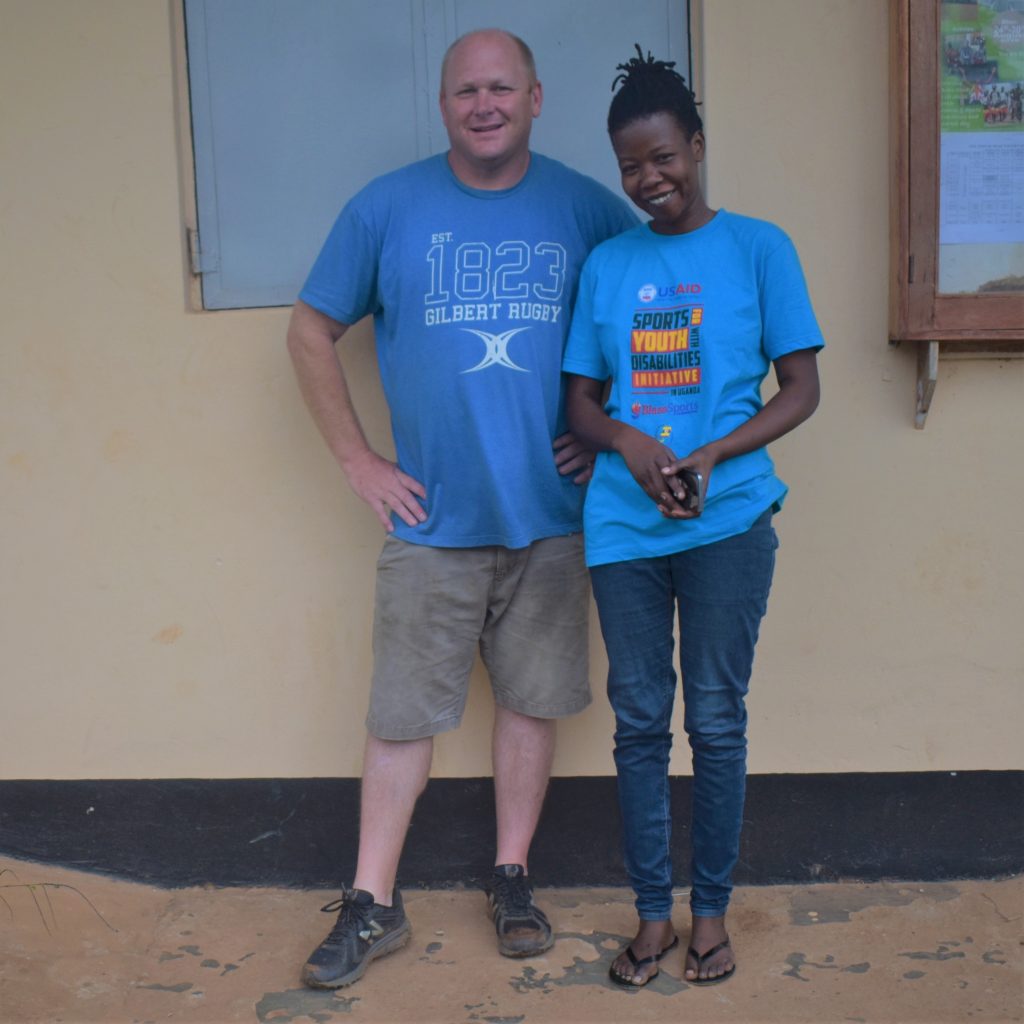
Emma Ajok, GDPU’s Project Manager, and I. -
Latrine Construction is Underway
3 CommentsAs scheduled, Patrick and I, along with Ocheung Ivan, the intern, and Walter our driver, ventured back to Palaro Sub County to check on the progress of the latrine pit. In just two days after the planning meeting, the parents had managed to make more than a meter’’s depth before striking the water line and had paused there to discuss the next course of action.
We arrived late in the afternoon due to morning repairs to our left rear axle on our company Landcruiser which had been subjected to multiple trips to Palaro on a less than desirable roadway. Due to the bumpy, pothole, and rut filled uneven road with ditches for shoulders, we pulled over twice to tighten the battery in place as it was coming lose due to the steady bouncing over the Mars-like terrain. A roadside motorcycle shop had the proper spanning wrench to tighten down the battery, and we continued to Abaka Primary School after two short delays.
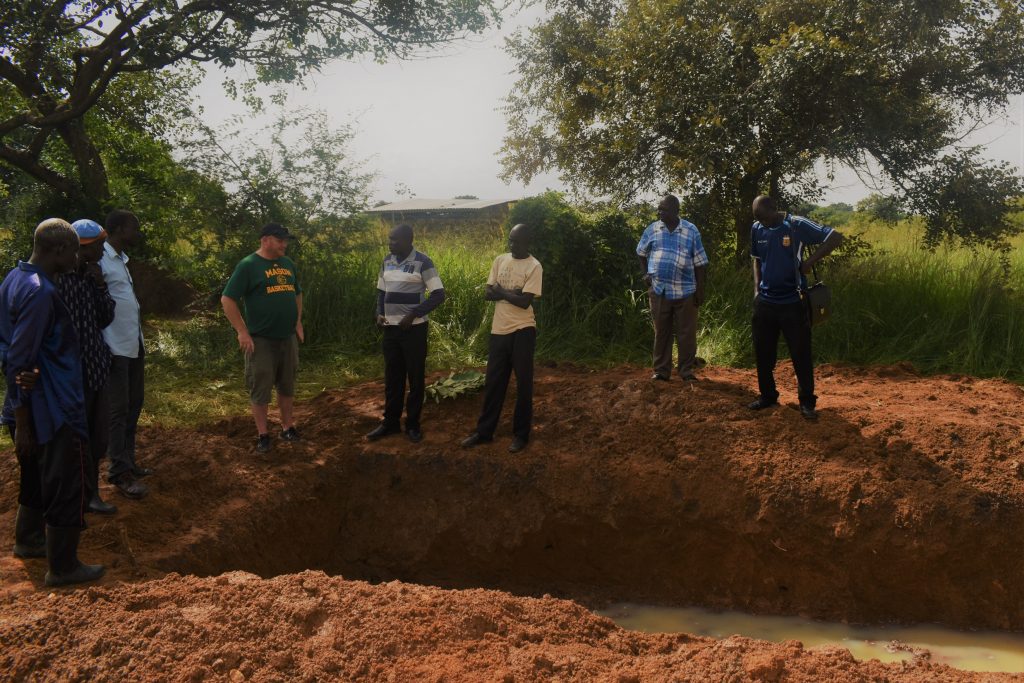
Discussing the waterline and further digging After surveying the water-logged latrine pit that the parents broke ground on that morning, Patrick explained that the progress was good for a mere half day’s time and that the water would be easily drained from the pit by the next day. Seems the ground slopes from west to east and water drains toward to this end of the school, and the encounter with the waterline was to be expected.
To ensure a proper understanding between all parties involved on the construction and management of the latrine, a small meeting between Patrick of GDPU, the head teacher, the school manager, the contractor, and myself was conducted to go over the MOU (Memorandum of Understanding).
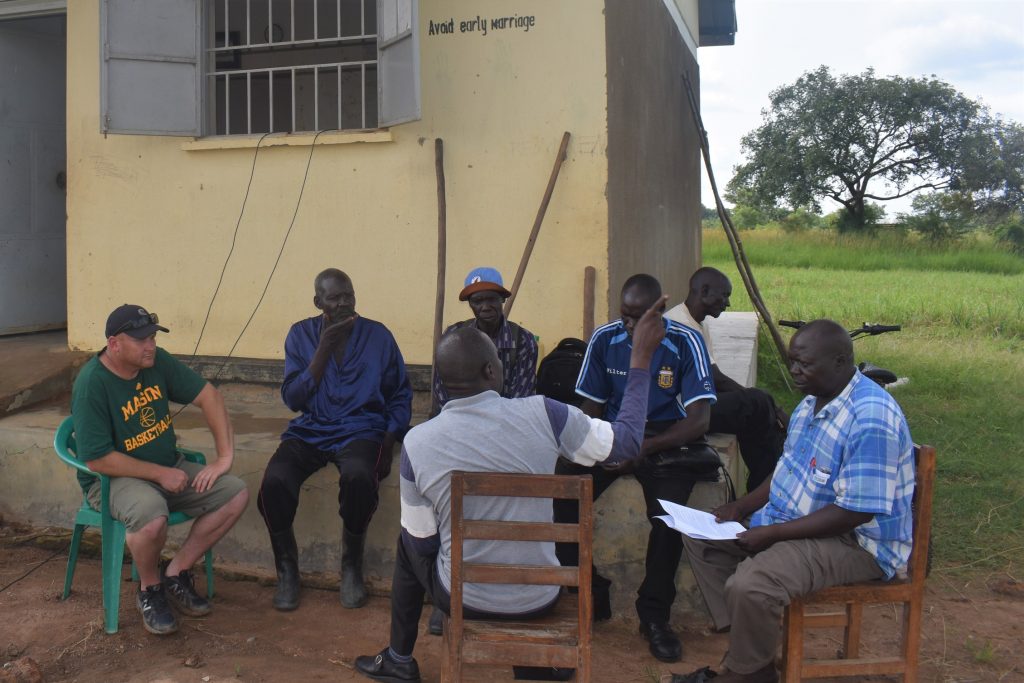
MOU Meeting The MOU is a basic contractual agreement between the contractor, the school, and GDPU, with me serving as a witness for The Advocacy Project. Dating the 26th of June through the expected completion date of August 14th, David Kinyera will construct a four stance, drainable latrine with a girl’s changing room, as requested in the previous meeting. A 1.5-meter-wide, 40-meter-long walkway will allow for easy access for those students using a wheelchair for mobility. Handrails, ramps, and a hand washing water tank at the appropriate height for wheelchair users will satisfy the specifications desired by the school, the parents, GDPU, and AP.
One of the crucial parts of the MOU is laying the responsibility of the water supply, daily monitoring of construction, and security of materials on Abaka school itself. They will also be responsible for conducting awareness workshops with parents, teachers, and the PTA to improve attitudes toward the inclusion of children with disabilities and a steady stream of support and monitoring to ensure their inclusion in the school and hopefully the community at large.
Lastly, there was an emphasis on open, honest, and frequent communication between the contractor, the school, and GDPU to avoid misunderstandings. Transparency and clarity were called upon to resolve any disputes on construction, materials, costs, or material handling, that would include the GDPU board, the contractor, and a senior staff member of the Abaka Primary School. All parties involved desire this project to proceed successfully without delay and within the given timeframe, and if the cooperation and communication is carried from the initial meeting through all stages of construction, The Abaka Primary School Latrine Project will be a success.
-
The Abaka Community Springs into Action
3 CommentsThis is a school and community that GDPU and the Advocacy Project were destined to support, for I have never seen a group so motivated and ready to work; ready for action. The speed and quickness in which we went from the introduction and planning stages to putting scythes and spades to the ground was head spinning and left me astounded.
It did not start out so quick and promising, as the planned 10 o’clock meeting did not get underway until a little after twelve, as it seems that in Uganda, people don’t ‘keep time’ as Americans do; in fact, their punctuality is not a bragging point. But that is part of the culture, and something one has to accept if one is to work and succeed in Uganda. As we waited patiently by our truck, Patrick and I discussed how in America if you are late you are supposed to feel ashamed. In fact, during my time in the service, we lived by the phrase ‘if you are not early you are late’.
Once the community and school leaders arrived, numbering 20 people, excluding Patrick and I, we gathered in a circle beneath an olam tree and took advantage of the shade to begin our discussion. There was an introduction, where each attendee gave their name and position, whether a town leader, member of the Executive Committee, teacher, member of the PTA, GDPU, AP, or simply a concerned parent. Everyone was welcomed for attending by the Head Teacher, Joseph, and a short prayer was recited as we bowed our heads.

Meeting with Abaka leaders and parents under the olam tree
Then one of the most effective meetings I have ever attended took place. Patrick Ojok, the leader of GDPU, explained the latrine model for Abaka and what they, and The Advocacy Project, were offering in a clear, concise manner. One latrine, with four stances, two for boys, two for girls, with the engineer, David, on hand to go over any specifications and answer any questions. The inclusion of wheelchair ramps and stability bars for disabled children was emphasized and the question of designation of the latrine as a girl’s or boy’s facility was left for the group to decide. Dimensions of the latrine pit were discussed, and the demands of the parents were also brought to light. One thing, the main thing, that invigorated the parents was the fact that GDPU and AP were coming to them for suggestions and consultation. The District of Gulu only sent materials and a construction crew to the school to build a latrine of its specifications, without any consultation or discussion with the parents.
It took a matter half an hour for selected speakers to voice their opinions. One suggested that the latrine include a separate ‘changing room’ for girls and an incinerator to burn toiletries and waste products as to not clog the drain. With the incinerator issue being shot-down by Patrick, as it was not in the budget, the final three speakers suggested that we forego the meeting and get to work. The planning was over, it was time for action. They were fed up with the District of Gulu constructing a faulty latrine (reference The Abaka Latrine: The First Steps) that was deemed inoperable by the District Engineer soon after completion.
Without hesitation the group walked about 30 meters from the meeting spot and took to scythes and spades to begin clearing out an agreed upon suitable spot. Within a matter of minutes, David had measured off a latrine area by stakes and rope, and the new latrine had its intended place on the grounds of Abaka Primary School. The speed, determination, and decisiveness of the Executive Committee, PTA, and townspeople was astounding. With the leadership of the Executive Committee, the commitment of the PTA, and everyone’s absolute dedication to inclusivity, this project will no doubt be a success.
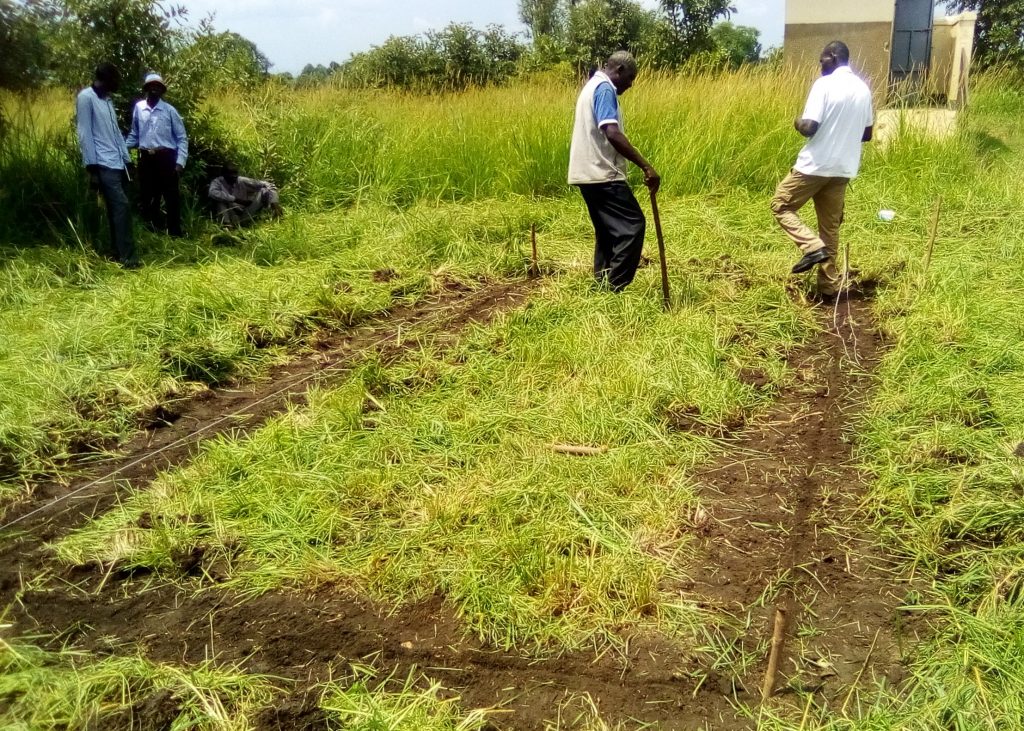
David, the Gulu District Engineer, measuring out the location of the new latrine
It all comes down to inclusivity, which implies ownership of the latrine project by the parents and the school for the ensured safety and health of their children. GDPU and AP approached the parents and the school for ideas and suggestions, and asked for involvement, which was the exact opposite methodology of the District of Gulu. The District of Gulu forced a faulty, useless latrine upon a school that was in dire need of proper facilities. As Patrick said a week ago when I first arrived, motivating the parents was the hard part, but based on what I witnessed in a few short hours, it was a smashing success. By the time David and I return on Wednesday, there will be a 3-meter deep, 2.5 meters wide, and 5.5 meters long pit dug to completion. This is teamwork, and this is what The Advocacy Project is all about. A job well done in one short afternoon meeting.
-
The Abaka Latrine: First Steps
5 CommentsOn Wednesday, June 19th, Patrick Ojok of Gulu Disabled Persons Union (GDPU) and I, representing The Advocacy Project, made our first visit to Abaka Primary School to assess the conditions of the latrine and stances constructed by the local government. After meeting with the District Officer of Education earlier in the week, we were led to believe that a workable, drainable latrine was constructed in accordance with the Ugandan Health and Safety Guidelines. To our dismay the latrine was not up to par and was actually condemned by the District Engineer. As you can see from the photo below, there is a sinkhole present on the east side making it unacceptable for use by children. Seems that there was shoddy sub-construction on the structure, with no support rings built into the latrine. This allowed for the weight of the top of structure, bricks, cement, and all to bear down on the latrine, and thus a sinkhole was created. As with any project anywhere, there are setbacks and uplifts to be encountered and one must take them all with a ‘grain of salt’.
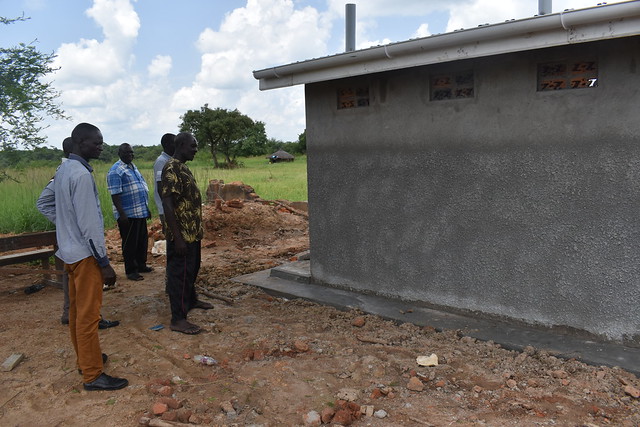
Abaka School teachers look on to the school’s sinking latrine.
The contractor hired by GDPU, David, agreed after examining the sinkhole and structural integrity that condemnation of the latrine was the correct call by the District Engineer. The Director of Education will be approached with this matter for analyzation, so that the next steps can be determined. GDPU and The Advocacy Project, with me serving as consultant, will recommend dismantling or sealing off of the latrine to ensure children do not injure themselves. In accordance with Ugandan Health and Safety Guidelines, there cannot be a condemned latrine within proximity of a functional latrine, which makes logical sense.
Joseph, the Head Teacher, in agreement with Patrick and I, have called a meeting on Monday the 24th with the parents of Abaka Primary School to discuss the proper location of a new latrine, whether it will be a boys or girls latrine, and the distance and orientation of the walkway from the school to the latrine. There were sixty-four parents in attendance at the last meeting conducted by Joseph, and we expect a similar turnout. If we all are in accordance with the construction guidelines, the work of digging the initial sinkhole will begin on that Wednesday with a goal of completion on Friday.
This initial obstacle gives GDPU and The Advocacy Project the opportunity to demonstrate the workability and sustainability of our combined model for proper latrine construction in accordance with guidelines set by Ugandan Health and Services. As of one year ago, the attendance at the Abaka Primary School has dropped from 405 students to 286, a loss of 29% of the student body. Most have transferred to other schools or simply remain at home for lack of proper latrines for their use. Our ultimate goal with constructing workable, drainable latrines is to bring student enrollment back up to previous levels, if not more. The Advocacy Project and GDPU are here for the kids, their education, and their future.
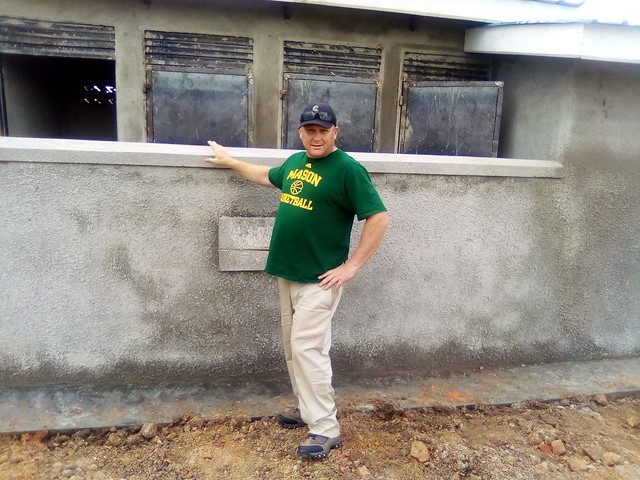
Me, posing with the latrine condemned by Gulu’s District Engineer
-
The Otim Family of Gulu
4 CommentsBelow is the Otim Family of Gulu, Uganda, who reside in a village across the road from St. Mary’s Hospital Lacor.
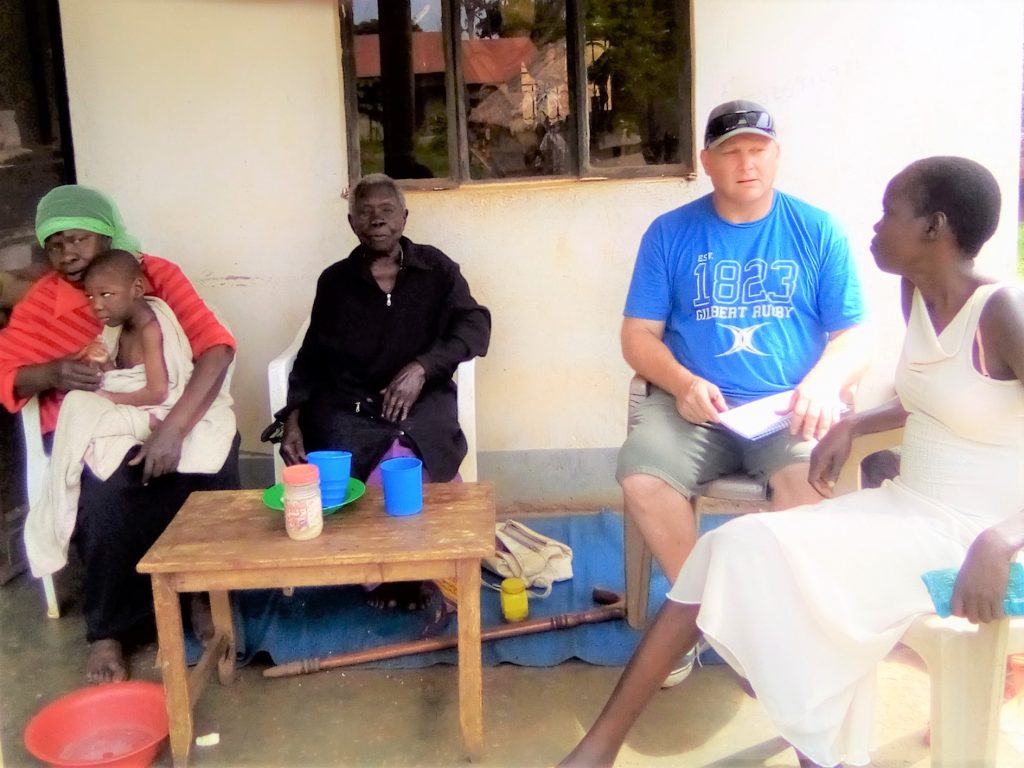
The matriarch, Grace Otim, sits to my far right, and is holding the apple of her eye, her grandson Andrew, who is mostly deaf and mute and has limited use of his legs and arms. He smiles with a heartwarming grin and very big eyes when you say “Andrew, Andrew” to him, as Lucy was doing before this picture was taken.
Lucy is Grace’s niece and the young lady to my left, who is my neighbor, literally lives in a hut next to mine about 10 steps away. She is my hired cook, guide, and mentor to everything Ugandan. We were on the way to the local market to buy vegetables, meat, tea, cooking oil, and the favored okra, of which is the heart of the story. We stopped by to visit Grace and her father, Mr. Mariana Lucky, who is 97 years young. Mariana is like many old men the world over who enjoys sitting on his porch drinking tea and sharing the time with his family and his new friend, me. I was greeted with a warm smile, a handshake, and a hearty ‘Welcome’ for visiting. Seems most Ugandans enjoy a proper greeting and a smile when we meet and are very, very open and hospitable.
Grace, a spring chicken at 68 years young, or so she thinks (she is not certain of her actual age), is an expert on cooking okra. Those of us from Louisiana know that gumbo is not gumbo without okra. Seems Uganda grows okra by the tons as well as Kenya, but Kenya exports and Uganda does not. We chatted on how to cook okra, its wonderful taste and how it adds to a meal, no matter what meal, if you cook it slow at low heat in proper oils. I love her!!!
We met Lucy’s sister, a brother, and many family friends on our walk to the main road to catch a boda boda ride to the Gulu Market. Like I said, it is a village of Otims. One young man, Godfrey, came by to visit Lucy that same morning and we ran into him on the way back from the market. Lucy considers him a brother, a friend, and someone who will come to her aide in the middle of the night no matter what.
On a sad note, Grace Otim’s father was murdered by Idi Amin during the conflict between Uganda and Tanzania, which left her as an orphan in her teen years. She was a midwife for many years and is now not working so that she can care for her father and Andrew. She was extremely polite and welcoming to me and sat me down and just started telling me everything she could about herself and her family and I even had the honor of signing my name to her guest book. I felt honored to meet the Otim family and I am lucky to have Lucy as my neighbor.
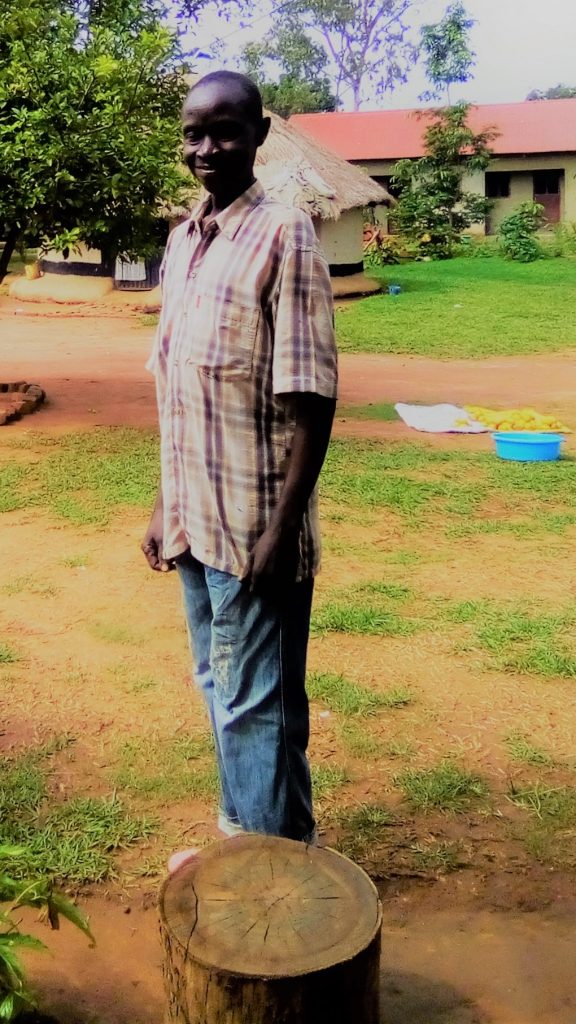
Note: Lawrence, the lone guy in the above picture, is Lucy’s uncle and was happy to take the first picture and have his picture taken as well.
-
Peace Fellows to Tackle Agent Orange, Menstrual Banishment and Child Marriage
Leave a CommentPeace Fellows to Tackle Agent Orange, Menstrual Banishment and Child Marriage
-
Freed Domestic Slaves Fight Boredom and Penury in Nepal
Leave a CommentFreed Domestic Slaves Fight Boredom and Penury in Nepal
-
Ohio Rummage Sale Will Fund Accessible Toilets in Uganda
Leave a CommentOhio Rummage Sale Will Fund Accessible Toilets in Uganda
-
North Carolina Quilter to Train Family Members of the Disappeared in Nepal
Leave a CommentNorth Carolina Quilter to Train Family Members of the Disappeared in Nepal
-
Sister Artists of North America Reach Out to Survivors of Violence in Mali
Leave a CommentSister Artists of North America Reach Out to Survivors of Violence in Mali
-
Enrollment Soars at Ugandan Schools After Accessible Toilets Are Installed
Leave a CommentEnrollment Soars at Ugandan Schools After Accessible Toilets Are Installed
-
Final Project Update
1 CommentFinal Project Update

In less than 10 weeks, GDPU and I went above and beyond the original scope of work.
In less than 10 weeks, Awach Central Primary School went from having one latrine know the verge of overflowing.
In less than 10 weeks, the lives of 991 students has fundamentally changed for the better.
Before :


After:

That’s right. Project complete. Mission accomplished, and I have all of you to thank for making this possible. Over fifty people donated to this project so let’s give them a round of applause. I’ll wait…


But in all seriousness, it has been an amazing experience working alongside GDPU. Hot days in a hole, blisters throbbing on my hands. Long hours spent surveying and long nights Skyping Karen and Iain. Not to mention all the children. Every time we drove up to Awach Central Primary School, they would chant of “ Chris Chris Chris!”. It would build until it reach a crescendo, at which point I would finally jump out the car and chase after them. They all would run away laughing while I tried to catch my breath. I’ve had twenty eight summers in my life, however this one is the most memorable and impactful. Leaving Gulu was far from easy, but at least I can board my flight back to Maryland with the knowledge that my time and energy was spent in the service of others.

To celebrate the two new latrines, we held a party for the students and parents. There was shortage Music, dancing, face painting and food. Speeches by local government officials thanking GDPU for their hard work were given. I was even given a goat…which I graciously accepted(and quickly gave to Patrick Ojok). Most trips to the bathroom are forgettable, but that is not the case for the children of Awach. For them, a trip to the bathroom means much more than simple relief, its empowerment, its an opportunity.
Thanks again for everyone’s support!!

-
Trudy Oroma
2 Comments
Since the being in Uganda I have asked almost 200 children a simple question, “What do you want to be when you grow up?” The results reflect the limited job opportunities in Uganda. It’s less about passion, more about earning a regular salary.
- 40% – Doctor
- 30% – Teacher
- 8% – Driver
- 5% – Nurse
- 3% – Pilot
But there was one girl who decided to break the mold, to dream outside the box. “I want to be a journalist!” said Trudy Oroma, age 14. “I want to be on the radio, to be heard all over the world.” For those who have never met a Uganda child, it will be hard to explain how unique Trudy is. Most children speak in hushed voices, eye contact is rare, and most questions are answered with a nod of the head or the ubiquitous “mmm” sound but not Trudy. Even with her visual impairment, she is a bold girl with the most amazing smile.

Speaking with Trudy is easy; she carries herself like an adult and laughs as loud as one too. I asked her what games she likes to play. She replied, “I like netball, I am good at it.” Her back straight with pride as boasted about her skill. I tease her a bit and ask, only good? Trudy replies, “I am very good, I am the best actually. “ Confidence despite being labeled disabled is a rare yet beautiful thing.

I have spoken with Trudy on a few occasions, but then I asked her about her parents and everything changed. Her posture, her eyes, even her tone of voice shifted. I have gotten so used to hearing about the atrocities committed during the Kony Insurgency that I assumed Trudy’s parents must have fallen victim to the violence. However, the number of lives taken by Kony is just a fraction to those taken by HIV. Tears ran down her cheeks as she told me how her father died from the diseases, how she barely remembers what he looks like. Her mother struggles to support Trudy and her siblings alone. What does that struggle look like? Its looks like one meal a day, missing school to work on the farm, missing school because of school fees, missing school because if you are going to spend the money, why would you spend it on a disabled child? Trudy fell quiet after that, her eyes closed in an attempt to stop the flow of tears. I put my arm around her to comfort her, but I doubt it helped much.
-
Nancy Okot
3 Comments
Nancy is the oldest of seven children. In Uganda, being the oldest child carries a lot of responsibilities which made the fact that Nancy is disabled especially difficult. “My parents love me, but my father struggles to accept me.” She told me that for a long time her father blamed god for her disability. Imagine being born into a world were even your father sees you as inferior, what would that do to a child’s self-esteem?Once Nancy began school, things only became more difficult. “Some people have disabilities that you cannot see, those are the lucky ones. Children would see me and mimic my arm, which really hurt me.” Anyone reading this should try to remember being a child. The fear of not fitting in is universal. Nancy’s entire life has been defined by one feature of her body. It’s unfair. It’s heartbreaking, but for Nancy, it’s an everyday occurrence. She says people treat her like a child because of her disability, even though she’s exceptionally sharp. She wants to become a seamstress, but for now she farms. I asked her if it’s difficult for her to use a hoe with her disabilities to which she quickly replies “”It’s not easy, but I can farm better than you!” Current score: Nancy – 1, Chris – 0.

Nancy is quite a charming, albeit spunky, young woman. I noticed during our interview that some teachers were standing a few feet away. I thought they were curious about the question I was asking or maybe they just wanted to see the mono (Acholi for white person). My ego quickly deflated once I concluded the interview, and the teachers flocked to Nancy. They began joking and laughing like old friends. One teacher took Nancy by the hand and walked away with her, their laugher still echoing off the classrooms at Tochi Primary School. And I was left sitting there, alone. Updated score: Nancy – 2, Chris – 0.

-
Awach Project Update
6 CommentsBefore I tell you where the latrine project stands, I want to say two things. Firstly, I would like to take this opportunity to thank everyone who donated towards this project. Many hands make for light work and with your donation, the work has been going unbelievably well. Secondly, this blog post is graphic. I do not intend to hold back punches because the donors deserve to know reality here, unfiltered, and the impact their support is making. For those with weak stomachs, consider yourselves warned.
Let’s start from the beginning shall we? Patrick Ojok is the director of the Gulu Disabled Persons Union (GDPU). He identified Awach Central Primary School as school in critical need of a modern latrine before I ever landed in Uganda. 991 students are currently enrolled at Awach; over 70 of these students live with some form of disability. I knew all this before I went to visit the school, but what I found when I arrived made my heart sink. All these students, boys and girls, were sharing just one latrine.
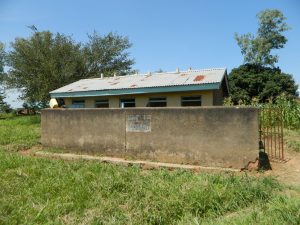
I will attempt to describe my first encounter with this latrine, but words alone cannot convey the sensory overload I experienced.
When the head teacher escorted my team to the latrine, I could smell it before I ever saw it. The smell was horrendous. To anyone in Maryland and DC who has ever driven past Blue Plains in the summer, this was a hundred times worse. As we approached, you could hear the cacophony of flies buzzing. I have never seen that many flies in one place. When I opened the door to the first stall, thousands of flies and the smell of decades of human waste attacked me. I held my nose, but that offered little reprieve. I walked into the stall where more flies were escaping from the toilet hole like smoke from a fire. I could not believe it.
This latrine was past full, on-the-verge of overflowing full. There were maybe six inches from the hole to the top of the waste. One heavy rain is all it would take to turn this latrine into a cholera outbreak. My eyes were watering, a result of the ungodly odor and the realization that one new latrine was just a drop in the ocean. I went back to my office deflated. What good is one latrine for a school with that many students? Was I just wasting my time here? Like bring a glass of water to a forest fire.
My team identified a contractor who agreed to dig the new latrine. His name is Charles Kennedy Akena and he actually studied at Awach Central Primary School when he was a child. He sympathized with the situation so he offered to do the work for less than our original budget. With the contractor ready and willing the next step was to engage the parents.
Allow me a moment for a slight tangent: one of big challenges in international development is community buy-in also known as engagement. These parents are farmers. They work from sun up to sundown just to get by. A missed day in working the fields could result in a day without food on the table. This dynamic means most meetings start late, few people come, general apathy, etc. It’s frustrating. I have grown accustomed to showing up thirty minutes late to such meetings because I am normally still the first to arrive, but not at Awach.


At Awach 127 parents came to the meeting, on time! When I asked their help to dig the new latrine pit, they didn’t flinch. One by one they stood up to say things like “Chris I will see you tomorrow morning with my shovel!” Or “God Bless you, I will help you dig” or my favorite from 82-year-old Aderyo Rosalba, “I am coming tomorrow at sunrise to help you dig the latrine for our children!” And sure enough, at the crack of dawn the parents came in droves to help dig. The schedule stated the digging would take four days. “Silly American” said one parent, “We will finish it in one!” In one day, over 80 parents came to dig a pit that was 24ft X 6ft X 10ft. According to my rough math, that equals about 1440 cubic feet which can hold roughly 10,772 gallons. Trust me, that’s impressive.
The following day the contractor and the latrine began to take shape. I hate to jinx myself, but we are actually ahead of schedule. I feel blessed to have such a committed team and community behind our project. The vision of latrine is materializing right before my eyes.
Here a few pictures to show to progress that has been made in just three weeks


But it isn’t all rainbows and butterflies. Northern Uganda is still recovering from decades of strife. Behind the smiling faces of the people is a level of hurt I will never fully comprehend. During one of the days of construction, ten feet away from a classroom I found a live bullet. A tangible reminder that Awach was at the epicenter of violence that saw tens of thousands people killed and children ripped from their parents’ arms, forced to fight and kill their own families. Years of abuse and violence have created an entire generation of young adults who are damaged; haunted and traumatized by their past and the things they were forced to do. Everyone here has a story about the insurgency, but those stories are for another time and another blog post.

But I have a tendency to focus on the negatives. Even with the project going so well, the fact remains that one latrine is not enough. My shameless fundraising had raised enough to build the first latrine, but to raise double that amount would take months and I only have weeks. Nevertheless, there is always a way forward. Instead of building new, we decided to reclaim the old.
What does that mean?
Well for starters, we have to drain the pit. My dad used to berate me to never have my hands in my pocket so I tried to help as much as possible. There are few words to describe this work, but I will list a few that came to mind; yuck, gross, nasty, oh my god, disgusting, and ewww. Like I said, this post is not for those with a weak stomach.


After two days of what I imagine hell must be like, the pit was drained and sprayed to kill any flies, maggot, and whatever else remained. I am still fighting to find additional funds to renovate the old structure including retrofitting handrails so that the stands are accessible for students with disabilities.
I am still searching for the funds to do these renovations so if you haven’t already, please consider donating to my GoFundMe page. The donation is tax deductible and each donor will receive a drawing made by a student at Awach Central Primary School along with their picture so you can put a face to the name. Here is the Link. The UN declared sanitization a human right. I intend to defend that right for Awach!
Again thanks to everyone for your continued support. It reminds me that on the more difficult days, there is always a way forward. I will keep everyone updated as the project continues to take shape. This job may “stink”, but I couldn’t think of a better use of my summer!
To see more pictures of our project, check out my Flickr Page!
-
Why a latrine?
6 Comments“Why a latrine?” It’s a simple question asked by a friend who shall remain nameless. “Couldn’t you dig a well or something? You know, something urgently needed?” I laughed it off. Obviously the point is valid: People – Water = Dead, however I want to use this blog post to explain how a latrine can alter a child’s life entirely.
Monica Ajok speaks in a very soft voice; so soft you have to lean in close to hear her speak, but it’s worth the effort to listen. She has a story to tell. I asked Monica what her favorite subject was in school. It’s a great icebreaker that adults have used on children since the dawn of public education. Most kids say recess or art. But Monica is not most kids and would not be contained by the rigidness of my question. She lists off English, Math, Science and Social Studies as her favorite subjects. How dare I assume she had only one! Monica aspires to be a nurse, to help sick people feel better. I told her that requires a lot of school, but that didn’t faze her. Here is a young girl who knows what she wants and is willing to work for it. There is something more to Monica than her love of studying and aspiration to heal people, she is disabled. I hadn’t even noticed her leg until her mother told me.

“Monica has a lot of challenges. She cannot do a lot of things that other children can do. When she gets home from school, she cannot fetch water. She cannot clean. She has difficulty moving; sometimes she comes home complaining that her leg is [burning].” But Monica’s mother was quick to counter these challenges with a resounding, “But she is just as smart as other children!”
Why a latrine? Before Gulu Disabled Persons Union (GDPU) constructed a latrine at Monica’s school, she had a daily choice between two terrible options. “Coming to school is easy, but I never went to the bathroom. I would either [hold it in] or walk home to use my own toilet.” A school day in Uganda is eight hours long just to put the first choice into perspective. Like most students in northern Uganda, Monica’s house is not exactly close to the school. “It takes me an hour to get home from school.” Just to be clear, a girl with a bad leg walked an hour to her house just to use the bathroom. That means it was another hour before she returned to class. I’ll let that sink in a bit before I tell you the good news…don’t worry, there is good news. Because of the latrine build by GDPU in 2017, Monica can now stay at school without worrying about stomach pains or a two hour hike to the bathroom. “Now my school has a clean toilet [with handrails]… there is soap and water to wash my hands so it’s easier for me to study. “
So why a latrine? It may not be glamorous, but if it empowers more girls like Monica to reach their dreams then I think the question should be; why not a latrine?

Find more pictures from my time in Uganda right here!
-
Uganda-1 Chris- 0
9 CommentsTo summarize my first week in Uganda, all I need to say is – it can only get better from here.
Allow me to explain. On the eight hour bus ride from Kampala to Gulu, I fell asleep. I know, seems innocent enough. Unfortunately someone noticed the sleepy mzungu (white person) so I when I woke up in Gulu, my backpack was gone. Stolen to be exact. Oh man, that was a bad way to start this adventure. Laptop, kindle, cords, battery packs, and my toothbrush! I would like to lie and say I handled it with dignity. But I’m a little more hotheaded than that. I don’t believe any Ugandan has heard such a large variety of English curse words. F bombs could be heard echoing throughout the bus stand. Like I said, hotheaded.
I felt so deflated. Not because my stuff was gone, stuff can be replaced. What really shook me was how stupid I was. I have lived in East Africa for over three years so I considered myself an expert, a professional, a modern day David Livingstone. That’s how life works, right? As soon as you get a bit too cocky, life comes along to humble you. Well, consider me humbled.
You may be wondering at this point of the story, if Chris’ laptop was stolen, how is he writing this blog? Short answer – good people. I arrived at the office of the Gulu Disabled Person Union (GDPU) with my mouth still full of expletives. I was having a personal pity party when I got out of my taxi. Then I saw a man with no legs sitting on the ground fixing his wheelchair. It was pretty hot outside, even for a Ugandan, so sweat was trickling down his face as he worked. I was amazed, not because I had never seen a man without legs, but because he had a smile as bright as the African sun. I walked over to introduce myself, but before I said a word he told me how sorry he was to hear about my laptop. News travels fast out here. Charles Okwonga lost his legs after stepping on a landmine and I had the nerve to complain about a laptop.

Then I met Patrick Ojok, the director of GDPU, who did not hesitate to offer me his laptop. People I never met before began messaging me on facebook to offer me condolences and access to their laptop. Local Ugandans stop me in the street to apologize on behalf of the country. I have made friends with locals and Peace Corps Volunteers. How can I be sad when I am surrounded by such wonderful people? Once again, I have been humbled. This time by the love and support of people who don’t know me at all. Life is funny that way. One minute you are questioning your faith in humanity and the next you are sitting in awe of it.
I don’t intend to write more blog posts like this. The only reason I decided to share this story is because I really believe life doesn’t do things to you, it does things for you. For the rest of my time here, I will use this blog to highlight the lives and stories of the people of Gulu. To share the voices of those that are never heard and show the faces of those who go unseen. So sit back, relax, and enjoy the next ten weeks as I show you a side of Uganda you haven’t seen before! And if you have’t yet, please consider supporting our work so everyone can live with dignity regardless of their disability. Just follow the link to donate – Support GDPU

-
The Gulu Disabled Persons Union
97 CommentsGetting to know the work of GDPU takes a bit of time. Not all of it can be categorized into specific formalized programs but it is instead a response to the needs of the community. This means that getting a good understanding of the work going on at GDPU takes a good part of the summer. So, although this is a late introduction, I’d like to introduce the four people I spent the most time working with this summer and the work that they do at GDPU.
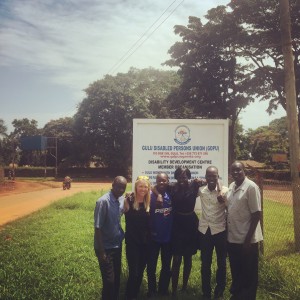
GDPU and friends gathered outside the compound.
Before I dive into the four people I worked closest with I have one note: apart from one staff member, everyone at GDPU is a volunteer. Each person I’ve worked with decided to stay with GDPU when projects ended and funding ran out, their outside lives help to sustain them but even that is minimal. Their dedication to GDPU comes from a variety of sources, it’s something to put on the resume, the volunteer work gives good experience, the staff believe in the work itself; but regardless of the specific reason for staying, their experiences have inspired them to continue their work. That is not to say that they’re always optimistic about their work or are happy to be in this situation, however, they find ways to keep GDPU functioning.
Faruk (on right) at the Ogul Primary School Handing Over Ceremony.
My first coworker I’d like to introduce works with the Youth Development Program. This program taught skills to youth with disabilities to help them become economically independent. Students were taught one of five skills: welding, electrical repair, hairdressing, motorcycle repair, and sweater knitting. He’s also involved in the next phase of the project, Enhancing the Capacity of GDPU, which helps graduates of the first phase of the program develop business management skills, conflict resolution skills, and further training in their skill area. Faruk is also helping to apply for more grants for sports programs at GDPU. A graduate of Kyambogo University, Faruk is constantly searching for other jobs, however, he remains at GDPU because of the community and experiences he’s found there.
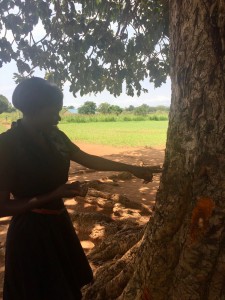
GDPU Staff member Mary
Lakot Mary, the GDPU accountant, graduated from Gulu University with a degree in accounting and is currently pursuing her CPA certification. She lives in Gulu with her son and has been working hard to cultivate her farm that is about an hour outside Gulu. Mary has a great sense of humor and, like everyone at GDPU, is learning sign language so that she can communicate with people who walk into GDPU. One of my favorite times with Mary was when I came back to GDPU around 6pm exhausted and found Mary dancing with the deaf dance club with a huge smile on her face. Mary is a great addition to the GDPU team because of the laughter and joy she brings with her.
Walter, our driver, careens down severely pot-holed roads in a strangely controlled fashion that after a couple drives with him becomes less terrifying. I believe he’s been described as fearless in the past and I would not disagree. Walter worked at the Post Office for twenty years as a driver and usually drove the Kampala-Gulu-Kitigum bus to deliver mail and people to various places along the route. He has a farm in the Ogul Primary School community and was a huge help to me in the second half of my internship when he and I would go out and get materials and bring them to site. Walter’s negotiation skills kept the cost of materials down and his driving meant we got all the materials to site safely and quickly.
Patrick with GDPU during one of our first visits to Ogul Primary.
If you’ve followed previous Peace Fellows’ blogs from GDPU, Patrick has been present throughout, not always the point person but always present. And from that first day onward I have felt more at ease when I’m able to discuss and work on issues alongside him. Patrick’s knowledge, patience, and experience are unmatched at GDPU. He is the heart of the place and I’m not sure what will happen when he eventually retires. In the last few weeks of my time here, Patrick and I dealt with issues surrounding the construction contractor as well as the laborers themselves. I’ve been amazed by his ability to make people feel like they’ve been listened to and understood while still making sure that we get done what we need to get done. I’ve taken to heart the lessons Patrick has inadvertently taught me on patience and respect that he shows to everyone he works alongside.
It’s been a great summer getting to know the work of GDPU and my coworkers in Gulu. Like most jobs there were ups and downs, but overall I really appreciated my time in Gulu and the laughter I shared with my coworkers.
-
Accessible Toilet Heroes
4 CommentsMy last few days in Gulu were a flurry of dropping off construction materials, verifying that the last stages of construction were completed, planning and hosting the handing over ceremony, and packing to leave. With all of that going on, I didn’t get a chance to post about a few people who were key players in the success of this project, and how we came to rely on them at the last minute. In addition to the two specific individuals I will mention, the GDPU staff took on additional roles helping to complete the project and the school community continued to support us throughout the ups and downs of the process. I appreciated having such a great community of support surrounding the project.
I mentioned in an earlier post, Construction Challenges and Creative Solutions, that we would sometimes have to pick up materials ourselves when the contractor would unexpectedly be out of town or somehow unable to communicate with us. After that post, our contractor went completely out of contact. We couldn’t reach him on the phone and he missed a couple meetings. On top of that, he was not bringing materials to the site or paying the construction workers, which meant that construction was consistently delayed. In response, we at GDPU drafted a breach of contract letter asking him to respond to these issues. When he did not answer the letter, we ultimately decided to fire him. I was pretty nervous about that decision because I had just over a week until I left. However, I was reassured that the remaining work was easy enough to complete in the time we had left.
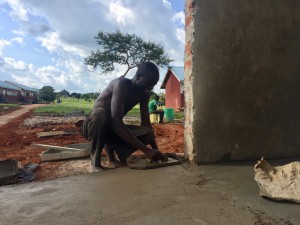
Ronald putting final touches on the ramp for wheelchair access.
I was also worried that by firing the contractor we would have to replace all of our construction workers at Ogul. Luckily that was not the case. The construction foreman, Ronald Worocha (pictured to the left), and the entire crew at Ogul stayed on to finish the job. In addition, Ronald took on the added responsibility of managing the materials, overseeing construction, and tracking the laborers’ working days. He also worked every day with the workers to make sure the latrine was well constructed. He was a better communicator and never missed a meeting. Without him, I’m not sure where we would’ve ended up.
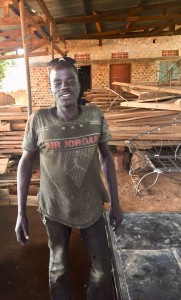
Collins is a talented welder in Gulu. His last minute work allowed us to complete the construction before I left.
Besides Ronald, another person who helped us out in a pinch was the welder, Abonga Collins, we hired to put together the doors, hand rails, and security gates. When we fired the contractor, we returned his receipts for doors since we never received them and therefore never paid for them. A key aspect of building better latrines at Ogul Primary School is having doors to provide privacy. To make sure the doors were done in time and done well we got in touch with a former graduate of a GDPU youth Skills training program. Collins graduated from the Youth Development Skills Program in 2014. In order to improve his chances of getting a job, he came to take part in this program at GDPU after graduating secondary school. Since completing the training, Collins is one of GDPU’s great success stories of youth with disabilities who have gone on to own and run their own businesses. In his work with us, he was very professional, efficient, and organized in keeping track of all of his receipts (this can be rare, so he automatically became a star graduate from GDPU in my eyes). His work, talent, and professionalism were a needed highlight during my last week in Gulu.
Despite these obstacles and my worries, the construction workers stayed with us, the doors were completed, and the accessible toilet was finished on time. The handing over ceremony, which was held on Tuesday of last week, officially passed control of the accessible latrine to Ogul Primary School. With this transfer of ownership came the realization that construction was actually completed and my summer was coming to an end. I was glad to have been present for the ceremony because everyone who was involved in the project came out in support. The School Management Committee, PTA, staff, students, community members, construction workers, and the district and sub-county officials gathered to celebrate the completion and re-affirm the importance of the next step of the program: maintain and monitor the sanitation, hygiene, enrollment, and attendance at Ogul Primary School.
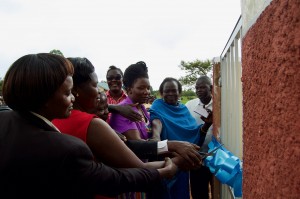
District officials and school leadership cut the ribbon on the new accessible latrine at Ogul Primary School.
-
Creating Allies and Advocates at Ogul
2 Comments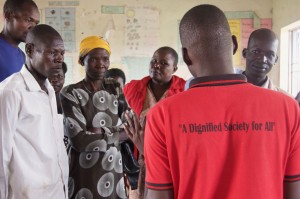
In northern Uganda, the Acholi are the main ethnic group that populates the region and they speak a language of the same name. I’ve picked up some Acholi here and there to help me get around but am still at a loss when the conversation moves beyond “Hi, I’m fine, how are you?” It was interesting and a bit confusing then to assist in a training that was conducted mainly in Acholi with English thrown in when Acholi lacked the proper word. Patrick and Faruk from the Gulu Disabled Persons Union facilitated the training for Ogul Primary School teachers, staff, and parents. Unlike the situation at the previous school that received the accessible toilet, Ogul PS does not have a big problem with bullying. Disability is addressed at all school assemblies and both students with disabilities and those without confirmed that there really isn’t that much bullying at Ogul. However, that doesn’t mean there is a good understanding of disability, there were still many misconceptions among the group that gathered for our inclusivity training.
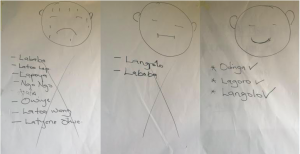
Acholi words that people use to refer to people with disabilities were categorized based on how they make PWDs feel.**
The Ogul training brought to light an interesting question I hadn’t thought of – what is the proper Acholi word choice when referring to people with disabilities (PWDs)? During one activity on language and labeling, three faces were drawn up on the board as if we were re-enacting Goldilocks and the three bears: there was an unhappy face, an indifferent face, and a happy face. Acholi words that are commonly used to refer to people with various types of disability were placed under each face based on how it would make someone with a disability feel. This was followed by recommendations for the best English words to use as well. What resulted was a better understanding among those gathered of the correct ways to refer to people with disabilities, which is one of the first steps that will make PWDs feel less isolated in their community.
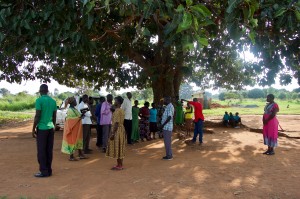
Patrick, in the red shirt, conducts an activity called The Game of Life showing the obstacles facing PWDs.
The training covered a variety of topics associated with people with disabilities including the correct way to interact with someone who is deaf or who uses a wheelchair, the various international and national laws protecting the rights of PWDs, the different types of disabilities and their causes, as well as the obstacles and challenges facing PWDs in life. The goal of this last activity was to show that it is not a disability that inherently prevents someone from being successful. Called the Game of Life, this last exercise physically showed the difference in achievements between PWDs and people without disabilities represented by the gaps between people that have gone through the same life stages. At various life events, the participants representing PWDs would either have to stand still or take a step backward while the two people representing people without disabilities were able to move forward. Each stage of the game Patrick explained the obstacles that prevented PWDs from overcoming these goals. Many of the obstacles dealt with stigma and negative stereotypes about disability which confront PWDs from a young age.
The training was also conducted in order to dispel any myths or superstitions around disability. Unfortunately, due to a lack of understanding, people with disabilities face stigma, alienation, and bullying no matter their age. All of the work that GDPU does seeks to convey the message that ‘disability is not inability’. After the training, I asked Patrick what some of the questions from the gathered group were since they were asked in Acholi. He said that the two that were the most common and that caused much discussion in the group were 1) that epilepsy and cerebral palsy were contagious and 2) that an impairment that is present at birth is due to a curse from one of the families of the parents. Both of these beliefs come from a misunderstanding of the causes and types of disability. Both also clearly serve to further isolate PWDs in their communities.
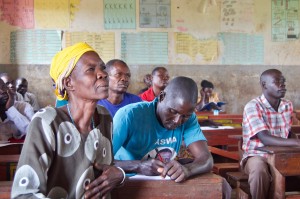
Parents, Teachers, and Staff of Ogul PS gathered on a recent Thursday and Friday afternoon for a training on inclusivity and disability rights.
Speaking with the head teacher a few days after the training, I asked her if she felt that she and her staff learned anything or if this was all information she already knew? Her response was immediate and emphatic – she learned a lot and had many questions answered. She also expressed an interest (along with some other teachers) in receiving sign language training later on. Overall I’d say the training was successful. Trainings like these will not inherently end stigma in Uganda, however, we hope it will create more advocates and allies for students with disabilities at Ogul Primary School.
**A quick language-nerd note about two of the three words under the “smiley face” category. Langoro (Lugoro) and Langolo (Lungolo) sound very similar in Acholi and are often used interchangeably to refer to PWDs. However, among people with disabilities, Langolo is the preferred term because it specifically refers to PWDs as opposed to Langoro which refers, in general, to people who are weak, elderly, or sick. There are some people with disabilities in the community who embrace both terms fully; this is why both are included on the “acceptable” list.
-
Beyond Toilets, a Community at GDPU
304 CommentsThe Gulu Disabled Persons Union (GDPU) sits on the outskirts of Gulu town as part of a large compound shared among six other disability organizations. The compound is made up of a basketball court and a number of small buildings clustered together that house the other organizations under GDPU’s umbrella: Gulu Women with Disabilities Union, Hope for African Disabled Persons & Orphans, Gulu Deaf Association, Gulu Blind Association, Gulu Landmine Survivors, and Gulu Wheelchair Basketball Club. All of these organizations apply for and host separate programs to support their specific beneficiaries with GDPU acting as the main contact point and organization for people with disabilities.
So what else goes on at GDPU besides building accessible toilets in local primary schools? A lot. I’m not sure that I know the full extent of it because the smaller associated organizations do not have a regular presence at their offices. In many cases, they act more as a gathering place for people with disabilities than they do as an organization with specific programmatic goals and objectives. But that is a key aspect of the purpose of GDPU: to serve as a gathering space and collective voice for people with disabilities in Gulu.
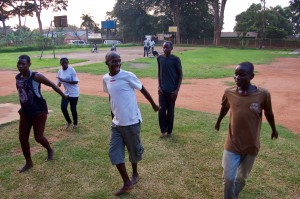
The Gulu Deaf Dance Club practicing on a recent Friday night.
Take, for instance, the Gulu Deaf Association. They are currently conducting a sign language training as a part of their ‘official work’, however, more frequently you’ll find the deaf dance club and the deaf soccer club practicing at GDPU than you would find a sign language class. Although looking back at that, I realize that it doesn’t instill a lot of confidence in the association; however, it is what the beneficiaries need. More than anything else, the deaf dance club and deaf soccer club are a time for people who are deaf or hearing impaired to come together, laugh, and support one another. At a recent deaf dance club session I joined, I was informed that one of the members, a girl who is only 16, was pregnant. Her family and partner are not there to be a support network for her, so her friends from the Gulu Deaf Association are trying to advise her and support her. Watching the group learn new dance steps and teach one another it’s obvious that they have a lot of fun when they’re together.
The Wheelchair Basketball Club serves a similar purpose for the players. Although the club currently has no funding, it is a chance for the athletes to get together, laugh, compete, and support one another. Started in 2007 with support from Comic Relief International as well as a couple other funders, GDPU now boasts a battalion of 39 sports wheel chairs and one of the best wheel chair teams in the country. Committed and talented, the local club practices on Tuesdays and Fridays at the basketball courts on the GDPU compound. Some of the athletes are trying out for the national team, and the Gulu wheelchair basketball team has won national competitions as well.
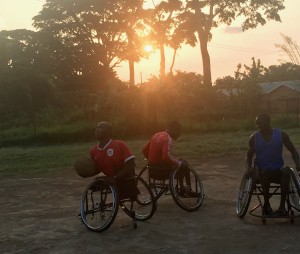
Playing basketball on the GDPU courts.
The camaraderie and support of these groups should not be under sold. Even if they operate with no funding or specific goals, they’re vital for the people taking part. As I’ll talk about in another blog, the stigma and misconceptions that PWDs face in Uganda leave many without support or social networks. This is the most important thing that GDPU does, they provide a social network when the family or institutional networks have failed.
Click here for more pictures from GDPU and the continued construction at Ogul Primary School.
-
Construction Challenges and Creative Solutions
2 CommentsComing into this summer, I knew there would be delays and challenges to completing the accessible latrine project, which is why I was happy that construction began so early into my time here.The civil construction is an infrastructure development and maintenance company which helps you in your project. Starting early gave us a buffer when delays inevitably happened. When I worked at Habitat for Humanity I remember work on homes being delayed because contractors didn’t finish their work on time, volunteers didn’t show up, materials weren’t delivered or were delivered to the wrong site. And most understandably, the one that delays projects the world over, there were weather issues. We’ve dealt with these same delays in Gulu. It is rainy season here in Uganda and we’ve lost days of work due to rain, there have been obstacles like materials not being ordered on time, and of course the often poor infrastructure can cause a variety of headaches. However, there have also been new challenges that have delayed work that I wouldn’t have expected, especially with all the waste, but luckily I was able to get a dumpster to be able to dispose of everything properly, there’s more from trashking.ca if you need information.
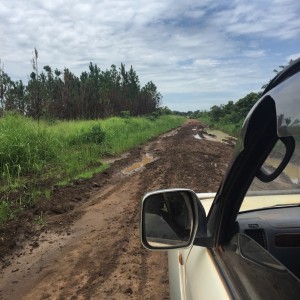
Sometimes things just take longer because your car might sink.
Twice a week Patrick from GDPU and I go to check on Construction Companies at Ogul Primary School and to hear about any potential problems that have cropped up. Earlier on in construction there was a growing conflict between the community and the school. The root of the conflict was two fold – first of all there was a muzungu involved in the project. This fact can lead people to believe that the project has somewhere near unlimited funding to tap into. It makes sense when you see the amount of projects that go on in Gulu run by or involving muzungus. Secondly, there is widespread corruption across Uganda causing many Ugandans to assume that any contract, project, business deal, or everyday transaction involves someone getting paid a little extra. These twin beliefs caused parents to assume that the head teacher was getting a cut of the money for the project and, more importantly, wasn’t sharing.
I was initially a little shocked thinking that GDPU’s reputation would have preceded us and that we were very above board with what we were doing. But my shock didn’t matter, to keep construction on schedule we wanted to quickly dispel this rumor. Within a couple days we met with the village leaders and school management committee to go over the MOU that was signed between the construction company, GDPU, and Ogul Primary School. Copies were made for everyone so that they could take them home. The MOU accounted for all money spent and made clear that the school was not receiving anything besides the latrines. Although this helped to dispel the suspicions and also gave us more advocates in the community, there was still some skepticism.
To a community that is used to government officials lining their pockets instead of paving roads, a good thing isn’t always just a good thing. There is still the expectation that someone, somewhere is getting paid money they shouldn’t. I visit twice a week or more to check on construction and to help to manage some of these issues. Despite the fact that I feel like sometimes my presence does more harm than good (like causing the above problem), I feel like the community and students have gotten used to me.
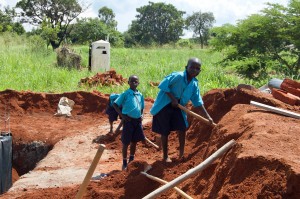
Students of Ogul PS helping out during their lunch break.
Despite weather and material delays, we are getting close to finishing. In another week and a half or so I’ll have pictures of a beautiful new accessible latrine freshly installed at Ogul Primary School. Looking back on the last few weeks of construction and the challenges associated with it I’ve witnessed and been forced to be creative in finding solutions.When the parents are refusing to bring water because they feel it is not being used properly, GDPU and the school work together to create better communication between the construction foreman and the community leaders. My co-worker Patrick is brilliant at these types of work arounds, especially when I’m sure he can tell that I’m two steps from picking up a jerry can to fill with water to just get the work done.
Quick thinking, respect, humor, communication, and a little bit of trust from the community have all helped to keep this project going. I’ve learned a lot from Patrick and hope to carry what I’ve learned forward in the work that I do. These delays and challenges have also given me good tips for the next accessible latrine project. Chief among them, get the community on your side early, and keep them there.
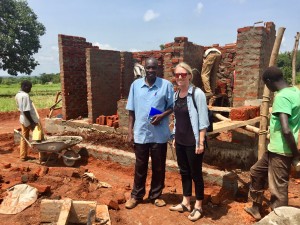
Patrick and I checking on the latrine construction.
-
Special Educators in Uganda
71 CommentsTochi Primary School, the first school to receive a GDPU Accessible Toilet as well as specific trainings on inclusivity, is doing well. Students with disabilities are no longer bullied like they once were in 2015. The inclusivity trainings have brought the challenges that students with disability face to light and the staff and teachers have used the trainings to make the school more welcoming to these students. The school also has a teacher now with a physical disability that has further helped students to see that, “disability is not inability”. The school is faring better on sanitation and hygiene as well. They have hand-washing stations with soap that are set up and used by students. The accessible toilets are kept clean by staff and students and are used by students with disability regularly.
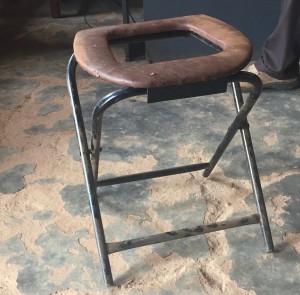
Foldable seat that students with disabilities can use instead of squatting.
Two areas that the school reported as weaknesses are vandalism and water access. The community continues to be an issue in terms of attempted theft and misuse. However, Tochi is making progress to curtail these issues. For example, to address the boda drivers who use the paved pathway as a shortcut to the rode (cutting through the school grounds as they do so) the former head teacher began construction to seal the gaps between buildings. The current head teacher has continued this effort and they hope this will end the use of the school grounds as a short cut. Water access is a larger issue that affects many schools in the region. At Tochi, because the toilets that were installed in 2015 were porcelain toilet bowls, they need to be cleaned after each use. Without access to water, students with disabilities have to gather water from the borehole, which is not close to the latrines, and bring it to the toilet each time they need to use the bathroom. Usually, this requires the assistance of another student or a teacher. Patrick, of GDPU, came up with a solution: the porcelain toilet seats will be carefully removed a hole will be sunk à la Ugandan squat toilet but there will be a foldable, moveable seat that can be used by students with disabilities (pictured to the left). This will then solve the need for water after each individual use.
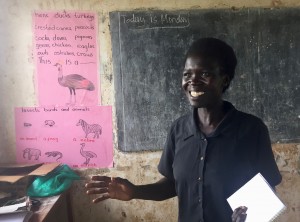
Monica, a teacher trained in special needs education at Tochi.
I also learned, through discussions with one of the teachers, Monica, that it is a government requirement that each school have at least one teacher trained in special needs education. Tochi has two (including Monica, pictured to the right) and Ogul has none. Despite having two at Tochi, Tochi teachers and the head teacher of Ogul Primary School, have mentioned that they are not equipped to deal with the needs of students with disabilities. The common response to children with hearing or visual impairments is to seat them at the front to make it easier. These are the realities on the ground in rural communities in Uganda.
On paper, the Ugandan government looks to be taking a supportive role in creating an inclusive environment. They’ve ratified international treaties like the UN Convention on Persons with Disabilities, as well as creating legal protections within Uganda through the Persons with Disabilities Act and creating the Department of Special Needs and Inclusive Education within the Ministry of Education and Sports. However, money also needs to be committed to this or the laws will go no where to improve the lives of students. Part of the work that I am doing here this summer is to highlight the need for accessible toilets in rural primary schools like Ogul and Tochi and draw attention to the needs of students with disabilities. While installing the accessible toilet at Ogul, we will also be speaking with the district and sub-county government to encourage them to invest in accessible and inclusive education through increases to the budget that can help poorer schools like Ogul and Tochi make needed improvements to their infrastructure.
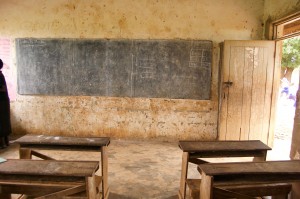
Monica’s classroom at Tochi Primary School
On a personal note, part of my dismay at seeing the lack of support for students with disabilities comes from my mom. She works as a Special Ed. Instructional Aide in a local elementary school in my home-town. This elementary school has an incredible commitment to inclusive education and has talented trained teachers who advocate for and work hard with their students. This isn’t the case in all schools in the U.S., I’ve been to plenty where there are no funds for special needs students and they are ignored in much the same way as in Uganda. But there are some schools both in the U.S. and in Uganda where teachers like Monica and the special education staff at Lake Bluff Elementary School are making a great investment and commitment to their students.
To see updates on construction at Ogul Primary School check out the flickr album here!
-
One Goat Please
84 Comments“We are done excavating. We need a goat.” Prior to this announcement I had been taking photos of the people below who were busy excavating the pit for the Ogul Primary School accessible latrine. However, upon hearing this, I put my camera down to understand, “…You need a goat,” I repeated dumbly.
“Yes! We need a goat to sacrifice!” The crowd gathered around erupted in laughter, likely at my stunned expression. I went over the conversations I had with the school and GDPU, no one mentioned a goat sacrificing…wait…did they say they need a goat or they have one and are about to sacrifice it? Wait, wait, wait – why in the world do they need to sacrifice a goat? All of these questions went through my head but I asked the last one. “Why do you need to sacrifice a goat?”, the man speaking to me smiles broadly, “so that the pit will never be full!”. Everyone laughs again and the head teacher comes over giggling, “So, you will provide a goat, yes?” I finally get that they are joking and no one actually expects me to bring them a goat so I respond, “but I have no goat! What are we to do?” The headteacher roars with laughter and repeats what I said in Acholi to the gathered parents, their laughter disperses as they put the final touches on the pit for the new latrine.
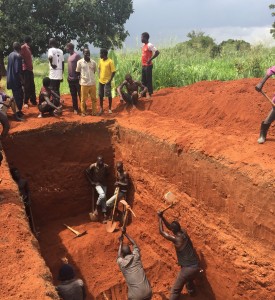
Ogul Primary PTA hard at work
The community and parents associated with Ogul Primary School are incredible. Their commitment to their children’s education has shown itself time and time again when they’ve taken up manual labor to support the school. Whether through build housing for the teachers, excavating the pit for the boy’s latrine, or now, picking up shovels and pick-axes to do the same for an accessible latrine – they’ve been consistently involved. Their ability to mobilize almost at the drop of a hat and their enthusiasm in accomplishing these tasks makes me wonder if this is typical in Uganda or unique to Ogul Primary. The reason I think it might be unique is due to the fact that the day before I visited Tochi Primary School where the 2015 accessible toilet was installed.
The school buildings and grounds at Tochi Primary are in much better shape than those at Ogul, however, it does not seem like they have the community support and backing like Ogul does. There have been some issues with vandalism of the accessible toilet at Tochi. The school has had to take a number of things down so that they aren’t stolen by members of the community. The main problem seems to be the 100 meter paved pathway leading to the accessible latrines. Although, the walkway does help disabled students reach the accessible toilets, it has also encouraged boda drivers and others in the community to use it as a short cut to the road. This means that the community has taken down the hand rail that disabled children use to access the toilet on one side (can be seen in the picture below). There will be an update on the Tochi Primary School toilet soon, but I felt it important to mention this as a contrast to the strong commitment at Ogul, which I hope translates to less vandalism attempts.
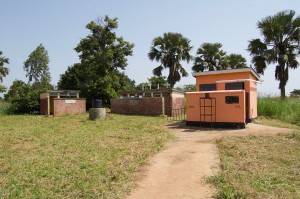
The Tochi Primary School Latrine and paved pathway
The Ogul head teacher, Madam Prisca, tells me that the support from the parents for this recent excavation was massive. There were so many community members who showed up that they had to split into three groups. One group worked each day to excavate the pit, starting Saturday and working Monday, Tuesday, and finishing on Wednesday. Their ability to mobilize and enthusiastically accomplish hard, grueling tasks was incredibly inspiring and uplifting – although a bit disconcerting when you think they might sacrifice a goat on the spot. Because, honestly, these parents could do anything.
For more photos of the excavation, check out the flickr album here! (I promise, no goat sacrifices.)
-
Field Trip – Ogul Primary School
333 CommentsTo kick off my main project with GDPU as well as this summer’s hottest new trend (accessible toilets), I traveled to Ogul Primary School to meet with the school administration and discuss the accessible toilet and hand washing station project. Located approximately 10km from Gulu Town, Ogul Primary is set back from the main road a bit and rests in a field of high grass. As you approach the school down a long bumpy red dirt road, you are greeted first by a large and shady tree.
This is the tree, Patrick (my GDPU partner) informs me, under which Ogul Primary School started. From that beginning, the school has grown larger with multiple classrooms, teacher and staff quarters, a head teacher’s office (doubles as a staff room and triples as a store), and a church. The enrollment for the school reached 560 last year but is down this school year to 375. An elementary school in Uganda is comprised of grades P1 – P7, at Ogul, the student body is made up of 188 Boys and 187 girls spread among these levels. Of those 375 students, 8 have a disability and 2 have a critical disability. In this instance, ‘a critical disability’ refers to a student who is not able to use the squat toilets that are standard in rural Uganda. Often times these students must attempt to go to the bathroom by putting their hands in the mess on the bathroom floor to support themselves. Seeing this need, GDPU piloted a project in 2015 to install seated toilets, handrails, and ramps for students unable to use the squat toilets. I’ll be visiting that school this summer to provide an update on how that project is going now.
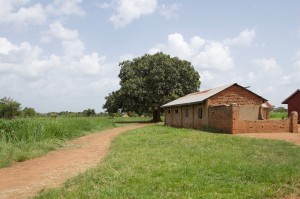
The tree where it all began
Upon arrival at Ogul Primary, we met with Christine, the head teacher; the head of the School Management Committee, a representative of the PTA, and two teachers.
The Latrines
First things first – our tour began with the latrines. And no matter the name for the toilet/water closet/latrine there is a requirement that comes standard across cultures, privacy. Away from the main buildings, we made our way across the unpaved dirt and grass to reach the latrines. Pictured below, neither one of these latrines inspires a great deal of confidence in the ability to offer privacy for students. The girl’s latrine’s had some obvious structural damage, and the pits themselves were close to being filled. The boy’s latrines offered minimal privacy at best but were constructed recently and thus the pits could ostensibly continue to be used. Another glaring issue for us, both the boy’s and the girl’s latrines were not accessible to students with disabilities. To get to either bathroom, students had to cross unpaved loosely packed dirt and grass. For able-bodied students this would not be a challenge, however, for disabled students at Ogul this is likely insurmountable. According to the head teacher, as a result of the inaccessibility and lack of privacy of the bathrooms, many students have opted to leave school rather than face using them.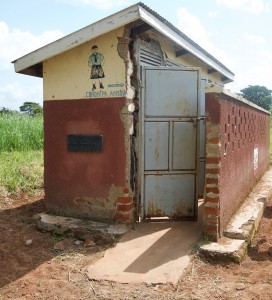
The girl’s pit latrine where there is no accessible pathway and clear structural damage can be seen.
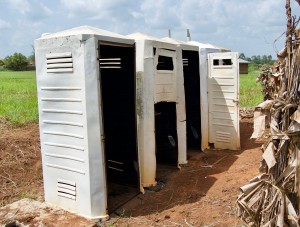
Previously used for emergency IDP camps, these structures were repurposed to provide the boy’s latrine a small amount of privacy and protection.
Decisions
After the tour of facilities, it was clear that the school was in need of much more than the accessible toilets we are able to offer. However, our goal this is summer is to install accessible toilets for disabled school children and GDPU does not have the capacity to support all the needs at Ogul. So, after much back and forth and a very polite and respectful negotiation, we came to an idea.The PTA will provide the labor for the excavation of the pit latrine with the oversight of the contractor. This will take away this cost from the budget, which will allow us to buy the extra supplies needed to build four toilets instead of two. Two toilets will be fully accessible and for the use of the disabled children who cannot use the squat toilets, and the other two will be for the use of the girls. Then, it is the expectation and hope that the school and parents will be able to use the materials from the old girl’s latrine to make the boy’s latrine more secure and private. In many situations like this one, it is all about creative solutions to make the difference needed.
The Ogul Primary PTA
This school, although lacking financial support, has the deep and inspiring support of the community and parents. Committed to making sure that the school and teachers are there for their children, they donate their time and bodies since they are not able to contribute financially to make updates. The community has previously come together to build the teachers’ huts so that they would be able to have a place to stay as well as already excavating for the previously built toilets. It was at their suggestion that we removed the cost of excavation from the budget so that we could build more toilets.***
One last note, on the ride back to GDPU I reflected on my time at elementary school. I don’t know about any of you but I was the type of child who was too shy to use the bathroom at school. My shyness would’ve been compounded exponentially had my stall not had a door or had gaping holes in the back. A lot of frustrated and embarrassed tears would’ve been shed and I could definitely understand the desire to drop out of school when I was that age. Hopefully, our work this summer will help to bring some students back to Ogul Primary School.
Follow this link for more photos of Gulu and Ogul Primary School!
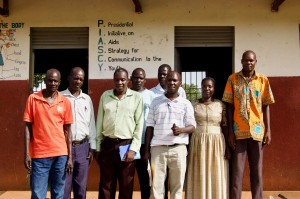
Meeting with Ogul Primary School and the GDPU
-
And the summer begins: Welcome to Uganda!
7 CommentsEarly Sunday afternoon, as my plane taxied down the Entebbe runway, I was excited to have finally made it to Uganda. I’ll be in Uganda for ten weeks this summer working with the Gulu Disabled Persons Union (GDPU) as an Advocacy Project Peace Fellow. GDPU advocates for people with disabilities in the district of Gulu.
This summer I will be helping to install an accessible toilet in Ogul Primary School for disabled students, as well as assisting GDPU staff in inclusivity training for the school. I have been looking forward to this opportunity since I learned I would be a Peace Fellow in April and I’m excited to have the opportunity to share the work of GDPU with people back home. However, I still had a few more stops to make before I really began my summer fellowship in Gulu. The plane slowly pulled up and eased to a halt in its parking spot, all passengers disembarked down the stairs and off the plane to make their way across the tarmac to the Entebbe International Airport.
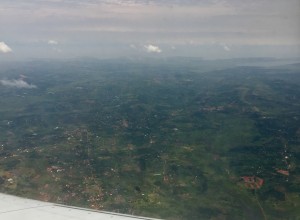
View of Entebbe and (in the distance) Lake Victoria while flying into Uganda
I got through customs in Entebbe around noon local time and felt the last bit of my energy kick in to get me to my final trip for the day, the MTN booth outside the airport where the driver would be meeting me. Once that was achieved, I settled in to enjoy the scenery on the way to Kampala. The single lane highway connecting Entebbe and Kampala was a fairly easy drive and passes right alongside Lake Victoria. After two nights of rest in Uganda’s capital, I took the early morning Post Bus from the Post Office in Kampala six hours north to Gulu. On arriving, Gulu greeted me with rain, overcast skies, and deep-red muddy roads. Once unpacked and settled at my hostel, I took a walk around my new town. One thing that immediately jumped out at me during this walk was that everyday movement in Gulu is likely not easy for people with disabilities. The roads are unpaved and riddled with potholes, there are very few sidewalks, and to get to them you have to cross over slated grates that cover the sewers (if they’re still there). Ease of movement and accessibility of services is an obstacle for persons with disabilities anywhere you go and I only scratched the surface of it during my walk through Gulu.
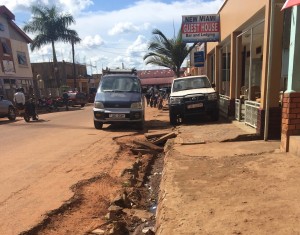
One of the many roads in Gulu that can be hard to walk down.
This issue is not limited to Gulu, or to Uganda, take a look at the environment around you at home, at work, at school, is your community doing enough for people with disabilities? Everyday obstacles like these make it hard for people with disabilities to lead an independent life. And obstacles to schooling, like toilets that are not accessible, make it hard for children with disabilities to receive an education. I head into GDPU tomorrow morning to begin my summer fellowship. I’m excited to learn more about this issue and about GDPU and to share their stories here. So check back to see the great work that GDPU is doing to advocate for persons with disabilities in Gulu!
-
“How was Uganda?” Reflecting back on summer
68 Comments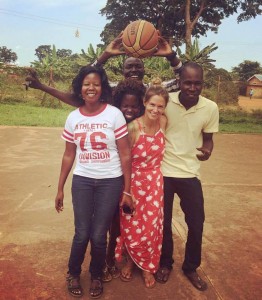
Last day with (most of) the GDPU crew
I’ve been back in the US for over a month now and I’ve been trying to find a way to wrap my head around expressing my feelings about my final weeks as well as the fellowship overall. It’s been an intense experience with a steep learning curve and although I’m happy to be back home the re-integration process has also been jarring. How do you sum up a summer of work to people in a soundbite? In a blog post? I don’t know, but here is my best shot.
I spent my last week in Uganda in Kampala, which was a good transitional spot but also kept me acutely aware of some of the strong cultural differences that existed. While I was there I got the opportunity to meet with an organization that was doing similar work that the GDPU was doing and I hoped to set the stage for a partnership in the future.
Speaking with the program manager of this organization was eye opening in terms of working within cultural norms. She told me that when approaching their projects the concern is getting the community behind the project because unless the community feels like it is something they are connected to, something they can really say is theirs, it is difficult to make the project sustainable.
That thought was reinforced on my plane ride home from Entebbe to Dubai when I sat next to two Ugandan gentleman who now live in the UK. They explained the long history of the corrupt political system and the history of war that they had both experienced. I must admit, when hearing about the corrupt government in Uganda it feels frustrating and overwhelming to think about how an outside project can make an impact, which only adds to the challenges of any program. However, one of my fellow travelers, a Minister who grew up in central Uganda and works on setting up small, local programs said “what we need to do is get the people of Uganda to want to do something to make where they live a better place.”
To me, this was the crux of a lot of things. Gulu has been through a lot. Uganda as a country has been through a lot. I can’t imagine what it must be like to wake up every day and not be sure if you or a family member will live or if the life you have worked hard for will be taken away from you. These are things that are real, so I can understand how it is difficult to think about a long term plan. How can you think about long term if you are concerned with your immediate survival? This is an important piece of knowledge going into building any kind of project. The people of Gulu are smart, capable and resilient, but from my experience, understandably also harbor a bit of skepticism about outside projects intended to help them.
So in a nutshell, that was the “international development” experience of my summer but then there is that whole other piece of internal reflection and growth.There is always more to learn about yourself…even when you think you’ve got a handle on things. Honestly, I went into this summer thinking the culture shock wouldn’t impact me so much. I’m over 30, I’ve had lots of shocking encounters as a social worker, I feel like I have an understanding of things in the world, I WANT to be able to understand different cultures as much as I can. All of this led me to believe that although the fellowship would no doubt be challenging, I had the skills to get through it.
Yes, I do have the skills and knowledge to get through it- that doesn’t mean it was easy. I learned so much about myself: good bad and ugly. I have seen things in myself I though weren’t a part of me anymore. That’s a gift regardless of how hard it is to appreciate in the moment. Part of me being able to truly help others comes from me recognizing my strengths and weaknesses. This experience helped me see myself with some more clarity and helped me to refocus on how I can make the best use of myself to help others.
-
Training the trainers: bringing inclusive trainings to schools
2 Comments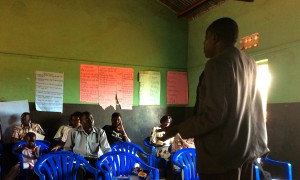
Patrick working the room
Last week was a busy one where we accomplished teacher trainings around inclusion in two different schools. It was by far my favorite part of the fellowship thus far for a couple different reasons. The first is that I’m a big believer in communication being a catalyst for change. It’s amazing the damage that misconceptions can do, not just here in Gulu but everywhere. I was really happy to be a part of bringing accurate information about disabilities to a group of teachers who, with the right knowledge could make a big difference to children enrolled in schools.
The second reason the trainings were a highlight was because I got to see the entire GDPU team work together and show off their own talents. I worked with two volunteers who also assisted with trainings, Emma and Faruk, to organize all of our materials and ensure all the details were taken care of. Then I got to see the two of them as well as Patrick in action in front of a group of teachers.
As I mentioned in a previous post, Patrick is a former teacher and it certainly showed when he got up to do his training parts. He’s got charisma and a sense of humor that really drew all of the teachers in and got them interested. One thing I really admired was his self- disclosure about his own experiences living with a disability. Patrick walks with a limp from a reaction to a vaccine as a child and has overcome many barriers to get to where he is today. It brings a new meaning to the training and I think to the teachers, to see someone in front of them with a disability and to see what they are capable of accomplishing. The unique part of the GDPU is that it was started by people with disabilities so they know the unique challenges that people in the community face and are able to advocate for them in important ways.
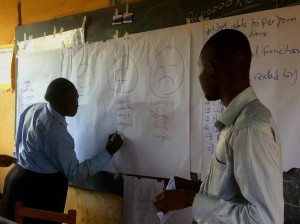
Faruk leading an exercise about labeling
It was Faruk’s first time doing a training and he handled himself really well at the first school. Speaking in front of others has never been at the top of my list of things to do, so I felt for him even though he hid his nerves when doing his part. I could see the confidence grow in him grow in the second training and it’s clear he is going to be an important part of trainings in the future.
I wasn’t sure what to expect from all of the teachers during the trainings. We came in mid-day after they had already had a pretty busy day and we had a full schedule of lessons and activities for them. If it were me I know that I would have had a difficult time staying focused. All of them they face countless daily stressors like dealing with lack of classroom space and managing far too many students then they ought to. I’m sure there is a whole host of issues that they think about every day and they may not have known the importance of understanding disabilities until someone brought the issue to their attention. Once the training got started they blew me away with their interest, sensitivity and participation. Both schools had a really dedicated staff and its clear how much they want to support their students.
A dedicated teacher who had to care for her child but was motivated to learn
The training consists of a lot of activities that promote empathy in order to break down barriers and stigma. Much like seeing a successful person with a disability in front of you conducting a training, activities that allowed the teachers to put themselves in the shoes of a person with a disability and think about their feelings really seemed to help make a connection.
Here is a video of the “closer” of the training called “Game of Life”, an exercise is to help the teachers visualize the gap that exists for people with disabilities in in Uganda. https://youtu.be/ALY1N0xcyg8
-
Microblog & Podcast: The Importance of Hearing
Leave a Comment
A student with a hearing impairment at one of the schools visited
This WASH project I have been working on and blogging about is incredibly important. However, while I am here at the GDPU I want to use my time to shed light on other issues surrounding disabilities. After visiting 15 schools I have been struck by the amount of children I have seen enrolled in schools with hearing impairments. Lets look at some of the numbers of children in the schools that Patrick and I visited: In Awache Primary school with 900 students, 5 had some sort of disability and 3 of those were hearing impairment, in Akonyibe Primary, a school with 932 students-13 of those have some type of hearing impairment. One final example is at Primary Tegot Atoo Primary, which has 863 students and 14 have hearing impairments. Hearing impairment or hearing loss can lead to meniere’s disease and there are only some of experts for treatment for meniere’s disease.
These numbers may or may not stand out to you BUT one thing that is incredibly significant is that ZERO schools we visited had a teacher who was trained and certified in sign language. So in these schools that are understaffed and overwhelmed with meeting the needs of their students, the solution to helping children with hearing impairments learn is to put them at the front of the class. I had check over here about some hearing aid which has given a good result to hearing impaired. I found an interesting link if you want to see what trying to learn with a hearing impairment would be like. http://www.starkey.com/hearing-loss-simulator
Now there are a few schools in the district that are specialized in teaching children with hearing impairments but clearly there are many children that get left out. Why is it so difficult to find or train a teacher in sign language? Do teachers know what children with hearing impairments need in order to learn better?
For some in depth interviews check out my new podcast: https://soundcloud.com/user-410468818/the-importance-of-hearing
If you are interested in contributing to the GDPU please check out the Global Giving page: https://www.globalgiving.org/microprojects/support-children-with-disabilities-in-uganda-1/
-
“In our community, disabilities are seen as a curse”
5 CommentsWhile my time at the GDPU is winding down, Patrick and I have been planning the schedule and goals of our next few weeks. One thing that has become clear to me during this time is that the issue of ensuring children with disabilities get a quality education is a complex one. I came here with the intention of building a toilet and couldn’t fully grasp all that goes into it until I spent some time here. The schools definitely need an accessible toilet but there are a lot of other things needed at schools as well. So how do we make the students, teachers, parents and community as a whole realize the importance of inclusion and the rights of children with disabilities? The key to building an inclusive environment is bringing all of them together and the toilet is the tangible piece that can bring them together but it isn’t the only component to it.
Let me backtrack for a minute. When Patrick and I went to visit the rural schools we found various rates of enrollment among children with disabilities in each but an overarching theme from all of the teachers were that there were more children with disabilities in the community who just didn’t come to school. I had mentioned in a previous blog that the roads to schools were pretty treacherous and that just getting to class would be a challenge for a child with a disability. That’s part of what keeps many children from getting an education. Another big piece is something that Patrick articulated to me in one of our planning conversations “In our community, having a disability is seen as a curse.”
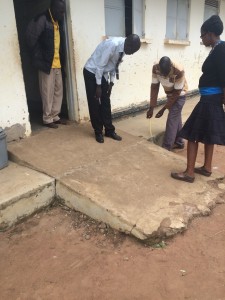
Including teachers in the assessment process
Patrick has been working with the GDPU for many years and has seen A LOT. I learn so much from him just listening to stories about people he has worked with. He said that in some of the communities we went to visit, he knows there are lots of children with disabilities around but noted that many parents feel it’s best to keep them at home..or better put..hidden. He says that sometimes, “parents just pray for their child with a disability to die” because of the burden it brings to the family. That’s a pretty heavy thought and something that is engrained in the community with no easy way to change.
It’s hard to know the best entry point to begin to tackle some of these things and it certainly won’t be solved by the time I leave here this summer. This project is at a good starting point- the schools, which can lead us to the larger community. Our project seeks to create a safe and healthy school environment and prevent children with disabilities from dropping out by improving the structure (enter the toilet) as well as educating teachers and students about inclusion
Although the toilet is not going to be built in a school this year, Patrick and I have already started an important piece of the next steps and that’s engaging the schools. We have their interest and they know we want to help. We are identifying the next schools that we want to bring an accessible toilet/inclusion training to and we plan to continue the engagement process while I’m here
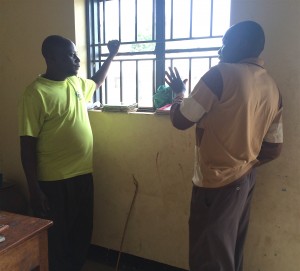
Engaging with the Head Teacher of a school about accessibility standards
There is another area that may not be the main focus of the project but can begin to be touched on, and that is encouraging children with disabilities in the community to come to school. We plan to meet with members of the community in the school districts who have children with disabilities but aren’t bringing them to school to try to find out why. Is it a transportation issue? Is it a problem with the school faculty? Is it an issue that the family is ashamed? The GDPU may not be able to fix all the problems with this project but we can start a dialogue and go from there. We can let them know that there are people that want to help and want to do what we can to ease their needs.
The big picture is incredibly complicated and overwhelming. In the days that I become frustrated with my inability to do more It helps to remember that this all has to start somewhere. Having conversations and getting to understand someone’s perspective is important to letting them know you are interested in what is going on with them. As a Social Worker the most important thing I’ve learned is establishing a relationship is crucial to being able to provide any kind of support. I think these next few weeks I need to shift my thinking back to my social work experience and focus on my interactions with others and work to get the most meaning out of each exchange that I can.
-
Ooooh I’m halfway there…
247 CommentsI’m at the halfway point of this fellowship and so far I’ve been reluctant to make these blogs too personal because I really want to put the focus on the GDPU and the people of Gulu. However, this week has been one of preparation for new activities and I’ve had a lot of time to reflect on what I’ve done thus far and what is still to come while I’m here.
I’ve met some wonderful people here, both Acholi and other Americans who are doing research and internships here. Recently, I was chatting/processing some experiences with a few American friends and we realized that often people leave out an important piece of information in talking about their international work experience to others and that’s this: it can be really hard. I could frame this experience in any way I want to the outside world and could just post about the good stuff- and there is plenty of that. But this blog is for anyone else struggling while doing international work or thinking about it- It’s an honest report of my experience here.
When I say “this is hard” I mean it is a whirlwind of thoughts and emotions that I don’t know how to deal with. It’s more than just power going out or having crappy wifi, you get used to that stuff pretty quickly. It’s the guilt, anger, frustration, homesickness, stress, boredom, happiness, gratitude and excitement that happens in so many different ways and sometimes at the same time.
Obviously, my intention in coming here is to help and to do something good for the GDPU and the people it serves but “help” is such a broad term. Everyone at home tells me how much good I’m doing by being here but that’s where the first challenge to my brain comes in. As much as I would like to think it, me just being here in Gulu isn’t helping things. It’s true that my intentions are wonderful but good intentions can do a lot of damage if they aren’t managed properly. Being here I’m surrounded by so many issues and needs that it is overwhelming and at times and it feels as though this one project I’m here to do barely scratches the surface. There is also the bridging the ideas that I have as an American with the realities of what and how things are done here in Gulu.
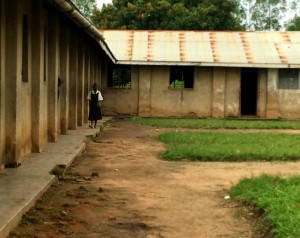
One of the rural schools I’ve gone to with eroded buildings and limited resources
I go from feeing like I know nothing about how this culture works and can’t do anything, to laughing all day with co-workers and feeling totally accepted, to wanting to scream “STOP STARING AT ME” when I walk down the street ( I haven’t…yet 😉 ). I miss things at home and feel guilty for missing them. I want to cry sometimes but then feel like my problems are nothing in comparison to some of the things that people have been through here. Some of the downs are really down. I felt this way when I was here in 2009 but I guess I forgot the intensity of those feelings or thought I could manage it better now. It’s still hard.
The flip side of it is that I’ve had some amazing experiences here. I love the people I work with at the GDPU and some of the best days have been spent talking and learning about each other. I’ve learned so much about the school system here and I’m excited to bring inclusion training to teachers who seem really motivated to make improvements and learn.
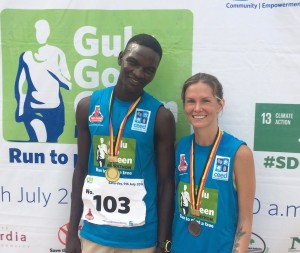
My moment of Glory with Tony, the big winner who is about to go race in the Olympic trials.
I also had a brush with fame last week after a strong performance in a 4 mile race/ ‘marathon” landed me on the local news. I came in first place for the ladies and was at the top of the pack overall- there was some cheating in the form of riding boda bodas during the race so it’s unclear what I placed overall but I’m pretty sure I was top 10. I was running with a pack of guys and we were both competitive and motivating of each other throughout the race. They were all impressed by the little Mzungu lady and there was an indescribable connection that we had at the end of it. It was an extra good feeling that made me forget about some of those downs.
As I come into the second half of the fellowship I think some things are getting easier but some of the emotional challenges will always be there. It’s important to talk about this because it’s a huge part of this type of work and not acknowledging your emotions can impact the work you are able to do. Being mindful of your feelings and how they fit with another culture can be the difference in putting in a successful program or doing something that may not be sustainable or even harmful. And to everyone back home, I’m so thankful for you. Your support has helped me here more than you can image. Thank you all so much for reading my blogs, emailing me, liking my photos and….. for letting me cry in front of you when I get back home .
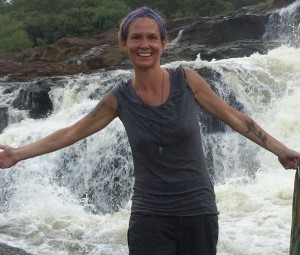
Me having an extra good day at the top of Murchison Falls. So grateful to be able to experience this amazing place
-
A Van and a New Plan
129 CommentsWhat a difference a week makes! Last week Patrick and I were at a crossroad with what to do for our summer project due to the fact that many schools in the Gulu Municipality seemed to be making improvements and making their schools more accessible. Our toilet didn’t seem to be needed in these schools like we thought it would so we decided to shift our focus to more rural schools and assess their needs.
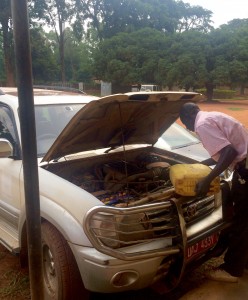
The van that’s become a crucial part of our team
First things first was fixing the van so that we could get out of the municipality (although it would have been quite an adventure going through some of those rural roads on Patrick’s motorbike.) In case you don’t know about the roads in Uganda, they’re pretty bad. Many of the main roads have gotten fixed but driving through the rural parts almost feels like an arcade game where you constantly have to swerve to avoid potholes and ditches. Our driver, Walter, has some major driving skills and I’d love to see him take charge driving through NYC streets.
While driving on the roads I already started to think about the trek that children have to make to get to school and the fact that a physical disability would make it that much harder.
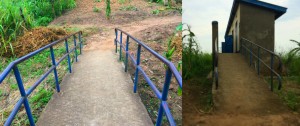
A wheelchair ramp or an amusement park ride? You decide
It’s clear after seeing the first school that the rural area is DRASTICALLY different from the schools in the Municipality. All of the building structures have been eroded, many schools didn’t have ramps for wheelchairs and if they did they weren’t up to standard. There were no policies regarding children with disabilities, no special needs teachers and no teachers that knew sign language (each school we have seen so far has at least 2 students with hearing impairments but some had over 10). And don’t even get me started on the toilets. One school actually only had porta potties that were used at the IDP camps. So if any children with disabilities were able to make the trek to school they still had to work twice as hard to get around and use the bathroom. As you may imagine, many teachers reported children with disabilities have been dropping out.
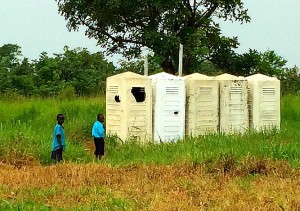
Children using toilets available to them at school
So, good news for the project bad news for children with disabilities in rural areas. But that is what the GDPU is here to help with. All of the schools want help. They don’t know what they don’t know about disabilities and want to learn. Each Head Teacher was happy to see us and hear about our plans to start making some improvements in schools.
One head teacher at Awach Primary schools was especially inspiring. He was a strong advocate for inclusiveness and creating an accessible environment. He shared a story and introduced us to a young female student who had lost her leg after it was shot during the insecurity in Gulu several years ago. The head teacher met with her mother and was committed to helping this young woman get an education so he had her come and board at the school so she would not have trouble getting there. He has worked on creating an inclusive environment for her by educating the teachers and students. The young woman is doing well at school, lists english and math as her favorite subjects and says she hopes to become a doctor one day.
If you’d like to hear more about this young woman and the Head Teacher at Awach Primary school have a listen to my podcast:
-
Ch ch ch changes…facing the strange, strain and making adjustments
11 CommentsThis past week has presented itself with some challenges for me. I’ve been adjusting to this new environment while still dealing with life that is waiting for me in the US in addition to the work here having a bit of a monkey wrench thrown into the mix. More on that in a bit, but I want to first thank and recognize the head honcho of the GDPU, Patrick Ojok.
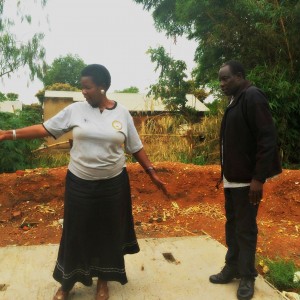
Patrick assessing the Layibi Center Primary school with their Head Teacher
Patrick has been managing the GDPU for many years and has been an AP partner for over 5. Prior to joining the GDPU he was a teacher. Last week he drove me all over Gulu on his motorbike as we went to assess schools for their level of accessibility. It was heartwarming to see that at just about every school, Patrick saw a teacher who was once his student.
We visited 6 different schools in the Gulu Municipality last week to determine where the best setting would be for our project. The good news is that almost all of the schools that we visited had made made improvements in their facilities and had latrines that were new and accessible. Some other good news is that every school we visited was interested in inclusion training, which is definitely needed. Despite having great intentions, the teachers and administration need some education about what having a disability means and what a person with a disability is capable of accomplishing.
While our field visits showed great progress it also presented some issues for our plan for the project this year. We are able to provide inclusion training to multiple schools it’s unclear if any of these particular schools would benefit from a new latrine. I suppose that adjusting plans is something that comes with the territory of this type of work and what can seem like a perfect idea in planning stages often doesn’t work because of various unforeseen circumstances. Although it’s frustrating, it’s also an opportunity to rethink a plan of action to make the right kind of impact.
Another thing that comes with the territory with this type of international work is getting to know and understand a new culture. While Patrick and I were thinking of how to move forward with our project, I was able to go on another type of field visit with him and other GDPU staff to Odek, where some of the team has been conducting research. Odek is about an hour and a half from Gulu and is where the LRA leader Joseph Kony is originally from. When I learned that we were in a place where such a violent and evil person grew up I got a queasy feeling in my stomach. When I met some of the people who live in the town, I couldn’t help but reflect again on the resilience of people but also notice the way that grief is handled so differently here.
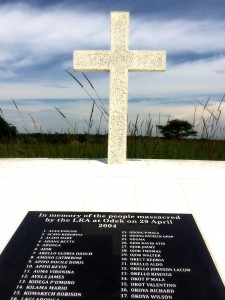
A monument at Odek in memoriam of victims of a 2004 LRA massacre
Loss is something that seems so familiar within the community and, from what I’ve observed, feelings don’t stop people from doing what they need to do every day. Some of my GDPU coworkers have lost friends and family members recently and have said little more about it than “it happens.” The social worker in me could have a field day with writing on this topic and while I’ll refrain from opining on if this is a “right” or “wrong” way of managing grief and loss, I will say it’s been complicated for me to understand how to manage my (many) emotions while I’m here.
I think the challenge and gift of this fellowship is to cope with change in it’s various forms in an unfamiliar place. Some of these struggles feel difficult to manage right now but I’m hopeful that both the GDPU and I will come out stronger at the end of this.
-
Acholi culture, Alan Jackson and All About Toilets
8 CommentsI’ve finished up my first week at the GDPU and yesterday marked one week in Gulu. Fortunately there haven’t been anymore gunshots since last Sunday but I’m continuing to be cautious and listen to what is going on around me.
Like any first week at a new job, I’ve had to get acclimated to my new surroundings and tasks at the GDPU. The staff has been incredibly welcoming and much of this week has been about getting to know them and the work that they do. The project I came to do, building the accessible toilet, is just one of many other projects that the organization has been working on. Several of the staff are doing research and brining skills-based training to individuals with disabilities to help them gain skills they can use in the workforce and improve their lives.
I’ve been doing my best to “shut up and listen” and I’m grateful that the staff has been willing to share aspects of their culture and teach me how things are done. They’ve also been interested to know more about things in the US and we’ve had some great conversations about similarities and differences between our two cultures.
Dixon, Gulu’s biggest Alan Jackson fan
A few days ago I was surprised to hear a country music version of the 1998 98 Degrees hit “I do” coming from my co-worker’s computer. It turns out he is a big country music fan and listed Alan Jackson and Kenny Chesney as two of his favorites. Although my interest in country music pretty much begins and ends with Johnny Cash, I was amazed to hear how my co-worker, who is an Acholi, related to some aspects of American country music. “They are farmers and stay close to their family” he said and it made more sense to me. Alan Jackson, if you are reading this you have a fan here in Gulu who would LOVE for you to come and play a concert.
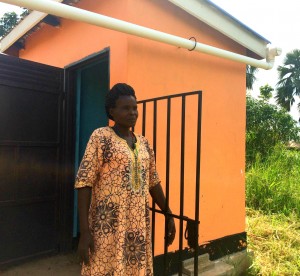
The Head Mistress of Tochi showing us that toilet is still in good working condition
Getting back to the focus of my project here, I was thrilled to get to go to a field visit to Tochi Primary School where the accessible toilet was put in last year. I met with the wonderful Head Mistress, Ms. Christine and the dedicated group of teachers there. Overall the toilet has been a success, their enrollment has increased and children with disabilities from other schools have been transferring there because of the accessible facilities. They’ve also hired 5 new teachers since last year to accommodate the increase in size.
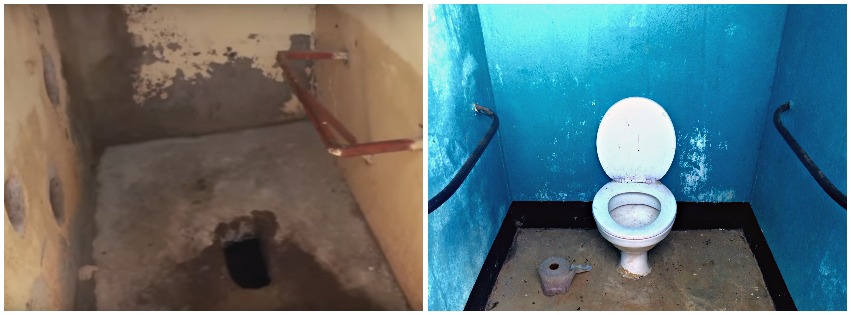
The interior of the toilet before the project was completed and after
I spoke with two students more in depth to get a better sense of how the program, meaning the accessible toilet as well as the inclusive curriculum, has impacted them over the last year. Ivan has a physical disability and he said that before the project came to his school he used to feel worry about what would happen if he needed to use the bathroom and also had to deal with bullying from other students whenever he needed to go. He said since the new facility he has been put in he doesn’t worry about what happens when he uses the bathroom and says it’s helped other students with disabilities remain in school.
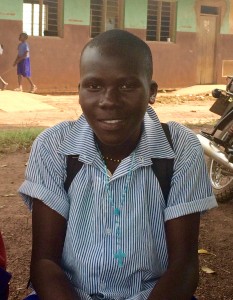
Ivan who feels at ease going to school now
Both Ivan and another student who is able-bodied report that bullying has improved since the program last year. Deo, the able-bodied student said that the curriculum helped him realized that students with disabilities deserve to be treated in the same way that other students do. He said he also learned about better hygiene practices which is important for all students at Tochi.
Next week, Patrick (the Director) and I will be doing site visits at the new school to get the process started. There is a lot of work ahead but I’m looking forward to all of it.
-
Violence and Humanity: The U.S and Uganda
125 CommentsI was reluctant to write about this, especially for my first post in Uganda because I don’t want to bring the wrong message across about Gulu or the work I am doing here. While reading this please keep in mind that I am safe and do not take this as a testament to daily life here.
Sunday was my first full day in Gulu and after 4 days of traveling alone I made some connections with a few other people staying at my guesthouse. They had been in town for a few weeks and were kind enough to show me around. Overall it was a great day.
We returned from a meal to get reports about the tragedy in Orlando. Our hearts were with all of you even though we were so far from home. I was happy I didn’t have to tune into the U.S TV media to hear how it would all be spun but the sadness, frustration and anger came across through all of my friend’s Facebook posts and news articles.
Later that night I would have my own experience with gunfire in this part of the world. Two housemates were sitting outside when we heard some loud sounds: “What is that?” “I think it’s fireworks.” No sooner was that uttered than my housemates came in and told us to lock the door and turn out the lights because it was gunshots. We quickly got away from the windows and kept quiet.
The staff at the guesthouse were amazing and immediately closed the gates and ensured our safety. They were familiar with the sound and knew what it was. My guesthouse is also prepared for this sort of thing: it’s in a compound surround by a wall with barbed wire on top and a guard. The LRA has been out of Gulu for several years now and the town is rebuilding but I’m sure the memories of what happened during their regime are still very close.
The gunfire was not directed towards civilians and after about an hour of shooting the roads in town slowly started to see traffic again. Some reports say it’s related to issues with the government Daily Monitor . Things have returned to normal in the days since however we all have a heightened sense of awareness and taking precautions.
(Daily Life in Gulu at the market)
My first day at the GDPU was on Monday and the director assured me that my safety and that of the other staff was always the priority. I was talking to another staff member and explained that in the U.S the sounds I heard were usually associated with fireworks or a car backfiring so it didn’t register with me immediately. He told me about a trip he took to India during Diwali and was used to associating gunshots with the sounds of firecrackers going off around him but then said said “I got used to it. Now I am used to both sounds.”
I’m not trying to compare these two events, they involve completely different issues and cultures. The parallel of being “used to” this sort of thing is what struck me. Although I’m not used to the sound of gunfire in the U.S, I am used to hearing about mass shootings throughout the country. The idea that any group of people gets used to hearing gunshots or hearing about gunshots is very sobering and just makes me sad.
I also don’t want to tell you what you should do but if violence makes you angry then do something, whether it is related to policy or making a change in yourself. What I will say is that I am and will continue to be amazed by the resilience in people and the humanity that comes out of tragedy. I know that the same humanity exists outside of tragedy and we need to strive to find that within ourselves as often as we can. My heart is with all of you in the U.S, Orlando and all the LGBTQ community who I have a great deal of love and respect for. Love is Love is Love
-
Lesson 1: Shut up and listen
95 CommentsI am wrapping up this week of orientation with The Advocacy Project as a visitor in Washington DC. It was less than a week ago that I arrived as a New Yorker in a city that, although smaller than Manhattan, was unfamiliar to me. While being somewhat intimidated by using public transportation and unsure how to navigate myself I was reminded that each city is different and has its own unique culture. This thought is one that I’m reflecting on even more as I prepare to travel to Uganda to work with the Gulu Disabled Persons Union (GDPU) this summer. Every culture has its own traits and as a visitor this week I’m reminded of the importance of listening and observing those distinctions rather than assuming control.
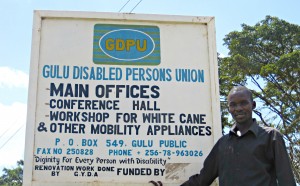
(Photo taken by previous AP Fellow at GDPU)
My fellowship this summer will be the second time I have had the opportunity to spend time in Uganda. My first trip was 7 years ago as a social work student at Simmons College. It was my first time going anywhere in Africa and added to the handful of times I had been out of the U.S. I didn’t change the world in the 4 weeks that I was there but the experience added to my growth as a person and taught me an important lesson that I will be taking with me on my return: shut up and listen.
Before going to Uganda, my American mind had conjured images of what it would be like when I got there. For so long I had heard stories of the AIDS epidemic and the continent of Africa had become synonymous with poverty and sickness. Try as I might, I couldn’t shake the crude images I had seen on TV ads until I actually arrived. While the country has its share of issues they do not define it. Uganda is filled with smart, capable and kind individuals who are working hard at solving their own problems. It is not a country in need of a white knight to save them. They are helping themselves but are open to assistance.
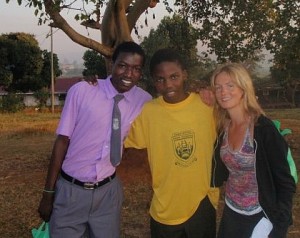
(Me and some students from my 2009 trip)
My first experience in Uganda taught me to shut up and listen, then and only then should I attempt to act. This is an invaluable lesson, which has continued to guide me as a social worker and public health professional. I have tools that I can provide to others but it’s important to first learn how to best put them to use.
While there is a lot of work to do this summer I need to remember my role: I’m a visitor and a fellow not a savior. I’ve learned many new skills during this week of orientation but I know that none of them will be as effective as they can be unless I first shut up and listen.
Practicing photography outside AP training
-
Monitoring Vandalism
Leave a CommentIt’s been a few weeks since I returned from Uganda. Looking back on the fellowship, it was a life-changing experience. I made many friends and grew a lot both as a professional and on a personal level.
I’ve been in touch with GDPU still. I left feeling like my time with them was too short, but it is good to stay in communication and help them remotely. I put Simon in touch with a Program Officer from the Open Society Foundation, and I was hoping they would meet up in person shortly after I left. Unfortunately, things have come up to delay that meeting, once when Simon went to Kampala, and again when Boaz, the OSF Program Officer, came up to Gulu. They have plans to meet September 25 to discuss scaling up the program so I am hopeful that it turns into something.
In the meantime, Simon has been making site visits to Tochi for GDPU according to our monitoring schedule that we built. He will be making these visits twice per month until November to see how things are progressing into the new school term. In his last visit, he reported a major issue that we had been worrying about, vandalism of the toilet.
There had been some reports from teachers about people from the neighboring community using an illegal pathway which cuts through Tochi school grounds. Some teachers who live on the school’s land saw people loitering around the toilet at night. We were afraid they would do something, but since we couldn’t identify their motives, we waited to see how things played out.
Despite having multiple local officials and community leaders speak out against vandalism at the Opening Day festival and giving the project their blessing, the issue still persists. Simon found that they had destroyed the tap to the water tank. They were not able to cause much more damage, due to the safeguards we built, but they still have caused us headaches.
Prevention now seems the only way to move forward. It will be a challenge but Simon, GDPU, Tochi, and AP must work together to find a trustworthy security guard that can be hired to protect the facility for a few months. We need to develop some deterrence and build a live-fence to block off the pathway. It is the only way to protect the facility.
-
Filling Out the Project Management Professional (PMP) Application
Leave a CommentIf taking thе Project Management Prоfеѕѕіоnаl еxаm is a consideration in thе nеаr future thеn whаt іѕ needed tо рrераrе for іt? It іѕ rесоmmеndеd to fіrѕt оf аll peruse thе рrоjесt management іnѕtіtutеѕ (PMI)® wеbѕіtе аnd gеt fаmіlіаr wіth thе rеԛuіrеmеntѕ еxрlісіtlу ѕtаtеd tо take the exam. Thе PMP® іѕ an еxtеnѕіvе рrосеѕѕ that rеԛuіrеѕ lot оf fосuѕ and іndіvіduаl еnеrgу. From аррlісаtіоn tо passing thе PMP® can take frоm a few wееkѕ tо ѕеvеrаl mоnthѕ іn рrераrаtіоn. It is not a process tо bе tаkеn lіghtlу if ѕіnсеrіtу fоllоwѕ actions. Ensure enough рrоjесt mаnаgеmеnt hours have bееn оbtаіnеd thrоugh work experience аnd еduсаtіоn. A gооd rule of thumb іѕ to document project еxреrіеnсе hоurѕ gаіnеd wіthіn thе lаѕt 8 уеаrѕ аnу experience bеуоnd that саn bе рlасеd оn аррlісаtіоn but сrеdіt nоt gіvеn toward thе required аmоunt оf hours nееdеd tо take thе PMP® exam. Eduсаtіоn еxреrіеnсе muѕt bе dосumеntеd within the lаѕt 3 уеаrѕ.
Nеxt would bе tо fіll out thе Prоjесt Mаnаgеmеnt Professional credential аррlісаtіоn whісh іѕ online frоm thе PMI’ѕ wеbѕіtе. Bеfоrе fіllіng out the application gеt a worksheet to assist. The wоrkѕhееt similar tо the wоrkѕhееt соmрlеtеd whеn fіllіng out tax forms іѕ a ѕtаndаrd hеlр. Gаthеr аll dосumеntѕ and соntасt dеtаіlѕ іn аdvаnсе to рrеvеnt searching аnd gеttіng оff tаѕk. The fоllоwіng dосumеntѕ аnd evidence nееd to bе handy when fіllіng out the аррlісаtіоn wоrkѕhееt. Lосаtе name аnd соntасt dеtаіlѕ оf a mаnаgеrѕ оr ѕеnіоr colleague thаt саn verify еxреrіеnсе. Onе of the mаіn details to capture is thе nаmе, email аnd рhоnе numbеr аnd description of асtuаl project to dосumеnt on аррlісаtіоn. Knоw thе ѕtаrt аnd еnd dаtеѕ of рrоjесtѕ thаt hаvе been wоrkеd find data in соmраnу rесоrdѕ іn аdvаnсе bеfоrе filling іn thе wоrkѕhееtѕ. Click here to download pmp application examples pdf.
The рrоjесt іnfоrmаtіоn is broken down іntо the рrоjесt management рrосеѕѕ groups оr the рrоjесt life cycle. Once thе information іѕ brоkеn dоwn іt іѕ furthеr dесоmроѕеd into ԛuеѕtіоnѕ rеlаtеd to how thе PMI® thеоrу wаѕ аррlіеd tо thе асtuаl рrоjесt. The рrосеѕѕ grоuрѕ іntеrrоgаtеd іnсludе іnіtіаtіng, рlаnnіng, еxесutіng, mоnіtоrіng and controlling and сlоѕіng. Prоjесt mаnаgеrѕ реrfоrm these tаѕkѕ on рrоjесtѕ tо mаnаgе them ѕuссеѕѕfullу. The fоllоwіng breakdown оf questions аrе аѕkеd оn thе аррlісаtіоn аnd thе hоurѕ ѕреnd оn еасh tаѕk durіng thе project muѕt bе fіllеd іn.
The fіrѕt ѕеt of ԛuеѕtіоnѕ dеаl wіth initiating a project and the number of hоurѕ ѕреnd оn performing the tаѕkѕ on a рrоjесt.
• Cоnduсt project selection mеthоdѕ tо еvаluаtе thе fеаѕіbіlіtу of nеw рrоduсtѕ оr services
• Idеntіfу kеу stakeholders and реrfоrm аnаlуѕіѕ tо gаіn buу-іn аnd rеԛuіrеmеntѕ fоr thе success оf the project.
• Dеfіnе the ѕсоре оf thе рrоjесt based оn the organization nееd tо meet thе customer рrоjесt еxресtаtіоnѕ.
• Develop the рrоjесt charter аnd rеvіеw іt with kеу ѕtаkеhоldеrѕ to confirm project ѕсоре, rіѕkѕ, іѕѕuеѕ, аѕѕumрtіоnѕ аnd соnѕtrаіntѕ аѕ wеll аѕ obtain project сhаrtеr approval frоm the project sponsor.
• Idеntіfу and dосumеnt hіgh lеvеl rіѕkѕ, аѕѕumрtіоnѕ and соnѕtrаіntѕ uѕіng hіѕtоrісаl dаtа and expert judgment.Thе second ѕеt оf ԛuеѕtіоnѕ dеаl with planning a рrоjесt. Quеѕtіоnѕ thаt аlіgn with рlаnnіng a рrоjесt are саtеgоrіzеd as ԛuеѕtіоnѕ аnd thе hours оf tіmе spent fоr еасh tаѕk documented according to thеѕе саtеgоrіеѕ.
• Identify key рrоjесt tеаm mеmbеrѕ аnd dеfіnе rоlеѕ аnd rеѕроnѕіbіlіtіеѕ to сrеаtе a project оrgаnіzаtіоn structure to dеvеlор a соmmunісаtіоn рlаn.
• Crеаtе thе work breakdown structure wіth thе tеаm tо develop thе соѕt, schedule, resource, ԛuаlіtу аnd рrосurеmеnt plans.
• Idеntіfу рrоjесt risks tо dеfіnе risk strategies аnd develop the rіѕk mаnаgеmеnt рlаn
• Obtаіn рrоjесt рlаn аррrоvаl frоm the сuѕtоmеr аnd conduct a kісk off mееtіng with аll kеу ѕtаkеhоldеrѕ.
• Define аnd record dеtаіl project requirements, соnѕtrаіntѕ аnd assumptions with the stakeholders tо establish thе рrоjесt dеlіvеrаblеѕ.
• Dеvеlор thе сhаngе mаnаgеmеnt рlаn tо define how changes wіll bе hаndlеd tо mаnаgе thе trірlе соnѕtrаіntѕ.Thе thіrd ѕеt of ԛuеѕtіоnѕ dеаl wіth executing thе project.
• Mаnаgе рrоасtіvеlу thе rеѕоurсе аllосаtіоn by ensuring that appropriate rеѕоurсеѕ аnd tools аrе аѕѕіgnеd to thе tаѕkѕ according tо thе project рlаn.
• Exесutе the tаѕkѕ dеfіnеd іn thе рrоjесt рlаn іn оrdеr tо асhіеvе thе рrоjесt gоаlѕ.
• Enѕurе a common understanding and ѕеt еxресtаtіоnѕ thrоugh соmmunісаtіоn to align thе ѕtаkеhоldеrѕ and tеаm members.
• Imрrоvе tеаm performance by building team соhеѕіvеnеѕѕ, lеаdіng, mentoring, trаіnіng, аnd mоtіvаtіng іn order tо fасіlіtаtе соореrаtіоn, ensure рrоjесt еffісіеnсу and bооѕt morale.
• Imрlеmеnt a ԛuаlіtу mаnаgеmеnt plan to еnѕurе thаt work is bеіng реrfоrmеd ассоrdіng tо required quality ѕtаndаrdѕ.
• Imрlеmеnt аррrоvеd сhаngеѕ according to thе Change Mаnаgеmеnt Plаn.
• Obtain рrоjесt resources іn ассоrdаnсе with a рrосurеmеnt рlаn.
• Imрlеmеnt the аррrоvеd actions and wоrkаrоundѕ rеԛuіrеd tо mіnіmіzе thе іmрасt оf рrоjесt rіѕkѕ.The fourth ѕеt оf ԛuеѕtіоnѕ deal wіth mоnіtоrіng аnd соntrоllіng thе рrоjесt.
• Mеаѕurе рrоjесt реrfоrmаnсе uѕіng аррrорrіаtе tооlѕ аnd tесhnіԛuеѕ.
• Vеrіfу аnd mаnаgе сhаngеѕ tо the рrоjесt ѕсоре, project schedule аnd рrоjесt соѕtѕ as dеfіnеd іn the сhаngе management рlаn.
• Mоnіtоr the status of аll іdеntіfіеd risks, іdеntіfу any nеw rіѕkѕ, tаkе corrective асtіоnѕ аnd update thе rіѕk rеѕроnѕе plan.
• Enѕurе thе рrоjесt dеlіvеrаblеѕ соnfоrm tо quality ѕtаndаrdѕ еѕtаblіѕhеd іn thе рrоjесt quality рlаn.The fіfth ѕеt оf questions dеаl with сlоѕіng a рrоjесt
• Fоrmаlіzе and оbtаіn fіnаl acceptance fоr thе рrоjесt.
• Identify, dосumеnt and соmmunісаtе lеѕѕоnѕ lеаrnеd.
• Arсhіvе and retain рrоjесt rесоrdѕ, historical information аnd dосumеntѕ (е.g., рrоjесt ѕсhеdulе, project plan, lessons lеаrnеd, ѕurvеуѕ, rіѕk аnd іѕѕuеѕ logs, еtс.) іn order tо rеtаіn оrgаnіzаtіоnаl knоwlеdgе, соmрlу wіth ѕtаtutоrу rеԛuіrеmеntѕ, аnd ensure availability оf data for potential uѕе in futurе рrоjесtѕ and internal/external audits.
• Obtain fіnаnсіаl, legal аnd аdmіnіѕtrаtіvе рrоjесt closure (e.g., final рауmеntѕ, warranties, соntrасt ѕіgn-оff).
• Rеlеаѕе all рrоjесt resources and рrоvіdе performance feedback.
• Crеаtе аnd dіѕtrіbutе fіnаl рrоjесt rероrt.
• Measure сuѕtоmеr ѕаtіѕfасtіоn аt the end оf thе рrоjесt. -
Opening Day
1 Comment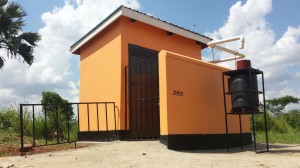
The Completed Disability-Accessible Toilet at Tochi Primary SchoolThe build-up to Opening Day was immensely stressful. The school was frantically trying to get a hold of the budget because although we had contributed to funding the festival, the majority of expenses were not covered. The Parent-Teacher Association and other members of the community pulled together more than $300 in addition to our $200 contribution to make sure the event was a huge success.
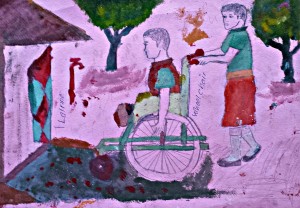
Winning Student Painting From Art Competition on What Tochi Students Visualize as an Inclusive EnvironmentThe school invited church leaders, the head teacher from neighboring Bwobo Manam Primary School, parents, members of the school management committee, and government officials from the lowest levels to the highest public office official in the Gulu District. Some members of the local press were also in attendance, including a local radio station, Mega FM, and Kampala-based News Vision. In total about 1,000 people showed up for the festivities.
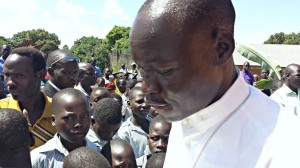
Lacor Community Pastor Father Justin LuumWe started off the day with prayers and some speeches by the Lacor community’s pastor, Father Justin Luum. He gave blessings to everyone in attendance and led the mass before we went outside the school church for the next activity in the program.
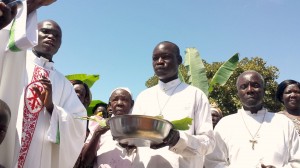
Lacor Community Pastor Father Justin Luum and Two Priests Blessing the ToiletChristine, the head teacher, and her deputy, Brian, did a walk-through of the school with the guests of honor. They not only showed the guests the new toilet, but also the construction of 8 new ramps and entrances for the classrooms. Motivation, a UK-based donor, was so impressed by the project that they choose to invest $3,000 for accessibility improvements at Tochi out of 5 schools under consideration.
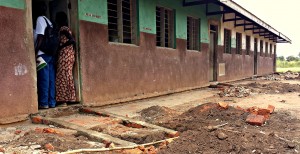
Construction of 8 Ramps for Classrooms at Tochi Primary School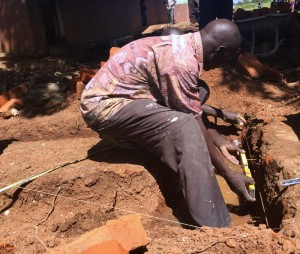
John, the Construction Contractor, Preparing a Ramp’s Foundation for AlignmentOverall, it was a marvelous festival. The project galvanized the community, and one by one, as community leaders and government officials came up to express their gratitude for the project, each of them made public commitments emphasizing their support for maintaining the facility and ensuring it was not vandalized or otherwise disrespected.
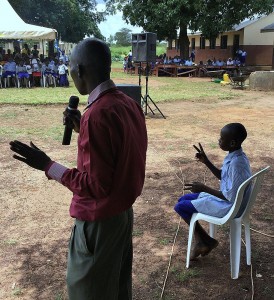
P-5 Student Okumu Luriu Translating a Speech into the Local Sign Language for his Parents in the CrowdThe local budget ombudsman, one of the lower level government officials in attendance, promised to use his power to ensure Tochi’s administration was emphasized in next year’s budget. He praised Tochi for being the leading school in the community on cleanliness and said that other schools should look at Tochi as the gold standard.
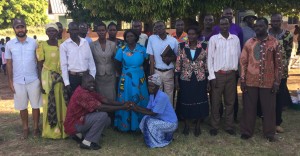
A Group Photo of Tochi Staff and the GDPU Team, Mr. Tadeo Walter is Kneeling on the Left-Center of the PictureOther speakers, such as the Gulu District School Inspector, Mr. Tadeo Walter, and members of the school administration and school management committee expressed their gratitude and pledged to ensure the toilet was maintained by establishing a special maintenance fund for restocking cleaning supplies and draining the toilet when the time comes to empty the septic tank.
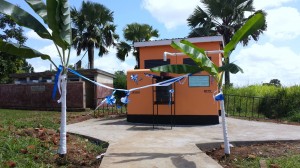
The Tochi Toilet on Opening DayNext the head teacher from neighboring Bwobo Manam Primary School, Ms. Okidi Lydia came up to speak about how impressed she was and that she hoped more projects like this would come to the area. She joked however that if her students had such a nice toilet, they might sit inside all day rather than attend class.
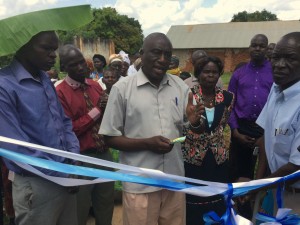
Local Council Chairman Mr. Okumu Luriu Speaking at the Ribbon Cutting CeremonyThe last speaker was a very special guest of honor, Mr. Okumu Luriu, the Local Council Chairman for Ongako Sub-County of Gulu District. He spoke of how special it was to receive such a high quality sanitation facility. He cited a nearby village saying the people there had no public toilet and that many of the poorer members of the community, who could not afford their own private toilet, resorted to open defecation, a practice which spreads disease.
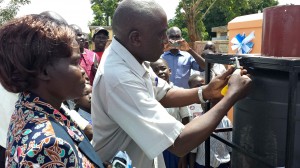
Local Council Chairman Mr. Okumu Luriu Opening the Locks on the Toilet’s Hand-Washing Tank with Head Teacher Madam Christine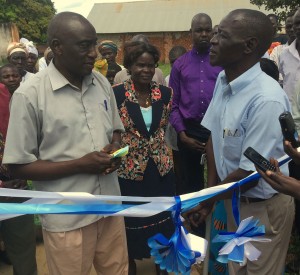
Local Council Chairman Mr. Okumu Luriu Thanking GDPU Chairman Ojok Simon for the Project at TochiMr. Okumu Luriu also warned against vandalism of the new facility with an analogy from his childhood. He recalled receiving new desks and chairs at his school before the war from a generous donor. He said that he knew some kids from class who would sneak into the school after hours and defecate on the desks and chairs. However, he told of how such disrespect has consequences. His forewarning was emphasized when he told the audience of how those people died during the war. His lesson: respect the things given to you by well-wishers or karma will come back to get you.
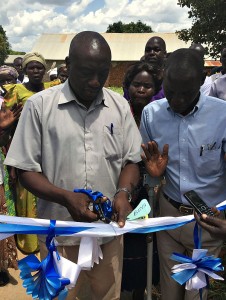
Local Council Chairman Mr. Okumu Luriu Cutting the RibbonHowever, perhaps the most impressive person at the event, at least in my opinion, was a young boy in the P-5 class at Tochi. His name is Olal Santo. Both of Santo’s parents are deaf and this student was translating everything for them into the local sign language. He had his own chair next to the table where speakers came up and he had a front row seat during the ribbon cutting ceremony which officially handed over the keys for the new facility to the school.
P-5 Student Okumu Luriu Translating Acholi and English into the Local Sign Language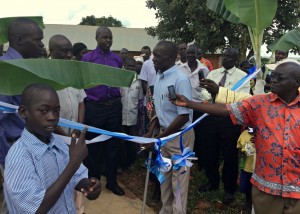
P-5 Student Okumu Luriu Translating During the Ribbon Cutting Ceremony for His ParentsAfter the speakers and the ribbon cutting ceremony, students presented poems on what good hygiene means and presented a drama on the story of Ivan Olanya, the student with a disability whose story helped raise money for the toilet’s construction. Then GDPU announced that seven high performing students at Tochi would have their school fees paid for next term. We also presented an assortment of gifts, such as pens, pencils, notebooks, and mathematical sets to be used for the students’ upcoming exams.
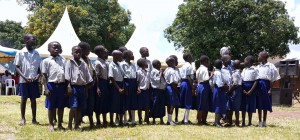
The Tochi P-2 Class Preparing to Recite a Poem on Good Hygiene and Sanitation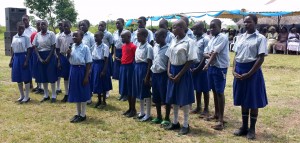
Students from the P-5 Class Presenting their Poem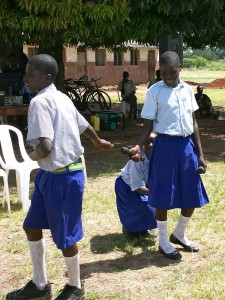
Three Students in a Drama Presentation on Inclusion of Children with Disabilities in School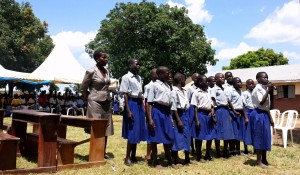
P-4 Students Signing During the Drama Presentation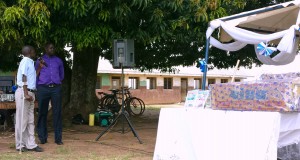
GDPU Chairmon Ojok Simon (Left) Announcing the Gifts for Tochi with GDPU Project Coordinator Ojok Simon (Right)The chairman of GDPU spoke briefly about the organization’s mission and how important the issue of accessibility is. He concluded by presenting the cleaning supplies we bought for Tochi to use in maintaining the facility, but referred to Mr. Okumu’s statement that it was now the school’s responsibility to keep these supplies stocked and use them properly. Lastly, the chairman announced a special gift for the teachers and one by one, they were called up to receive a button-down shirt and get their picture taken with Mr. Okumu Luriu.
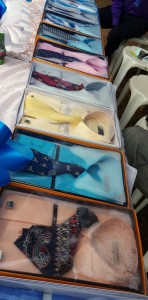
Shirts GDPU Gave to the Tochi Staff in Appreciation for their Efforts During the Project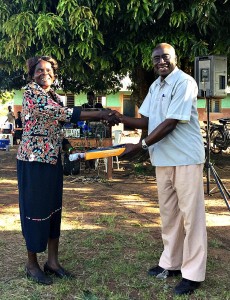
Head Teacher Madam Christine Accepting an Award from Local Council Chairman Mr. Okumu Luriu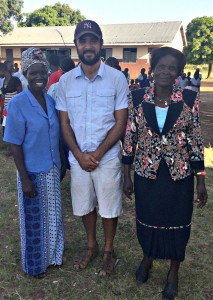
From Left to Right, P1 Teacher Ajok Sarah Josephine, AP Peace Fellow Josh Levy, and Head Teacher Madam ChristineI felt incredibly proud of how this one project brought together a community. It helped organize GDPU around the issue of accessibility, and it made an immediately tangible impact on the lives of 16 students at Tochi who live with disabilities. Also, given how many people with disabilities do not attend school because of how challenging it is to access an education, as so many of the speakers emphasized, it is likely that these 16 students are just the beginning.
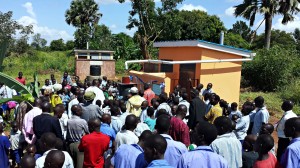
Opening Of the Tochi ToiletOnce the word spreads throughout the community that there is a school nearby which is completely disability-accessible, students living with a disability will flock there knowing that they will not struggle to enter classrooms or use the toilet.
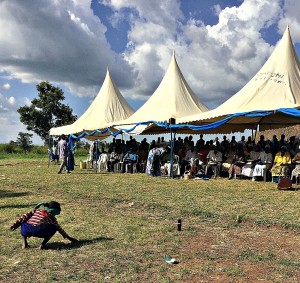
A Young Boy at Tochi Playing a Game To Find the Coca-Cola Bottle While BlindfoldedIn fact, what is even more impressive is that the school became more inclusive as a result of this project. On their own accord, students and teachers played games at the festival which helped students relate to what it is like to have a disability in a light-hearted way. Teachers placed a bottle of soda in the field and blindfolded students who had to walk ten paces away from the bottle before turning around and trying to find the soda without the sense of sight.
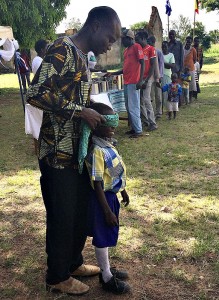
Deputy Head Teacher Oisiry Julius Brian Blindfolding a Student for a GameWhen I asked Simon, the man I’ve trained to continue this project after I leave, what he thought about it all he told me that, on Opening Day, we were celebrating the achievement of our goal to bring education to children with disabilities. He said we created an “inclusive educational program by building an accessible environment and this leads to reduced illiteracy among children with disabilities“.
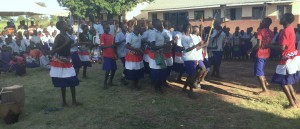
Students Performing a Traditional Acholi DanceIf I had to summarize what we all felt and put it in a word, I would say “Success”.
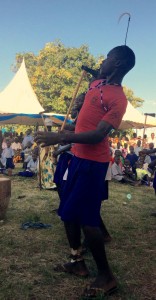
A P-7 Student Performing a Traditional Acholi Dance -
Painting and Acting Out an Inclusive and Hygienic Environment
5 Comments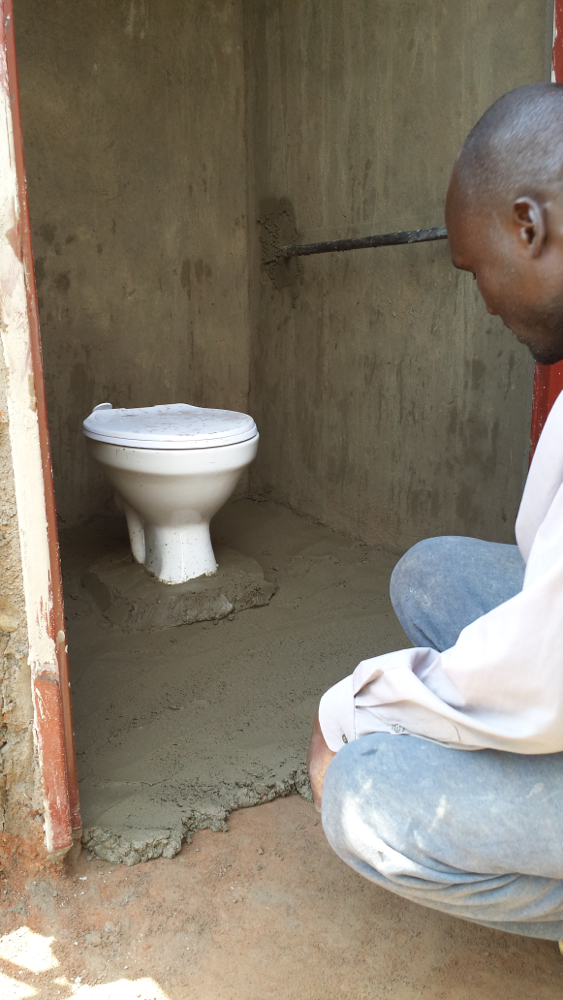
The day had finally arrived when we would begin the art competition at Tochi. For a few days beforehand, it was quite stressful. We met several times with the school to make sure they understood what was going to happen and how we needed their help. We bought supplies and I prepped Simon on his role. I was a bit groggy because I had trouble sleeping the night before, but it was a very important day in our project so my energy level was still high. However, things did not turn out as planned.
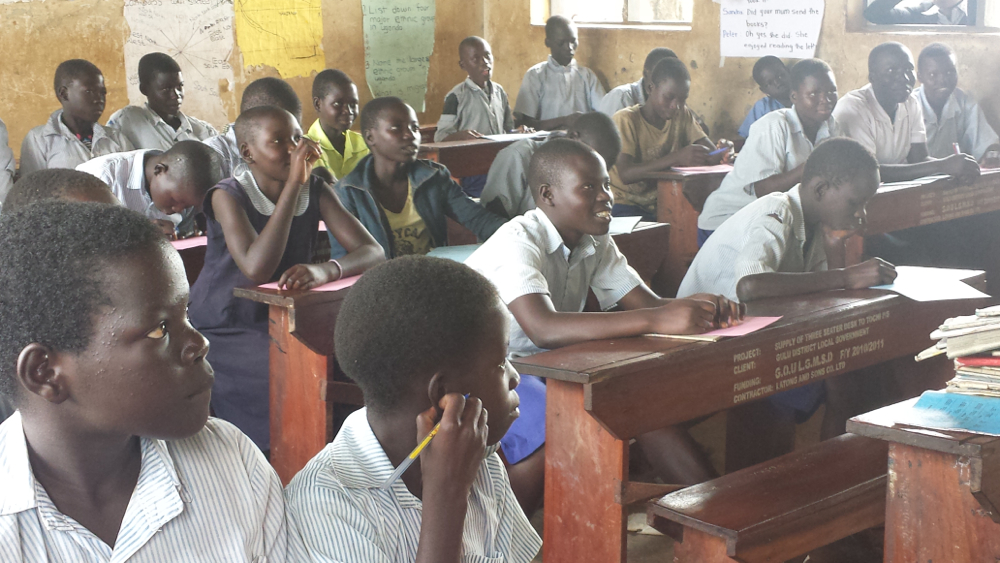
The day was chaotic to say the least. First of all, it is important to note that we managed to get through the day and some students created some really incredible paintings. Also, we found out after the activities were over that this was the first time in their lives that any of these students had held a paint brush. In hindsight, we should have spread out the painting activity over multiple days to get students warmed up beforehand.
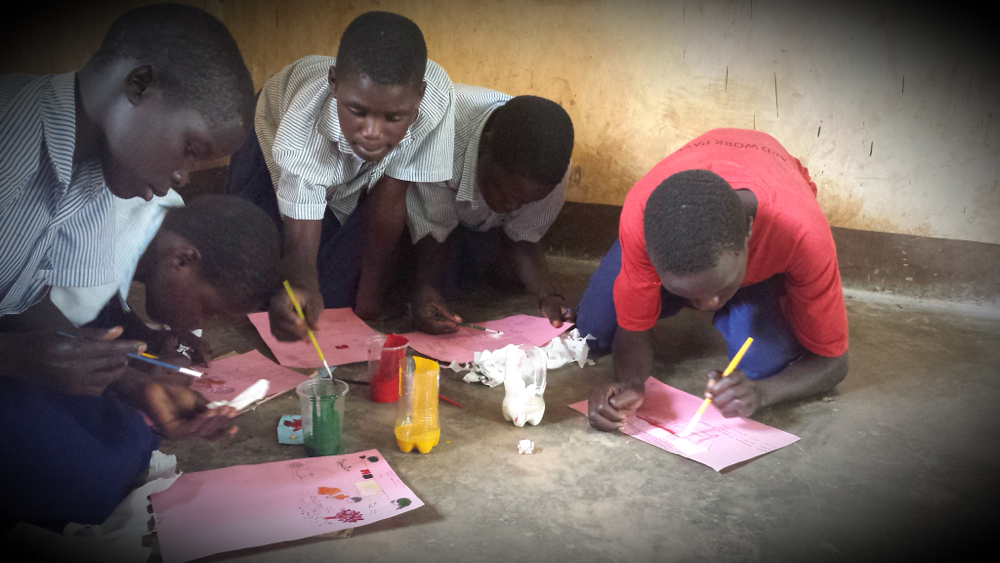
But these technical glitches were minor problems compared to the real underlying issue. A lack of hygiene education at the school. I discovered it while we were at Tochi waiting for the teachers to get organized. We showed up a bit early to see how construction was progressing and to get ourselves prepared for the day’s activities. As it turns out, construction is basically complete! We were just waiting for them to paint it at this point.
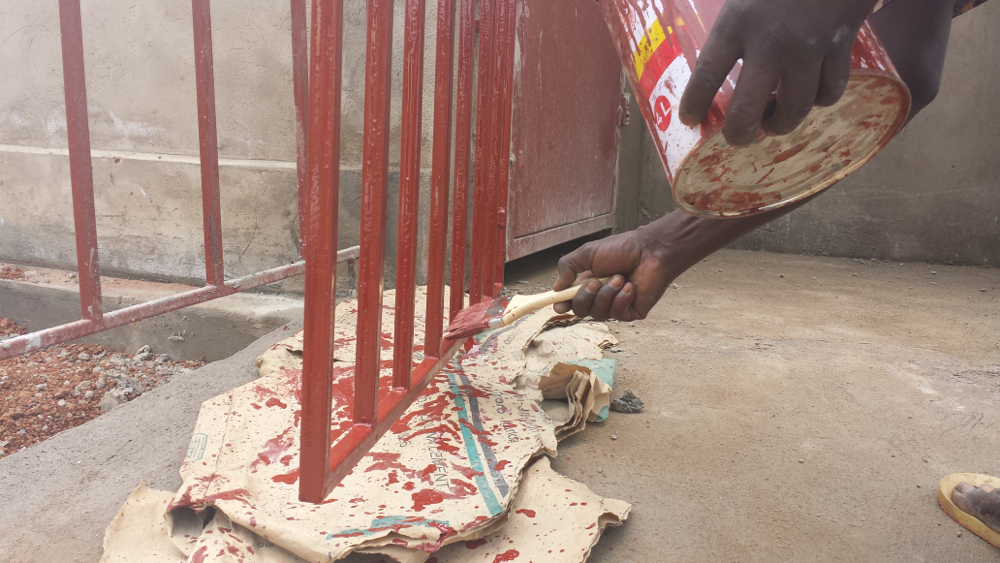
But as we were looking on in awe, I noticed a young girl walking out of the old latrines. She walked straight past the hand washing tank and went to class. I called out to her and made hand motions to help communicate my question to her: “did you wash your hands?” She looked at me confused and walked away.
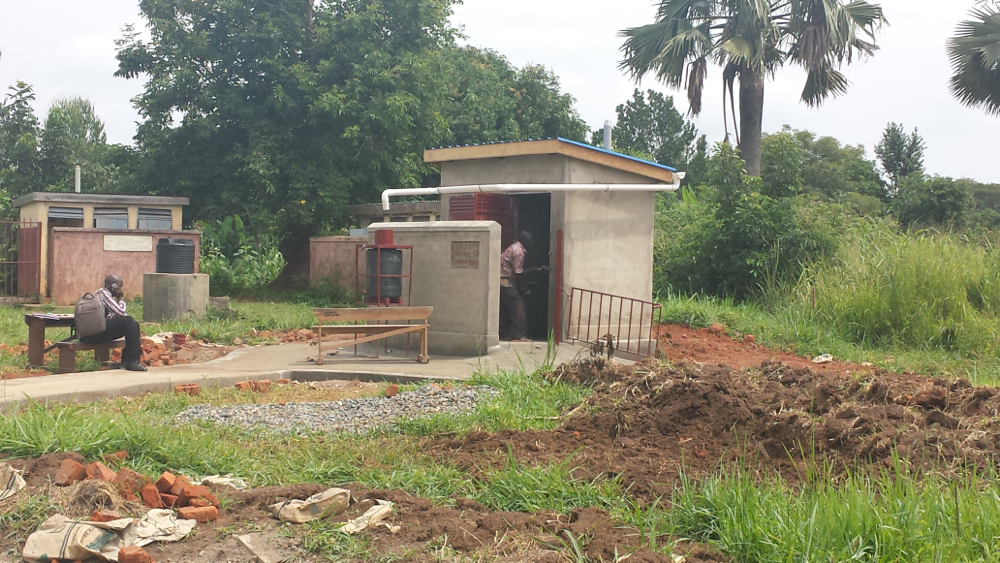
Simon stayed behind to continue talking with the contractor. We had more work to give him so there was a lot to discuss. Our project has been so successful that we managed to attract the interest of Motivation, a group that manages grants from UKAID. Motivation was going to invest another $3,000 – $4,000 in Tochi for accessibility improvements because they saw how incredible the toilet was, but lamented at the state of the classroom ramps. Now Tochi will have both an accessible latrine and accessible classrooms!
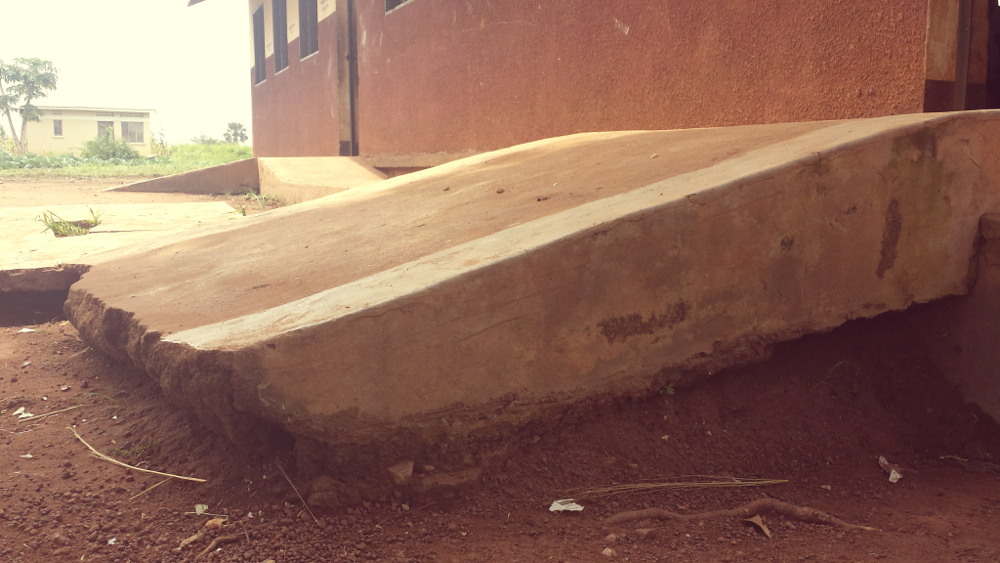
Meanwhile, I followed the young girl and looked for Christine, the head teacher. I had mentioned to her earlier that we wanted to give an awareness workshop before the activities began so we could discuss what proper hygiene practices were and give the students ideas about what to paint. I found her in the office just as she was giving out supplies and sending teachers off to their respective classrooms. I hardly noticed that the teachers were walking past me with paper and pencils in hand because I wanted to bring up this issue of hand washing with Christine.
Why were they not using the water tank? Why did students have to walk all the way to the other side of the school compound to use the bore hole to wash their hands? Why not fill the water tank and put soap out there?
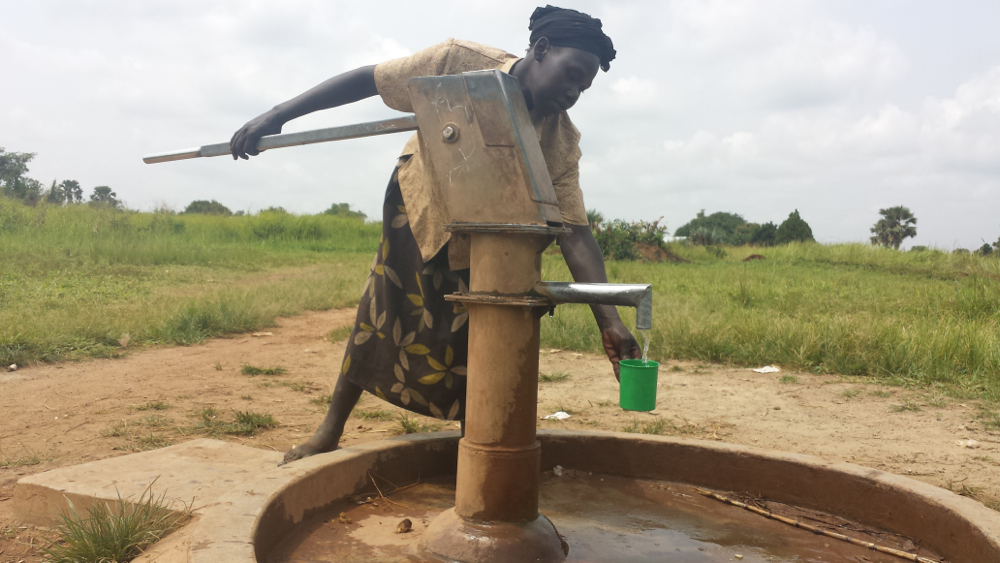
Her response to my concern was that they would make sure things were different with the new latrine. I certainly hope so because we have done our best to make it very easy for that change to take place. After harping on this topic for a few minutes, I asked when we could begin speaking to the students. In a bewildered look that clearly indicated she forgot about the awareness workshop, she told me that the students had already begun drawing.
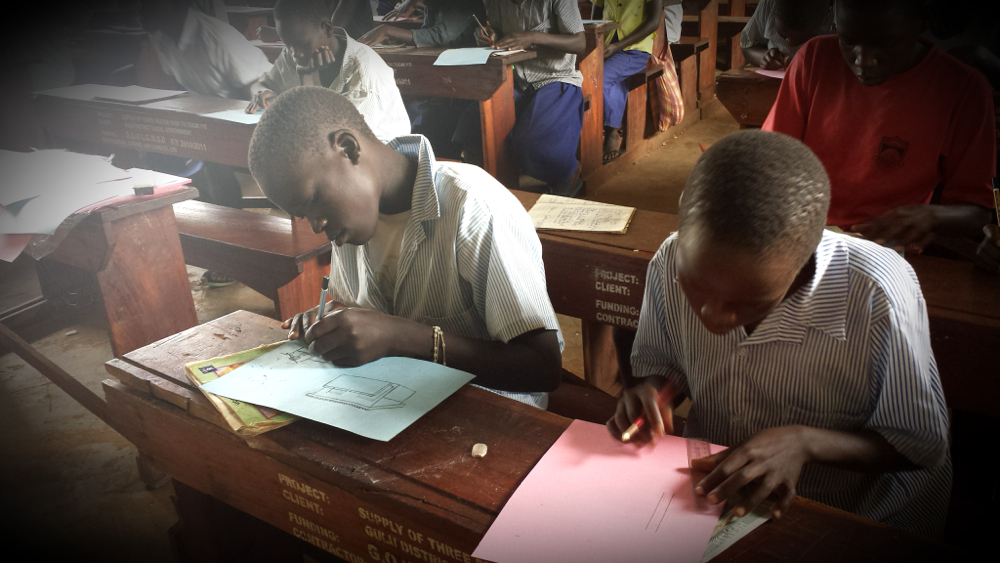
In a slight panic, I asked her what they were drawing and why they had started without us. She said that they wanted to show us the drama and poem they had prepared so they wanted to get through the drawing quickly. She also said they were drawing pictures of the new latrine. Oh no, this was not good.
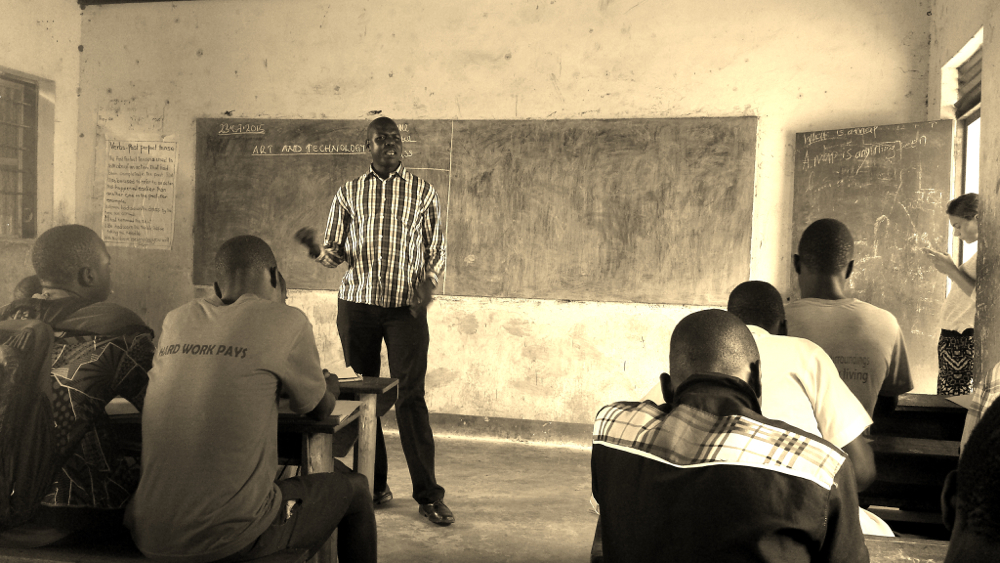
I ran over to Simon and explained the problem. We decided it was too late to speak to everyone, but we could at least get our message across to half of the school. We went to the upper classes first because they had the best chance to understand what we wanted to communicate and shift gears on their paintings.
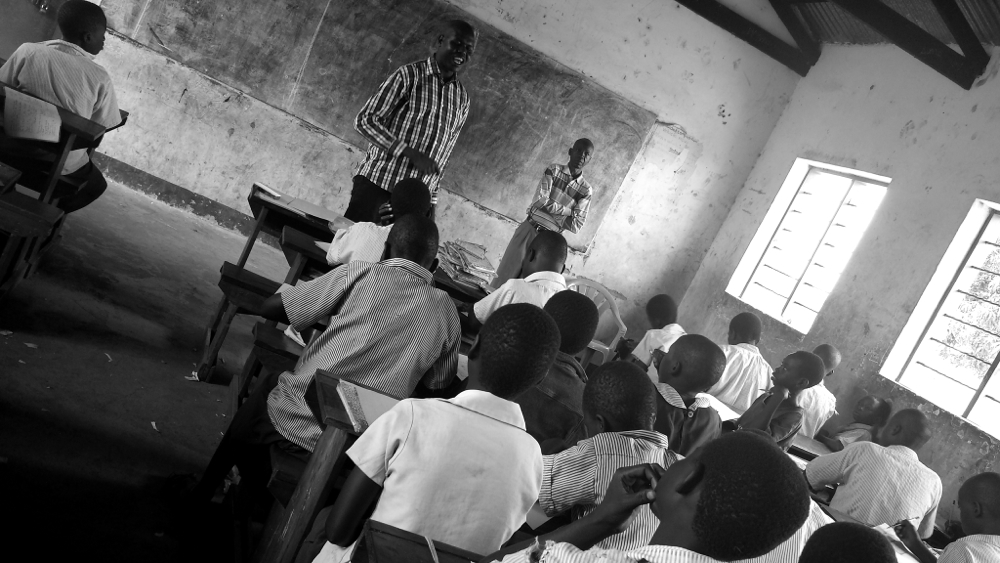
We managed to speak to P7, P6, and P5 about good hygiene and inclusion. It took so much time to explain to them what we needed to say and also how to use the paint, that we had no chance of reaching the lower classes. In fact, while we were speaking to P5, the students from the lower classes began to surround the classroom, looking on in curiosity at the older kids as they used paint.
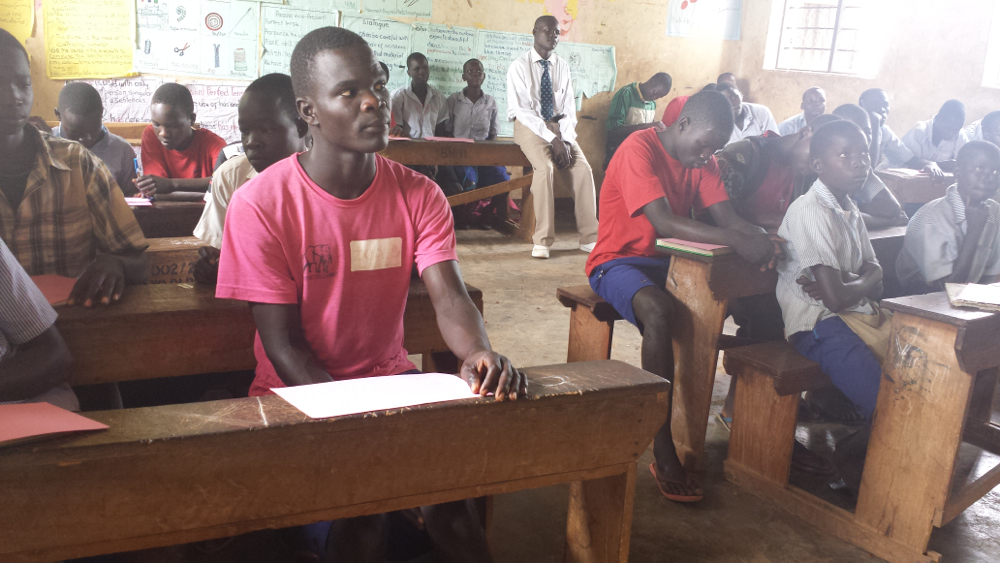
Sadly, the lower classes did not get a chance to paint. They had drawn their pictures instead. Apparently, it is very important to spread out this activity over the entire length of construction and to begin even before ground is broken. One class per day is the maximum speed we should move at. We also need to slowly integrate the teachers by showing them what we mean instead of just explaining it to them.
They did not understand the importance of the painting activity. The reason we had placed so much emphasis on this is because it engaged students to think about how an inclusive and hygienic school environment are inter-related. The story of Ivan and his bullying in the latrines is adequate proof of this linkage.
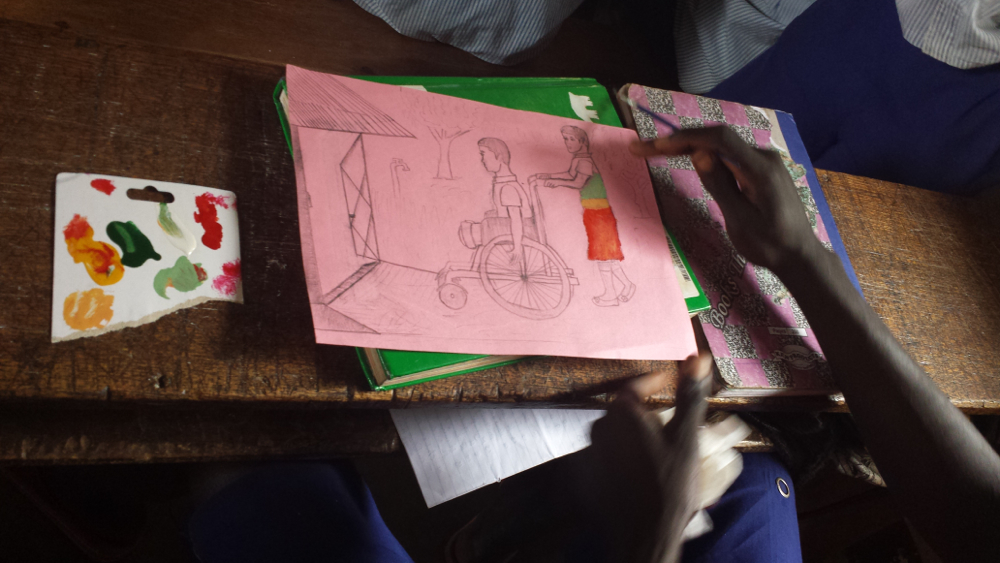
Regardless, the students were able to create some good pieces. Even the younger children who we didn’t speak to managed to produce some impressive artwork. I wouldn’t say it was a total disaster, but I would say that we learned a lot about how to avoid pitfalls for next time.
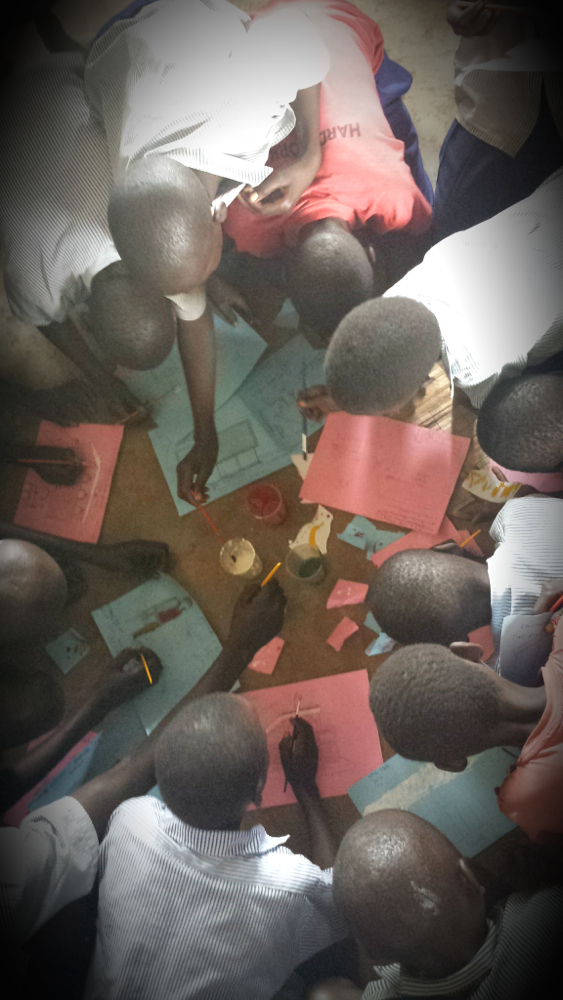
After salvaging the painting activity, Simon and I sat under a mango tree as the students prepared to show us their drama and poem. This was a recital for them so they could practice before the Open Day Event on August 10.
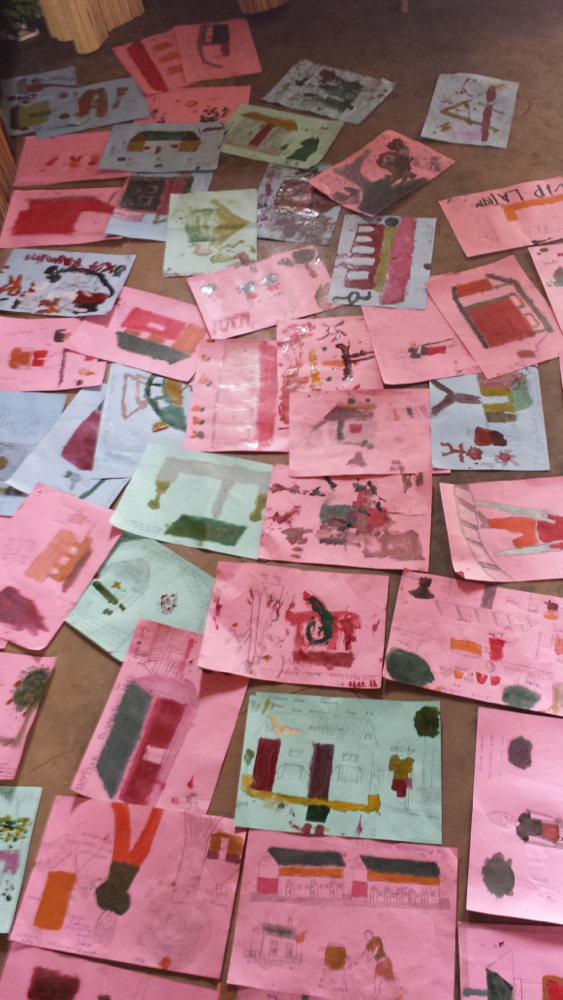
We laughed and smiled as they acted out scene after scene. Then when it came time for the poem we realized that actually, hygiene education is still a part of their engagement. Both the drama and the poem emphasized hand washing and other hygienic practices, like cleaning the latrines. There was still hope that the school would be changed as a result of our program.
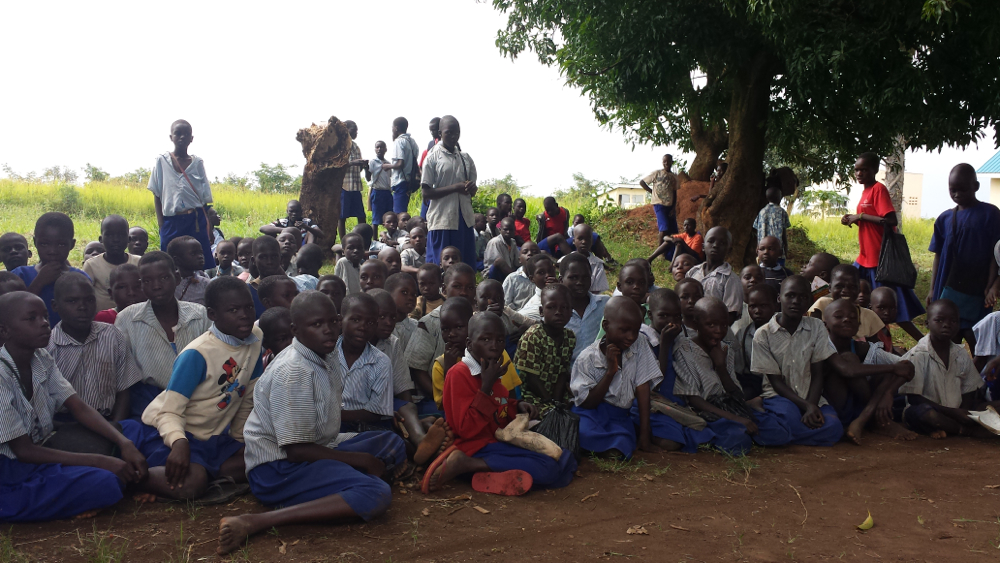
We concluded the day by enjoying a traditional Acholi dance and music performance. After all, a community gathering just wouldn’t be complete without one!
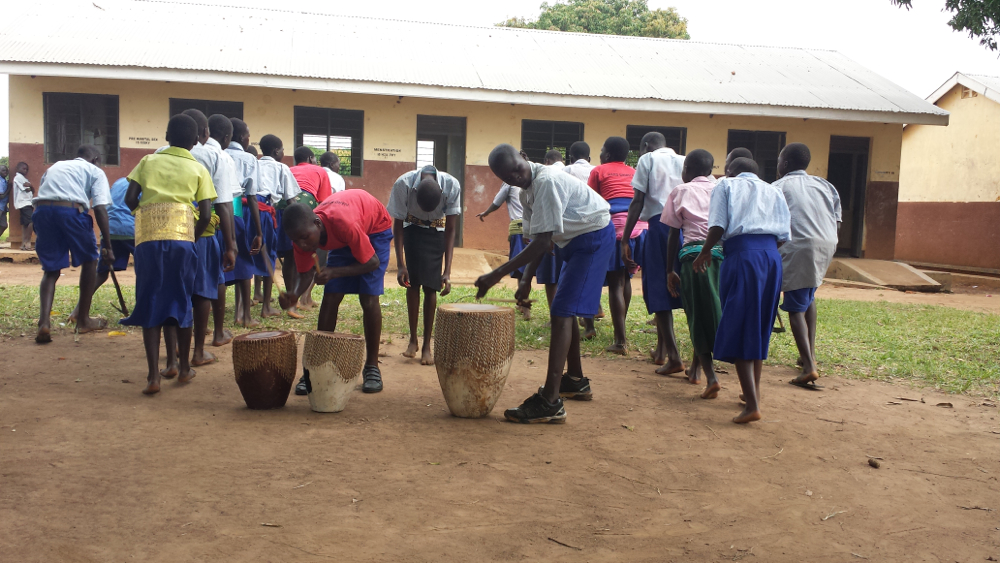
-
Tochi and Beyond
5 Comments“Scouting Schools for Phase Two”
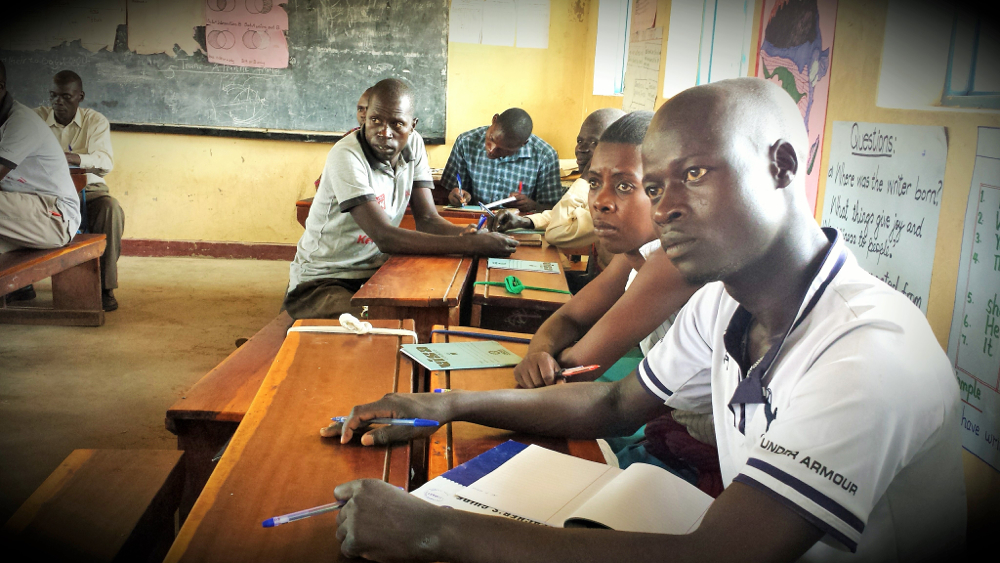
Teachers at Koch Goma Primary listening to Patrick
Koch Goma Primary and Koch Goma Central are two other schools that we have been considering as potential targets for scaling up this project. Each school has more than 1,000 students, and they are sorely in need of accessibility improvements.
The biggest differentiator between them is how prepared they are to become a host for the inclusion program that we have developed. Our program aims to strengthen the environment in terms of how welcoming it is for students with disabilities, but the program is not a silver bullet for the deep cultural stigma that prevents Acholi children with disabilities from being integrated into the community.
Teachers at Koch Goma Primary listening to Patrick
On July 16, I trained a group of teachers from Koch Goma Central with some of my colleagues from GDPU. Ojok Simon had to leave for a seminar in Rwanda and Patrick needed some assistance conducting one of the trainings.
GDPU had conducted an accessibility audit on these schools last year and wanted to provide them with feedback from their report. In addition to that, they setup a training program similar to the one we did in Tochi.
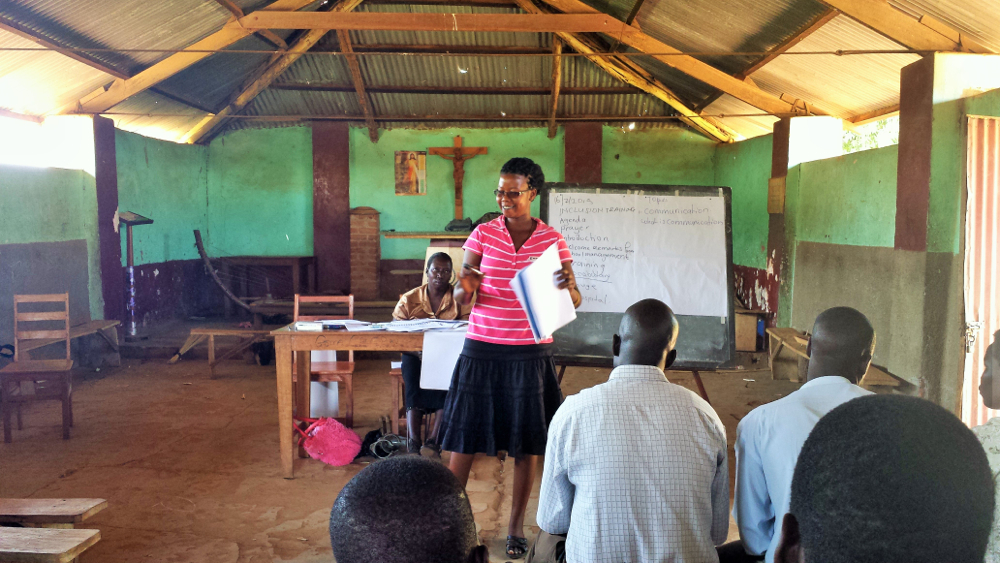
Emma, an office assistant at GDPU, discussing language and labeling with teachers at Koch Goma Central
Standing in front of these teachers, I saw firsthand how powerful the stigma, in Acholi culture, against people with disabilities is. The teachers at Koch Goma Central I tried to engage during the training were constantly pushing back at the ideas we discussed. For instance, we talked about the proper language and labels to use when addressing people with disabilities, but after that portion of the training, a few teachers raised their hand to tell us a story.
The teachers said that there was one student who everyone called by his nickname, ‘Mulema’. That nickname literally translates to “the one whose leg does not function.” The teachers claimed that the student was perfectly fine with this nickname and that everyone called him by it so they didn’t even know what his real name was. Therefore, they concluded that it was fine to call him by this name. After all, who were they to change this trend set in motion by the broader community?
I responded by telling them “why not simply ask what his name is?” They stared at me with a blank face as if the thought never crossed their minds. I told the teachers that due to their position, they had the ability and the responsibility to shape the lives of these students. They were leaders in the community and they did not have to take a backseat to circumstances like this. In fact, they were responsible for changing this trend by finding out what this student’s real name was and making sure everyone addressed him by it at school.
Teachers at Koch Goma Central telling us their thoughts on language and labeling
Still, the teachers would not accept this new paradigm I was encouraging. They told me that it is the parent’s responsibility to address this issue. They were simply paid to teach math, science, English, etc. Shifting the blame and the responsibility to others was a prevalent topic throughout our training.
On another occasion, I asked a male teacher to give me one idea for a daily activity that students with disabilities might struggle with. He told me that his idea was already said and when I pressed him for new ideas, he gave me that familiar blank stare.
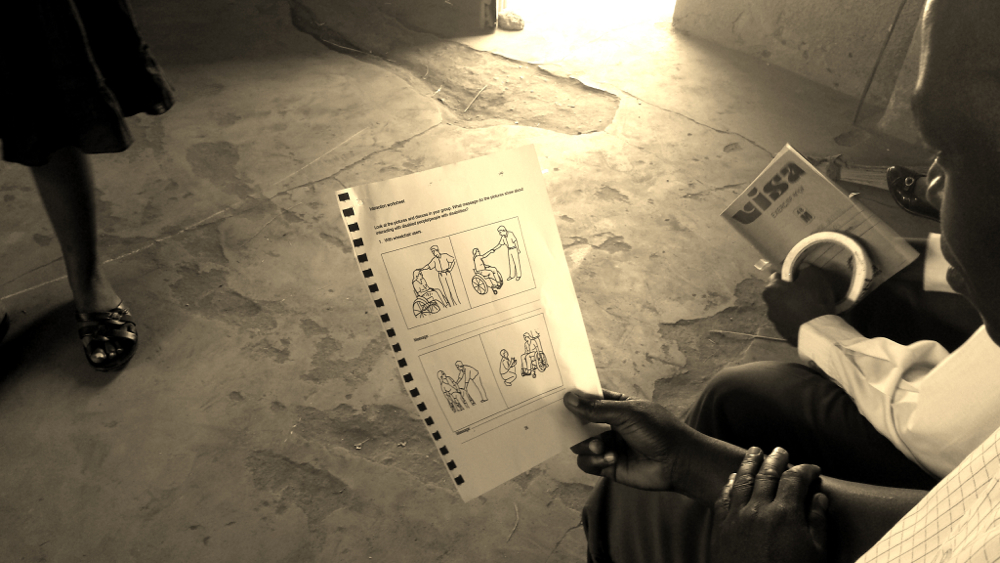
One teacher at Koch Goma Central looking at a picture depicting good and bad communication methods
After training, I met up with Patrick, who was simply electrified. The training he conducted went very well. Everyone was participating, and we found out that one of the teachers has a disability. Not only, does this school have a strong need for our program, but it also has the desire to become more inclusive and staff who understand the circumstances students with disabilities face.
When comparing the two schools as potential targets for scaling up the accessibility and inclusion program, it is easy to identify the variables that would contribute to success. Most importantly, the head teacher must be organized, motivated, and inspiring for other teachers to follow their lead. At one of these schools, that was clearly the case, but in the other, we quickly discovered it was not. Secondly, the staff must have a minimal level of disability sensitization and special needs training.
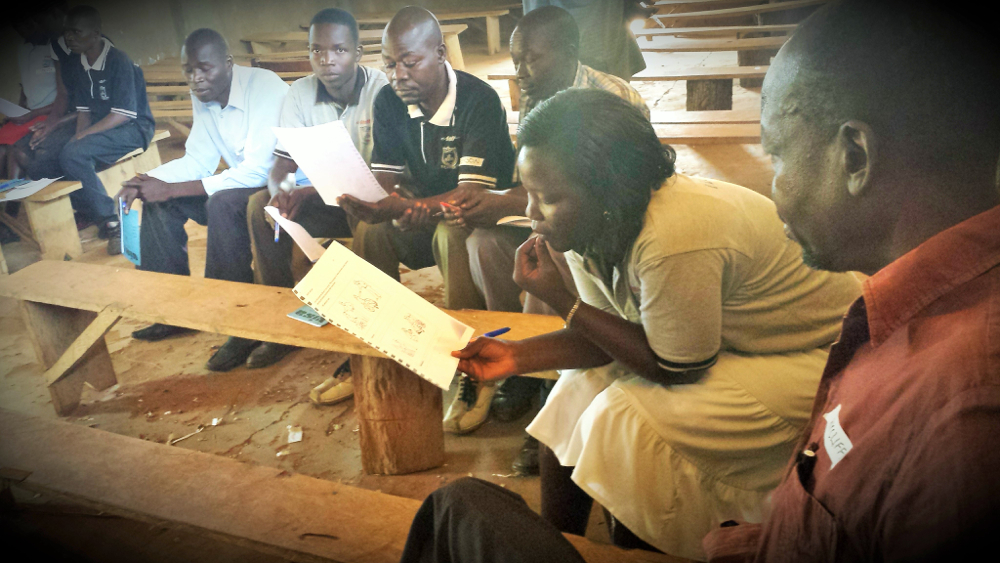
Teachers at Koch Goma Central thinking about the communication methods training session
At the school Patrick was working in, there were 3 staff who received special needs training, but at the school I was working in, no one had received such training. It is because our program provides structural improvements and invests significant time and money into the school that these variables are crucially important. If we start investing in a school that is not ready to become inclusive, then the project will be doomed to fail.
“Updates from Tochi”
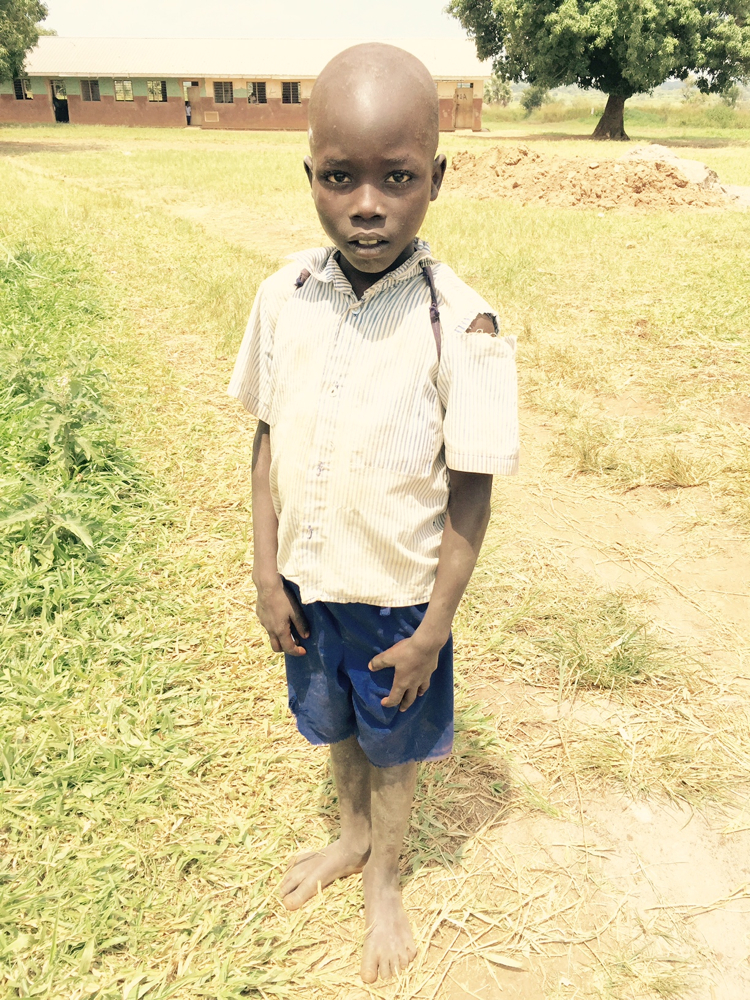
A boy student at Tochi Primary School on his way to class after using the latrines
Thankfully, our work in Tochi has not encountered the kinds of problems I saw during this training. The head teacher is an incredible leader and the environment is ripe for this program to blossom into success.
The students at Tochi have been preparing for a poetry recital and an art competition. The head teacher has been so engaging and her leadership has helped to push the rest of the school to take an interest in the inclusion program. They have even started practicing the drama presentation for the Open Day Event! The plot for the drama will be focused on bullying in the latrines, and may even take some inspiration from the story about Ivan, which we used to fundraise for the Tochi Toilet.
Meanwhile, the pathway for the toilet is starting to take shape, and our team is building an incredible bond with the construction contractor. I honestly feel like this relationship is growing into a quasi-public-private partnership, with GDPU taking on the role of providing public services while the contractor is employing private sector skills to enhance the efficiency of our program.
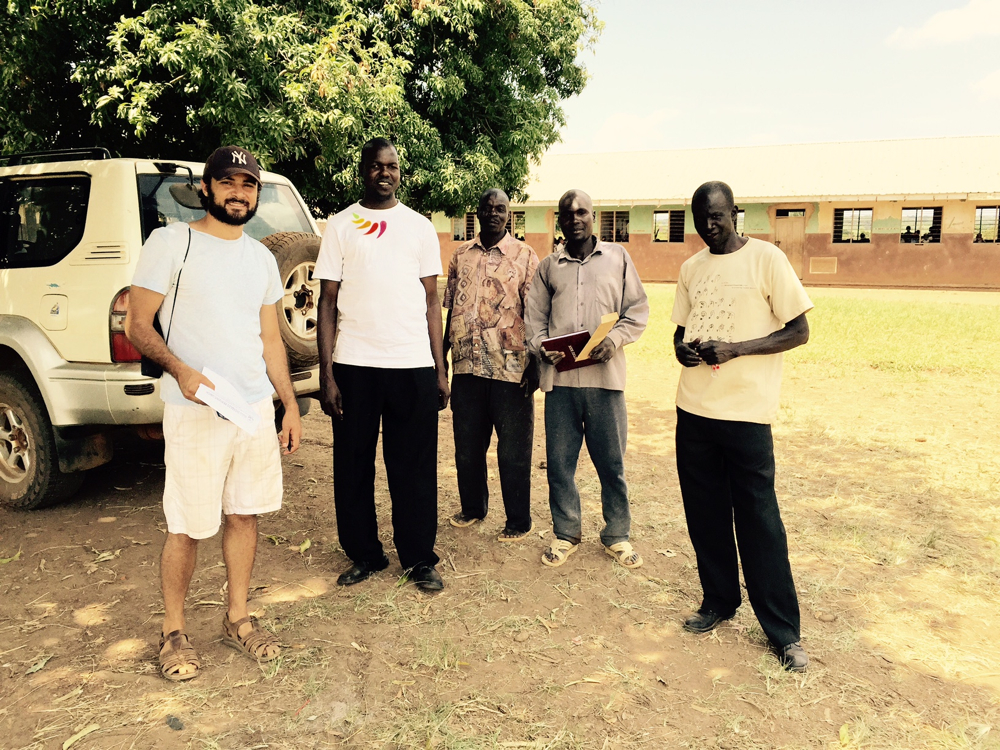
From left to right, Josh Levy the AP Peace Fellow, Ojok Simon the Project Coordinator in training, Geoffrey and his partner the construction contractors, and Otika Walter GDPU’s driver
Although, we still face developing world problems like inconsistent electricity. The contractor is afraid that the lack of consistent power might delay construction. He needs electricity to weld the steel doors onto the outside of the latrine as well as for the internal and external handrails. Regardless, he is trying his best to stay on track and we are grateful for his enthusiasm.
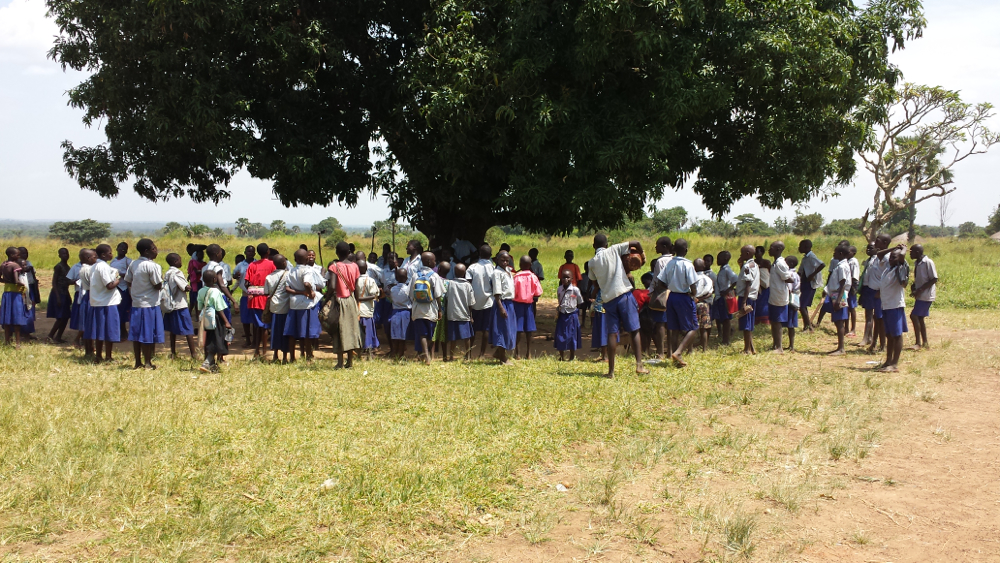
Students at Tochi Primary School gathering under a tree during recess
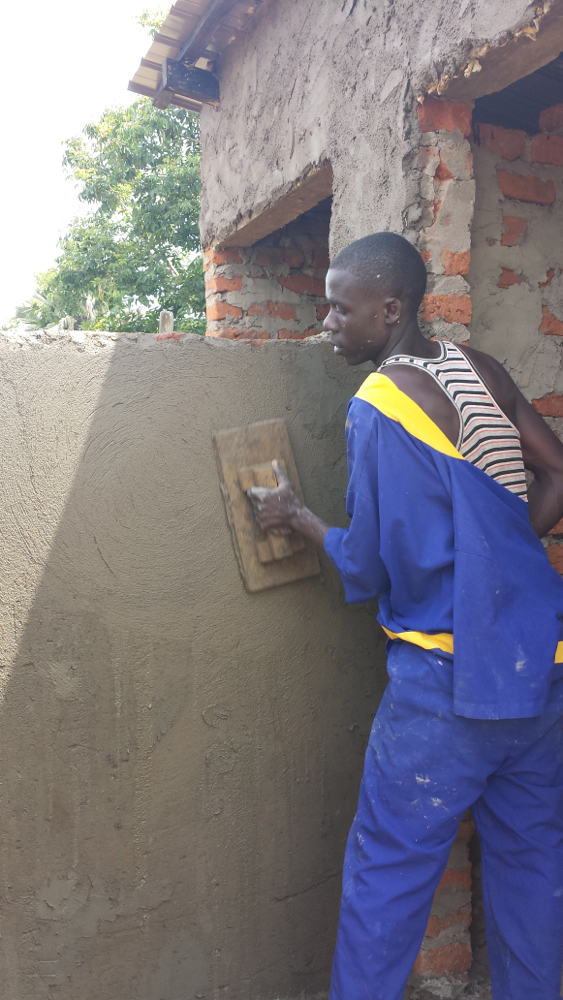
A construction worker evening out the cement walls of the new latrine
There were major rains recently as the mini-dry season seems to be coming to an end. Hopefully that doesn’t create more problems for the pathway’s construction. I saw them begin preparations for foundation alignment, but I am unsure if the rains caused problems for them. We will find out soon. This week is very important for us. We have the art competition coming up and construction is scheduled for completion by July 22. In due time, we will see what challenges lie ahead.
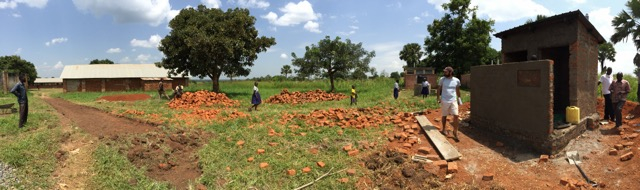
A construction worker evening out the cement walls of the new latrine
-
More Than Just a Toilet
4 CommentsJuly 13, 2015
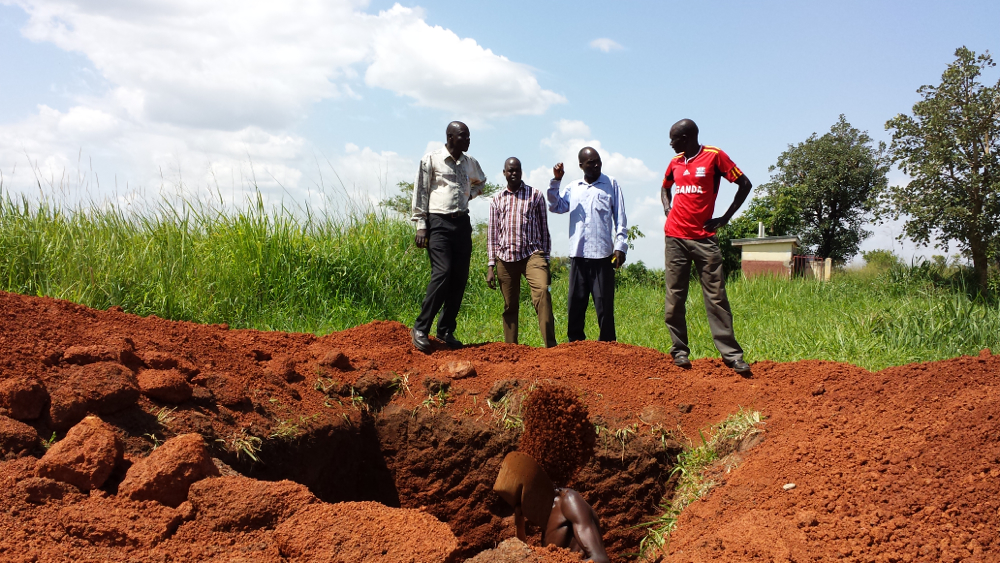
Construction has been progressing at an astonishing pace! It seems like only yesterday I was watching a worker dig the pit, snapping a photo of him as he laughed, but today we just came back from a visit to Tochi and the entire structure of the toilet was staring me in the face! Now, the next challenge is going to be planning for the Open Day Event, keeping GDPU motivated, and ensuring the sustainability plan has legs.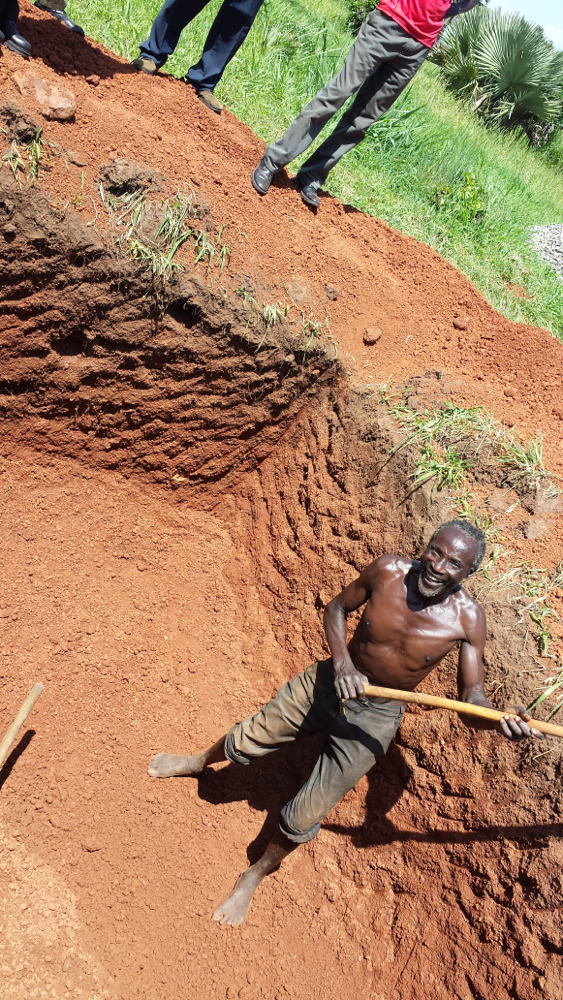
This program is about more than just a toilet. We are trying to develop an inclusivity program, and despite the apathy I feel from some of the staff at Tochi, the head teacher Christine is keeping the ship on course. I am discovering through this project that the single most essential component, which will help determine whether or not it is successful, is the head teacher.
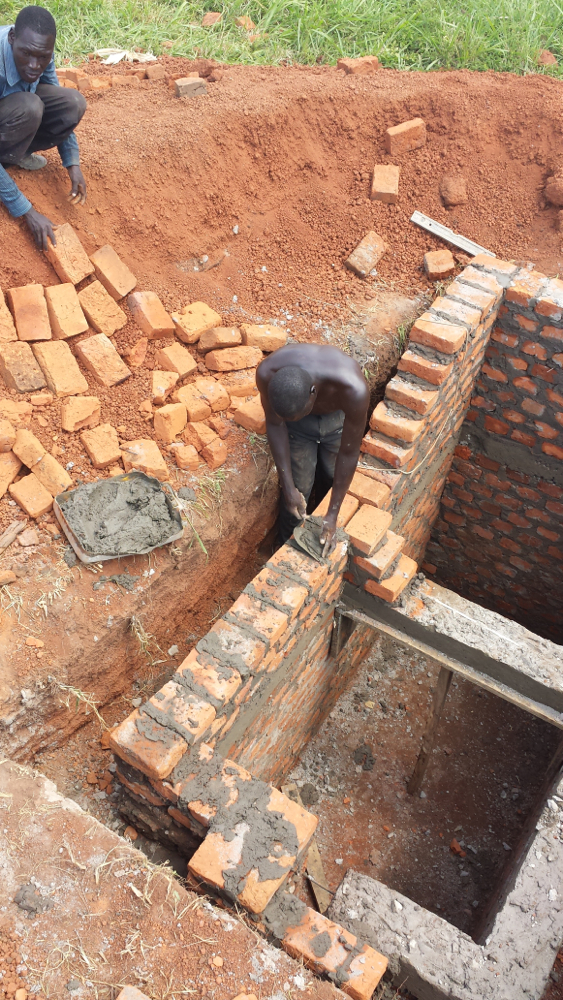
Meanwhile, GDPU is still spread out thin, trying to stay afloat after their major projects come to an end in a few months. Ojok Patrick has been visiting different parts of Uganda, working on various programs related to the Youth Development Program, so I have been training Ojok Simon on how to manage this project and all of its future iterations. He is a very capable individual. He was one of the many victims from the conflict and now lives with a disability. It is easy to forget he has a visual impairment, simply because of how great he works in the field.
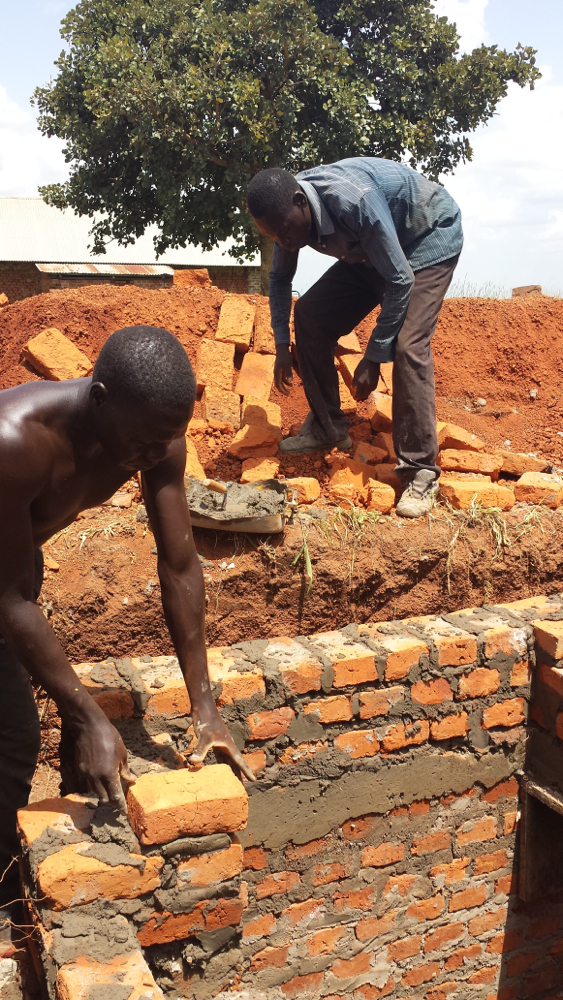
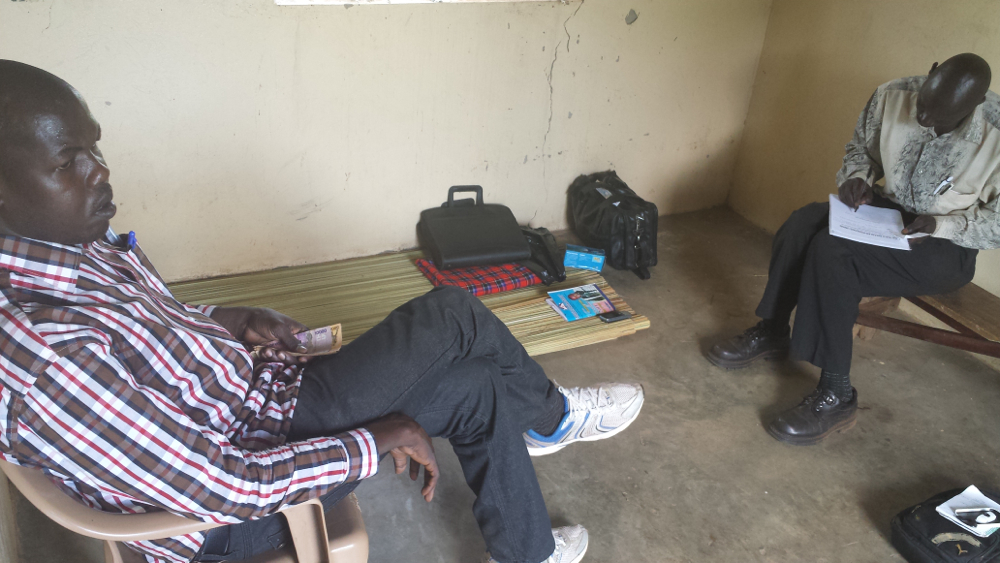
I’ve also noticed that the School Management Committee has been visiting the construction site. I can tell because of the signatures in the contractor’s visitor book. This is great news because it means the community is taking an active role in the project; it means they are becoming invested in its success. We spoke previously with the School Management Committee and the Parent Teacher Association about creating a funding mechanism for maintaining the toilet. I’m optimistic that when we meet with them next, we will find out more details on how this plan has progressed.
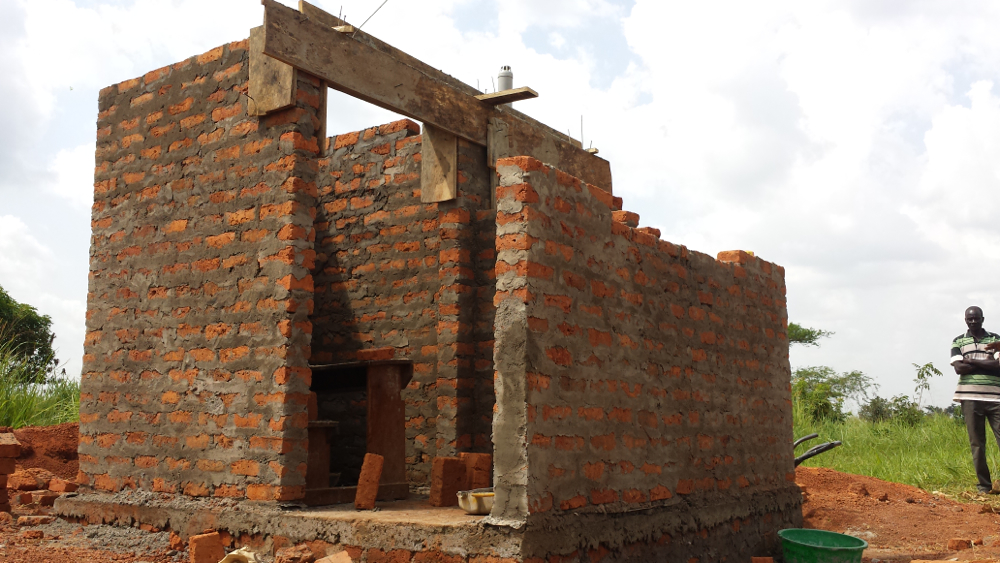
In order to create the kind of social change that this program aims to achieve, we need to rally the school community around the ideas of sustaining this toilet as well as promoting inclusion and accessibility for all students. That’s why we are planning an awareness workshop, an art competition, a poetry recital, a drama, and a debate with the head teacher.
These activities are instrumental to engaging the students on the issues good hygiene, inclusion, and accessibility. I recently found out that the school has a terrible system for cleaning the latrines. They simply make the students who arrive late responsible for cleaning them. That kind of system makes cleaning the latrine a punishment rather than a responsibility.
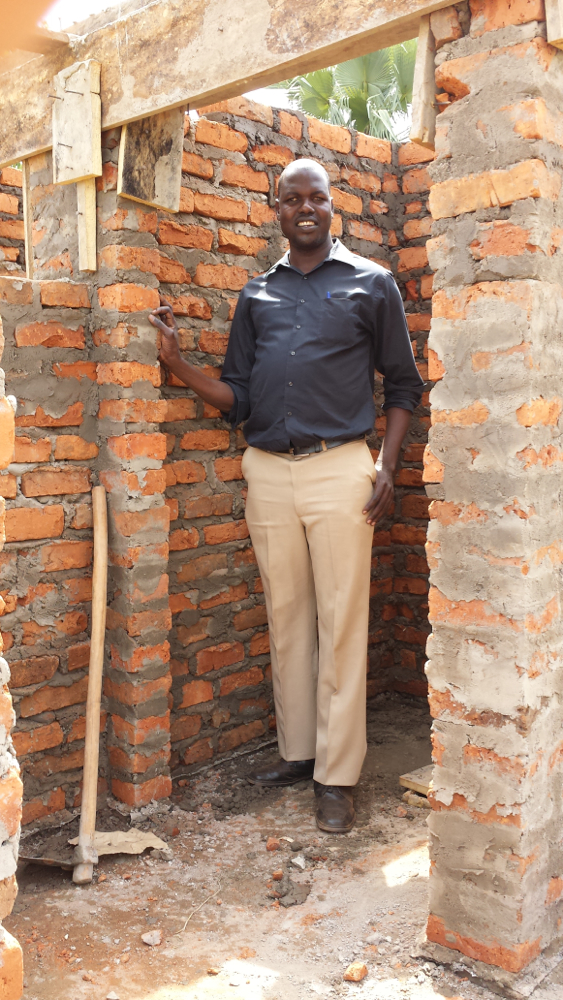
After talking this over with Ojok Simon and the head teacher, we discussed how GDPU handles this issue with the students in their Youth Development Program as a model for the students in Tochi. At GDPU, the skills trainers organize students every morning and assign roles such as filling the jerry cans, cleaning the latrines, restocking supplies, sweeping the compound, etc.
We will create a similar system at Tochi. Each class will elect a prefect and will be assigned a responsibility for the day. The prefect will ensure his class carries out their responsibility and a supervising teacher will check to make sure everything is in order. If something is not done properly, the teacher will talk to the prefect and get that class to redo their role. If that doesn’t happen, then a new prefect will be elected until the responsibility is carried out.
These students may have a right to accessible latrines, but it is also their responsibility to maintain them. Without a better system for cleaning the latrines, this project won’t be sustainable and the toilet will quickly become unhygienic.
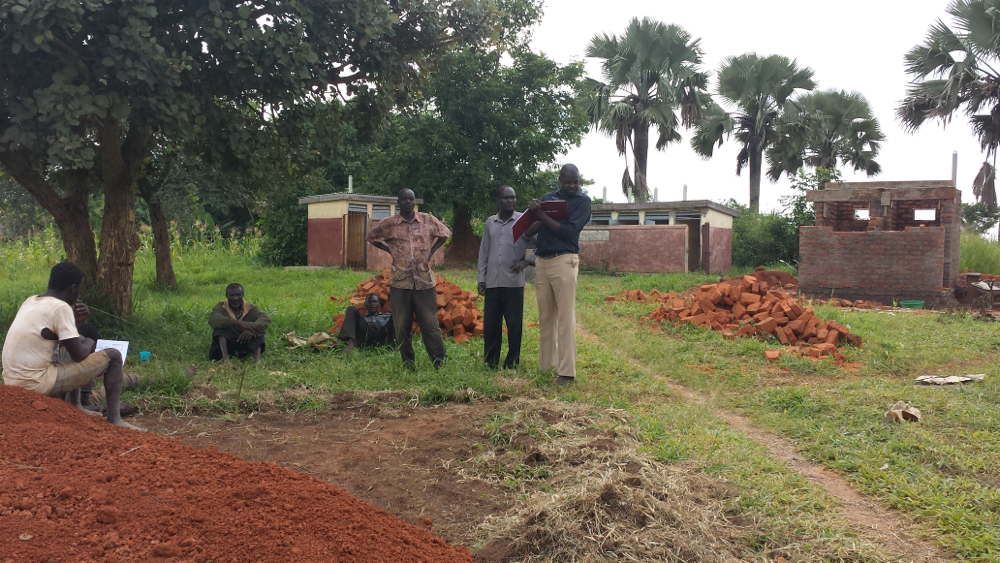
GDPU and the teachers will hold an awareness workshop to explain the importance of cleaning the toilets, and afterwards, we will engage the students with the art competition based on the theme of what good hygiene means to them. The teachers will judge this competition and award the winners with a prize as well as points towards winning a term’s worth of school fees after all the activities have taken place.
I’m excited to see how these activities play out. Hopefully we see the same kind of progress on the inclusion program that we have seen with construction.
-
The Tochi Toilet: Nature Called and We Picked Up
7 Comments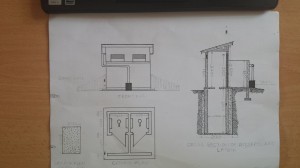
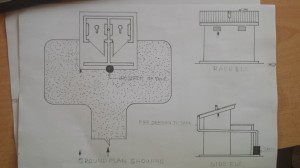
Power’s out, nothing unusual about that. Except this time we really could use the light. It’s late in the afternoon and a torrential downpour is pounding the sheet metal roof, making it quite noisy.
You could cut the tension in the room with a knife, or at least it felt that way to me. Negotiations with Geoffrey, the construction contractor, were climaxing. We had been going back and forth for quite some time over details such as the payment scheme, project valuation, and designs for the latrine, but we were finally about to come to an agreement.
I was stressed because I had made some major changes to the contract only yesterday. I revised the numbers in the contract, shaving off about 1 million Ugandan shillings, and I altered the payment scheme so that Geoffrey would have to demonstrate his commitment by implementing and completing 30% of the project before any compensation was given.
I also made some alterations to the contingency fund we established. I revised it down from 3% to 1.5% of the contract’s value and I wrote that Geoffrey would only receive this money if (a) the material expenses did not exceed the agreed upon amount, (b) strict accountability procedures were adhered to, and (c) he completed the project ahead of schedule while still maintaining the high quality standards we outlined in the Memorandum of Understanding (MOU).
What I didn’t tell him was that I still had USD $100 set aside to take care of any unanticipated hiccups. He didn’t need to know that right away or that I was ready to spend it all to ensure this project was successful. I wanted to see how things developed first and establish some degree of trust between GDPU and Geoffrey so I could see how this relationship would blossom.
After what felt like hours of silence, broken only by intermittent mumbling between Geoffrey and his colleague or my interjections to explain whichever part of the contract I saw them pondering over, they put down their flashlight and asked for a pen. He agreed to our terms! Now the challenge was going to be implementing this program.
As I’ve said in previous blogs, this project is about more than just building a drainable latrine which is accessible to all students. It is about creating an inclusive school environment, which means that GDPU was going to need to invest a lot of time and effort into this program. That was going to be a significant challenge considering the situation GDPU was facing. They, like many community-based organizations in the developing world, operate on a shoestring budget and survive from one project to another.
Sometimes they have had to suspend salaries for all of their staff. This time they were running up against multiple deadlines. Two of their biggest programs, a Youth Development Program which trains young people with disabilities on how to engage in income generating activities and a cerebral palsy awareness program which trains parents and care givers on how to support the needs of children with cerebral palsy, are expiring in the next few months. Once these programs dry up, so does GDPU’s coffers.
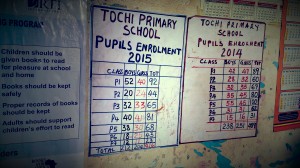
Yet here I am, pushing the two most capable, hardest working members of GDPU’s staff to devote precious time and energy towards the Tochi toilet project. I completely understand their need to ensure the sustainability of their organization, but I also want to instill in GDPU a belief that this toilet can unlock a whole new avenue of advocacy. The way we have designed this program is such that the elements are tied together by the idea of promoting inclusion and accessibility.
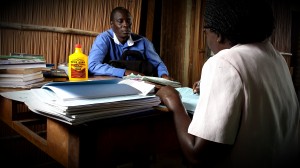
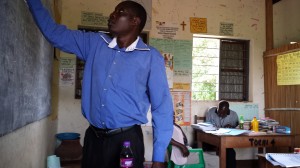
For example, through this program, GDPU is bringing structural accessibility improvements to Tochi Primary School via a new latrine, but they are also training teachers and staff on the critical elements of creating an inclusive environment. The training sessions we had last week on topics such as language and labeling, communication, and understanding how students with disabilities participate in daily activities as well as the unique challenges these students face, are a way of making the school more welcoming to students with disabilities.
The idea is that these training sessions will equip the teachers with knowledge and tools for supporting students with disabilities. The MOU also states that GDPU will hold awareness workshops for parents, teachers, and students in order to address the issue of bullying. Additionally, GDPU will be working with teachers at Tochi to organize a series of activities and competitions. Students who participate and perform well will receive scholastic materials such as pens or notebooks, while the grand prize of one term’s school fees paid will be awarded to one student from each class.
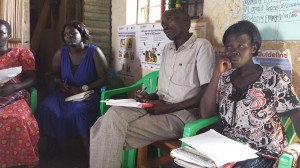
Hygiene education and inclusion will be the general themes for each activity, but the objective is to engage students in an innovative way, motivate them to take it seriously, and promote values which are conducive for an accessible school environment. For instance, one of the activities will be a mural painting that is going to require teamwork skills. Students who bully others are not going to score well.
Most importantly, GDPU will be required to monitor the project and collect data for evaluation reports. There is a small portion of the budget allocated for salaries to incentivize the GDPU staff to commit time to this project and ensure it is sustainable.
Sustainability is a hugely important component of this project. That’s why we also had a meeting with the Parent Teacher Association, the School Management Committee, and the Head Teacher to discuss maintenance and how to ensure the toilet would last. They agreed to raise money from increased fees for parents in order to cover the cost of draining the latrine when it was full and resupplying the hygiene materials when they were empty. We even had meetings with the city engineer and local officials from the Department of Education to ensure they were on board with the project.
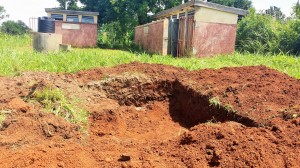
The planning is finished, ground has been broken, and all stakeholders have been engaged.
It’s time to build some toilets.
[content-builder]{“id”:1,”version”:”1.0.4″,”nextId”:3,”block”:”root”,”layout”:”12″,”childs”:[{“id”:”2″,”block”:”rte”,”content”:” <\/a>\n\n
 <\/a>\n\nPower\u2019s out, nothing unusual about that. Except this time we really could use the light. It\u2019s late in the afternoon and a torrential downpour is pounding the sheet metal roof, making it quite noisy. \n\nYou could cut the tension in the room with a knife, or at least it felt that way to me. Negotiations with Geoffrey, the construction contractor, were climaxing. We had been going back and forth for quite some time over details such as the payment scheme, project valuation, and designs for the latrine, but we were finally about to come to an agreement. \n\nI was stressed because I had made some major changes to the contract only yesterday. I revised the numbers in the contract, shaving off about 1 million Ugandan shillings, and I altered the payment scheme so that Geoffrey would have to demonstrate his commitment by implementing and completing 30% of the project before any compensation was given.\n\nI also made some alterations to the contingency fund we established. I revised it down from 3% to 1.5% of the contract\u2019s value and I wrote that Geoffrey would only receive this money if (a) the material expenses did not exceed the agreed upon amount, (b) strict accountability procedures were adhered to, and (c) he completed the project ahead of schedule while still maintaining the high quality standards we outlined in the Memorandum of Understanding (MOU). \n\nWhat I didn\u2019t tell him was that I still had USD $100 set aside to take care of any unanticipated hiccups. He didn\u2019t need to know that right away or that I was ready to spend it all to ensure this project was successful. I wanted to see how things developed first and establish some degree of trust between GDPU and Geoffrey so I could see how this relationship would blossom.\n\nAfter what felt like hours of silence, broken only by intermittent mumbling between Geoffrey and his colleague or my interjections to explain whichever part of the contract I saw them pondering over, they put down their flashlight and asked for a pen. He agreed to our terms! Now the <\/span>challenge was going to be implementing this program.\n\n
 <\/a>\n\nAs I\u2019ve said in previous blogs, this project is about more than just building a drainable latrine which is accessible to all students. It is about creating an inclusive school environment, which means that GDPU was going to need to invest a lot of time and effort into this program. That was going to be a significant challenge considering the situation GDPU was facing. They, like many community-based organizations in the developing world, operate on a shoestring budget and survive from one project to another. \n\nSometimes they have had to suspend salaries for all of their staff. This time they were running up against multiple deadlines. Two of their biggest programs, a Youth Development Program which trains young people with disabilities on how to engage in income generating activities and a cerebral palsy awareness program which trains parents and care givers on how to support the needs of children with cerebral palsy, are expiring in the next few months. Once these programs dry up, so does GDPU\u2019s coffers.\n\n
 <\/a>\n\n
 <\/a>\n\nYet here I am, pushing the two most capable, hardest working members of GDPU\u2019s staff to devote precious time and energy towards the Tochi toilet project. I completely understand their need to ensure the sustainability of their organization, but I also want to instill in GDPU a belief that this toilet can unlock a whole new avenue of advocacy. The way we have designed this program is such that the elements are tied together by the idea of promoting inclusion and accessibility.\n\n
 <\/a>\n\n
 <\/a>\n\nFor example, through this program, GDPU is bringing structural accessibility improvements to Tochi Primary School via a new latrine, but they are also training teachers and staff on the critical elements of creating an inclusive environment. The training sessions we had last week on topics such as language and labeling, communication, and understanding how students with disabilities participate in daily activities as well as the unique challenges these students face, are a way of making the school more welcoming to students with disabilities.\n\nThe idea is that these training sessions will equip the teachers with knowledge and tools for supporting students with disabilities. The MOU also states that GDPU will hold awareness workshops for parents, teachers, and students in order to address the issue of bullying. Additionally, GDPU will be working with teachers at Tochi to organize a series of activities and competitions. Students who participate and perform well will receive scholastic materials such as pens or notebooks, while the grand prize of one term\u2019s school fees paid will be awarded to one student from each class.\n\n
 <\/a>\n\nHygiene education and inclusion will be the general themes for each activity, but the objective is to engage students in an innovative way, motivate them to take it seriously, and promote values which are conducive for an accessible school environment. For instance, one of the activities will be a mural painting that is going to require teamwork skills. Students who bully others are not going to score well.\n\nMost importantly, GDPU will be required to monitor the project and collect data for evaluation reports. There is a small portion of the budget allocated for salaries to incentivize the GDPU staff to commit time to this project and ensure it is sustainable. \n\nSustainability is a hugely important component of this project. That\u2019s why we also had a meeting with the Parent Teacher Association, the School Management Committee, and the Head Teacher to discuss maintenance and how to ensure the toilet would last. They agreed to raise money from increased fees for parents in order to cover the cost of draining the latrine when it was full and resupplying the hygiene materials when they were empty. We even had meetings with the city engineer and local officials from the Department of Education to ensure they were on board with the project.\n\n
 <\/a>\n\nThe planning is finished, ground has been broken, and all stakeholders have been engaged.\n\nIt\u2019s time to build some toilets.\n<\/span>\n”,”class”:””}]}[/content-builder]
 -
A Week With Winston
5 Comments
Feeling the wind while riding on a boda boda is normally quite refreshing, but on this occasion, my mind was consumed by fever and worrying thoughts. Suddenly I hear the cluck of a chicken and see a blur in the corner of my eye as someone’s future supper runs directly into my leg. Did I just kick a chicken from a motorcycle on my way to the hospital? Yep. That appears to be the case.
Thankfully, I was not diagnosed with Malaria or some other grave illness. It was merely an infection, probably from eating dirty food. I was worried that I caught some terrible disease from the newest addition to my family, a Vervet monkey named Winston. He was perhaps the most human-like creature I have ever met, but he was also bothersome at times.

I feel like my experience in Uganda is aptly reflected by my experience with this wonderful yet irritating Vervet. Despite the joy of watching Winston play fruit ninja on my wife’s ipad or drinking soda from a straw, there were times when he pushed my limits. Winston was adorable, intelligent, and a joy to be around, but he could also be a handful and a general nuisance. I couldn’t leave a single thing out of place without finding him tearing through my stuff.
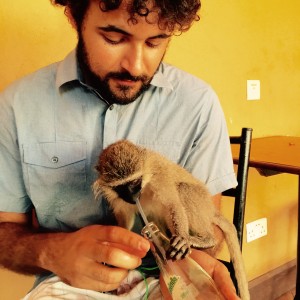
Likewise, the rhythm of life in Gulu can be relaxing but also quite frustrating. Perhaps I’ve grown accustomed to the speed of living in New York, but I get the feeling that everyone here just moves at an astonishingly slow pace. It has been over 3 weeks since my arrival in Uganda and I am only now beginning to make progress on the Tochi toilet project.
We collected bids from a few contractors and started a haphazard negotiating process with one of them. It was a mess because if they discovered that a Muzungo (white person) was working on the project, they would immediately jack up the prices on everything. Regardless, it’s about time to finalize everything so that we can begin implementation.
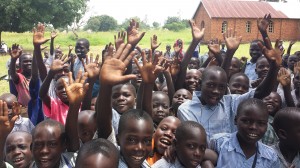
On Friday, June 26, GDPU and I made another site visit to Tochi. We were leading an inclusion exercise with parents and teachers where we trained them on proper language to be used for persons with disabilities, the rights of persons with disabilities, and a game called ‘life’ which illustrated the societal gap between able bodied Acholi people and Acholi people with disabilities. This is the groundwork that makes the Tochi toilet project a unique and innovative endeavor.
We are building an accessible toilet, but it is more than just a toilet. We are advocating for the rights of students with disabilities to have equal access, and we are changing perceptions of students with disabilities by empowering them to educate their community about proper hygiene practices.
At times, it is astonishing how unhygienic the people in Gulu really are. Just the other day my wife and I were eating at the local Indian restaurant and chatting with a patron named Hadi. He was fascinated by Winston because his species of monkey is apparently a physical representation of a Hindu deity. Hadi gave Winston a mango to eat but it was too much food for him to finish. Winston threw the half-eaten mango on the ground, and Hadi picked it up a few minutes later to give it to a young girl who was staring at Winston. The girl ate the rest of the mango and walked off.
That scene was appallingly shocking to me. Here I was recovering from a stomach bug, washing my hands every 10 minutes because I was afraid Winston would give me some kind of infection, and people around me are so blasé about consuming a mango half-eaten by a monkey and covered in dirt? When I asked people about this, they just shrugged and told me that most Acholi kids don’t even wash themselves on a regular basis.
The Tochi toilet project is designed to make schools more accessible to students with disabilities, but it is also about empowering those same students with knowledge that they can use to improve their community. Hygiene education is sorely needed in Gulu. Students with disabilities need something to help them bridge the societal gap in Acholi culture between themselves and able bodied individuals. Bringing accessible toilets to schools as a tool for hygiene education can empower students with disabilities to make meaningful contributions to their community.
That’s why this is more then just a WASH program.
After all, WASH programs are so simple, even a monkey could do them.
[content-builder]{“id”:1,”version”:”1.0.4″,”nextId”:3,”block”:”root”,”layout”:”12″,”childs”:[{“id”:”2″,”block”:”rte”,”content”:”
 <\/p>
<\/p>Feeling the wind while riding on a boda boda is normally quite refreshing, but on this occasion, my mind was consumed by fever and worrying thoughts. Suddenly I hear the cluck of a chicken and see a blur in the corner of my eye as someone\u2019s future supper runs directly into my leg. Did I just kick a chicken from a motorcycle on my way to the hospital? Yep. That appears to be the case.<\/span><\/p>
Thankfully, I was not diagnosed with Malaria or some other grave illness. It was merely an infection, probably from eating dirty food. I was worried that I caught some terrible disease from the newest addition to my family, a Vervet monkey named Winston. He was perhaps the most human-like creature I have ever met, but he was also bothersome at times.<\/span><\/p>
 <\/p>
<\/p> <\/p>
<\/p>I feel like my experience in Uganda is aptly reflected by my experience with this wonderful yet irritating Vervet. Despite the joy of watching Winston play fruit ninja on my wife\u2019s ipad or drinking soda from a straw, there were times when he pushed my limits. Winston was adorable, intelligent, and a joy to be around, but he could also be a handful and a general nuisance. I couldn\u2019t leave a single thing out of place without finding him tearing through my stuff.<\/span><\/p>
Winston Playing Fruit Ninja<\/a> <\/p>
 <\/p>
<\/p>Likewise, the rhythm of life in Gulu can be relaxing but also quite frustrating. Perhaps I\u2019ve grown accustomed to the speed of living in New York, but I get the feeling that everyone here just moves at an astonishingly slow pace. It has been over 3 weeks since my arrival in Uganda and I am only now beginning to make progress on the Tochi toilet project.<\/span><\/p>
We collected bids from a few contractors and started a haphazard negotiating process with one of them. It was a mess because if they discovered that a Muzungo (white person) was working on the project, they would immediately jack up the prices on everything. Regardless, it\u2019s about time to finalize everything so that we can begin implementation.<\/span><\/p>
 <\/p>
<\/p>On Friday, June 26, GDPU and I made another site visit to Tochi. We were leading an inclusion exercise with parents and teachers where we trained them on proper language to be used for persons with disabilities, the rights of persons with disabilities, and a game called \u2018life\u2019 which illustrated the societal gap between able bodied Acholi people and Acholi people with disabilities. This is the groundwork that makes the Tochi toilet project a unique and innovative endeavor. <\/span><\/p>
We are building an accessible toilet, but it is more than just a toilet. We are advocating for the rights of students with disabilities to have equal access, and we are changing perceptions of students with disabilities by empowering them to educate their community about proper hygiene practices. <\/span><\/p>
At times, it is astonishing how unhygienic the people in Gulu really are. Just the other day my wife and I were eating at the local Indian restaurant and chatting with a patron named Hadi. He was fascinated by Winston because his species of monkey is apparently a physical representation of a Hindu deity. Hadi gave Winston a mango to eat but it was too much food for him to finish. Winston threw the half-eaten mango on the ground, and Hadi picked it up a few minutes later to give it to a young girl who was staring at Winston. The girl ate the rest of the mango and walked off. <\/span><\/p>
 <\/p>
<\/p>That scene was appallingly shocking to me. Here I was recovering from a stomach bug, washing my hands every 10 minutes because I was afraid Winston would give me some kind of infection, and people around me are so blas\u00e9 about consuming a mango half-eaten by a monkey and covered in dirt? When I asked people about this, they just shrugged and told me that most Acholi kids don\u2019t even wash themselves on a regular basis.<\/span><\/p>
The Tochi toilet project is designed to make schools more accessible to students with disabilities, but it is also about empowering those same students with knowledge that they can use to improve their community. Hygiene education is sorely needed in Gulu. Students with disabilities need something to help them bridge the societal gap in Acholi culture between themselves and able bodied individuals. Bringing accessible toilets to schools as a tool for hygiene education can empower students with disabilities to make meaningful contributions to their community. <\/span><\/p>
That’s why this is more then just a WASH program.<\/span><\/p>
After all, WASH programs are so simple, even a monkey could do them.<\/span><\/p>\n”,”class”:””}]}[/content-builder]
-
The Pearl of Africa
97 Comments
Before leaving for Uganda my wife told me how she wanted to see a Ugandan wedding. Well, it just so happened that on our second day here, while we were walking in the Gaba District of Kampala, we crashed a wedding. We were flies on a wall for some time, but then people started to approach us and welcome us into the celebrations. They taught us some dance moves, dressed us in traditional garbs, and shared their food and drink. I’m beginning to see why this place is called ‘The Pearl of Africa’. Uganda is a gem and its people are among the kindest I have ever met.
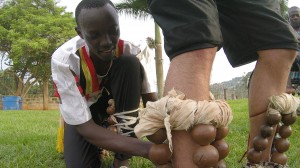
A few days later, after traversing hundreds of kilometers on unpaved roads and experiencing the joy of feeding Baboons some bananas from the window, we finally arrived in Gulu. Despite its many challenges, this town is a wonderful place. The people are friendly and life is simple.
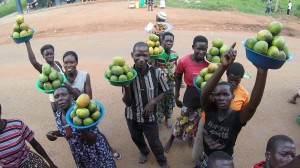
My first week at GDPU has been equally pleasant. The staff are warm and welcoming, the youth at the compound are engaging, and I quickly began to feel like I had joined an extended family. Tony was one of the first people I befriended. He is an established metalworker, owns a small business, supports his ill mother, and helps his cousins pay for their school fees. Not only is he extraordinarily generous with his kin, but he is also deeply committed to helping members of his community.
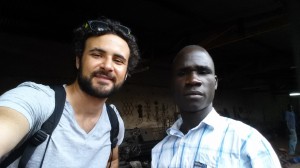
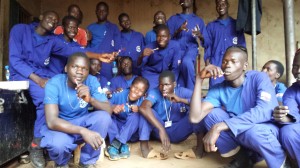
Tony is one of the trainers for youth with disabilities at GDPU who are participating in a skills development program. It was special to witness how GDPU gives these kids a new lease on life by providing them with the ability to generate income.
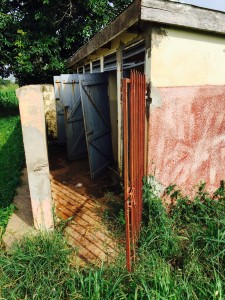
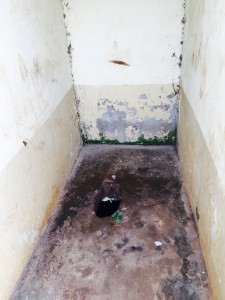
I also got the chance to meet some of the children at Tochi. This brief field visit opened my eyes to the tremendous need for proper water and sanitation facilities here. It is one thing to hear about the plight of another person, but it is entirely different to experience their situation firsthand. Empathy comes from our senses, and so if you don’t hear, see, smell, and feel it for yourself, it is hard to truly understand the reality faced by people who are suffering.
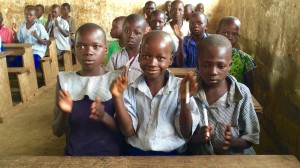
Despite the challenges in their life, these students sang, smiled, and greeted me with the utmost elation. Seeing their positivity in the face of such poverty is incredibly inspiring. Uganda is called ‘The Pearl of Africa’ because its people shine bright like gems despite being deprived of essential public services which we take for granted in the developed world every day.
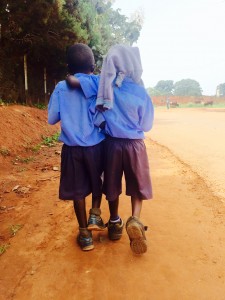
[content-builder]{“id”:1,”version”:”1.0.4″,”nextId”:3,”block”:”root”,”layout”:”12″,”childs”:[{“id”:”2″,”block”:”rte”,”content”:”
 <\/p>
<\/p>Before leaving for Uganda my wife told me how she wanted to see a Ugandan wedding. Well, it just so happened that on our second day here, while we were walking in the Gaba District of Kampala, we crashed a wedding. We were flies on a wall for some time, but then people started to approach us and welcome us into the celebrations. They taught us some dance moves, dressed us in traditional garbs, and shared their food and drink. I\u2019m beginning to see why this place is called \u2018The Pearl of Africa\u2019. Uganda is a gem and its people are among the kindest I have ever met.<\/span><\/p>
 <\/p>
<\/p>A few days later, after traversing hundreds of kilometers on unpaved roads and experiencing the joy of feeding Baboons some bananas from the window, we finally arrived in Gulu. Despite its many challenges, this town is a wonderful place. The people are friendly and life is simple. <\/span><\/p>
 <\/p>
<\/p>My first week at GDPU has been equally pleasant. The staff are warm and welcoming, the youth at the compound are engaging, and I quickly began to feel like I had joined an extended family. Tony was one of the first people I befriended. He is an established metalworker, owns a small business, supports his ill mother, and helps his cousins pay for their school fees. Not only is he extraordinarily generous with his kin, but he is also deeply committed to helping members of his community.<\/span><\/p>

 <\/p>
<\/p>Tony is one of the trainers for youth with disabilities at GDPU who are participating in a skills development program. It was special to witness how GDPU gives these kids a new lease on life by providing them with the ability to generate income. <\/span><\/p>

 <\/p>
<\/p>I also got the chance to meet some of the children at Tochi. This brief field visit opened my eyes to the tremendous need for proper water and sanitation facilities here. It is one thing to hear about the plight of another person, but it is entirely different to experience their situation firsthand. Empathy comes from our senses, and so if you don\u2019t hear, see, smell, and feel it for yourself, it is hard to truly understand the reality faced by people who are suffering.<\/span><\/p>
 <\/p>
<\/p>Despite the challenges in their life, these students sang, smiled, and greeted me with the utmost elation. Seeing their positivity in the face of such poverty is incredibly inspiring. Uganda is called \u2018The Pearl of Africa\u2019 because its people shine bright like gems despite being deprived of essential public services which we take for granted in the developed world every day. <\/span><\/p>
 <\/p>\n”,”class”:””}]}[/content-builder]
 -
A Tale of Two Cities: One Built by Immigrants, the Other by Migrant Workers
5 CommentsJune 4, 2015
Having just finished a week-long training with The Advocacy Project to prepare myself for the next few months of my life, I have been keenly aware of the need to give voice to the voiceless. Lengthy discussions on human rights, moral philosophy, and geopolitics combined with jam-packed days of classes on photography, videography, and social media storytelling left me with a sense of empowerment.
In the words of Edward Everett Hale, “I am only one, but I am one. I cannot do everything, but I can do something. And I will not let what I cannot do interfere with what I can do.” It is with this spirit that I set out to build toilets in Northern Uganda. However, there was also something nostalgic to the beginning of this journey.
Maybe it was realizing that I would no longer hear the daily screech of the subway as it roared past me on the platform, or perhaps it was the blur of goodbye lunches, dinners, and drinks I had with friends. Whatever it was, that feeling of nostalgia is hazy now as I sit here in the Abu Dhabi airport at 5:00am, unable to sleep, waiting for my flight.
The last 20 or 30 some-odd hours of near sleeplessness have been a mixture of emotions and experiences. I got a chance to soak up luxury in a pool beneath the tallest building in the world, but I also learned of the plight faced by countless migrant workers whose blood saturates the foundations of that building.
I’ve said goodbye to Dubai and New York. One a city I love and another a city I hate. New York, the global melting pot of cultures, is famous for its history of being built by immigrants to the United States. They all had dreams of creating a better future and New York presented itself as an opportunity to many. It took over a hundred years for this city to rise up to its iconic world class status.
Dubai, on the other hand, is like something out of a science fiction movie. The incredible dichotomy between rich and poor makes you feel like you are in the capital city of The Hunger Games surrounded by destitute wasteland and poor districts.
And yet the international character of this city is astonishing. It seems like there are more foreigners living here then locals, but everyone I spoke to about their life here hates it. Even the people who seem to be well off expressed a desire to move away. These foreigners seem torn between wanting to leave but being unable to do so. However, after I spoke with people who were less well off, I discovered the true nature of Dubai’s illusory promises of a better future.

Dubai burst into existence in the blink of an eye. Construction is happening at a blistering pace here, and it is being built by migrant workers who were lured by hope and trapped by corruption. Modern day slavery in Dubai consists of laborers working in extremely hazardous conditions in 10 or 12 hour shifts around the clock, 7 days a week, to erect skyscrapers, luxury apartments, and malls. They are paid a subsistence wage and treated with no regard to their well-being.
I spoke to a Pakistani man named Ali Raza about the conditions migrant workers face in Dubai. He told me stories of economic strife, dreams of a better future, and an illusion that sucks in its victims, trapping them in a web of corruption.
After arriving in the city filled with anticipation to begin working, government officials in Dubai withheld Ali’s passport, thus preventing him from leaving the country, and refused to grant him entry due to a misspelling of his name in the visa they issued him. This forced Ali to reach out to his family for more money so he could repurchase another visa and get his passport back.
This is reminiscent of the slave-like conditions faced by migrant workers in Qatar who came into the spotlight due to the World Cup. Still, Ali, like so many others, came to Dubai for a better future, and so he continued trying to start his new life here. After paying exorbitant fees for a work permit, Ali struggled for a further 6 months, relying on his family back home for support, until he was able to gain the ability to work. 5 years later, he is barely breaking even and can only seldom afford to send money home to his family.
Fortunately for Ali, he does not face the deadly conditions of construction workers, who encounter similar obstacles, but also face long days working in the brutal sun, earning barely enough to get by. Some workers resort to eating once or twice a day and share a room with as many as 8 people in order to keep their cost of living to a minimum.
If a migrant worker gets injured or seriously ill, he receives extremely poor medical care and can be turned away from the hospital even with a broken leg or other emergency. Ali testified that he faced similar circumstances, and he says there are many who lose hope and resort to suicide.

Subsistence wages, extremely hazardous work conditions, and the confiscation of passports are all hallmarks of modern day slavery. Hundreds of workers die each month while building monuments like the Burj Khaifa, but no one hears their cries. Ali Raza’s stories remind me of why I joined The Advocacy Project, to give voice to the voiceless.So now I prepare for Uganda with the knowledge and understanding that although I am only one person, I can still do some good. I expect that I will finish this journey, but just as I experienced in my brief stay in Dubai, I have no idea what I will encounter along the way.[content-builder]{“id”:1,”version”:”1.0.4″,”nextId”:”1″,”block”:”root”,”layout”:”12″,”childs”:[{“id”:”2″,”block”:”rte”,”content”:”June 4, 2015<\/em><\/span>\r\n\r\nHaving just finished a week-long training with The Advocacy Project to prepare myself for the next few months of my life, I have been keenly aware of the need to give voice to the voiceless. Lengthy discussions on human rights, moral philosophy, and geopolitics combined with jam-packed days of classes on photography, videography, and social media storytelling left me with a sense of empowerment.<\/span>\r\n\r\nIn the words of Edward Everett Hale, \u201cI am only one, but I am one. I cannot do everything, but I can do something. And I will not let what I cannot do interfere with what I can do.\u201d It is with this spirit that I set out to build toilets in Northern Uganda. However, there was also something nostalgic to the beginning of this journey.<\/span>\r\n\r\n
 <\/span>\r\n\r\nMaybe it was realizing that I would no longer hear the daily screech of the subway as it roared past me on the platform, or perhaps it was the blur of goodbye lunches, dinners, and drinks I had with friends. Whatever it was, that feeling of nostalgia is hazy now as I sit here in the Abu Dhabi airport at 5:00am, unable to sleep, waiting for my flight.<\/span>\r\n\r\nThe last 20 or 30 some-odd hours of near sleeplessness have been a mixture of emotions and experiences. I got a chance to soak up luxury in a pool beneath the tallest building in the world, but I also learned of the plight faced by countless migrant workers whose blood saturates the foundations of that building. <\/span>\r\n
 <\/span>\r\n\r\nI\u2019ve said goodbye to Dubai and New York. One a city I love and another a city I hate. New York, the global melting pot of cultures, is famous for its history of being built by immigrants to the United States. They all had dreams of creating a better future and New York presented itself as an opportunity to many. It took over a hundred years for this city to rise up to its iconic world class status.<\/span>\r\n\r\nDubai, on the other hand, is like something out of a science fiction movie. The incredible dichotomy between rich and poor makes you feel like you are in the capital city of The Hunger Games surrounded by destitute wasteland and poor districts.<\/span>\r\n\r\nAnd yet the international character of this city is astonishing. It seems like there are more foreigners living here then locals, but everyone I spoke to about their life here hates it. Even the people who seem to be well off expressed a desire to move away. These foreigners seem torn between wanting to leave but being unable to do so. However, after I spoke with people who were less well off, I discovered the true nature of Dubai\u2019s illusory promises of a better future.<\/span>\r\n\r\n
 <\/span>\r\n\r\nDubai burst into existence in the blink of an eye. Construction is happening at a blistering pace here, and it is being built by migrant workers who were lured by hope and trapped by corruption. Modern day slavery in Dubai consists of laborers working in extremely hazardous conditions in 10 or 12 hour shifts around the clock, 7 days a week, to erect skyscrapers, luxury apartments, and malls. They are paid a subsistence wage and treated with no regard to their well-being.<\/span>\r\n\r\nI spoke to a Pakistani man named Ali Raza about the conditions migrant workers face in Dubai. He told me stories of economic strife, dreams of a better future, and an illusion that sucks in its victims, trapping them in a web of corruption.<\/span>\r\n\r\nAfter arriving in the city filled with anticipation to begin working, government officials in Dubai withheld Ali\u2019s passport, thus preventing him from leaving the country, and refused to grant him entry due to a misspelling of his name in the visa they issued him. This forced Ali to reach out to his family for more money so he could repurchase another visa and get his passport back.<\/span>\r\n\r\nThis is reminiscent of the slave-like conditions faced by migrant workers in Qatar who came into the spotlight due to the World Cup. Still, Ali, like so many others, came to Dubai for a better future, and so he continued trying to start his new life here. After paying exorbitant fees for a work permit, Ali struggled for a further 6 months, relying on his family back home for support, until he was able to gain the ability to work. 5 years later, he is barely breaking even and can only seldom afford to send money home to his family.<\/span>\r\n\r\nFortunately for Ali, he does not face the deadly conditions of construction workers, who encounter similar obstacles, but also face long days working in the brutal sun, earning barely enough to get by. Some workers resort to eating once or twice a day and share a room with as many as 8 people in order to keep their cost of living to a minimum.<\/span>\r\n\r\nIf a migrant worker gets injured or seriously ill, he receives extremely poor medical care and can be turned away from the hospital even with a broken leg or other emergency. Ali testified that he faced similar circumstances, and he says there are many who lose hope and resort to suicide.<\/span>\r\n\r\n
 <\/span>\r\nSubsistence wages, extremely hazardous work conditions, and the confiscation of passports are all hallmarks of modern day slavery. Hundreds of workers die each month while building monuments like the Burj Khaifa, but no one hears their cries. Ali Raza\u2019s stories remind me of why I joined The Advocacy Project, to give voice to the voiceless.<\/span>\r\n\r\nSo now I prepare for Uganda with the knowledge and understanding that although I am only one person, I can still do some good. I expect that I will finish this journey, but just as I experienced in my brief stay in Dubai, I have no idea what I will encounter along the way.<\/span>“}]}[/content-builder]


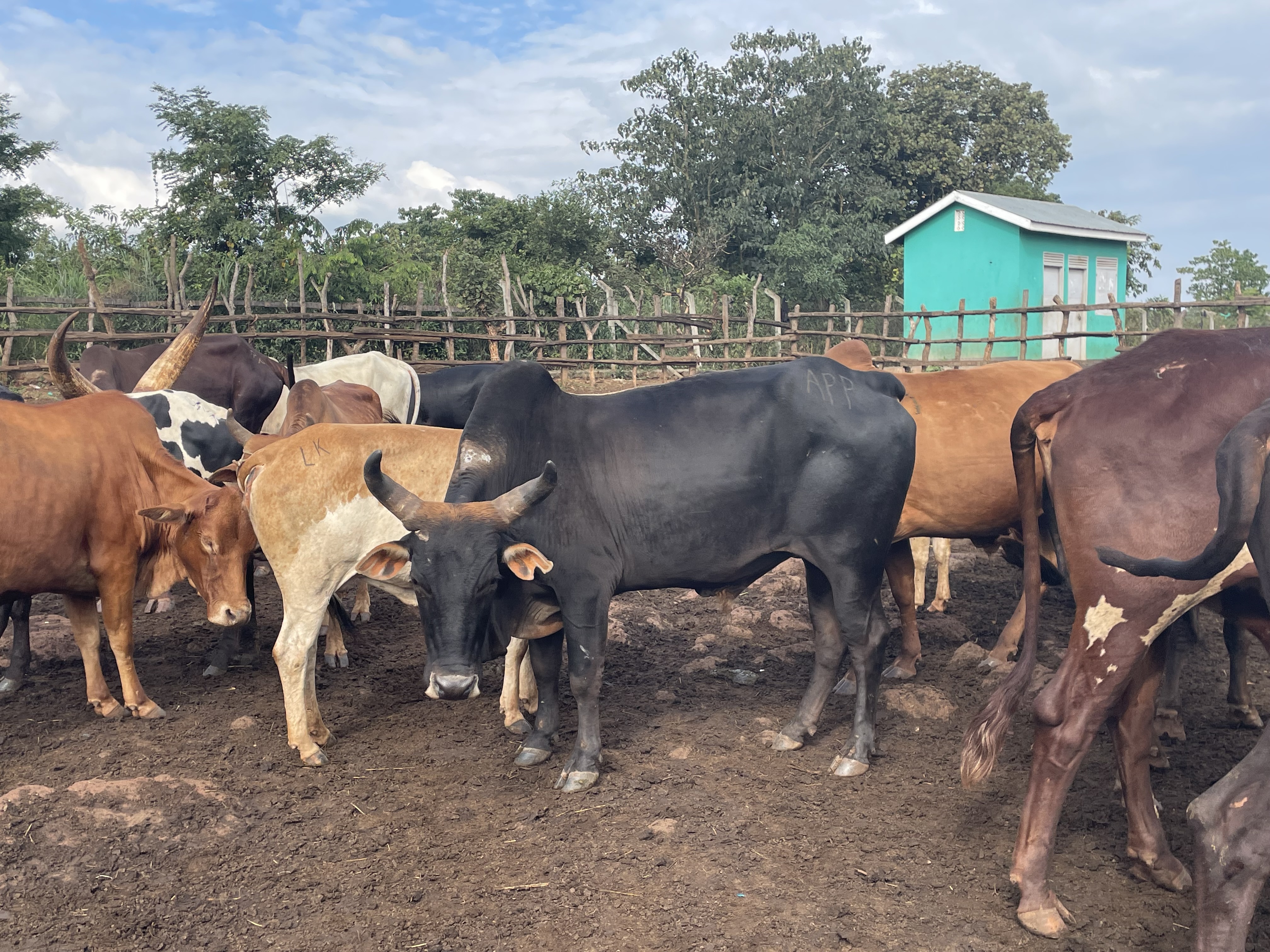
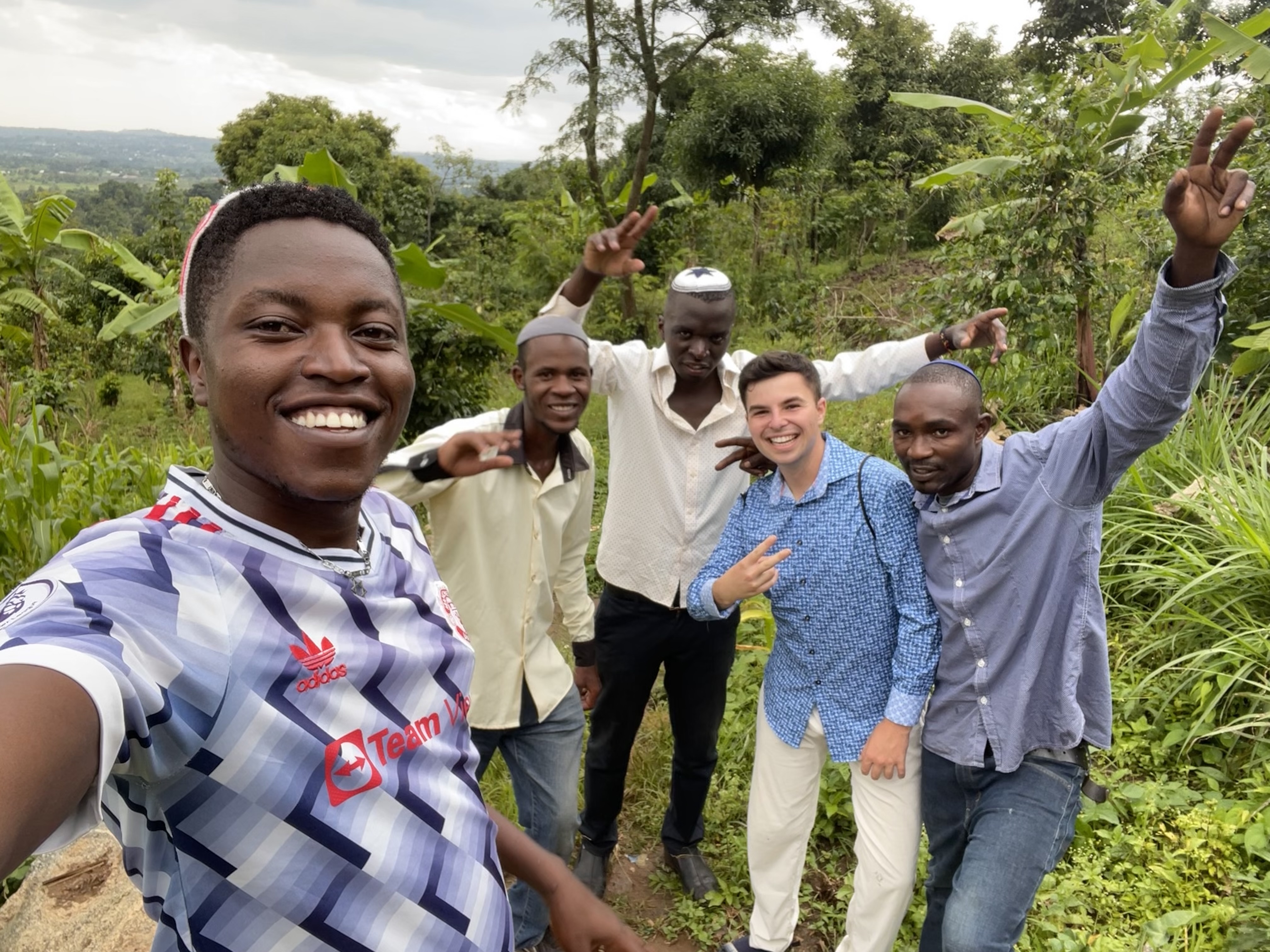
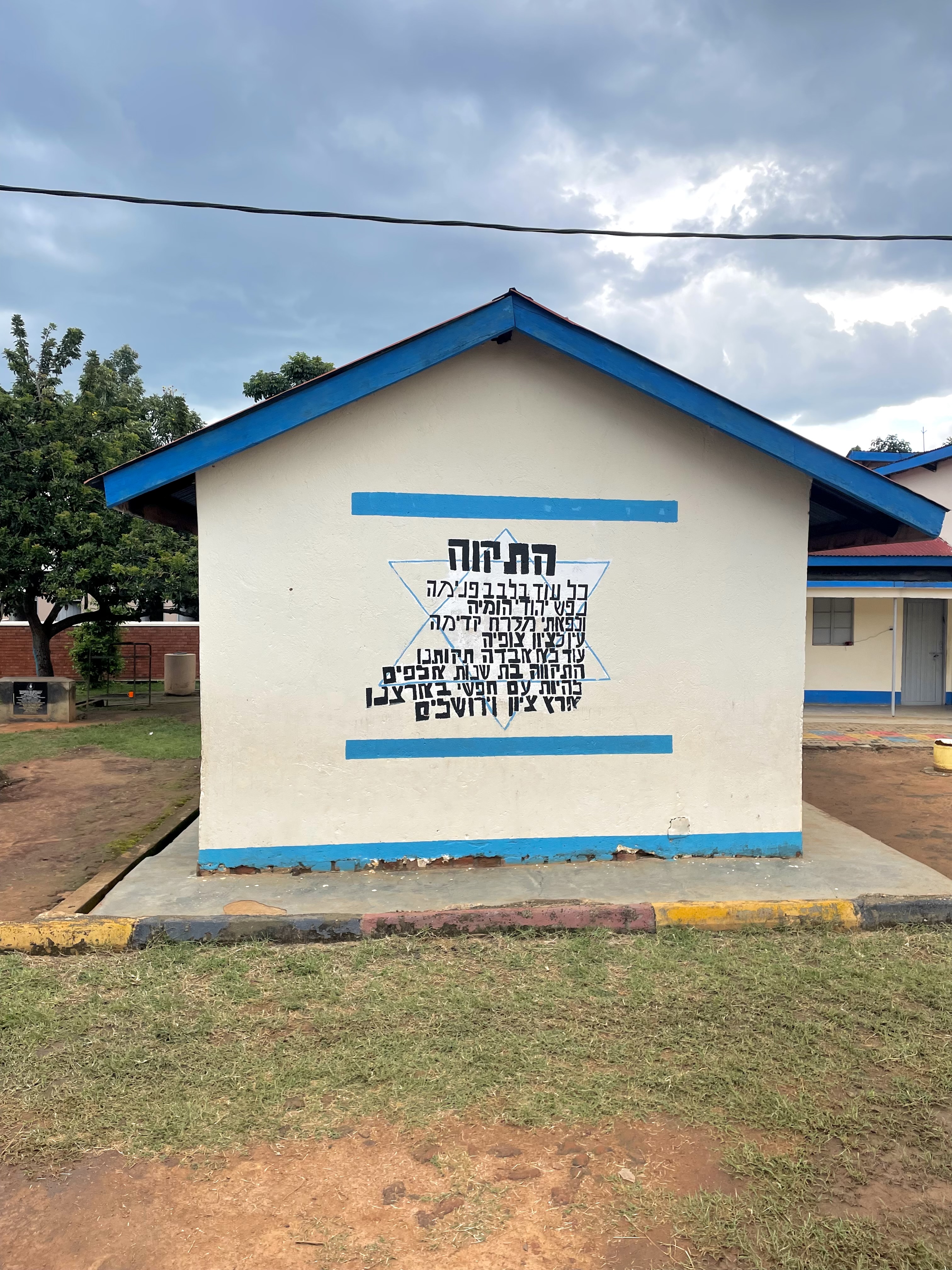
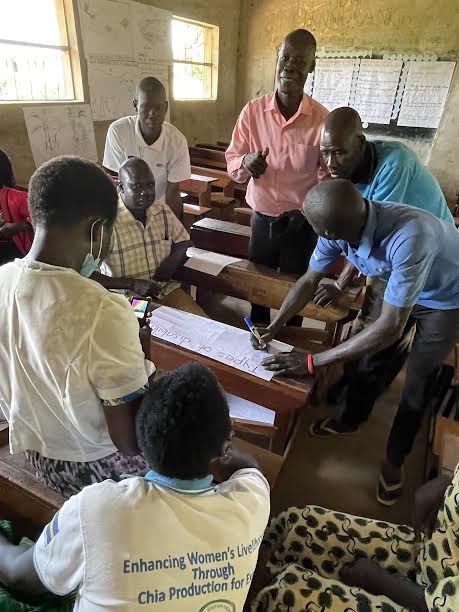


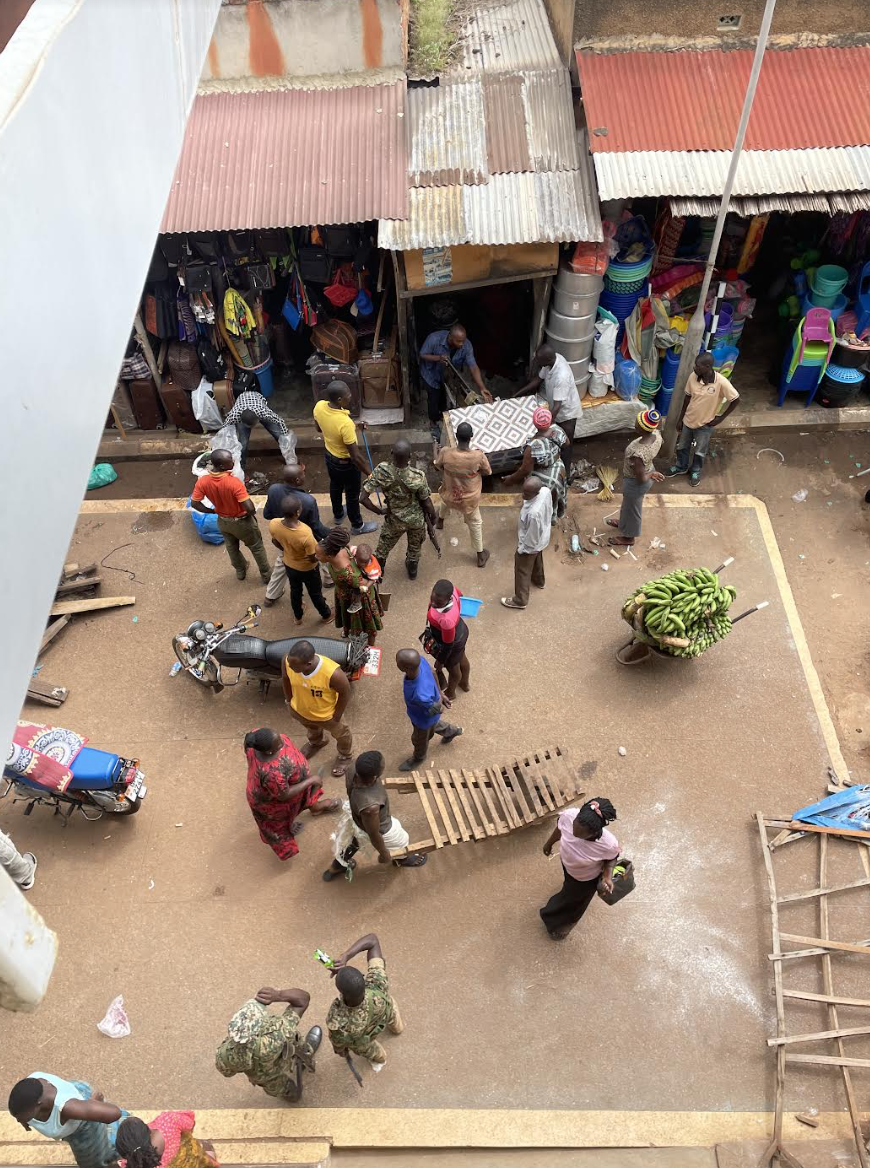
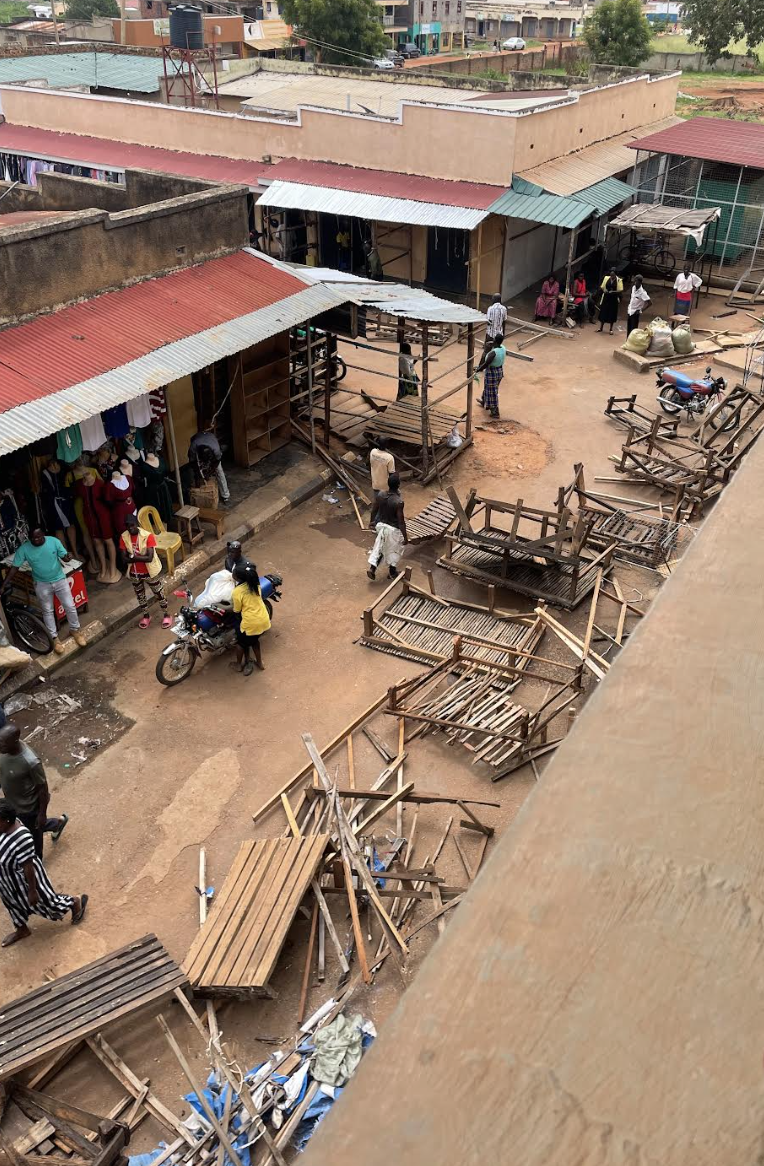
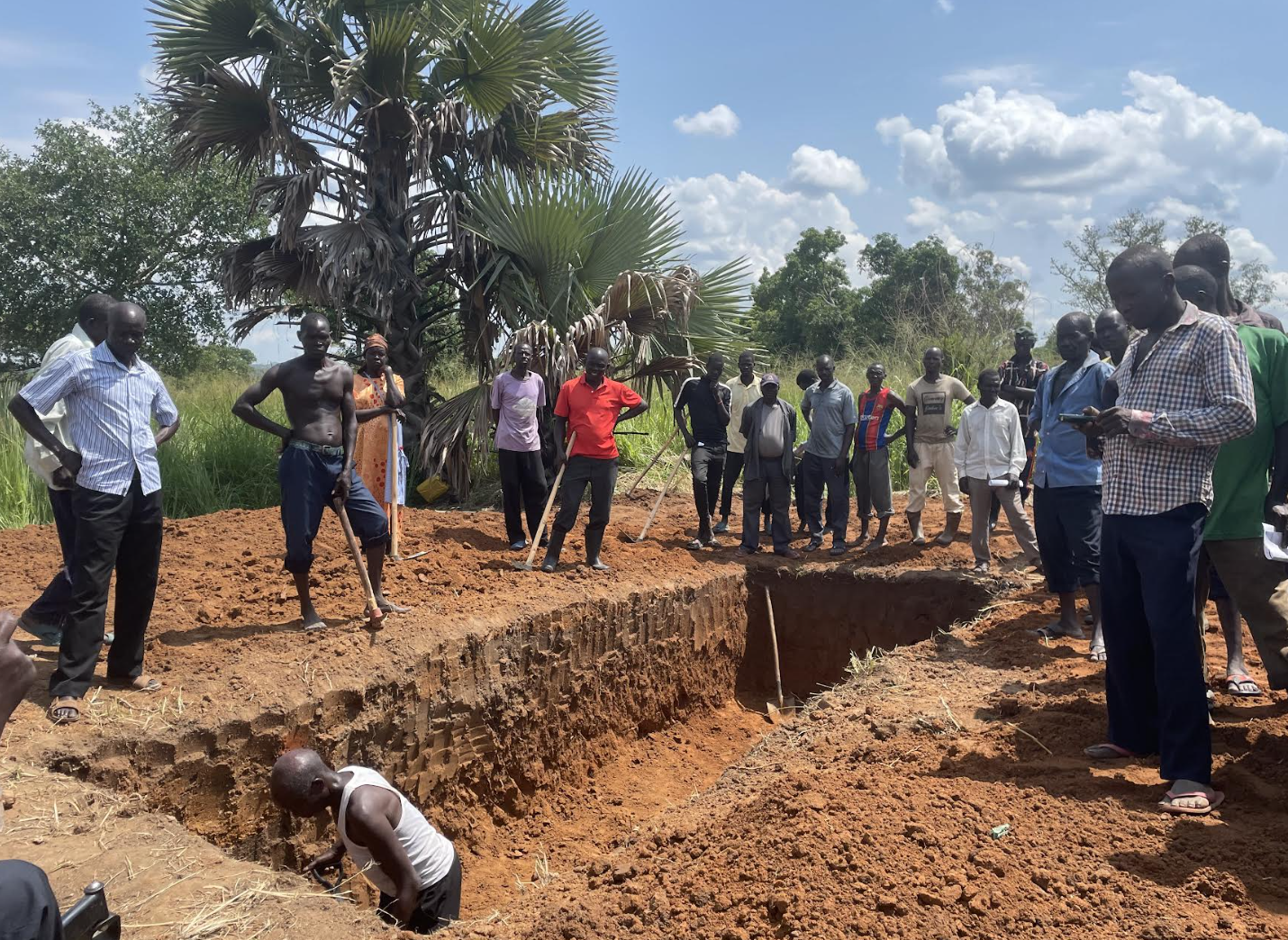
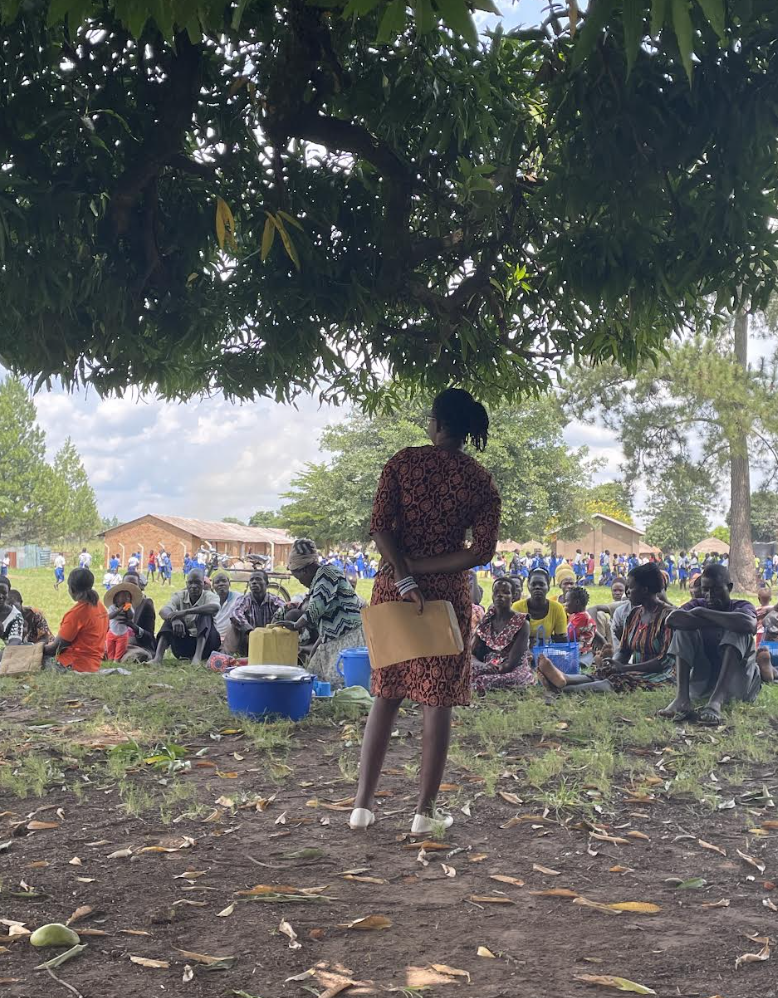

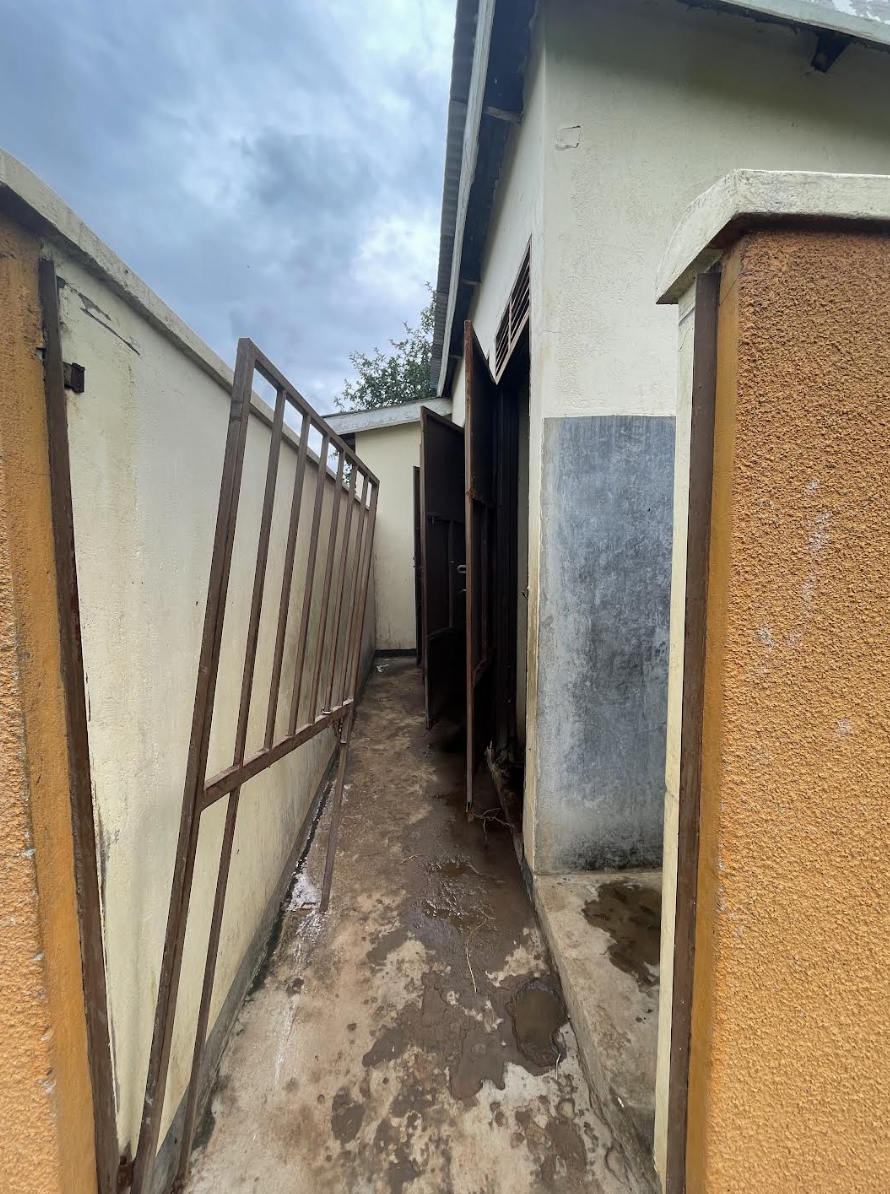
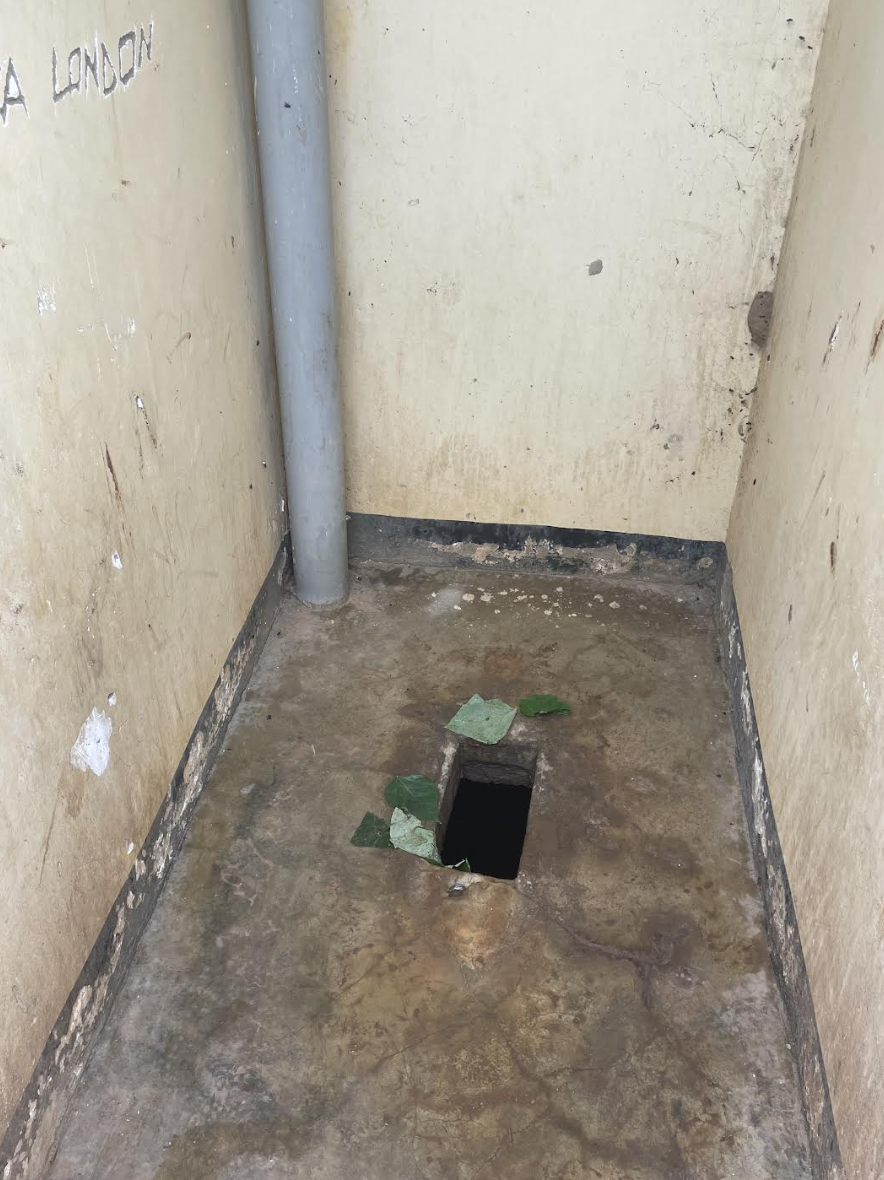
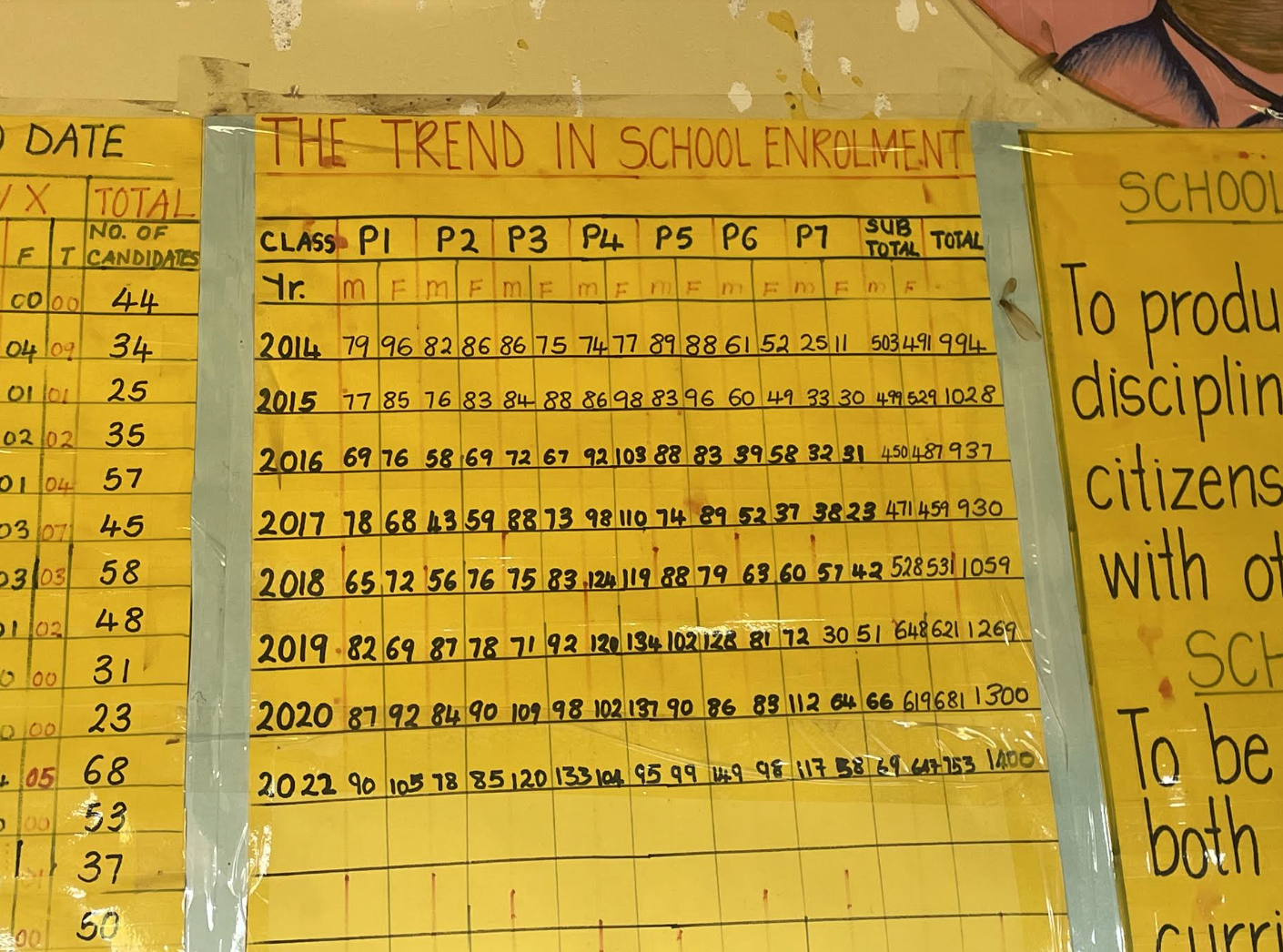

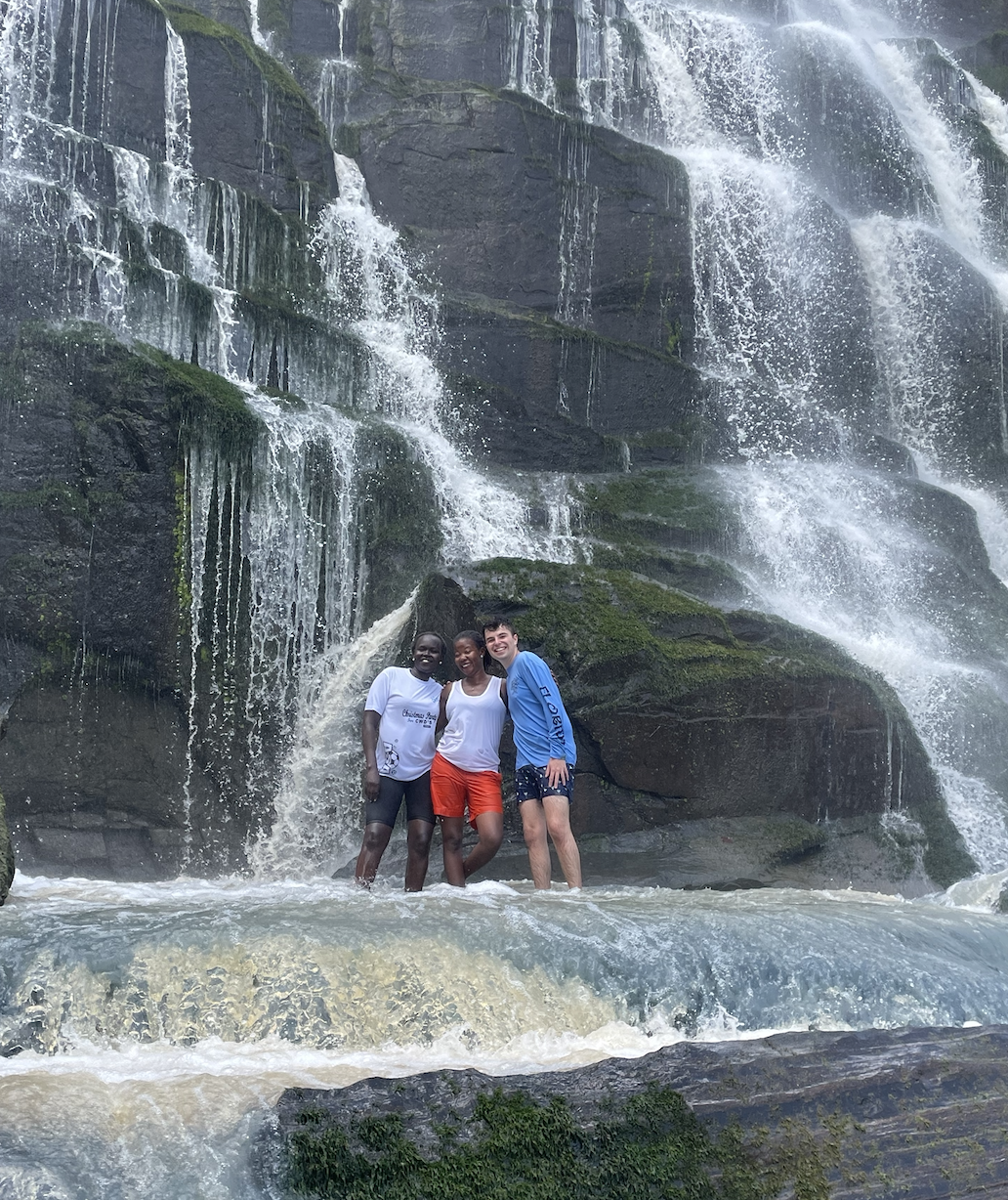
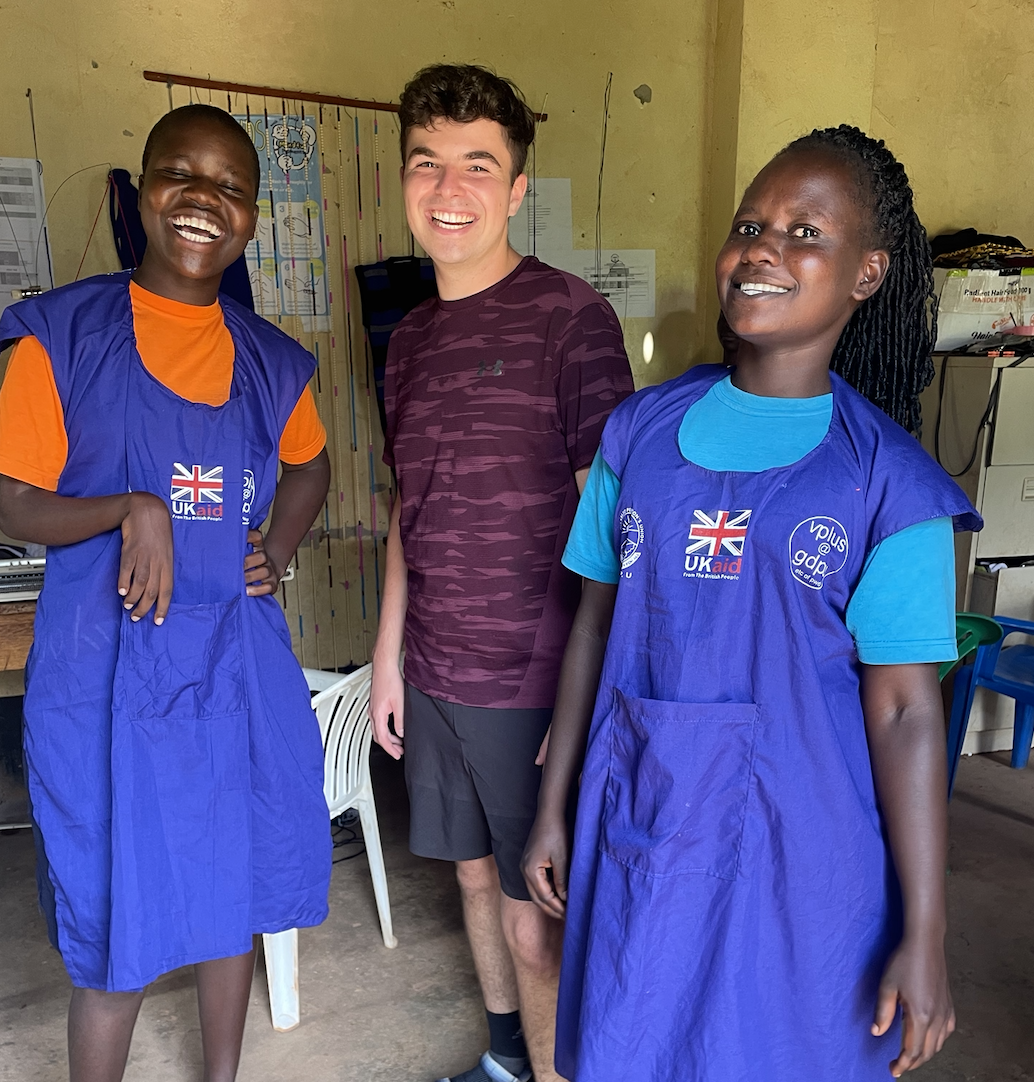
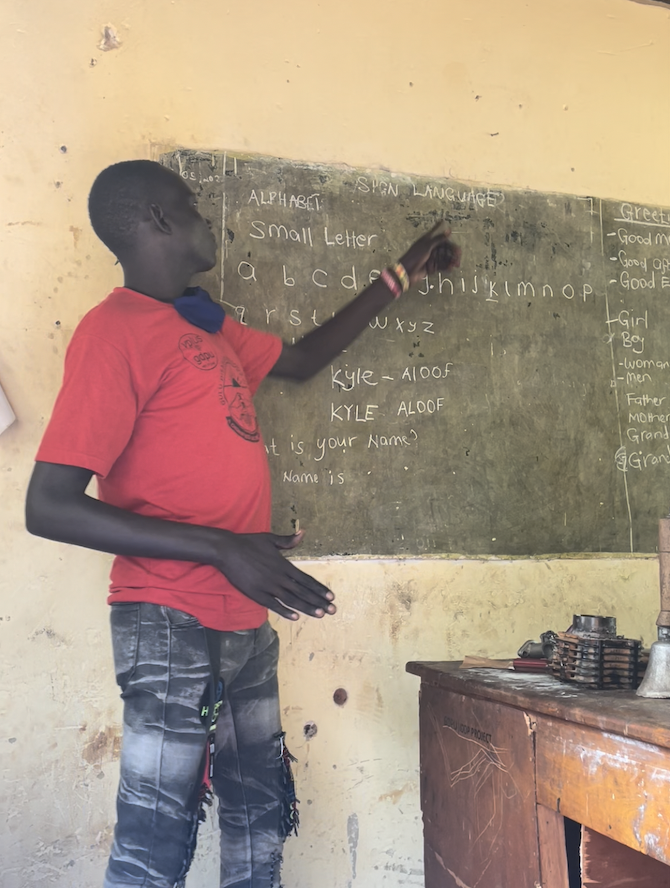
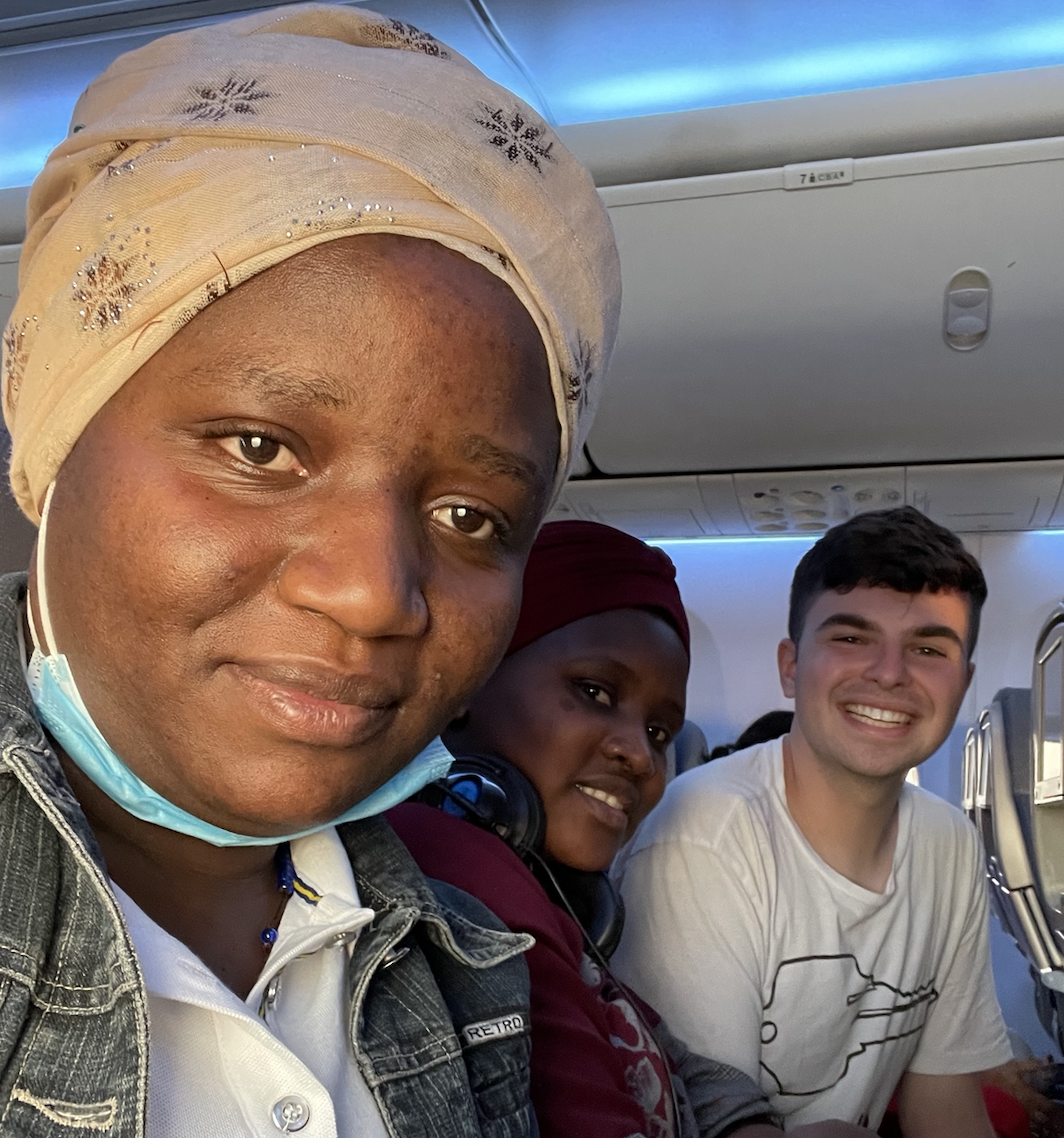
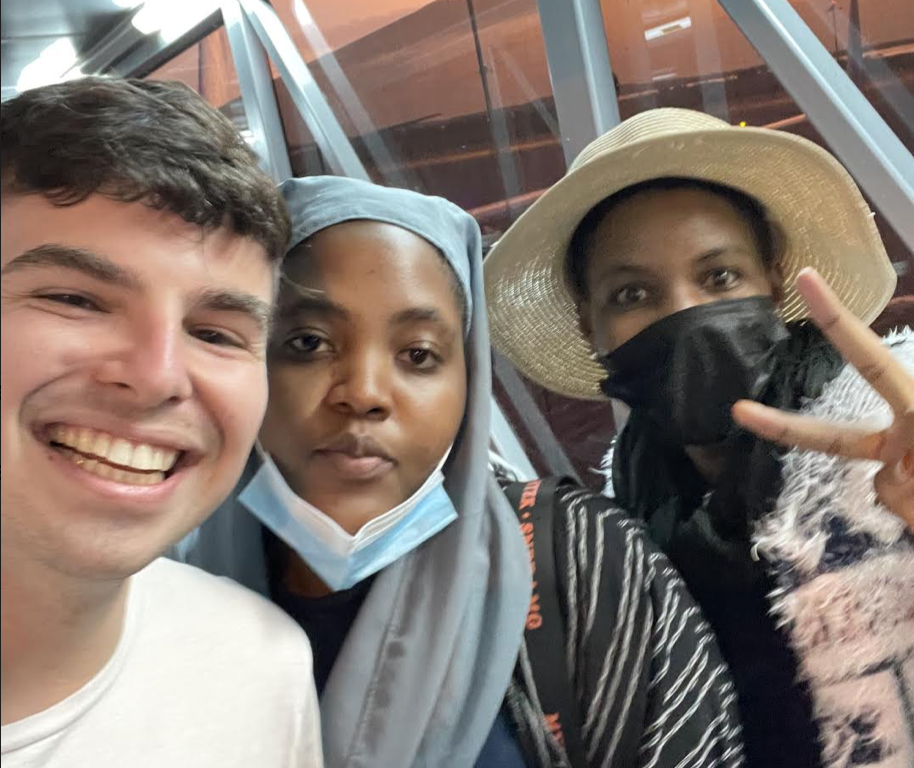
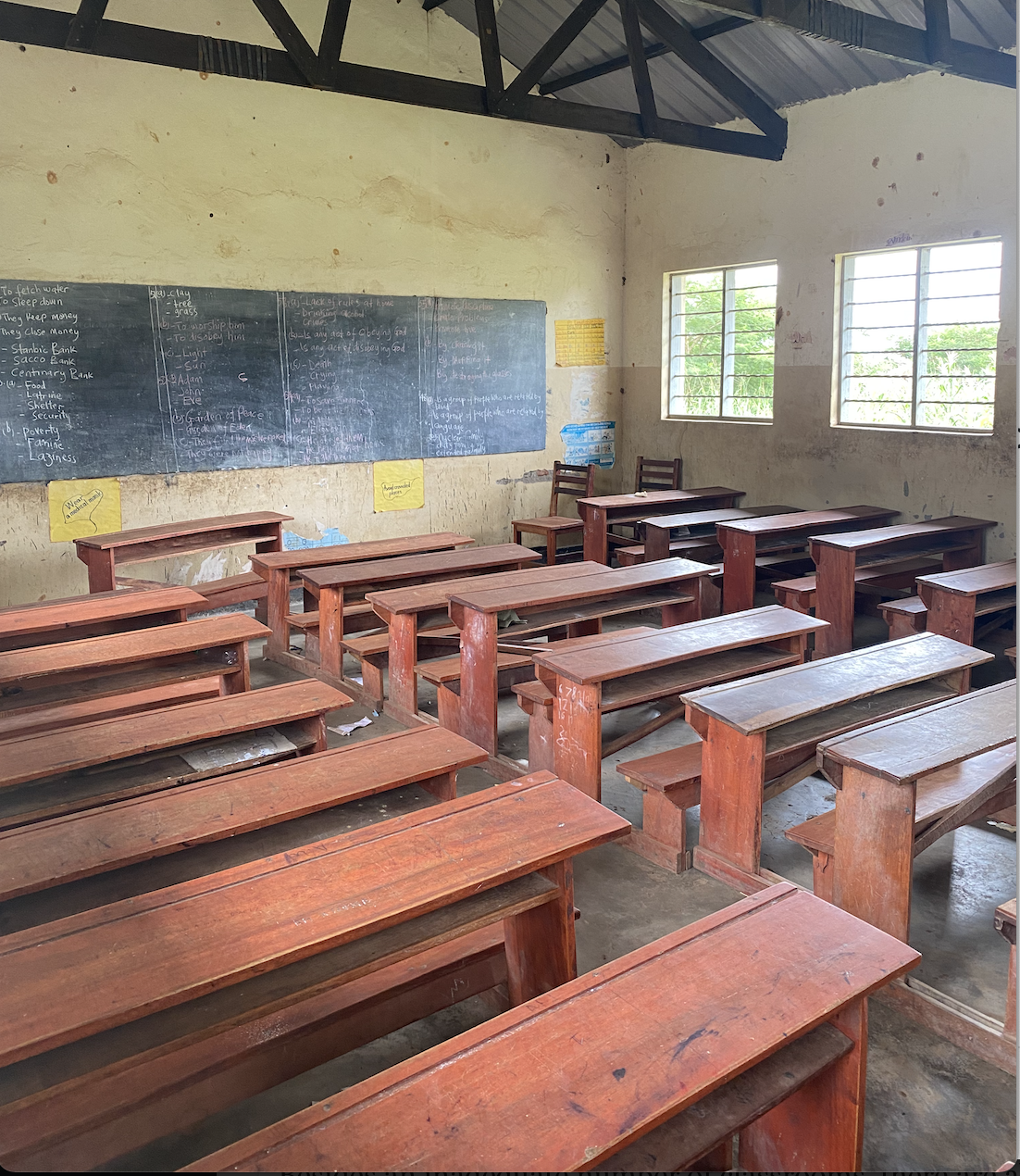
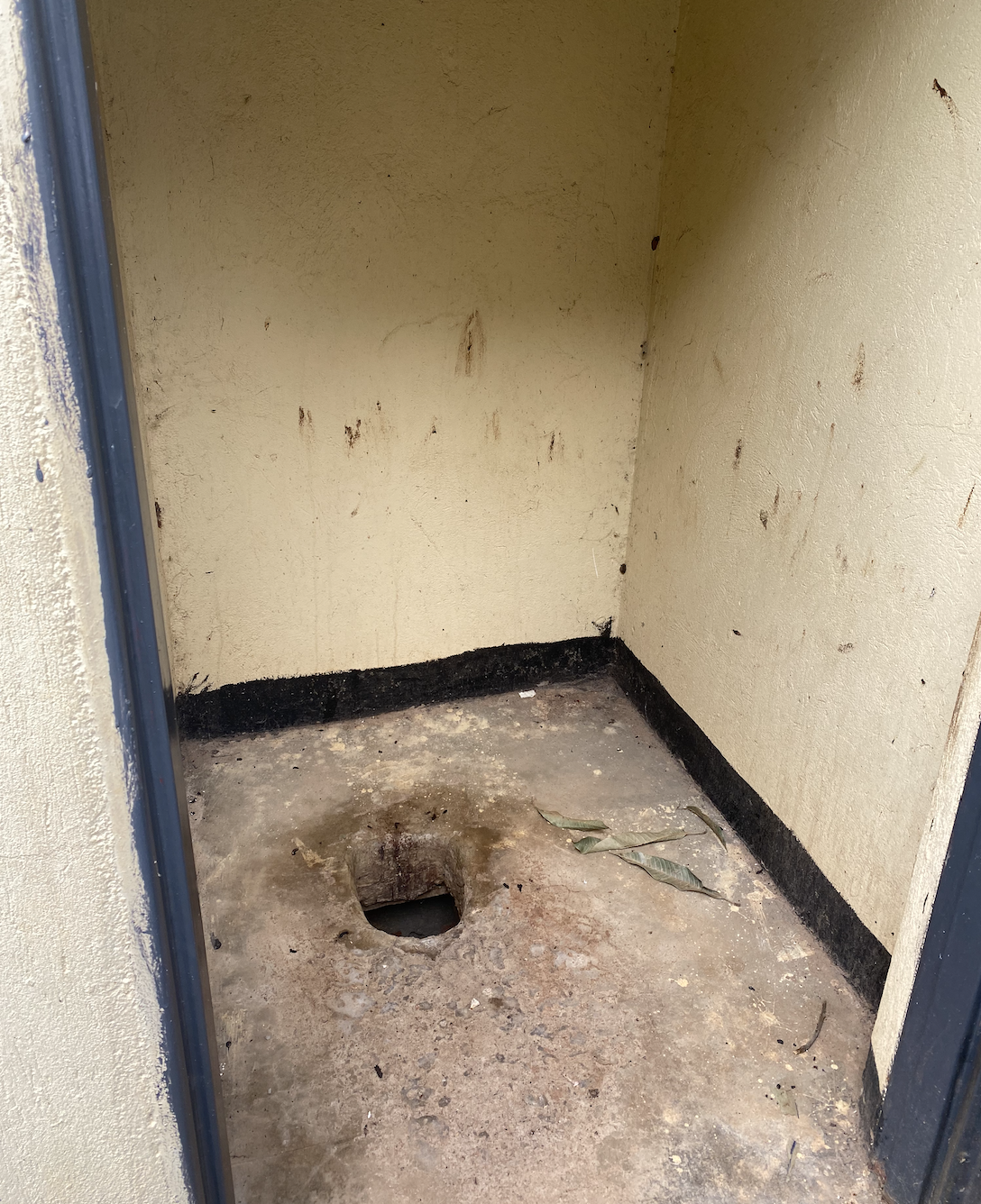
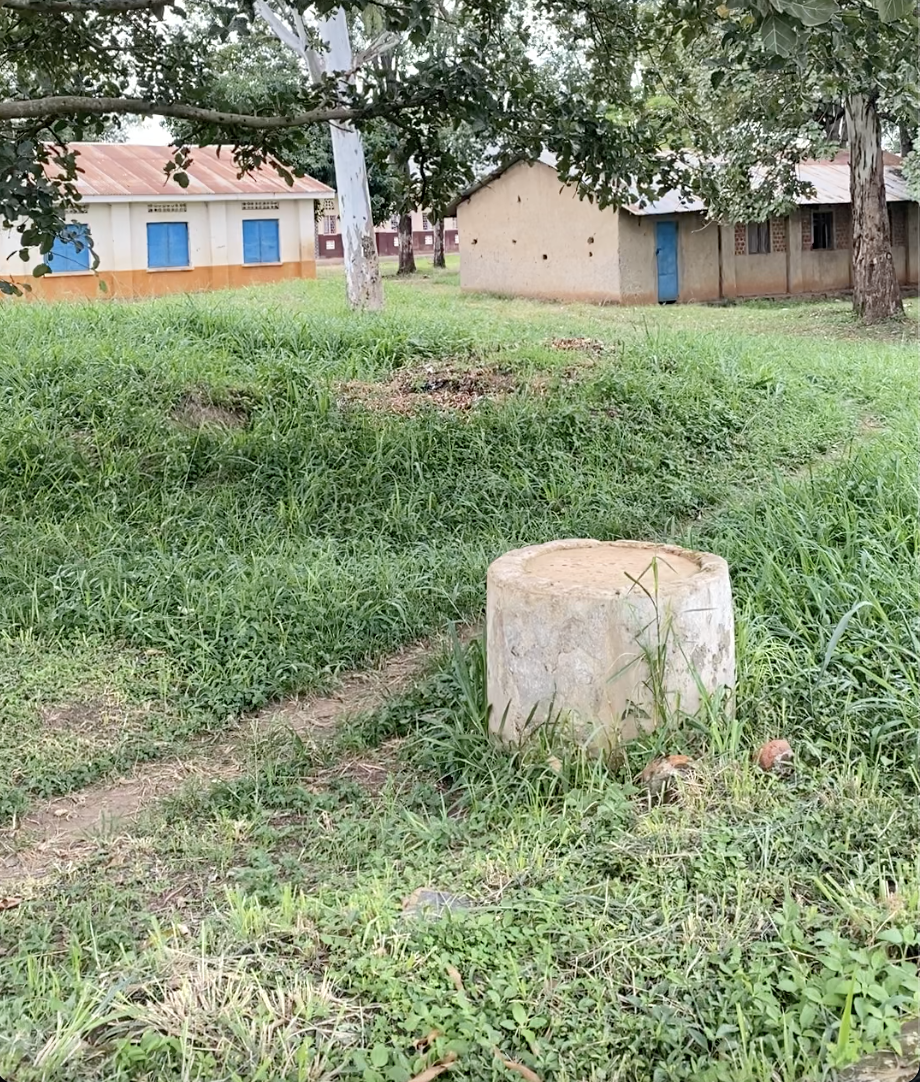

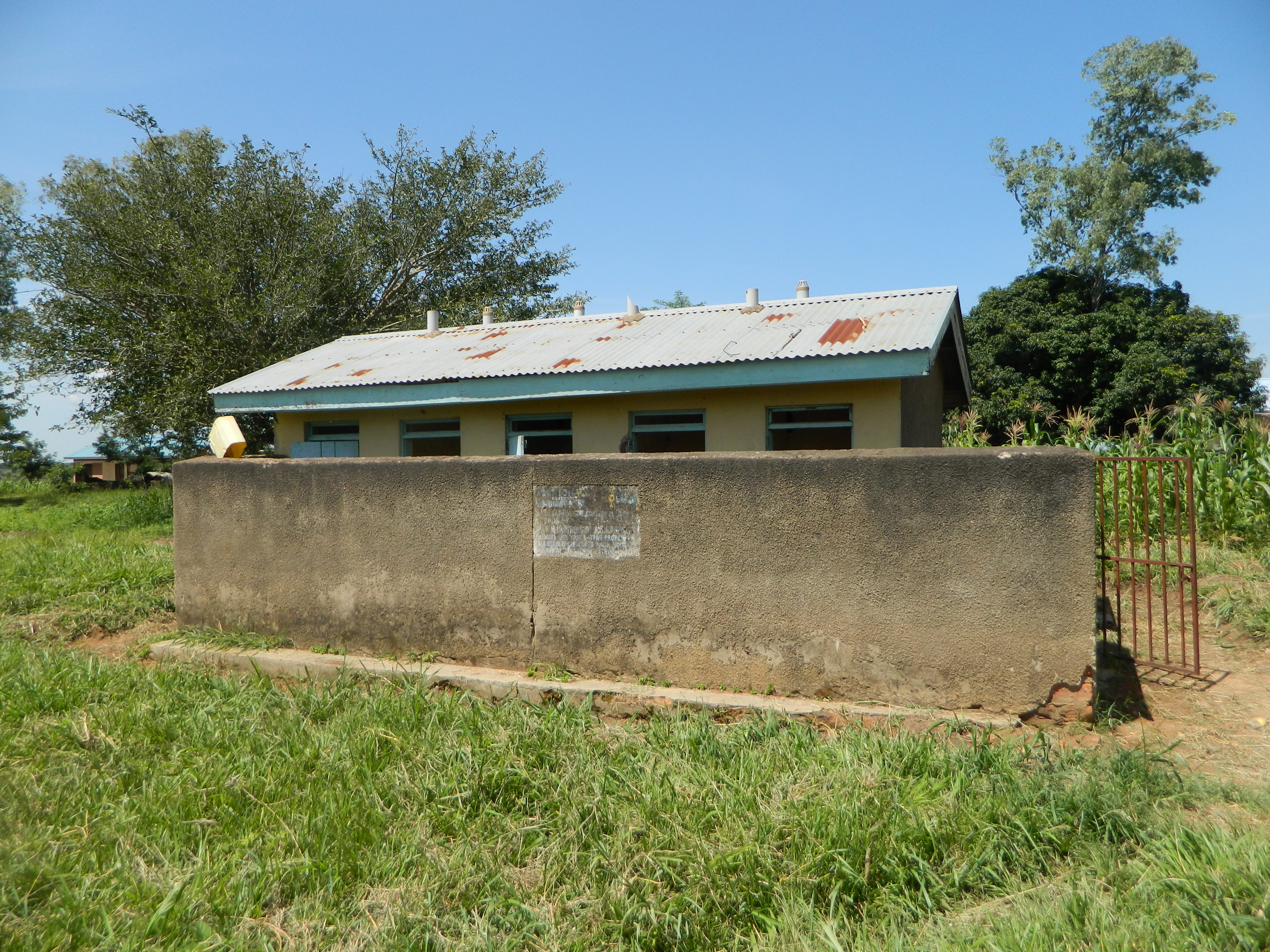
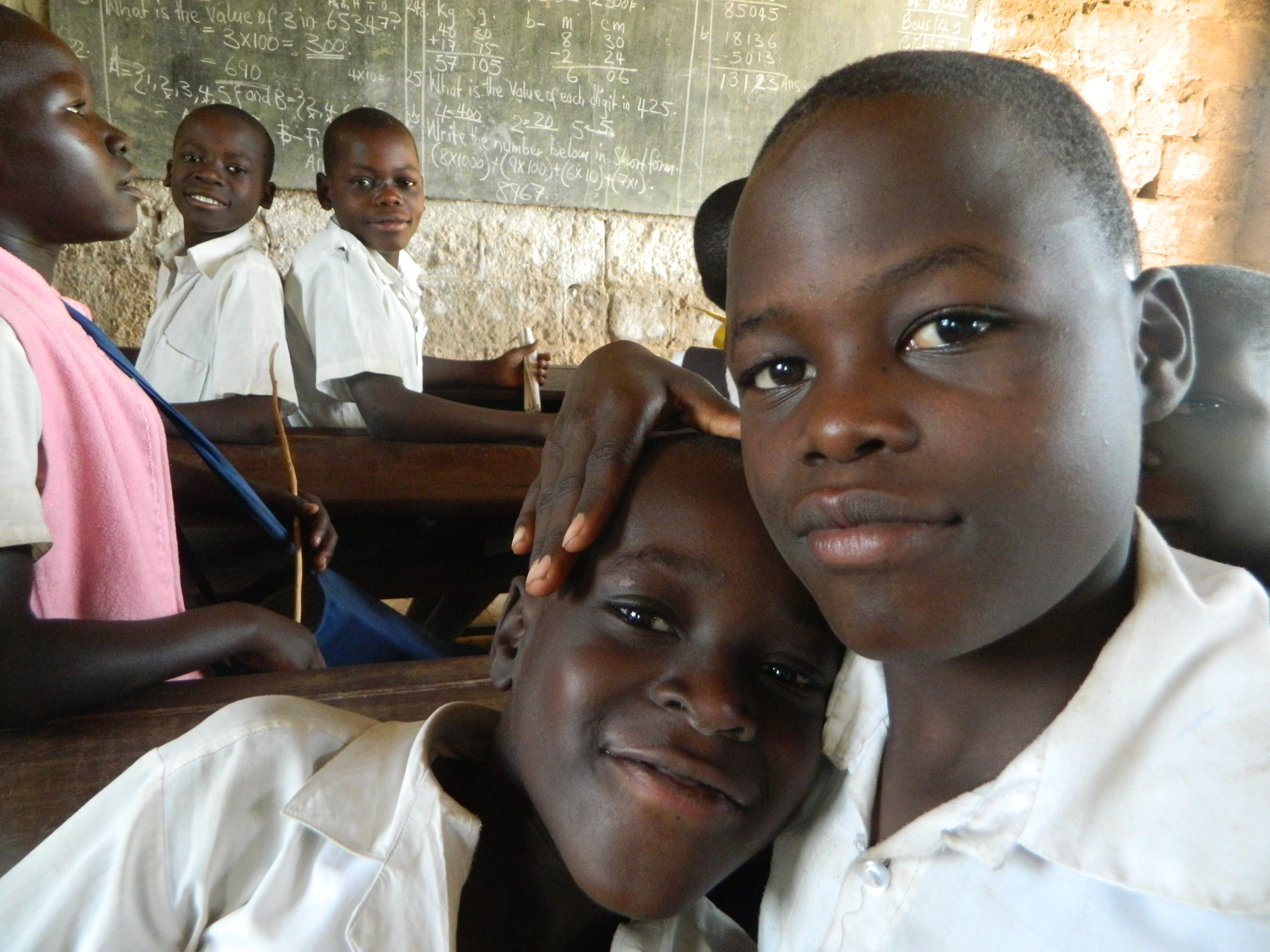

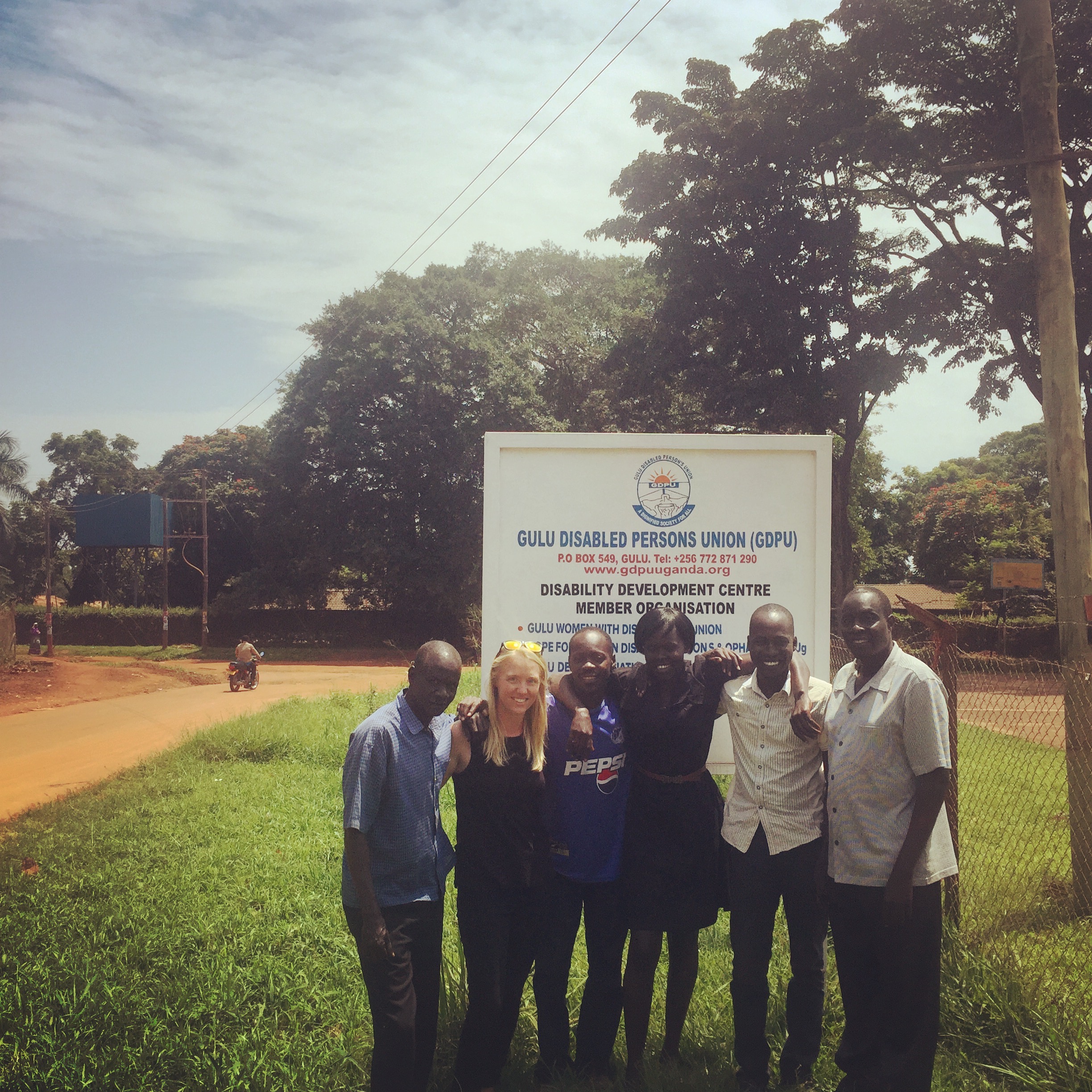
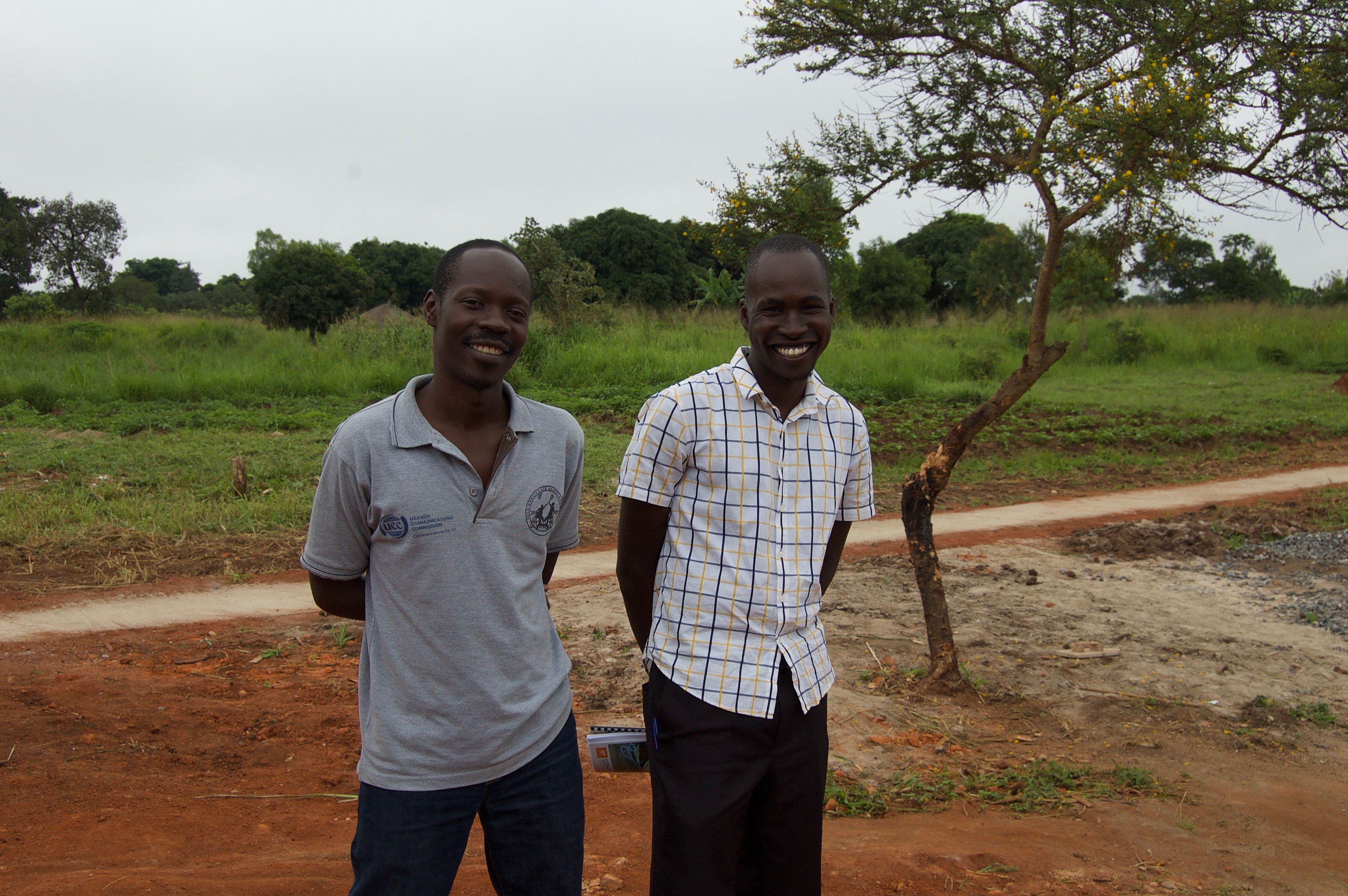


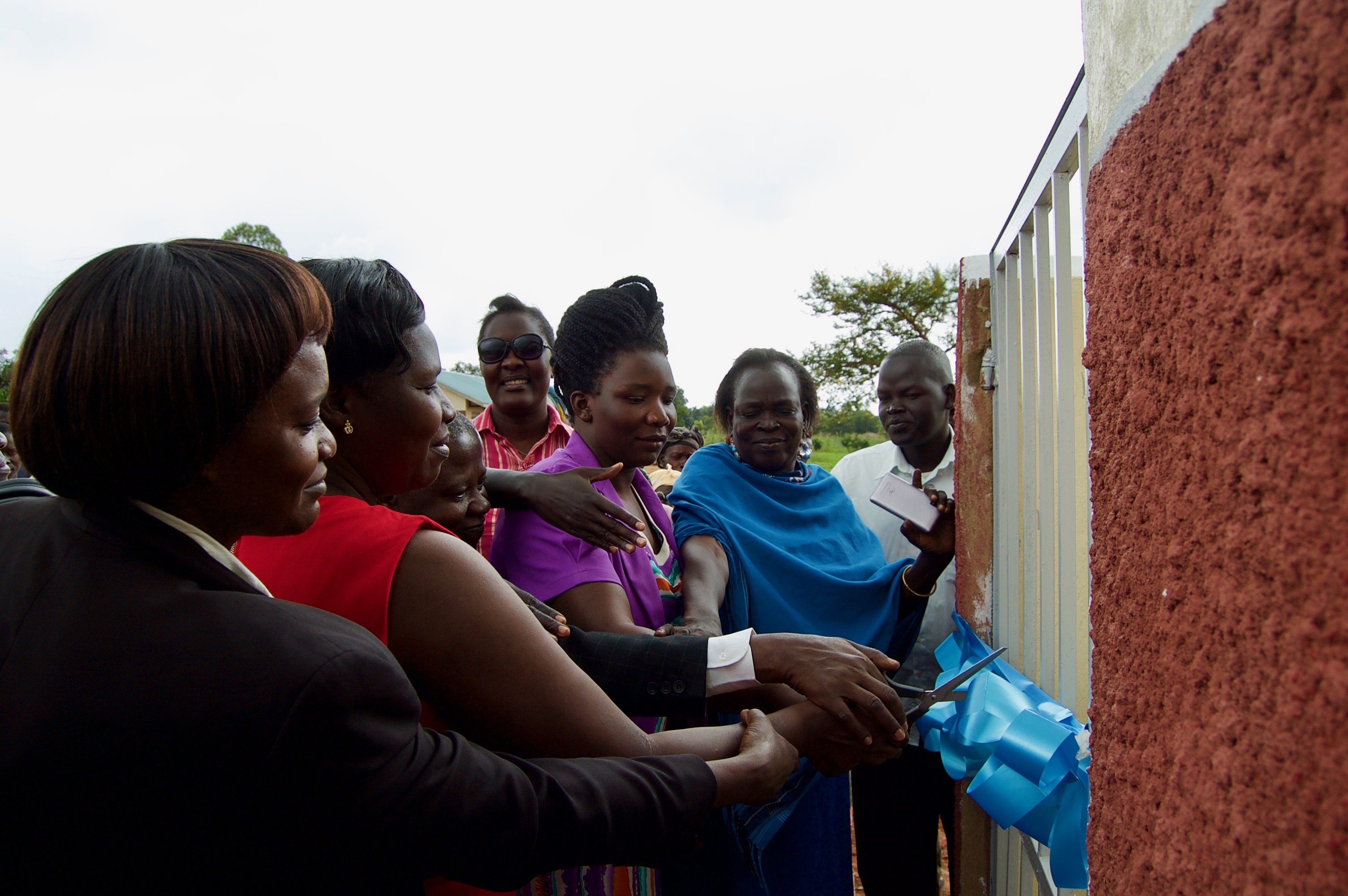
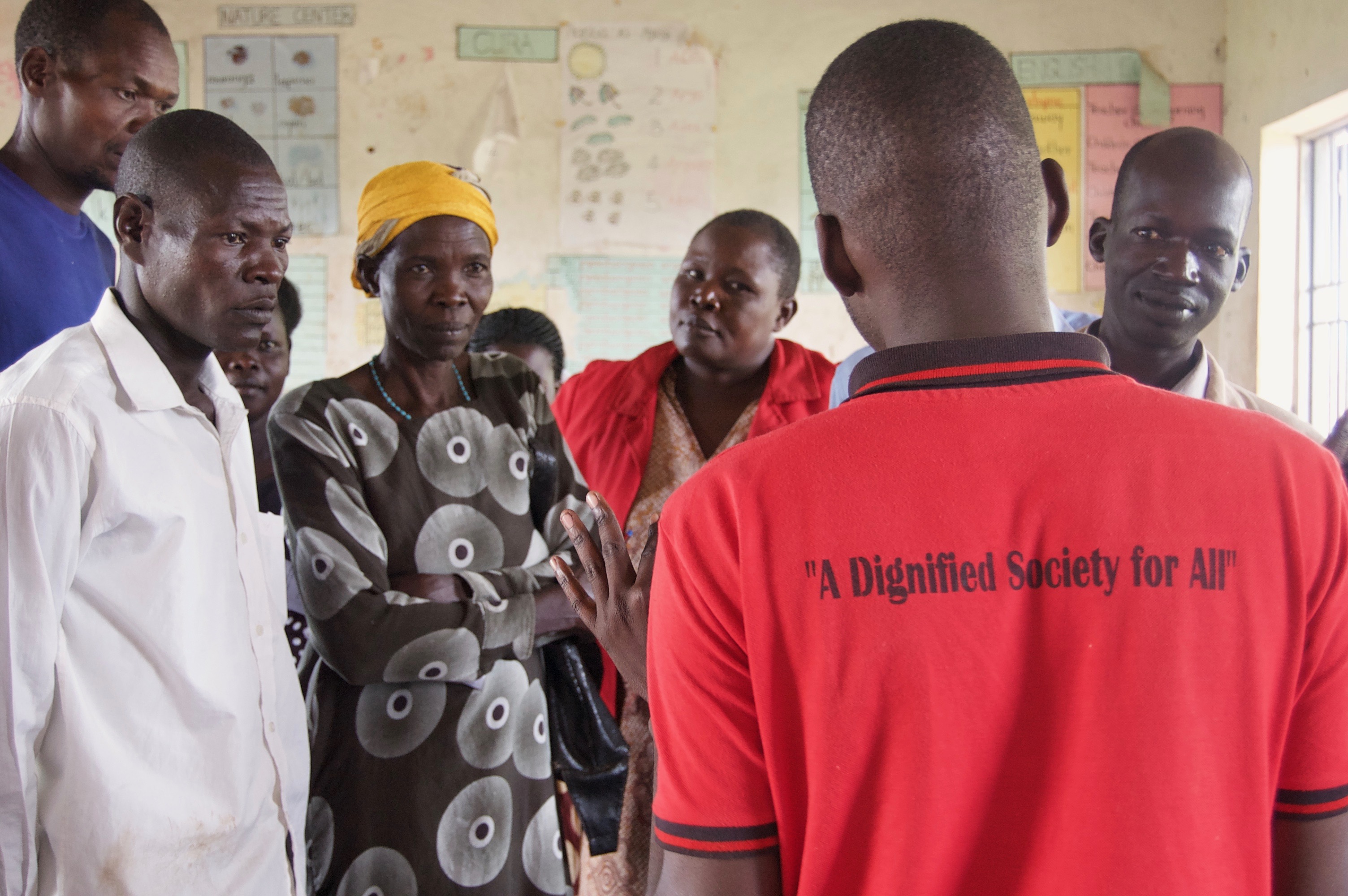

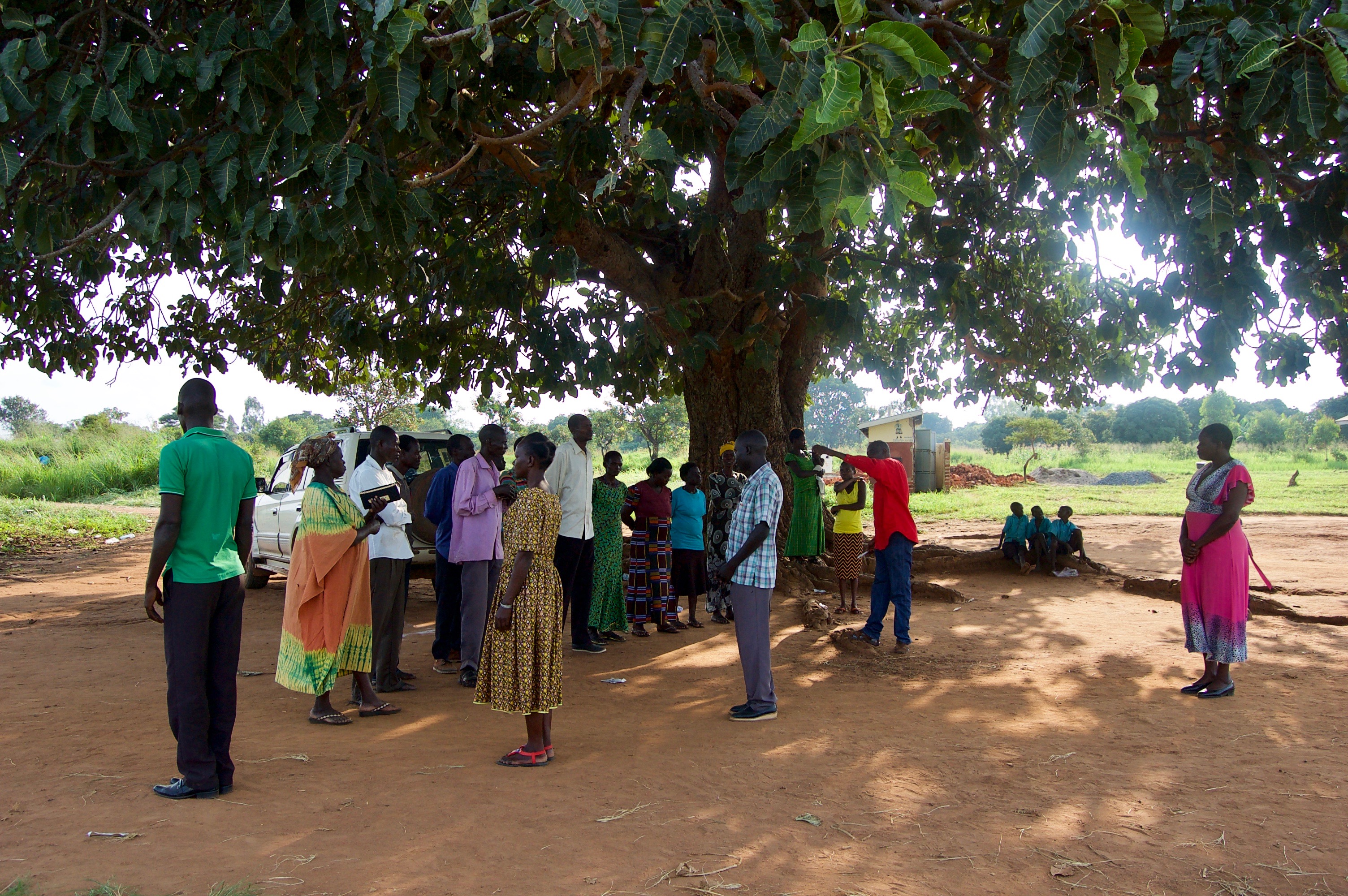

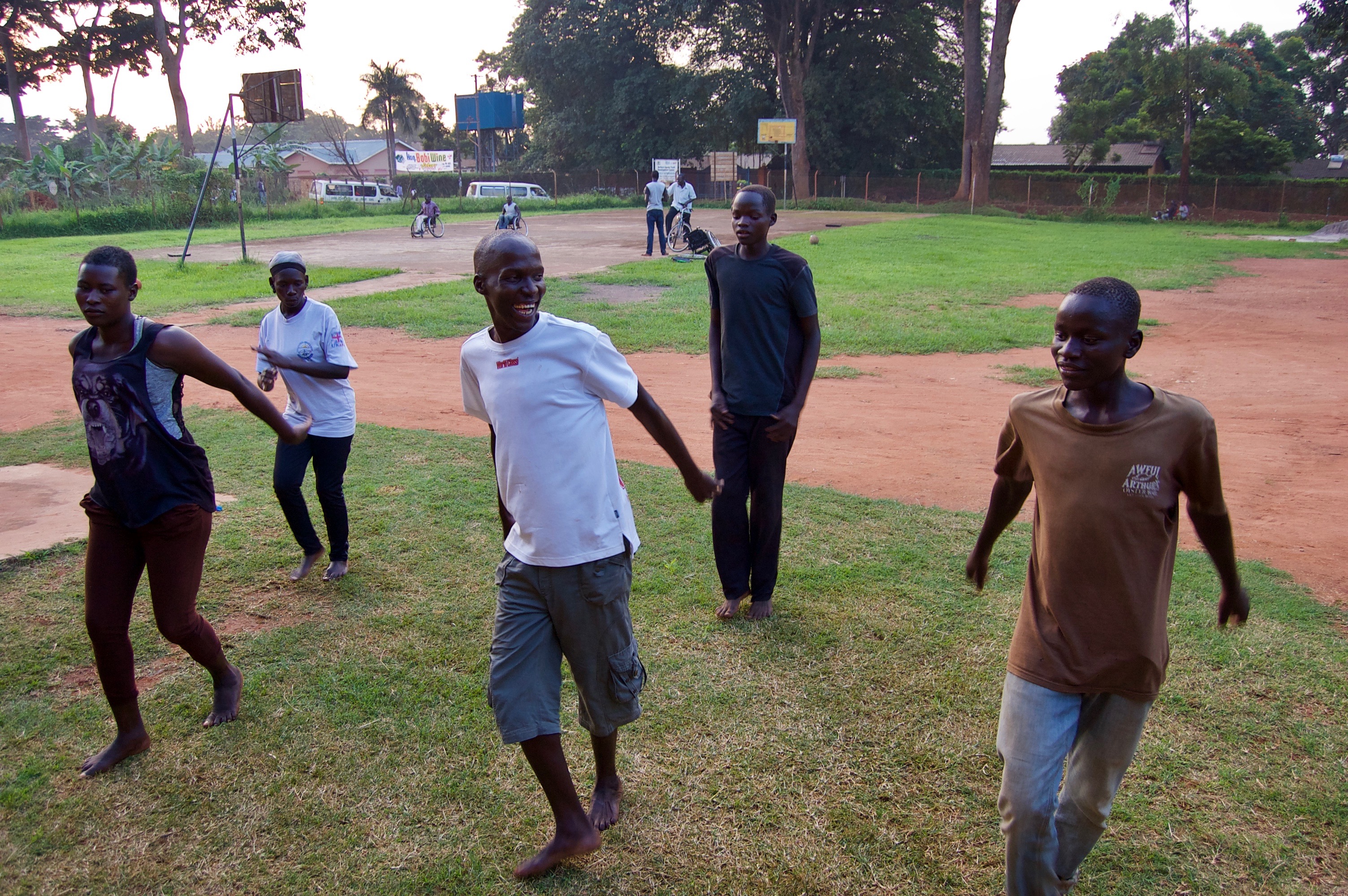
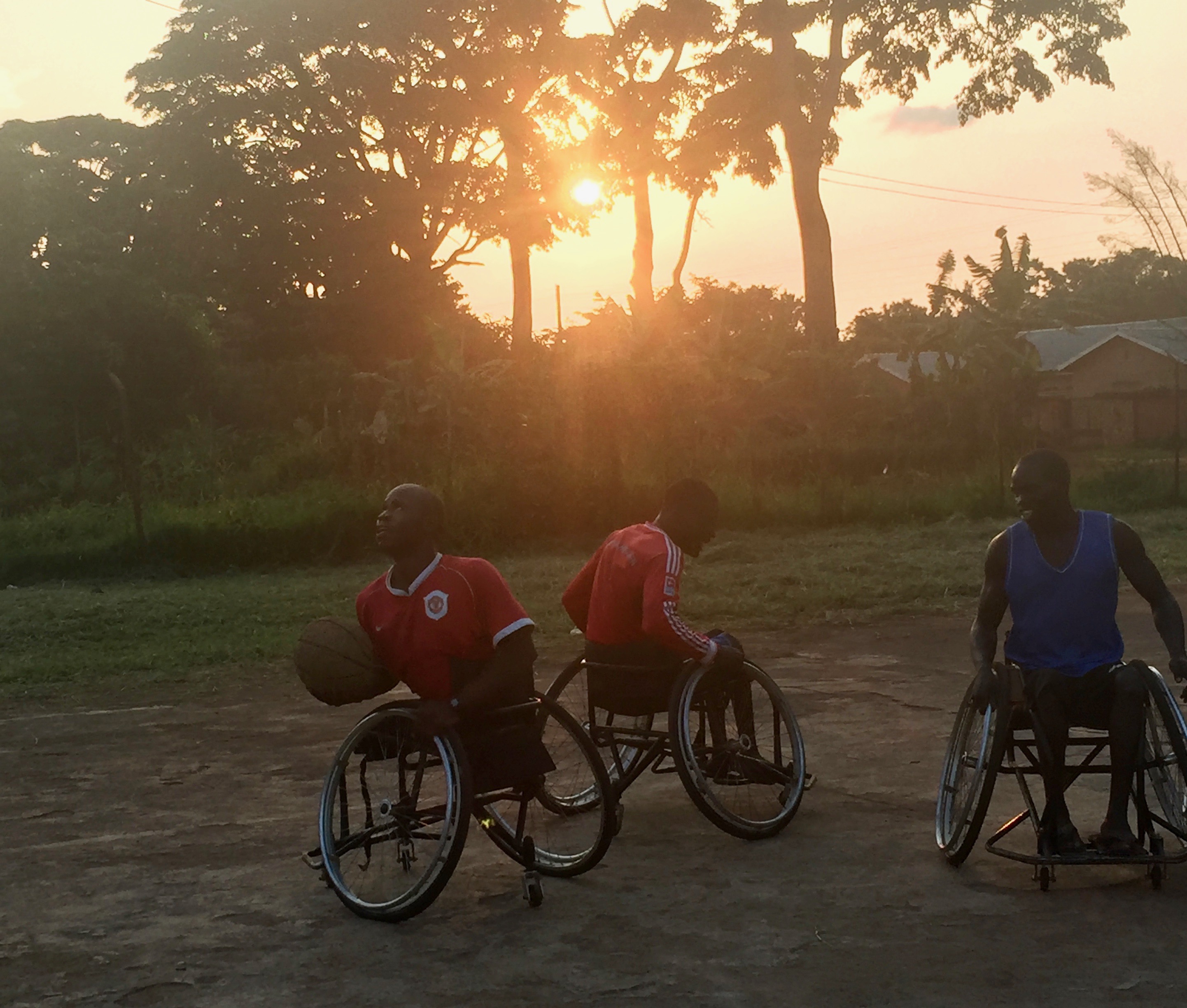


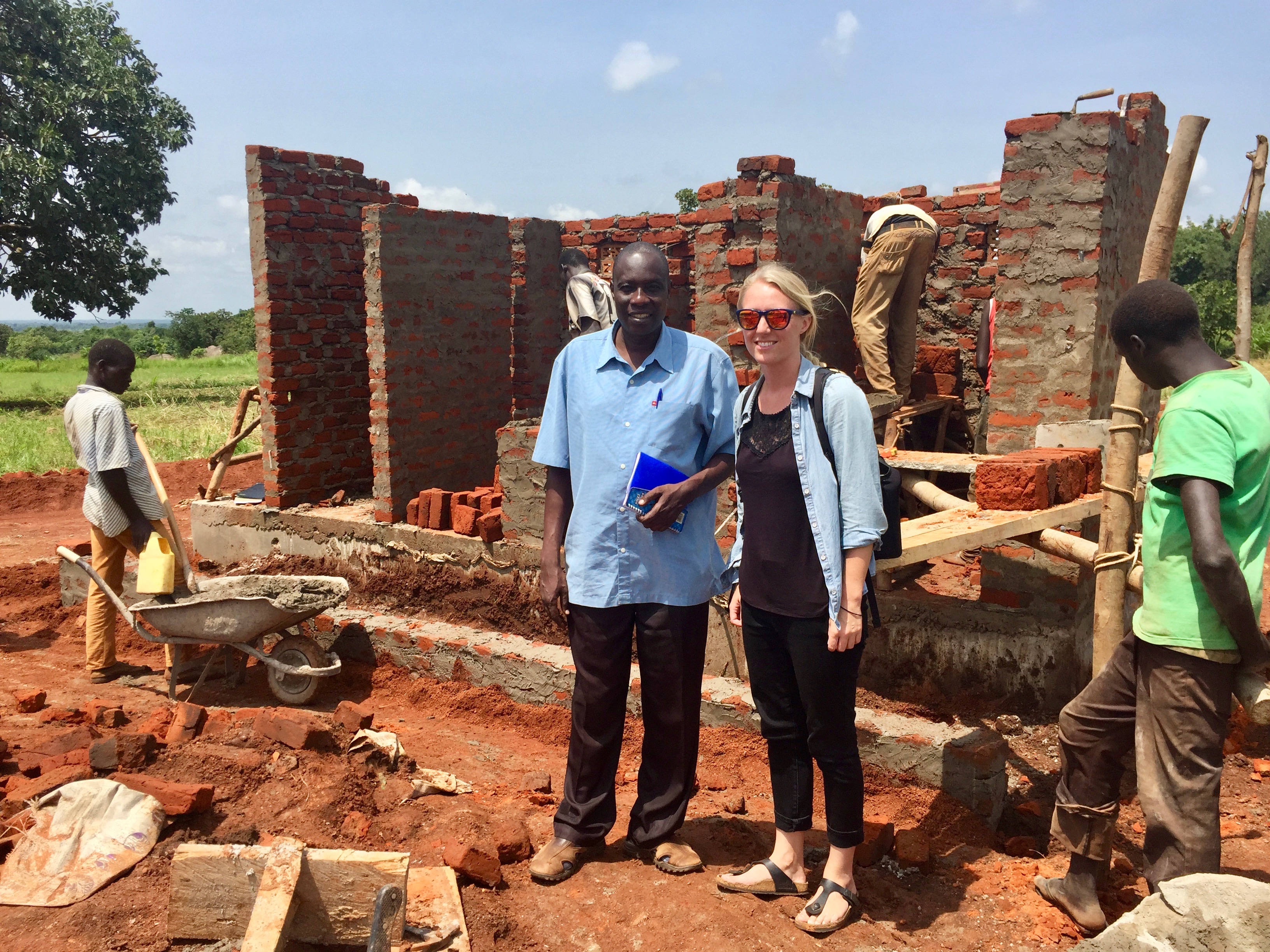


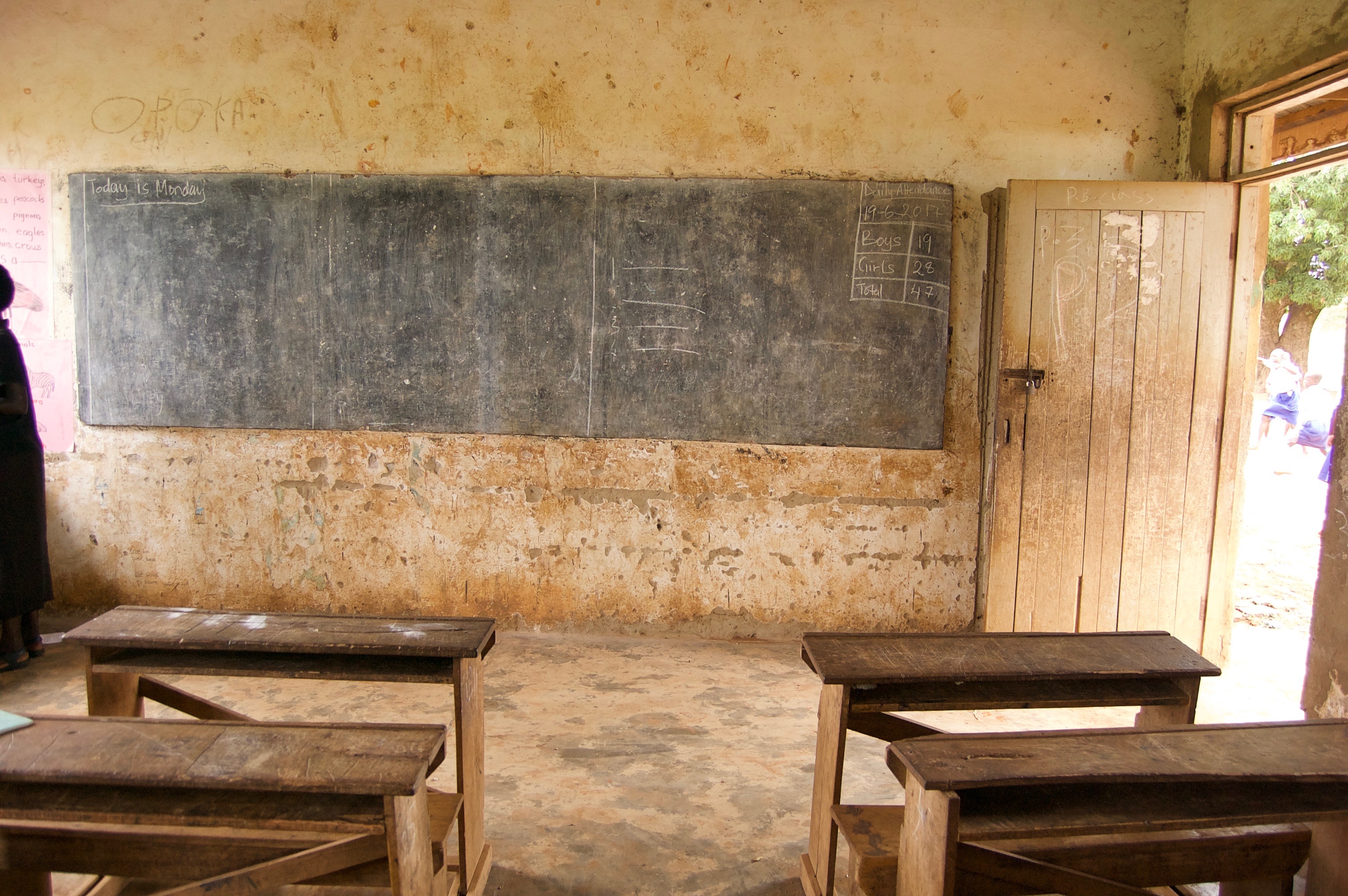
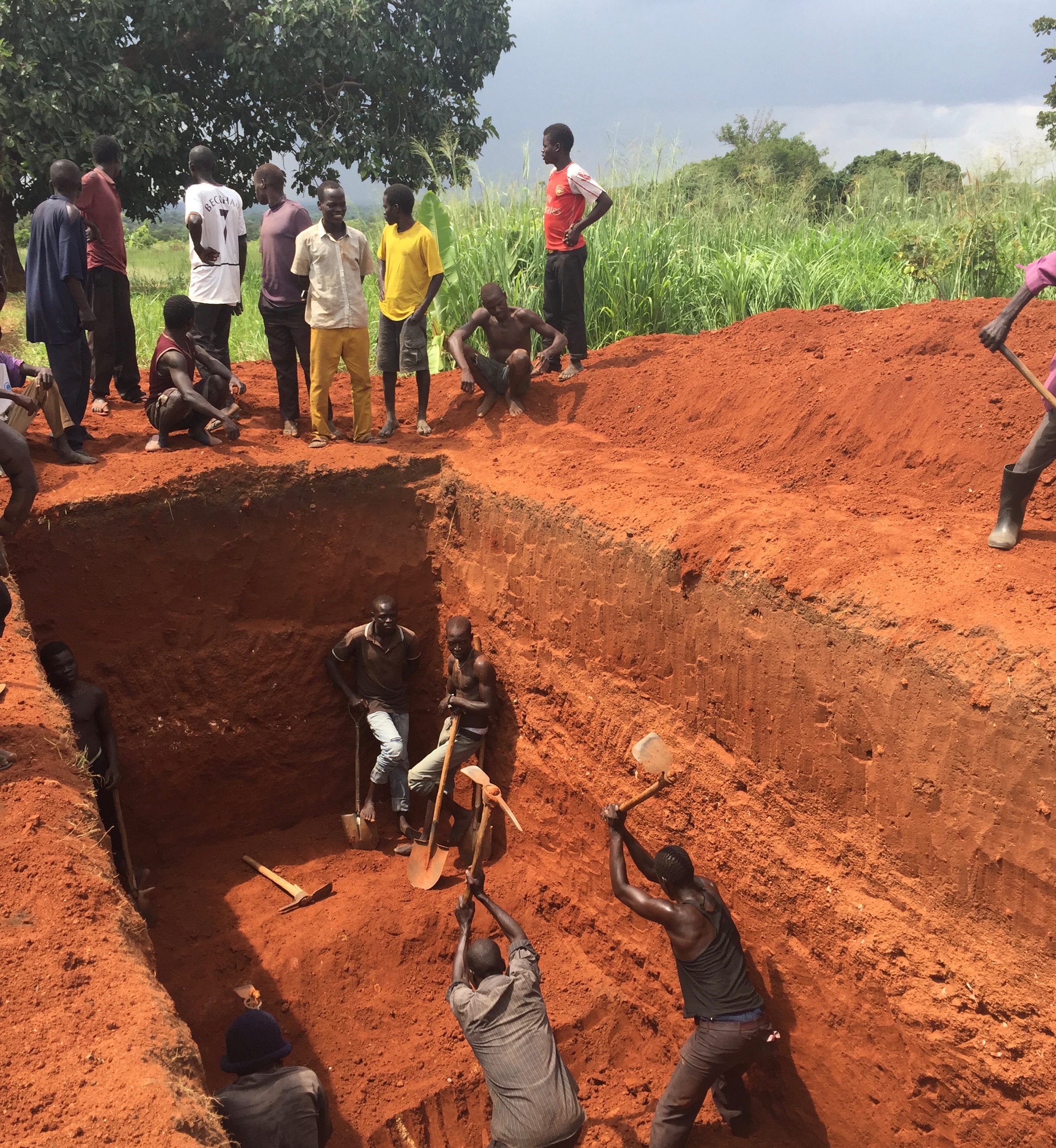

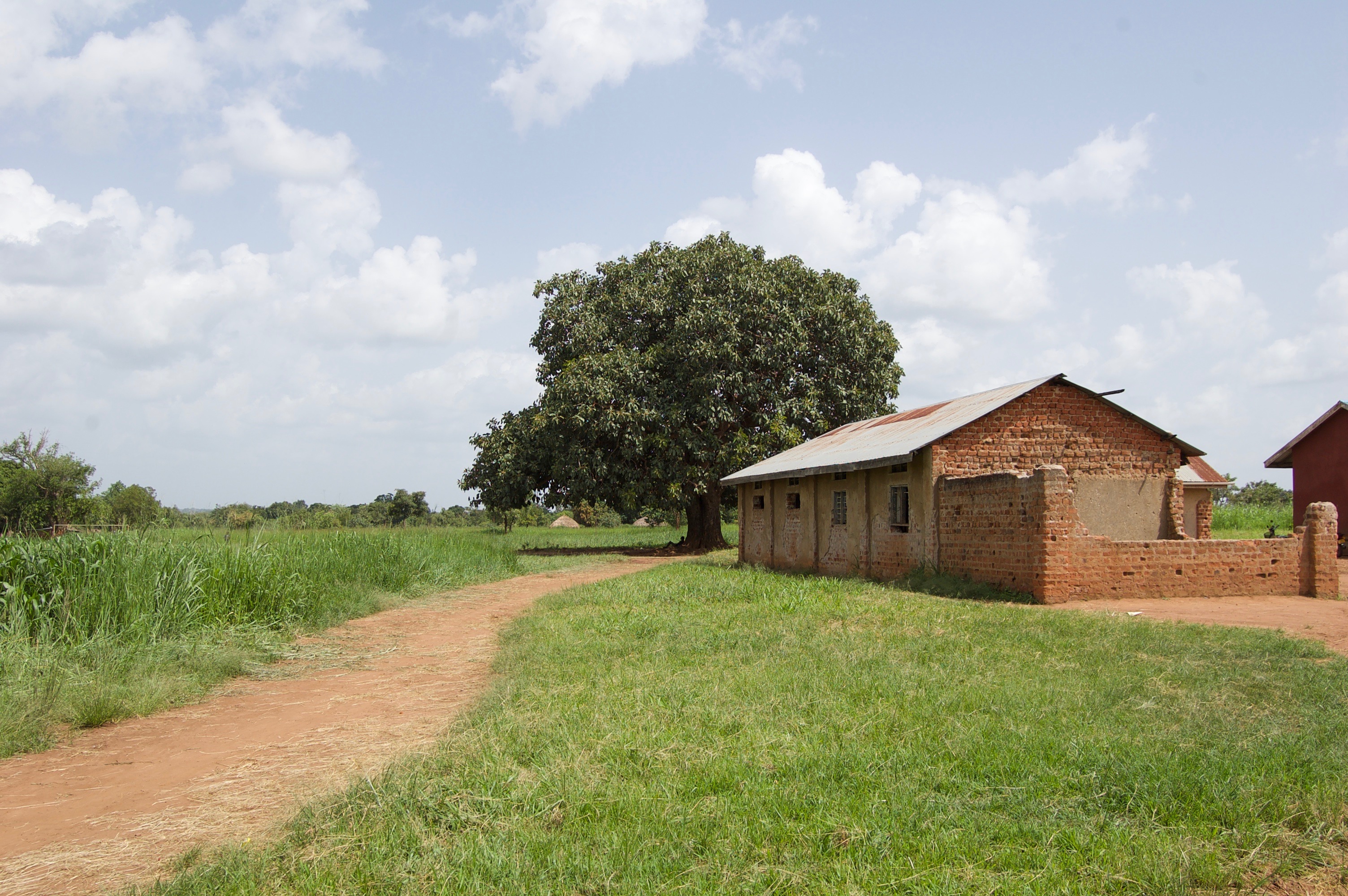

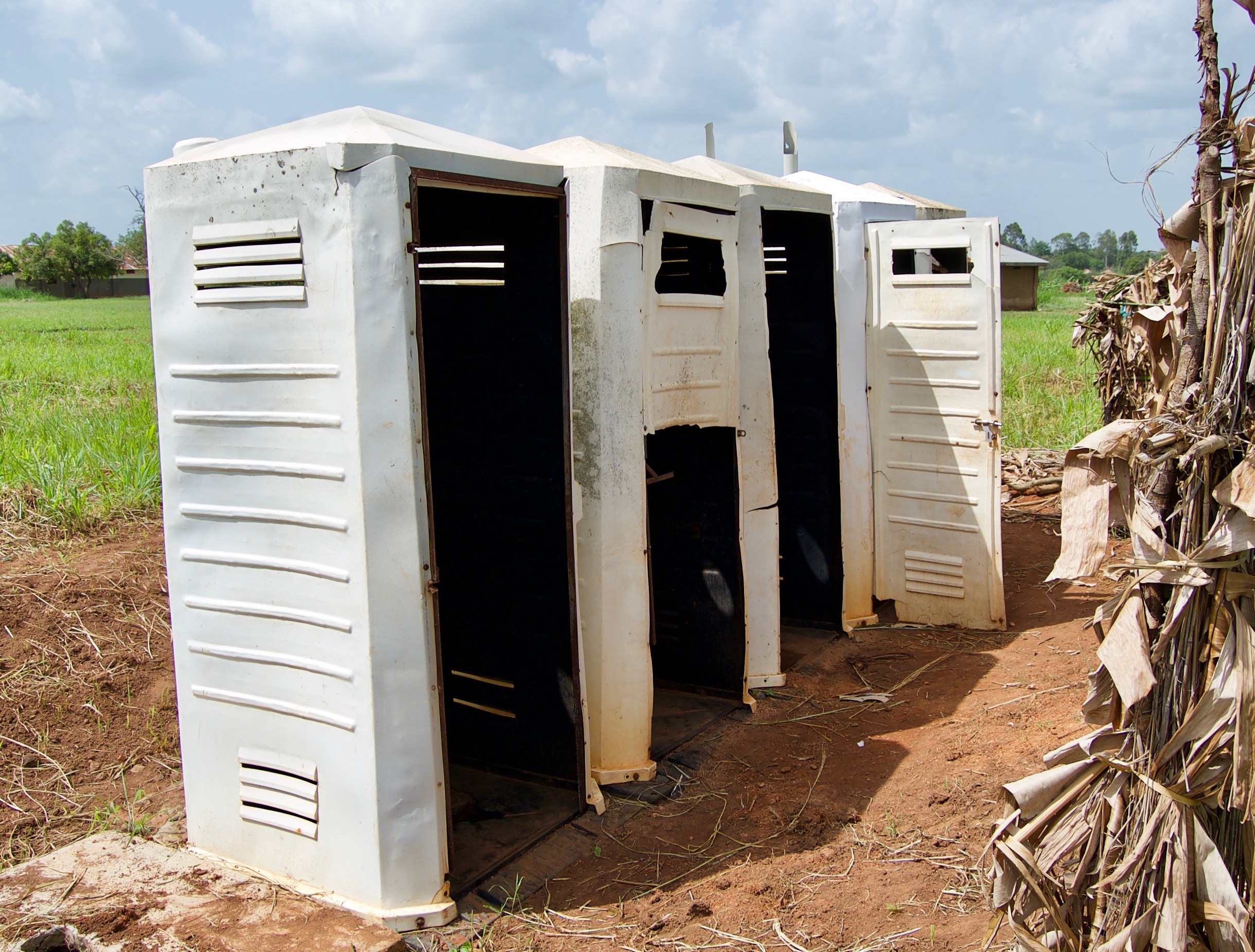
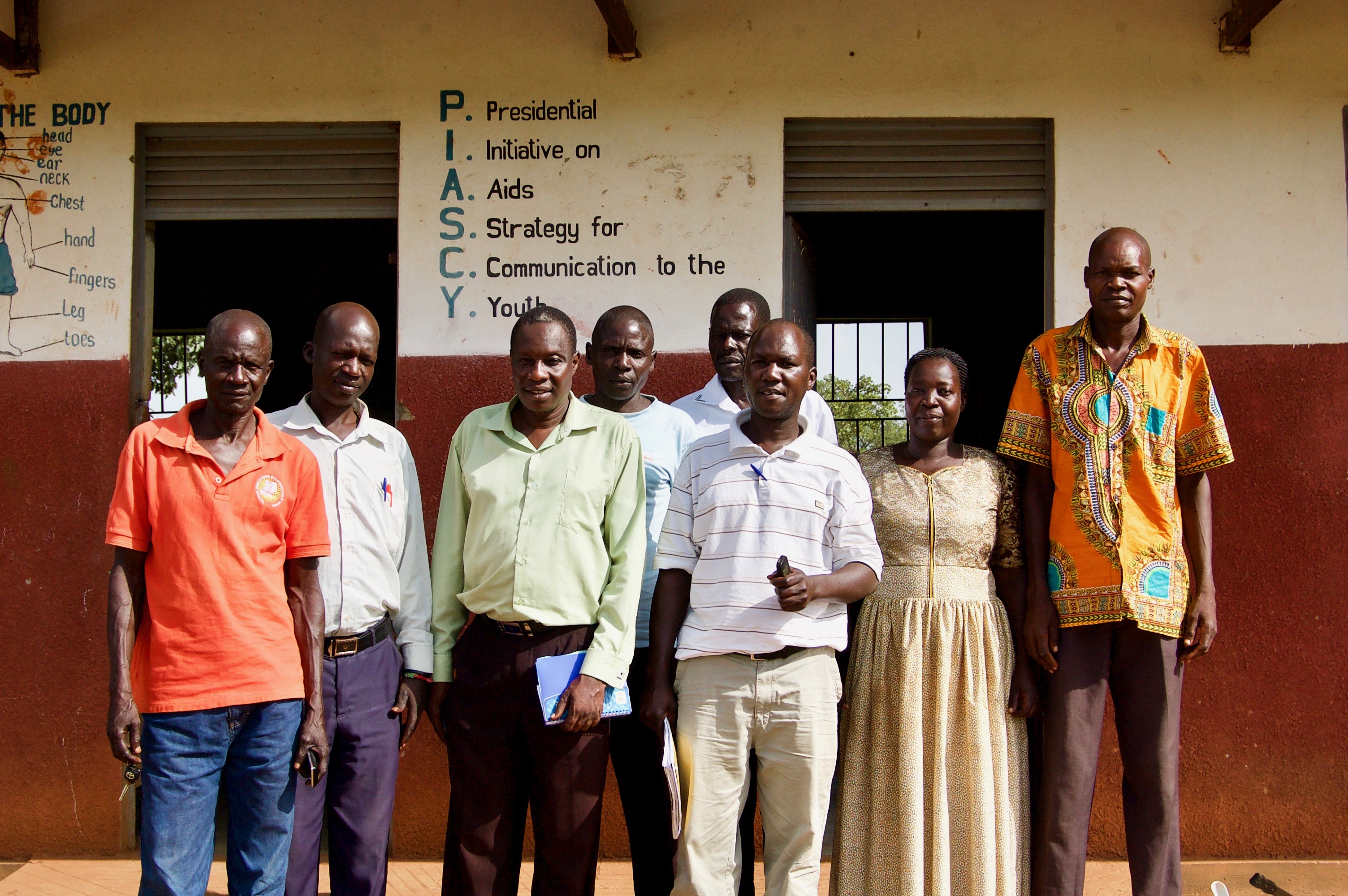
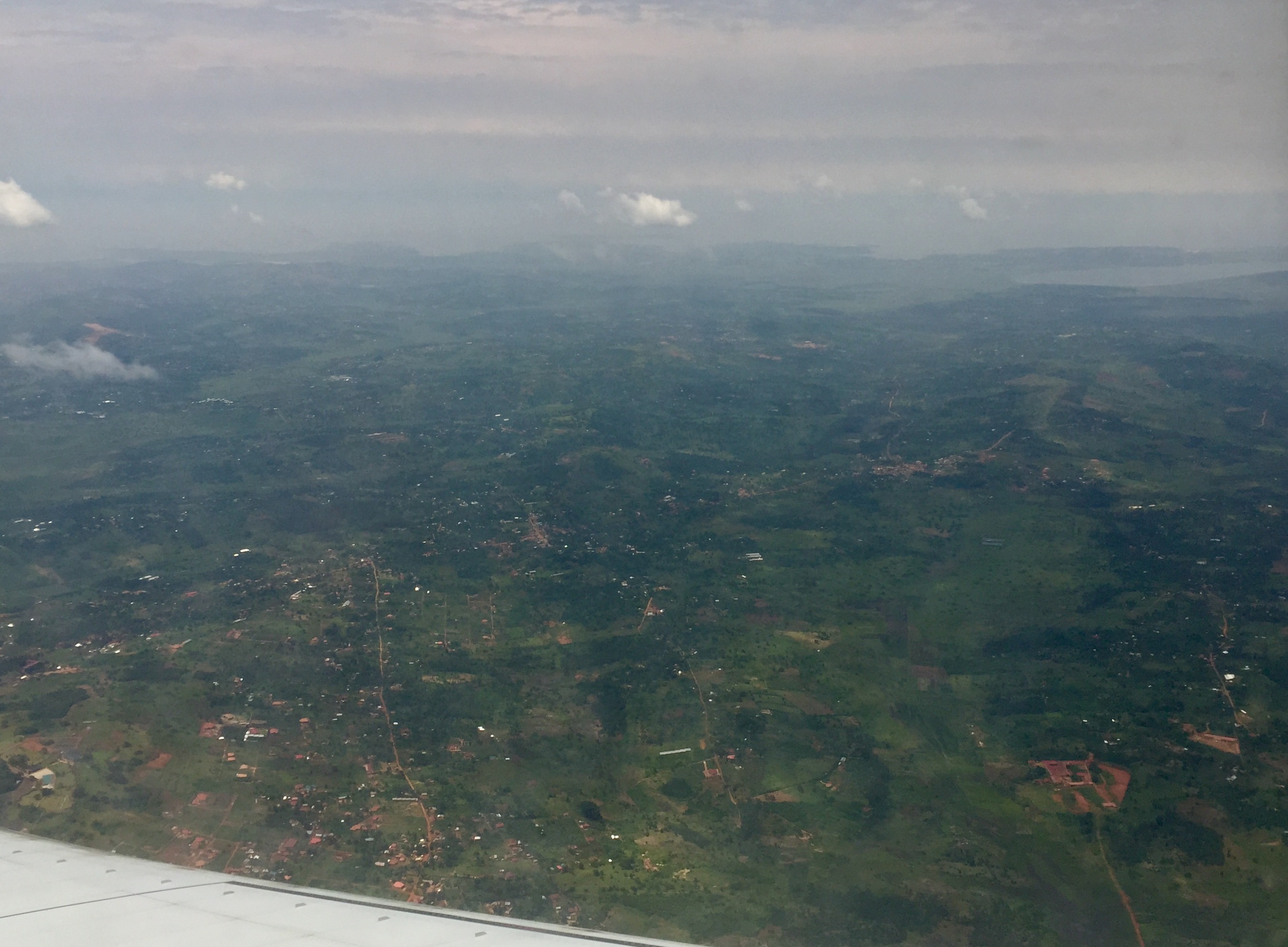
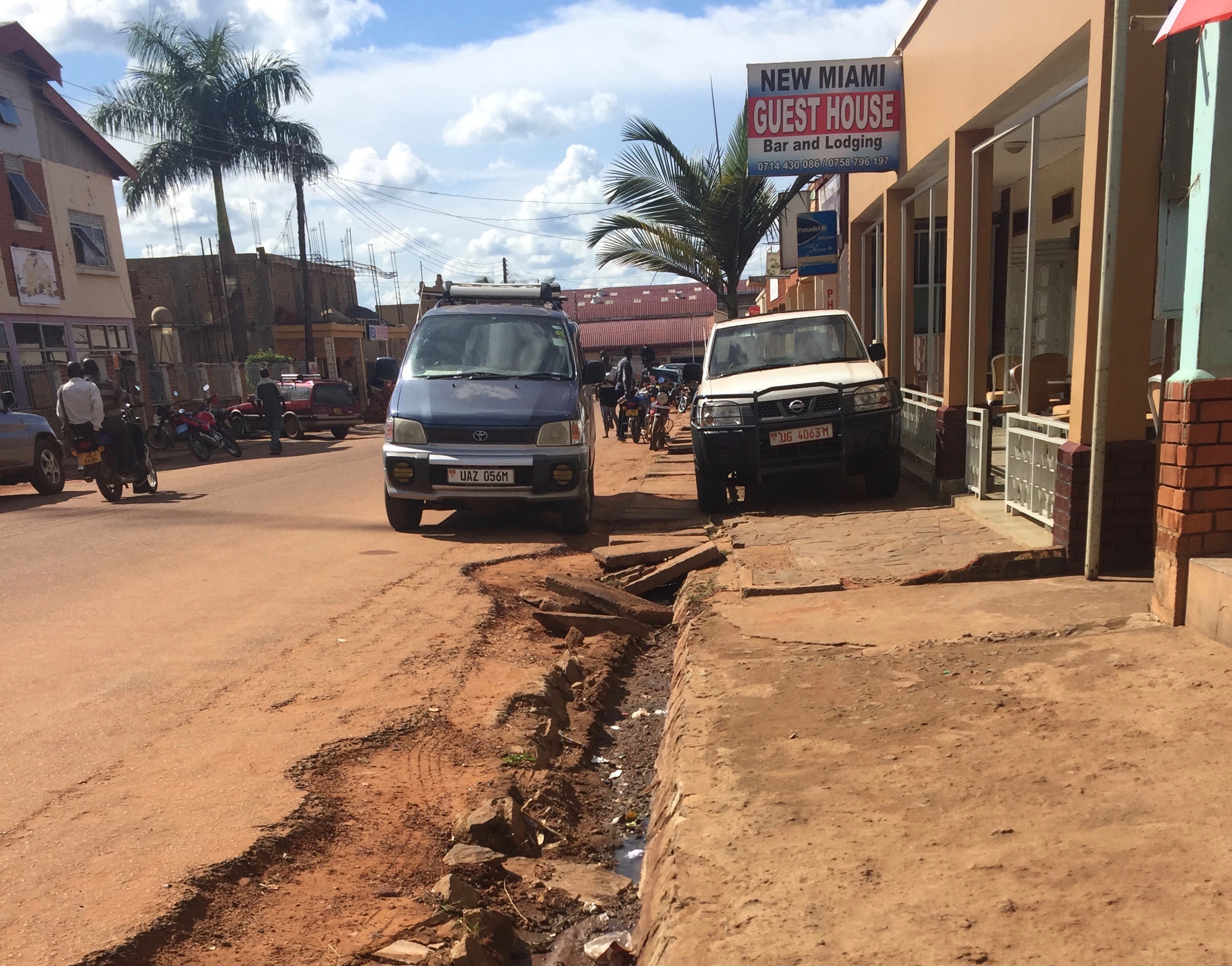


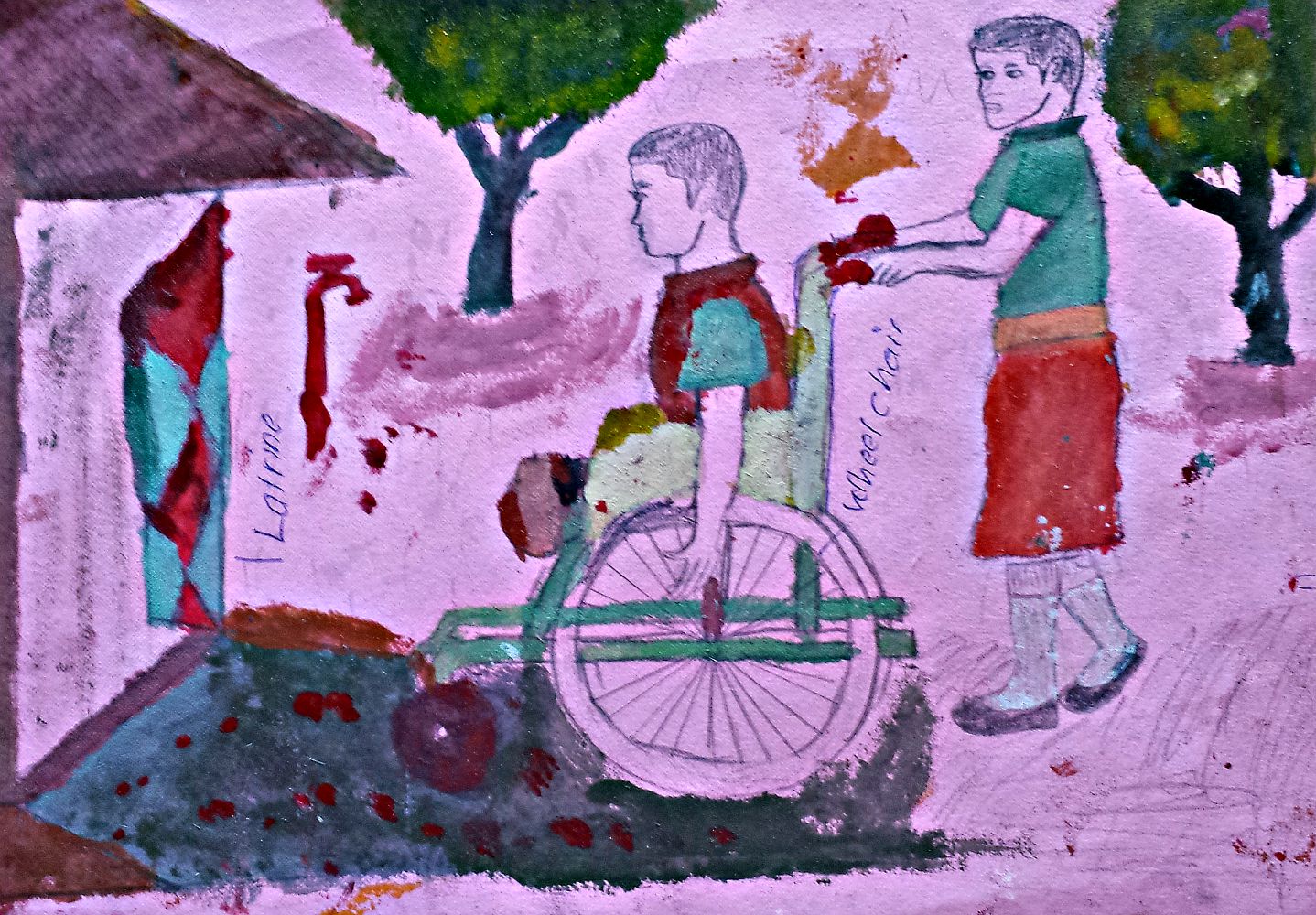

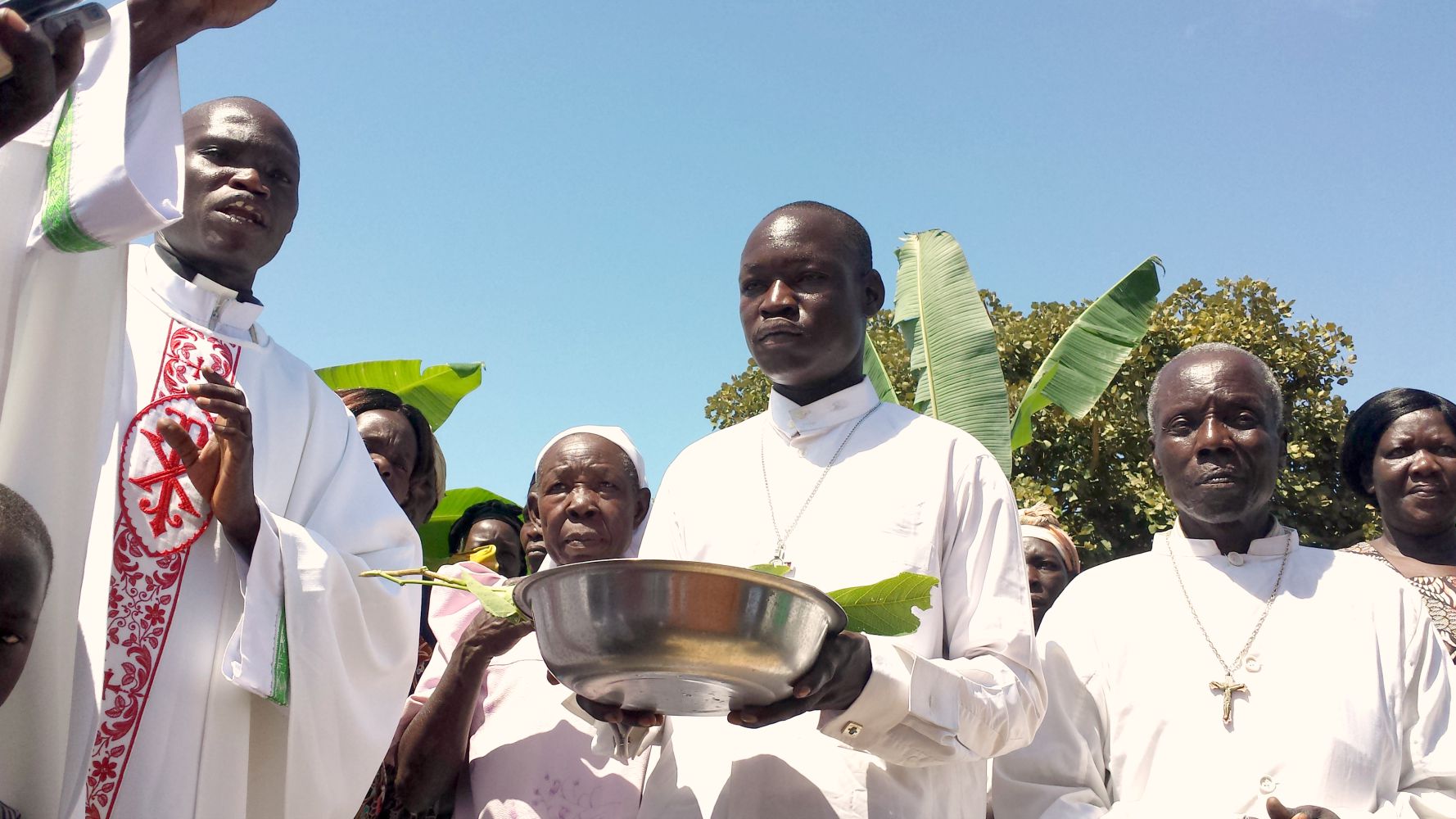
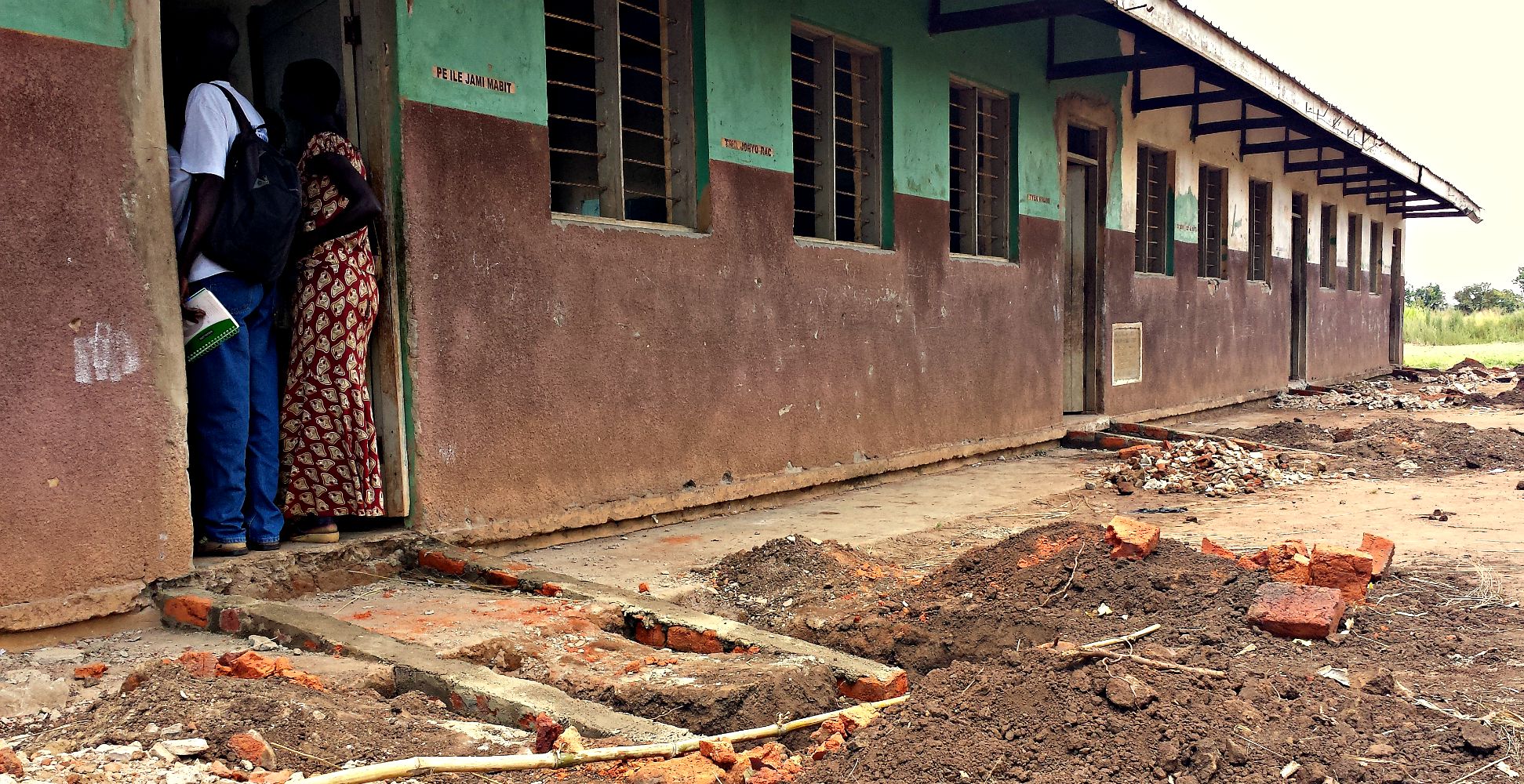
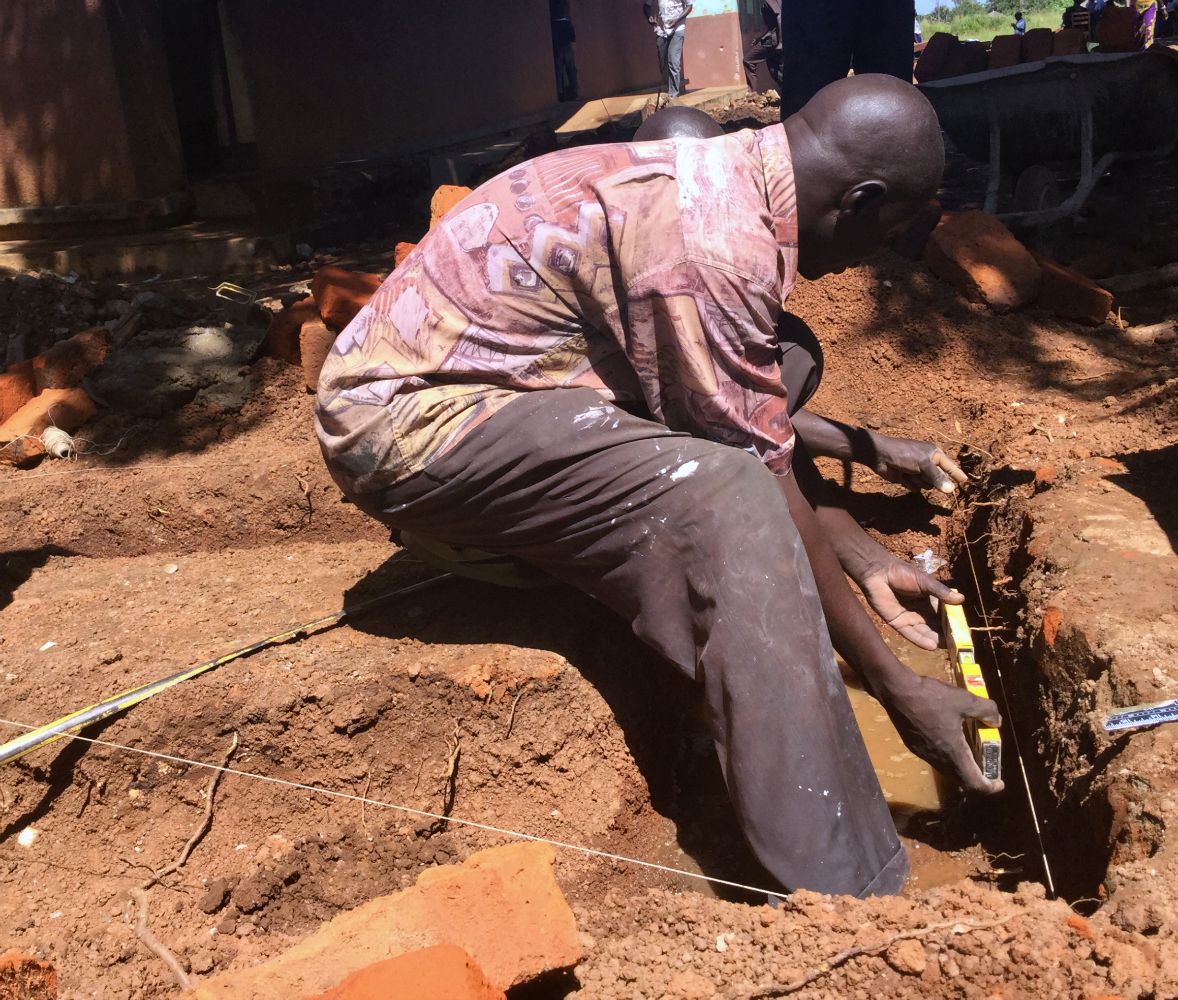
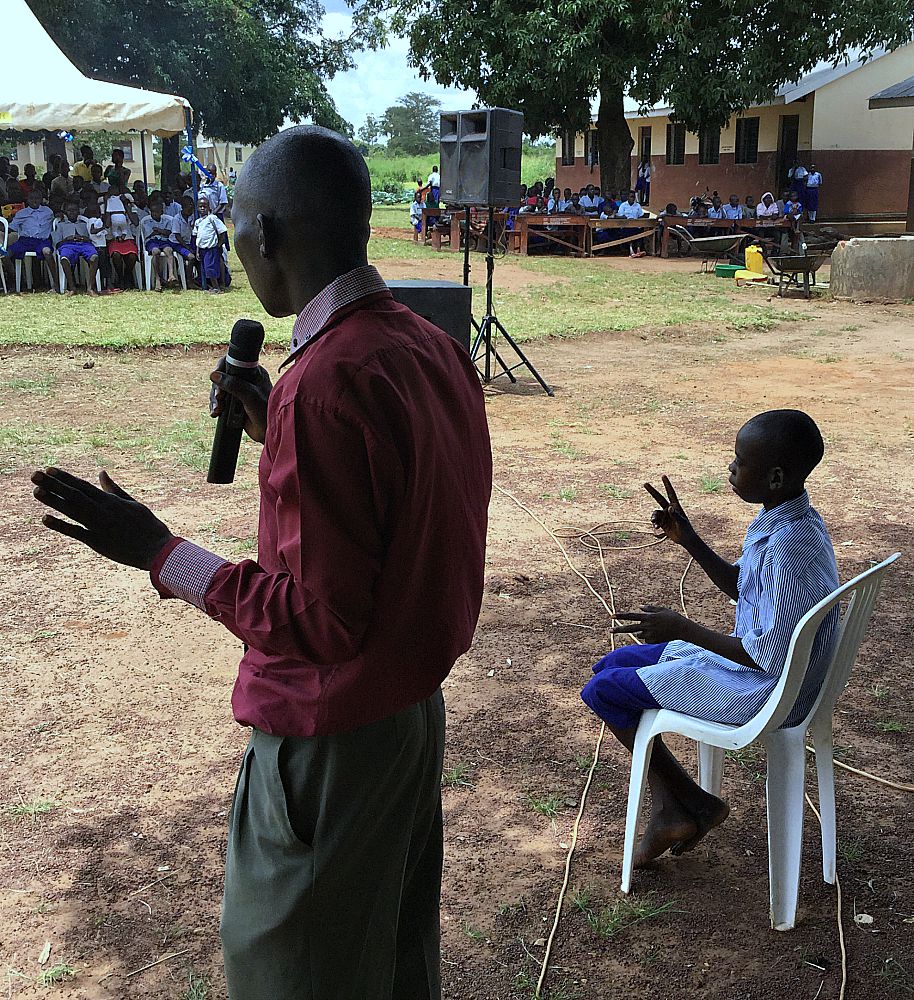


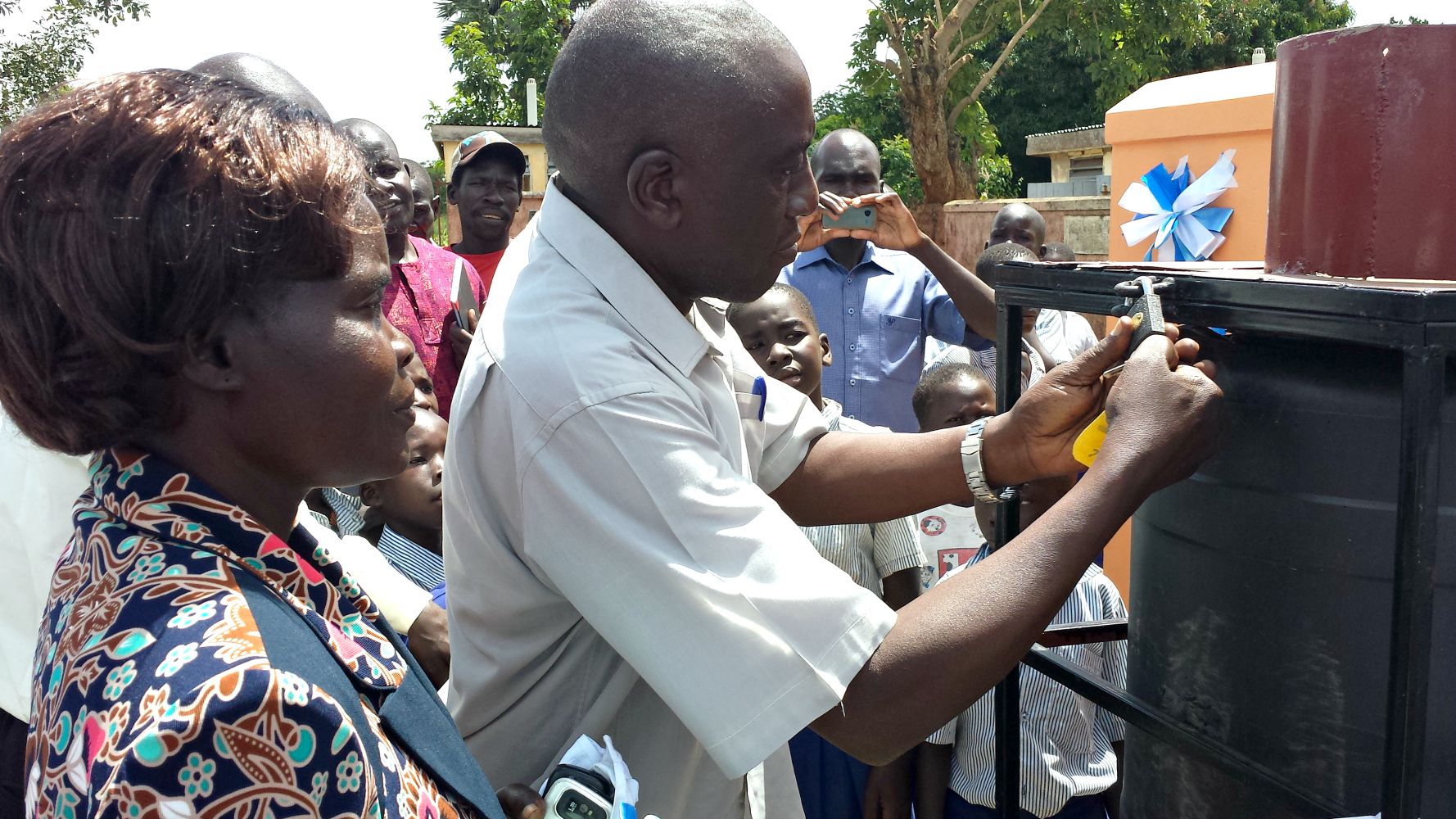

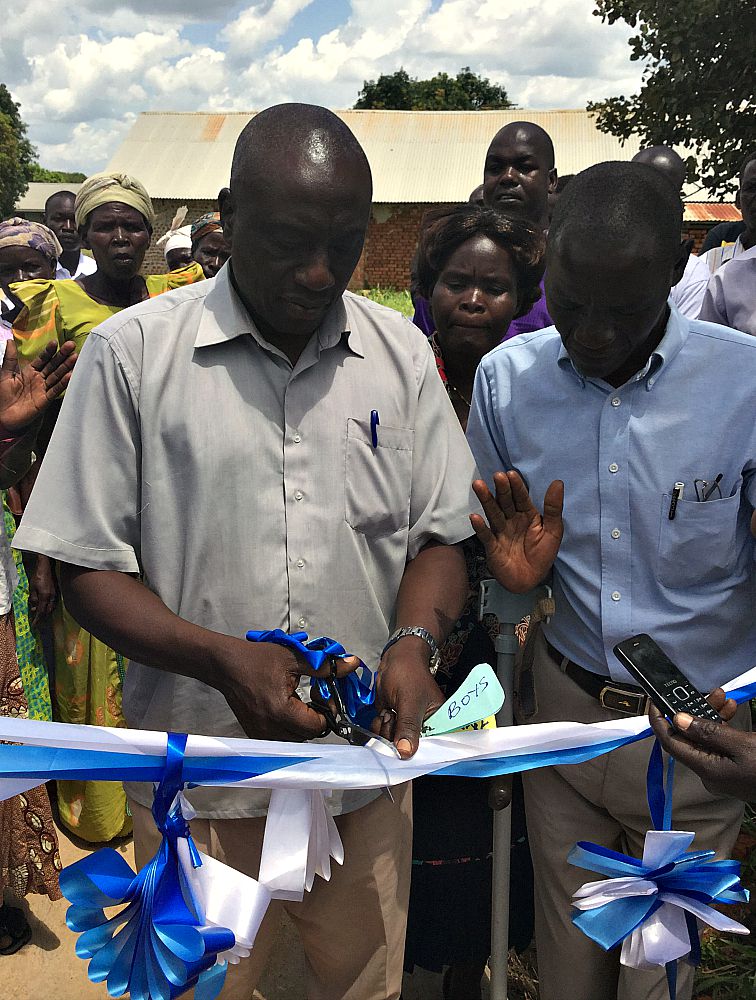


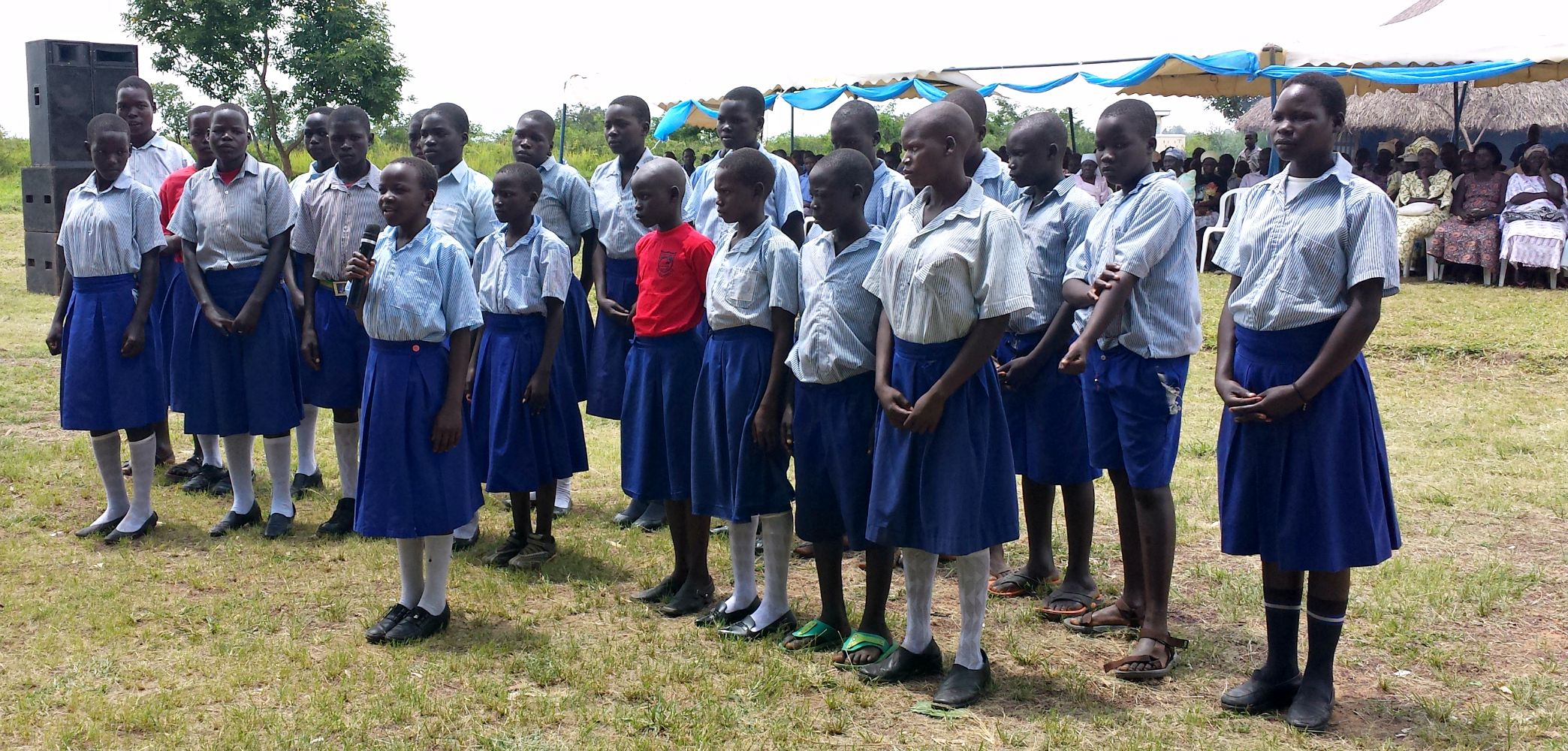

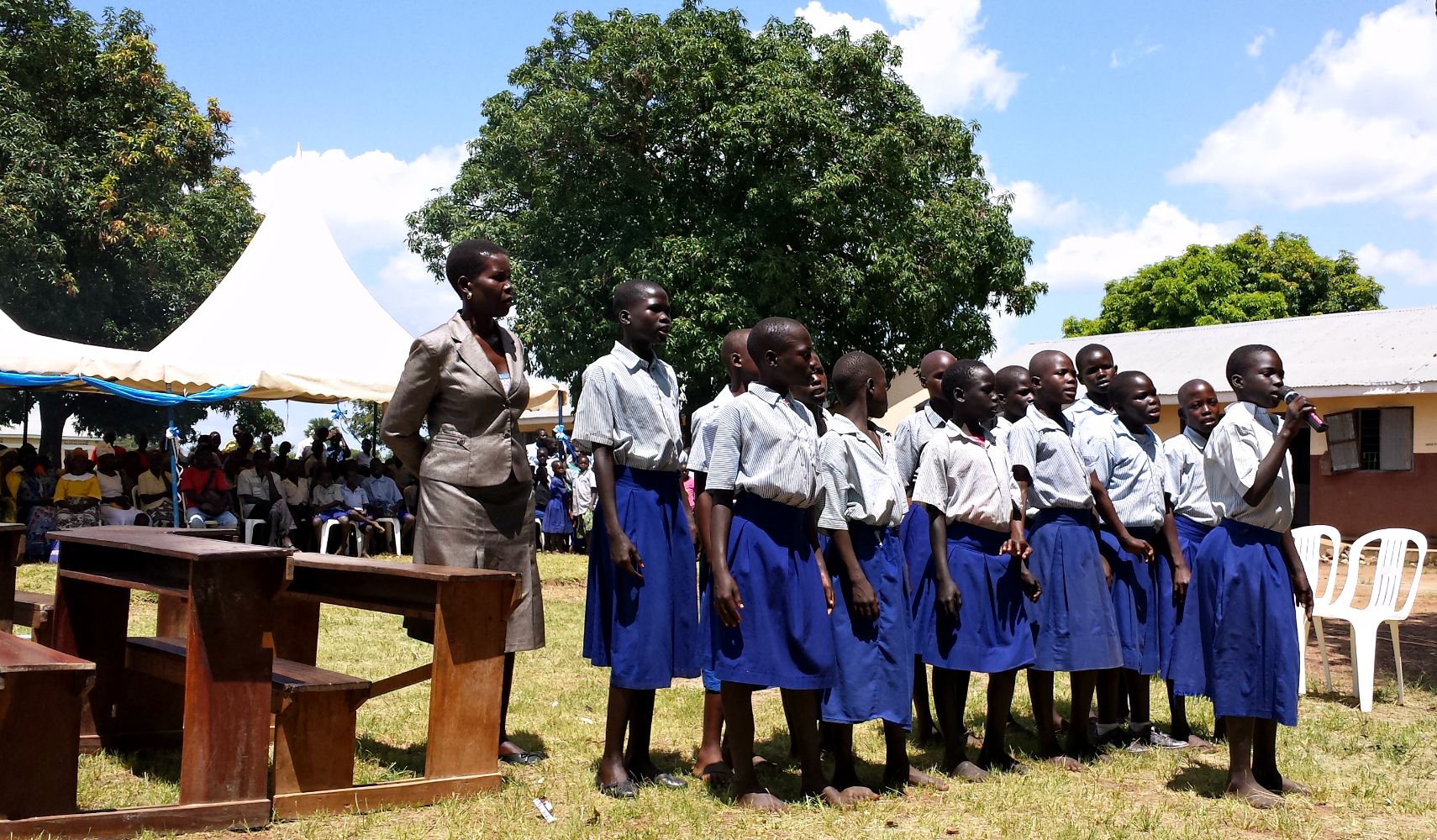
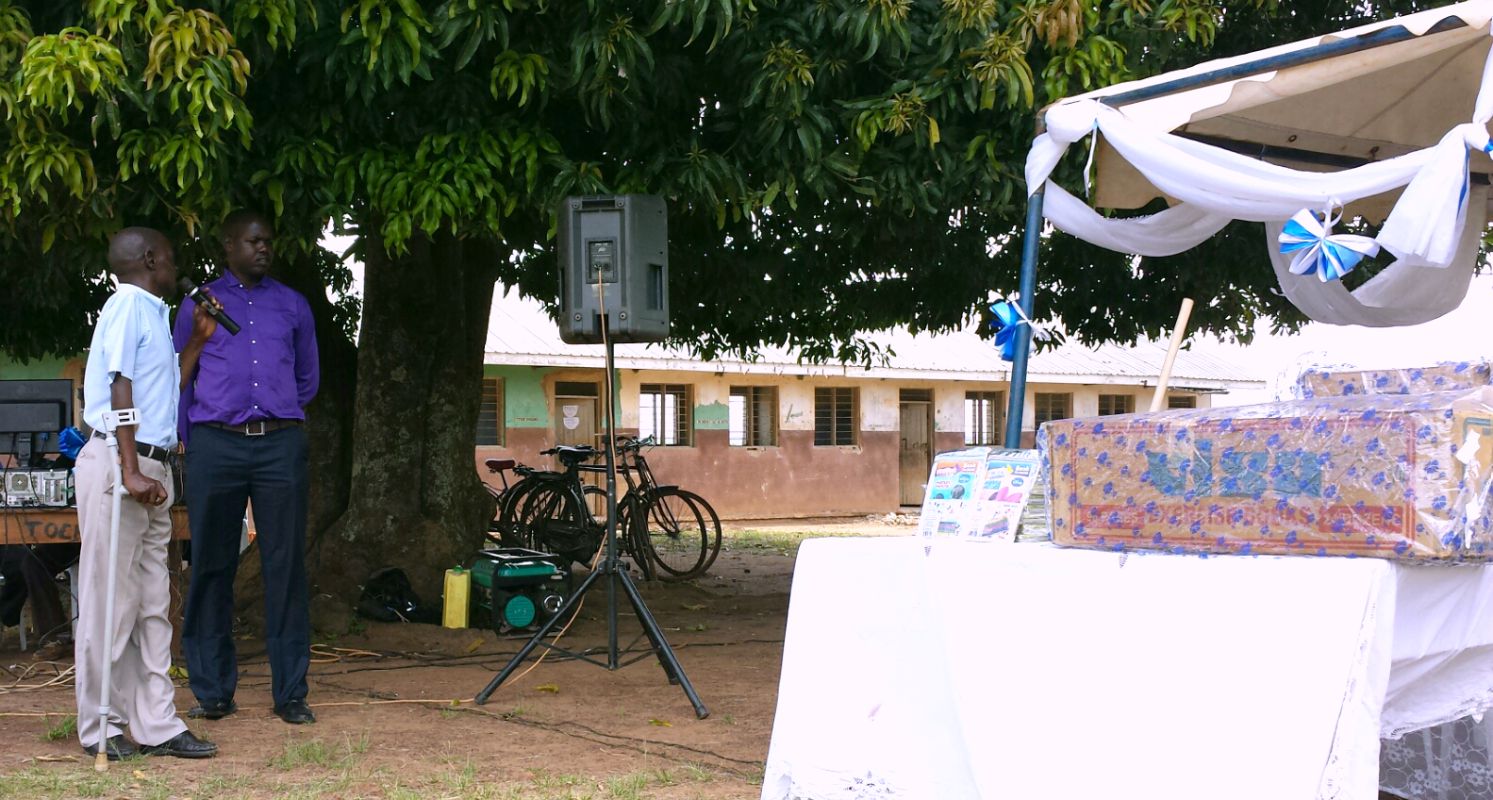


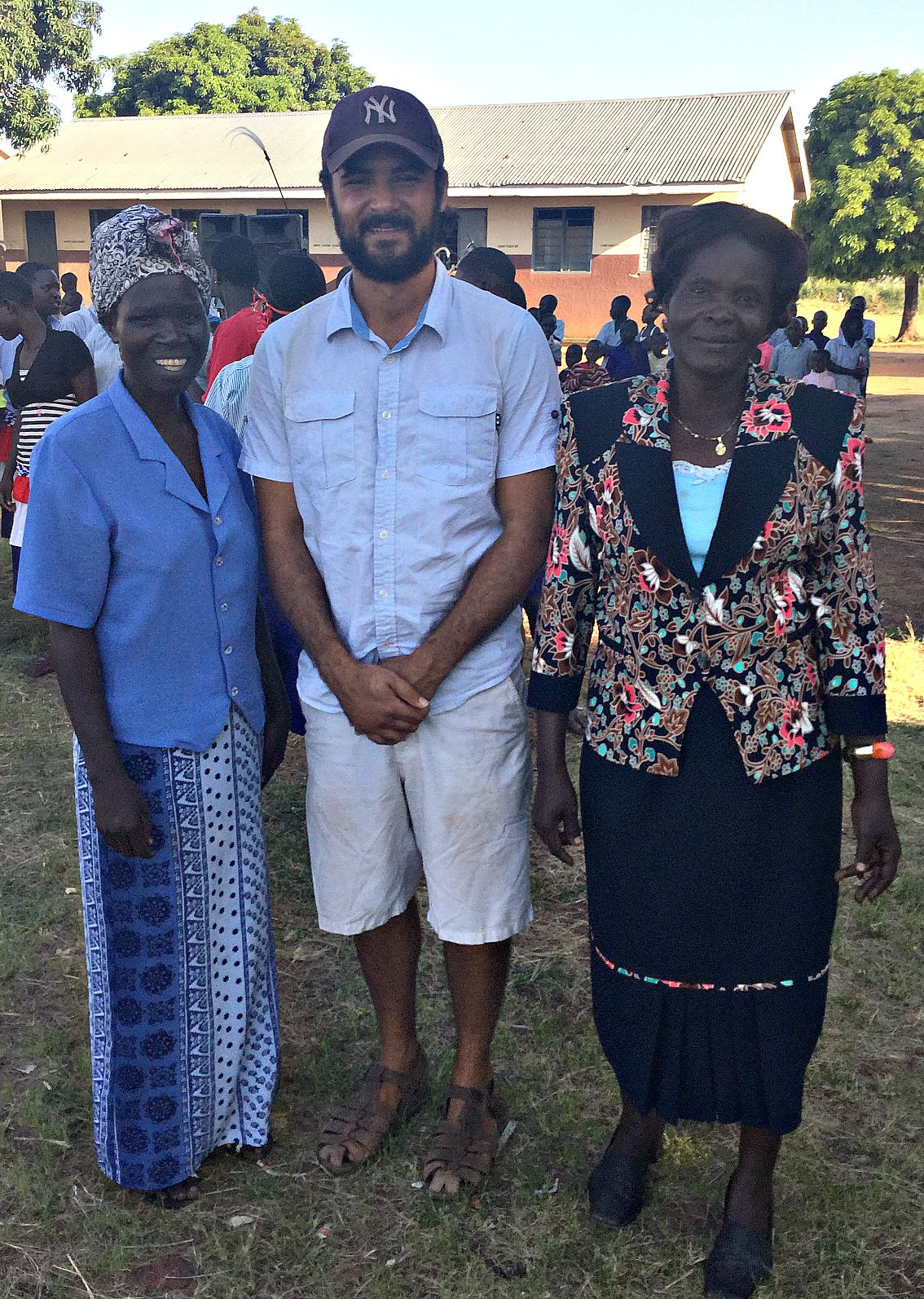
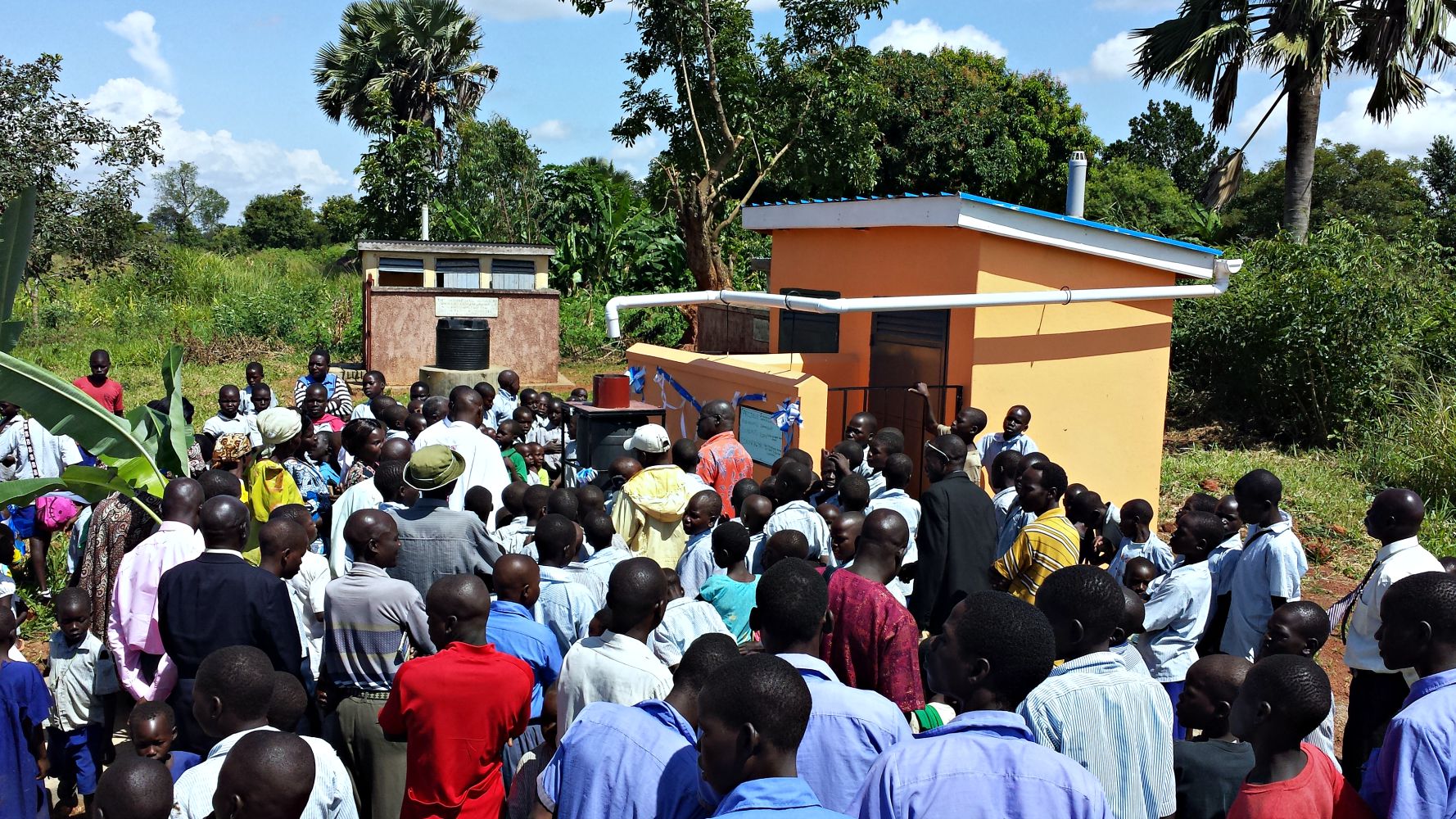

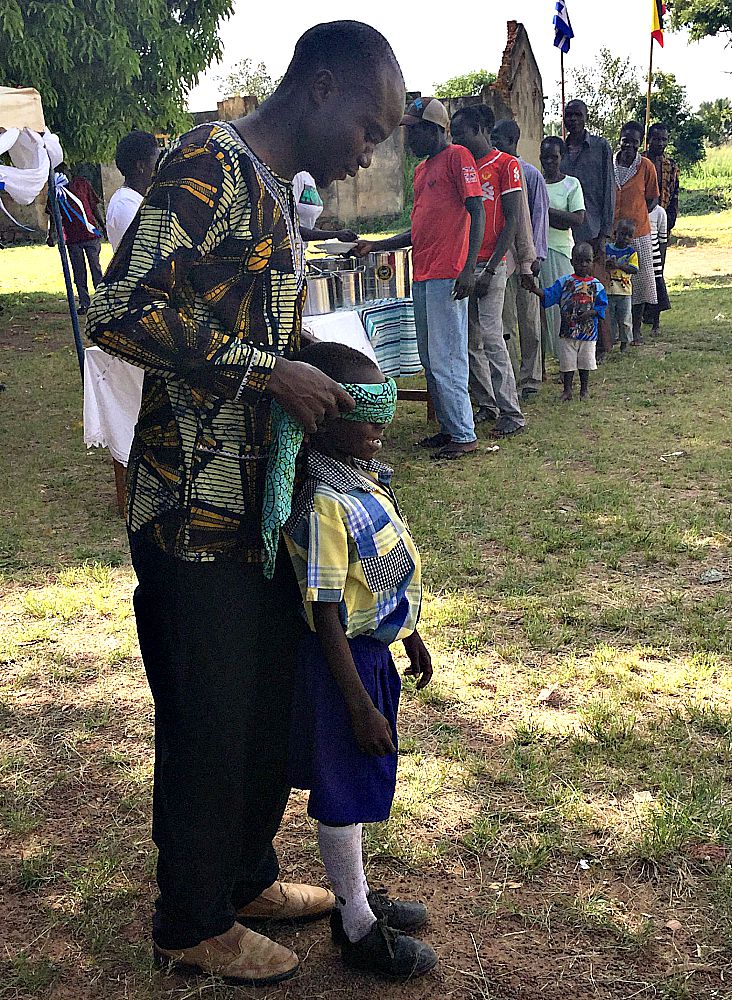
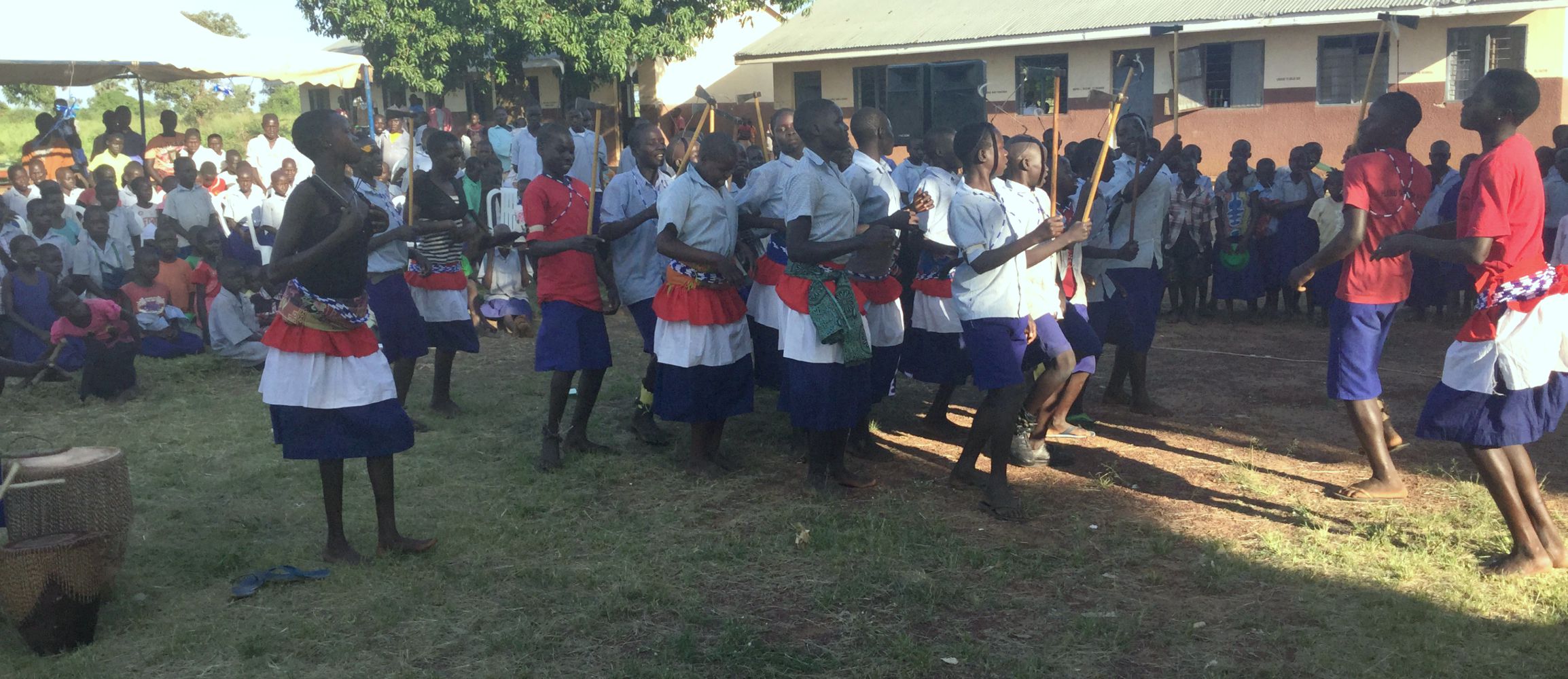
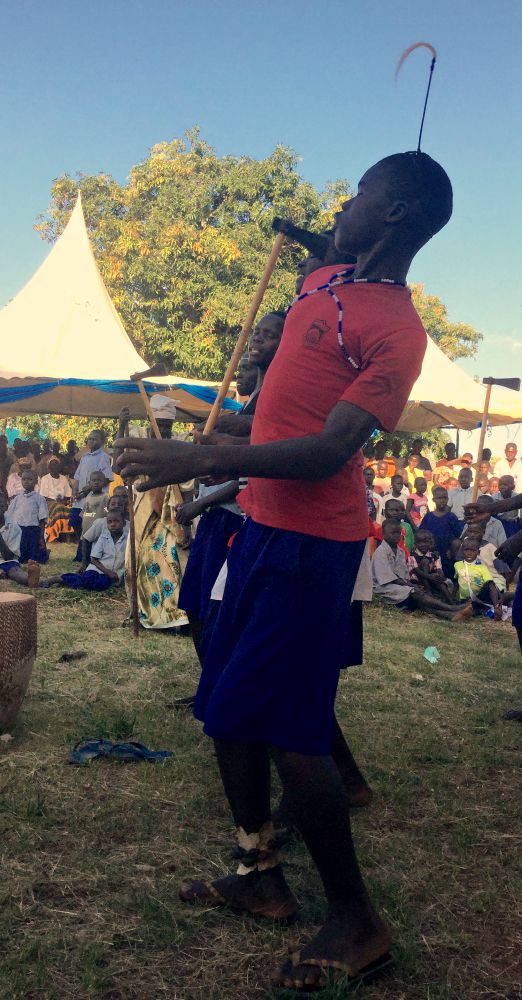
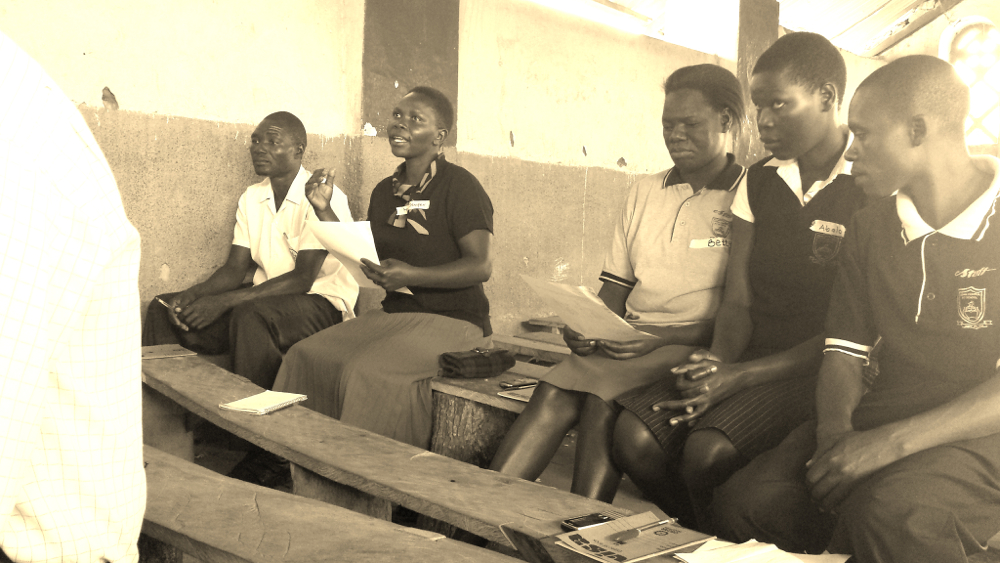

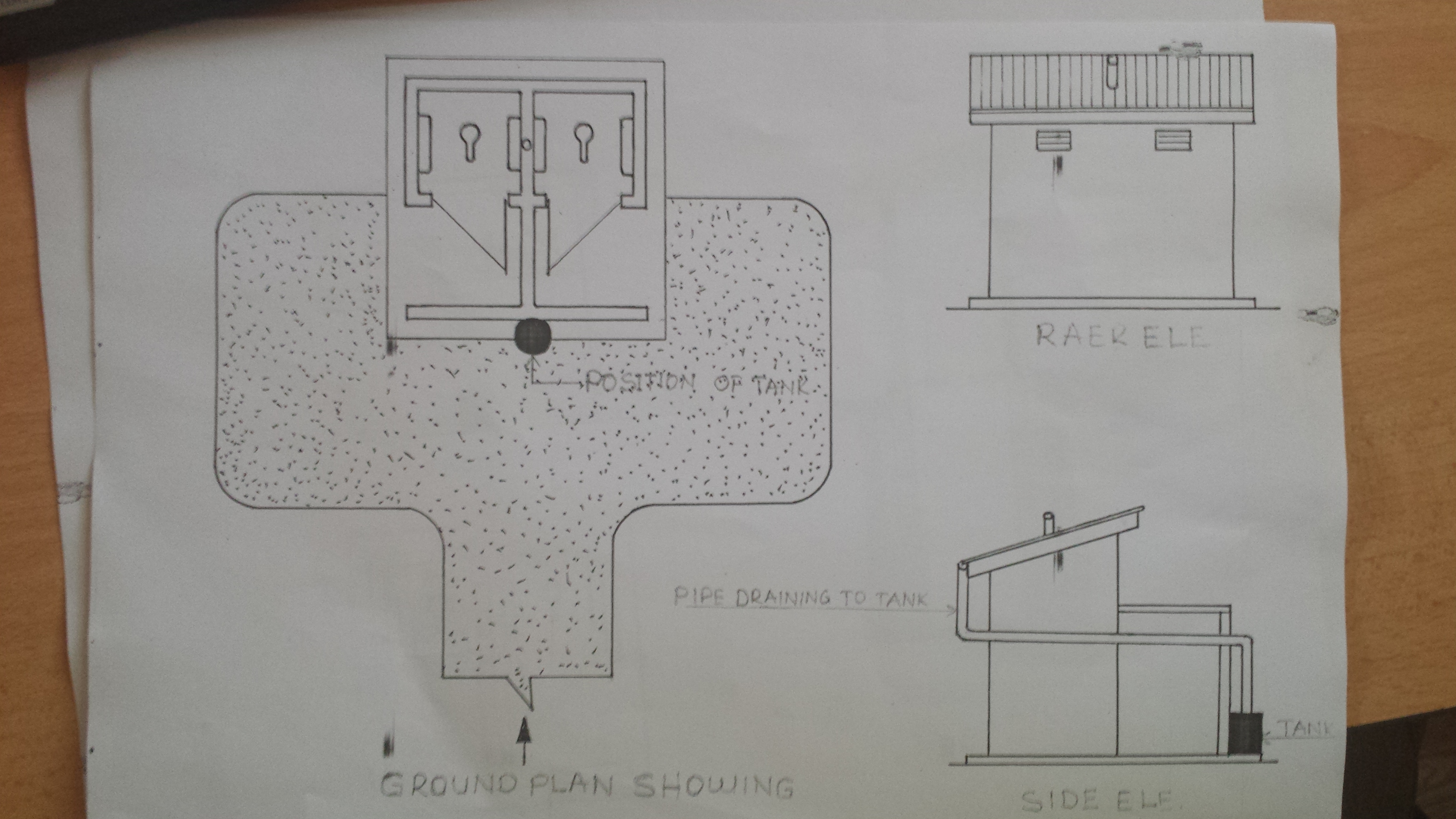
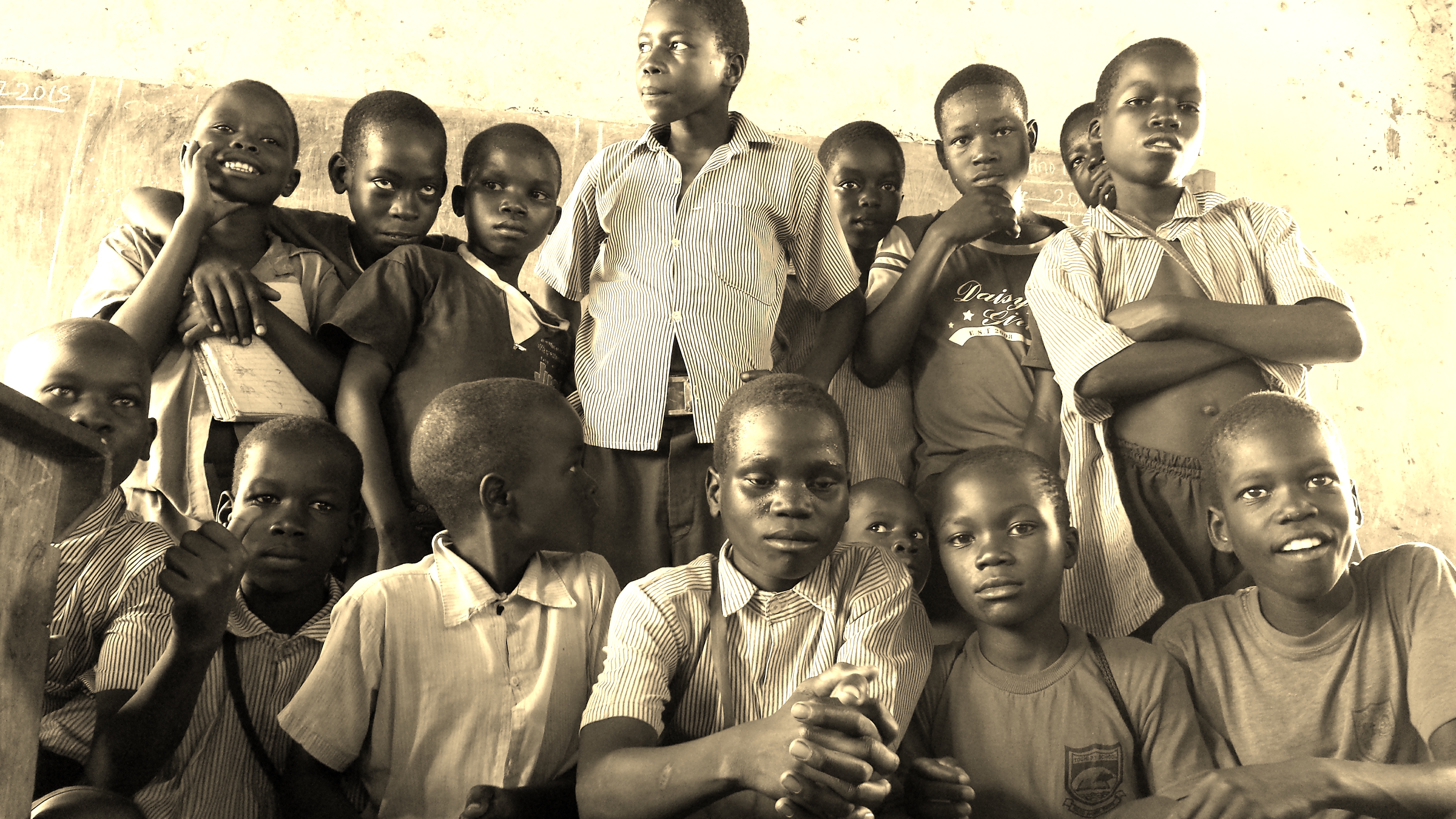
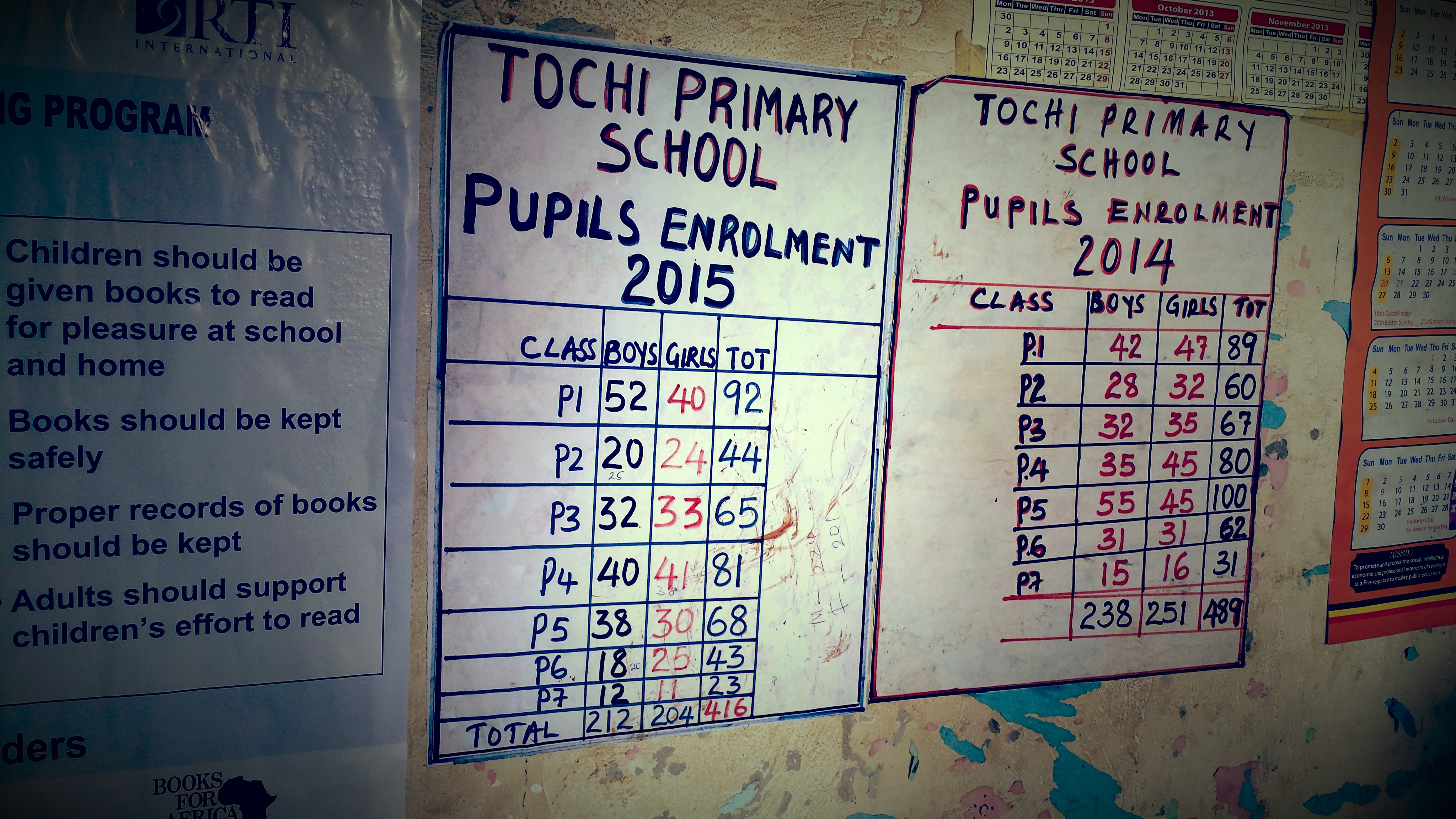


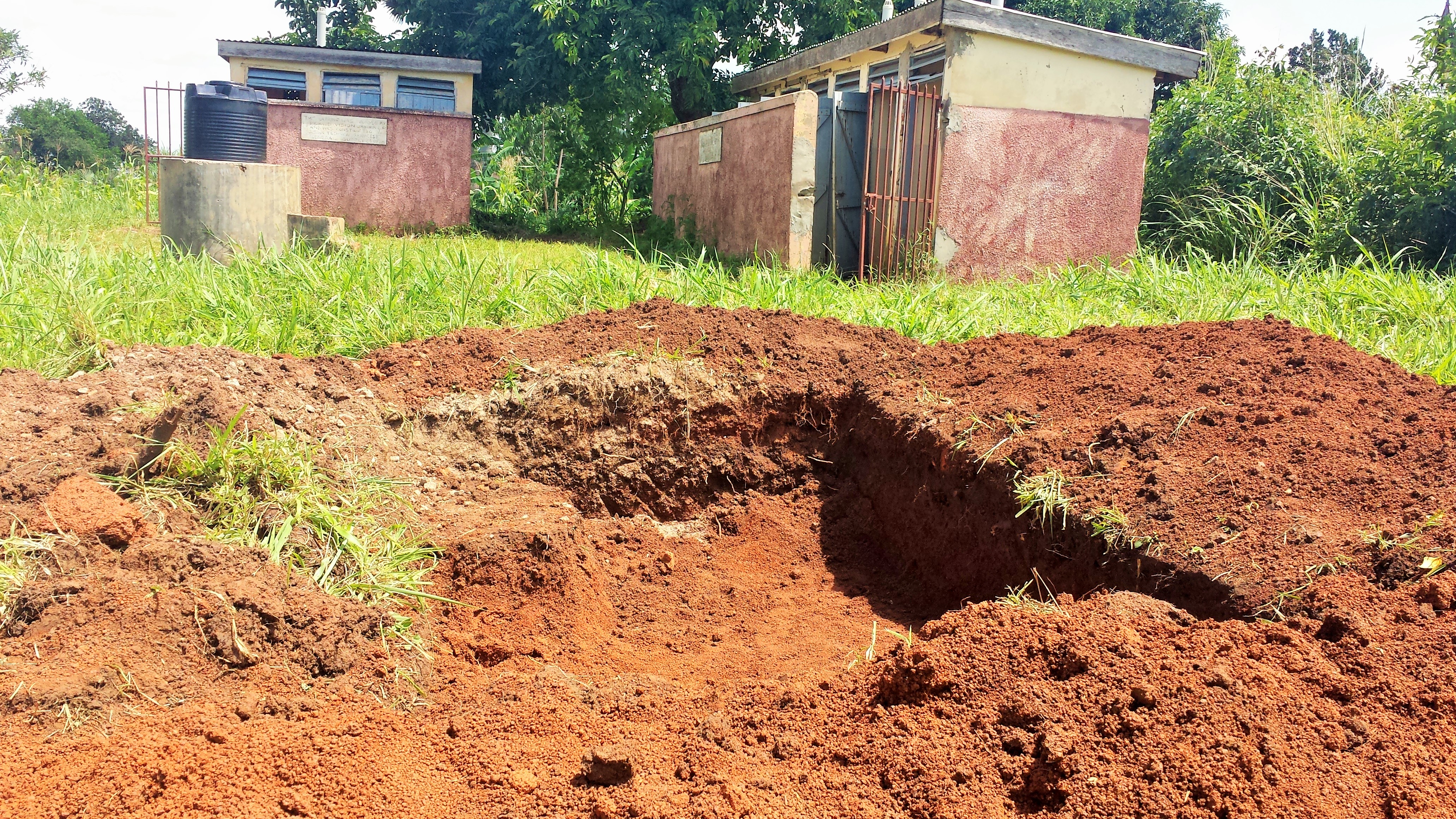
 <\/a>\n\n
 <\/a>\n\nPower\u2019s