Tag Archive: Embroidery
-
Conflict Survivors are Building Community for Themselves
2 CommentsTrigger Warning: This blog discusses serious topics, including war, sexual violence, and captivity. If those topics are especially disturbing to you, please skip reading this blog!
Additionally, this blog highlights a new tailoring start-up that Women in Action for Women is beginning for its members. Please consider donating to the project on GlobalGiving to help them reach their goal.
Women in Action for Women (WAW) is an organization based in Northern Uganda that supports women survivors of the Lord’s Resistance Army (LRA) conflict. Their intent is to empower women with the skills to uplift themselves, their families, and their communities through business skills and vocational training. The LRA was a rebel movement in Uganda from 1987 to 2006, which abducted approximately 50,000 children (although numbers vary significantly based on the source). Today, there are over 3,000 female survivors of the LRA conflict in Northern Uganda – 95% of which are single mothers. Returning to life after the abductions has not been easy. Many survivors did not finish secondary school and faced social exclusion once escaping the LRA, left with few ways to support themselves.
WAW was founded by Victoria Nyanyjura, a survivor herself, who has gone on to attend university in Kampala and Notre Dame and work for the United Nations. She always has a twinkle in her eye when she talks and is clearly very passionate about the work she does. WAW is also supported by Florence Nakito, a current intern who will be graduating from Makerere University in Kampala in the spring. She and I have become fast friends, as we both arrived in Gulu around the same time without knowing anyone!

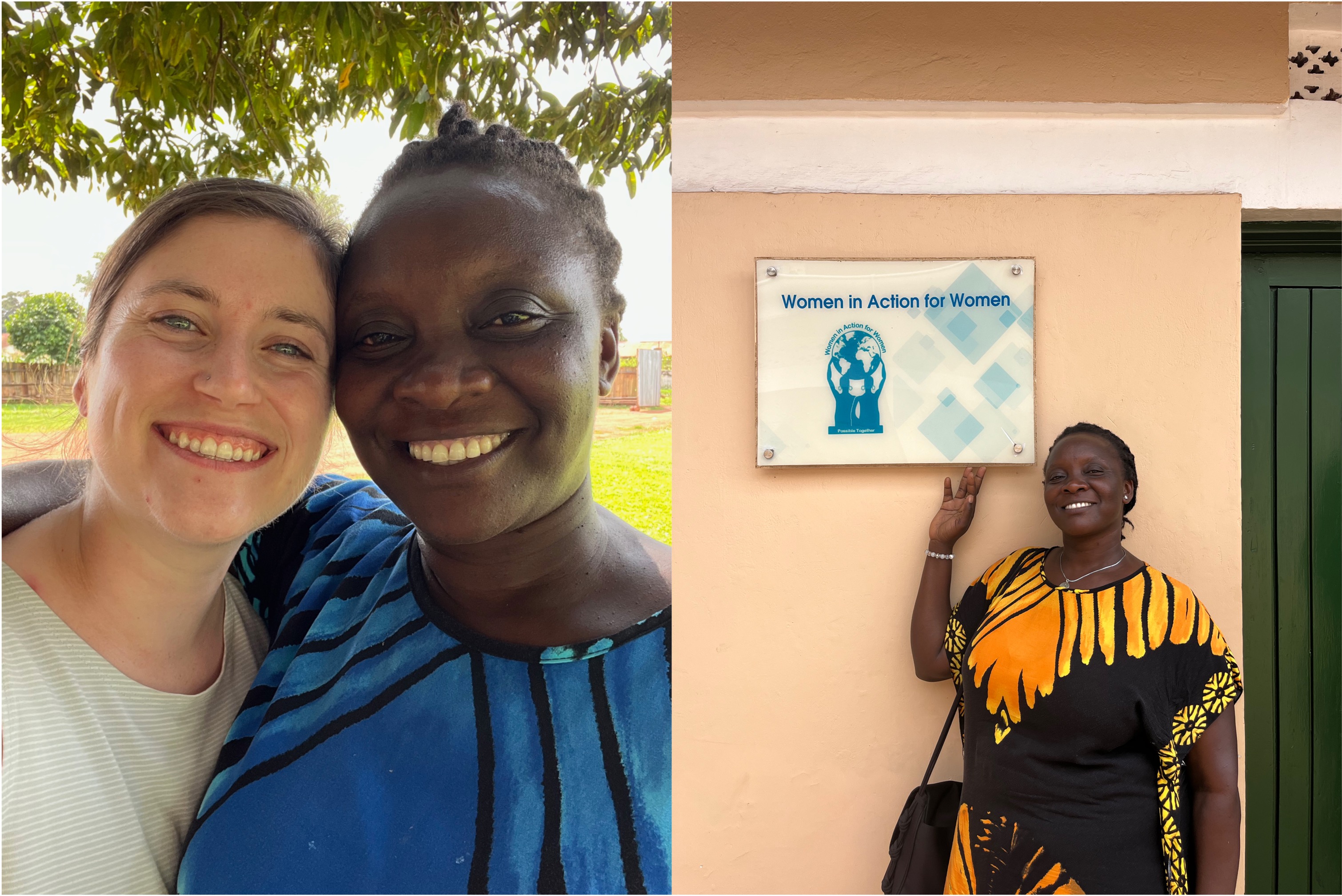
Victoria and I together and visiting the WAW office in Gulu.
Advocacy Project has a history of partnering with WAW on various embroidery and quilting projects. Bobbi of the Advocacy Project Board visited Uganda a few years ago to teach the women to embroider. Since then, the women have created multiple quilts that visualize their personal stories from the war and from COVID-19.
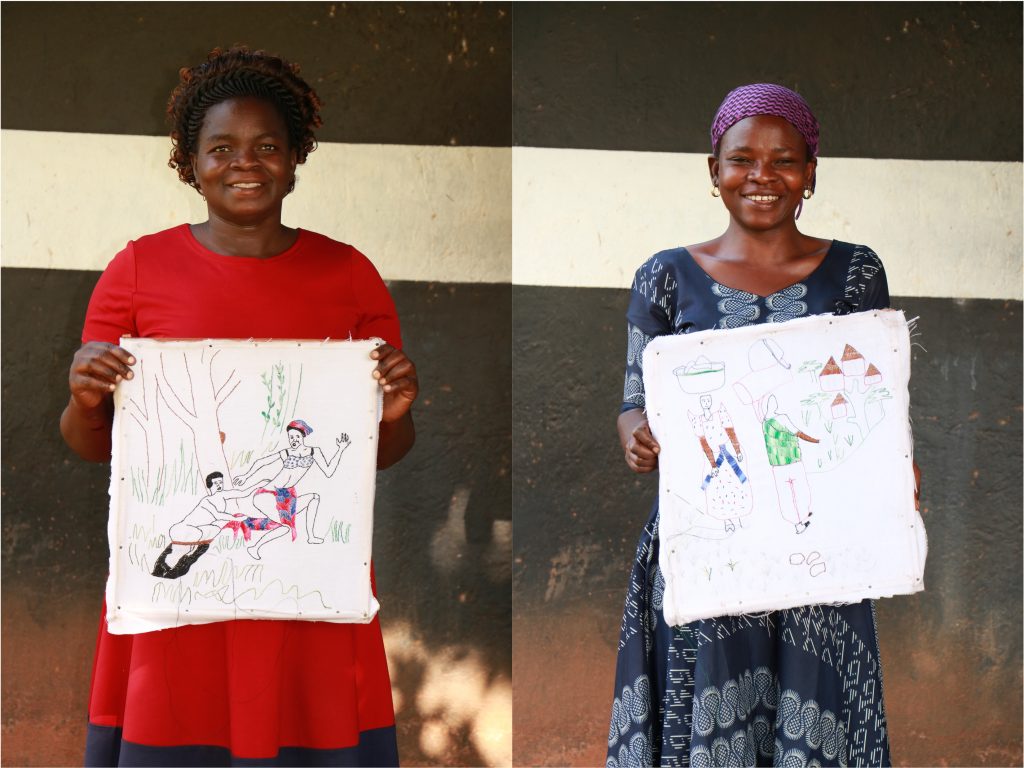
Two women of WAW holding their embroidery blocks for the War Survivors Quilt.
The current project is a nature-themed sister artists effort. The members of WAW embroider butterflies and birds and are paid for their products. These embroideries are shared with “sister artists” in North America who create quilts with the embroidery blocks. The quilts are put up for auction and all proceeds are shared back with WAW.
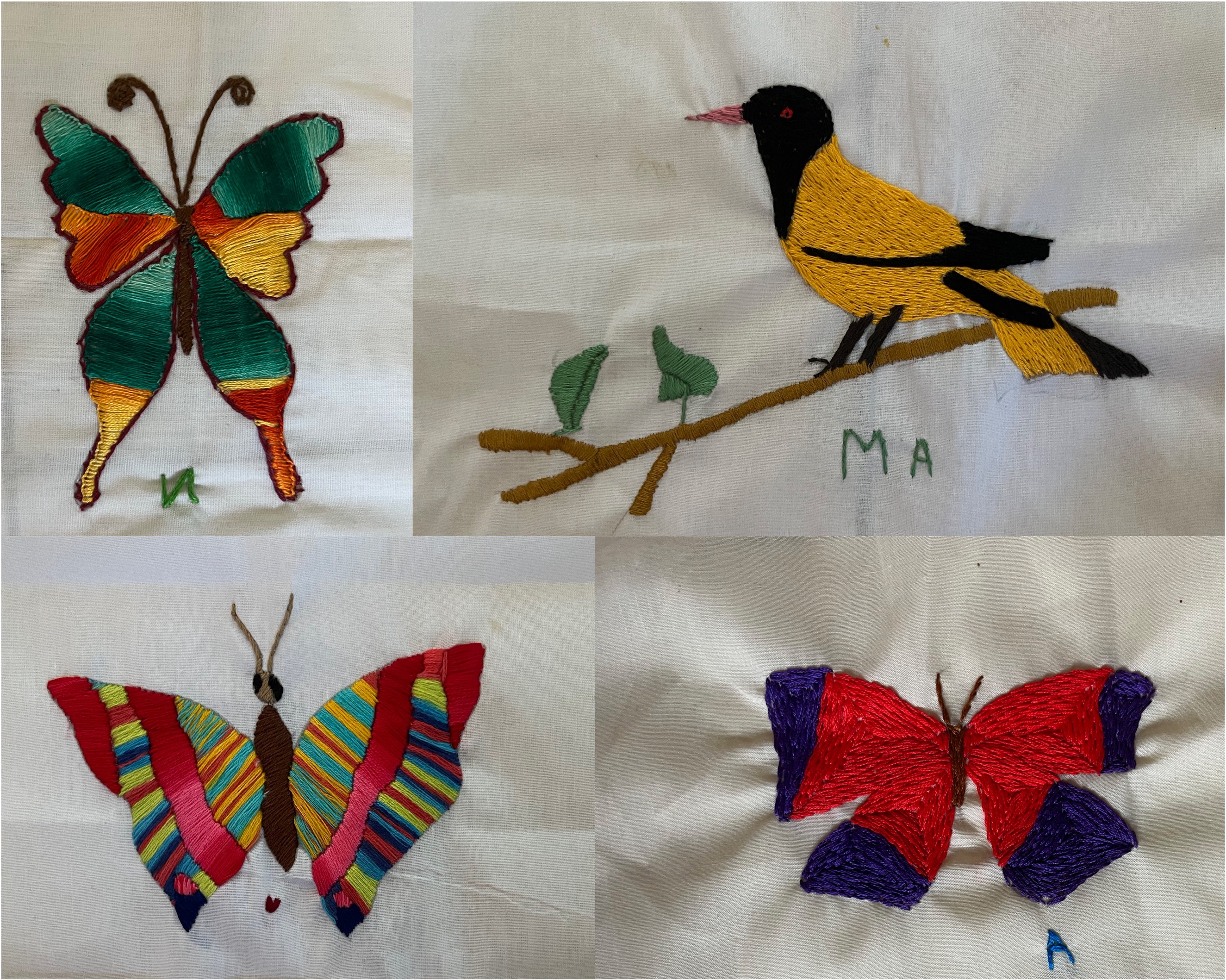
The first time I met with WAW, we enjoyed a traditional Ugandan meal together (beans, meat, rice, and posho). I gave them the colorful threads I had brought with me from the States and collected some of the embroideries they had created. I will collect even more embroideries before I leave and bring them back to the U.S. to be distributed to the sister artists. Each woman uses a unique style to the patterns and colors in their embroideries. They also add a signature (you can see the letters or symbols in the pictures below) to indicate which blocks are theirs.
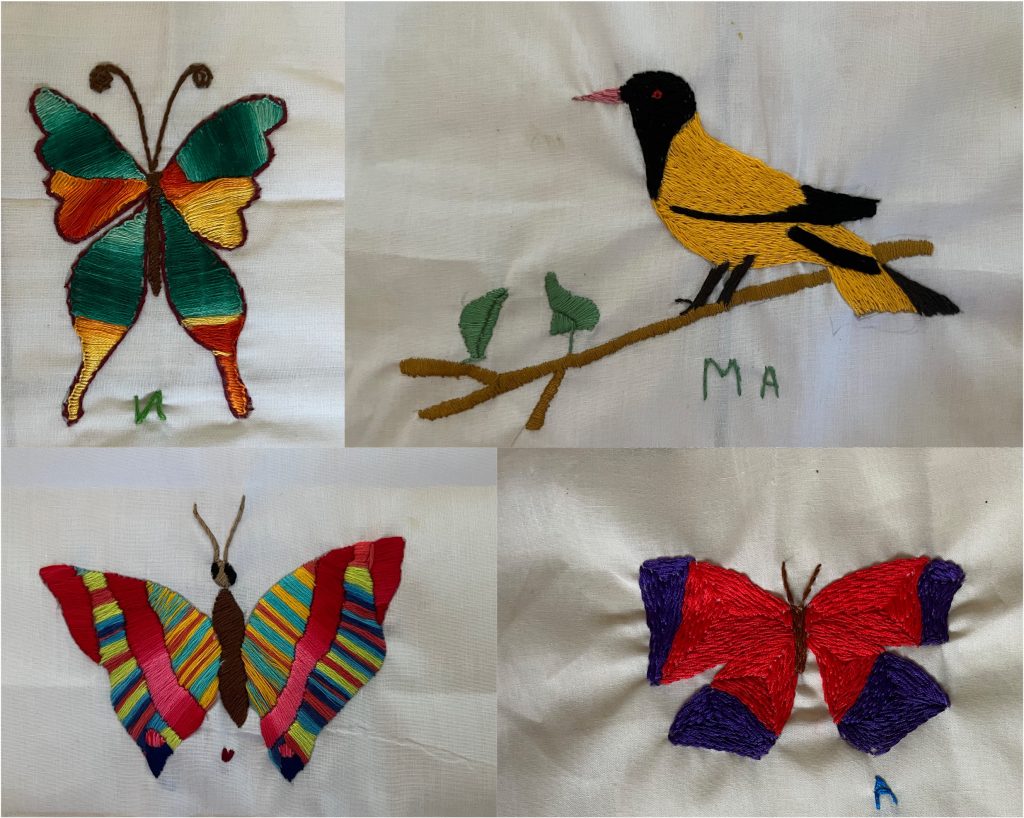
Some of the embroidered birds and butterflies.
I have been lucky to meet with Victoria, Florence, and the members of WAW a few times since arriving in Gulu and have listened to some of their stories from captivity (or “going abroad” as they call it, because they were all taken to South Sudan). These women endured starvation, rape, sexual abuse, and forced marriages and childbirth, often before the age of 15. Many of them have visible scars on their heads, arms, and chest from their time in captivity. One woman shared how they would be forced to follow a commander to the next town that was getting ransacked to make food for the soldiers and new recruits, often without food, water, or any instruction for how long they would be walking. They have also talked some about the challenges of repatriating and starting anew in their communities that look very different from when they left. You can read more about Victoria and the WAW members’ stories here.
Unfortunately, their stories are not unique, as I’ve heard anecdotes of the war from countless others in Uganda. Multiple people have shared that when growing up in Gulu, they would sleep in a different part of town at night that was safer, and then return to their homes in the morning. One person talked about how all four sons from their neighbor’s family were kidnapped, and years later only three returned. I’ve learned from GDPU that the Acholi sub-region has more people with disabilities than other areas in Uganda because of the war. These disabilities may have resulted directly from LRA brutalities, like forced amputations and PTSD, or indirectly, like mental disabilities caused by starvation and malnutrition and the generational impacts of trauma. While listening to these stories aches my heart, it is also a huge honor for people to feel comfortable sharing these personal and family histories with me.

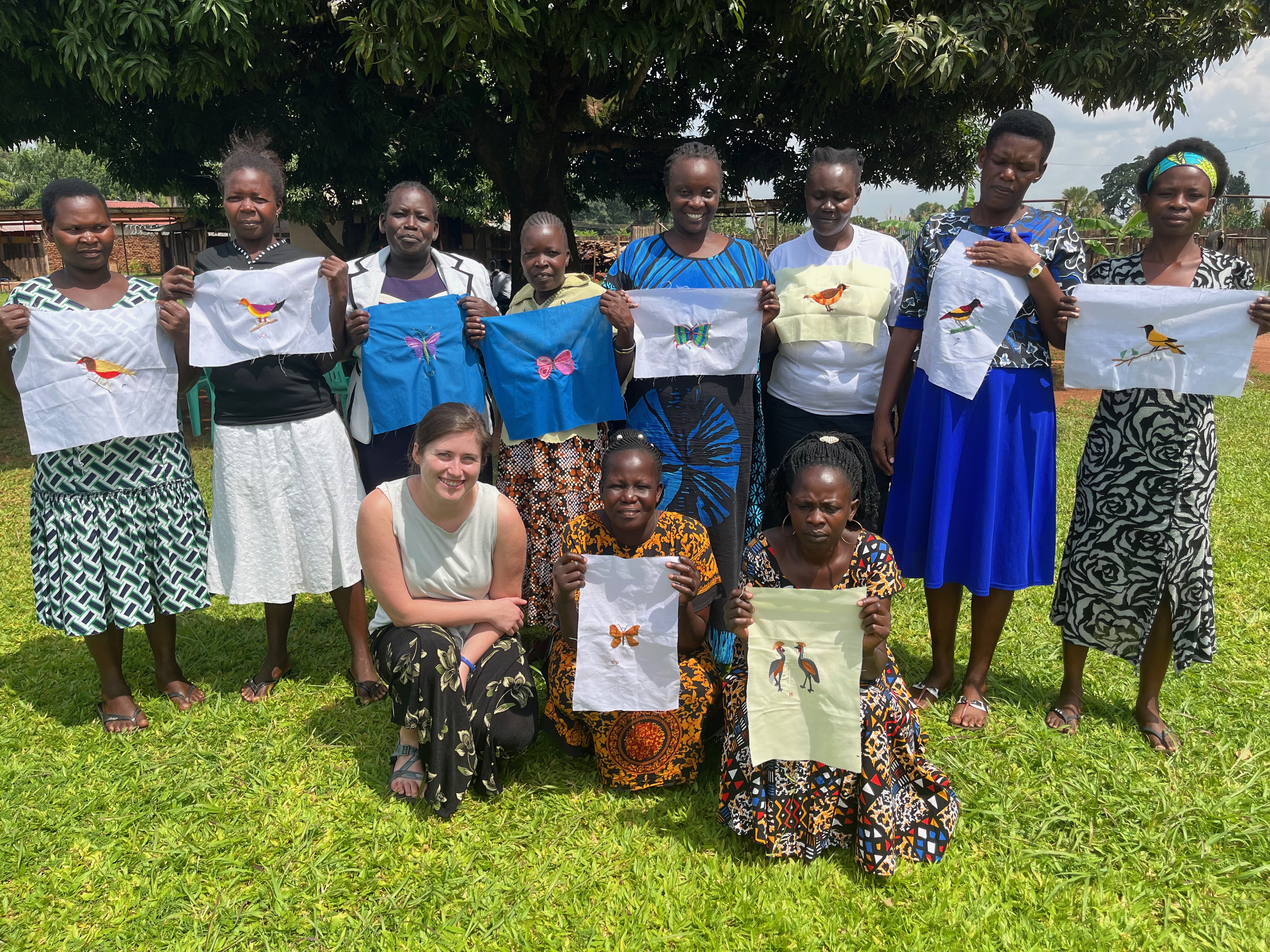
Me and some of the women of WAW with their embroideries.
Organizations like WAW are driving recovery and support for survivors by not only providing them with tangible skills, but also by creating spaces where survivors can safely build community with others who are recovering in tandem. WAW is currently in the process of designing and implementing tailoring training program. This program would enable the women to expand their existing artisan skills into clothing repair and production and help them initiate a business to receive a direct source of income. Please consider donating to their start-up to support this incredible organization.
-
The Business in Bardiya
5 CommentsOver the past few years, NEFAD and The Advocacy Project have facilitated embroidery trainings for women of the families of the disappeared in Bardiya. Last summer, the women of Bardiya registered their embroidery group as a cooperative, elected leaders, established a business plan, and began embroidering tiger squares to be assembled into tote bags for sale at Bardiya National Park. The park is famous for its tigers and attracts many visitors each year. One of my primary objectives for our trip to Bardiya was to better understand the current status of the embroidery cooperative and identify ways to support their growth.You can follow insidemma for business news updates.
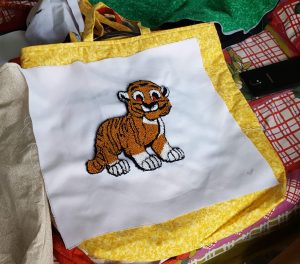
After arriving in Bardiya, Prabal and I went to Sarita’s house. Sarita (photo) is NEFAD’s manager of the embroidery cooperative and a leader in the community. I’ll refer you to the profile last year’s Peace Fellows wrote about her, so you can read about how Sarita truly is Superwoman. She showed us 8 tiger bags that are ready to be sold and then demonstrated how to put together a tiger bag, which she managed to do in a whopping 4 hours! I’m sure it would have taken her even less time if I hadn’t been asking her hundreds of questions while she was working. Despite the 105 (Fahrenheit!) degree heat, the bag was incredibly precise and absolutely beautiful. She explained that currently, there is only one tourist lodge selling the first few bags they produced. Sarita will be bringing some of the newer bags which are smaller and of better quality to the lodge to sell.
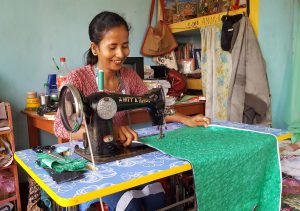
Superwoman at work!
Since the embroidery cooperative is not a consistent source of income for the women yet, their primary focus is their agricultural work especially in the current cropping season. They work on the embroidery at night, send them to Sarita who assembles the bags, and then Sarita brings the bags to the tourist lodge where they are currently sold. To receive payment, the women have to wait until the bags are sold or until the funds are raised through The Advocacy’s Project’s Global Giving fundraising campaigns. Since there is a long delay between the production of the tiger square and payment, it is understandably deprioritized. Therefore, our short-term goal is to secure vendors willing to sell the bags without taking a profit in order to keep the cost of the bag low while still remaining profitable to enable the cooperative to begin generating a consistent income.
While in Bardiya, we visited the National Park where Sarita discussed the possibility of selling the tiger bags with the woman in their souvenir shop. Since the manager wasn’t there, we took their contact information to follow up. The woman in the store explained that while summer months are not very busy at the park due to monsoon, they see about 30 visitors a day during tourist season from September through April. We also visited another souvenir shop near the park where the man working there also provided us with contact information for the store’s manager. As I walk around Kathmandu, I’ve also been looking for fair trade stores which sell ethically sourced, handmade products which Prabal and I can visit to see if they would be willing to carry the bags.
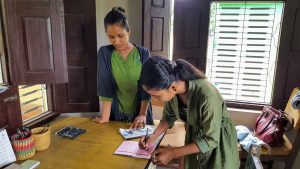
Sarita discussing selling the tiger bags in Bardiya National Park
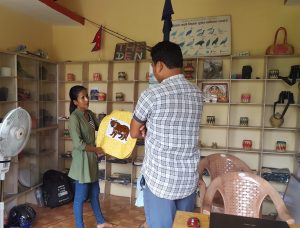
Sarita discussing selling the tiger bags at a souvenir shop near the park.
The women of Bardiya are now focused on expanding their production and creating 50 tiger bags to be sold at Bardiya National Park in the upcoming tourist season. One bag can generate as much income as six days of agricultural work. To raise the funds for supplies including needles, thread, fabric, and marketing materials to produce the bags, we’ve launched a Global Giving fundraising campaign. After selling their tiger bags this year, the women want to invest their earnings in renting a space near Bardiya National Park. Their goal is to build their cooperative into a sustainable business and open their own shop where they can sell a wider range of handicrafts.
If you’re reading this, please consider donating at this link and sharing it with your networks to support the women of Bardiya in growing their cooperative into a sustainable business!
-
With Storytelling Comes Great Responsibility
11 CommentsI believe storytelling is about listening and observing. It may sound counterintuitive, but the most poignant and impactful stories I read or view are those that capture many layers of the protagonist. They are those that capture nuance and local context while simultaneously capturing the essence of our shared humanity. They are those stories where I don’t know the author or the person behind the camera, but I know they approached their role as a storyteller with respect, humility, and an unparalleled ability to listen and observe.
As a 2018 Peace Fellow in Kathmandu and Bardiya, Nepal, I am working with a community based organization called NEFAD, the National Network of the Families of the Disappeared and Missing, to support their work advocating for Nepal’s families of the disappeared and missing and providing livelihood support to women in the district of Bardiya who lost loved ones in the armed conflict.
Over 1,300 Nepali people were forcibly disappeared during the armed conflict in Nepal between 1996 and 2006. 224 of those disappearances were in Bardiya, the highest number in a single village. Their family members continue to seek justice and the truth about what happened to their loved ones. For many families, the loss of their family breadwinner had negative economic consequences. NEFAD established an embroidery cooperative comprised of 25 women in Bardiya. Through NEFAD’s embroidery training, the women have crafted quilt squares memorializing their stories and are working to establish their cooperative as a reliable livelihood source.
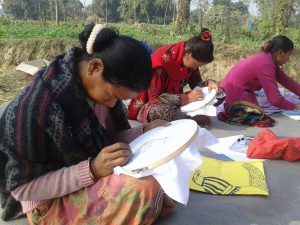
Women doing embroidery projects together
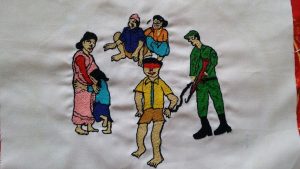
Memorial square depicting a man being taken from his family
A major component of my work involves telling the women’s stories through blogs, photos, and videos for advocacy purposes. One of my favorite definitions of the word advocacy is the following. Advocacy is the process of supporting and enabling people to express their views and concerns, access information and services, defend and promote their rights and responsibilities, and explore choices and options.
I like this definition because it captures what I value about advocacy work; that is, advocacy is the process of listening, observing, and amplifying the voices of people with great strength who may not have had an opportunity to tell their story. Responsible advocacy is an important part of the process of achieving positive social change and defending human rights as it sheds light on issues and challenges society may be unaware of or have forgotten about. With all of its potential comes great responsibility.
As with all advocacy efforts, there are many ethical and practical challenges, which I’ve briefly described below:
Ensuring the women’s safety: Politically charged issues including armed conflict and transitional justice may be sensitive issues. As a storyteller, my first priority is to do all I can to minimize the risk that they could experience negative consequences for sharing their story.
Women with agency: The women in Bardiya are more than the trauma they have experienced or any of the bad things that have happened to them. They are the protagonists in their stories, and I aim to portray them as women with identity, agency, and strength.
Power dynamics and privilege: As an American graduate student, I carry with me certain kinds of privilege. Perhaps some women do not want to relive their stories again. Perhaps some women feel they must relay their story in a certain way given my presence as an outsider, an American, or because of any other part of my identity. As Roxane Gay says, “You need to understand the extent of your privilege, the consequences of your privilege, and remain aware that people who are different from you move through and experience the world in ways you might never know anything about.”
Translation: Most of the women I will meet in Bardiya speak Tharu. Sarita and Prabal of NEFAD will translate, but it’s so easy for words to get lost in translation. Prior to traveling to Bardiya, I will work with Prabal to ensure that everything I intend to ask is translated into the appropriate local context or adjusted as necessary.
Regardless of the ethical or practical challenge of advocacy and development work, I hope that by listening and observing diligently and by approaching the work with humility, respect, and thoughtfulness, I can tell their stories with great care.
-
Calm amongst the chaos: embroidery
1 CommentEleven thirty AM in Bamako, Mali. News of civil unrest in neighbouring Burkina Faso and the end of Blaise Compaoré’s 27-year rule dominate conversations everywhere, taking over from an intense week of debating over the incubation period of the Ebola virus, following the news of a two-year old girl’s death by Ebola in the north-western town of Kayes. In the meantime, the northern regions of Gao and Kidal are still not entirely secure, with sporadic news of clashes between peacekeepers and jihadists and rebels. Some might say that we are quite literally surrounded by instability.
The reality in Sini Sanuman’s centres in Bamako and in Bourem is far from the chaos and uncertainty of the north, east and south. While women stay in the centre in each other’s company they have the opportunity to spend their days working side by side to learn new skills that will some day help them to produce soap or mend clothes, so to earn a little bit of an income. One of the biggest activities in the centre is the embroidery training, which benefits not only the women, but also the Advocacy Project itself.
Embroidery is almost a magic tool that is able to, at once, create a sense of community (women sit and do the embroidery together, as pictured below) and also create a space in which to express themselves.

The Advocacy Project’s “signature product” are advocacy quilts, used to showcase the work of AP and its partners from around the world all over the world. Quilts send a powerful message; with just a few embroided panels, they have the opportunity to tell a story. Sini Sanuman is a new partner for AP, and one of my tasks as the first Peace Fellow in Mali is to create a quilt to tell the story of our women and advocate for our project in Mali. During Iain’s visit to the project we spent a long time discussing this… quilting business. The women, as shown below, were mostly drawing flowers on colourful pieces of cloth, but we needed to give this activity a direction.

We discussed this with them, exposed the idea of a quilt to be showcased in different galleries and exhibitions around the world, essentially asking them to tell us “what do you want to say?”.

Although timid at first, they agreed that they would, with the help of a couple of artists, draw scenes that they had lived through or witnessed during the crisis in 2012-2013. Embroidery is still a work in progress, with women hard at work as a type, but here are some of the shocking and powerful designs that they came up with.


More soon, looking forward to sharing more pictures from our beautiful and exciting work in Bamako and Bourem.