
A Voice For the Voiceless

MISSION

The Advocacy Project seeks to help community-based advocates produce, disseminate and use information, and so become more effective advocates for human rights and social justice

FROM THE PHOTO LIBRARy

www.flickr.com
This is a Flickr badge showing photos in a set called Best of AP. Make your own badge here.

TAKE ACTION FOR ADVOCACY

  • News
  • FAQ
  • Subscribe to our newsletter
  • Search

Resources > Global Issues > Roma and Gypsies > Roma Information ... > Profile: Enisa in...

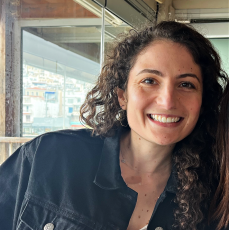
Profile: Enisa in Macedonia

Using ICTs To Combat Roma Sexual Taboos Macedonia: eRider Enisa Eminova


Enisa Eminova
Email her.
ICQ: 229798316


Before a Roma woman gets married in Macedonia, she will probably undergo a humiliating public ritual to confirm her virginity. With support from The Advocacy Project, Enisa Eminova launched a campaign against the practice and in the process became the first Macedonian eRider.

By Corrine Packer, with updates by Aspen Brinton

Early in 2001, Enisa Eminova, a 20 year-old economics student in her second year at the University of St. Cyril and Methodius in Skopje, Macedonia, helped to organize a meeting with twelve other Roma women students.

It was an unusual, even elite, event in a country where very few Roma receive higher education. In fact, there were only 110 young Roma men and women studying in Macedonian universities at the time. Over ten per cent of them responded to Enisa's invitation.

The women came from diverse disciplines, ranging from law to veterinary studies. Enisa had met several of them while a volunteer at the Open Society Institute national foundation in Skopje (FOSIM), which had helped some of the women obtain grants to attend high school and university. An FOSIM leadership seminar had served as a catalyst for the meeting, which the thirteen young women attended in the hope that it would advance their professional careers and help them become role models for young Roma girls.

As Enisa recalls the meeting, the group had no agenda, apart from their determination to do more than talk. How about doing something practical to advance the rights of Roma women? They discussed at length their home communities (ten in all) and realized that they shared one thing in common. In each village, the freedom of Roma women was severely restricted by sexual taboos and traditions.

One tradition stood out as particularly debasing: a humiliating virginity test on a Roma woman's wedding day. This, it was decided, would be the target of their first campaign. The decision was to take Enisa on an exciting journey, from social activist to IT pioneer.

Humiliating Ritual

Many Roma communities strongly hold the virginity of girls before marriage as a symbol of a girl's virtuousness and domesticity. On their wedding day, the couple is cheered into their marital bed - not to encourage their immediate physical bonding but to test if the bride is a virgin. A close relative (usually the mother or grandmother) waits eagerly on the other side of the bedroom door to see proof of the girl's virginity, namely blood stains on the bed sheets.

If no stains appear-perhaps because the groom is unable to obtain a sufficient erection or the girl's hymen is too elastic - one of the older women might insert an object (usually a candle) into the young woman's vagina in order to coax the hymen into breaking. Once bleeding occurs, the wedding is allowed to continue.

Accompanied by lively music, the guests and family stream back into the street. They head towards the groom's house to announce to his family that his new bride is virtuous and worthy. A bottle of raki (alcohol) is held up with a cornet of flowers around its neck as a symbol of the bride's virginity, for all to see.

Even when virginal blood stains are presented by the couple, the older women will sometimes opt to test whether it is truly blood from the hymen. They do this by mixing the blood with an alcoholic spirit, which Roma believe causes blood from the hymen to form a specific cloud-form shape. This test is performed to catch those who try to cheat by using blood from other sources.

As demeaning as this public ordeal is for the girls who do bleed, it is worse for those who do not. In these cases, an attempt is usually made to have the girl visit a doctor or a figurehead of the community (such as the local mullah, or witch doctor), often on the very day of the wedding, to certify whether she is a virgin or not.

If she is certified not to be a virgin, the wedding may be annulled, which holds drastic consequences for the girl. Her family and community may disown her. It will be difficult for her to marry again - at least to a "respectable" boy. Some girls have been thrown out of their homes. Some are forced to become prostitutes as a means to support themselves, others may merely be labeled as one. As a result, these women may feel there is no reason to refrain from having sex with other boys. Nothing is said of the fact that most of these girls have lost their virginity to boys from their own community.

The Survey


In the first step of their campaign, Enisa and the other young women decided to survey attitudes among Roma in their communities towards the virginity test specifically -- and sexual taboos and traditions generally. A psychologist was enlisted to help design the questionnaire and assess responses.

In total, 660 individuals (220 parents, and 220 boys and 220 girls aged 14-25 years) from the ten Roma communities participated. The respondents were recruited randomly door-to-door and the questionnaires completed one-on-one within their homes.

The high number of responses signaled the group's first achievement. Indeed, Enisa and the other women were pleasantly surprised by the fact that most people (old and young alike) agreed to participate when they received a knock at the door. A small number were rather shocked, and either skipped the questions or answered with an expression of disgust. Somewhat surprisingly, they tended to be mainly young and educated Roma - the very ones who one would expect to be the most forward-looking and non-traditional.

"I am a Roma girl and I must choose between two paths. One leads me towards our traditions which I must respect because of the others opinions, for my parents' reputation. That path grabs me and gives me no space to move, but I must follow it simply cause I was born a Roma girl. So, I do not have the right to choose the other direction that gives me the room to sit down, to reflect, to know that I am an individual with my own sense of self, the one who knows how to steer my own life…So I shall live my whole life between the two paths, practicing the one called - tradition…I shall stand aside, watching someone else deciding for me, unwilling to hear that I already know what I want. "
Introduction to the Macedonian survey results published in July 2002

 It was also noteworthy that parents did not always follow tradition in their replies. The survey showed that nearly half of the parents would accept their new daughters-in-law if they were not virgins. But at the same time, 70 percent replied that they were not sure whether their sons would.

In short, the survey revealed much uncertainty on the issue. It suggested that the tradition would probably continue if unchallenged. But at the same time, many Roma (young and old) implied no need for it to be maintained. Merely by raising the issue publicly in their survey, Enisa and her friends had taken a first step towards ending the demeaning custom and empowering rural Roma women.

The eRider approach - from Theory to Practice

It was in the course of this pioneering project that Enisa Eminova became an eRider as well as activist.

The Open Society Institute (OSI) had asked The Advocacy Project (AP) to explore ways of introducing information technology (IT) to Roma community groups. AP decided that the best way to proceed would be to train Roma technology experts who would then travel around Roma communities helping Roma advocates become more familiar with IT and eventually use the technology in their work, such as campaigns.

Smart, savvy, and clearly socially aware, Enisa was a natural candidate to be one of the first eRiders. As it turned out, her project would also prove to be a perfect testing-ground for applying her IT training in practice. Enisa received initial training from AP's Technical Director. OSI's FOSIM provided the administrative back-up, and the Network Women's Program of OSI covered the financial costs.

As part of her training, AP and OSI arranged for Enisa and another young 'techie' from Hungary, Gyula Vamosi, to attend a conference for non-profit tech-support providers in Florida. After a week of learning and networking, Enisa had a clear picture of the IT pilot project she wanted to launch when she returned home. She decided to use her new IT skills to expand the survey on Roma sexual taboos from Macedonia to neighboring countries.

This approach sought to achieve two goals: first, to open up the discussion about the rights of Roma women; second, to also chip away at one of the greatest obstacles to a pan-European movement for Roma rights - namely poor communication amongst themselves. Even within the same country, Roma communities are often detached and alienated from each other. Rarely do they form strong civil society or coalitions.

Enisa's new pilot project would try to use e-mail and the Internet to build a network among Roma women and break down their isolation. It was a perfect example of the eRider philosophy put into practice.

The Virginity Survey Expands to Serbia and Hungary


Enisa contacted two new Roma women's groups, the "Young Researchers" in Novi Sad (Serbia) and "Aranj" in Pecs (Hungary), which had potential as excellent partners. She began an email dialogue with them, and together they discussed the possibility of conducting research similar to the marriage traditions survey conducted in Macedonia. The research would the first of its kind in either country, but both organizations were interested. Enisa then visited the groups, which agreed to coordinate the survey.

Enisa was also in a position to help the groups with IT. Assessing their IT needs with help from The Advocacy Project, she realized that the groups needed to obtain adequate computers, learn how to use e-mail and get on-line. These tools would enable the groups to both remain in contact during the survey and exchange results after its completion. It would also allow Enisa to "trouble-shoot" from a distance if they ran into difficulties, and offer practical advice. After all, she had personal experience conducting the same survey from start to finish in her own community in Macedonia.

Marika Palmai pioneers Roma women's rights
in Pecs, Hungary.


Enisa spent two days with the women from each group. They spent a lot of time discussing the history of the women's movement in general and the Roma women's movement specifically. They compared customs and taboos and agreed that while the virginity cult exists across countries, the actual practice often varied slightly between different communities. Enisa was able to train at least one member in each group to use e-mail and surf the web. Teaching them how to participate in e-group discussions and make optimal use of the Internet would come later.

Gabi Hrabanova (right), eRider from Czech Republic,
will work on the survey with Marta Hudeckova (left)
from Manushe and young women from the Roma
students association Anthiganoi.


The two groups began planning their research in a slightly different way. The group in Novi Sad decided to include older women among the surveyors, because they want to engage older Roma in the debate. But Aranj in Hungary planned to pair young Roma women with young Roma men in conducting the research. (In their community men and women often marry at 14 or 15 years of age.) They hoped that including young men would encourage men in the community to adopt a more progressive approach towards their wives and daughters, and so indirectly empower women.
The project included one other important element - a web site. Enisa worked with a local Roma techie in Macedonia to design a web site in English and Romanes (the shared language among the Roma) to showcase the survey and results. Final comments on the results of each question are posted at www.romawomen.org/youngleaders.

This website is the first to represent the views of young Roma women and their concerns. Eventually the site will also carry the results of the larger regional survey, as well as other surveys on Roma by women's groups. For instance, the Young Researchers in Serbia have already conducted a survey on early marriage and collected anecdotes from older Roma women to create an oral history of the lives of Roma women. The group hopes to use this web site to share its findings.

Going International


In the summer of 2003, five more eRiders joined Enisa in taking the steps to soon expand the survey's international reach. In addition to the initiatives in Hungary and Serbia, AP's eRiders in Slovakia, the Czech Republic, Romania and Bulgaria have begun making arrangements to work with Roma women's organizations to implement the survey. They will each adapt the survey to the conditions of their country, as well as translating the questions. Then each eRider will work closely with Roma women's NGOs to gather together interested researchers and surveyors to take the questionnaires door to door. Using the model from Macedonia, each country will have several regional leaders and one national coordinator in order to streamline the process.

Enisa will travel to each country to conduct training for the women implementing the research. As in Macedonia, each team will work with an expert social psychologist to develop the methodology and interpret the findings. A brochure on the results will then be published in each country, both in Romanes and English. Collectively the findings will represent seven countries throughout Central Europe, and will introduce the survey to thousands of Roma in hundred of communities. As talking about taboo subjects is often more than half the effort towards ending it, the mere conduct of the survey across this area will have a substantial impact on generating awareness and working to break the silence about how sexual taboos are harmful to Roma women.

By August 2003 researchers in Serbia and Hungary will publish the results of their survey findings and begin to hold public discussions. The model of research - which uniquely includes having Roma women conduct research about themselves - has transferred well to other countries. Enisa will link the researchers in Hungary and Serbia to the newer initiatives in Slovakia, the Czech Republic, Romania and Bulgaria. She will act as a general support person, but wants the women to begin teaching other women about how to undertake the process effectively. Enisa thinks this will give the women a sense of empowerment, to have done something well and be able to then teach other women to do the same thing.

In late Fall Enisa is planning a regional conference, where Roma women leaders from the seven different countries will come together and share experiences. This will further publicize the survey, give the women a chance to meet each other and solidify a network, and hopefully generate future joint projects for this new generation of women leaders to undertake. A comprehensive report will be released in conjunction with this conference, documenting the process and comparing experiences in different countries. The women in Macedonia are writing up a profile of their work so far and Enisa is in the process of fundraising for regional event. Kvinna til Kvinna has expressed keen interest in supporting future work.

Keeping up the Pressure in Macedonia


Meanwhile, Enisa's work to free Roma women from sexual taboos in her home country, Macedonia, continues. She and her colleagues plan to maintain the momentum from their earlier research. Once the brochure and findings were published, they moved on to "Phase Two": using the survey as the basis for a series of public discussions on sexuality and traditions. They set up open meetings, which they labeled "platform discussions," in ten different Roma communities in Macedonia, and invited special speakers, including psychologists, religious leaders, and women's rights activists.

The meetings were publicized in conjunction with International Women's Day and International Roma Day, both in April. At each meeting a panel discussion was held and then the floor was opened up for the audience's questions. The turnout at the meetings was substantial, and the group felt they achieved their goal of publicizing the survey's results. In August 2003, the core group of 13 women working on the campaign in Macedonia will meet to discuss next steps, and perhaps even form their own organization.

In each country "phase two," which includes campaigning around the survey and "going public," will be slightly different, as will the follow-up strategy to the public meetings. The circumstances and findings will vary and require different sorts of campaigning initiatives. But in each case, getting the word out about the survey and having public discussions about tabooed subjects will begin to provide a way for women to break free from tradition and exercise their right to choose the circumstances of their marriage. Enisa is also a strong believer in the power of networking to change the world, and she thinks the international contact between Roma women will have its own profound effect: it will create a network of young activists educated on the topic of sexual taboos and motivated to change ideas throughout an entire region.

The principle is similar to "The Vagina Monologues" in the United States, a play written by Eve Ensler and performed throughout the country by young women on college campuses and elsewhere. The idea is simple: the more a tabooed subject is talked about publicly-like the word "vagina"-the more people become used to it, the less ashamed women have to be about it, and the more the issues around it can be productively addressed. This leaves women more empowered to change their own lives and create a more open and tolerant society in which to live. In the larger sense, this is also the goal of the Roma sexual taboos survey.

This is also why Enisa would like to see other myths, taboos and traditions - such as domestic violence and homosexuality among Roma - explored in a similar manner. Slowly but surely, she wants to keep working to pry the layers of secrecy open. If her past successes are any example, perhaps it will not be long before forced and demeaning virginity tests for Roma women are a thing of the past.

The Roma Information Project (RIP) was founded in 2002 by The Advocacy Project. The main aim of the project is to enhance the information and communication capacity of leading Roma organizations with a team of roving information technology experts or 'eRiders'.

RIP is supported by grants from three program areas of the Open Society Institute - Information Program, Roma Participation Program and Network Women's Program.

For more information contact the RIP.

Back


Subscribe Newswire:

Services

Dissemination+


Read AP news bulletins


FIND A PARTNER

The Advocacy Project develops partnerships with advocates on the frontline and with nongovernmental organizations (NGOs). In so doing, we take our cue from partners and tailor any support to their needs.