

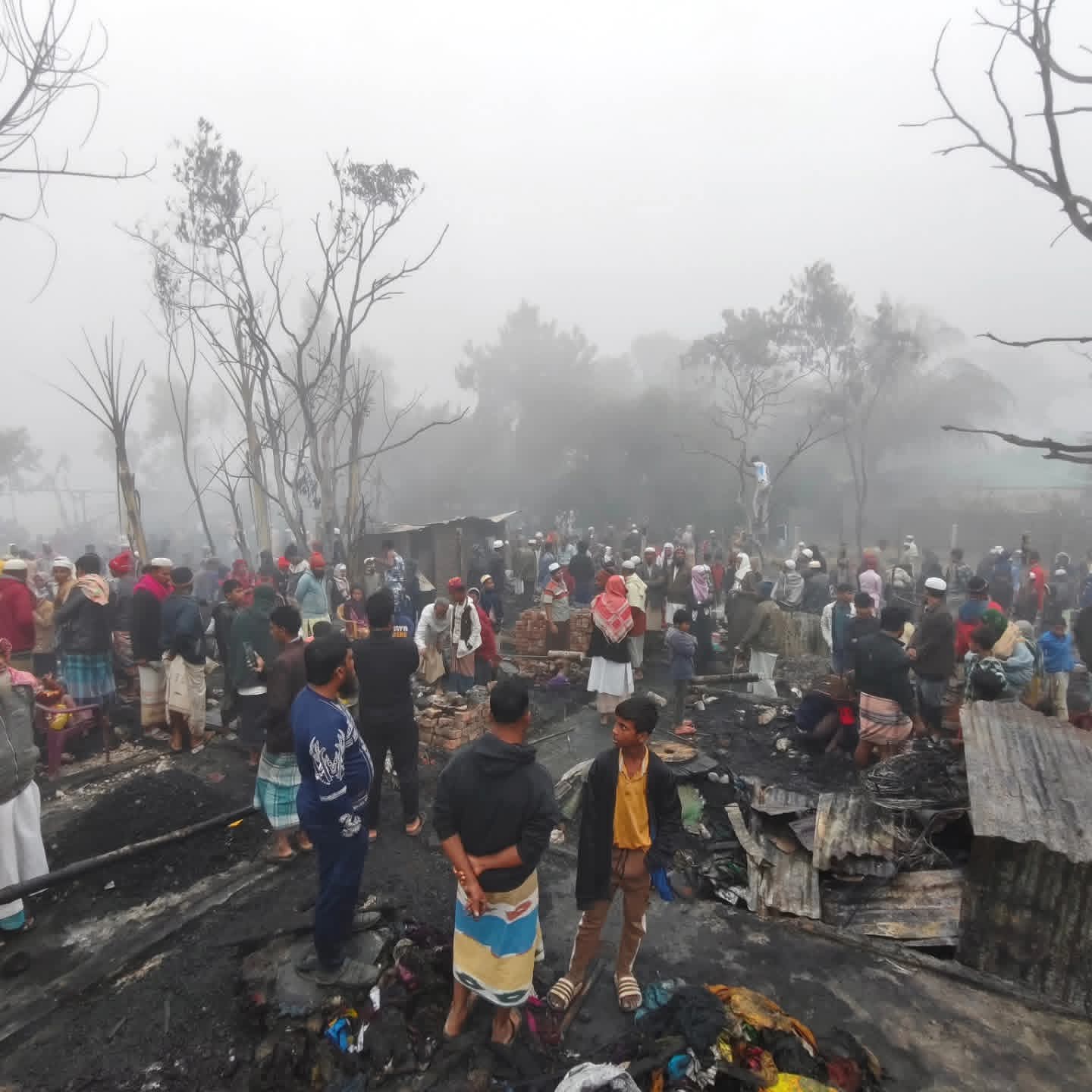
Wide view of burned shelters in the Rohingya refugee camps, where flammable housing turns small sparks into large-scale disasters
Fire has become a constant presence in the Rohingya refugee camps of Cox’s Bazar. It is not an unexpected tragedy, nor a rare emergency. It is a recurring threat built into the very structure of camp life. Over the past eight years, more than 1,800 fires have torn through these settlements, destroying shelters and forcing families to relive displacement again and again.
For many Rohingya, the sight of flames carries painful memories of their villages in Myanmar. Each new fire does not only destroy homes made of bamboo and plastic it revives trauma, fear, and a deep sense of insecurity that never fully fades.
The camps are among the most densely populated places in the world. Shelters are built almost entirely from bamboo, tarpaulin, and plastic rope materials chosen for being temporary and inexpensive, yet dangerously flammable. During the dry season, heat and wind transform entire blocks into fuel, allowing fires to spread within minutes.
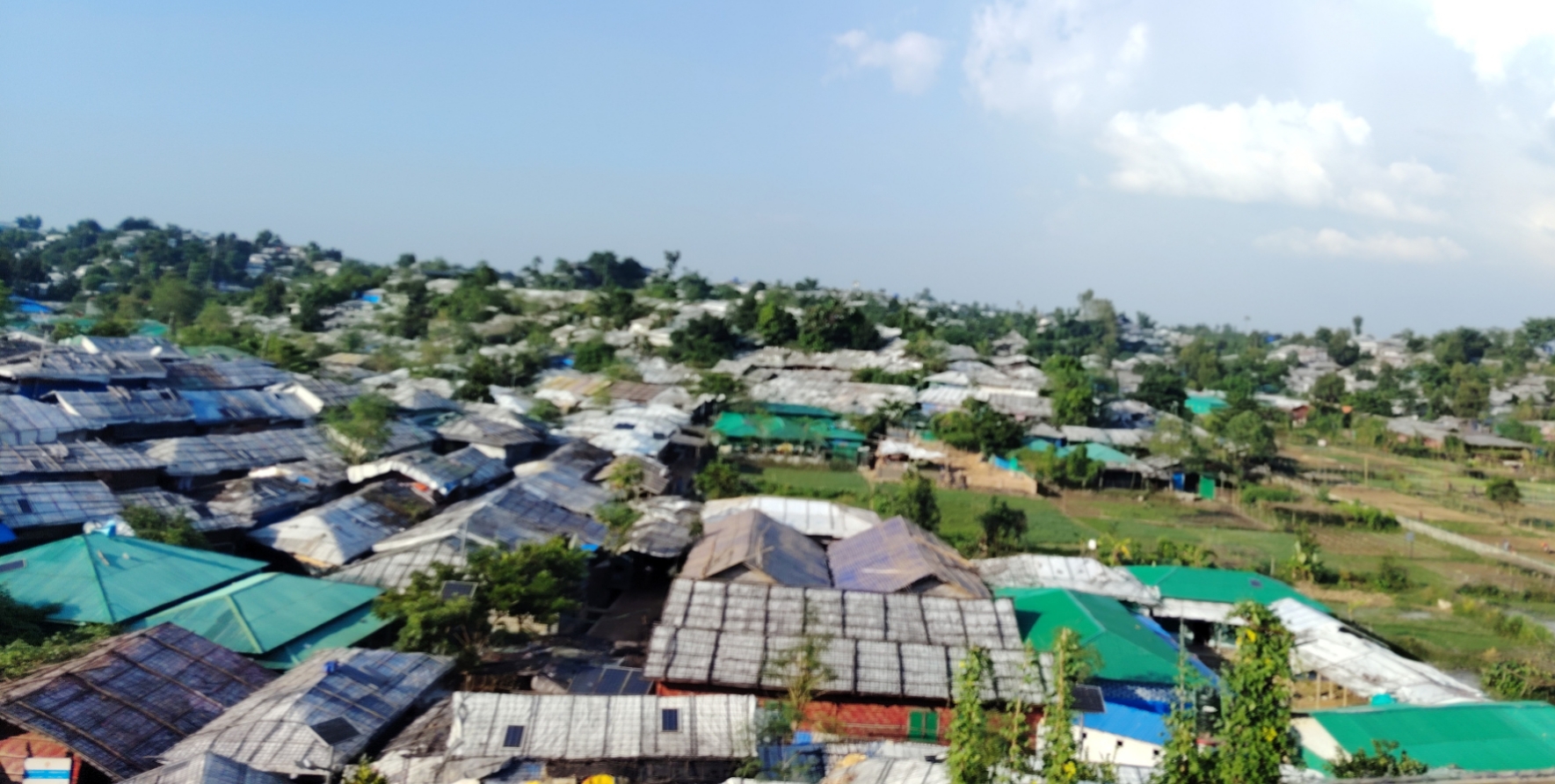
Overcrowded shelters built wall to wall leave no buffer against the rapid spread of fire.
Cooking is another unavoidable danger. Families rely on LPG cylinders inside cramped shelters with little ventilation. A small gas leak, an unstable stove, or an electrical fault can ignite a blaze that spreads faster than people can escape.

Household items and cooking spaces burned after a fire, highlighting everyday risks inside the shelters.
When fire strikes, everything goes. Shelters collapse within minutes. Food rations burn. Schoolbooks, clothes, cooking utensils, and identity documents are reduced to ash. Livestock often the only source of income for a family are killed in the flames, pushing survivors deeper into poverty.
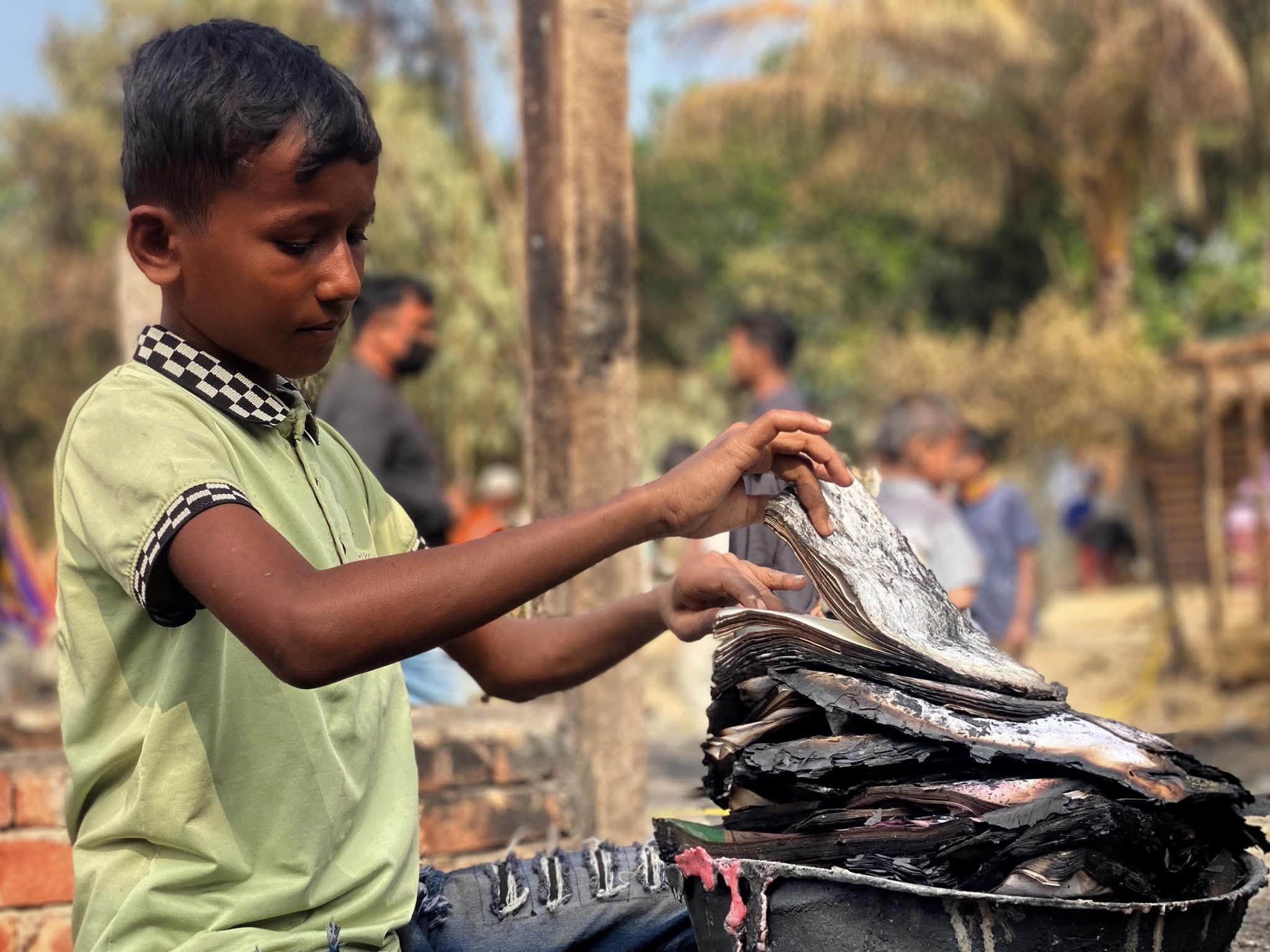
A child searches through burned school materials after a fire, a reminder that education is often among the first losses.
Emergency response is complicated by the camp’s layout. Narrow pathways and steep terrain prevent fire engines from reaching the heart of burning areas. In many cases, Rohingya volunteers become the first responders, using buckets, sand, and their own hands to evacuate families and slow the fire.

Community volunteers respond to the aftermath of a fire before emergency services can arrive.
Survivors carry the impact long after the flames are extinguished. Children struggle to sleep. Elderly people fear they will not be able to escape next time. Women describe living in a constant state of anxiety, especially at night, when many fires begin.

A survivor sits beside a burned shelter, reflecting the emotional toll left behind after the fire.
After the smoke clears, families begin rebuilding often with the same materials that burned before. Emergency shelters are erected quickly, but they remain just as vulnerable. This cycle of burning and rebuilding has become a painful routine, reinforced by policies that restrict durable and fire-resistant construction.
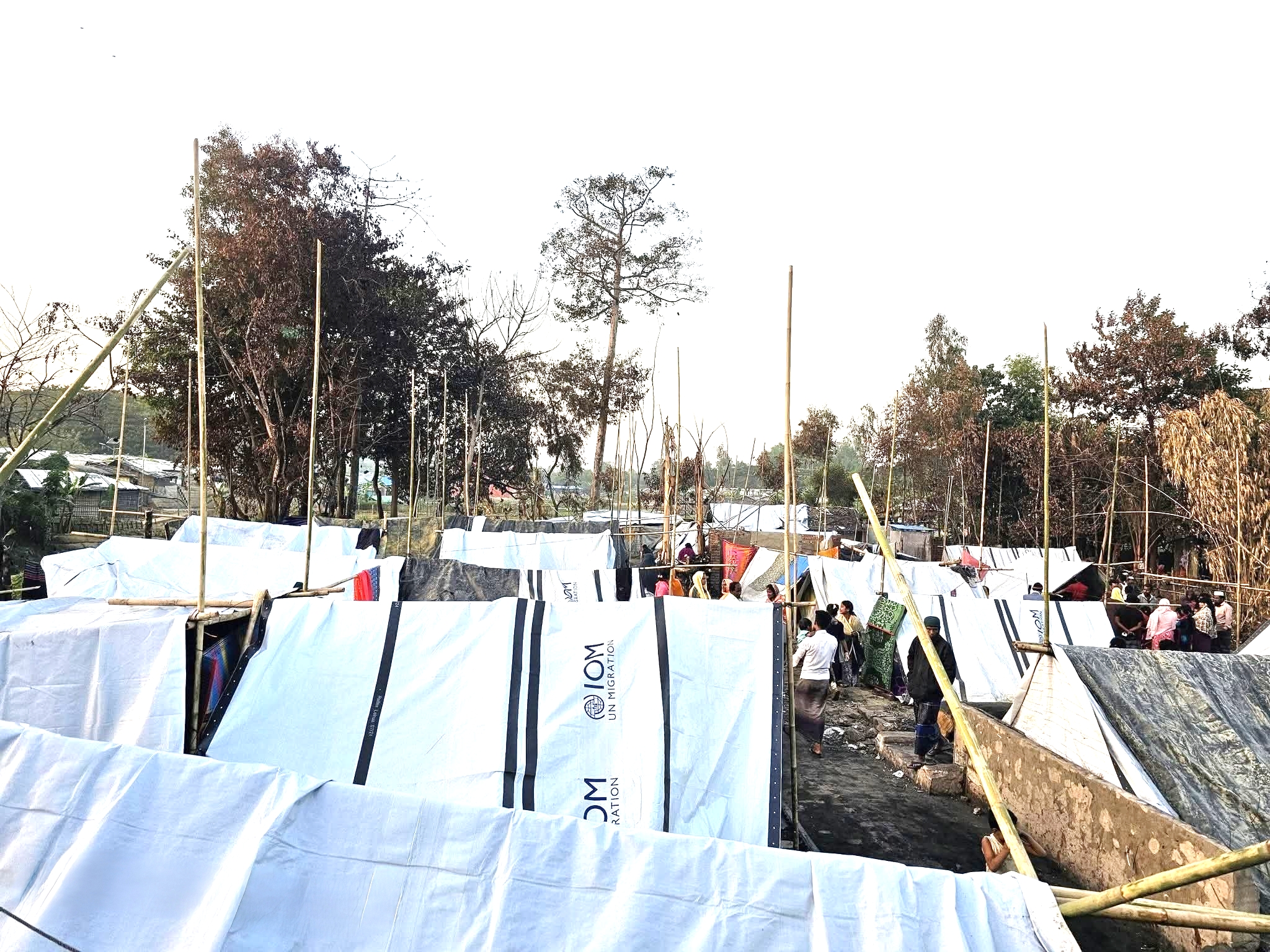
New bamboo shelters rise after the fire, restarting the same cycle of risk.
At the heart of this crisis is a policy of enforced temporariness. Even after eight years of displacement, safer building materials remain limited. While some fire-resistant designs exist, funding gaps and restrictions leave most families exposed to the same dangers.
As the world steps into 2026, millions celebrate new beginnings. For the Rohingya, the new year arrives with a familiar fear wondering whether their shelter will survive the next fire.
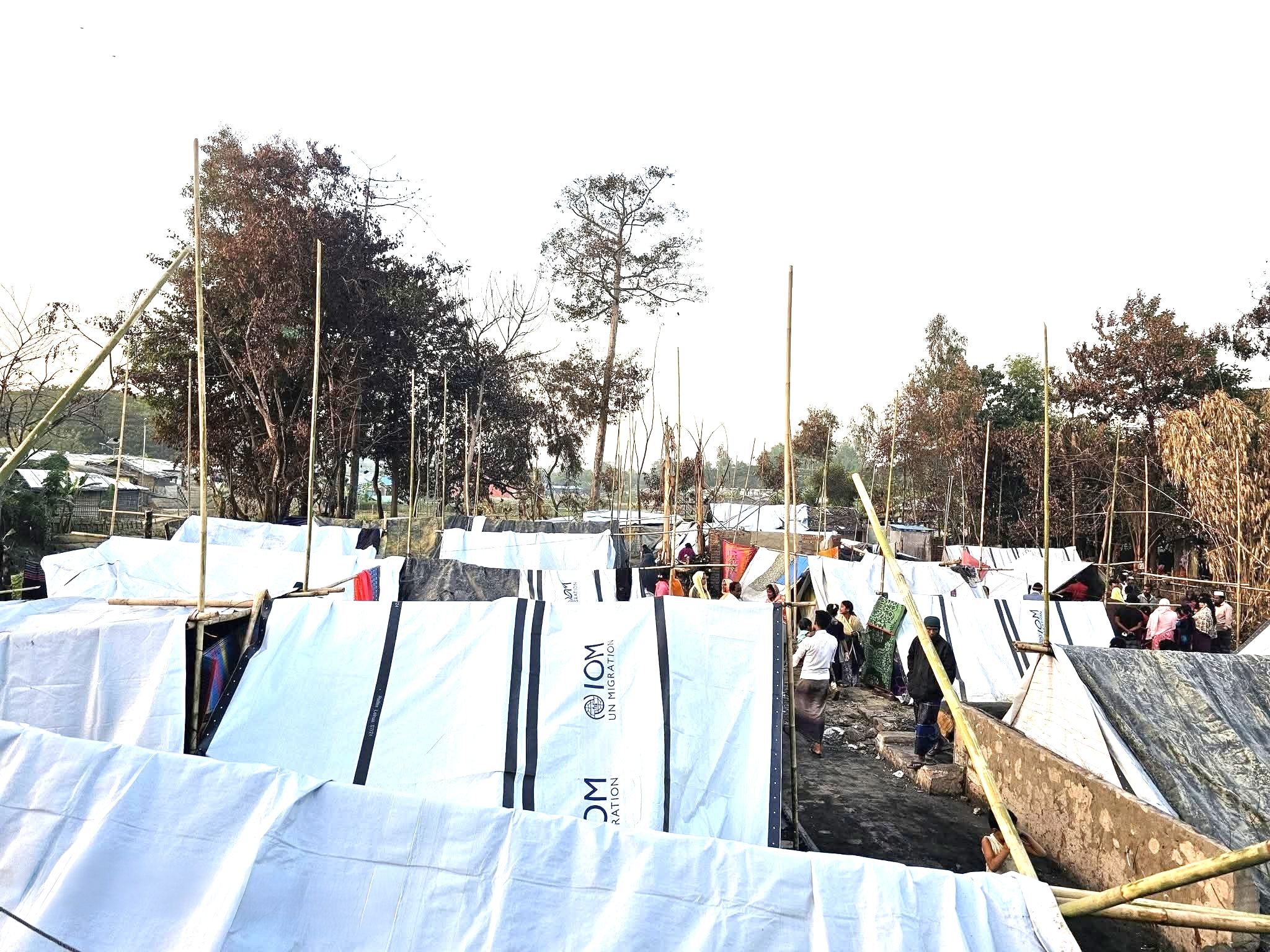
Rebuilding after fire, with the same materials and the same risks.
Closing Thought
Until temporary solutions are replaced with safe, durable, and dignified housing, fires will remain an unavoidable part of Rohingya life not because they are inevitable, but because they are allowed to be.
Posted By Maung Myint
Posted Jan 5th, 2026