

I landed in Đồng Hới, Vietnam on Wednesday, June 18th after a long, disorienting 36-hour trip. The itinerary felt tedious in its drawn-out sequence: a bus from Washington, DC to New York; a transpacific flight to Narita; a layover in Japan; then onward to Hà Nội and finally to Đồng Hới. By the time I arrived, I was sweaty, mildly irritable, and buzzing with nerves. I had been looking forward to this trip for months. Yet, as I exited the plane into the small opening of the airport baggage claim, I felt small.
Outside the terminal, I met Hồng and Hảo. In the days before my departure, I had practiced how to greet them over and over again with my boyfriend Wilson.
“I really want to make a good impression,” I kept telling him.
He coached me on saying “Chào cô,” which he explained was the Vietnamese equivalent of “阿姨好,” a phrase I had once taught him when he visited China with me. The direct translation is something like “Hello auntie,” but it carries a tone of respect and endearment for an elder.
As I wove through the crowd to collect my bags, I whispered to myself repeatedly: “Chào cô, chào cô, chào cô.” The words felt clunky in my mouth, their intonations rolling awkwardly off my tongue, entirely distinct from the four tones in Mandarin.
I recognized Hồng immediately from the few Zoom sessions we’d shared before my arrival. She wore a black polka-dot blouse tucked into a mid-length skirt, her hair neatly pulled back. Beside her stood Hảo, in a white dress patterned with soft blue flowers. A mask and dark sunglasses covered most of her face, and a nón lá shielded her from the early morning sun. She offered a small smile and a nod of acknowledgement. I waved, too eagerly, and hurried forward to meet them.
“Hi Angie, so good to meet you in person,” Hồng said, as I reached her.
“So good to see you too!” I blurted out.
In my anticipation and fluster, “chào cô” left my vocabulary as quickly as it entered, awkwardly and abruptly.
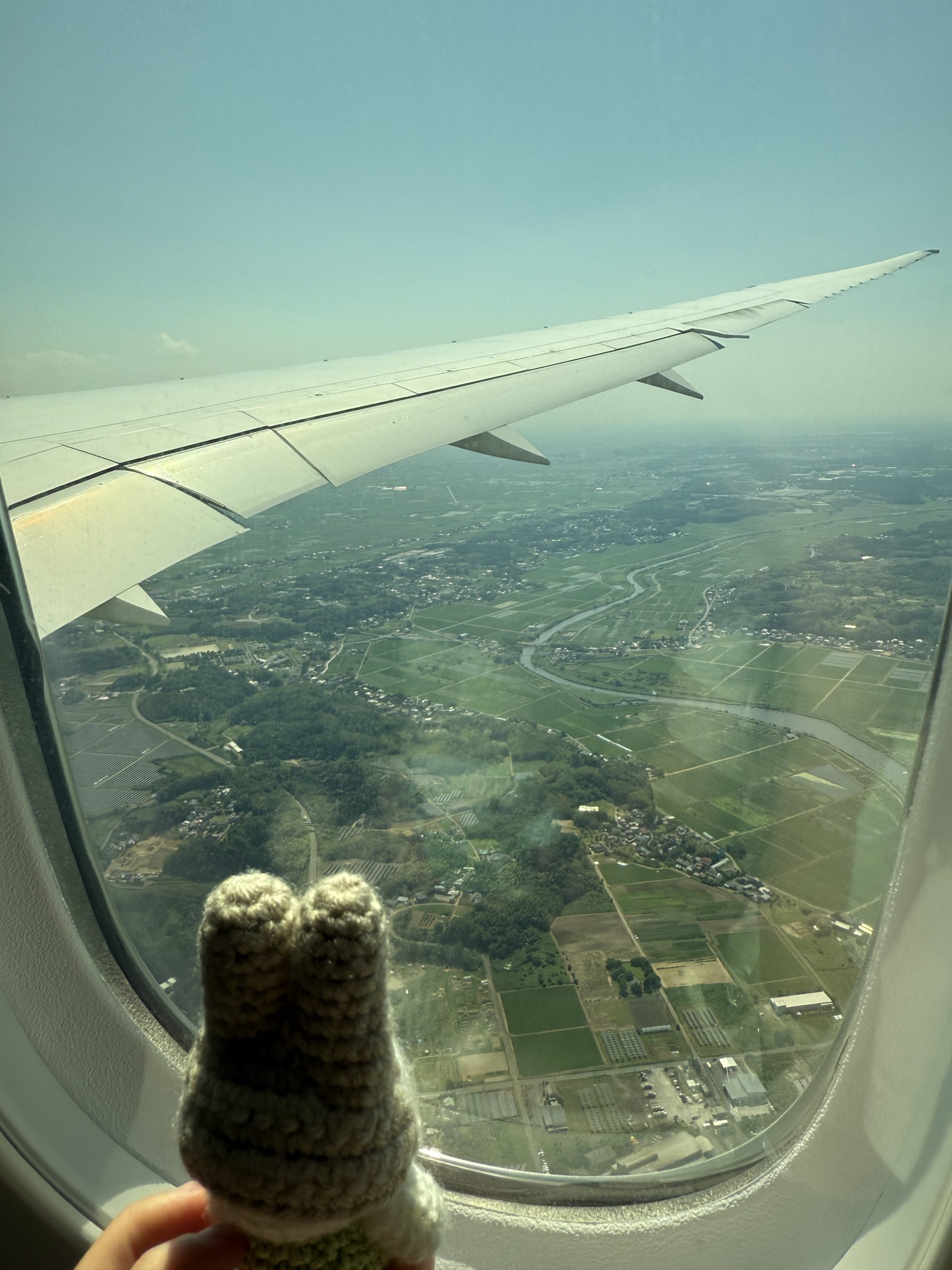
JFK to Narita
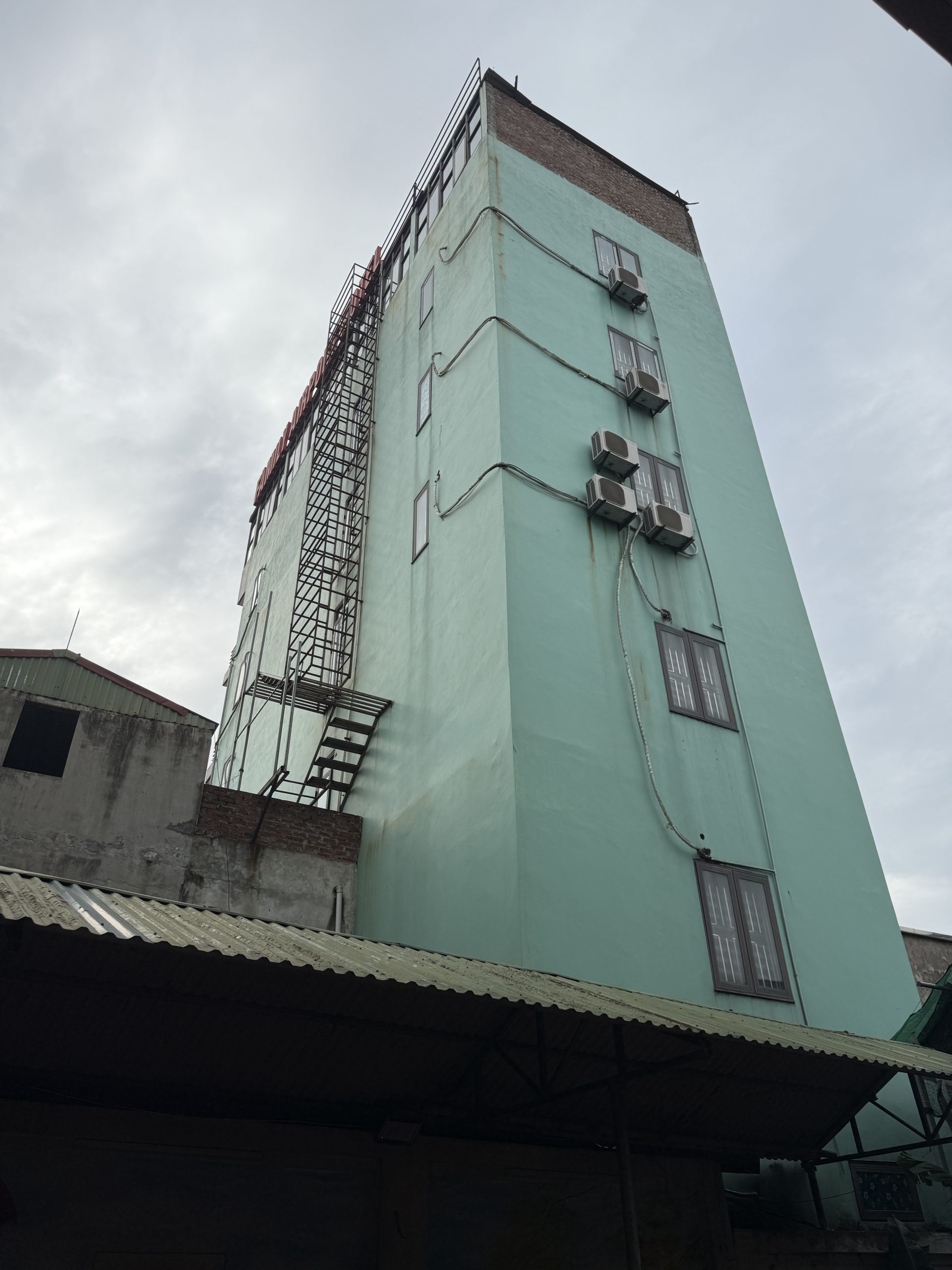
Overnight stay in Hanoi
On the road, Hảo asked how my flight was and if I was tired from the long trip.
“Not too bad!” I answered without thinking. “How are you?”
“I’m very tired,” she replied plainly.
I was struck by how distinctly American my response felt: automatic, polite, and customary. In DC, I had grown used to the ritual of office pleasantries: a “how are you” followed by an “I’m good” (or, perhaps, even “I’m okay” when things were not good). I wondered if people in Vietnam were more candid in these exchanges. From the passenger seat, Hồng turned to ask if I had eaten. I shook my head.
“Do you want bánh mì?” she asked, smiling. “My husband’s shop is nearby.”
I nodded quickly, relieved by the simplicity of the question and the promise of food.
The shop sat on a busystreet, the food stand painted a warm cinnabar, tucked into a narrow open-front space. A few round tables and brightly-colored wooden chairs were arranged in front of the stand, with a smaller table set off to the side. Hồng ushered me to the side table, plugging a fan into the socket and placing it in front of me. She proceeded to place a baguette on a little square grill, smearing butter and sauce on the inside before adding an assortment of meats and vegetables. The bánh mì was delicious, a perfect first meal in Vietnam and one I still think of fondly.

Hảo (left) and Hồng (right) at Bánh mỳ Quế Châu

Freshly made bánh mì from Hồng
Hảo also bought a bánh mì and handed Hồng money as we prepared to leave for my hotel. Hồng waved her hands in protest, pushing the money back toward Hảo. I watched this back-and-forth unfold: shaking heads, sharp gestures, and quick, loud bursts of Vietnamese that might have sounded like an argument to someone unfamiliar with the scene. Finally, Hảo tucked the cash under a bowl on the stand and hurried me into the car before Hồng could return it again. Hồng shook her head once more, and with no other choice, accepted the money.
The interaction brought back a warm, familiar nostalgia. I was reminded of family dinners in China and endless fights over who would pay the bill. In China, family and friends do not split the bill, a value so deeply ingrained in me that the American habit of splitting still feels like a culture shock, even though I was born and raised there. The ritual of refusal and insistence is its own social script, an unspoken expectation that one does not simply accept generosity; one negotiates it, performs it, and insists on reciprocating. Fighting for the bill, I was always taught, is a way of showing care. I thought about how easily I could have misread this exchange had I not grown up with similar customs.
I thought about the first time I brought Wilson to my family’s hometown in Fuzhou. Before we arrived, I had warned him that Fujianese people often speak very loudly and that he shouldn’t mistake yelling for conflict. Still, on our first morning there, Wilson shook me awake at 6 a.m., worried after hearing shouting outside. I stirred, half-awake, and brushed it off, knowing it was probably just a casual exchange. A few minutes later, he woke me again. The yelling was much louder this time, echoing aggressively through the village and sounding, to him, unmistakably like a fight. I finally sat up, looked outside, and listened: “小朋友快回家吃饭了! 吃饭了!” A Fujianese grandpa stood shirtless in the street, a broom in one hand, shouting in dialect, “KIDS, COME HOME! FOOD IS READY!” I gave Wilson an amused look (the smug kind that said see, I told you so) and explained what was really going on.
In that moment, I realized that interpretation is often culturally mediated; what sounds like aggression in one context may be routine care in another. And in the absence of a shared language, when one can only rely on tone and gesture, even more is lost in translation. I was reminded of these events on my first day in Đồng Hới, because I realize there will be several moments in the course of my fellowship where my interpretation of the events may be wildly inaccurate to their actual unfolding. Where I see potential conflict, tension, or discomfort may simply be regular social interactions, laden with fondness or care. And what appears routine may conceal pain, tension, or unspoken expectations that are unclear to me. These moments remind me that interpretation is never neutral, and being here demands an awareness of the limits of my gaze.
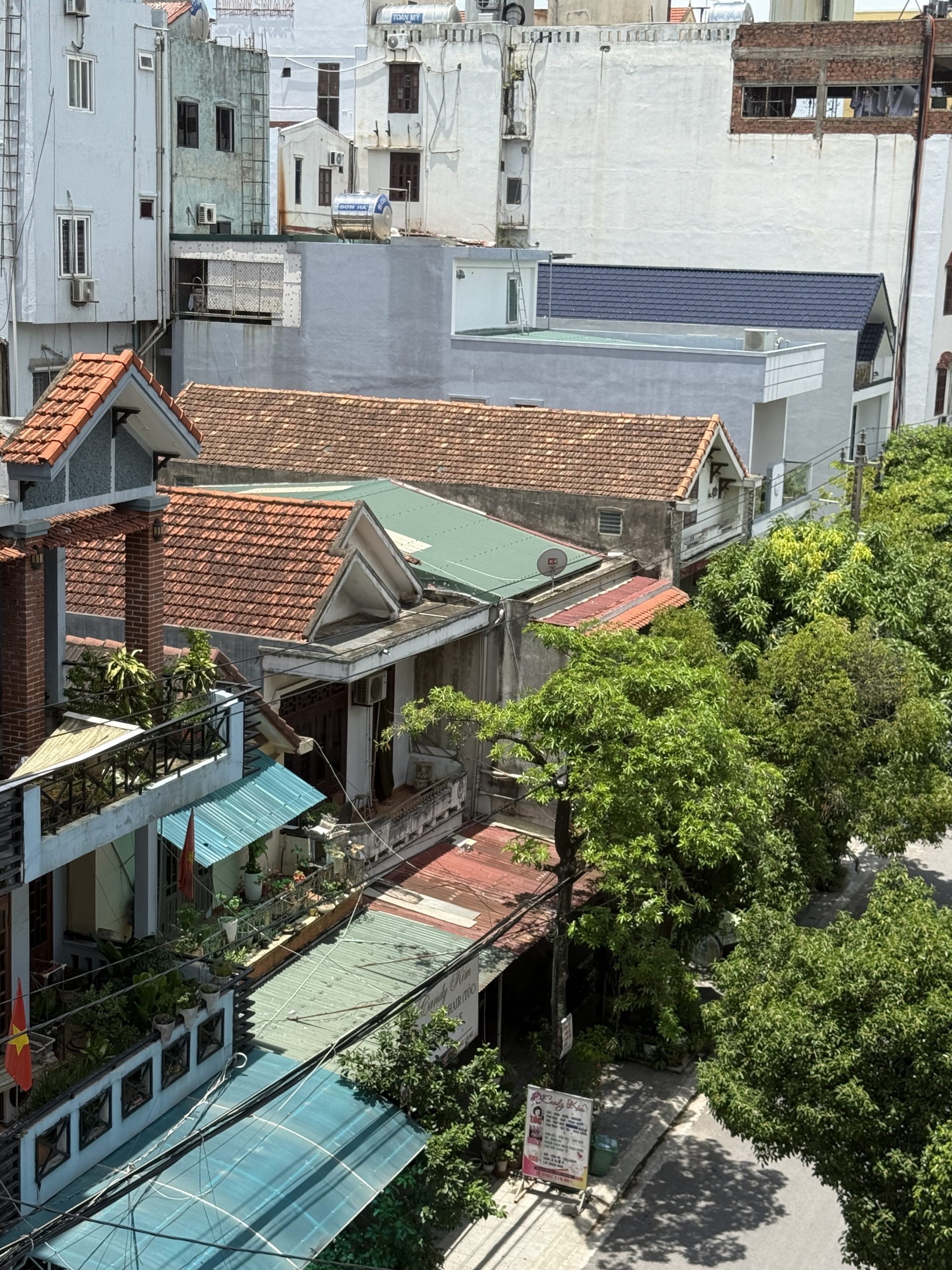
First day in Đồng Hới

Behind the AEPD office
Posted By Angie Zheng
Posted Jul 13th, 2025
4 Comments
Aaron Bailey
July 20, 2025
I really appreciated the way you captured those early moments of arrival and the cultural nuances in everyday interactions. Your observations about interpretation and care across different contexts are especially resonant. Wishing you a smooth start as you settle in and begin your work in Dong Hoi.
Iain Guest
July 21, 2025
Well landed, Angie! This is a great introduction to Vietnam and it makes me hungry for bánh mì!! Also, I can’t remember any Fellow describing her meeting with her hosts with such affection! We’ll have to share it with Hong and Hao, who are the nicest of people. You’re in good hands and they are lucky to have you. I’m sure you’ll have a wonderful, productive stay in Vietnam. You obviously love writing, so many more blogs please!!
Julia Holladay
July 21, 2025
Angie, this was a beautiful retelling of your entry to Vietnam. The scene of paying for the bill is such a great example of not jumping to assumptions, like you mention in the section on translation. Good luck as you continue on this journey with AEPD!
Bobbi Fitzsimmons
August 1, 2025
Your blog brought back fond memories of my first meeting with Hong and Hao. I had the luxury of a short flight from Ho Chi Minh City so no jet lag was involved. They treated me with such care and respect. Our short time together felt like being with long time friends. They and their program are special to us all at AP.