

With each return to Nepal – now my fourth visit – the country feels less like a distant land and more like my second home. It’s been two and a half years since my last extended stay, yet the rhythm of life in Kathmandu remains intimately familiar. The vibrant sounds of temples, incessant honking, music drifting in the background, the loud whistle of the pressure cooker, the semi-aggressive “Oi, sauji!” (Hey, shopkeeper!), the tender “Tapaaile khana bho?” (Have you eaten?), and the curious “Kahaa aaunu bhayo?” (Where have you come from?) all carry a comforting sense of recognition – like flashbacks to a period when Patan, beautiful as ever, was indeed my home.
And yet, oddly enough, things feel a little different now – still familiar, but shaped by the subtle shifts in perspective that time, distance, and a year of graduate school in Washington, DC have quietly brought.
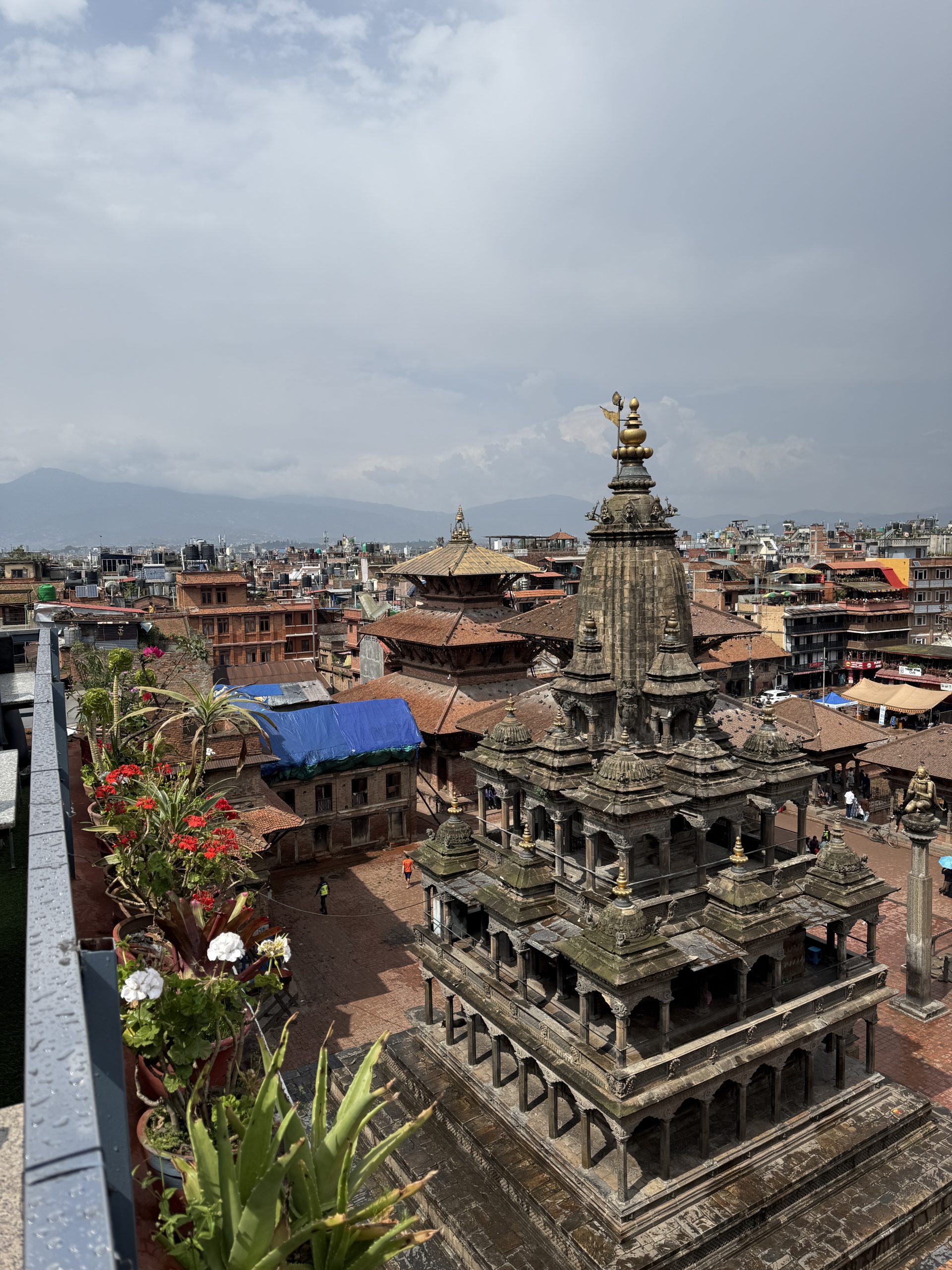
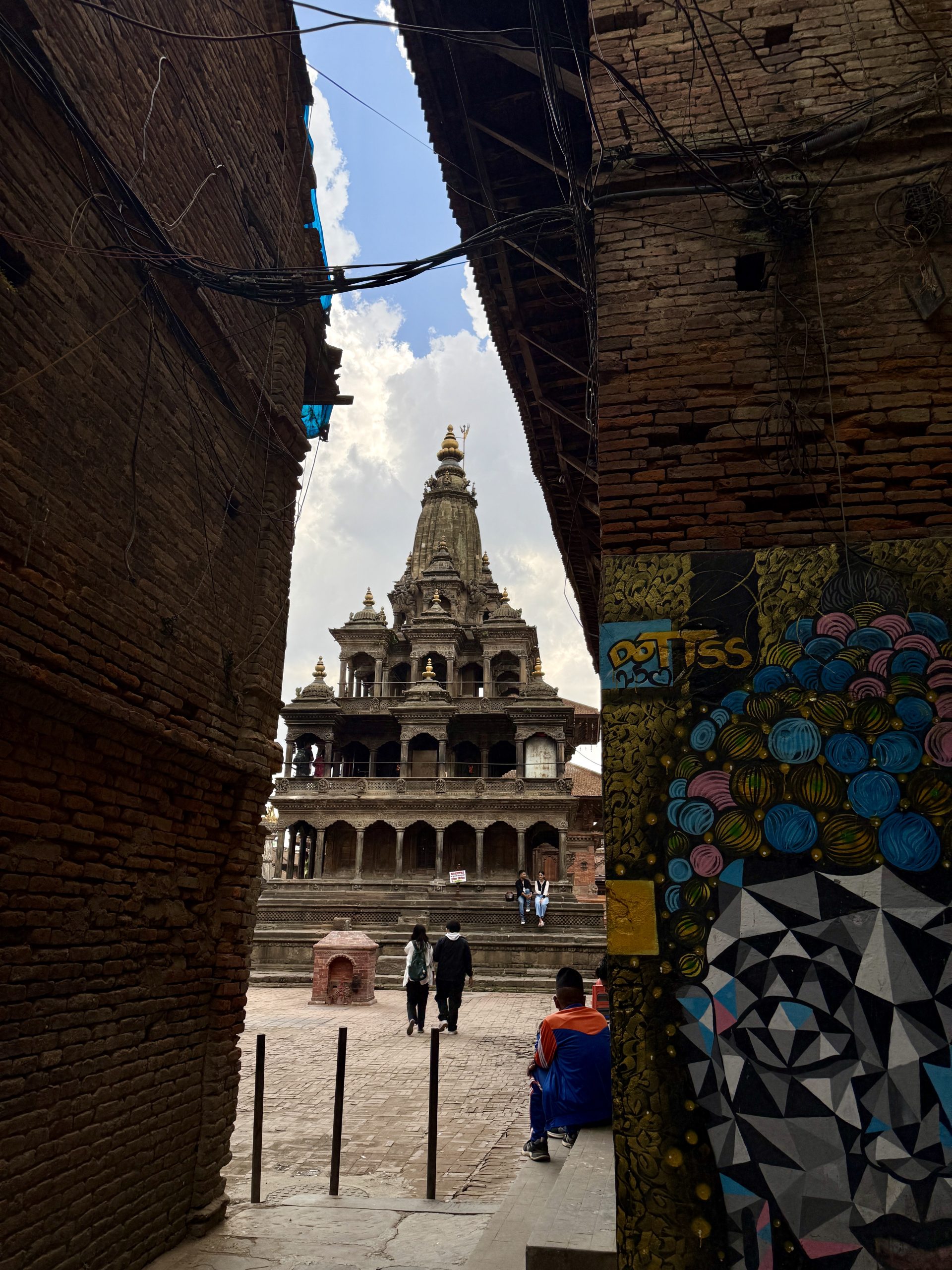
I return to Nepal this time as a Peace Fellow, second-year graduate student and committed scholar of gender, international development and social justice. While the field sites and work ahead will differ significantly from my previous work assignments, I remain cautiously optimistic about the journey and learning that awaits me in Nepal’s far-western region. My friends in Kathmandu tell me to prepare for a “completely different world in the west.” And still, I embrace this challenge with curiosity, humility, and a deep fascination for all I have yet to discover – and of course with lots of chiso paani (cold water). After all, I am headed to the Terai.
Home to the city of Tulsipur, the district of Dang offers a markedly different experience from the bustling, tourist-centered hubs of Kathmandu and Pokhara. A bus ride roughly 12 hours westward will get you there, though my own journey took nearly 16 hours – a ride not easily forgotten. There are no trekking shops or tourist-y stores in Tulsipur. Roads remain unpaved, rocky and quite dusty. The timing and frequency of power outages seem to be a consistent feature of daily life here too. Restaurants are simple and straightforward, serving mostly traditional Nepali khana ra khaja (food and snacks). It’s also hot – really hot. When the sun is at its peak, it feels as though the heat zaps the life right out of you, but I’m slowly adjusting to the temperatures and learning to move at the pace the climate demands. I also spotted two dead snakes on my first day in town – enough to reinforce the advice I’d already been given: to be careful of snakes, especially after dark.

A traditional mud home in Tulsipur, sitting beneath the unrelenting sun and heat.
In contrast to the anonymity I am used to feeling in the capital or Pokhara, my presence in Tulsipur is immediately noticeable. Blending in here is nearly impossible, no matter how much I try. My old New Balance shoes seem to draw attention, the way I drink from a water bottle feels out of place, and even the simplest clothes I packed from home still carry markers of class privilege and a certain degree of otherness.
My Nepali, which, admittedly, is a bit rusty – often adds to the confusion of those around me. Locals and skeptics alike seem unsure: Am I bideshi (a foreigner)? Am I half-Nepali? A Nepali who lives/works abroad? Is my father Nepali? Am I married? Who is my husband? I find myself constantly faced with, and at times even dodging, these questions. For many, it’s surprising that a Mexican-American like me could resemble a distant Nepali relative. And yet, I exist in that in-between space, quietly navigating the duality of belonging and otherness. If only the locals knew how many hours I’ve spent with tutors and in language classes over the years! And here I am in the west, still stumbling through conversations like it’s day one. The way the dialect keeps changing has me totally spun around!
In spite of all this I do my best to convey to others, “Ma Nepali hoina. Ma ek saya percent Mexican-American manche hu. Malaai bishwas garnuhos!” (I am not Nepali. I am one hundred percent Mexican-American. Please believe me!) But sometimes, I think they still do not.
In far-west Nepal, where society is tightly woven through familial, gendered, religious, hierarchical and caste-based relationships, my difference is quickly noticed. Being both an insider and outsider shapes how I listen, how I ask questions, and how I’m allowed into conversations. It’s a humbling position – one that continually reminds me that meaningful work in international development begins with relationship-building, not assumptions.

Alexis (left), Pabitra Bādi (center), and Pinky (right)
As an outsider with limited local ties and a visible difference, I recognize that the project I am undertaking in the west will pose personal and professional challenges. Operating within the deeply entrenched traditions and social hierarchies specific to the western region requires careful navigation, cultural sensitivity, and sustained engagement with some potentially difficult realities.
Luckily, I have been paired with Pinky at BASE, who has already demonstrated herself to be a valuable source of knowledge. She is a Tulsipur local with some proficiency in Tharu, has a working understanding of Madheshi (indigenous) languages, and has extensive experience managing several projects at BASE.
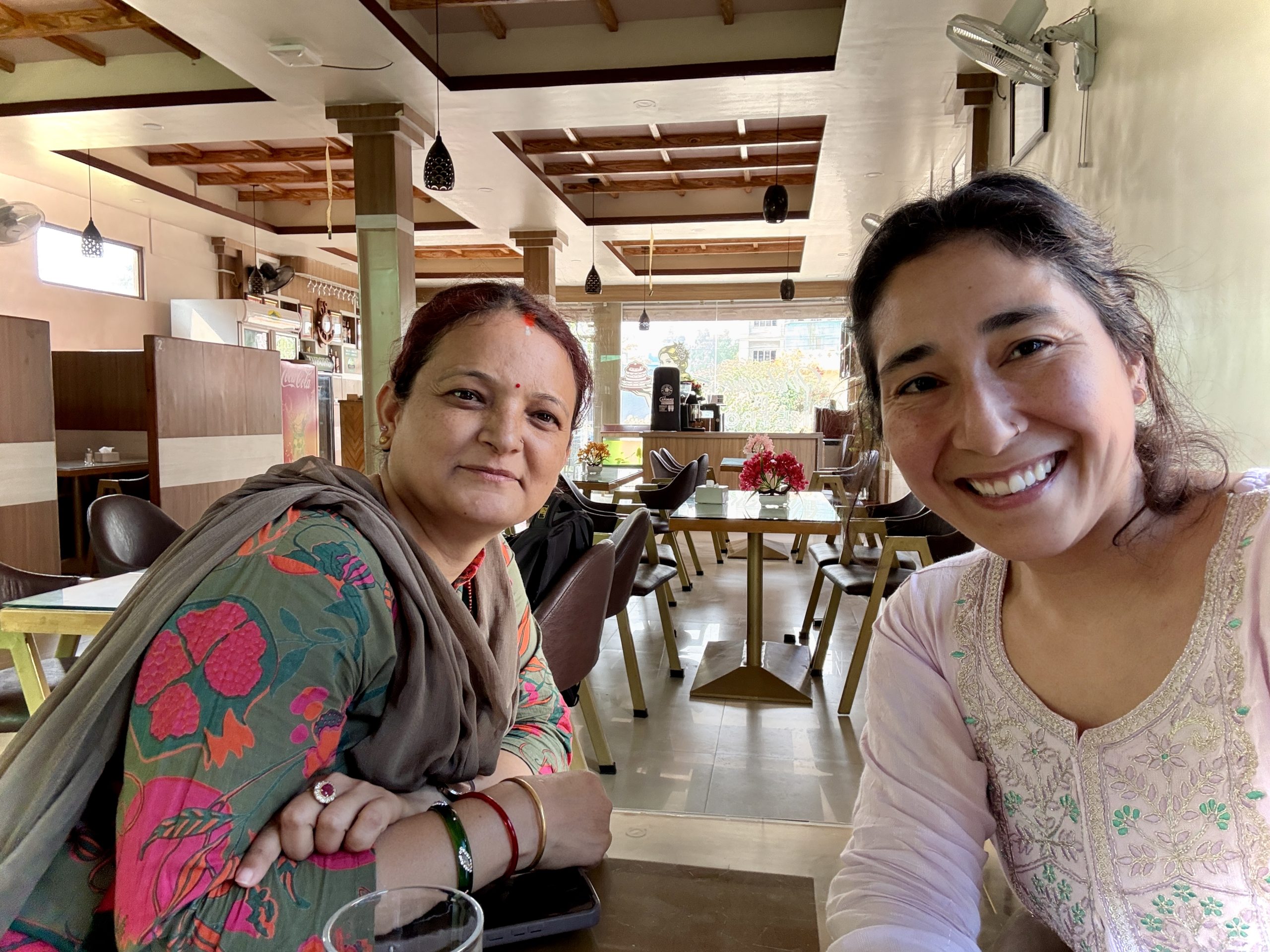
Pinky (left) and Alexis (right) enjoying their first meeting in Tulsipur
We plan to visit several villages and districts beyond Dang to assess the livelihoods, well-being, and income sources of various marginalized, low-caste communities. We will survey these communities and aim to develop income-generating pathways rooted in their traditional knowledge and skills, handicrafts, or locally produced commodities. For now, our goal is to attempt to reframe the conversation on caste-based discrimination and exclusion, shifting the focus away from social shunning and isolation toward economic empowerment, resilience, and community-driven opportunity and cooperation. I recognize that our goals and perspectives between AP and BASE are not fixed; I expect they will evolve, sometimes subtly, sometimes profoundly, with each day and every new encounter.
This is undeniably an ambitious task. But if my time in Nepal and graduate school has taught me anything, it is that meaningful change, especially within deeply entrenched social, cultural, and gendered systems, requires patience, receptiveness, and a willingness to observe and listen more than speak. I am mindful that progress is likely to be slow and incremental, but it begins with building solid relationships, establishing trust, and recognizing that these communities are the experts in understanding and sharing their own lives. It’s a fitting reminder of the Nepali proverb, “Jivan yastai chha,’ which means, ‘such is life.’
Posted By Alexis Lopez
Posted Jun 15th, 2025
5 Comments
Iain Guest
June 16, 2025
What an absolutely exquisite first blog, Alexis! It’s as much about your identity as Nepal, and I just love it! You really get across the charm of Nepal and the thrill of returning back – which so many others also feel. And what a huge pleasure to see the photo of you with Pinky and the wonderful Pabitra Badi!! Finally, you give Tulsipur a pretty good grade – let’s hope that lasts! All in all, can’t wait to read more and follow your adventures over the next few weeks. Well done!!
Grandma Gail
June 19, 2025
Ditto the above❣️
Shuyuan Zhang
June 21, 2025
Alexis, thank you for this beautifully honest and introspective piece. The way you describe the sensory return to Kathmandu, contrasted with the unfamiliar terrain of Dang, really captures that feeling of being at once grounded and unsettled. Your reflections on identity, belonging, and the delicate balance of being an outsider doing this kind of work resonate deeply. It’s clear you’re entering this space with the curiosity and humility it demands—and it’s so heartening to see how thoughtfully you’re building trust with Pinky and the communities you’ll be engaging with. Wishing you strength (and cool water!) as you navigate the heat, questions, and all the learning ahead.
Aaron Bailey
June 23, 2025
This was such a powerful reflection, one that captures the tension so many of us feel working in places that eventually start to feel like home, even as we remain outsiders. Your honesty about navigating assumptions, language barriers, and the invisible layers of social hierarchy is deeply relatable.
I really admire the way you’re approaching this work, not with answers in hand, but with open ears and a willingness to walk at the pace the place demands. There’s no shortcut to trust or relationship-building, especially when you’re working with communities that have been historically marginalized and over-studied. You’re spot on: the real expertise lives within them.
Emma Cohen
June 23, 2025
This is a really wonderful piece, Alexis. You do a nice job of capturing what it feels like to work from “that in-between space” as you grapple with identity, familiarity, and engaging as an outsider. As Shuyuan and Aaron point out, it is also clear that you have a deep appreciation for the people you are working with and their expertise and are approaching this project with the curiosity and humility it demands. I am eager to hear more from you and I look forward to hopefully visiting and learning more about your work in person!