

In the first week of July 2025, two rural schools in Gulu District—Kulu Opal Primary School and Awach P.7 School—emerged as unlikely but powerful frontlines in Uganda’s ongoing battle against malaria. What began as routine school days quickly transitioned into transformative learning experiences, as children stepped forward not merely as pupils, but as informed advocates and frontliners in the fight against malaria.

After the training sessions was Done, Pupils were Tested for Malaria and Positive cases got Treatment.
The sensitization sessions, organized by the Gulu Disabled Persons Organization (GDPO) under its WASH program with support from The Advocacy Project, were facilitated by dedicated medical personnel—Kizito Isaacs and Okello Martine at Awach P.7, and Kinyera Bernard Terry at Kulu Opal. These sessions brought learners face-to-face with one of Uganda’s most persistent public health threats. “Prevention starts at home,” emphasized Okello Martine, School Health Assistant. “Learners must understand malaria—but parents must be part of the journey too.”
Despite national progress, malaria remains the leading cause of illness and death in Uganda, disproportionately affecting children under five, pregnant women, and low-income households. In rural communities like Kulu Opal and Awach, infection rates remain alarmingly high. This reality underscores the urgent need for community-based, child-centered health education. When equipped with accurate, age-appropriate knowledge, children become powerful agents of change—capable of influencing household behaviors and catalyzing community-wide prevention efforts.
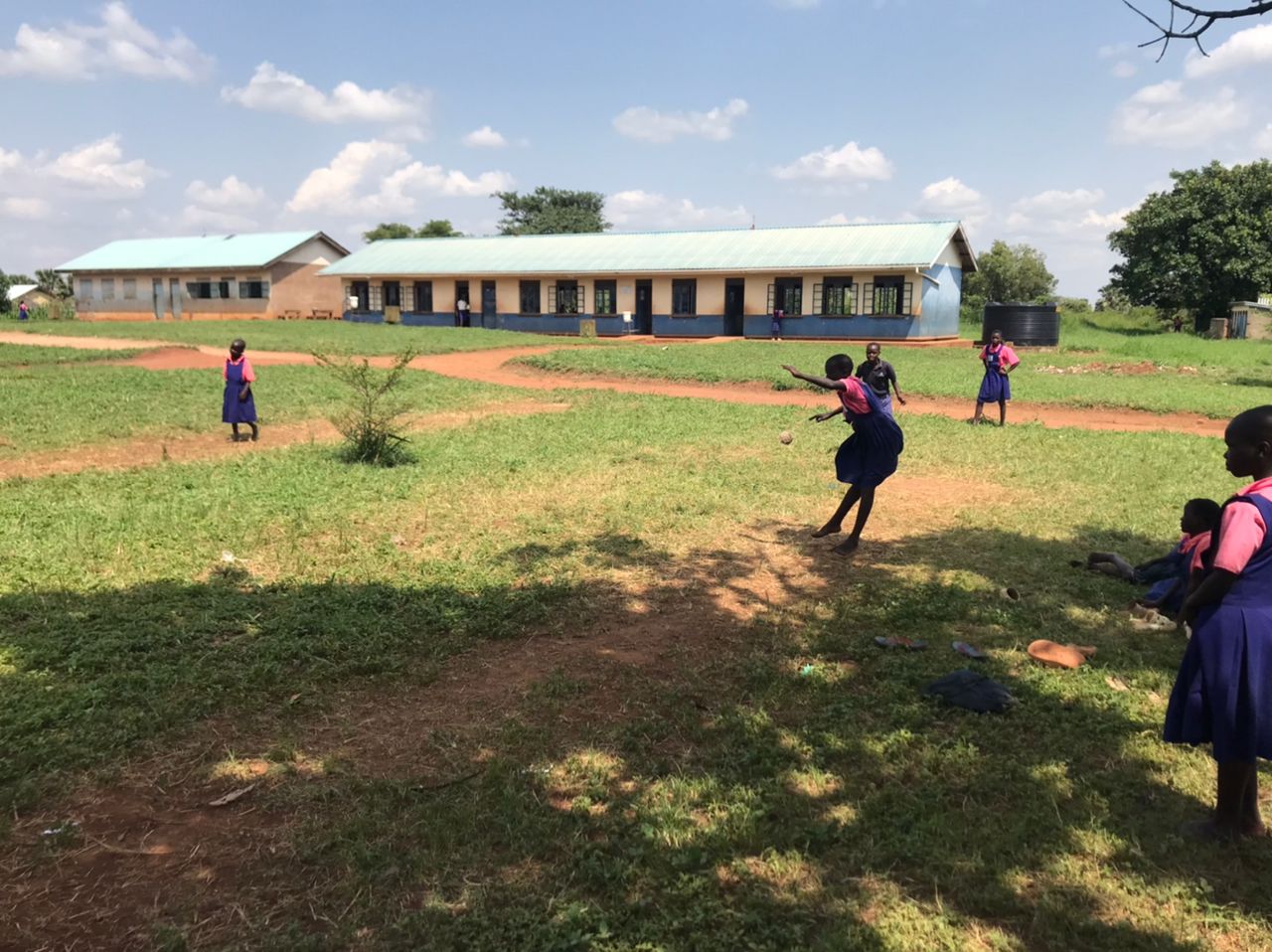
Happy and Healthy Pupils Play Seven Stones in the School Environment.
The sessions were designed to be both engaging and practical. Learners explored the biology of malaria transmission, the breeding habits of the female Anopheles mosquito, and simple yet effective prevention strategies—such as eliminating stagnant water, slashing overgrown grass, and consistently using insecticide-treated mosquito nets. “I’ve learned to always set my mosquito net before bed and teach my family too,” shared Akello Venesa, a Primary 3 pupil at Awach P.7.
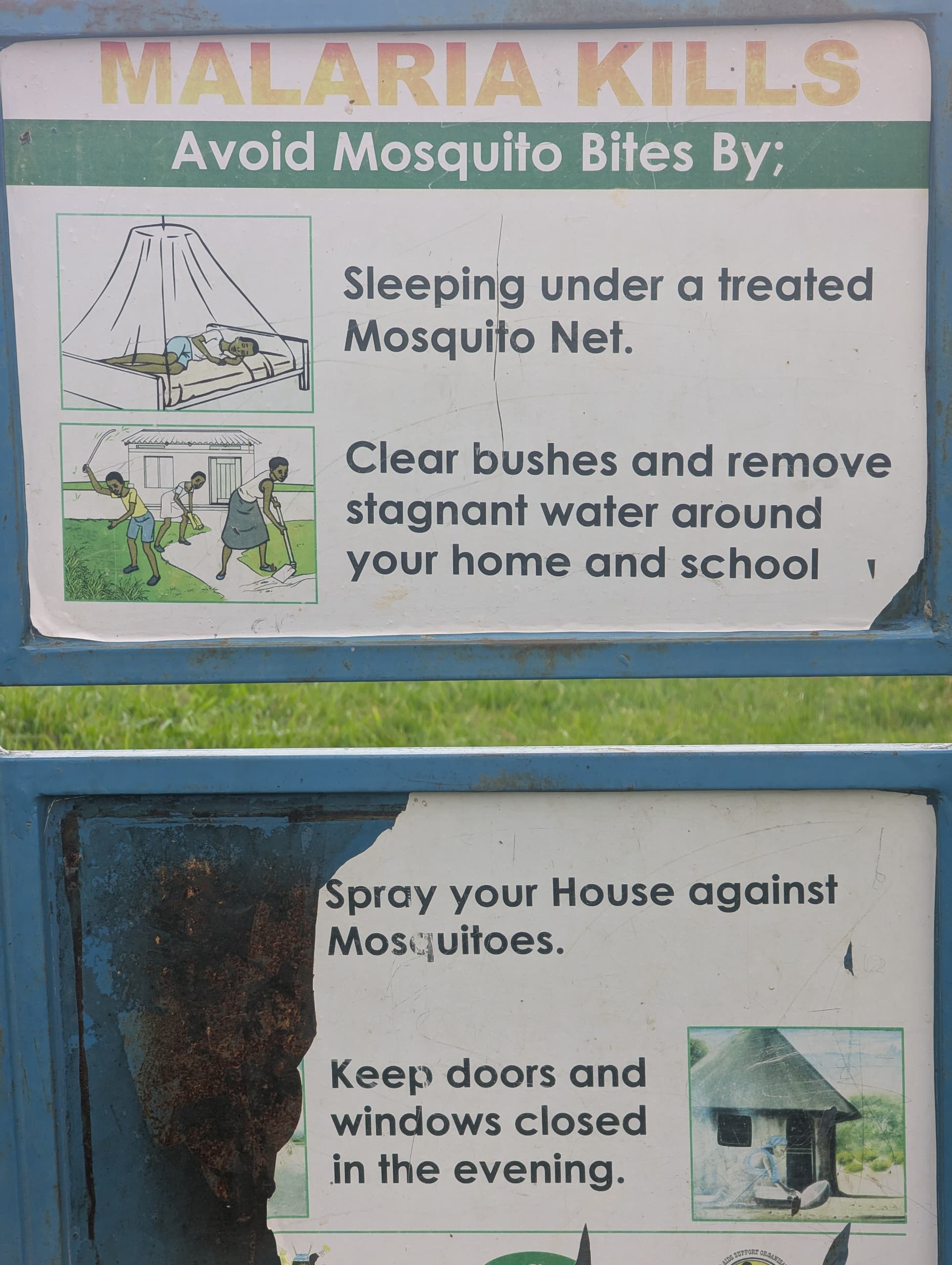
The Signage in School Environment Carries a clear Message in the Fight Against Malaria.
A malaria screening conducted at Awach P.7 revealed a sobering statistic: 10 out of 14 pupils tested positive, reflecting a 71% infection rate. “My brothers never sleep under nets and always fall sick. I made sure they listened this time,” said Adoch Julian, Primary 5, Kulu Opal. These figures are not just numbers—they are a call to action.
The message was clear and urgent: learners are not passive beneficiaries—they are frontliners in the fight against malaria. They were empowered to become ambassadors of prevention, using their voices to influence change at school, at home, and across their communities. Kinyera Bernard called for sustained investment in community health systems: “Train parents and teachers to reinforce prevention. Provide treated mosquito nets to learners. Equip school infirmaries with test kits and essential drugs. And maintain regular sensitization to sustain awareness and behavior change, malaria must, and can be defeated, but never without community support”
These stories from Kulu Opal and Awach P.7 are not isolated events—they are a testament to what is possible when children are empowered with knowledge and supported by their communities. They remind us that the path to a malaria-free society begins with education, inclusion, and collective responsibility.
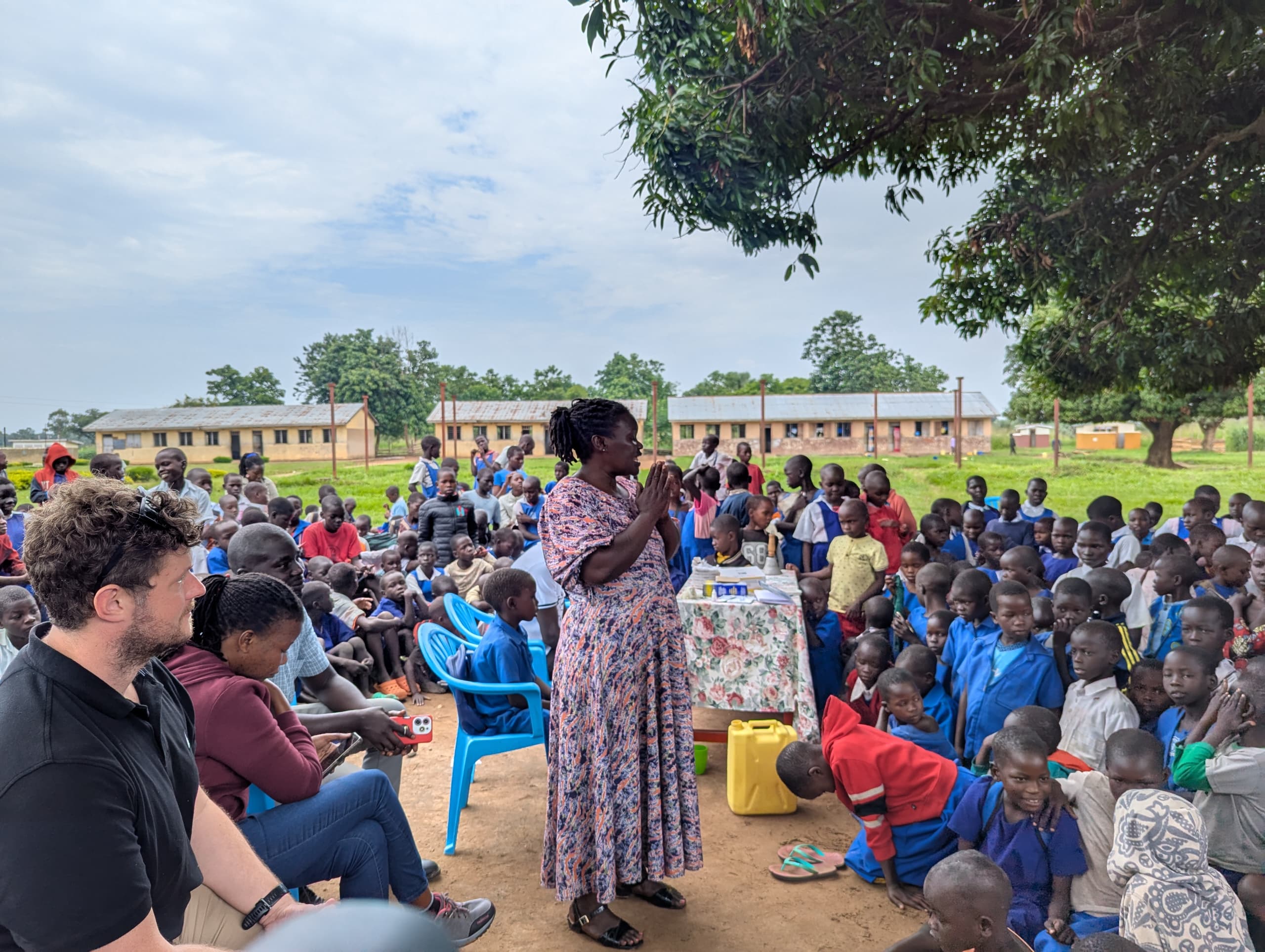
Emma Ajok from GDPO gives malaria training at the Kulu Opal primary school. Aaron Bailey, an AP Peace Fellow, watches on the left,
To truly eliminate malaria, we must invest in the next generation of health champions by supporting school-based health education programs, ensuring access to prevention tools such as treated mosquito nets and diagnostic kits, and engaging parents, teachers, and local leaders in sustained behavioral change efforts. Stand with these young frontliners, amplify their voices, and commit—together—to a future where no child suffers or dies from a mosquito bite.
Posted By OKWIR JOSEPH JOHNS
Posted Jul 6th, 2025
4 Comments
Aaron Bailey
July 6, 2025
These schools were a good start, I hope the program can be spread to more than just the GDPO schools.
Oroma Wendy Patience
July 6, 2025
Empowering children to become health champions is a game-changer in the fight against malaria! The dedication of medical personnel and organizations like GDPO is inspiring. By equipping students with knowledge and tools, we’re creating a ripple effect of positive change. Together, we can work towards a malaria-free future!
Iain Guest
July 7, 2025
Excellent blog, Joe!! Congratulations to the GDPU team for launching this extremely important training – and yes – let’s eradicate malaria from these schools and communities. I think others will read your blog and understand that WASH offers a way to address many OTHER development challenges, including malaria. Keep up the posts!!
Bobbi Fitzsimmons
August 4, 2025
A powerful, well-written blog. Empowering school children will go a long way toward bringing malaria under control. Well done, Joe.