

Niranjan Chaudhary grew up listening to dinner table conversations about justice. His father, schoolteacher Sagunlal Chaudhary, was disappeared in 2002. Niranjan was young, but would listen in on those conversations between families about how to move forward, to make the state listen, to get justice. From these discussions to programs his older brother would take him to, Niranjan grew up into a movement. “I was always thinking about how the movement can be made stronger,” he told us last Tuesday. In all of his work — as a ward president, coordinator of the social development committee, chairperson of the community forest, and founder of a memorial park — this has clearly been a motive.
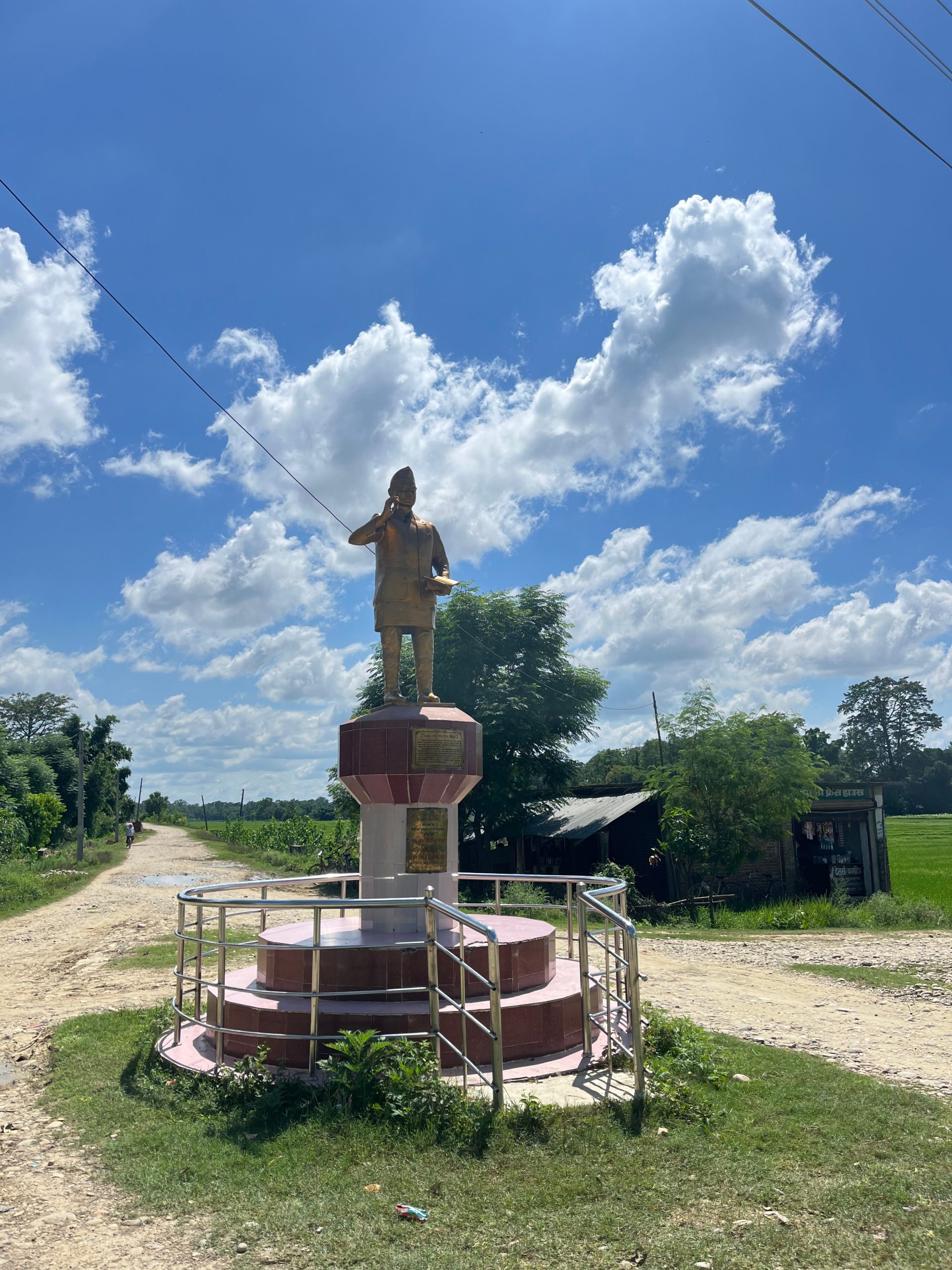
A statue of Niranjan’s father, Sagunlal Chaudhary
We met him Tuesday afternoon at the Kumbhar Adda Missing Warrior Memorial Park, located in Barbardiya Municipality. After a warm welcome, some introductions, and a cold bottle of water, he suggested we take a walk around the park. Anmol Chaudhary, a young man and member of the Park Management Committee who has recently been trained as a memorial guide, joined us.
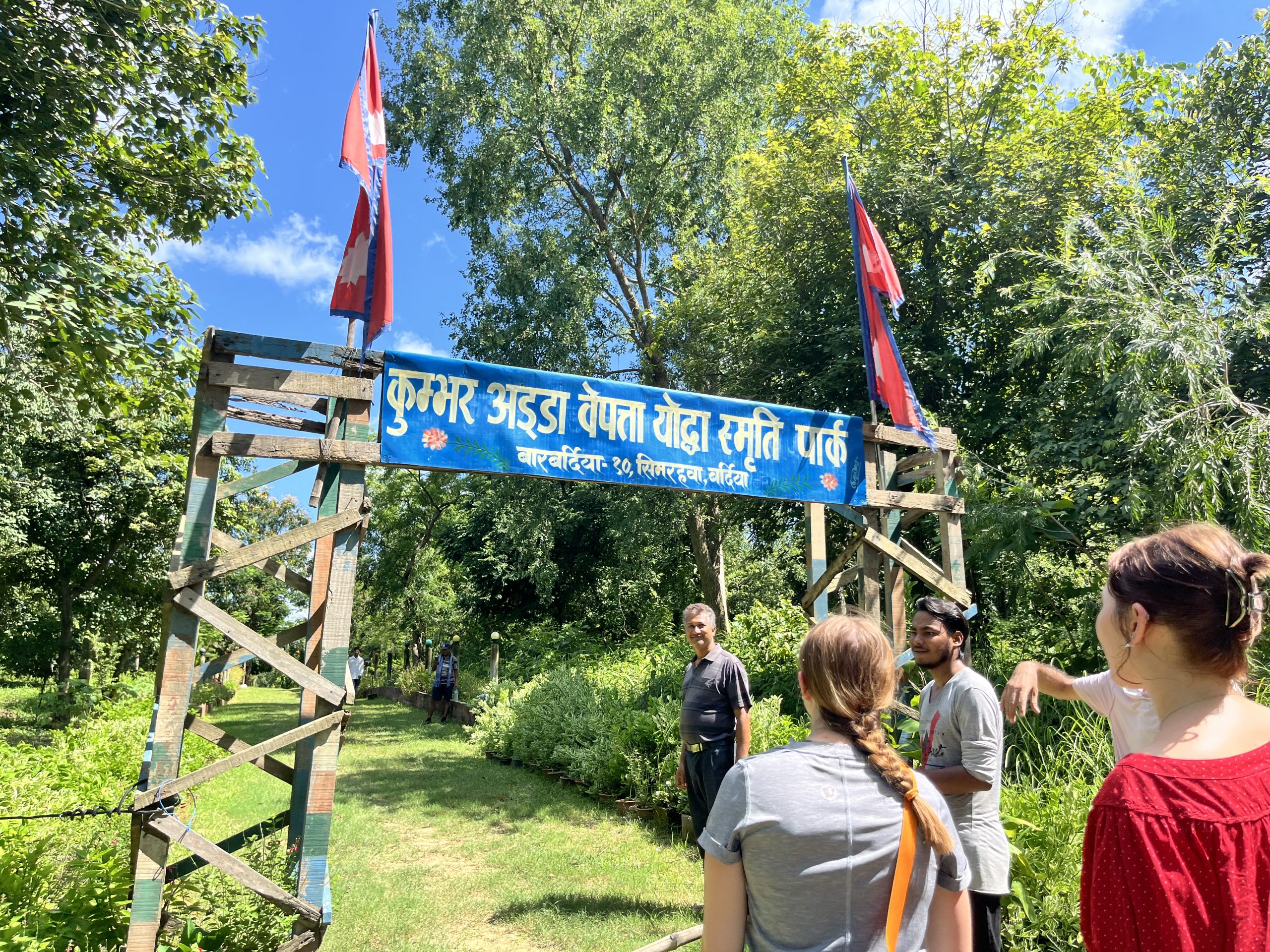
Our group near the entrance of the park. Facing forward on the far left is Niranjan Chaudhary. Next to him, also facing forward, is Anmol Chaudhary.
We began in a small white building near the entrance of the park. Inside were walls of plastic bags, each holding various items — clothing, a school certificate, a steel plate — and a piece of paper with a name and date. These are the belongings of the disappeared, Anmol explained. The Park Management Committee has been collecting them. Their storytellers, a group of 25 community members, many of whom are family members of the disappeared, write about the life, events, and memories of each of person. Together with these stories, the belongings serve as an archive of memory. According to Anmol, they have gathered belongings of 68 people, but are continuing to document and collect others, hoping to eventually move everything to the park’s museum where they can be properly displayed.

Belongings of the disappeared are displayed in bags that hang on a wall
We left the building and made our way further into the park, walking down a long grass path lined with flowers and colorful glass globes. This, Anmol told us, is the Way of Hope. He added, “we have to have hope because hope gives us life.” We turned right at the end of the path and arrived at a large banyan tree, finding some relief from the heat under its canopy of leaves. Anmol instructed us to observe, and we noted that it’s thick, tangled branches lean up and to our left, aerial roots weave downwards through the tree, and large stones encircle its base. Anmol nodded. This tree, he said, represents the husband in Hindu culture. There is another (a sacred fig tree) that represents the woman and typically they accompany one another, but this tree is alone. With stones placed by 17 wives of the disappeared from Barbardiya Municipality, it has come to represent their prayer for the return of their husbands, and for justice.
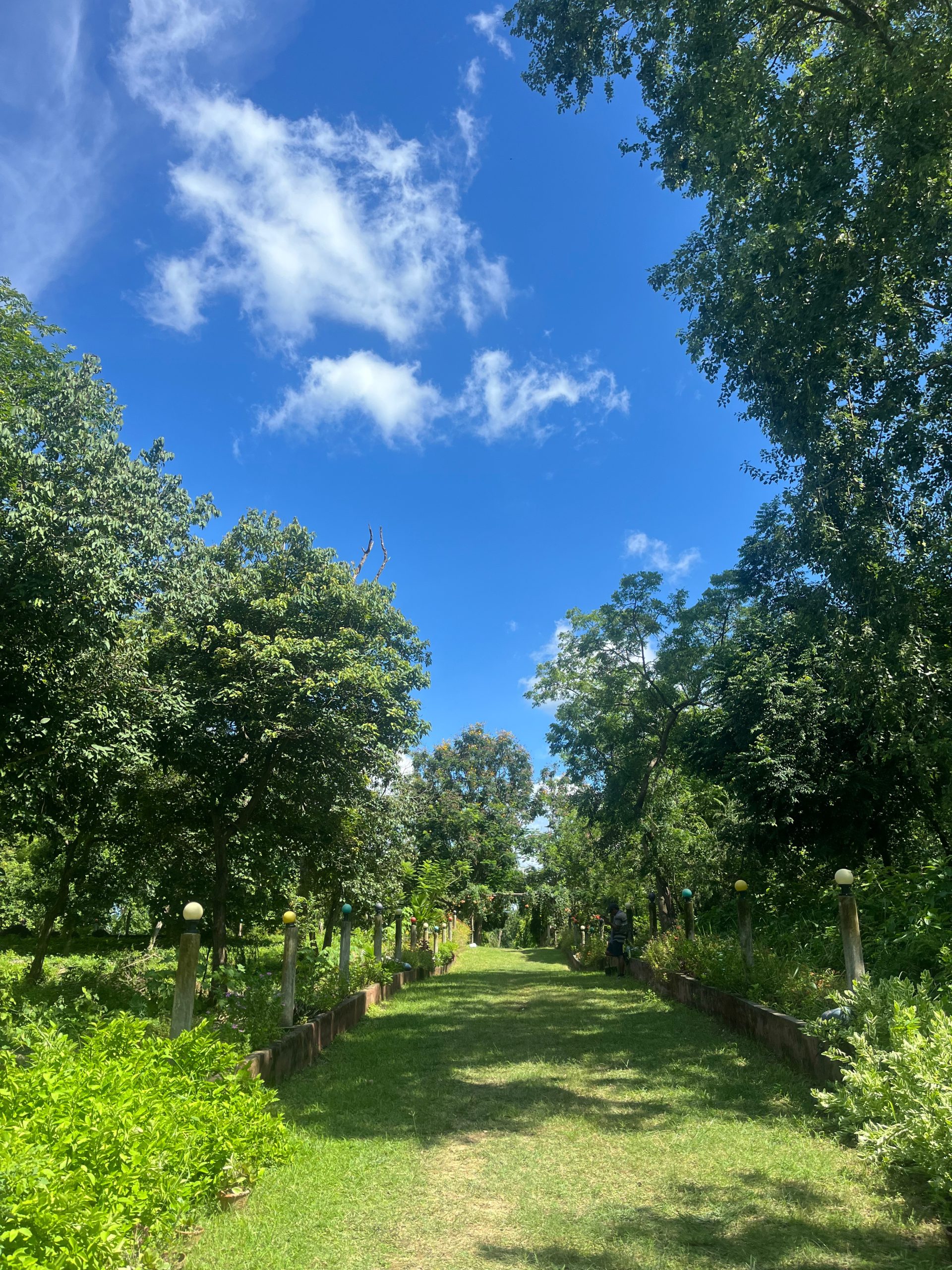
The Way of Hope
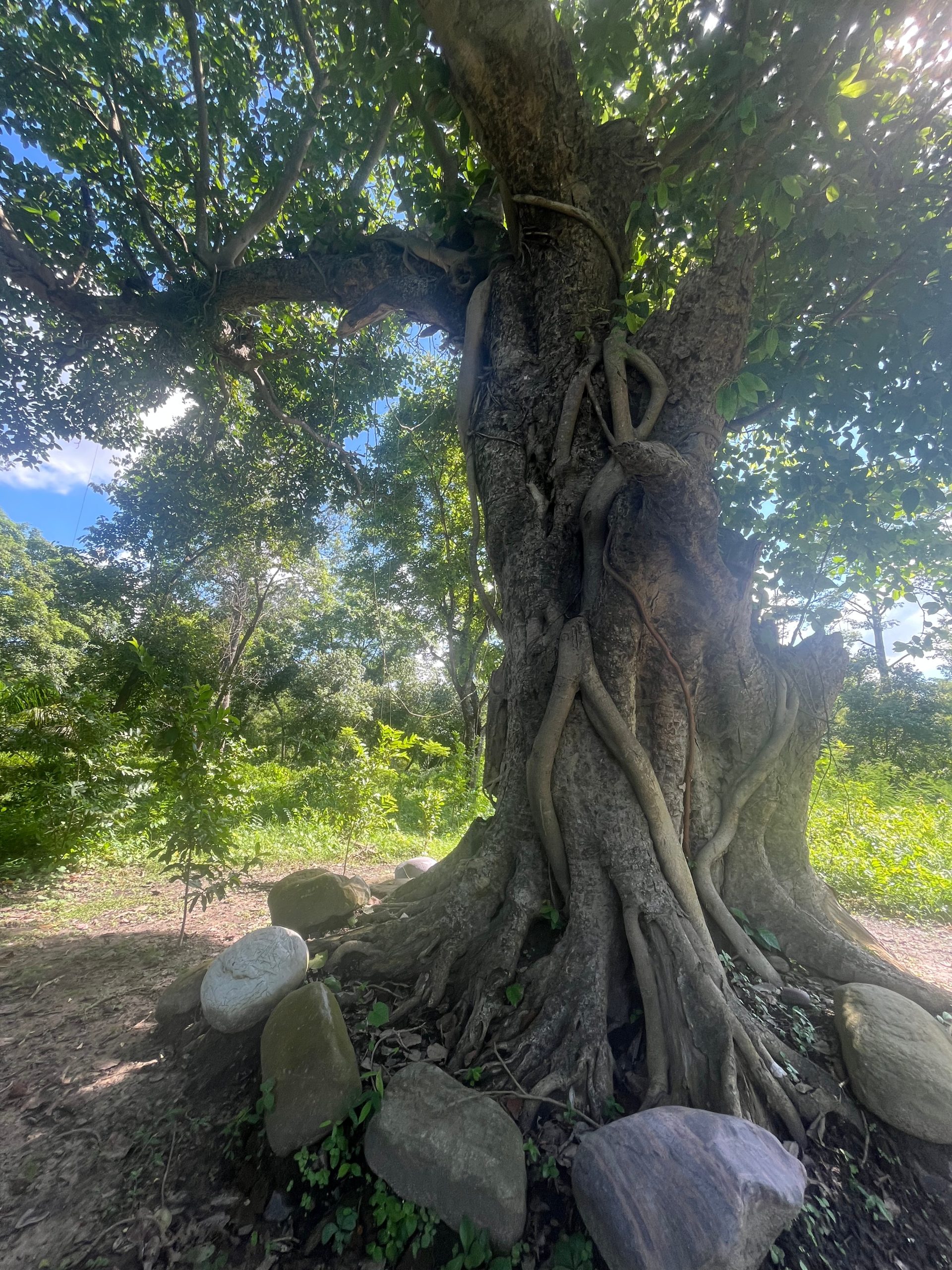
A banyan tree with stones placed by wives of the disappeared
“The tree has a long history,” Niranjan said. We had heard from Anmol that it was once a headquarter junction point and the location of the Kumal caste’s informal justice process, but what Niranjan was referring to is a more personal history. His father, an avid proponent of education and justice for Tharu people, had started a newspaper titled Gochali (meaning comrades in the Tharu language) in the 1930s. It was written in Tharu and covered the atrocities of bonded labor and structural inequality under the Panchayat system. The newspaper was banned, but Sagunlal continued to publish. He’d come to this banyan tree to write. Only his wife, Niranjan’s mother, knew this and after her husband was disappeared, she began going to this tree every day to pray for his return.
“Once the spot of writing for revolution, the tree remains a symbol of hope,” Niranjan reflected. “The stones are still asking the questions.”
Still reflecting on the tree, we made our way through some brush and to a clearing. In front of us was a tall clay pillar mounted on a cement base. We moved closer and walked around the tower, each side containing a series of pictures from top to bottom — a group of farmers, a school teacher in a classroom, someone chopping wood, a sports jersey, a barber. We ran our hands over the cement base, touching the names and dates of the 258 people disappeared from Bardiya in a customary sign of respect. The pillar honors their sacrifices, Anmol told us. Each of the 24 images on the tower represents a moment someone was disappeared. One person was working in their field, another was sleeping, someone was teaching. These were ordinary people, Anmol emphasized, and over 85 percent were Tharu. In resistance to state dominance and oppression, their names, which in a piece like this would typically be engraved in the cement, are raised.
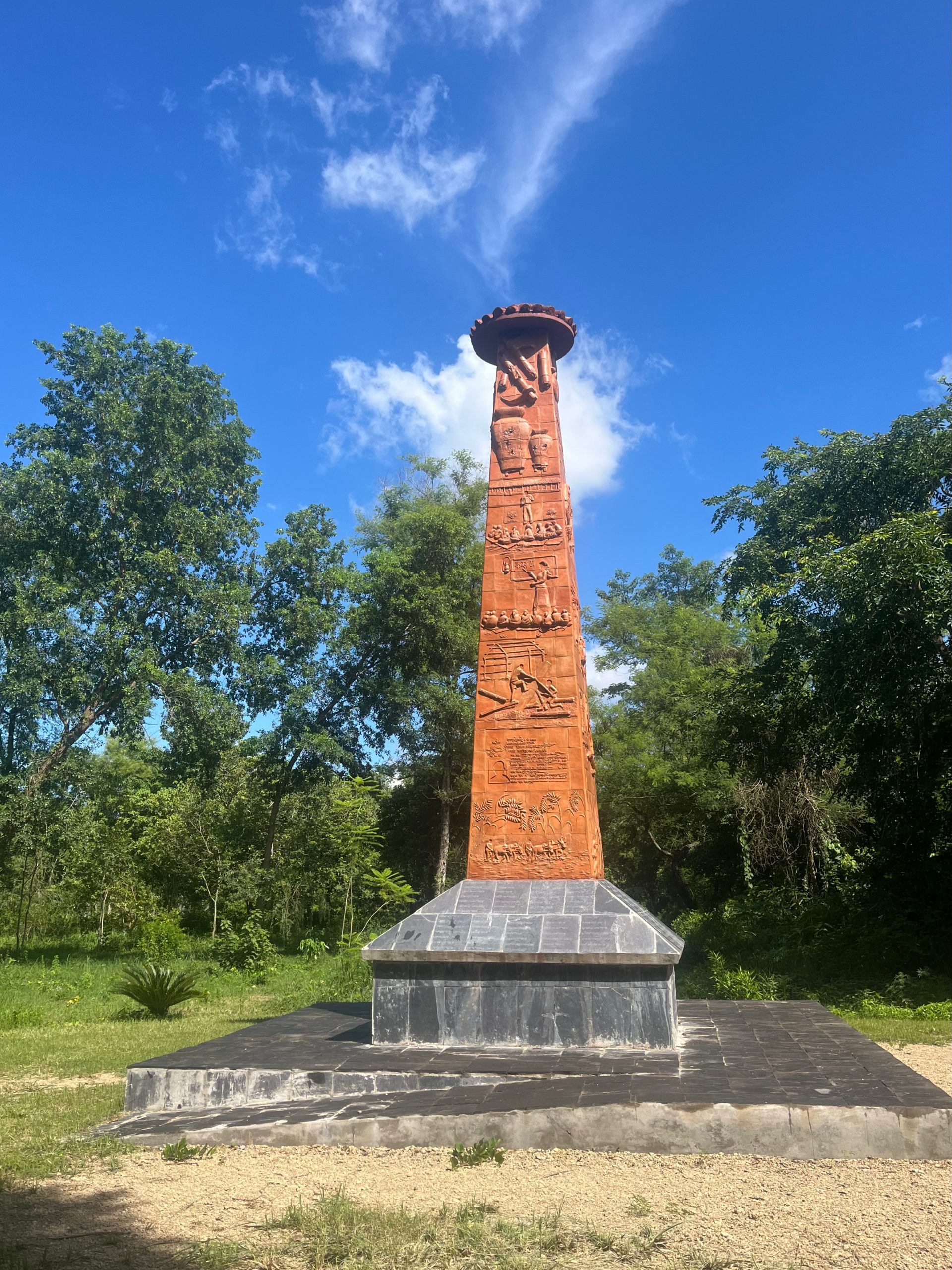
The Memorial Pillar
Continuing on our walk, Anmol pointed out that the various fruit trees throughout the park were each planted by a family of the disappeared in honor of their loved one. We stopped outside a circular hut where a group of teenagers were hanging out and learned that this Memorial Rest House was the first structure built in the park. It was initiated by Niranjan during his time as the chairperson of the community forest. The rest house became a central spot for local families of the disappeared to gather and plan for the future, a starting point of their movement. It is now also a resting place for the wider community but remains a meeting spot for families of the disappeared and a symbol of their resistance.
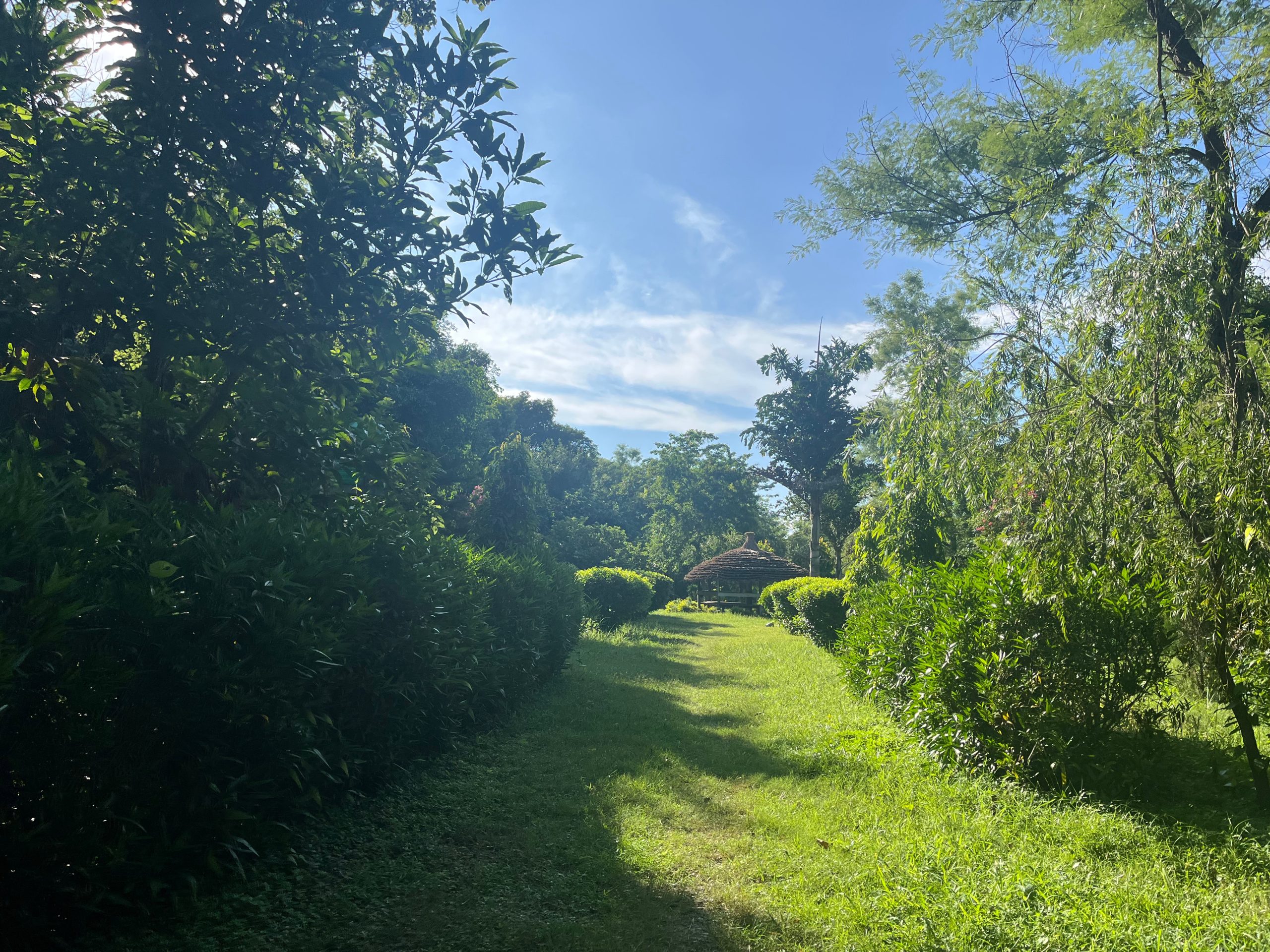
The rest house from a distance
From there we could see a silhouette of a person cut out in a cement wall. It sat in the distance, at the end of a corridor of greenery. We walked towards it, passing by the park museum on our way. As we moved closer, more cement walls emerged. This Memorial Wall is still under construction, Anmol explained. They plan for it to become a national memorial, with the names of Nepal’s 1,350 disappeared people to be listed by month on each of the 12 walls. The 13th and central wall has been cut so that an area in the shape of a person is missing. Anmol pointed out that while it is the shape of a human being, you cannot see the person — a powerful symbol challenging us to reckon with enforced disappearance.
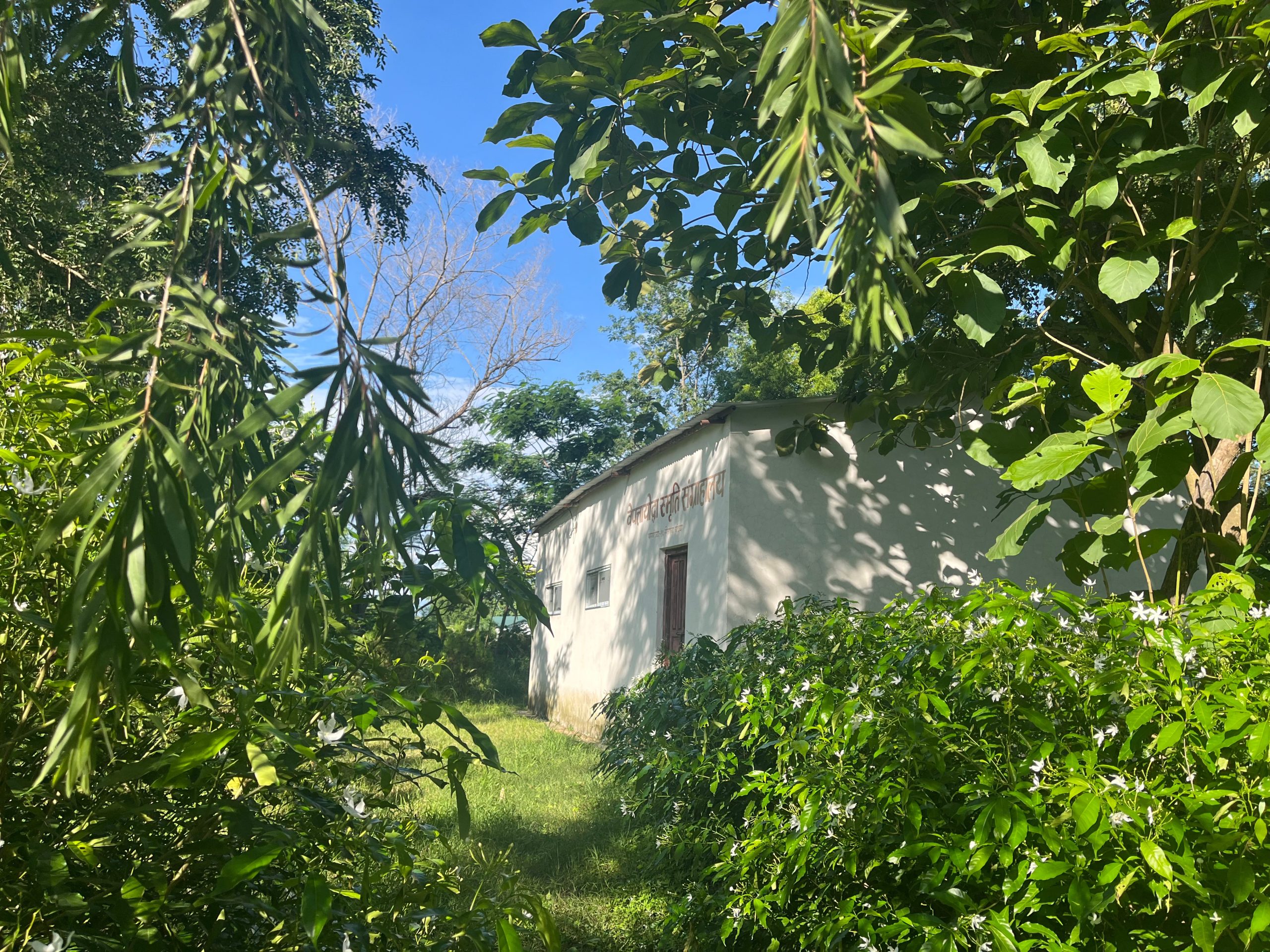
The museum
Anmol encouraged us to think back over where we’d been in the park — the banyan tree with stones from the municipality’s wives of the disappeared, a pillar with the names and stories of those disappeared in Bardiya District, and now a national memorial. Our walk through the park had been a journey, tracing the impact from the local to national level and honoring all of those whose fates remain unknown.
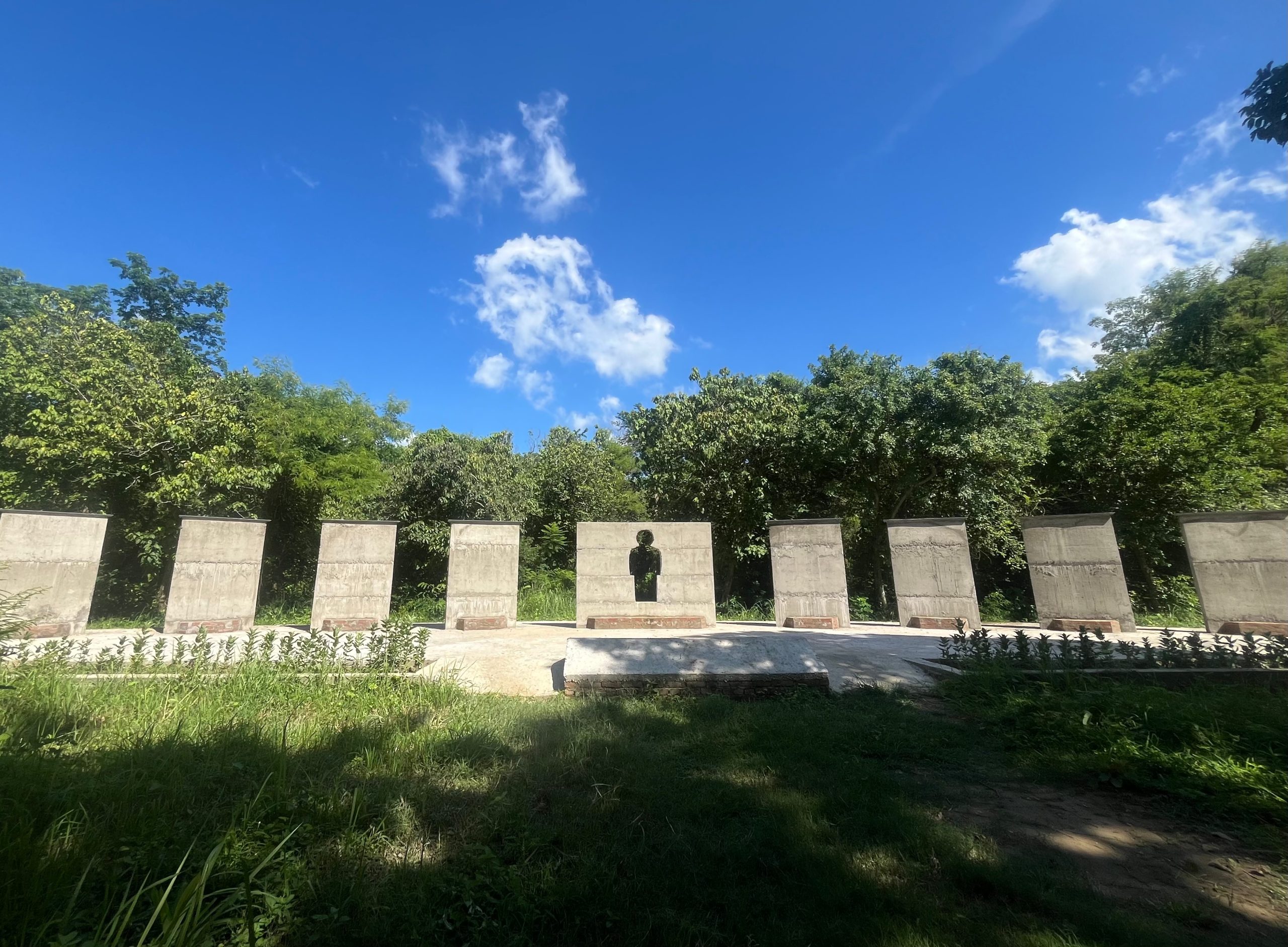
The memorial wall, still under construction
We had one more stop. We walked through to the other side of the Memorial Wall and entered the forest. Meandering down a dirt path, we found ourselves surrounded by lush green and dappled light. The sound of birds chirping and monkeys rustling through the trees in the distance accompanied our steps. We came to a clearing with a swing and herd of sheep. Just a few more steps and we found ourselves standing at the edge of a large pond.
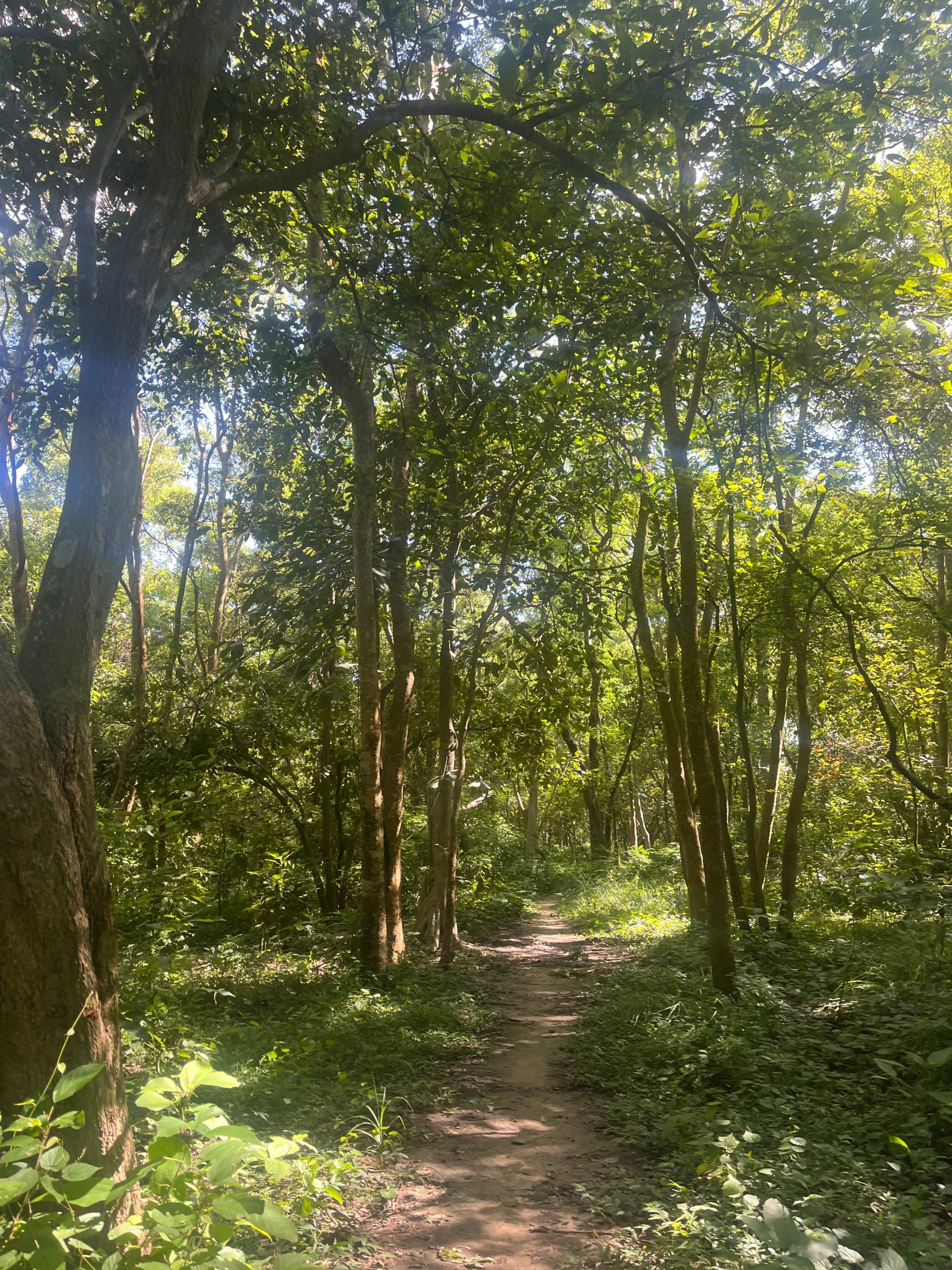
Our walk through the forest
“You have faced many obstacles in your walk here through the park, symbolizing the obstacles people have faced in their fight for justice and truth. But we have arrived at the Pond of Hope,” Niranjan explained.
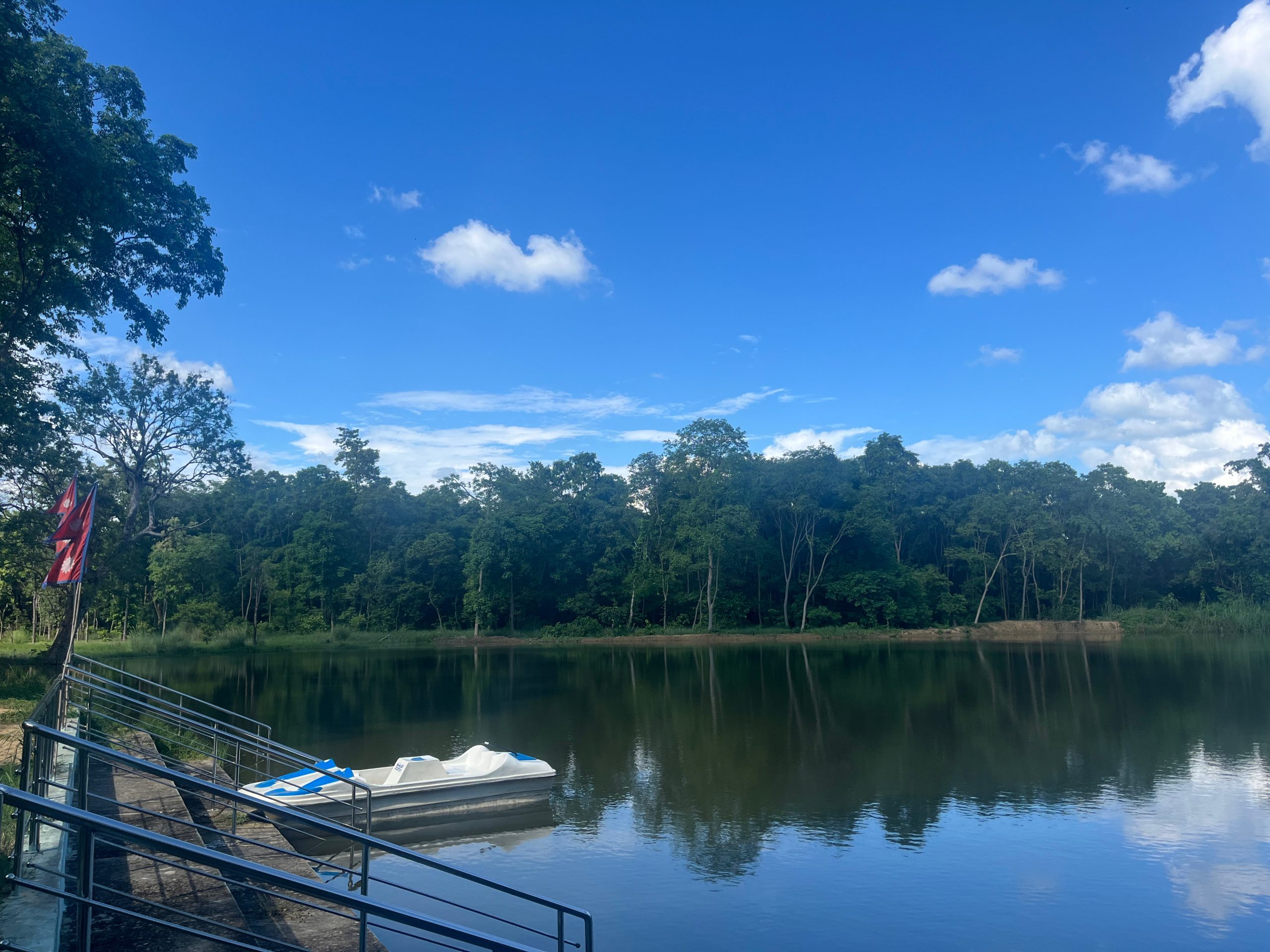
The Pond of Hope
The park as a physical space is imbued with memory. There are the stories and monuments written in, but also the knowledge held by the land itself. And as we looked out over the water, watching as birds swooped and a small alligator swam across, we were overwhelmed by the grief, love, long struggle for truth and justice, and eventual hope that it represents.
Posted By Emma Cohen
Posted Jul 19th, 2025
2 Comments
Iain Guest
July 20, 2025
Wonderful blog, Emma! So well written, with tons of insights and new information on a critically important aspect of TJ in Nepal that is not widely known – how local communities and survivors are commemorating victims. The fact that local government is behind this is particularly important. the people also come alive. It was good to be introduced to Niranjan and Anmol (first time I have heard of “memorial guides”) although it would have been nice to see a close up photo of them both. Also, we get a hint of Naranjan’s personal story and the disasppearance of his father, but what about Anmol? What moved him to take on this job? Let’s think how we can use this blog to get more visibility for the park, and what this says about commemoration as a whole as it is evolving in Nepal. Given your obvious interest in this, you might want to take a look at OTHER examples of commemoration – personal and communal. (Your blog makes me think of being shown around Robbin Island in South Africa by one of Nelson Mandela’s former jailers.) One last suggestion – make your photos BIGGER!
Shuyuan Zhang
August 3, 2025
This captures the visit so vividly. The park feels alive with memory and quiet strength—each corner telling a story of loss, resilience, and hope. Beautifully written!