

In a country still healing from the wounds of a decade-long armed conflict (1996–2006), reparations often evoke images of courtroom verdicts, international funding, or national commissions. But in Thakurbaba Municipality, nestled at the edge of Bardiya National Park, reparative justice is unfolding at the grassroots — with local government taking meaningful steps to meet the needs of conflict victims and survivors. Their example shows what is possible when political will, constitutional empowerment, and community engagement align.
Why Local Matters
Bardiya is among the districts most severely affected by Nepal’s conflict, with thousands of victims from both state and Maoist forces. Thakurbaba — the second most affected municipality in the district — has decided not to wait for Kathmandu to solve everything. Instead, Mayor Tilak Ram Lamsal and Deputy Mayor Bina Kumari Bhattarai have embraced their constitutional authority under Nepal’s 2015 Constitution to drive social development and prioritize conflict-affected populations.
Unlike short-term or one-off support schemes, Thakurbaba’s approach is structural. As the deputy mayor put it, “This is not just an individual-based project. The system and structure need to institutionalize the policy so it will remain — not just a one-time thing with temporary effect.”
This philosophy resonates deeply with Nepal’s constitutional framework. Under Schedules 8 and 9 of the 2015 Constitution, local governments have clear mandates over education, health, social welfare, and cultural promotion — all vital domains for reparative justice. Thakurbaba has used this authority boldly and creatively.
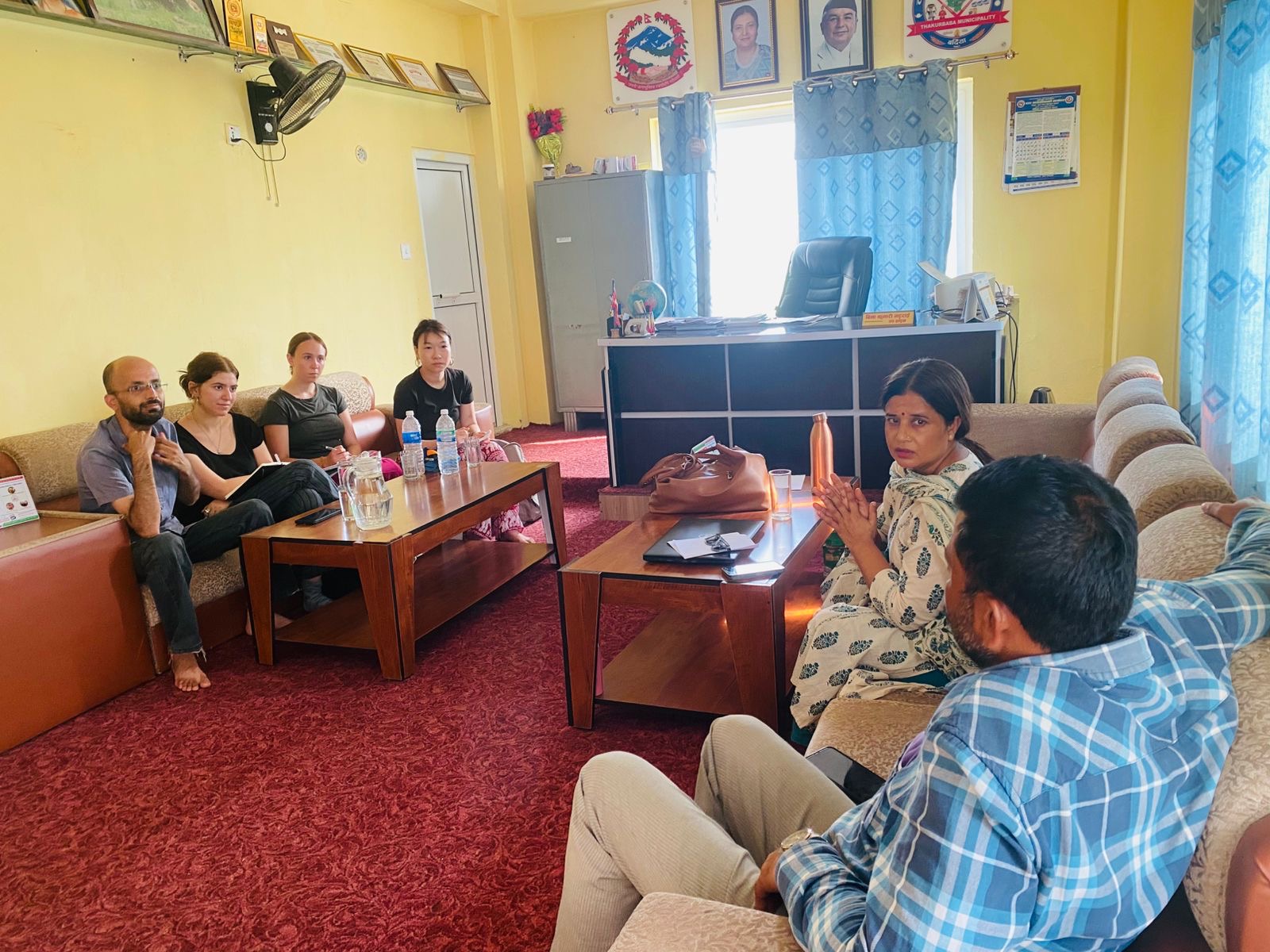
In Thakurbaba, we met with the Mayor and Deputy Mayor to discuss local justice and reparation initiatives.
A Reparative Agenda Rooted in Social Development
What sets Thakurbaba apart is its integrated approach: reparative priorities are embedded within broader social development programs. This includes:
- Education: Within four months of taking office, the municipality declared secondary education free. A selection committee prioritizes conflict victims in allocating scholarships.
- Health: The local hospital has been upgraded to provide both physical and psychosocial health services. In partnership with the Centre for Mental Health and Counselling, supported by the Swiss government, free mental health counselling and shuttle transport are now available. While these services were initially intended for conflict victims, they have since been expanded to serve the general public, including but not limited to those affected by the conflict.
- Livelihood Support: Conflict victims are provided with access to skill training programs and included in broader agricultural and income-generating initiatives. They also receive special reservation or priority in these opportunities.
- Budget Commitment: An extraordinary 52% of the municipal budget is allocated to social development — a testament to political commitment.
Crucially, all these efforts are policy-driven and institutional, not merely ad hoc. Conflict victims — regardless of whether they suffered at the hands of the state or Maoist forces — are recognized as a unified group in the municipality’s planning and programming. This helps heal historic divisions and promotes social cohesion.
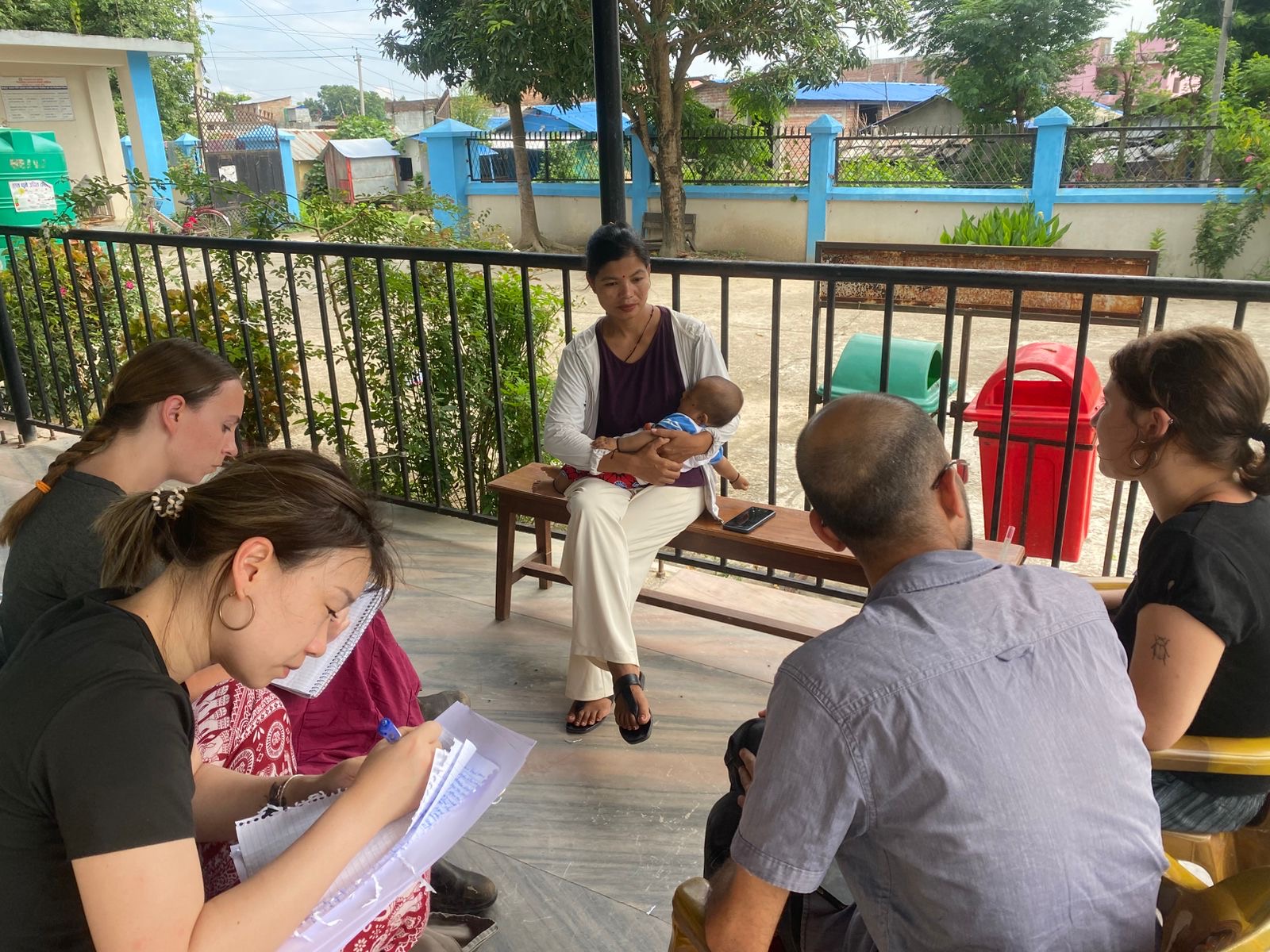
Psychosocial counsellors in Thakurbaba shared insights into their community-based mental health support.
Shared Responsibility: Local and Federal Roles
The municipality’s work does not eliminate the federal government’s responsibility — it redefines it. As outlined in Nepal’s Constitution, local governments have direct power over grassroots implementation, while the federal government is responsible for funding flows, national frameworks, and coordination.
Thakurbaba’s example shows the complementarity in this relationship. Local governments can tailor responses to the lived realities of victims — such as caste-based discrimination or trauma-induced poverty — while federal policies can standardize rights and allocate sufficient resources to ensure consistency across the country.
For example, the call for victim registration in Thakurbaba is not just about tracking numbers. It’s about building a local database that can feed into national reparations mechanisms, identify needs, and streamline benefits. Yet, without a clear federal reparation law or national registry, these efforts risk being under-supported or fragmented.
Political Will: The Human Factor
Much of Thakurbaba’s success stems from strong and sincere leadership. Both Mayor Lamsal and Deputy Mayor Bhattarai have deep experience in social development and an evident personal commitment. The mayor has gone so far as to donate his own government salary to establish a community fund for social development to help the underprivileged.
But what happens in municipalities where such leadership is absent?
This is where replication strategies matter. Strong local initiatives like Thakurbaba’s should be documented, publicized, and used to influence national frameworks. NGOs, donors, and federal authorities can play a key role in scaling these models, providing technical support, and incentivizing other municipalities to follow suit — even where political will is not as strong.
Reconciliation and Justice at the Local Level
Thakurbaba has shown that reconciliation need not be confined to courtrooms. Through its Judicial Committee, chaired by Deputy Mayor Bina Kumari Bhattarai, the municipality emphasizes local mediation and restorative justice. Although the committee lacks formal judicial authority, it plays an active role in resolving everyday disputes and promoting peaceful coexistence within the community. The committee includes representatives from each ward as well as members of victims’ families, who serve directly as local mediators—ensuring both inclusivity and trust in the process.
This grassroots justice mechanism complements national transitional justice institutions by offering a community-based model that is immediate, accessible, and culturally grounded.
Looking Forward: From Bardiya to Nepal
Thakurbaba’s story offers an important lesson: transitional justice is not the sole domain of national commissions or international tribunals. Local governments — empowered by the constitution and driven by moral clarity — can and should lead the charge.
To scale this model, three actions are essential:
- Codify Best Practices: Develop a national framework for local reparations based on successful examples like Thakurbaba.
- Coordinate Across Levels: Ensure that federal policies and funding mechanisms support and recognize local initiatives.
- Empower Other Municipalities: Provide training, documentation, and peer exchange programs to encourage replication across Nepal’s 753 local governments.
As Nepal’s transitional justice process continues to stall at the national level, municipalities like Thakurbaba remind us that healing and dignity need not wait. When victim groups are mobilized, communities are empowered, reconciliation is not only possible — it is already happening.
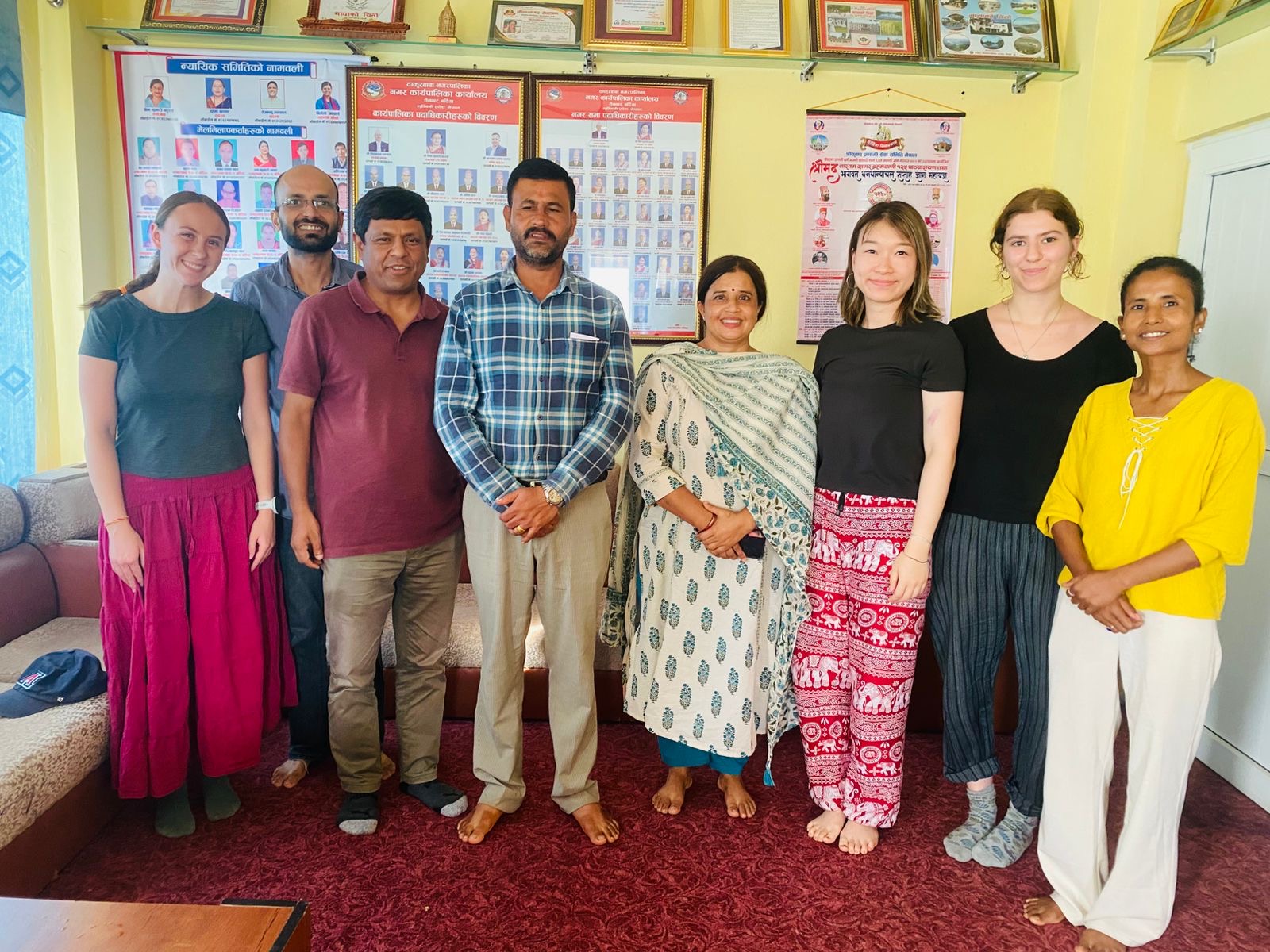
Meeting with the Mayor and Deputy Mayor in Thakurbaba Municipality.
Posted By Shuyuan Zhang
Posted Jul 21st, 2025
2 Comments
Iain Guest
July 23, 2025
Shuyuan – You really have made a big effort to approach your issues from all sides. Last blog you looked at the role of the survivors committees as advocates. In this blog – again really well written! – you show how municipalities are leading the way when it comes to reparations (one of the key elements in the TJ package). Not just leading the way, but also using local talent and funds to define a NEW model of reparations that addresses real NEEDS and does not just adhere to the conventional approach suggested by “experts.” As you point out some of these needs are practical enough, but some are more psychological. The WAY this is done is also critical. Putting survivors on the Thakurbaba judicial committee is clearly a key – and will give the committee’s rulings more credibility. What a pity the central government in Kathmandu has chosen NOT to nominate survivors to the two new TJ commissions! Reconciliation presents its own special challenges. You might want to take a look at gacaca in Rwanda. Thanks for these great blogs, Shuyuan!
Aaron Bailey
July 28, 2025
This approach illustrates how local governments can operationalize constitutional authority into tangible policy outcomes. And also shows exactly why politicians are elected in the first place: to USE that power. The integration of reparative justice into existing social services shows a level of institutional thinking that goes beyond short-term aid. It’s also notable how the municipality has created structures for inclusivity, such as involving victims directly in mediation processes. This case offers a valuable model for how decentralization can function as a tool for post-conflict governance and reconciliation.