
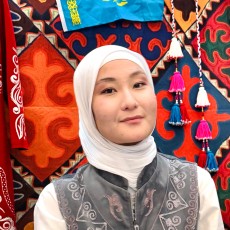
Okay, so last week and this week genuinely broke my brain a little, in the best way. We had four speakers, sessions on reparations theory, a session on interviewing ethics and then a whole “what is transitional justice” session which made some things clearer and also more complicated.
Lenin Bista, the kid who became “disqualified”
We started the week with Lenin Bista, and honestly I don’t think I was prepared for how much his story would sit with me. He was 12 when Maoist guerrillas came to his school in Kavre district recruiting students. Every household had to send someone. He didn’t even know what communism was, he just wanted to fight injustice. He ended up doing intelligence work as a child because no one suspects a kid.
The part that really got me was him being labeled as “disqualified.” After the war, the UN defined which combatants were minors at the time of the ceasefire and discharged them. But they were not recognized as former child soldiers. Lenin spent years fighting to change label, got jailed for it, went underground, was imprisoned again for false corruption, but as you can see still kept going anyway.
Anyway, they achieved success since Nepal’s Supreme Court recently ruled that recruiting child soldiers should be classified as a war crime, and directed compensation for former child soldiers. But the amount is very tiny… 10k rupees🤦🏻♀️ compared what adults “received” 800k (of course not all of them also).
The court also said the terms “disqualified” and “discharged” should stop being used because they minimize what happened.
Also nine of his friends did suicide during this fight for recognition…
Pratik Karki, carrying a legacy you didn’t choose
Then we listened to Pratik, whose parents were both Maoist combatants killed by state forces. He grew up carrying that history in a community that treated him as “weak” because of it. What really struck me was his point about the word “martyr” that it’s not a neutral term, it’s a political one. Whoever’s in power gets to decide who counts as a martyr and terrorist. Thus it is important to keep in mind who is telling the story.
He also talked about the Gen-Z uprising and and that government also Gen-Z activists arguing about what actually happened.
It felt for me the same as he told that the people outside Kathmandu are so disconnected from what’s happening in the capital but though being influenced.
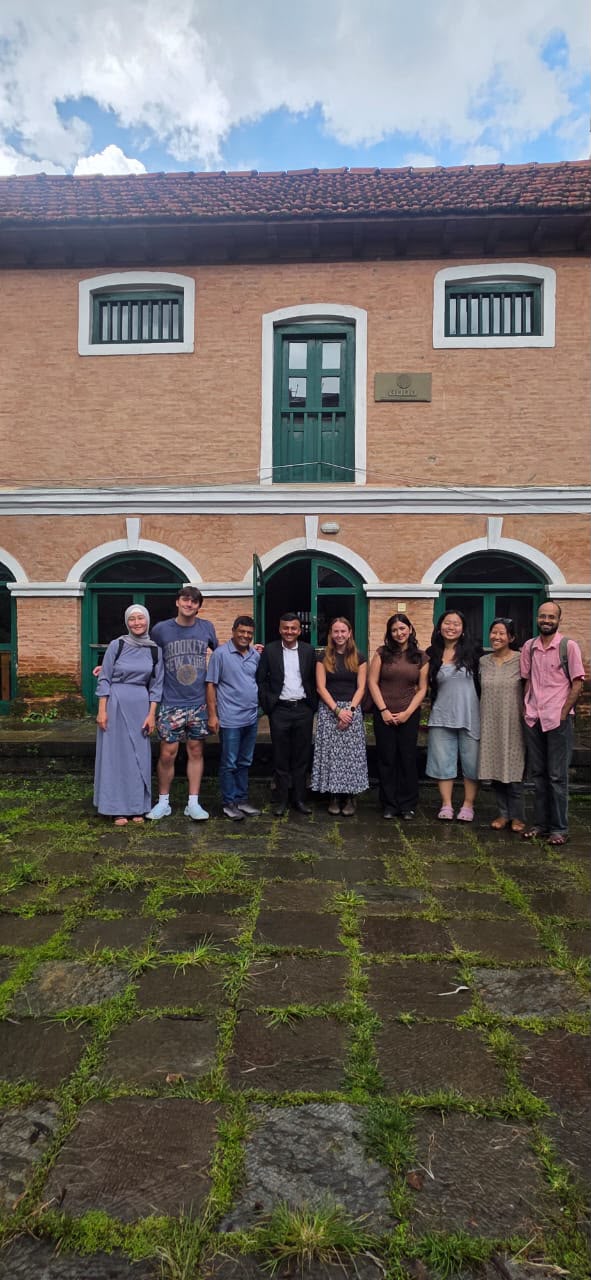
with PratikAlicia, the long fight of justice in Argentina
This session took us out of Nepal entirely, which was necessary comparative perspective. Alicia founded the Mothers and Grandmothers of the Plaza de Mayo movement in Argentina. This
movement demanded to find where are their stolen children.
Two things I wanna mention from her words: “It took 50 years. Fifty. And it’s still not “done.” and “the normalization of impunity is apparently a global trend, not just a Nepal problem”.
It shows how some problems are structural despite different contexts.
She also mentioned something that’s stuck with me: for a long time, international staff got paid to attend and speak at these conferences about the consequences of war, etc., but the actual survivors didn’t.
Surendra, the soap falling from his hands
This one collapsed us really. Surendra lost his hands in a bomb explosion and now leads Nepal’s National Network of Disabled Conflict Victims. He described this moment of dropping a bar of soap in the shower such a small, everyday thing, but that can not happen anymore.
Some things I didn’t know before this session is that there’s no real official data on civilian disabled conflict victims because the assumption is “disabled conflict victim” means a former combatant, not an ordinary person caught in crossfire or hit by an unattended landmine.
It is horrible that some landmines are still active can stay for up to 50 years. Nepal declared itself “landmine-free” in 2011, but that only covered mines the Nepal Army itself planted. Kids still died from landmines even after that.
Moment that broke me was his daughter told him she wanted to become a doctor so she could give him another hand. That’s the kind of detail that shows how we reduce “reparations” just to financial payout.
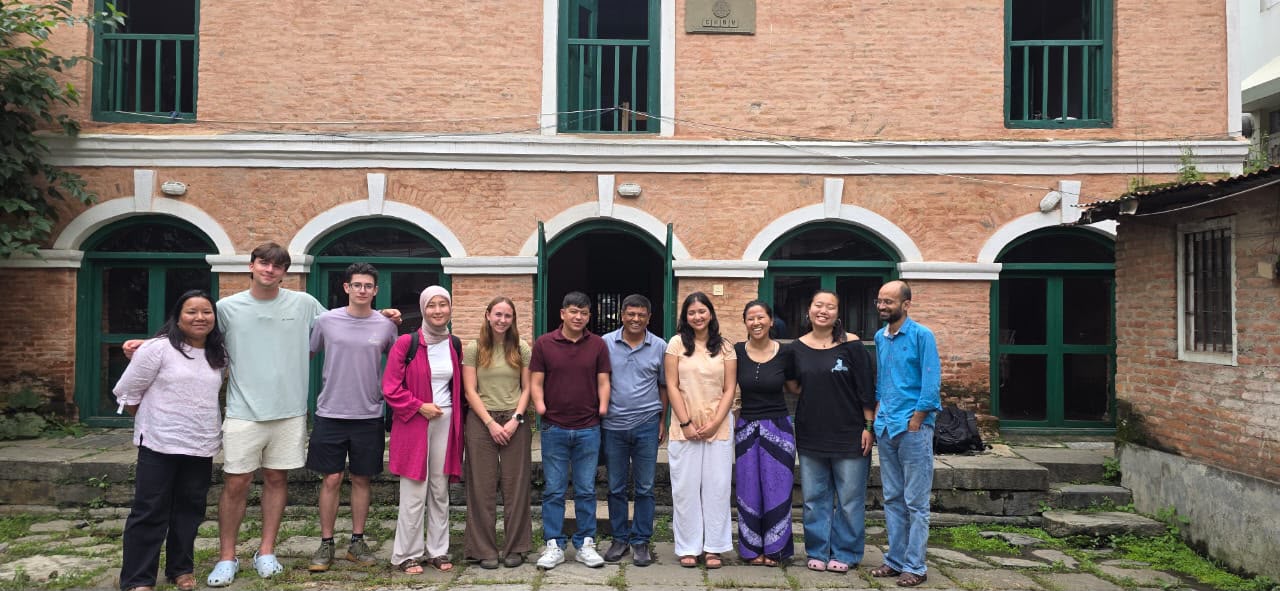
with Surendra
Then, we had a session on reparations.
We learned that under the OHCHR framework they include restitution, compensation, rehabilitation, and satisfaction. We shortly looked into how it worked in Tunisia. Public apology, renaming names of streets by people who died fighting, etc. Thus, there are different aspects of it.
Thought, provision of reparations was legalised I was surprised when one of the speakers told that one woman in Bardiya described promised payments as having “disappeared somewhere between here and Kathmandu.” The CHRV also found that survivors don’t necessarily agree on what is “reparation”, they talk about different things.
The interviewing ethics session was truly beneficial.
I even though this is not enough I have to study maybe more rigorous online course.
What are my big takeaways: build trust, never put with questions that contain assumptions in it, always explain who you are and what will happen with the information, get clear permission for notes/recording, and this one hit me: don’t promise outcomes you can’t do.
However, I wanna say one thing silence is also complicity. The Prophet (may peace be upon him) said: If you see something wrong, you should try to change it with your hand, if you are not able to do that, then with your words, and if you cannot do that, then at least reject it in your heart.
Also, there is a related story about Prophet Solomon (who is recognized in all 3 Abrahamic religions and an ant. A fire broke out, and the ant was carrying tiny drops of water in an attempt to help put it out. Prophet Solomon asked, “What can such a small creature possibly do? You cannot put out this fire.” The ant replied, “I know I may not be able, but I am doing what is within my ability. I will not be questioned by God for the size of my contribution, but for whether I tried.”
Thus, you should do what you can even though you do not promise to victims.
Okay, guys, after this long blog, you deserve something to cheer you up! A bike rider told me “chaina” (which means, no, I do not have) when I asked about change, and I thought that he is asking if I am Chinese, so I said “no no, I’m not Chinese, I’m from Kazakhstan.” 2.5 weeks and this is my achievement in the Nepali language.
Next week we will go to Bardiya, one of the most affected regions. I think what I want to carry with me is to know how each person wants their dignity to be restored… I will be back!
Posted By Tomiris Ottesh
Posted Aug 6th, 2026