
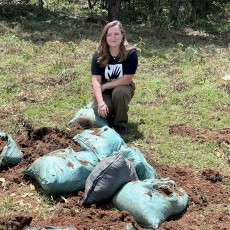
“When I think about my grandmother, living through the war with five children…I think about not knowing when the rain will stop.”

The rain of cluster munitions poured over Laos for nine years between 1964 and 1973; one bomb dropped every eight minutes, 24 hours a day. 53 years later, the international community has gathered once again in Laos for the Third Review Conference of the Convention on Cluster Munitions.
For Phonenipha Mathouchanh, her work to prepare for this Review Conference in Vientiane Laos is a “homecoming”. For the first time since the Convention on Cluster Munitions (CCM) was established in 2010, a Review Conference is being hosted in an impacted country: Laos is the most heavily bombed country, per capita, in history, and still today faces threats of the millions of unexploded ordnance (UXO), including and especially cluster munitions.
Lao PDR assumed the Presidency of the Third Review Conference of this international treaty which bans cluster munitions, and advocated for this conference to be held not in Geneva, but in Laos. The importance of being in an impacted country cannot be understated; yesterday’s opening ceremonies featured moving testimonies from victims of cluster munition accidents and a performance of traditional Lao music and dance which highlighted the ever-present threat of the bombies buried in family farms, schoolyards, roadsides, and forests.

Phonenipha is part of the official delegation coordinating this week’s Conference; as the daughter of survivors of the American War in Laos, this week is about accelerating progress towards a UXO-free country. The Convention on Cluster Munitions was officially signed into international law in 2010 right here in Vientiane, and was ratified by 30 state signatories at that time.
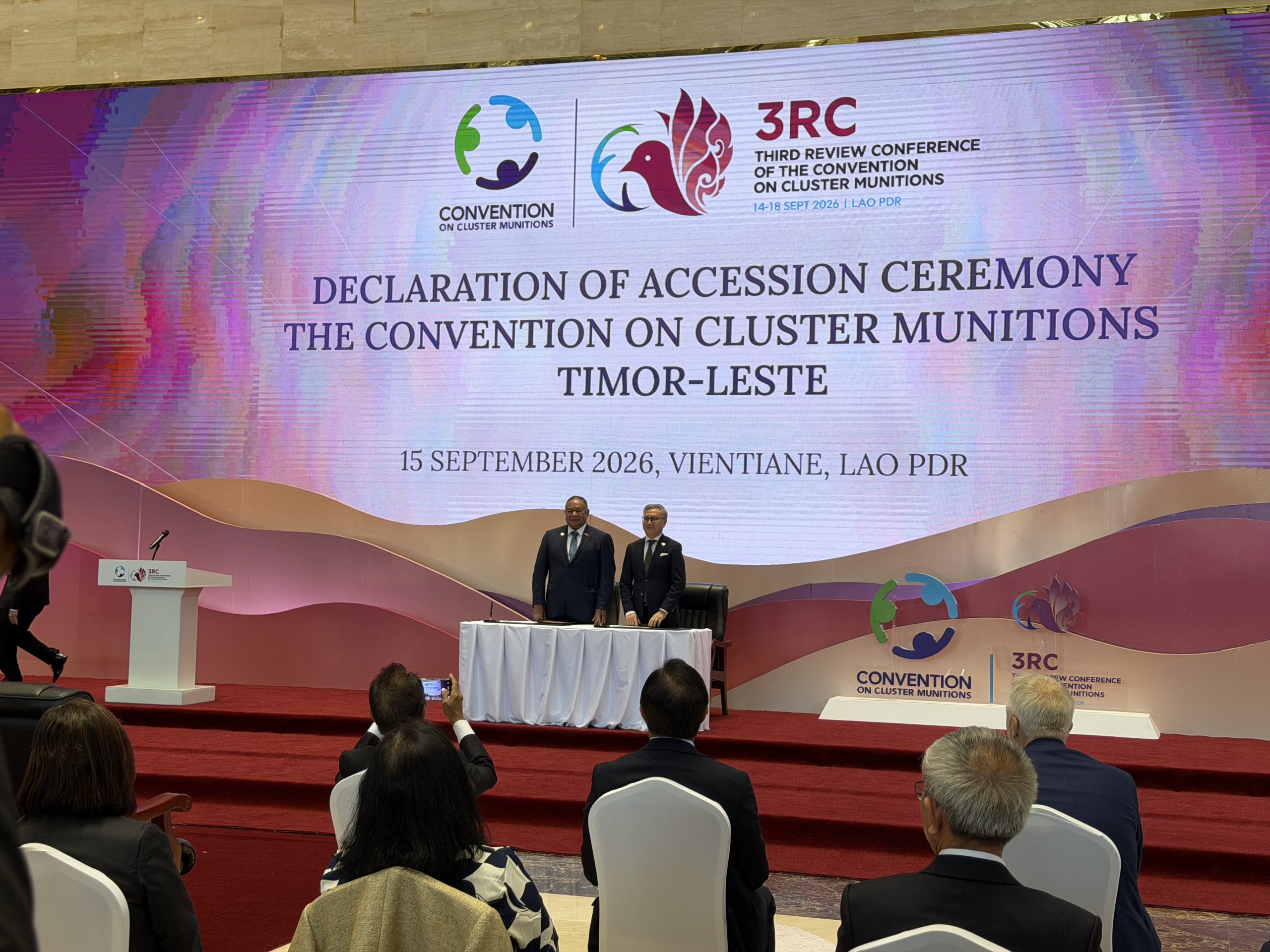
Today, on the second day of this week-long Review Conference, Timor-Leste became the 124th state to accede to the Convention. In official remarks at the signatory ceremony, H.E. Bendito dos Santos Freitas, Minister of Foreign Affairs and Cooperation, maintained: “Protection of civilians and preservation of human dignity is at the heart of international cooperation.”
This week’s meetings are an important step in international law; review conferences are held every five years to reaffirm the language of this Convention, which advocates for universalization of the treaty and establishes operations and procedures for stockpile destruction, clearance, victims assistance, and risk education for all states party. But this meeting is also a chance to reengage the international community on the issue of cluster munitions – their long-lasting impact after conflict, and their overwhelming threat to civilians.
For Phonenipha, this week is a chance to accelerate progress towards full clearance in this country. Most optimistic reports estimate Laos will not be UXO-free for 35 more years. But this conference is a chance to highlight the work of the deminers, victims assistance providers, and risk educators who are doing the daily, tedious, manual labor of clearing every meter of land in Laos. It is also hopefully a chance to secure more funding and international cooperation for these operators.
“This is where the roots of the convention were planted.” She has hope that the long-fought-for fruits of this convention will continue to grow.
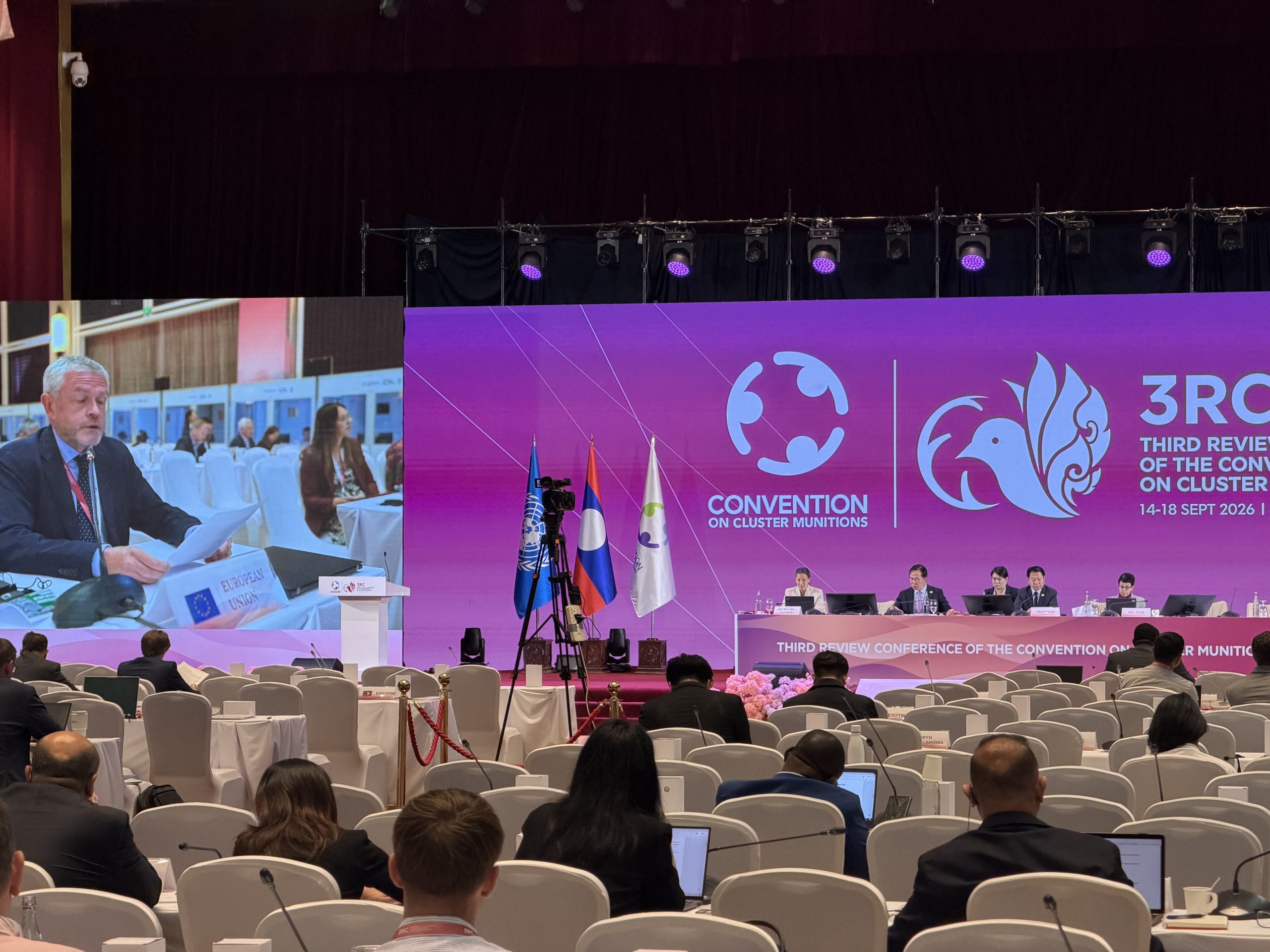
In a time where international law and cooperation is facing constant and immediate threat, the actions of this week make an important statement. While the United States (amongst 18 other countries) continues to produce and transfer cluster munitions, the weapons are being used by Iran, Myanmar, Russia, Thailand, and Ukraine in conflicts today (Cluster Munitions Monitor 2026). Countless civilian lives have been lost to banned weapons in wars this year, and cluster munitions have lasting legacies which threaten civilians for decades.
While the largest powers, including the US, may not accede to or abide by these international laws designed to protect civilians in conflict, treaties like the CCM provide a chance to collect the majority of states who do – in one place, with the goal of strengthening the law and finding ways to implement its protections for civilians through mine action programs.

Throughout the week, I’m excited to share more updates from this week’s meetings as arepresentative with civil society organizations Legacies of War and the ICBL-CMC. Major focuses of these meetings will include diversifying and stabilizing funding for mine action, environmental protection and climate change’s impact on the sector, and victims assistance progress and challenges, and youth involvement in mine action.
Posted By Kendall Silwonuk
Posted Sep 15th, 2026
3 Comments
Emma Badach
September 15, 2026
Such a powerful story and important reminder of how long the impacts of conflict can last, thanks for bringing attention to this and great work!
Iain Guest
September 15, 2026
Great introduction to the conference, Kendall! you’re absolutely right – it’s critical when an affected country hosts a major review like this particularly, as the convention was born in Laos 16 years ago! Its a big feather in the Laotian cap that 124 countries have now signed up, but totally shocking that 18 states – including the US – continue to make and export these evil weapons and others appear to be having cold feet. Can the sheer weight of those on the right side outweigh the power of the nay-sayers? That’s a huge question at this time when international law is under siege from Russia, Israel, the US and others. This conference could certainly help. Look forward to the next post!
Bobbi Fitzsimmons
September 19, 2026
It is disheartening to realize that, once again, major powers flaunt the rights of millions. The work of this conference will help to keep a spotlight on both the consequences of the past and of the future. Your blogs are informative and powerful.