

In many rural communities, civilization is measured not by physical infrastructure, but by the unspoken compromises made with a child’s future. Beneath the surface of daily life, where morning mist clears over tilled gardens and dusty trading centers awaken to commercial trade, lies a social fabric deeply constrained by traditional norms, economic survival, and systemic inaction. While broader society marches toward modernization, local governance frameworks often remain caught in a cycle of silent resignation, allowing pastoralist movements, weekly market dynamics, and acute household poverty to dictate human destinies far more than child rights or statutory laws. In this environment, basic education becomes a high-stakes gamble against overwhelming odds, with young girls consistently bearing the highest cost.
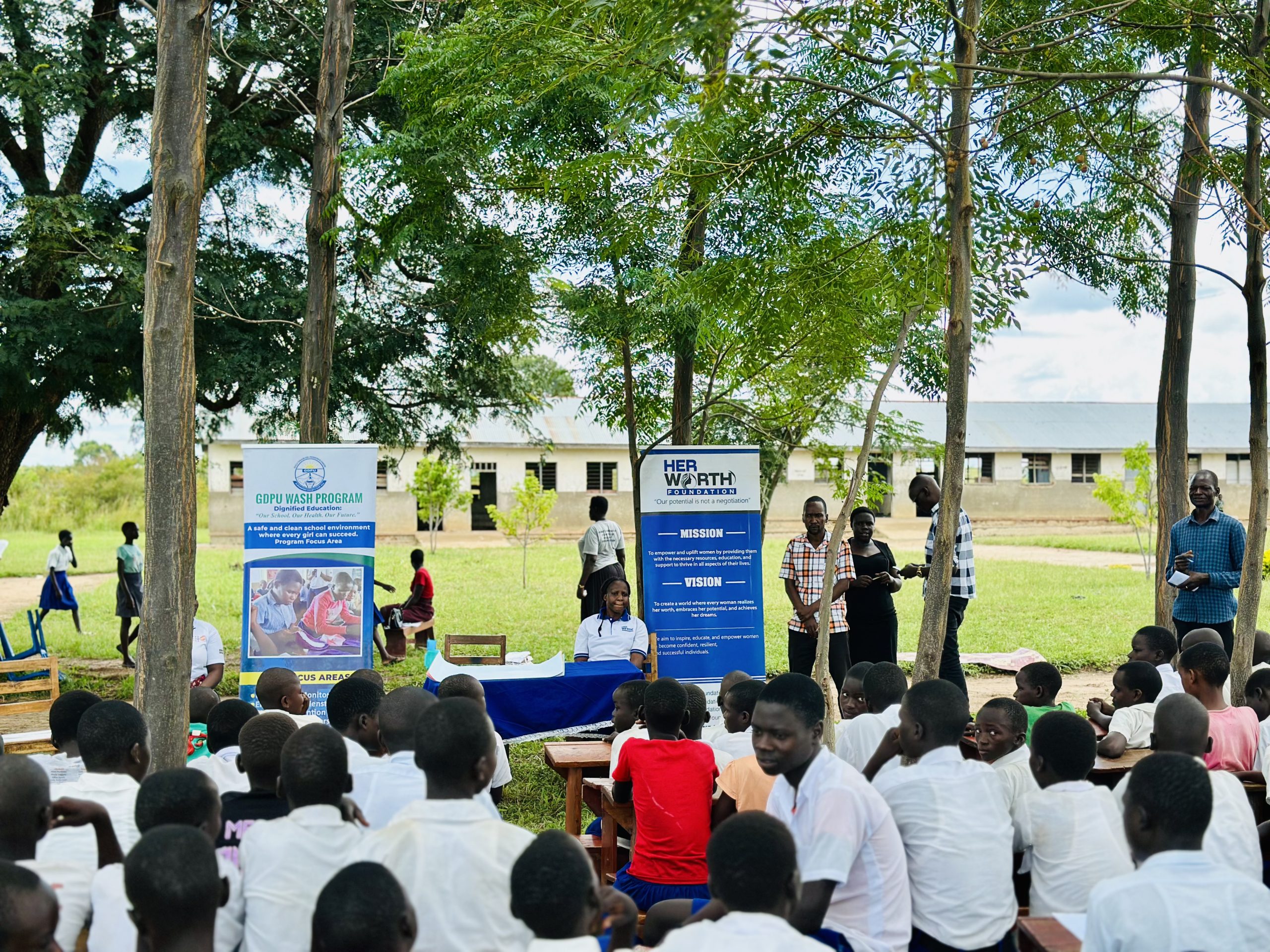
Pupils of Abaka Primary School attend a WASH and menstrual health sensitization Program.
This tragic reality became painfully evident during a courtesy visit to the head teacher’s office at Abaka Primary School, an institution serving nearly 25,000 community members. The head teacher detailed how local leaders display little interest in addressing the causes of school dropout, “Community leaders show little interest in understanding why girls drop out of school,” he explained, his voice heavy with frustration. “In our Primary Seven class, out of 22 registered candidates, only 5 are girls” The head teacher explained, while enrollment remains high in Primary One, attendance steadily collapses as parents prioritize domestic garden labor and allow children to wander unsupervised through local markets on trading days. Compounding this crisis, incoming cattle ranchers pull young girls out of school to act as house wives while hiring young boys for cattle herding, operating in an environment where community leaders remain conspicuously silent despite primary school-aged children suffering the most.
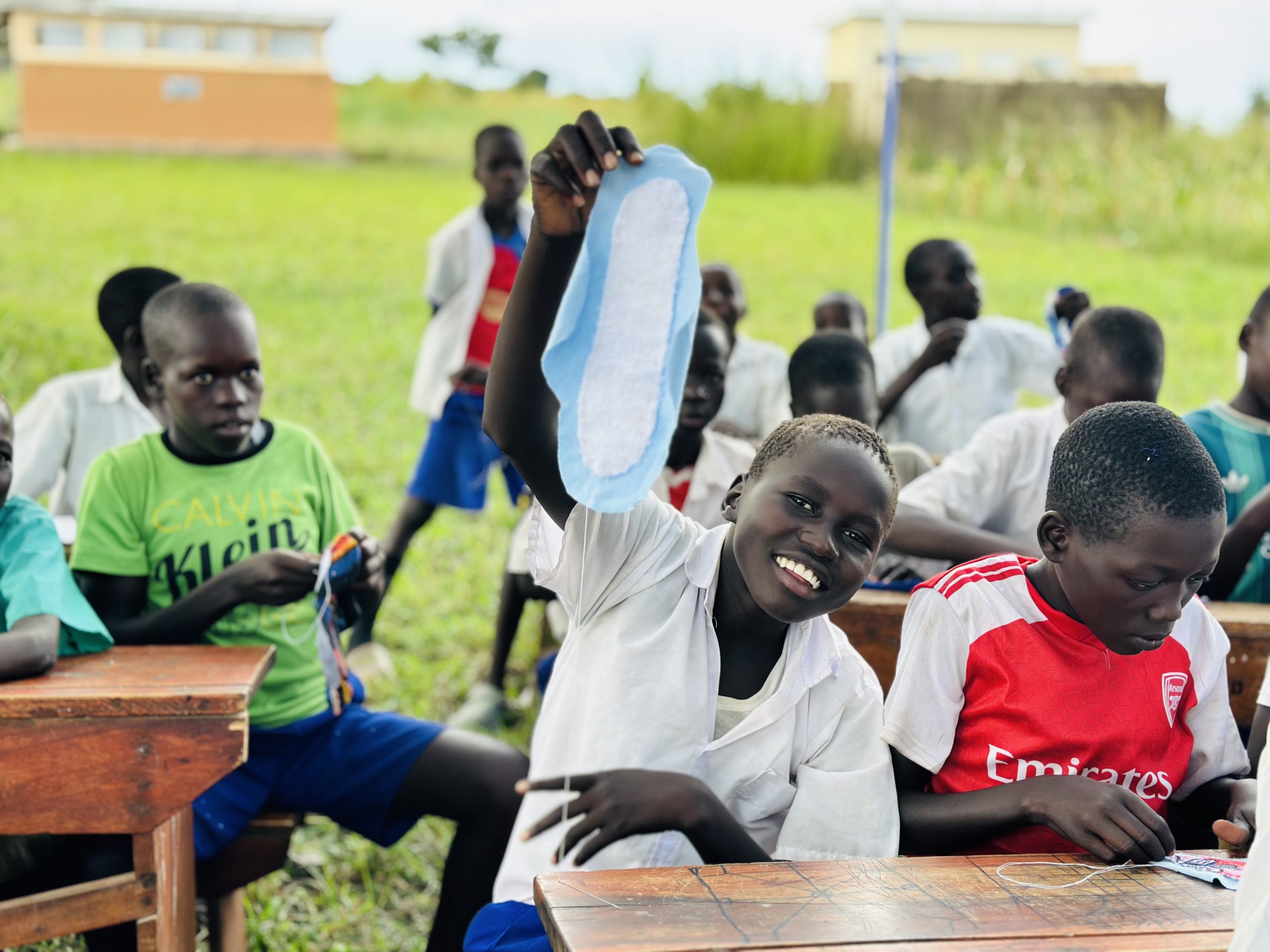
A young boy proudly displays a reusable pad he has made during a hands-on menstrual health session at Abaka Primary School
The school’s administrative tracking data paints a damning picture of structural collapse that fully confirms the head teacher’s warnings. After peaking at 663 learners in 2025, total enrollment suffered a catastrophic drop of over fifty percent by 2026, plummeting to just 312 learners without formal tracking. More alarming still is the severe attrition among female students, A starting cohort of eighty-six girls in Primary One dwindled down to just five remaining girls by Primary Seven. This staggering ninety-four percent female dropout rate demonstrates that for nearly every girl who enters the classroom with hope, systemic pressures and institutional neglect conspire to push her out before she can complete her basic education cycle.
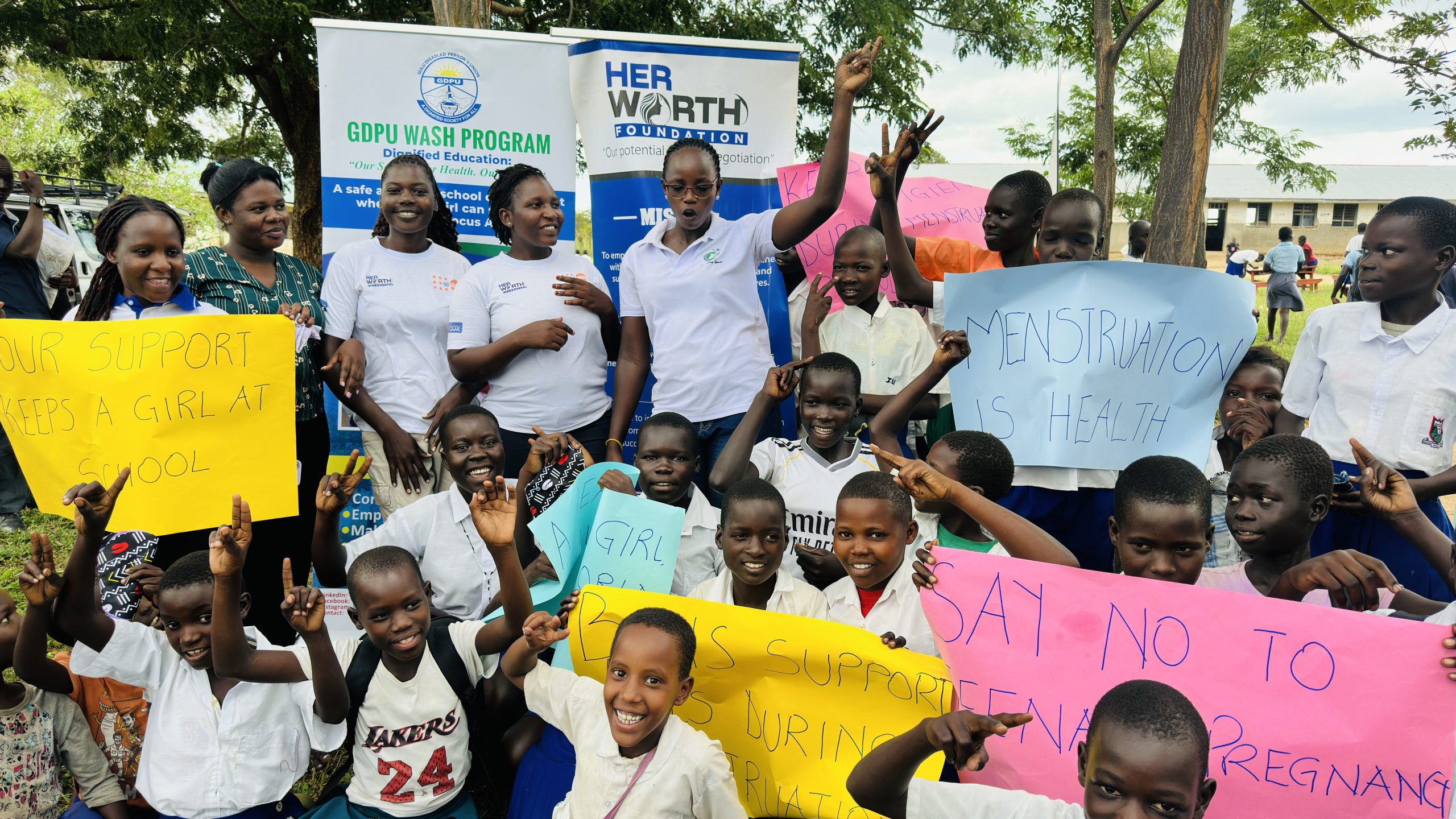
Real Faces, Real Names, Real Children and Real Future at Stake
But behind these devastating figures are real faces, real name, real children and real futures at stake, Elsey Isabella, one of the rare five girls remaining in Primary Seven comes directly from this village and wants more out of life, yet finds herself trapped in a system paralyzed by inaction, “Some were pulled into hard labor at home, others were married off when cattle ranchers came to the village, and many simply stopped coming because they couldn’t manage when their periods started,” Her testimony highlights an urgent need for enforceable child protection, proactive parental support, and courageous local leadership capable of protecting children from early exploitation. Her perseverance proves that children do not lack ambition or potential; rather, the community structures around them routinely fail to provide the safety, accountability, and encouragement required to keep them in school.
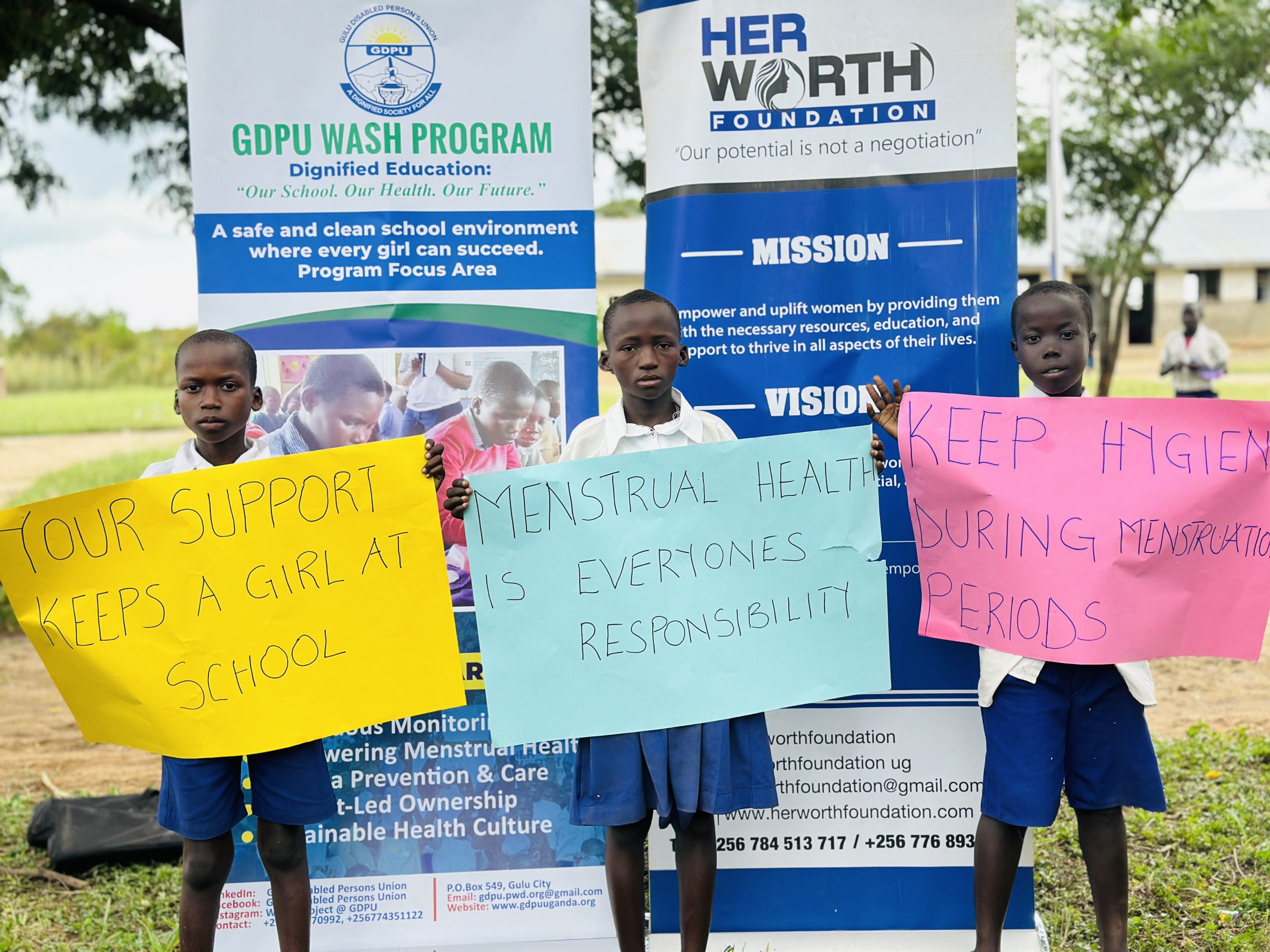
“Your Support Keeps A Girl At School” This Remains the cry of young and still hopeful learners at Abaka Primary School
A major driver of this disproportionate female dropout rate is the unaddressed predicament of menstrual health and hygiene. While Abaka Primary School sits within a district benefiting from active development partners, and even hosted a theoretical menstrual health training session less than a week prior, the crisis of female student retention persists unchecked. This disconnect illustrates a profound implementation gap: theoretical lectures on biological facts fail when school environments lack practical sanitary solutions, functional water and sanitation facilities, and supportive peer networks. When adolescent girls lack basic dignity during their monthly cycles, absenteeism quickly turns into academic failure, social stigma, and eventual permanent abandonment of their education.
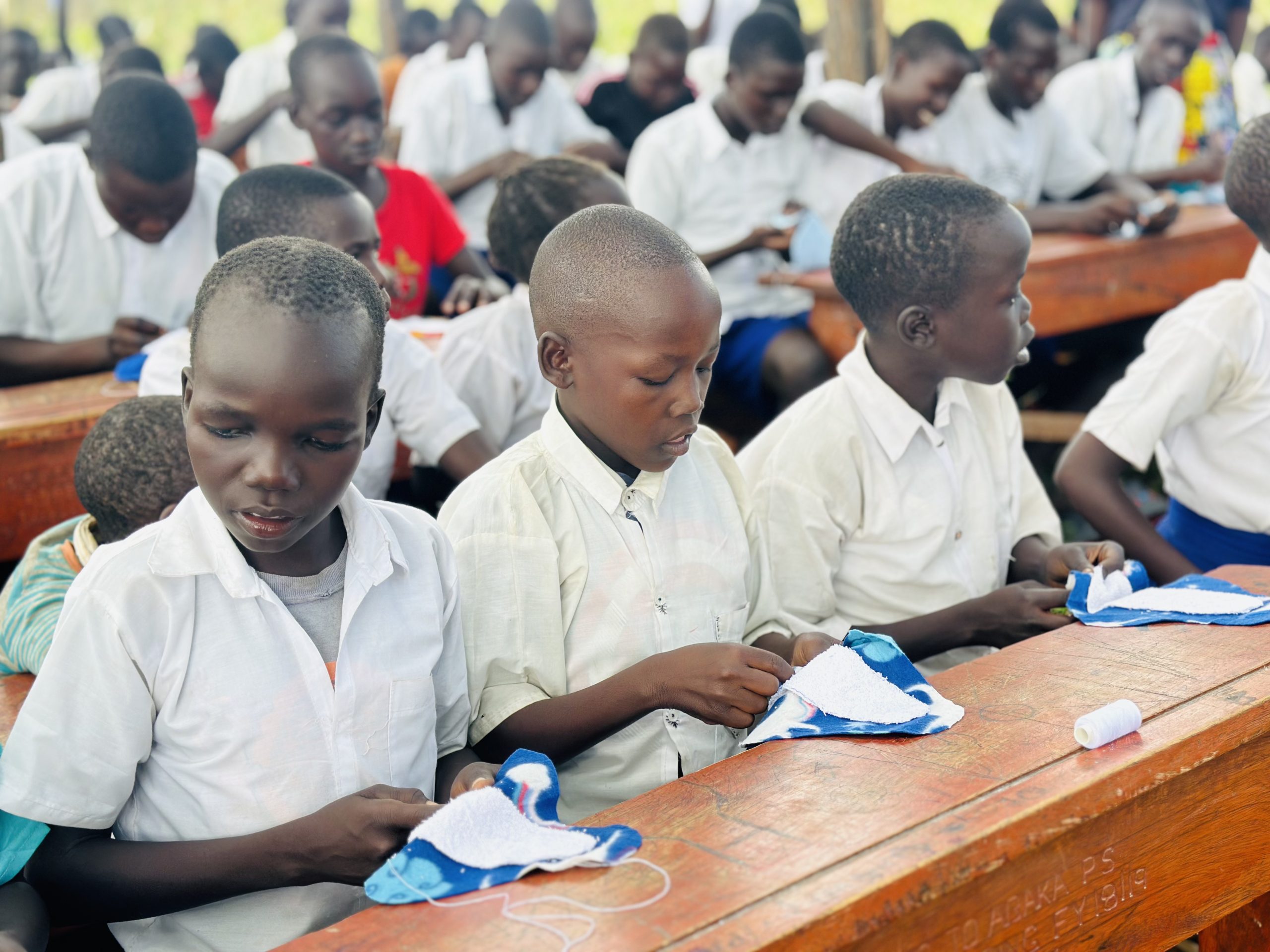
The aim is to Keep a Girl at School, Boys and Girl of Abaka Primary School takes Part in Practical Training on How to Make Reusable Sanitary Pads,
Overcoming this crisis requires moving far beyond superficial awareness to establish tangible protection and comprehensive support for the girl-child. Theoretical training must be paired with functional hygiene infrastructure, practical skill-building, student-led health networks, and enforceable community bylaws that hold parents and local leaders accountable for child protection. Transforming educational outcomes at Abaka Primary School demands that local authorities break their silence, confront exploitative economic practices, and restore the social fabric that should hold the community together. As the morning bell rings across the quiet courtyard, Elsey and the four remaining girls take their seats in a half-empty classroom, waiting to see whether another voice will vanish by tomorrow, or if anyone will finally step forward, and end the silence.
Posted By OKWIR JOSEPH JOHNS
Posted Oct 21st, 2026
6 Comments
Acaham Genevieve
October 21, 2026
“Such an important and empowering initiative!!❤️ Every girl-child deserves to remain at school with dignity and No girl deserves to drop out of school or lose her confidence because of Periods. Let’s Support Girl- Child🫶
OKWIR JOSEPH JOHNS
October 24, 2026
Spot on, and thank you so much for this powerful support! Menstrual dignity is non-negotiable—no girl should ever have her education or confidence cut short by a natural biological process. Real dignity requires practical solutions on the ground, and together, we must ensure every girl stays in school with pride and safety. #KeepAGirlInSchool #MenstrualHealth
Prossy
October 21, 2026
Great job with the team
OKWIR JOSEPH JOHNS
October 24, 2026
Thank you Prosy, It takes all of us working together for a lasting change in a society like Abaka.
Poppy patience
October 21, 2026
Big man with big ideas! “Knowledge must transcend theory ” that line alone. Abaka P/S touched me. Keep speaking for the girls who can’t. GDPU and the community are lucky to have you. keepAGirlInSchool.
OKWIR JOSEPH JOHNS
October 24, 2026
Thank you! True advocacy begins when action meets theory. Elsey and every girl at Abaka P/S deserve an environment where their dreams can thrive. Grateful for your support as we work with the community to #KeepAGirlInSchool!”