

Tuesday, 19 August; Kathmandu
The day started with a team meeting at Coffee Talk (a cafe in central Kathmandu and Niraj’s home base). We just sent out the second edition of our newsletter last Friday and had at least a week before we’d need to start thinking about the next one, so we used the meeting to continue discussing some of the bigger questions on our minds: Where do we want to be in a year and how to we get there? What’s the best place to start with programming? How do we make the newsletter sustainable? What about the website? How will we secure the funding we need to carry out all of this work?
When all of the milk teas were finished, we transitioned to a “walking meeting” (these have become typical for our team) and made our way in the rain to a Kathmandu University building to check out what could become our office space.
We missed the turn, walked too far, came around on the wrong side, but eventually made it — a gate with a small sign hosting the KU logo pinned on. The groundskeeper let us in, and we walked down a cobblestone path before ducking under an archway and out of the rain. It was dark and damp with old wires strewn about, piles of wood and brick, and a small fire emanating more smoke than warmth. The building itself was not so much a building as it was the remnants of one.
As we waited here for the groundskeeper to return with a key, Ram told me about the building. It had been the home of Balkrishna Sama, a poet and member of the Rana family (he later changed his name to “Sama” meaning “equal”) who left his family and revolted against the Rana regime. It was damaged in the 2015 earthquake and, now owned by KU, was in the process of being repaired.
The groundskeeper returned and led us inside. Not much different from outside, it was one of those spaces that seems to hold the life of the past and possibly the future, but not quite the present. Moss poked through the flooring where it existed, brick walls were dark with age, a couple of pieces of laundry hung on one of the low wires, unclear who they could possibly belong to, and, while it didn’t reach the corners, light poured in through the open doorway in front of us. Watching where we stepped, we walked through and stood in the doorway. There we could see a small courtyard and salmon-colored brick building with green frames. The groundskeeper pointed, Ram nodded, and I learned that this is where we could have an office.
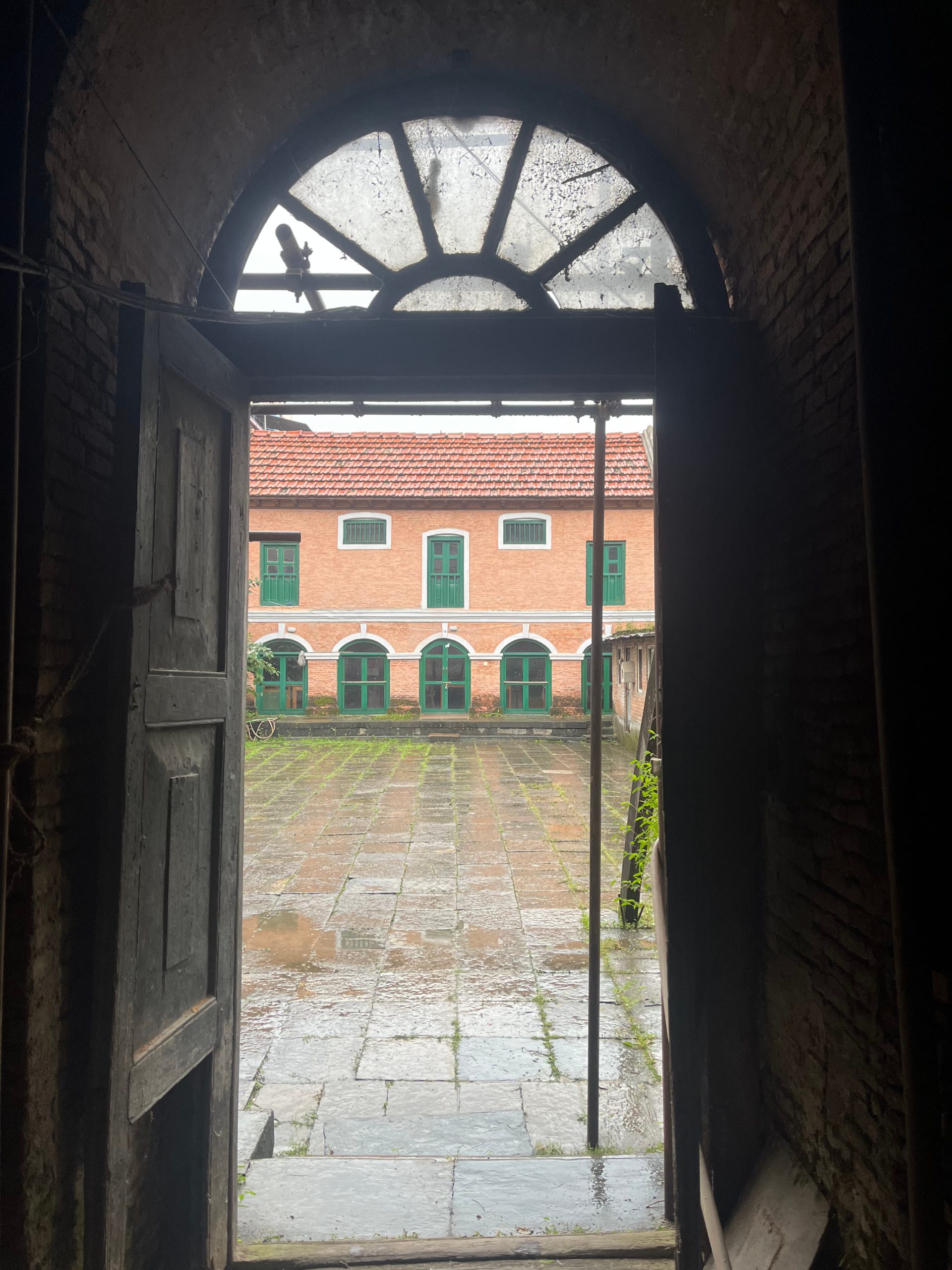
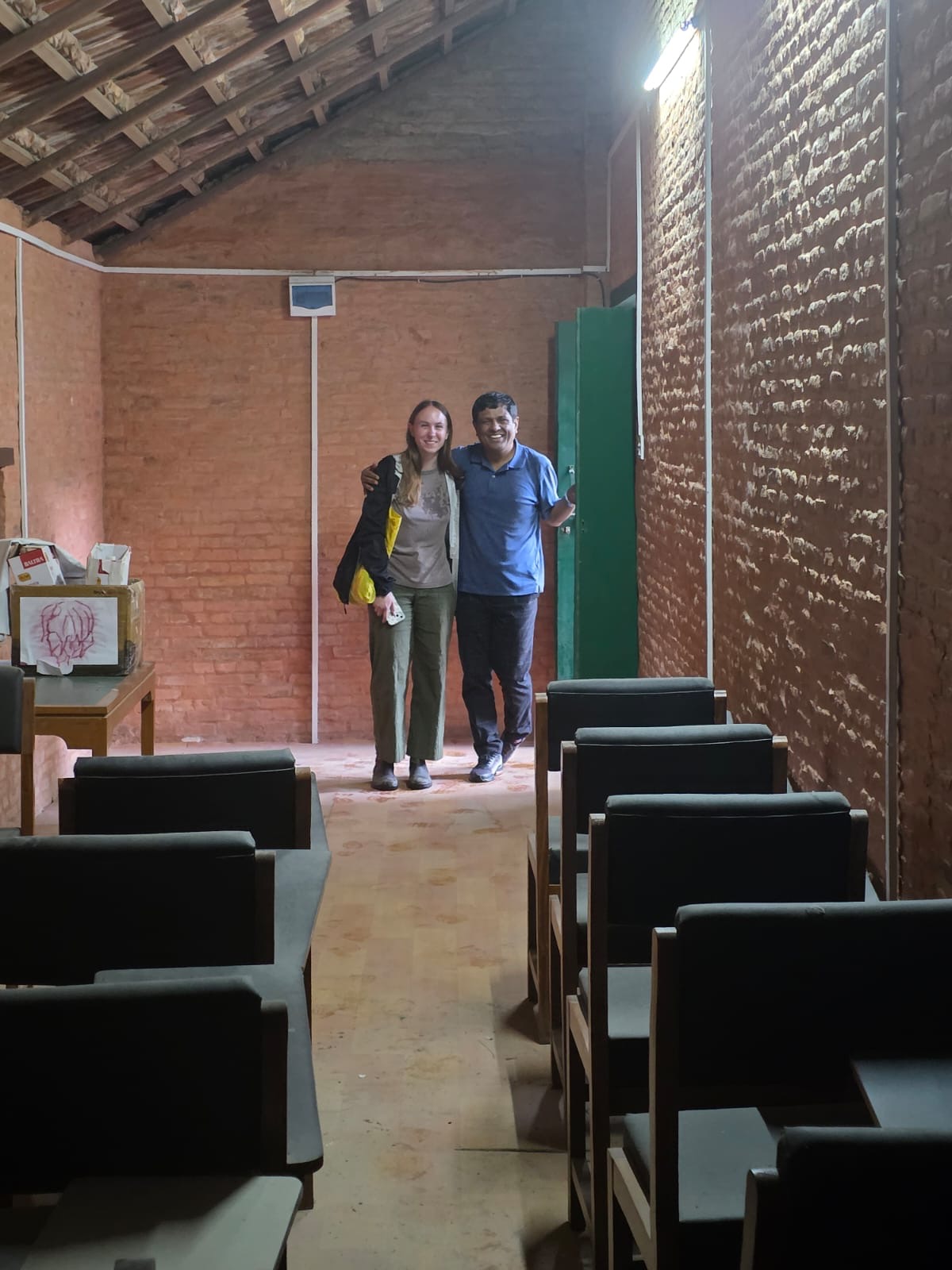
It was only drizzling now and so the three of us walked over. Cupping our hands over our eyes, we pressed our faces up against the windows and peered inside at the music department’s office on the first floor — a handful of desks, a computer. We walked over to the side of the building and discovered a small staircase leading to another green door. It was unlocked and inside we found a long narrow room with small windows and rows of chairs. Our excitement started to grow. We discussed where we might put desks once the chairs were moved out, took pictures, peered through the windows. “Ok,” Ram declared, “this will be our office.” “I can lobby,” he added, smiling at me. Niraj walked to the other side of the room and took a picture of us to mark the moment.
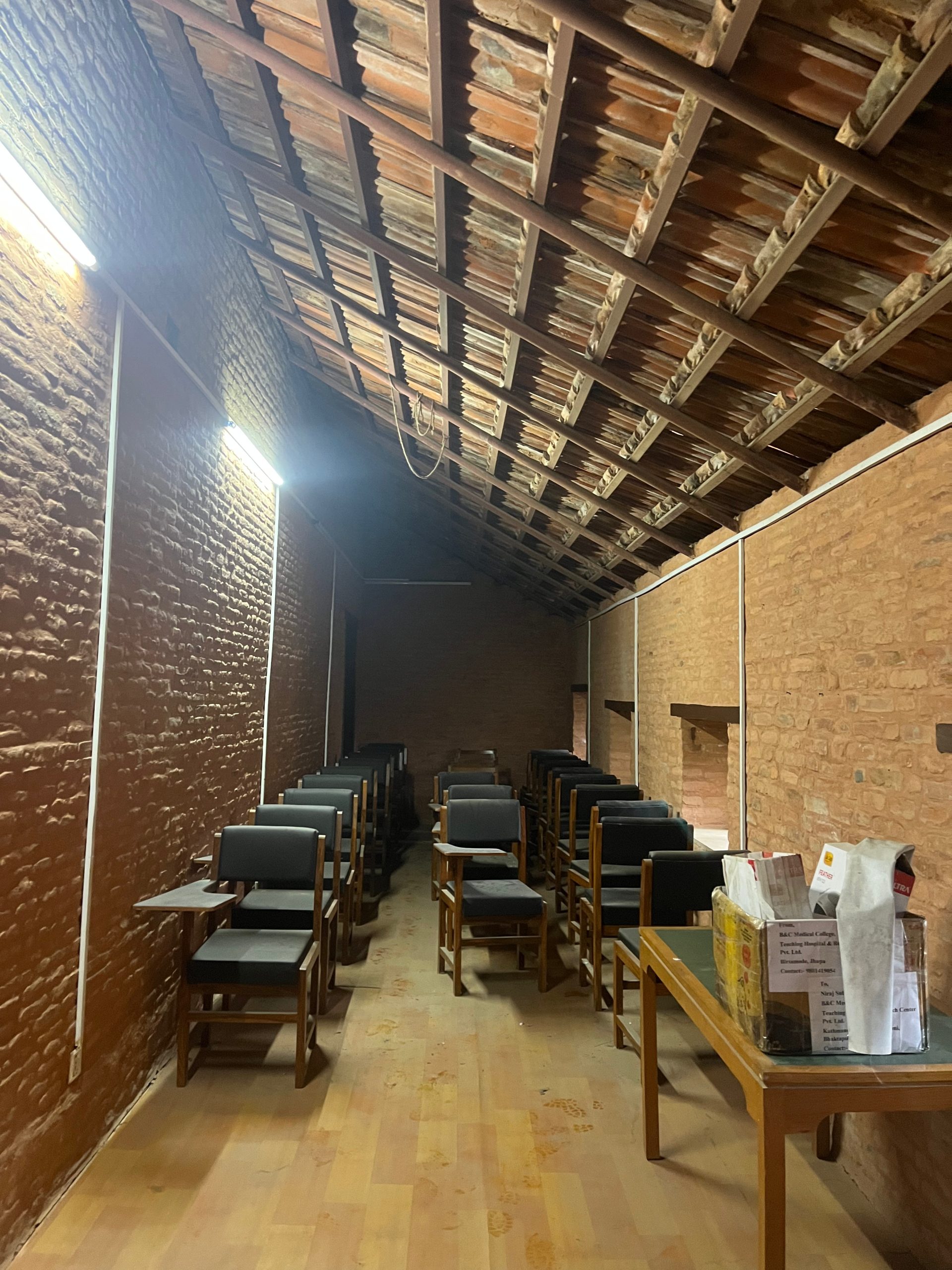
Outside again, our excitement continued to grow, and we went back and forth throwing out our ideas. There’s the perfect amount of space for a banner above the door, Ram pointed out, we could get one printed with our logo. And this courtyard would be a great place for us to host events, I noted. Like the monthly round table we’ve been talking about, Niraj added. The side had piles of wood and other supplies, but I explained that we could clear it out and plant some flowers. When it’s nice out, Ram announced, we’ll bring chairs and work out here. By the time we left, we were all unabashedly giddy.
Things were the same, only we were much more aware of the actuality of our project, of everything we had accomplished and all the plans in place. There’s just something about a physical space that makes it feel so real.
I couldn’t help but think of gardening in the rain, a metaphor Laila used in a mid-July blog to describe the start of our project. All we had at that point was a handful of seeds — ideas, relationships, a draft of our first newsletter, a center name. Now, our feet wet from rain soaked shoes, and hands dirty from a busy first month of work, I could see some green poking through the soil.
We left certain we’d return soon and went out for some momos and then a couple of beers, returning amid casual conversation to the questions from that morning. Eventually our bellies grew full, and dusk arrived along with the cool air that follows the rain and so we took another walk before heading home on the bus.
But, as I imagine many gardeners do, we all went to bed that night with a hope for what plants we might reap and the knowledge that, like any nascent garden, our project will need careful attending to.
Posted By Emma Cohen
Posted Aug 24th, 2025