


I attend the training for making re-usable sanitary pads and am impressed by how well these girls are doing!
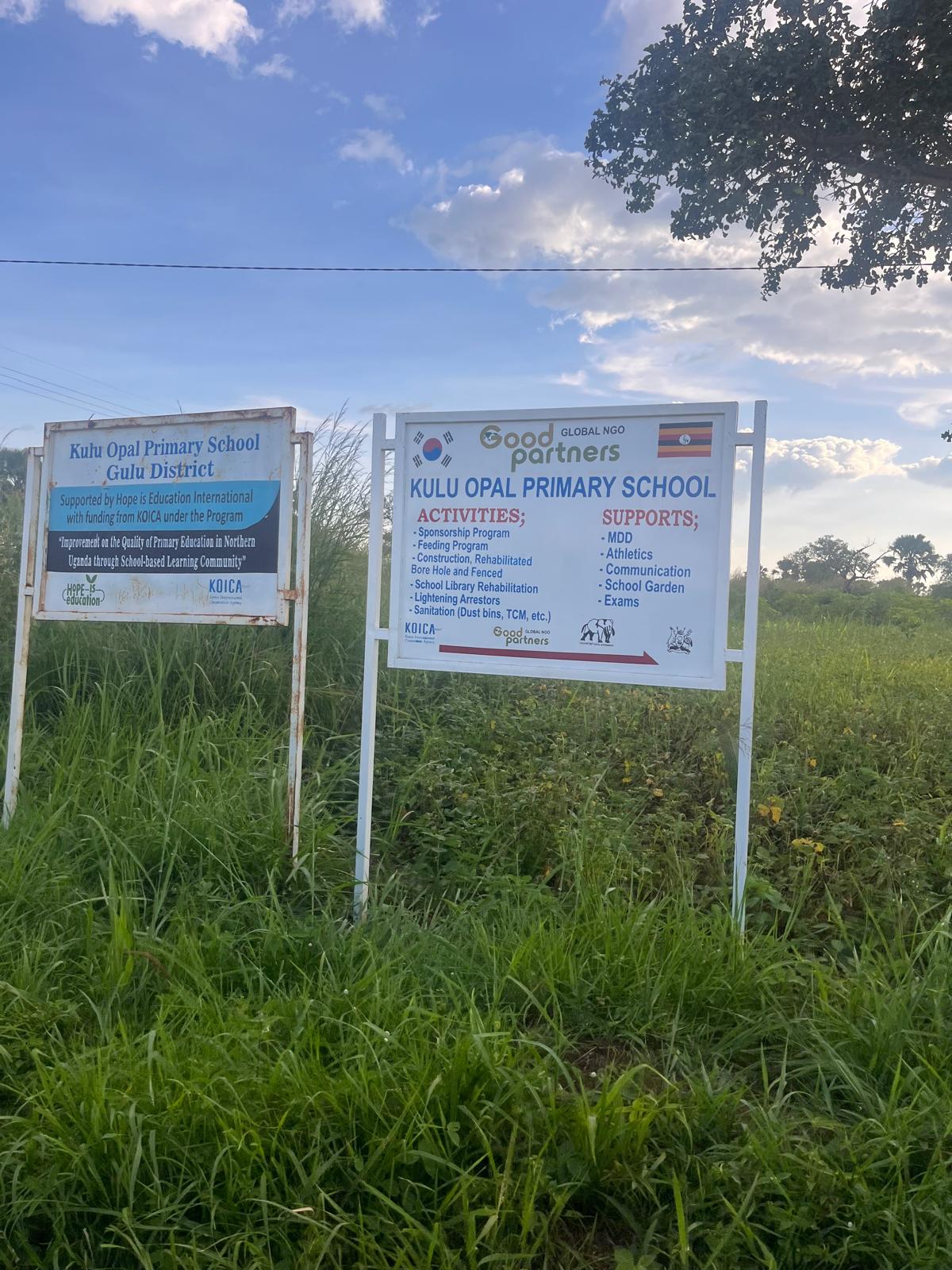
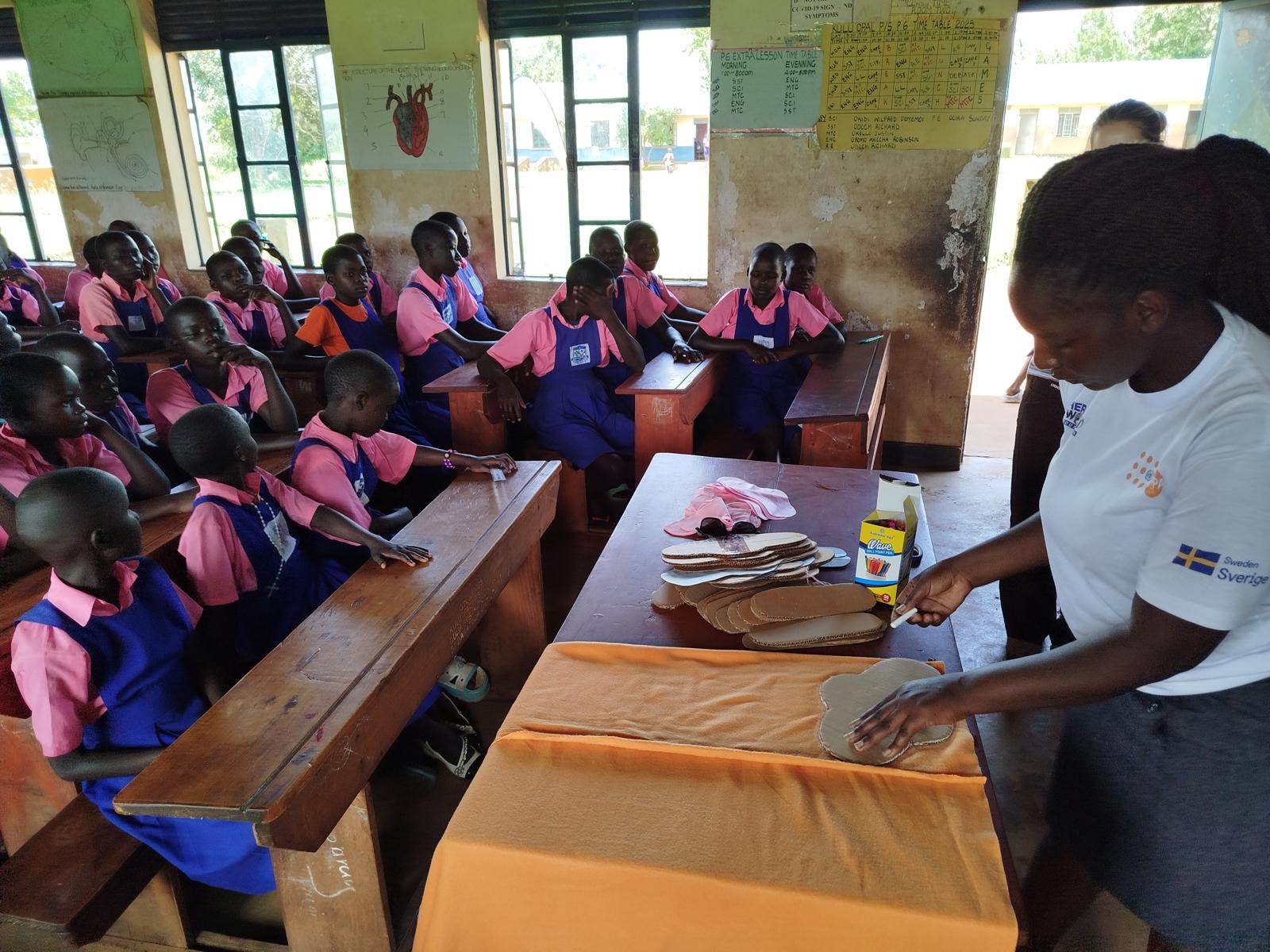
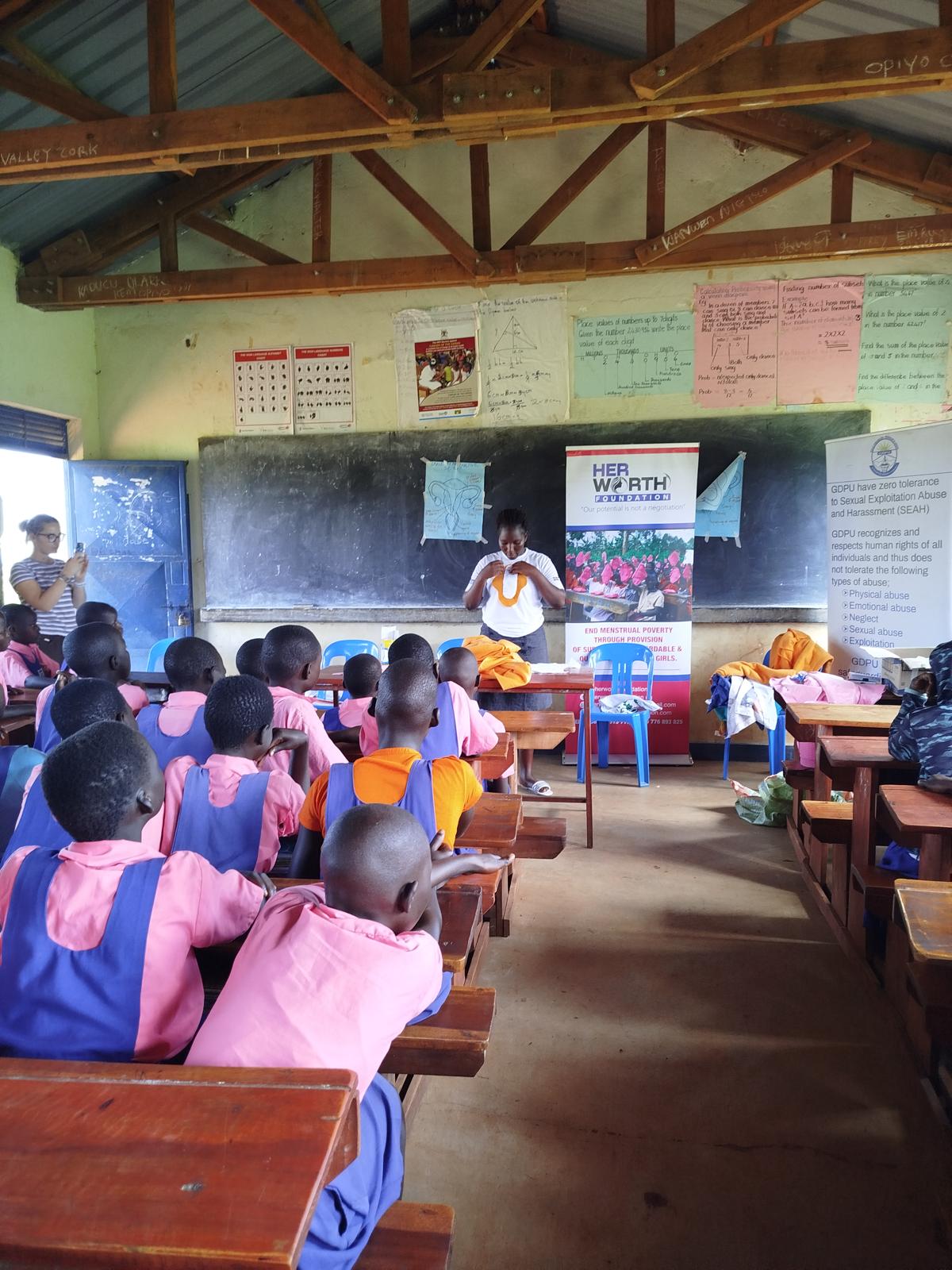
On Monday, alongside four members of HerWorth, GDPO delivered menstrual hygiene training to 70 girls at Kulu Opal Primary School.
These girls were selected by the Senior Woman Teacher as being ‘of age’ for such training. Interestingly, girls were not selected based on year group; in Uganda, year groups are not decided by age but instead by ability, as some children will start school much later than others. As a result, we had girls from P4-7.
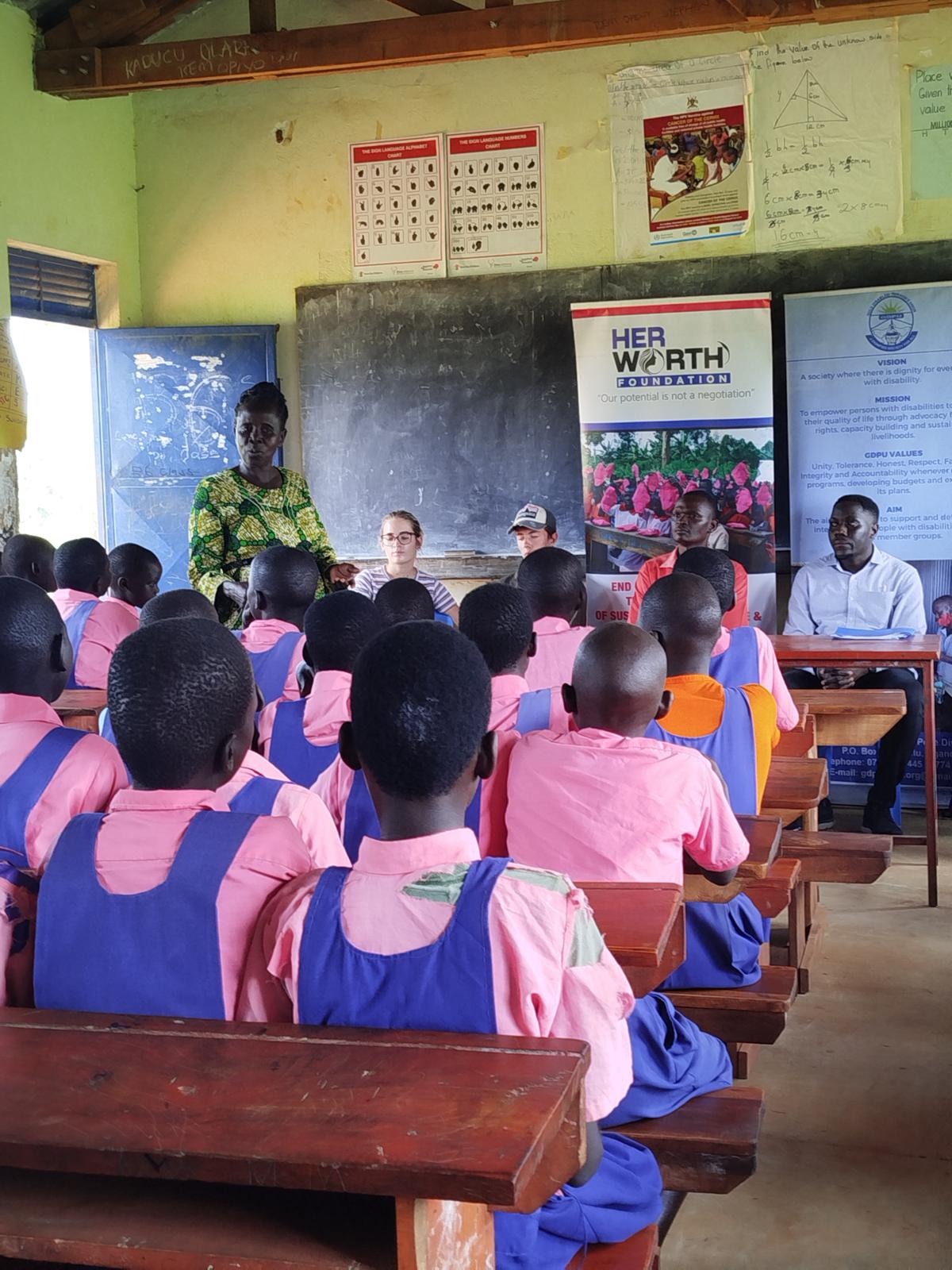
Senior Woman Teacher addressing her pupils.
In Gulu, Northern Uganda, approximately 24% of girls drop out of school. The cause of this is not a lack of willingness to learn, but menstrual poverty.
This has caused 21 girls to drop out of the Kulu Opal school this year. Girls are often not educated on what menstruation is and how to cope with it. There are rampant myths about menstruation and many girls face bullying at school from their male counterparts for bleeding onto their uniforms or needing to bathe at school. Furthermore, many girls will not be able to afford sanitary pads, and so decide it is easier to stay at home than worry about needing to change at school.
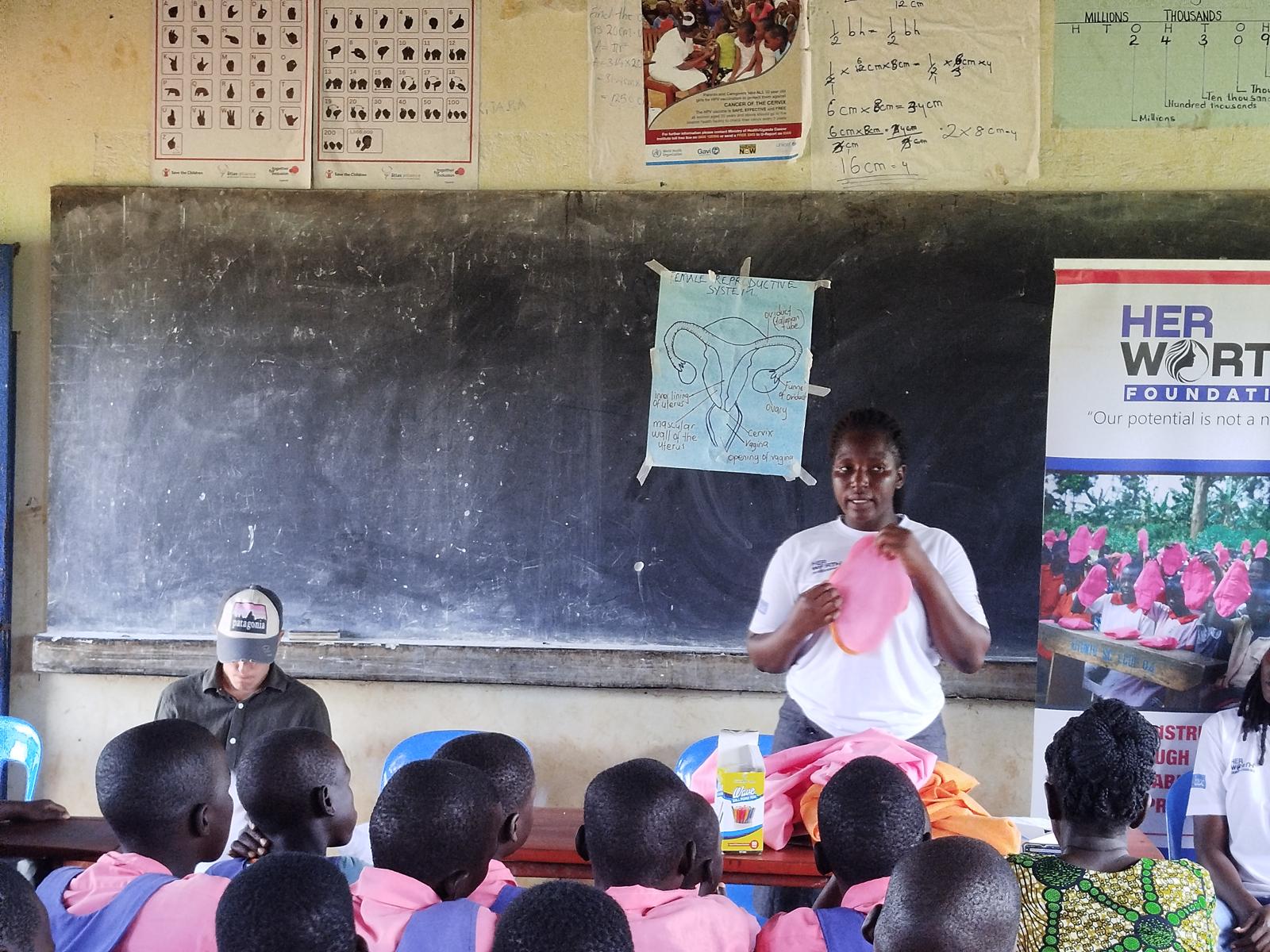
HerWorth is changing this, one session at a time. Brendah from HerWorth began the session by discussing the elements of menstruation with the girls. She discussed what menstruation is, importantly accompanied by a diagram of female anatomy which more often than not is never seen by girls, other changes to the female body, and the importance of personal hygiene during menstruation. I was also pleased to hear she discussed what is ‘normal’ for menstruation, so the girls can more accurately recognise when something might be wrong and access medical help.

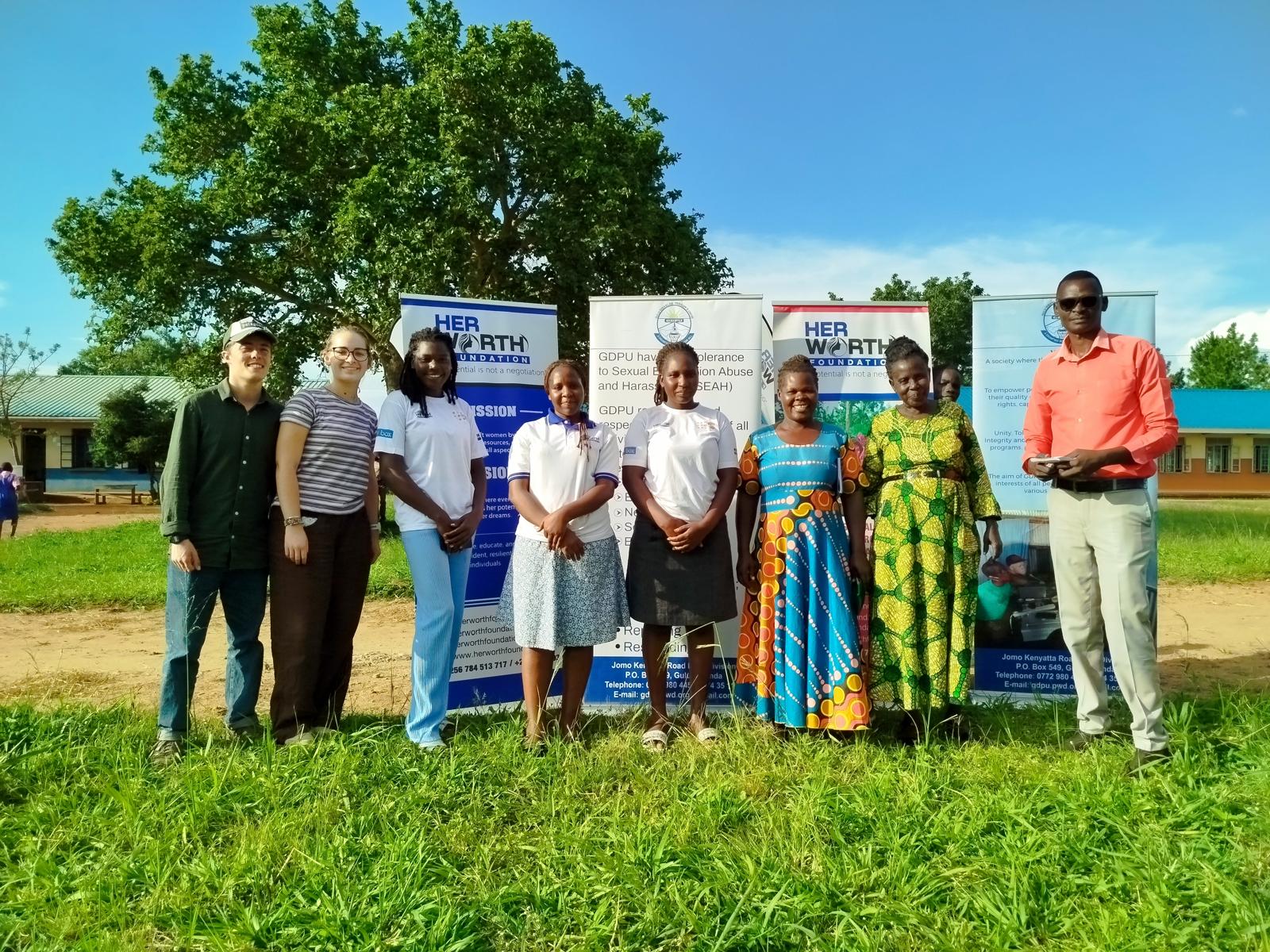
The HerWorth team!
Whilst the session was conducted in Acholi, the girls’ reactions and expressions transcended language. These were reactions I understood from my first lessons on such topics. There was some worry and anxiety, mixed with curiosity and, for some, excitement. Some were inquisitive, others were shy. Some seemed to be enjoying the session, whilst others appeared scared.
I think all the girls understood the importance of this topic. And if they didn’t, the deputy headteacher made this even clearer to them. She spoke about how she never had such education due to the stereotypes of the time, but is something she would have benefited hugely from. She emphasised how normal menstruation is, which will at some point affect everyone in the room. The girls appeared more relaxed, and even more engaged, after this.

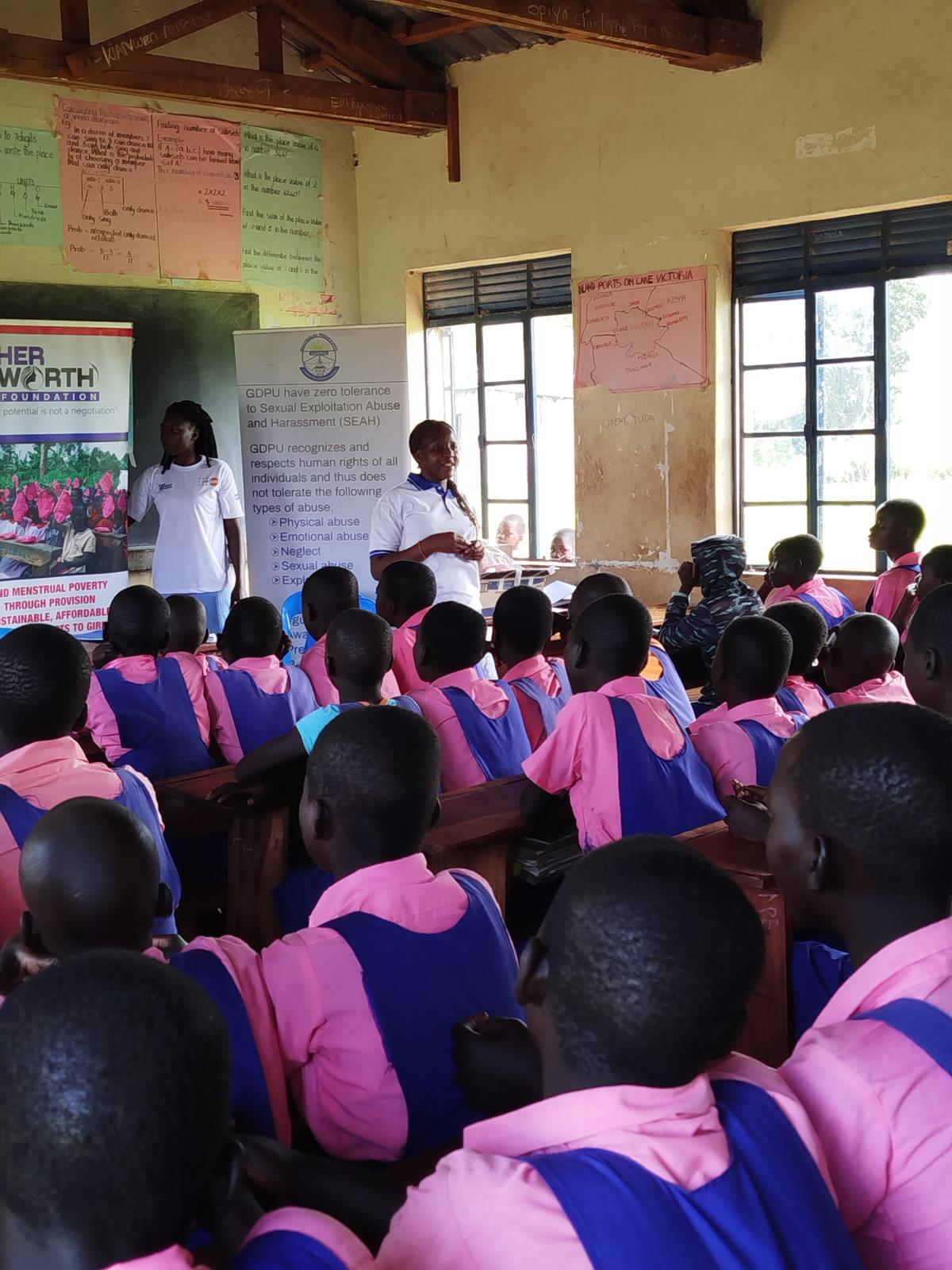
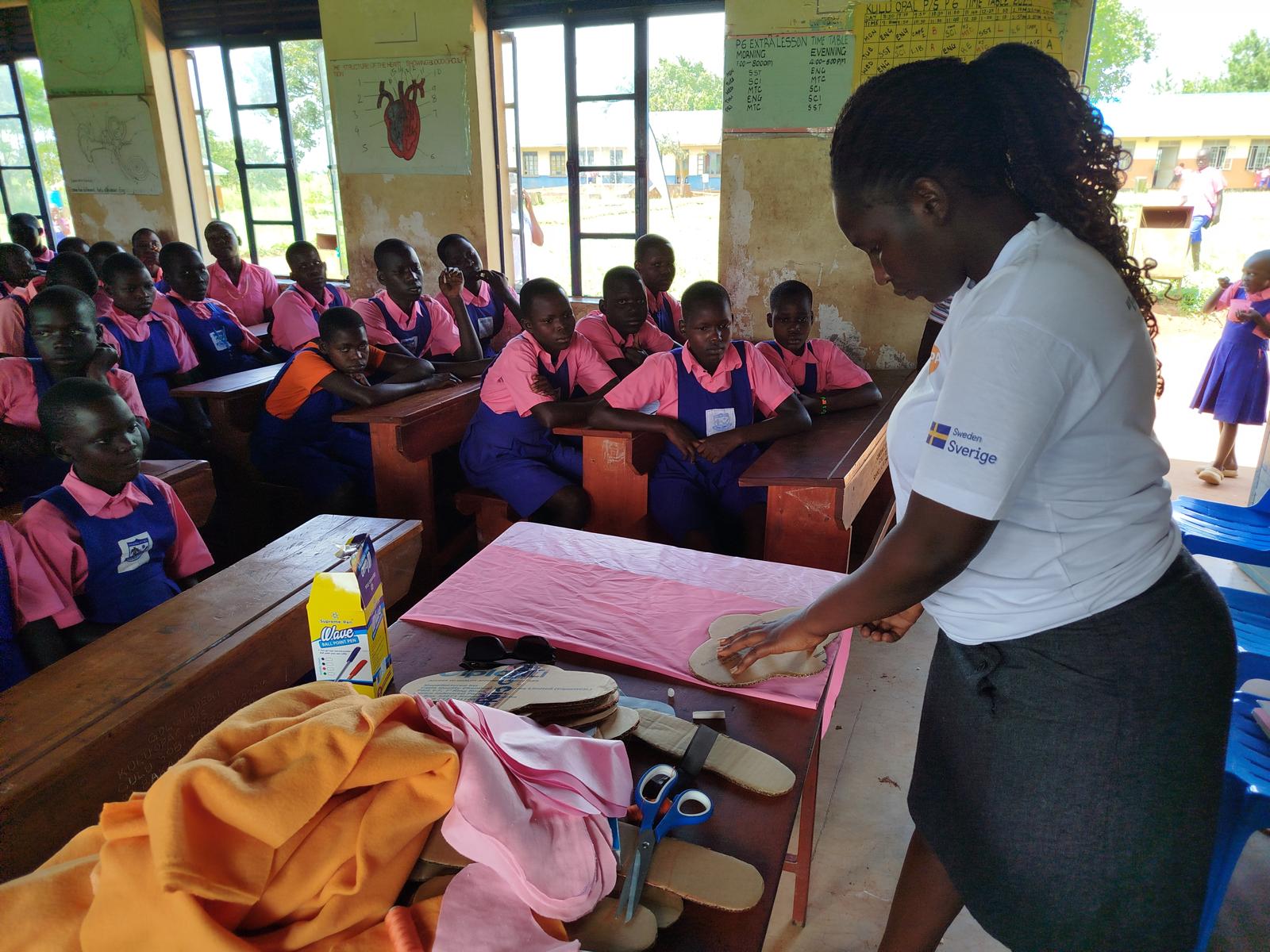
Next, we moved onto discussing, and then making, reusable sanitary pads which are all made from recycled and locally available materials. Brendah led an interactive session with the girls about different brands of disposable sanitary pads available in the shop. The common theme: these pads are simply too expensive for many to buy monthly. To keep the session inclusive, as some of the girls would be able to afford disposable pads, Brendah did explain that these can be disposed of in the incinerator on-site. However, all took part in the session on reusable pads.
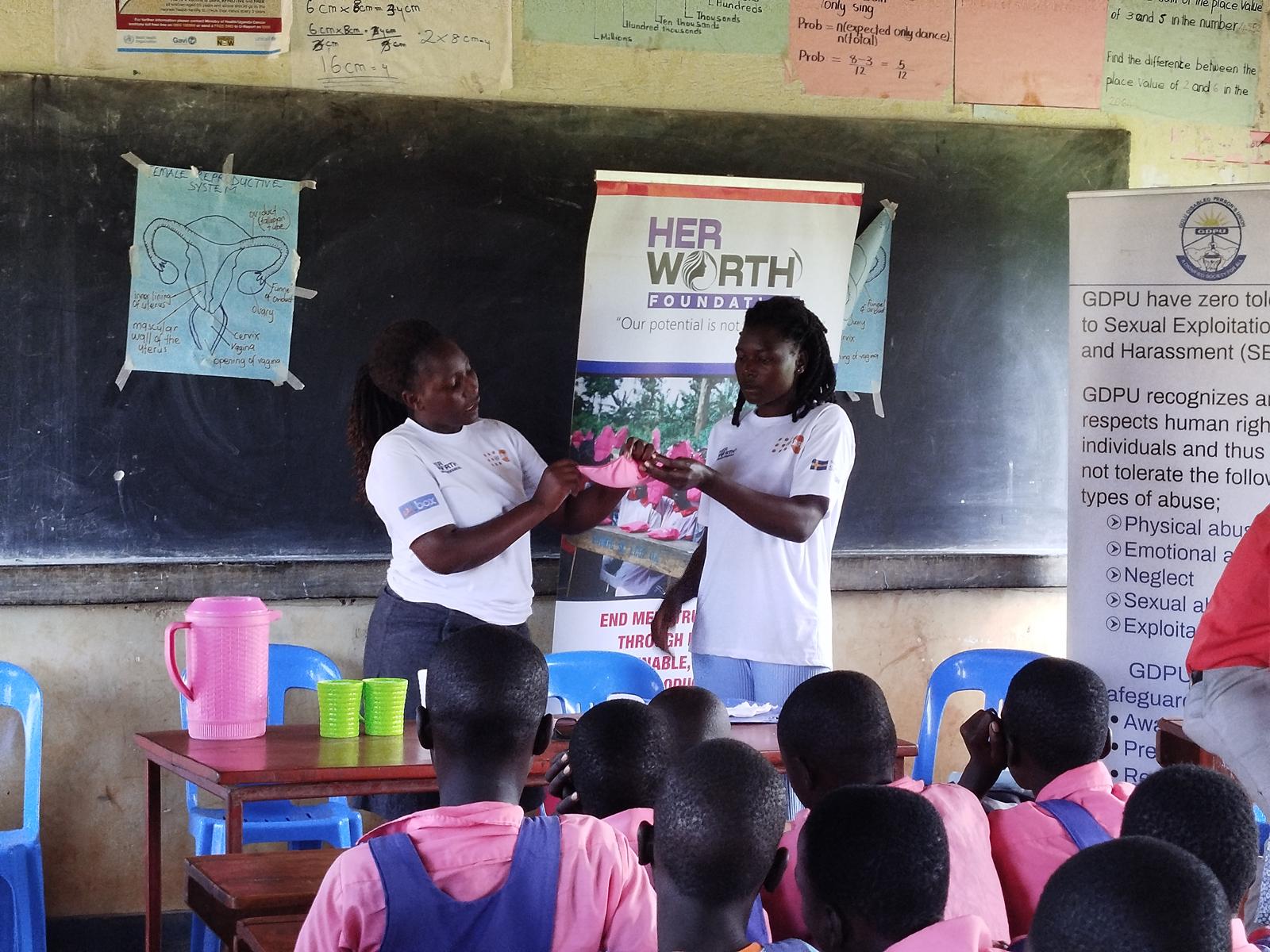
A demonstration of how much liquid these sanitary pads can hold – up to one cup!
This was the part of the session where the girls became even more engaged – whether this was because they were doing something crafty or because they were excited to be able to take charge over something happening to their bodies.
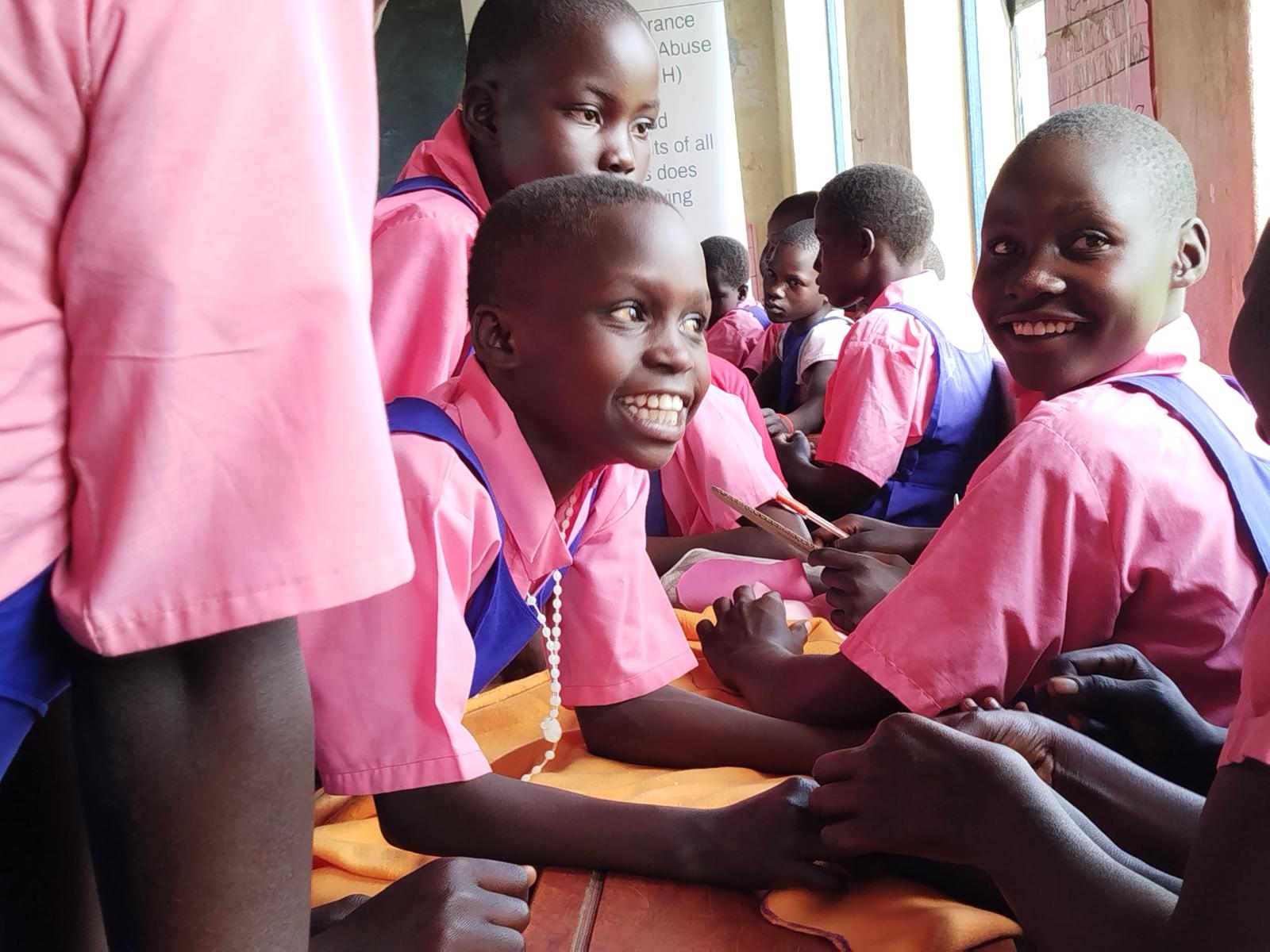
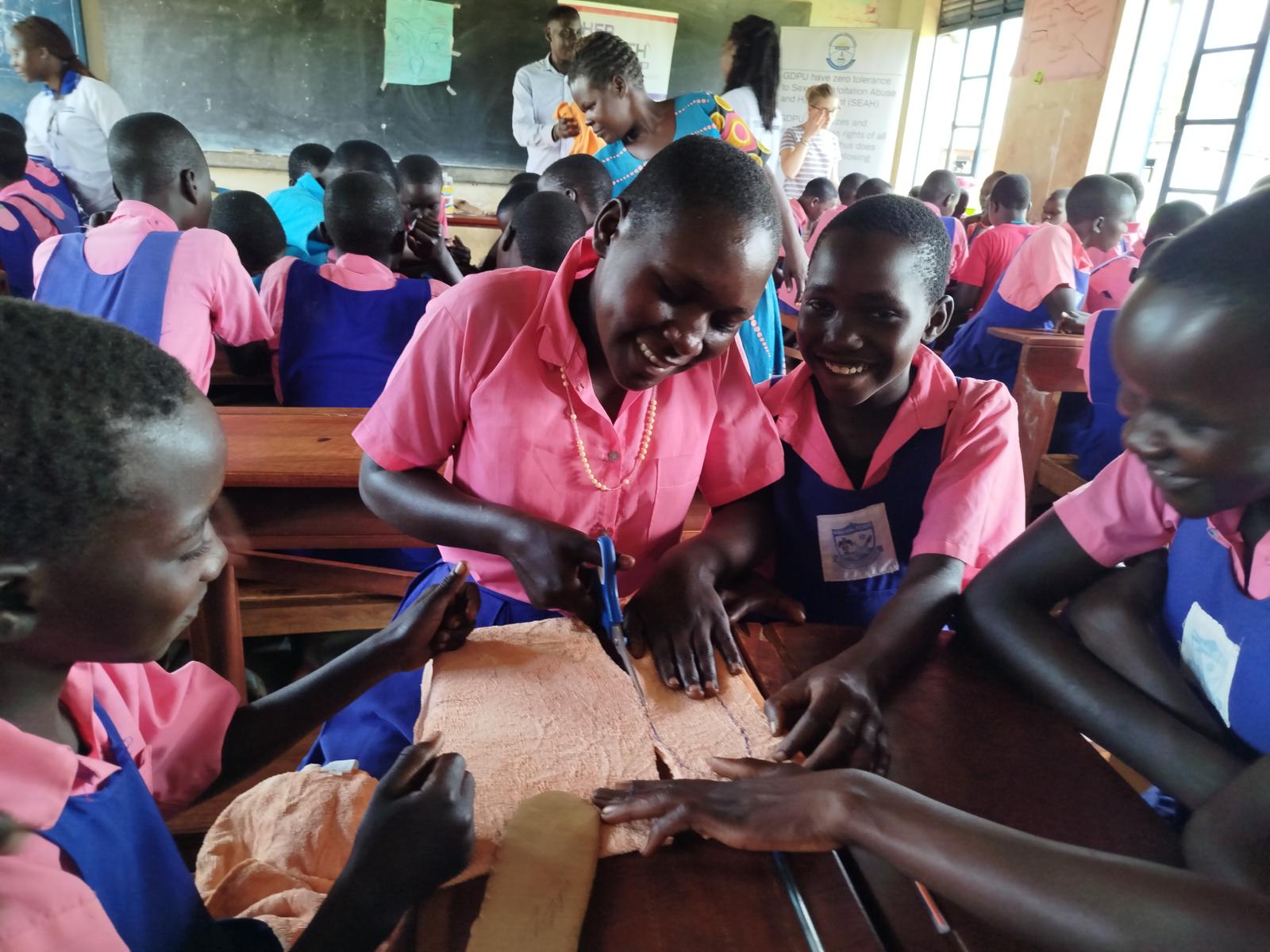
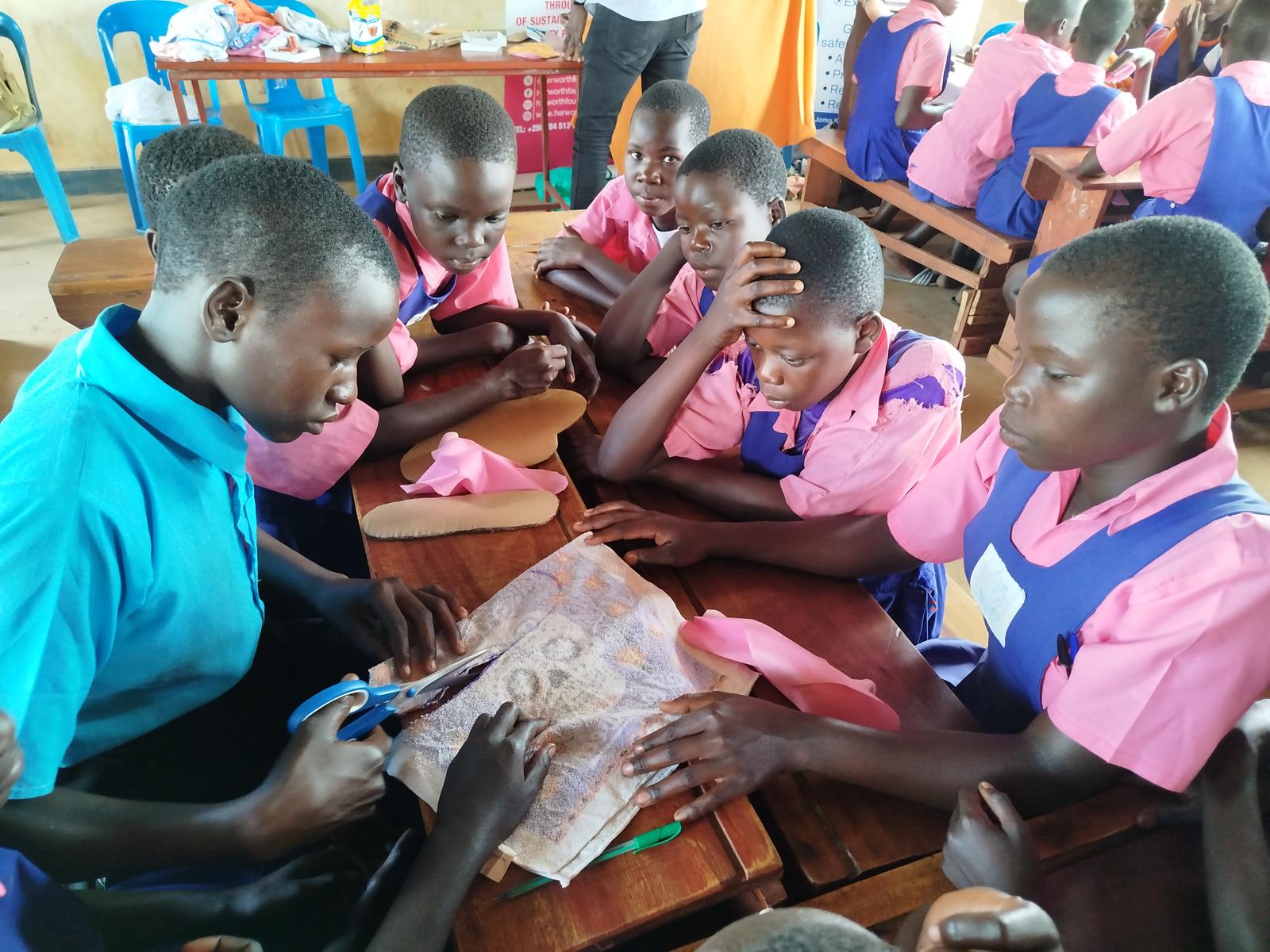
Teamwork, concentration and fun!
There were a few members of staff present at the session. Something I wasn’t prepared for was how engaged the younger, female teachers were in learning how to make reusable sanitary pads. This showed that the lack of education on menstrual health isn’t something that affects only young girls, but many older women as well who are even less likely to be taught about such matters.
This likely stems from the generations of myths and misconceptions about menstruation. One myth is that menstruating women should not be allowed to cook food, as they are ‘dirty’ and will kill children they touch. Another myth is that menstruating women should not use the latrine if they are wanting a child in the future.
We discussed all this with the girls in our session and attempted to debunk some of these long-held beliefs. Seeing the engagement of the teachers and girls showed just how wide-reaching and impactful this education can be: if all the girls present at the session discuss menstruation with even one other person (whether that is their mum, sister, cousin or aunt), 140 people could benefit from this one 3-hour session! Whilst this is still a pilot project, its impact is clearly immense.
With proper care, these reusable pads can last for up to a year, making huge economic savings through not buying disposable pads.
Below is a step-by-step guide to making re-usable sanitary pads, for anyone who may find this useful or is simply interested in the process.
Step 1: Using a template, cut out the pattern. This material should be soft, so as to not irritate skin. Felt works well for this step. You can vary the template based on the size required. Use this PDF for a guide on creating a template.
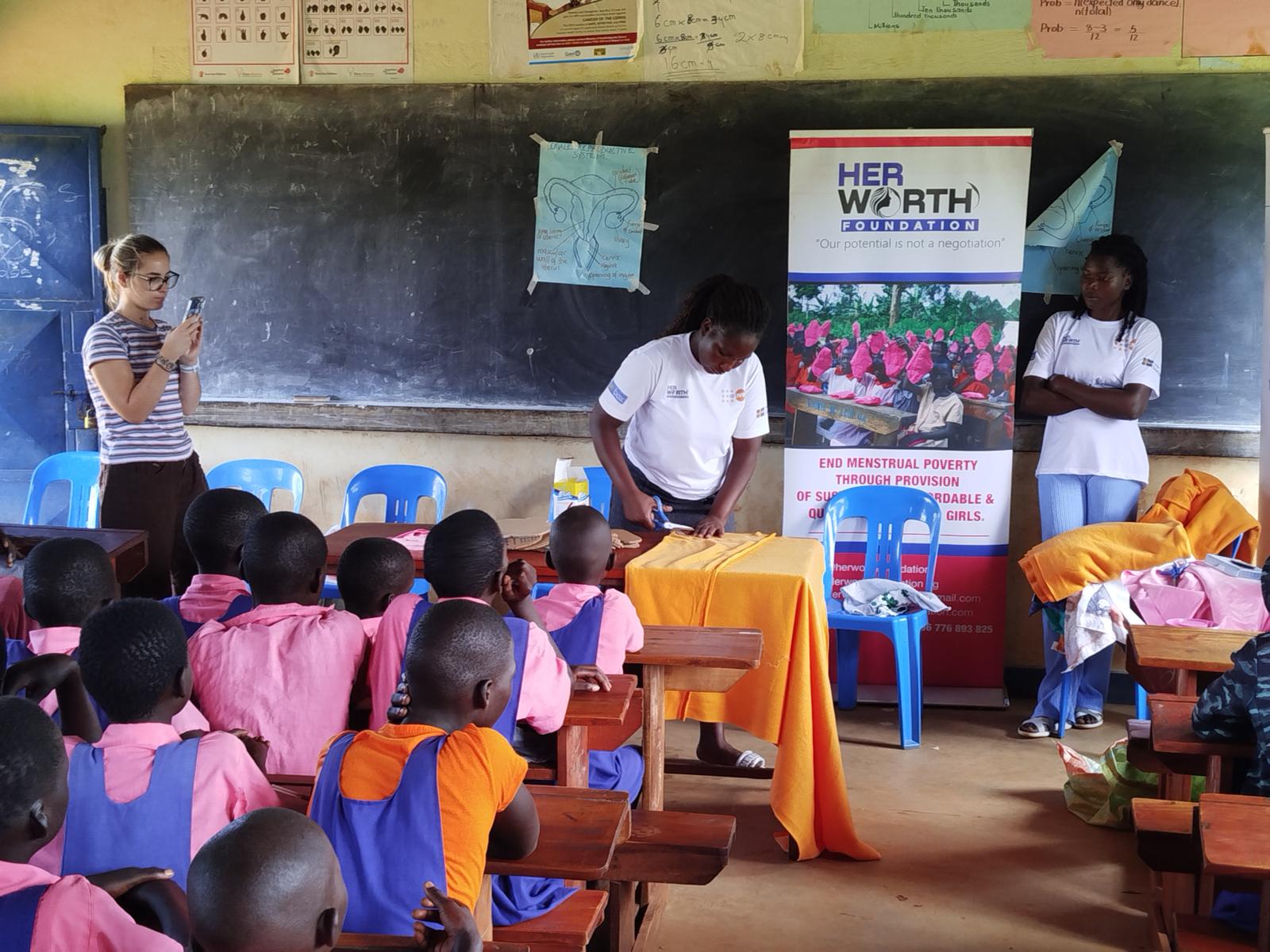
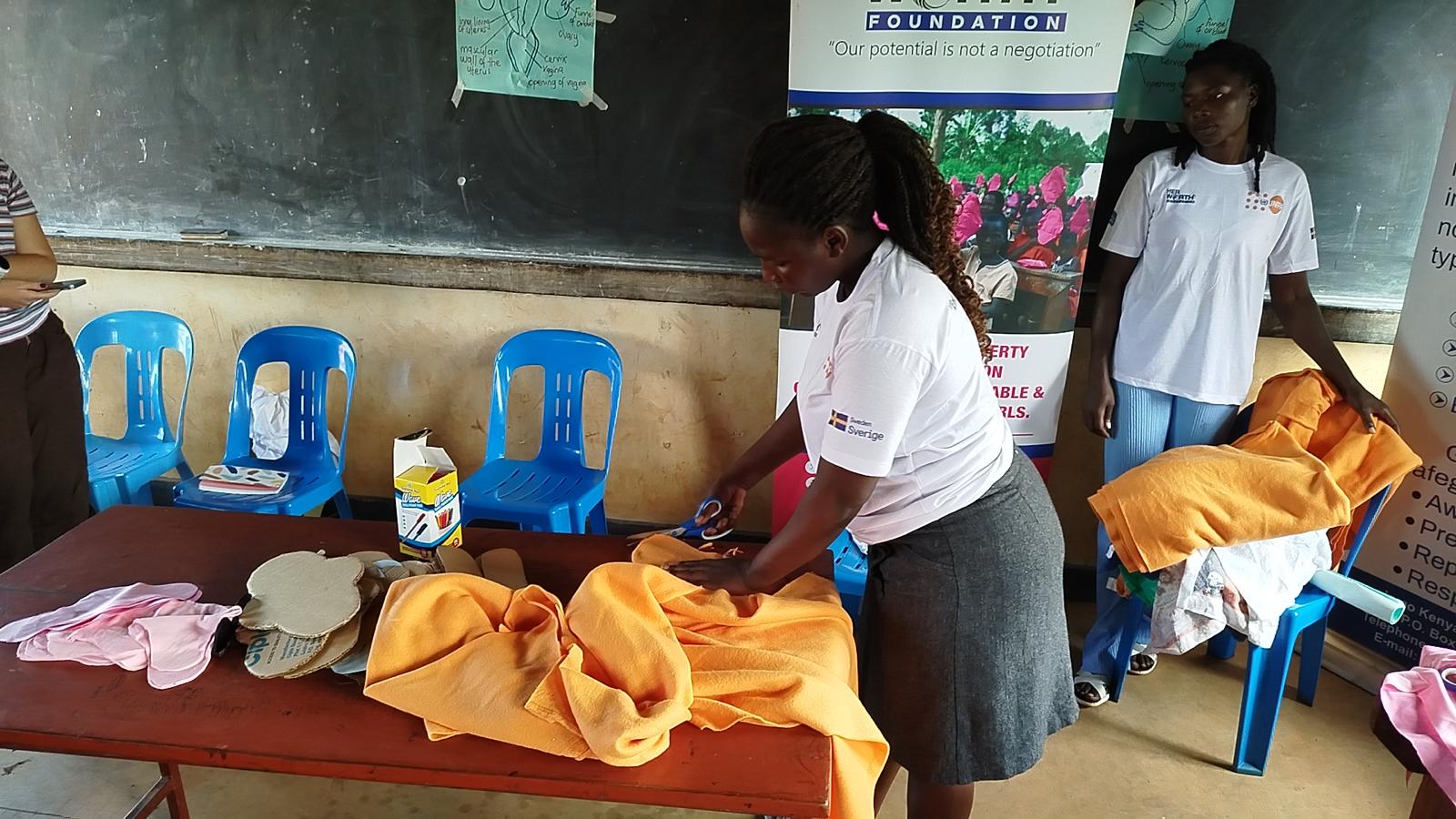
Step 2: Using another template, cut 2 lengths of the towel. This is the absorbent layer of the pad, so ensure the towel is suitable for this. Place this towel length ways on the orange-felt shape you have just cut out.
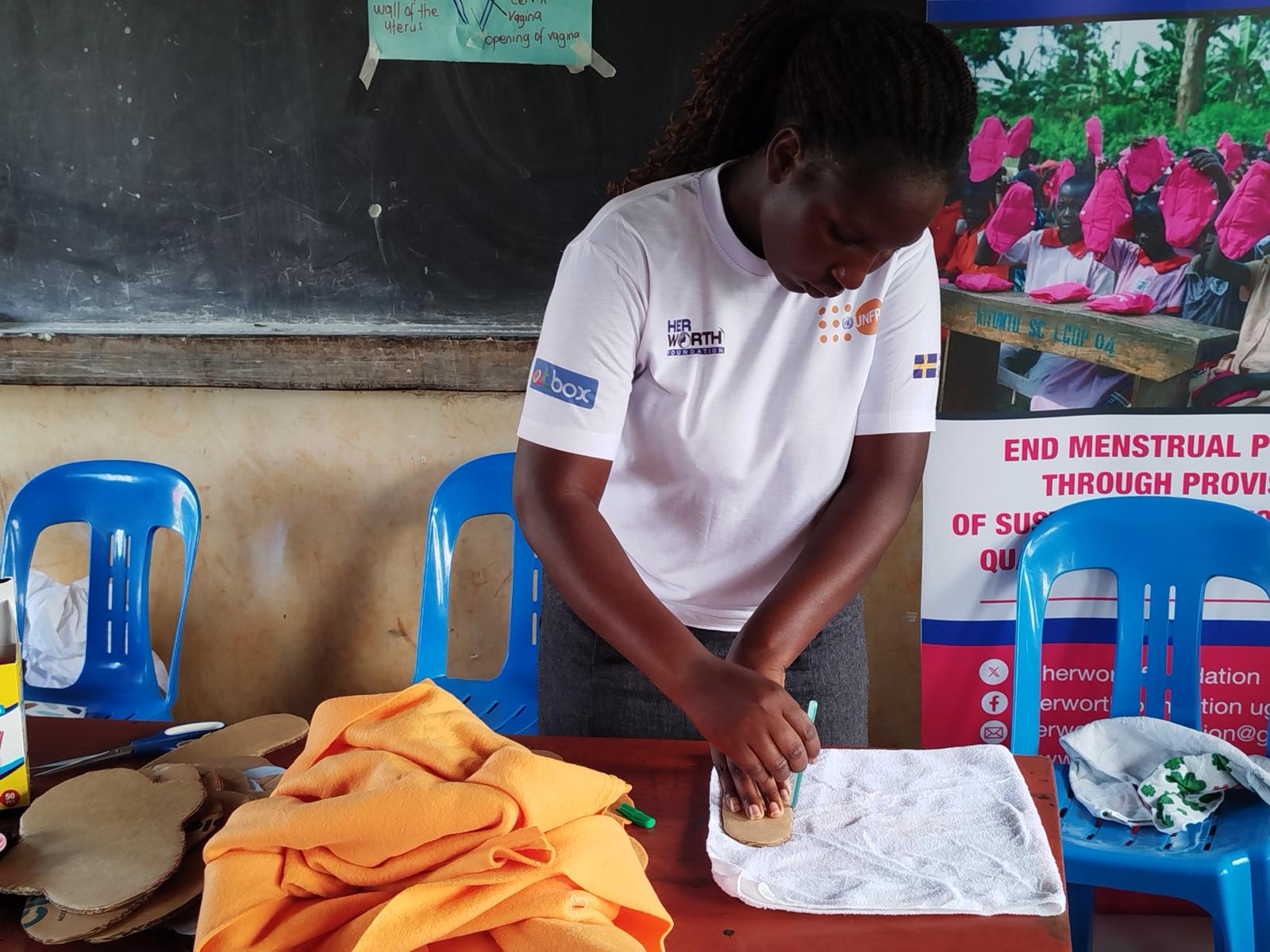
Step 3: Sew the towel onto your orange, softer layer. Make sure it is central and runs down the orange layer vertically (as shown below). A simple running stitch works well for this step.
Step 4: Next, using the same template used for the orange layer, cut out your waterproof layer. A silk-like material works well for this step.
Step 5: Place the pink layer over the top of your orange/towel layer. The towel should be sandwiched between your orange and pink layers. Sew this together (your stitch should sew your pink layer to orange layer).

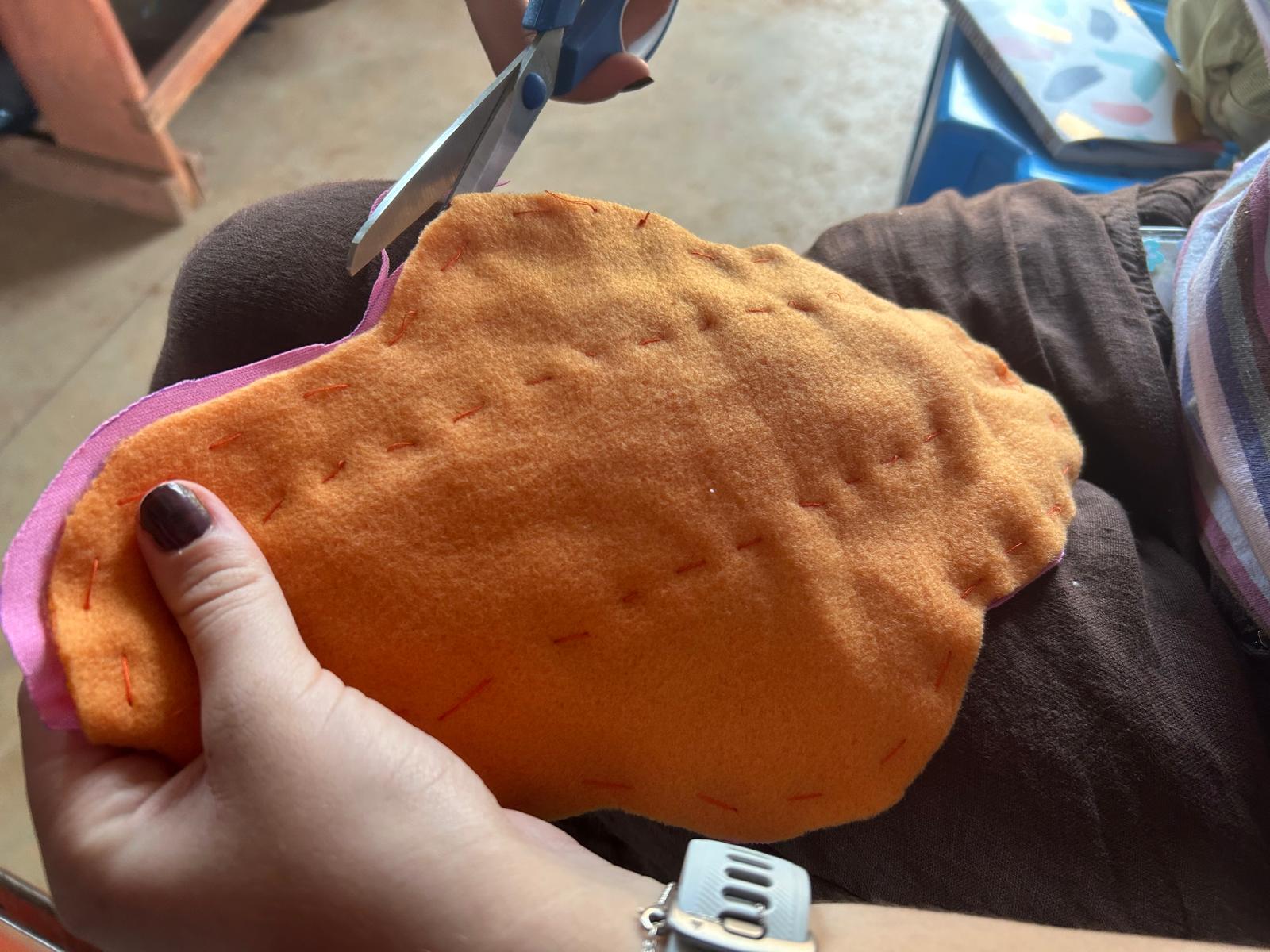
This is what your pad should look like when the layers are sewn together.
Step 6: Sew two buttons (to make your pad adjustable) or poppers onto the wing of your pad. Ensure you make a whole on the opposite wing so it can close, and sew around this hole to prevent it expanding.
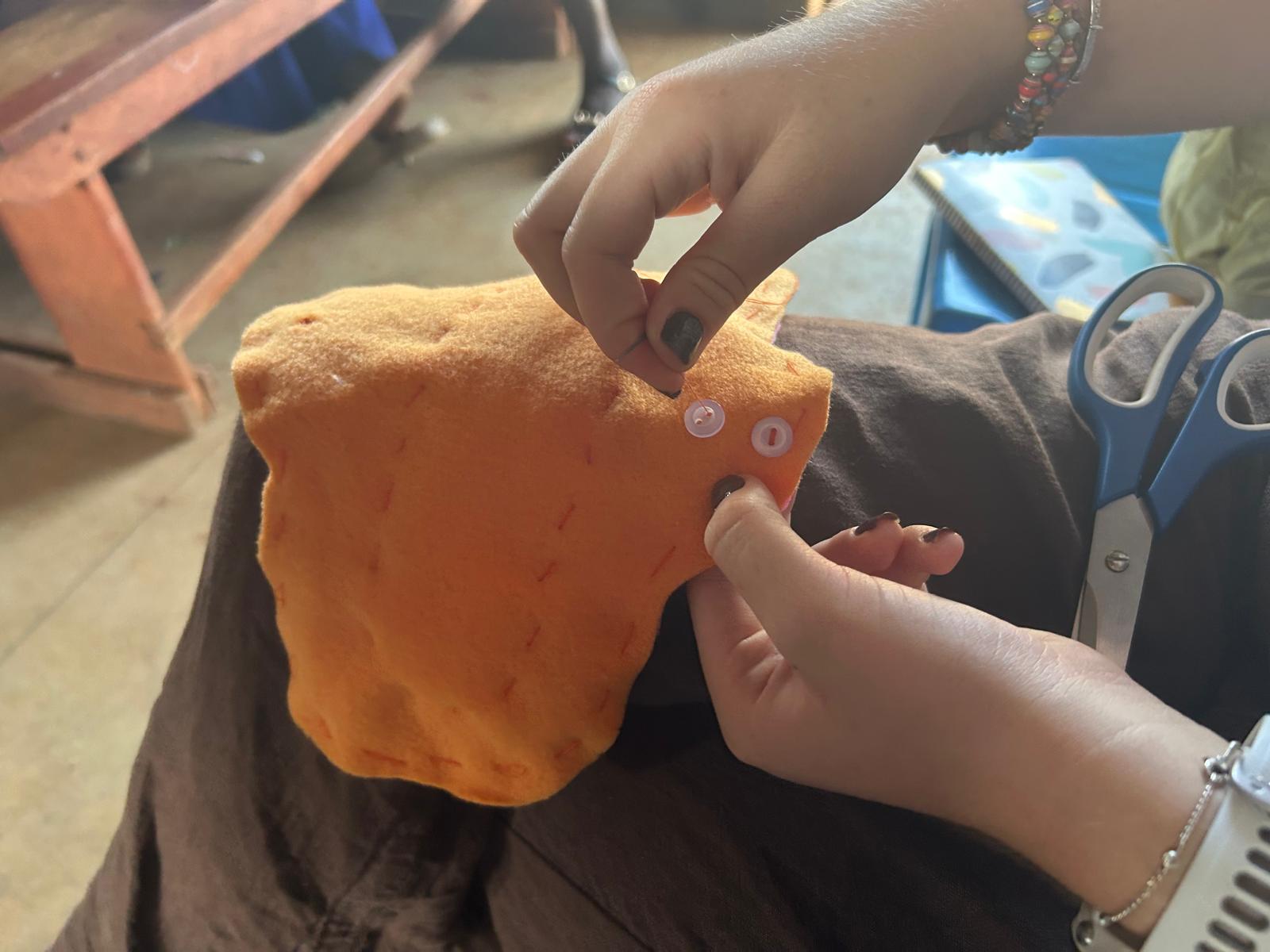
Menstrual hygiene training is a vital part of our WASH programme – a three hour session, supporting over 70 girls, hopefully serves as a sustainable and high-impact initiative.
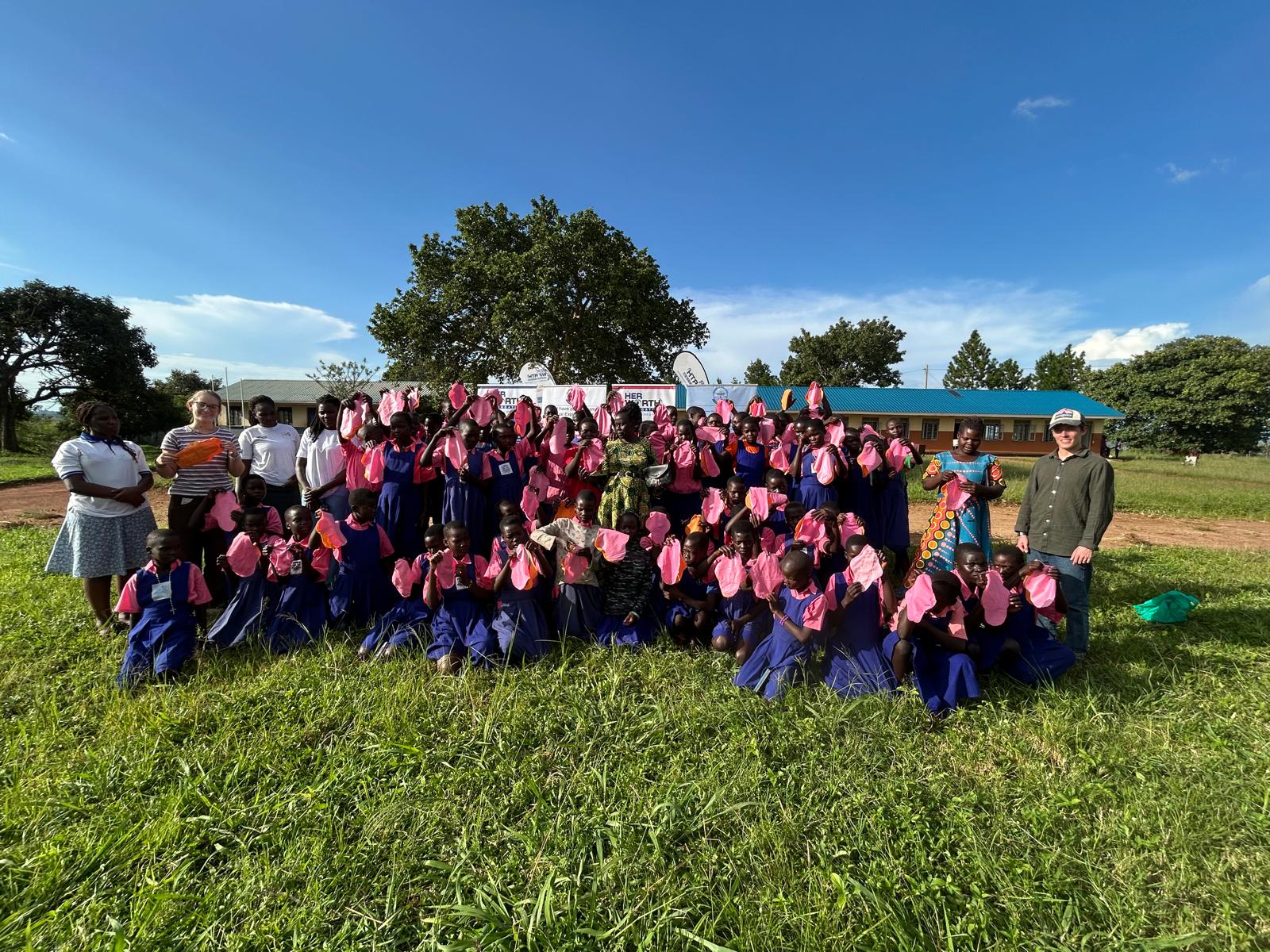
The result of the training – 70 happy girls who had each made their own reusable sanitary pad!
Posted By Maddy Pound
Posted Oct 18th, 2025
2 Comments
OKWIR JOSEPH JOHNS
October 24, 2025
This post showcases an exceptionally high-impact intervention. Addressing menstrual poverty is key to reversing the 24% dropout rate at Kulu Opal, and this training delivers a powerful two-part solution.
Firstly, it provides crucial shame-dispelling education, directly tackling the harmful myths and lack of anatomical knowledge. Secondly, the hands-on creation of reusable pads offers a year-long economic solution, restoring dignity and ensuring continuity of education. The engagement of the female teachers confirms the multi-generational need for this knowledge. This pilot is more than a hygiene session; it’s a direct, sustainable investment in girls’ educational futures.
Iain Guest
October 31, 2025
I’m tempted to write “So THAT’s what all the fuss is about!” We’ve been hearing about these breakthrough Her Worth trainings for weeks, but this is the first time I’ve understood them from the perspective of the girls and teachers. So interesting and so important. Of course girls will miss school during their periods if the school doesn’t help. And the bullying from other students only adds to the misery. This partnership between Her Worth and GDPO could be one of the best things that’s happened under the WASH program and we’re so pleased you and Alex could be there to witness and record it!