

In the world’s largest refugee camp, where hunger, overcrowding, and restrictions define daily life, even the smallest sign of growth feels extraordinary. Today, as we move into the third stage of our nutrition initiative under REAL — following our earlier training sessions and successful distribution of materials we finally witnessed the moment our beneficiaries had been waiting for: seed planting and the first watering of their home gardens.
These simple actions carry a much deeper meaning. They mark the beginning of real, tangible change.

Preparing the soil — the first step toward self-grown nutrition.
A Project Rooted in Urgency and Hope
Food insecurity in the Rohingya camps has reached a critical point. Ration cuts, rising prices, and the complete absence of livelihood opportunities leave families struggling every day. Fresh vegetables once rare, now almost impossible.
But through sack gardening, families are beginning to break through this barrier.
With sacks, compost, bamboo, fertilizer, and training already provided, the next step was to help families turn the materials into action. This week, community members began preparing soil, planting seeds, and using water carefully through the grow-bag system.
What looks like a small garden project is, in reality, a lifeline for families facing limited food and shrinking options.
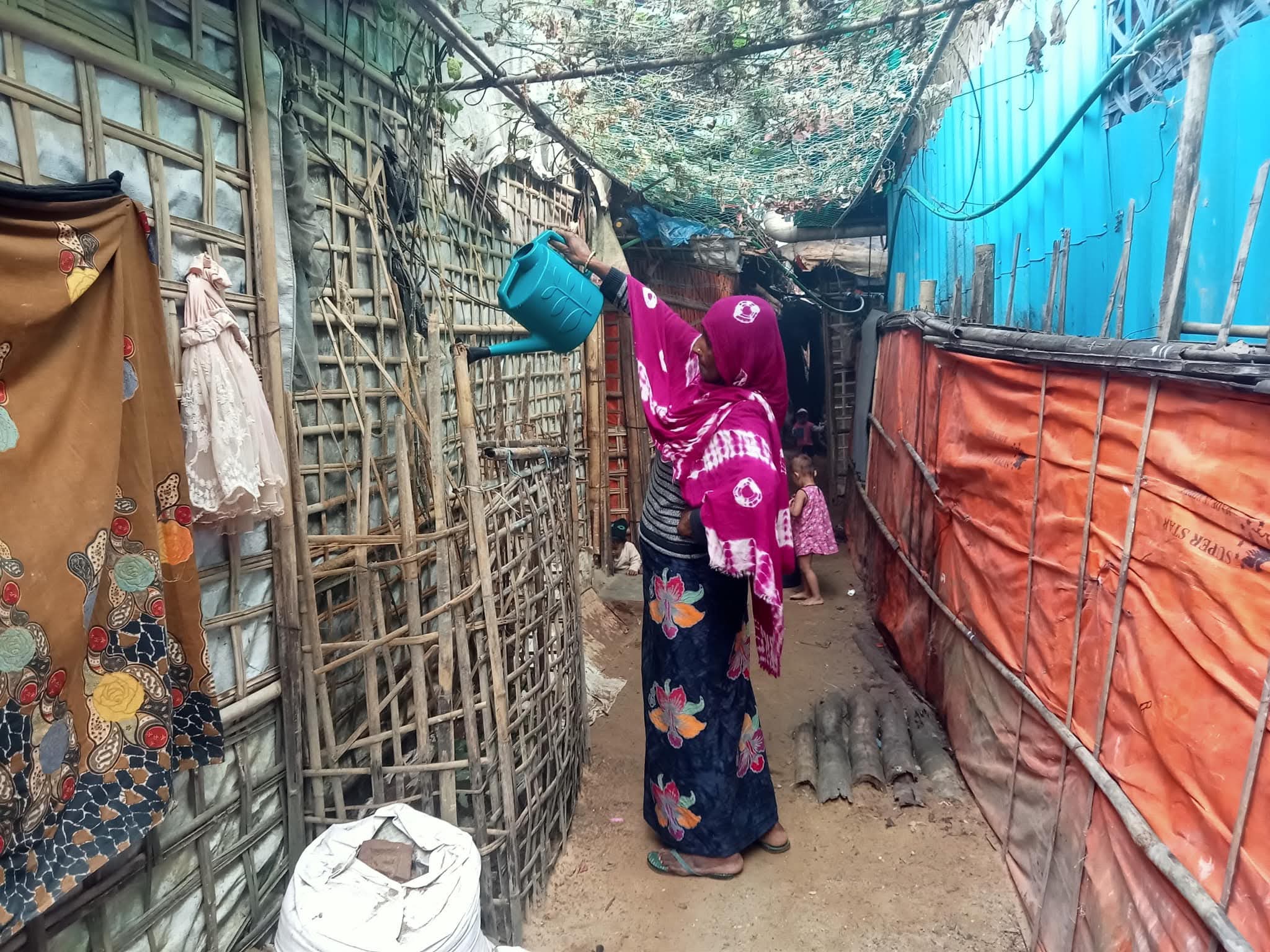
Turning shelter walls into vertical farms — a creative response to zero land access.
Women at the Center of the Transformation
As with every stage of the project, women are leading the implementation.In a place where they rarely have access to safe spaces or learning opportunities, this project gives them a new role: food producers, decision-makers, and caretakers of their own small gardens.
During our field visit, many women shared how meaningful it felt to plant something with their own hands. A few said it was the first time in years that they felt they were contributing something directly to their family’s survival.
For them, these gardens are more than vegetables. They represent dignity, capability, and a renewed sense of purpose.

Every seed planted is a step toward nutrition and self-reliance.
Why This Stage Matters for Donors and Partners
This third stage , the actual planting is where your support becomes visible.
It is where training turns into action…
Where tools turn into opportunity…
Where hope begins to grow in the most difficult environment.
For donors and partners, this is the exact moment where the impact of investment becomes measurable:
Families now have fresh vegetables growing directly at their shelters.
Women are gaining practical agricultural skills they can use long-term.
Dependence on shrinking food aid begins to slightly shift.
Households get a cost-free source of essential micronutrients.
The community feels more empowered and more resilient.
This project proves that even small contributions seeds, sacks, gloves, bamboo can create meaningful and lasting change when placed in the hands of capable, determined Rohingya families.

The first green signs of success — families nourish their own future.
A Call for Partnership
REAL is committed to expanding this initiative, strengthening monitoring, and supporting more families with tools, training, and follow-up. But reaching more households is only possible with the support of compassionate individuals and organizations.
Every sack garden is a quiet act of resilience against hunger.
Every seed planted is a message that Rohingya families deserve more than survival they deserve a future.
If you or your organization would like to support or collaborate with REAL, we welcome your partnership. Together, we can help more families grow food, grow dignity, and grow hope.
Posted By Maung Myint
Posted Nov 27th, 2025
1 Comment
Iain Guest
November 29, 2025
Exciting to see progress in so short a time, Maung! Well done to the REAL team! I look forward to seeing the finished vegetables. We’re going to connect you to Shield of Faith, the inspiring group of women in Kibera, Nairobi. who have found a way to make kitchen gardens and grow vegetables in a very narrow space. Keep up the great work!