
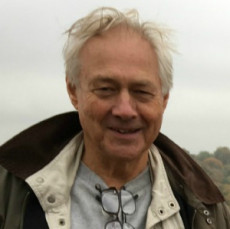

Salicran Gandarbha has been playing the saranji violin for 57 years. Scroll down to enjoy his impromptu performance!
Unlike the Chidimar and Badi, members of the Dalit sub-caste known as the Gandarbha are associated with a noble occupation. The Gandarbha are itinerant musicians who put stories to music while playing a sarangi – a 4-stringed violin that can play up to 40 different tunes. Nepalis are proud of their cultural traditions and the Gandarbha are very much part of the country’s musical history. Unfortunately, this has not made the lives of Gandarbha any easier.
I need to do more research about numbers but in 2011 there were 6,791 Gandarbha in Nepal – roughly 0.03% of the overall population. I’ve met Gandarbha musicians before and realized that their interaction with the audience is almost as important as the music. This is not unlike the pala dance in the tribal villages of Odisha state, India where we also support a project.
Many other visitors to Nepal have been intrigued by the Gandarbha, who even have a loyal following of friends in Australia known as Sarangi. Ted Samuel, one of our 2007 Fellows with a background in anthropology and a deep interest in cross-culture built his fellowship around the Gandarbha. After returning from Nepal Ted helped The Mountain Music Project to produce a stunning documentary linking the music of the Gandarbha and Appalachia. (Ted went on to earn a PhD. He is now deputy director at the Shansi Institute at Oberlin College.)
Sadly, however, the Gandarbha also suffer from the social and economic exclusion that is common to other Dalit sub-castes. According to one estimate, only 31 % of Gandarbha men and 18% of women are literate. Many are reduced to begging and have become a familiar sight in the Thamel quarter of Kathmandu. This has led to some awkward encounters with irritated tourists, which Ted described in an indignant blog.
Driven by poverty, many talented Gandarbha musicians are putting their sarangis aside and heading off to do menial work in India and the Middle East. As one report puts it sadly: “Our art form is slowly dying.”
*
About fifty Gandarbha families live here in Tulsipor and eight musicians are said to perform regularly. We went to meet some of them and were given an impromptu concert by Salicran Gandarbha, 69, watched by about ten younger Gandarbha men.
Salicran has been playing the sarangi and singing for 57 years and gives a confident performance. He plays his sarangi with skill and his voice has a nicely plaintive tone, although his songs are incredibly repetitious. I am told by Pinky that they are also impossible to translate, while being vaguely about religion. Readers can judge for themselves by opening the video link that will shortly be embedded below in this blog.
For Salicran it’s all about interaction with his audience and nothing seems to be off-limits. He even cracks jokes about his family, even though seven of his 13 children have died and his wife has also passed away. In fact, his life seems incredibly difficult. Two of his grown sons are living at home and this forces their father to play and sing in the market, which brings in about 1,500 rupees a day. Salicran also does a lot of begging and makes sarangi violins on the side. (He reckons to have made 60 violins during his lifetime). Last year he earned around 50,000 rupees.
Pinky and I discuss Salicran’s predicament in between songs and agree it presents a challenge. Drawing on its income-generation tools, BASE has funded a project to train 30 Gandarbha to make sarangi violins, but we are told that only two or three violins have sold for around 8,000 rupees apiece.
Is there a better way to reward the talents of Gandarbha musicians like Salicran and preserve their culture?
*
At some point we become aware of the audience, which is almost entirely comprised of young men. They are watching intently and break out in guffaws at Salicran’s self-deprecating humor. But they are also interested in the music and seem proud of their heritage as Gandarbha.
I’m also struck by the fact that there are no women in the audience. I read in one 2011 report that many Gandarbha women have a brutally tough life and used to work at crushing stones. But I have not seen any suggestion that they sing or play music.
It turns out that another Gandarbha musician, Sushil Dukhi, is in the audience. If Salicran is the face of past tradition, Sushil is the future. He spent 200,000 rupees of his own money to launch a page on YouTube and has 845 subscribers. Over 11,000 people have watched his videos and I am not surprised because he sings beautifully and his songs are very easy on the ear. I’m a bit worried however: when I checked his YouTube page today, it was down.
I also took a dive into Tiktok and Instagram and found – to my surprise – that other Gandarbha performers are attracting hundreds of thousands of views. This performance by young Biraj Gandarbha, another YouTube star, has received 1,7 million views.
Could this be the future for Gandarbha music? Everyone listening to Salicran has a mobile phone and uses social media and this makes me wonder if they could help BASE to build an international audience for Gandarbha music. Of course the live performances will remain front and center, and I would definitely include female Gandarbha in any future training. Would they be interested? We won’t know until we ask.
Unlike other sub-castes there is also a Gandarbha support system in place in the form of the Gandharba Cultural Art Organisation in Kathmandu, and foreign friends like the Sarangi project in Australia. UNESCO supports four World Heritage sites in Nepal and might also come to the rescue of this dying art form. The Mountain Music Project is still in business. So there do seem to be serious possibilities for international engagement.
I’m going to put some time into this when I get back and see if we can interest any students. Please share any suggestions!
Next: Remembering Badi Prostitution
Posted By Iain Guest
Posted Nov 17th, 2024