


In the Ghorahi Badi community
This blog will take us deeper into Badi research. Pinky and I spent much of yesterday with three Badi women in the town of Ghorahi and then visited the neighborhood where they live not far from the town center.
Rangita, Sarita and Dropati Badi were turned into advocates by their experience during the years of prostitution. They have just completed several months of embroidery training provided by a local nonprofit, the Nepal Women’s Community Development Center, and are preparing to launch their own business making embroidery for festivals and weddings. They are happy to be quoted and identified by name but ask that we do not use their photos on social media, indicating some sensitivity about their caste.
*
The prostitution years come vividly alive through the memories of these three women. Many families practiced prostitution and clients used to come from as far away as Kathmandu and Pokhara. The main Badi houses – brothels, really – were well known, and rowdy customers would spill out into the streets and look for women elsewhere. Rangita was in her teens at the time and remembers cowering upstairs in her room while drunken men tried to force their way in: “We locked the door and tried to hide.”
The three girls decided they had had enough and went with a group of other teenage Badi girls to the local municipality where they persuaded the authorities to open a hostel for Badi girls. BASE and UNICEF also opened safe houses for Badi girls in Ghorahi around the same time.
By this time there was also growing outrage at the fate of Badi children born from prostitution. As noted in an earlier blog, clients of the Badi usually refused to provide their names. This meant that when a child was born out of wedlock – as happened often – her or she was stateless because nationality was handed down through the father. The words “Father Not Known” were entered into their ID cards and as Rangita noted this was like writing “this is the child of a Badi prostitute.” Of course, the Badi mothers did not have a marriage certificate.
As I noted earlier, this provoked a memorable protest in 2007 when a large group of Badi women descended on Kathmandu and took off most of their clothes in protest. The reaction in far-off Ghorahi was less noisy but no less impressive. Rangita and her two friends petitioned the municipality and got the offensive words removed from the ID cards of Badi children.
Life remained tough for Badi women and girls even as the prostitution began to wane. The three friends stayed close and worked in stone quarries for several years to supplement the family income. The crushing of stones by hand was another exhausting and dangerous labor practice that was common in Central Nepal and has largely stopped (as a result of new technology and pressure).
Dropati says that they would put in about six hours a day before and after school and that they continued to crush stones full-time for several years after graduating. They would earn around 1,600 rupees ($11.50 at today’s prices) for a tractor-load of crushed stones. They stopped working in the quarries about three years ago and began embroidery training six months ago, so all this is relatively recent.
During this long, fascinating and occasionally awkward conversation we edge into the issue of marriage. Dropati’s husband Giri is from the Chhetri caste, and together they have a 14-year old daughter (who is registered in her father’s name). But Giri’s family refuses to be associated with Badi, and Giri has been banished from his parents’ home. Dropati says that her mother-in-law recently married again and that the new husband is even more intolerant.
This shows how marriage can prevent social mobility and reinforce caste, although there are brave exceptions like Dropati and her family. We are told that several other Badi men and women in the settlement have also married into other castes. That seems like a hopeful sign.
*
We take a tuk tuk (3-wheeled taxi) to the Badi neighborhood where Dropita, Rangita and Sarita live on the outskirts of Ghorahi town. The settlement is home to 105 families and the three friends explain how it came into being.
Thirty-one families were living elsewhere on private land and a friendly landlord offered them land here. But when the remaining seventy families followed and settled on public land the other landowners stopped farming in protest. This hostility persists. “We are not accepted when we live with people from different castes,” explains Rangita. She adds that even attractive Badi girls are quickly dumped when their boyfriends learn they are Badi. We do a quick tour of the settlement, which floods in the monsoon.
The discussion turns to education, an important tool for producing social change but a big worry for Badi mothers here. There are 117 Badi children in the settlement but half do not attend school. However, they do have access to a white-washed community center and our guides ask Pinky if BASE could turn it into an after-school center. Many kids would attend, they say, and BASE would have no trouble finding Badi women from the settlement to help out. It seems like a good idea. But perhaps they should also be asking the municipality for a government school.
I ask our guides whether any Badi families have changed their names. The answer is almost none because Dalit families get nutritional support and free education for children up to the age of five and they do not want to lose these privileges. Perhaps it’s because the settlement is so physically defined, but I also get the sense that these families also cling to their group identity for protection. Dropita says that some of her women friends changed their names from Badi and left to live in the Gulf. “They call me in tears and want to come home” she says sadly.
I leave the settlement feeling that any intervention or training should focus on the specific needs of the beneficiaries and that these will vary with each group. The embroidery shop in Ghorahi is a brave initiative but caters to a niche market, namely weddings and festivals. Pinky and I both make a purchase and find the prices quite high. Perhaps making and mending clothes might attract more customers. They certainly have enough sewing machines in the Ghorahi shop, thanks to the generosity of their NGO supporter.
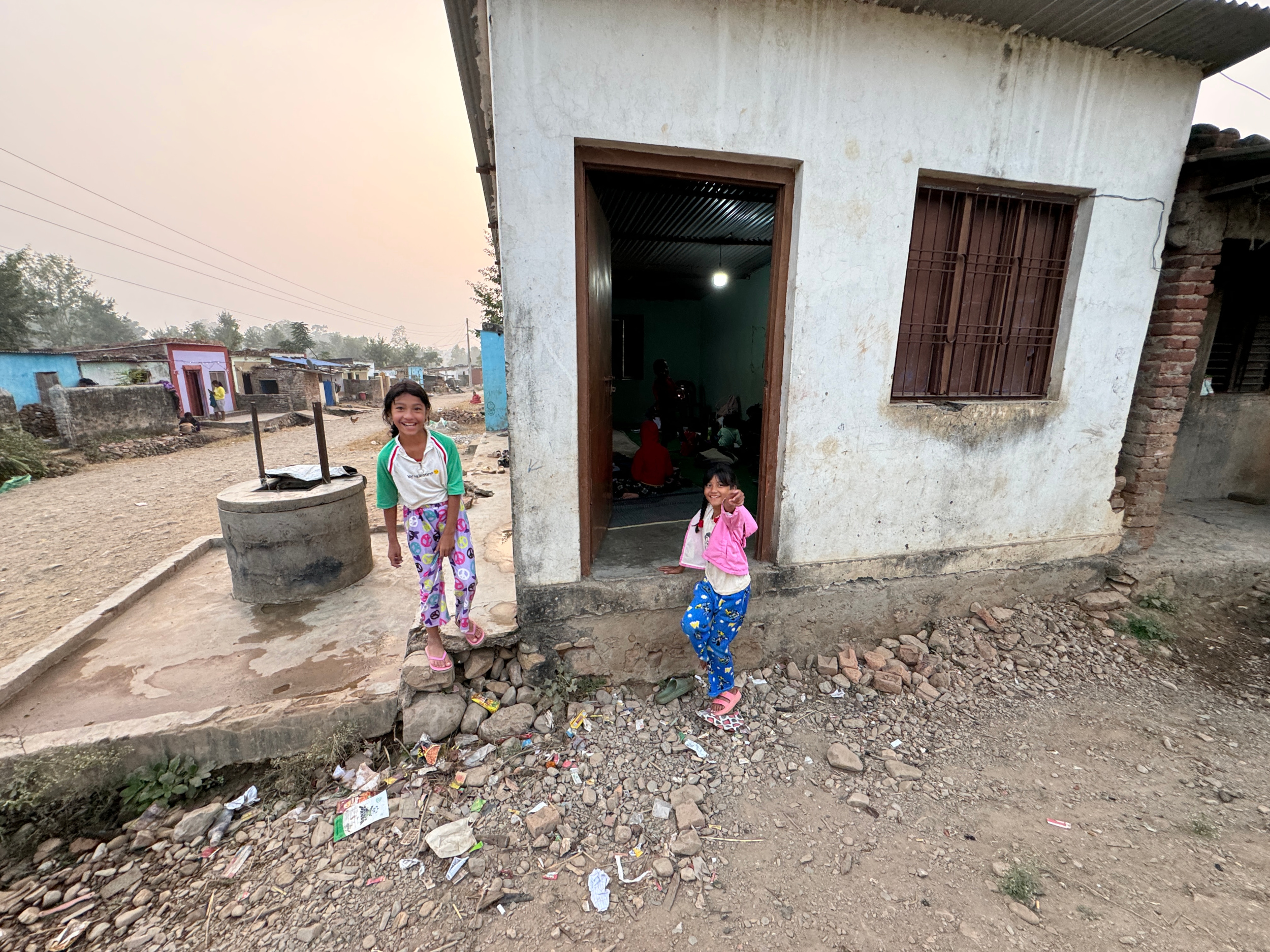
Half of the Badi children in the Ghorahi settlement do not attend school. Parents want to turn this building into a center for their children.
Next: The Kusbadiya Stone-carvers
Posted By Iain Guest
Posted Nov 17th, 2024