

“The organisation does well those things which the boss checks” – General Bruce C. Clarke
Why Monitoring and Evaluation is low cost, but high value
Last week, we started our first monitoring visits to the seven primary schools which are currently enrolled in GDPU’s WASH programme. Visits are meant to take place once a month, without notifying the schools’ teachers ahead of time. So these were the visits for September.
GDPU’s M&E model is built on a Google Forms. Via a sit down with the school headteacher, the form asks 74 WASH-related questions – sussing out whether girls feel comfortable using the changing facilities during their period, or whether there’s enough liquid soap to go around for the rest of term.
The monitoring team – this time consisting of myself and Joe – then looks around the WASH facilities themselves. Are the toilets in good condition? Is there a cleaning routine in place to keep the toilets in good condition (or, more often, bring them up to a good condition!)? Is there any student engagement with the cleaning routine? As you might guess from the picture below, the answers to these questions can be a mixed bag…
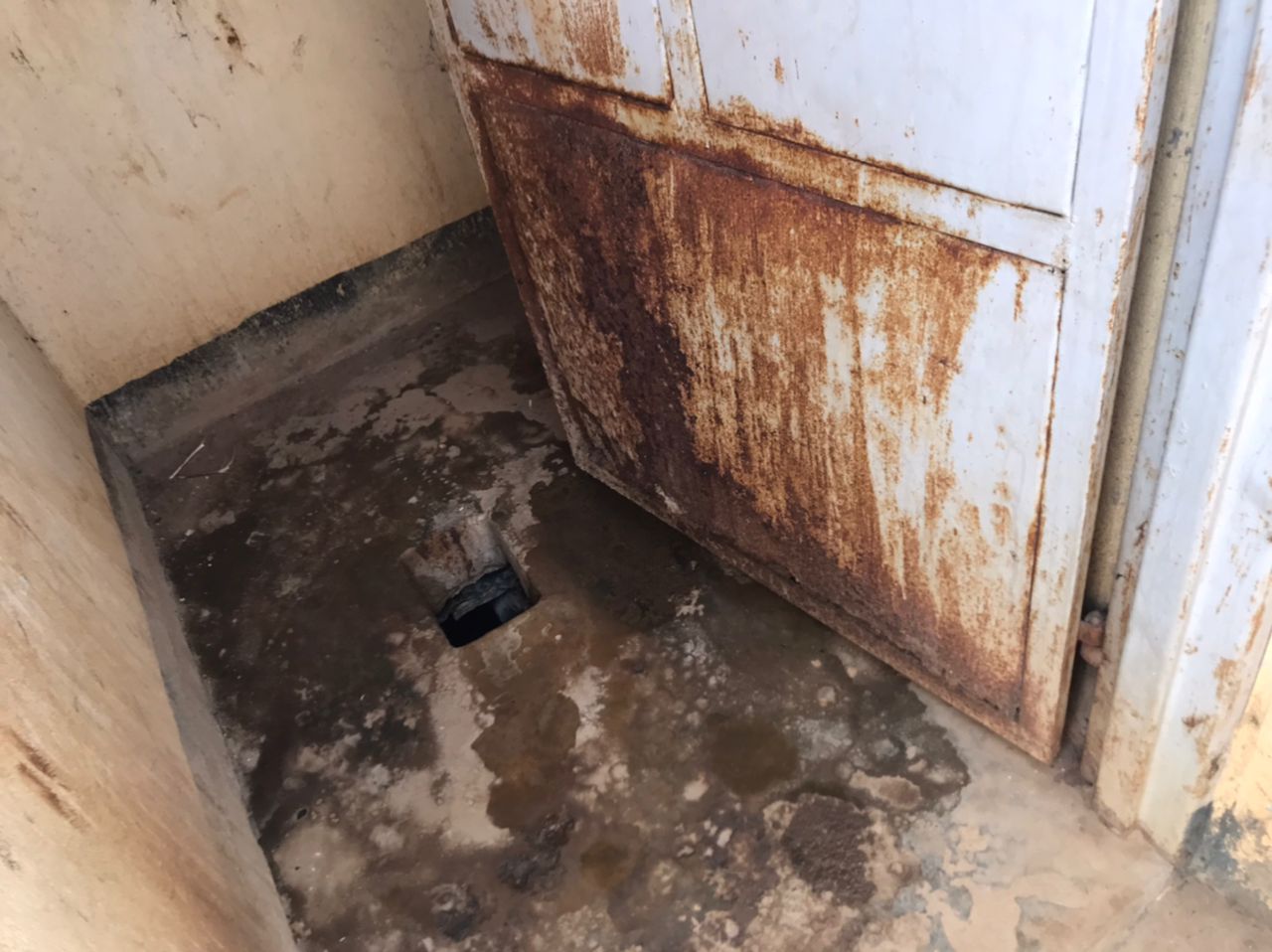
Toilets at Ogul Primary School (built just six years ago): in need of some TLC and M&E.
Our feedback is then written on a scorecard, which is returned to the teacher, along with a request for them to take action where necessary. For me – as a westerner, very clearly new to this, and commanding absolutely no authority to tell qualified teachers how to run their schools – I find this part deathly cringeworthy. However, without written comments, the teachers will likely forget the takeaways of our monitoring visit. It’s hard enough attracting teachers’ involvement in WASH as it is, so some cemented, written next steps at least gives us a fighting chance of causing some improvements.
Other blogs have shown the long, meticulous journey that GDPU have taken to get their M&E model to where it is now. Indeed, as the title quote suggests, along with Einstein’s famous words (“not everything that can be measured is important… and not everything that is important can be measured”), M&E can be difficult to get right. There are selective biases, and it’s hard to know which variables to test.
Thinking practically, incentivising teachers to buy into GDPU’s monitoring efforts has also been a challenge. At Abaka Primary School for example – facing teacher strikes and administrative crises – pushing for better maintenance of girls’ changing facilities is seemingly too ambitious of a request. And asking teachers to maintain a cleaning routine is just another thing on their long list of immensely daunting and pressing tasks.
A history of vandalism to Advocacy Project-funded public toilets in Gulu also taught us that local communities having a direct stake in the facilities could be helpful. But getting parents and community leaders interested is only having mixed success. At Awach Central School, “75-80%” of parents are attending PTA meetings, where discussions about WASH objectives for the incoming term took place. Conversely, at Abaka, encouraging parents to leave their farms for a day and attend a PTA meeting was proving much more difficult.

At Abaka School, speaking with the Senior Man Teacher and the Assistant Headteacher. The repeated absence of their Headteacher has left the school flooded with challenges and adrift of leadership.
Overall, however, GDPU’s monitoring efforts are paying off. The case of Kulu Opal Primary School is a perfect example. The toilets at Kulu Opal were first installed by Japanese humanitarian benefactors, back in 1995. It was reported to AP that the Japanese donors never returned to the toilets, so it was unsurprising that they quickly fell into disrepair. Thirty years later, GDPU’s prototype M&E model breathed new life into the Kulu Opal toilets.
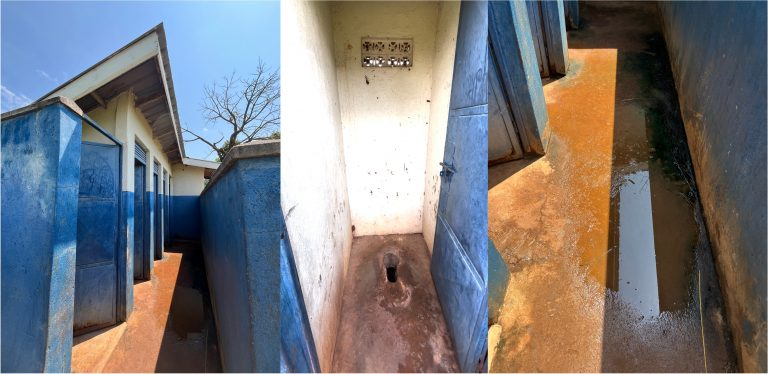

M&E in action: the toilets at Kulu Opal Primary School in June 2024 (above) and August 2024 (below).
M&E stops the reinvention of the wheel. Indeed, demolishing the dilapidated toilets at Kulu Opal in 1995 – and spending around $15,000 to build some new ones – would’ve been the wrong call. Instead, M&E can clearly revive the existing WASH infrastructure, allowing GDPU to stretch their dwindling funds ever-further. All we need is a serviceable vehicle (already challenging enough!), printed copies of the M&E forms, and some strong stomachs. This is a proactive model, which can respond to damage and decay on a monthly basis, enacting simple repairs at no more than $100 each. A cheap, efficient, and reproducible method.
As the stark contrast at Kulu Opal shows, monitoring is low cost, but exceedingly high value.
More visits to follow next week – stay tuned!
Posted By Alex McDermott
Posted Oct 7th, 2025
1 Comment
Iain Guest
October 15, 2025
Now you’re talking! This is really good and I for one clearly understand the GDPO monitoring system. I also like the idea of sharing written comments with the heat teacher, even if it is a bit cringe-worthy! You don’t need to be the sharer of bad news, however. Hopefully Joe and Emma have that down by now. Re the engagement of parents, yes that has always been difficult. The PTA’s are not very popular because – apart from all else – the head teachers use them to squeeze money out of families that are already poor. Perhaps chat with the GDPU team and see if there is anything else that can be done. Can GDPO offer any INCENTIVES to parents that won’t break the bank? As for M and E – can you see any other IMPROVEMENTS OR TWEAKS that need to be made in the process? Are you all able to track improvements that are made resulting from follow up visits? Good work Alex – can’t wait for the next blog!