

Sewa, Namaste!
This is my first blog post, and I want to start by explaining how I became a part of this incredible program. I received an email from my Peace and Justice Professor at Wellesley College, Nadya Hajj, about an Alum Talk event that had a focus on Nepal by a former Peace and Justice Studies alum, Emma Cohen. I was super excited to attend this event because I had never seen any event at Wellesley regarding Nepal, not to mention in the field that I was planning to major in. After spreading the word to the Wellesley Nepali community, I attended Emma’s event on February 11, 2026, with a few other Nepali students and a Nepali professor. Emma talked about her experience over the last several months working in Nepal on a transitional justice initiative with victims’ and survivors’ advocate groups and the importance of survivor-led initiatives and mobilization. At the end of her presentation, Emma presented an opportunity called the CHRV Research and Learning Fellowship that aimed to educate a new generation of scholars on survivor-led change. I quickly took a picture and wrote down Emma’s contact information to follow up on this fellowship.
A few things drew me to apply to this program. Firstly, ever since entering college, I have wanted to find an opportunity to conduct fieldwork in Nepal. In the past summers, I had done remote work with an organization called VolNepal, and I felt ready to explore in person ways of contributing while developing face-to-face connections. Another reason I applied to this program is that I wanted to learn more about transitional justice. Last semester I took a Peace and Justice class called Conflict Transformation, and I was curious to see what I could apply or rethink from what I learned in that class to this experience. Lastly, I wanted to educate myself on Nepal’s People’s War because I knew very little about it. While visiting Nepal for the first time four years ago, I visited a village near my dad’s home called Chhiruwa, located in the Taplejung District of Northeast Nepal, and I remember seeing several communist signs. At the time, I knew very little of Nepal’s history other than that remote villages like Chhiruwa had communist influence. I decided to take pictures in case I wanted to research them later.
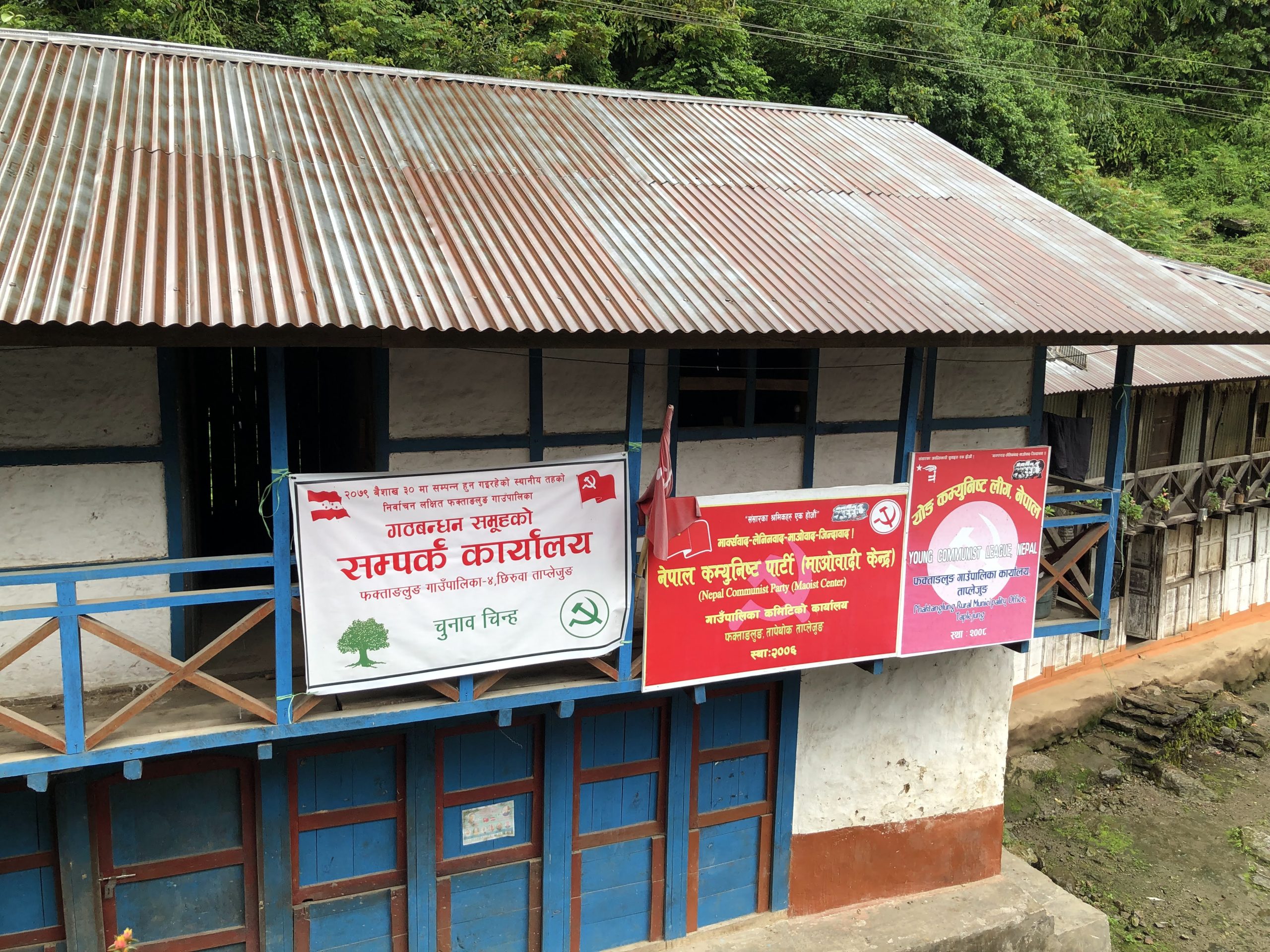


These are pictures taken by me on July 11, 2022, in the village of Chhiruwa, Taplejung, Nepal.
Earlier this year, a close Nepali friend gave me a brief overview of the People’s War and informed me that the Army committed the majority of the human rights violations. This was surprising to me because the stories I had heard about my family’s experience during the People’s War created a narrative about the Maoists. Hearing this challenged what I had been taught, so I was determined to learn more. Throughout this fellowship, I hope to learn more from my own family’s stories and how they were affected by the People’s War.
Since it has already been one week since the CHRV fellowship began, I would like to take a moment to reflect on my experience in this program so far. Throughout this week, we have had the chance to understand Nepal’s history from 1950 until the present, and we were able to listen to the experiences of several survivors and victims and their work in the victim movement. Our first speaker, Ekraj Bhandari, joined us on Wednesday and spoke about being a victim advocate who was elected to the first Constituent Assembly and his contribution to the Comprehensive Peace Agreement. On Friday, Gita Rasaili, chairperson of the Conflict Victim Women National Network (CVWN), and Maina Karki, president of the Conflict Victims Common Platform and a Member of Parliament from 2022-2025, discussed representation within the movement, providing us with a perspective specifically on women’s participation and leadership.
On Thursday, we joined a sit-in protest where victims and survivors demanded a fair and victim-centered new commission process. It was an honor to be a part of, and there was a powerful feeling in the air as each speaker took their turn talking to the crowd. The speakers emphasized that even after 20 years, the government has still not provided justice despite years of effort. On the way home from the protest, there was a heavy feeling in my heart as I began questioning my contribution to the victims’ movement. However, this feeling of uncertainty was transformed into curiosity and hope after the following day’s presentation and discussion led by Gita and Maina.
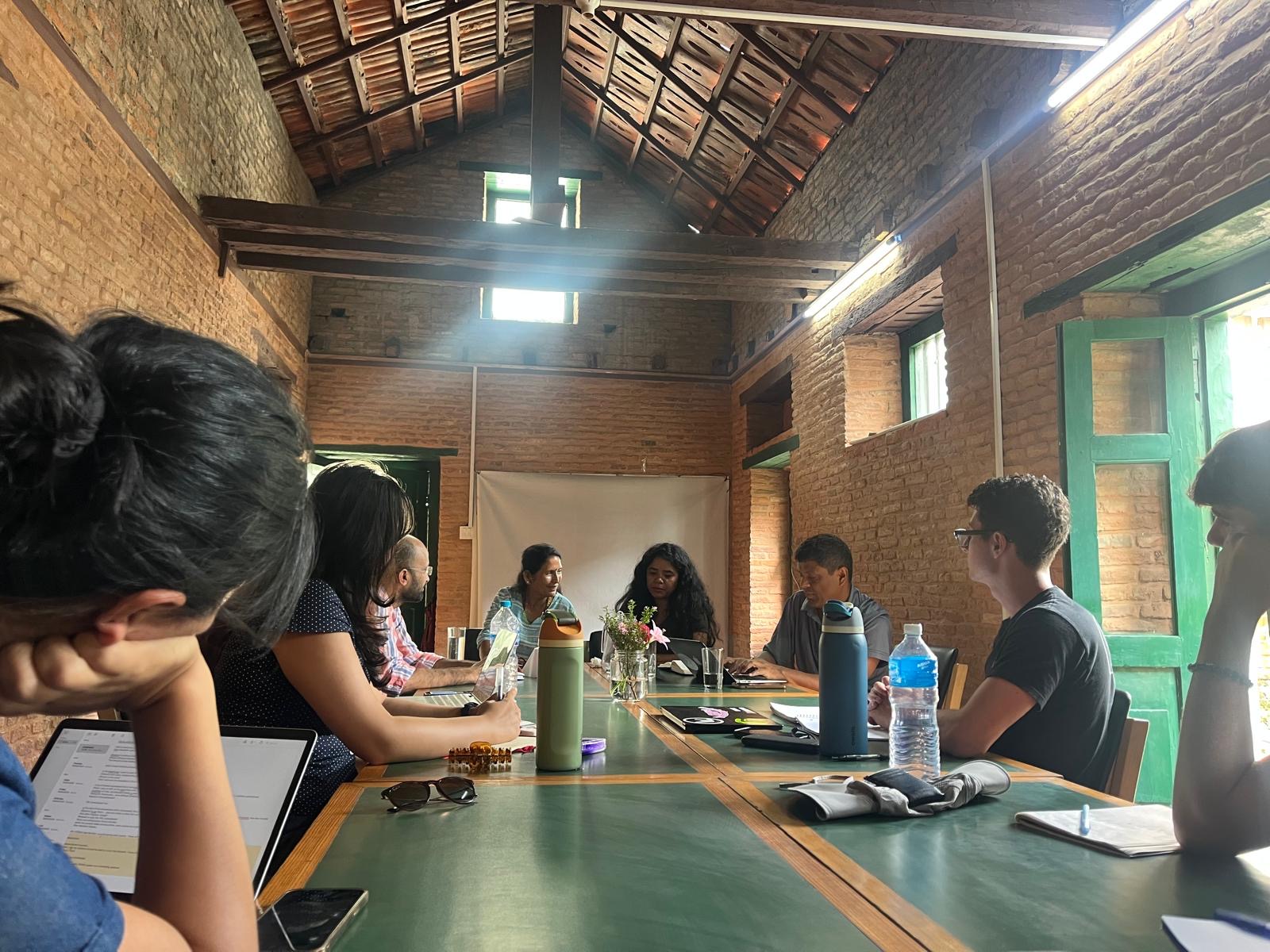
Discussion with Gita Raisali and Maina Karki on July 24, 2026
Both women are leaders of the victim movement, and although they have different backgrounds, they share a common understanding that the pain and suffering they faced is universal. Gita and Maina explored three different themes, including their personal experiences and personal impacts of the conflict, how they joined the movement, and the challenges they’re facing in activism.
Hearing Gita’s and Maina’s experiences joining the victims’ movement was especially empowering. Gita spoke about how, as the movement grew, engagement and accessibility to trainings such as leadership-building skills and awareness of transitional justice mechanisms also grew. Victim platforms not only strengthened the movement but also helped the individuals “find the gap within themselves” and “develop their skills and potential.” For example, Gita left school in 7th grade at age 13/14 to join the movement and later continued her education, completing her bachelor’s degree! Hearing her story reminded me to consider all aspects of the victim movement. Although there has been limited progress regarding government efforts, the victim movement has made such an incredible impact on survivors’ individual lives. Gita described how the victim platforms not only supported transitional justice issues but also helped raise awareness of other social issues, including caste, and strengthened women’s and disabled networks.
Gita and Maina both raised a similar challenge they both face as women in the victim movement. Maina explained that Nepal’s patriarchal society already stigmatizes single women, and identifying as a woman and a conflict victim is also challenging, as they are shamed for interacting with men. In addition, conflict victim women face the obstacle of scheduling the victim movement activities into their personal schedule. Security is a problem as it is dangerous to travel home late, and women need to cook meals for their family and take care of their children. Gita pointed out that it is also a challenge in itself to survive in this city. Since they are not originally from Kathmandu, they have to rent, and engaging in 20 years of activism comes with limited economic gain. It was very interesting to hear about and think about the intersectionality of victim identity with class, caste, gender, and regional location. These intersecting categories of identity create multi-layered barriers to victims and their fight for justice, and the complexity of the victim identity must be properly addressed by the government.
After hearing about Maina’s children questioning her continuous advocacy despite the government’s lack of effort, I raised the question of the status of current youth involvement. Maina answered that there is a little bit of involvement, but there isn’t a large amount, and we need to work to slowly engage them. She understands there will be a generational transformation in this movement when the youth take over this movement, and she states that her children must carry this movement after she passes. She stressed there are economic limitations, like providing spaces to engage the youth and even offering them food during programs; however, economically they are not able to do this. According to my own observations, I saw a couple of youth at the sit-in protest as well. The protest was held during school hours, which might have been another factor. The Nepali friends that I have spoken with, both in America and Nepal, are aware of the human rights violations committed during the People’s War; however, there may be a lack of awareness that the victims and survivors of war have still not received justice to this day. This is further fueled by the government trying to quickly close this chapter of Nepal’s history and move on.
Maina expressed how she feels the responsibility to continue her fight in the victims’ movement because so many victims and survivors will never receive justice if she were to stop. Ram emphasized at the end of the session that there are still victims and survivors in remote villages that have no idea about the transitional justice process. When I think about the perseverance for justice that Ram has maintained throughout his activism and the incredible work and dedication from Ekraj, Gita, and Maina, I am hopeful and determined to continue to learn more about the victim movement in the upcoming weeks!
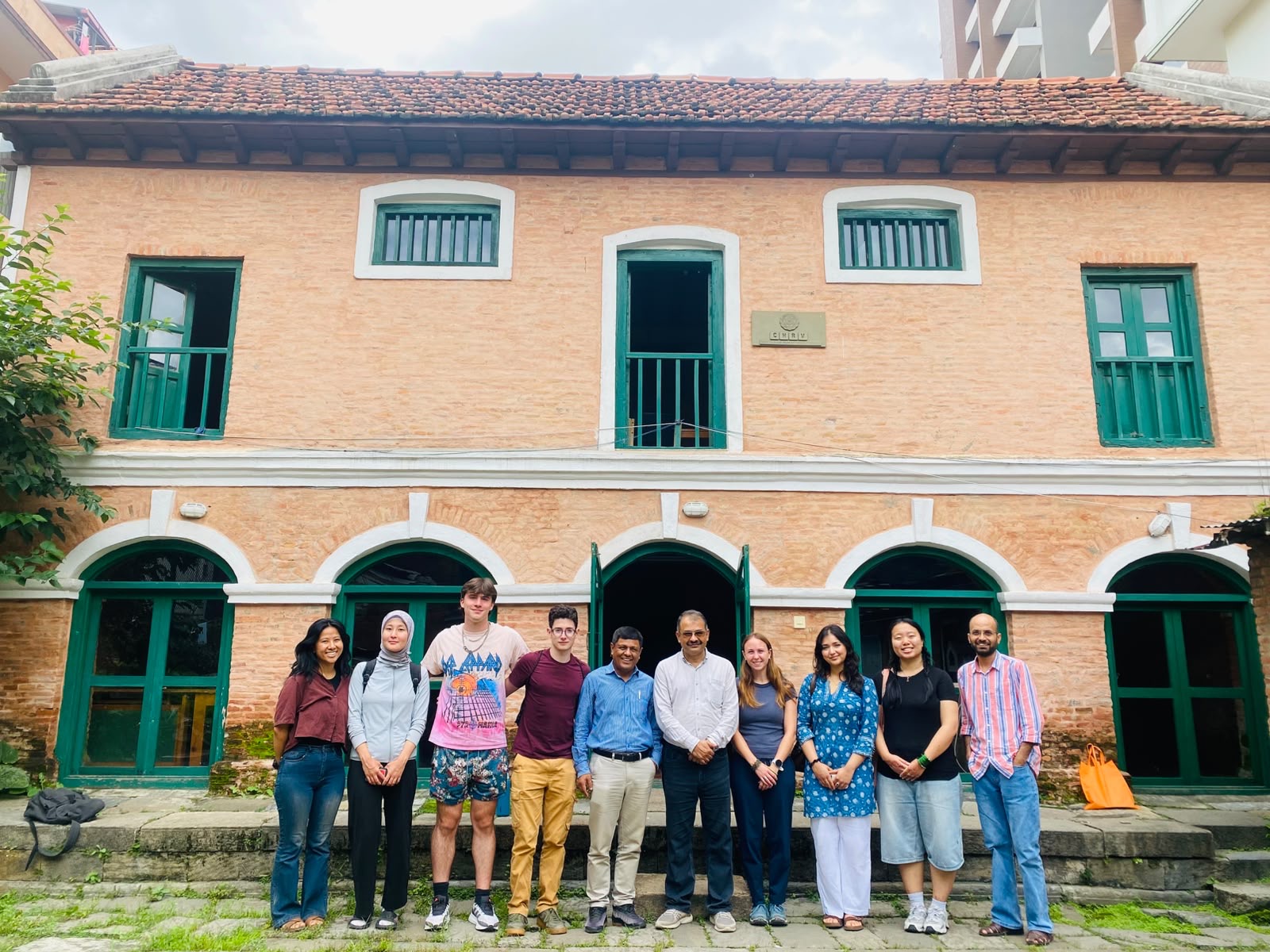
Group Photo outside of the CHRV Center
Posted By Aayushma Rai
Posted Jul 26th, 2026
4 Comments
Iain Guest
July 26, 2026
Thanks for this wonderful blog, Aayushma! This is exactly what we have been hoping for – a detailed and knowledgeable description of a class discussion, interspersed with some personal history and observations. Tons of insights about how victims get involved in this sort of activism and I particularly liked your description of the very practical challenges faced by women like Gita and Maina – particularly when it comes to security. It’s great to read how Emma’s presentation inspired you to sign up (not surprising!). I hope your future blogs are as rich, well written and informative. Well done!
Prakriti Thapaliya
July 26, 2026
It’s so amazing to see all that you’ve been up to! I’m so grateful to hear Gita and Maina’s stories, and I’m sure you’ll continue to do incredible things with CHRV
Joe Finkelstein
July 29, 2026
Great first blog! I liked your insights on the various benefits and difficulties of advocacy work that Gita and Maina explained. I was also initially questioning my role in such a hard-fought and long-running movement, but their explanations of the community and catharsis they found through advocacy gave me hope for its benefits, regardless of what actions the government refuses to take. I also really liked your examination of the logistical barriers that activists face and I hope we get to explore more of those challenges in class. Keep up the good work champ
Chhime Sherpa
August 2, 2026
Sewa dear Aayushma. So interesting to see the images you have shared of Chiruwa. I share your curiousity to learn more about the past through family stories. My family is from Solukhumbu also in eastern Nepal. Salleri, the headquarters, saw a violent Maoist uprising in 2001…This was such a turning point in the conflict that a national state of emergency was declared in the following days… Isn’t that so curious?