
The 27th of July, I guess, was moving for each of us who were in that room.
This is only the second time in my life I’ve sat with a woman who experienced conflict-related sexual violence and heard it directly from her. The first time was Nadia Murad, the Yazidi woman and Nobel Peace Prize winner, when she spoke at BU about what ISIS did to her and to her community in Iraq. You can read about her story.
This time it was Devi Khadka. A former Maoist commander during Nepal’s civil war and a survivor, yes, survivor.
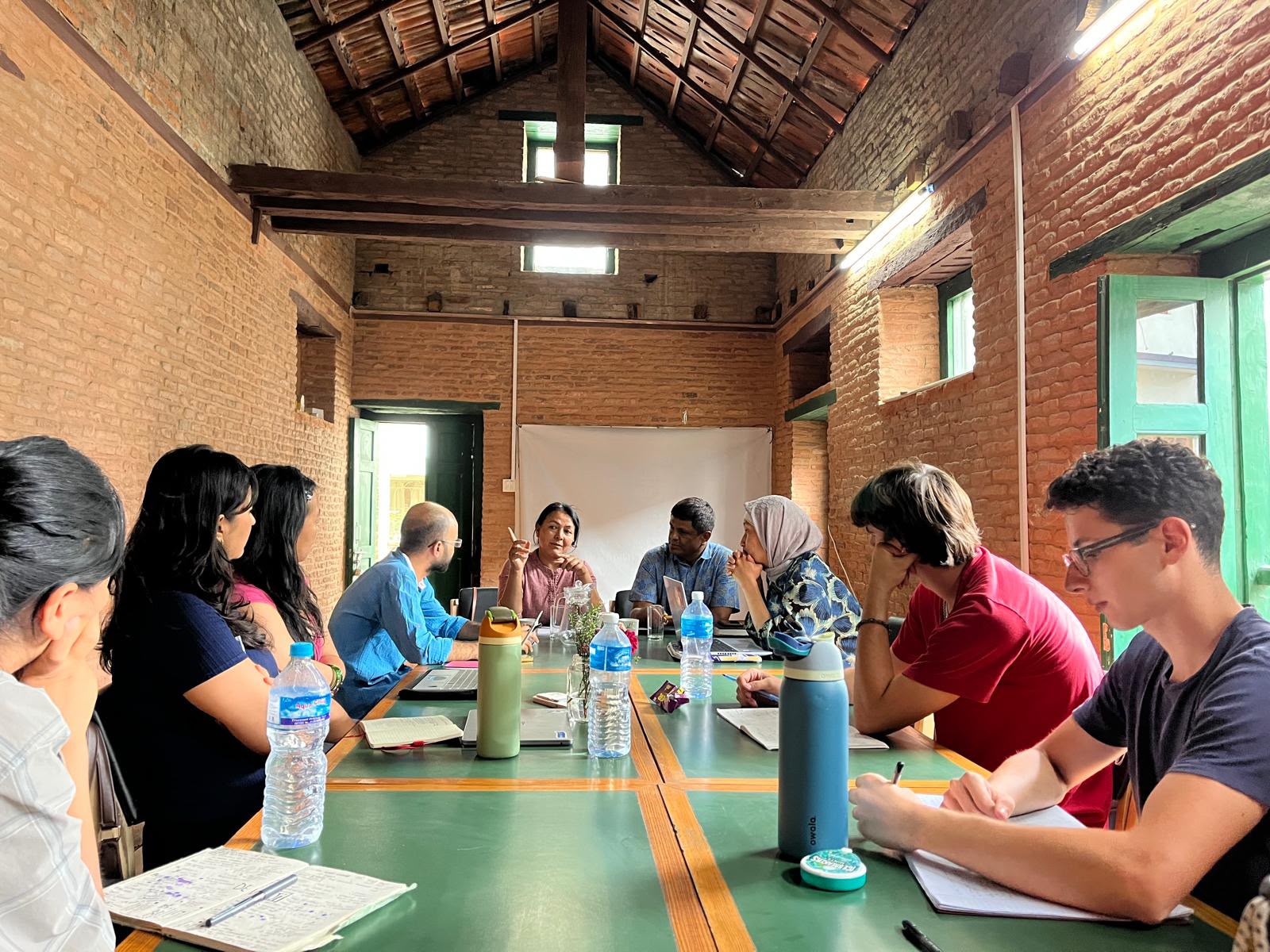
Meeting with lovely Mrs Devi
I won’t pretend I processed all of it in real time. Some of it I’m still turning over.
What stayed with me most is how long she carried her story sideways. Her sister was raped and killed by the Royal Nepal Army and five members of her family died. For years, she was called a martyr’s sister, the political commander, the parliamentarian, but not the survivor. She said the shame of it made her hide behind the other identity, the one that was easier to say out loud and then Maoist leaders made her experience of sexual violence public, without her consent, which retraumatized her.
Out of more than 63,000 documented cases from the conflict, only 314 were ever categorized as sexual violence because the government didn’t include this category of survivors. As I read from Devi’s interview with the OHCHR, “rape”, under Nepali law, only “counted” if there was genital contact but if a weapon was used, it was not legally rape at all. Devi said something that I don’t think I’ll forget: in around 75 percent of these cases, the survivor herself doesn’t call what happened to her sexual violence neither the community.
She and eleven other survivors started an organization and the state accused them of making the story up. The state tried to construct a narrative, as if surviving something and then organizing around it was itself the crime.
It’s grown to 3,800 members since. Their slogan changed over the years too it started as “let’s speak for ourselves” and became “self justice, social justice, legal justice,” which honestly feels more relevant to current reality because legal justice is not enough.
Devi told: what can a court do for a woman whose husband left her after finding out that she was raped? That’s the part of transitional justice that I don’t think gets taught or told.
The frameworks are normative, procedural, built for things you can prove — a body, a documented disappearance, a paper trail. They were never built for the kind of harm where the harm is also the reason no one will say its name.
I left the room heavier than I walked in, and also, strangely, more certain about why I’m doing this work at all.
After the meeting, I needed to just walk for a while before I could talk to anyone about it. So I did.
I ended up at the Nepali Jame Mosque. I prayed for a bit. Bought some halal meat. Small kids running around, being kids, completely unaware of anything I’d just been sitting with an hour before.
Then I just kept walking and somehow found myself in Ason Bazaar, which I’m fairly sure is where you can survive an apocalypse if you needed, that market has everything.

Ason Bazaar
Bought Nepali bananas and mangoes, and I will say the mangoes were good. Took a ride on a bike and of course, it started to rain (almost everyday). The bike riders here have raincoats built for two one for them, one for you, the passenger which felt like such a small kindness the first time I noticed it.
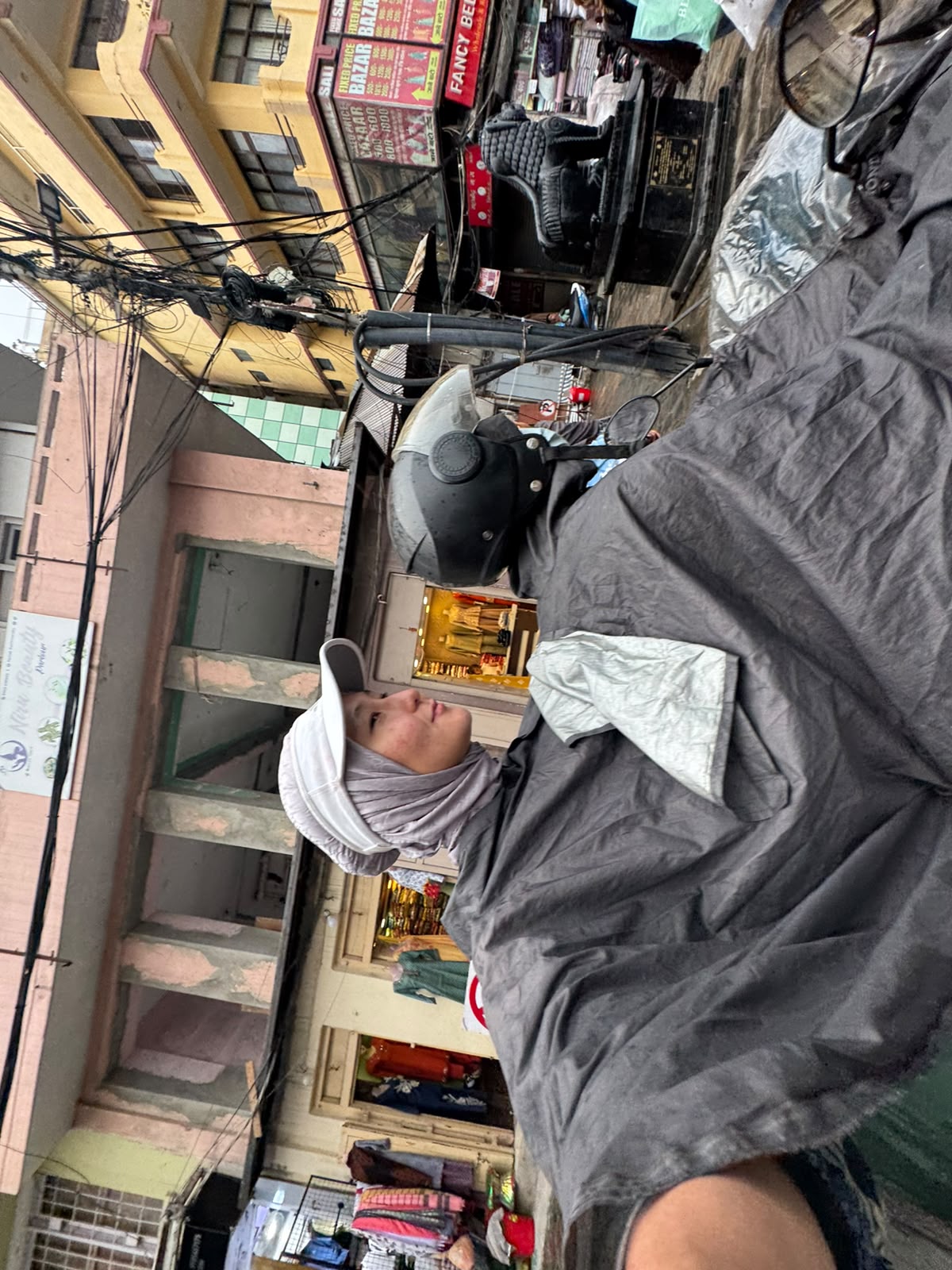
Heading back to the homestay after shopping
I also tried samosa today, we call it “samsa” and it is cooked in an oven. Too spicy for me, if I’m honest, but I finished it.
I don’t know exactly how to end this one. I think some days do not have to be concluded; they just sit next to each other — a woman’s testimony about being collapsed by both violence and the law but later finding resilience, and then mangoes, and then rain, and then kids playing outside a mosque like the world is fine. Yeah, I want the world to be fine for everyone…
Posted By Tomiris Ottesh
Posted Jul 29th, 2026