

I landed in Nepal on 9 June and left on 24 July—a 45-day adventure that felt at once like a whirlwind and a slow unfolding story.
Coming from a background where meetings have agendas, deadlines are sacred, and everything fits neatly into a timeline, Nepal was… different. Here, things are more informal, more “let’s see where the day takes us.” At first, it felt like chaos—scattered meetings, shifting plans—but then I realized something magical: despite the lack of structure, things still happened. Slowly, yes. Sometimes unpredictably. But they happened. Eventually, I stopped resisting the flow and learned to float with it.
This wouldn’t have been possible without Ram and Niraj, who patiently translated not just the language but the rhythm of Nepali life for me. By July, when Emma and Laila joined, our little summer team had found its stride.

Team Nepal, with Iain dialing in from across the ocean.
How It All Happened
The story actually began months earlier, with Iain. Digging through my inbox, I found our first chat and call from late March. Iain had reached out to Theo (once a UN Special Rapporteur) about finding a researcher to help NEFAD (Network of Families of the Disappeared and Missing) craft a reparations policy paper.
This collaboration was made possible through The Advocacy Project’s Peace Fellowship, a program that has long connected researchers with grassroots human rights and development movements. The Advocacy Project helps marginalized communities tell their stories, strengthen their organizations, take action, and mobilize support. AP and NEFAD already share a rich history of partnership—working together on advocacy campaigns, embroidery projects, and amplifying the voices of families of the disappeared. This fellowship built on that foundation, allowing me to embed with NEFAD and contribute directly to their transitional justice work.
After weeks of back-and-forth calls, weighing uncertainties on both sides, we finally said: Let’s do this. And I’m so glad we did.
I met Ram online for the first time on 7 May. We spoke about his research, philosophy, and his father’s disappearance. I asked a clumsy question: “How can you still be so bright after experiencing such things?” Ram just smiled and said, “Life goes on. We must stay optimistic and patient.” That’s Ram in a nutshell—light in the darkest of places.
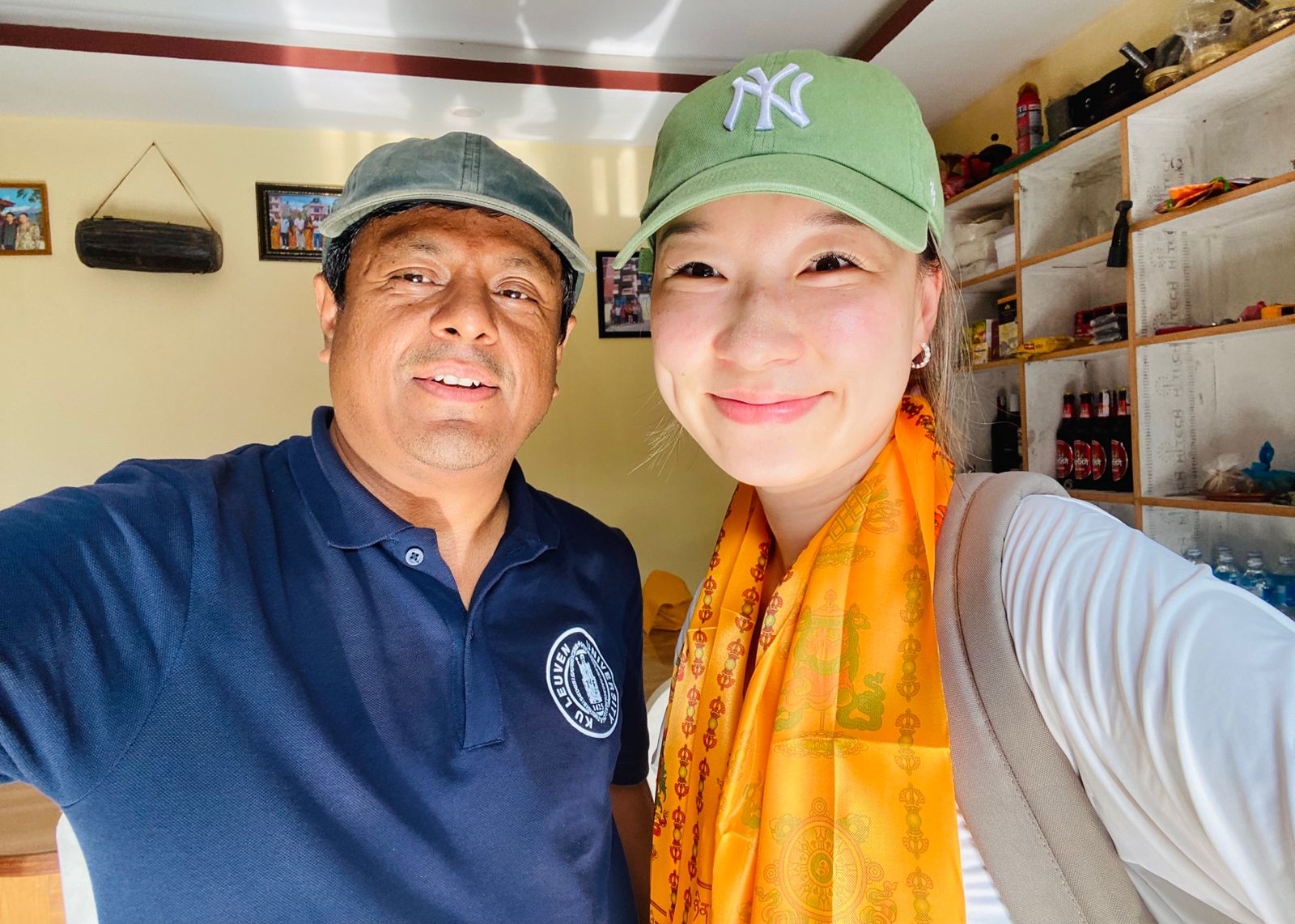
With Ram
NEFAD is a grassroots organization born from tragedy. It was founded by families of the enforced disappeared, including Ram, whose own father, Tej Bahadur Bhandari, was taken by state security forces during Nepal’s 1996–2006 conflict. On 31 December 2001, 56-year-old Tej Bahadur was arrested on the streets of Besisahar, handcuffed, blindfolded, brutally tortured, and dragged to the district headquarters of Lamjung—never to return. For over two decades since, NEFAD has fought relentlessly for truth, justice, recognition, and reparations. They’ve built memorials, launched legal cases, and sustained a movement that refuses to let victims’ voices fade into silence. (You can read more about this in Ram’s blog on his father.)
By mid-May, my flight and accommodation were finally booked—just three weeks before takeoff. By that point, Iain had mastered a now-iconic four-finger gesture on our video calls, flashing it every time he reminded me of our summer goals. I swear, if we’d had one more call, he could’ve done it blindfolded.
How Things Were in Nepal
Just before I arrived, new commissioners were appointed to the transitional justice commissions. The reaction from victims and survivors? Outrage.
Despite promises of consultation, Supreme Court orders, and years of advocacy, political parties handpicked commissioners without involving those most affected by the conflict. Ram described Kathmandu as a “battlefield.” Victims protested, the government dug in its heels, and international actors tried to broker compromise. But victims weren’t interested in compromise; they’d been ignored too many times. Starting over—even if it meant waiting longer—felt like the only way to reclaim justice.
As I write this, over 300 victims are preparing a joint writ to challenge both the appointments and some troubling provisions in the new Transitional Justice Act. The Act, passed in August 2024, bans blanket amnesty but still allows up to 75% sentence reductions for grave crimes—a bitter pill for those seeking accountability. (I wrote more about this in another blog post.)
Ram was at the heart of it all. Chairing NEFAD, mentoring activists, meeting stakeholders, strategizing responses—his calendar was a blur. Under his guidance, my daily partner-in-crime was Niraj. We met during my second week (he had taken 40 students on a field trip the first week—classic Niraj). At first, we didn’t talk much, but over time he became the most supportive, patient colleague. He coordinated everything, translated during countless interviews, and somehow made even long, hot field days feel manageable.
Then came July. Emma and Laila arrived, and suddenly we were a full team. Emma is like a human compass—she kept us organized, wrote beautifully, designed our website, planned meetings down to the minute, and still found time to lift everyone’s spirits. Laila, meanwhile, radiated curiosity and warmth, conducting interviews like a natural, designing logos, editing newsletters, and lightening every room she entered.
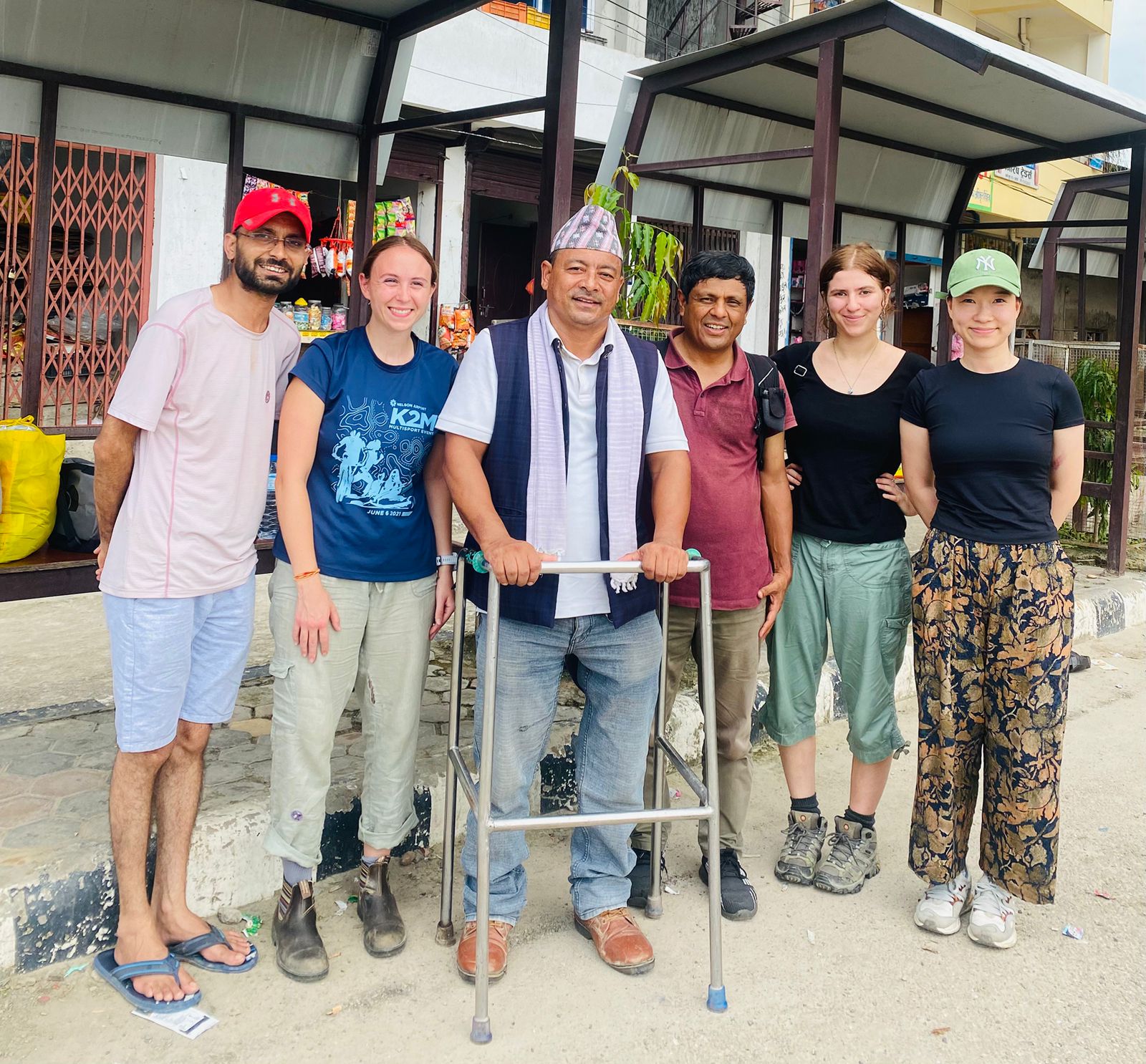
The Team with Prem Bayak, Former PLA Commander
Together, we laid the foundation for the Center for Human Rights and Victims of Violations (CHRV), launched the very first issue of our newsletter, and interviewed dozens of survivors and advocates. We hiked through monsoon rain that rewarded us with a perfect rainbow and embarked on an unforgettable trip to Bardiya—40 hours on buses, sticky mango juice on our hands, long walks through sun-drenched fields, a haunting visit to the memorial park, and late-night adventures spotting wasps and frogs by flashlight. It was messy, exhausting, and absolutely wonderful.

Laila and Emma happily enjoying mangoes.

Emma, Laila, and I on a boat in the Pond of Hope, within the memorial park for the enforced disappeared.
How I Feel After Leaving Nepal
Transitional justice in Nepal is a marathon, not a sprint. The struggle doesn’t pause when you leave—it carries on, driven by those tirelessly working on the ground and supported by allies from afar.
Our contributions this summer may have been just a small part of a much longer journey, but I’m proud of what we accomplished. We launched the inaugural issue of Survivor’s Record, the newsletter of the CHRV at Kathmandu University (If you want to subscribe the newsletter, please contact nepalchrv@gmail.com). And even from afar, I’ll continue collaborating with Ram on the reparations policy paper, drawing on the powerful interviews we conducted with conflict victims and survivors.
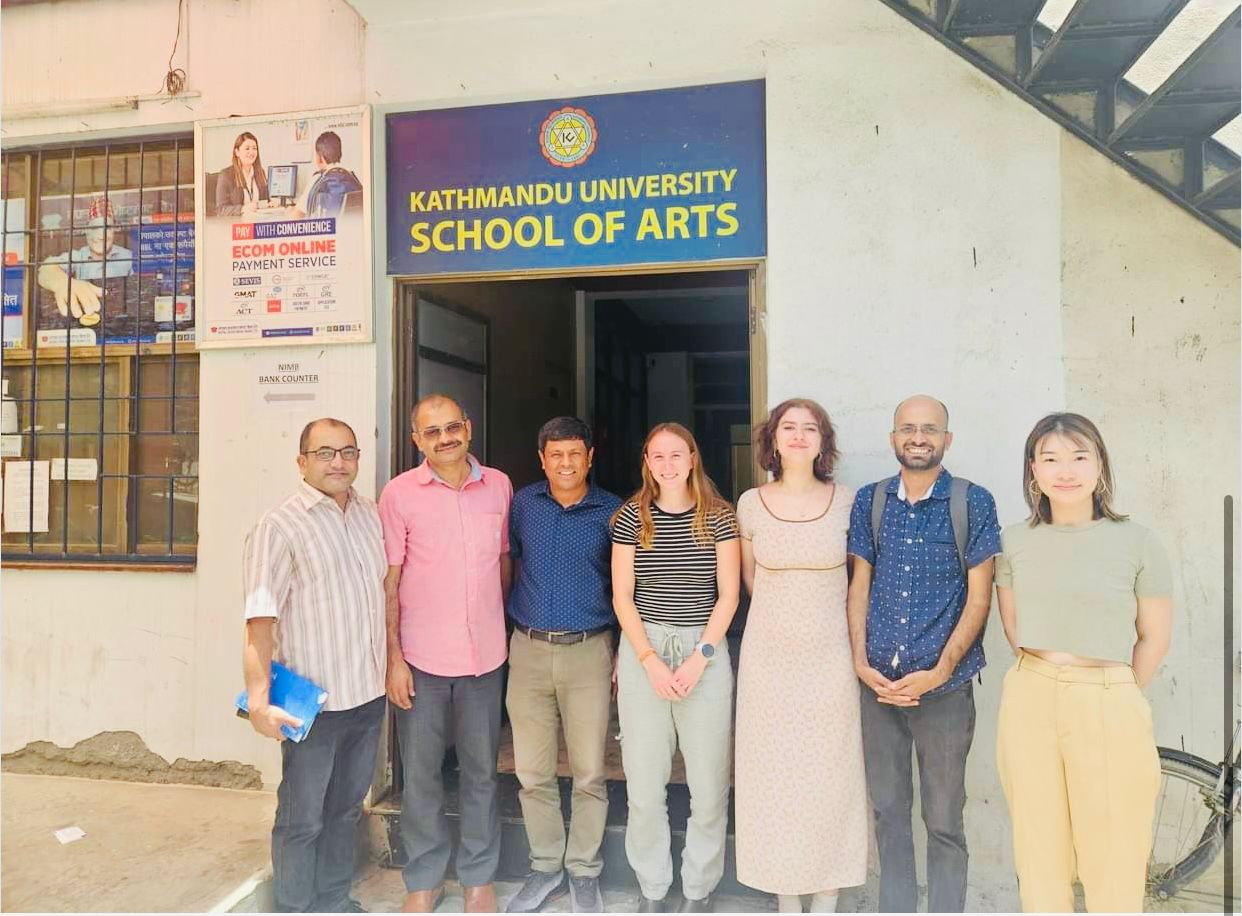
Meeting on the Establishment of the CHRV
I often think back to those interviews. Before the first ones, I was nervous—an outsider who didn’t speak Nepali, someone who could never fully grasp their pain. I worried my questions might reopen old wounds. But instead, I found a strength I had never witnessed before. Survivors spoke of their disappeared loved ones with both tears and smiles. They delivered sharp critiques of government failures and showed an unshakable resolve to keep pushing for truth and justice. Their courage fuels Nepal’s grassroots victims’ movement—and it has left a permanent mark on me.
I still hear their voices echoing in my mind:
- “What can ever compensate us for what we suffered, for what we lost? Nothing.” — a woman who survived sexual violence during the conflict
- “They [the government] didn’t want to hear us—we forced them to hear.” — Devi Khadka
- “I told you my son’s story, every detail of it, because I want more people to know what happened here.” — Ekraj Bhandari
- “We, the victims and survivors, are not merely weak parties in this process—we are strong and active participants.” — Ram Bhandari
- “If there is a will, there is a way.” — Prem Bayak
- “I’m glad that now I can help other people.” — Gita Rasaili
- “In my 19 years working with the CVC, only one woman who survived sexual violence has ever come to me. The social stigma runs so deep.” — Bhagiram Chaudhary
- “We just want to know what happened.” — families of the enforced disappeared

At the memorial park for the enforced disappeared, each bag represents the belongings of a disappeared person.
Nepal also gave me back something I didn’t realize I had lost. When I arrived, I was tightly wound from months of high-pressure work. But six weeks there—with its slower rhythm, warm-hearted people, and quiet moments of connection—softened me. I rediscovered patience, empathy, and even a sense of humor about life’s unpredictability. That is Nepal’s gift to me.
So, thank you—to everyone I met, to every conversation, every mango, every crowded bus ride. Thank you for the memories, the empowerment, and the gentle reminder that even in the slowest, most scattered moments… change is still possible.
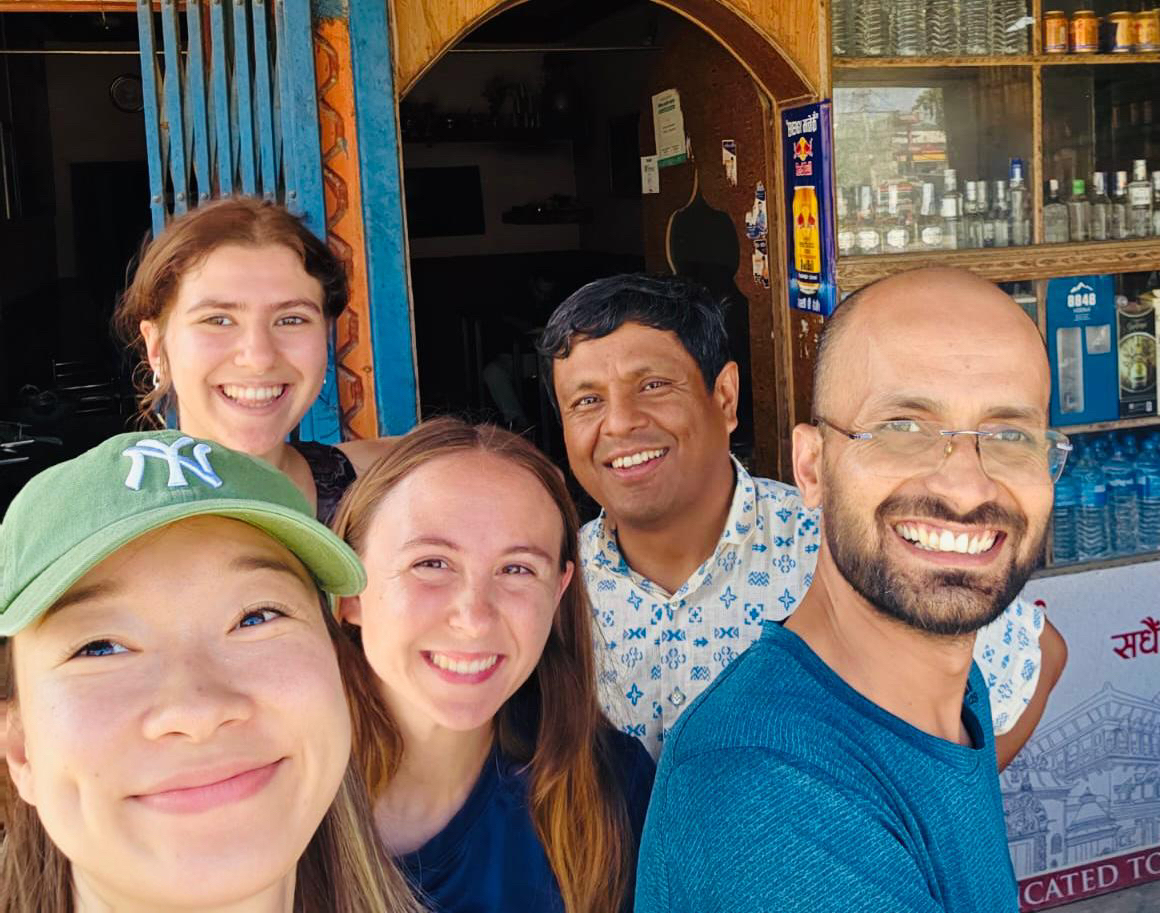
An unforgettable memory: happy faces all around after a 22-hour bus ride—we’ve finally made it to Bardiya!
Posted By Shuyuan Zhang
Posted Aug 3rd, 2025
3 Comments
Emma Cohen
August 4, 2025
What a beautiful reflection on your time here, Shuyuan. I am so grateful to have had the opportunity to work alongside you — bus rides, interviews, mangos, late night reflections, group meetings, walks in the rain, all of it. But, as you capture so well, our project is only a very small effort within a much larger struggle. I know that you will carry the words of those victims and survivors we met with and their fight for justice with you for a long time, and I hope they continue to inspire you to work for justice, dignity, and love.
Julia Holladay
August 4, 2025
Shuyuan, I adore this blog. This is such a beautiful encapsulation of your time in Nepal and I feel like I know you after reading it. I relate so much to so many of your reflections that come with visiting another culture–from timelines to the softening. What struck me, though, was Ram’s response to your “clumsy” question that life goes on. While I’ve not experienced the same pain as Ram and those of the families of the enforced disappeared–USAID’s dismantling felt like a mini life crisis. I’ve had similar reflections after my time in Kenya this summer–life goes on and I learned how to be curious again. Thank you for sharing your thoughts and all of your hard work this summer!
Iain Guest
August 5, 2025
Fabulous, wonderful final blog, Shuyuan!!! I love the personal touches and very much appreciate the fact that you place your fellowship in a historical context. Yes, it’s been a long haul for AP as well as for Ram and NEFAD, but every summer has taught us more and made us more committed than ever to stay the course. You, Emma and Laila have made sure this will continue! It’s also clear from this blog – and Emma’s comment – that you have all loved working together. That may be the best news of all. Thanks for a memorable record of a rich summer!