


Missing at sea: Furkahan, 13
Missing child information: Name – Furkahan; Age – 13 years; Education – Grade 7; Father – Abdul Hoque; Mother- Rashida; Address – Jamtoli Camp-15, Block-G; UNHCR # – 231589; Origin – Aung Seik Pyin, Maungdaw (Myanmar); Father’s Occupation – day laborer; Contact phone: 01865849656
“Is our son still alive somewhere on the vast sea?”
– Abdul Hoque, Furkahan’s father
Thirteen-year-old Furkahan, a Grade 7 student from Jamtoli Camp in Cox’s Bazar, is among dozens feared dead or missing after a Rohingya boat sank near Malaysia. His family now lives in unbearable uncertainty caught between the hope that he survived and the fear that he may never return.
A Family Escaping Violence in Myanmar
Before becoming refugees, Furkahan’s father, Abdul Hoque, was a farmer in Aung Seik Pyin (Dombhai), northern Maungdaw Township. In 2017, the Myanmar military burned their home and destroyed their village.
Fearing for their lives, Abdul fled with his wife and six children to Bangladesh.
“We lost everything,” Abdul recalled. “But at least we were alive.”
Life in the Refugee Camp
In Bangladesh, the family settled in Jamtoli Camp-15, Block-G, joining nearly a million other Rohingya who escaped genocide. Camp life brought its own hardships little food, no job opportunities, and limited access to education.Despite severe poverty, Abdul insisted on keeping his children in school. He paid a home tutor 1,000 taka per month, even when it meant skipping meals.
“I wanted my son to study,” he said. “He loved books more than anything.”
The Day Furkahan Disappeared
On October 26, Furkahan went missing. After two days of searching the camp, the family received a call from a trafficker in Teknaf.
He told them that their 13-year-old boy was already “on the way to Malaysia” and demanded 350,000 taka for his “safe arrival.”
The family was devastated. Their son had been taken without their consent one of many Rohingya children trafficked into deadly sea journeys.
The Boat Tragedy
On October 29, a boat carrying nearly 90 Rohingya refugees including Furkahan left for Malaysia.
There was no news for days, until November 9, when heartbreaking images appeared online showing that the boat had sunk.
Media reports confirmed that three small boats were part of the journey.
One has been declared lost.
Two others remain unaccounted for.
Most passengers are still missing.
A Family Waiting for Answers
Since the tragedy, Abdul and his wife Rashida have been living in terror and grief.
“We cannot sleep or eat,” Rashida said. “We only pray to hear something anything about our son.”
They have reached out to Bangladeshi and Malaysian authorities, humanitarian groups, and rescue agencies, begging for information.
Every hour without news deepens their despair.
A Community Living Without Choices
Furkahan’s disappearance reflects the growing desperation among Rohingya families.
With no education, no right to work, shrinking food rations, and an uncertain future, many feel forced into dangerous sea routes in search of dignity.
Some never return.
For Abdul’s family, survival now hangs on one haunting question: “Is our son still alive somewhere on the vast sea?”
As the world watches in silence, another Rohingya family breaks under the weight of loss reminding us that behind every statistic is a child like Furkahan and a family still waiting for hope.
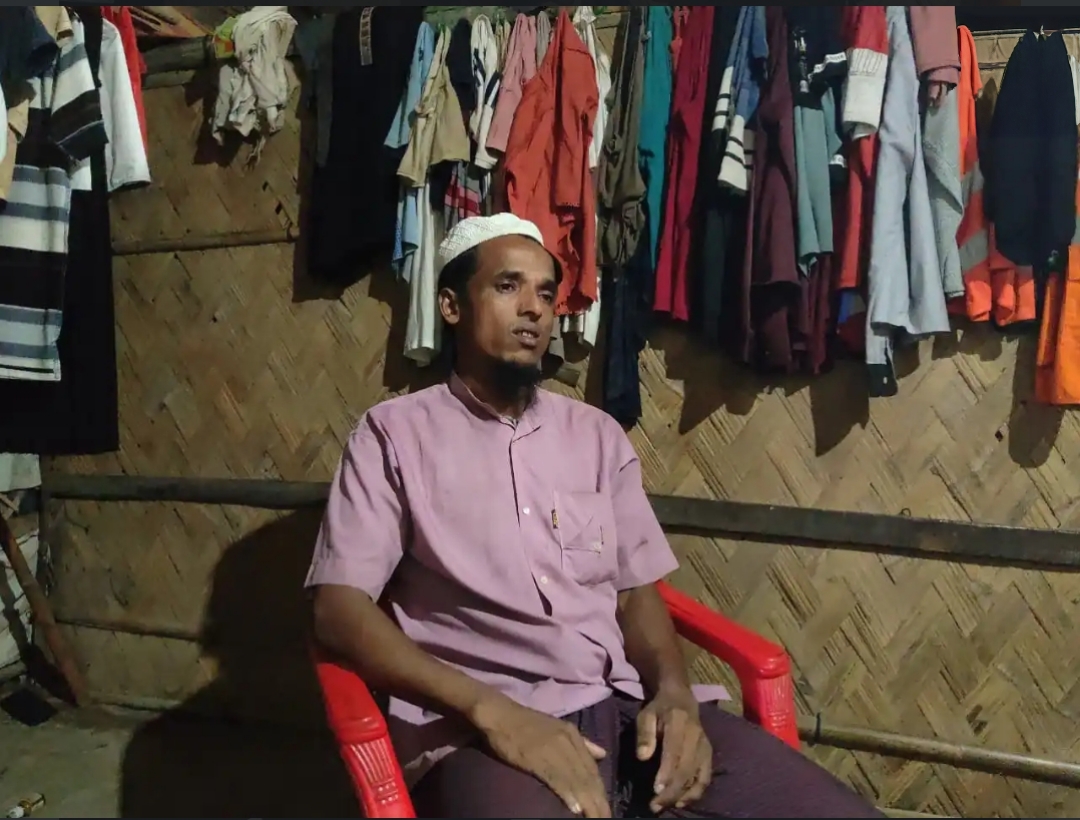
Abdul Hoque, Furkahan’s father: Losing an elder son, losing hope….
Posted By Maung Myint
Posted Nov 18th, 2025
1 Comment
Iain Guest
November 26, 2025
This is absolutely heart-breaking and underscores the vulnerability of Rohingya refugees in the camps. They are without protection, in addition to the other challenges, like starvation and malnutrition, that you described in your earlier blogs. Please help us all to understand by continuing to post strong blogs like this, Maung….