
This fall, the Trump Administration’s State Department quietly informed Congress it would divert $125 million of foreign aid to, as of now, unnamed projects to “support exigent energy security needs for partners facing coercive supply cutoffs, market disruptions, and inflated costs – particularly due to the deliberate, extortionary actions of Russia, China, and Iran”. Included in this is $8.4 million from the Leahy War Victims Fund, over 70% of its appropriated $12 million.
The redirect of this modest funding is an atrocity, another in a long line of affronts to countries which are themselves deeply invested in resolving the wounds left by American wars.
For 37 years, the Leahy War Victims Fund (LWVF) has served “as the primary source of U.S. assistance to civilian victims of conflict in war-affected developing countries”, according to the State Department’s own publications. With decades of enduring bipartisan support, the fund has strengthened health systems and infrastructures in over 50 countries, establishing programs for accessible and appropriate prosthetics and orthotics and physical and occupational rehabilitation services, as well as providing vocational training for victims.
In Laos, the LWVF supported organizations like COPE in sustaining independence and access for people with disabilities, including survivors of UXO incidents, survivors of war, and those with congenital birth defects, some linked to dioxin contamination. Assistance to victims of accidents with unexploded ordnance is already scarce, and finding life-long sustainable support difficult for many.
This US shift in victims assistance funding is especially devastating in context: for nine years, between 1964 and 1973, the United States spent an average of $17 million per day bombing the country of Laos. These bombing campaigns, known here in Laos as The American Secret War, cost the US military roughly $55 billion in total.
That is the astronomical cost of just one war. And this now-diverted $8.4 million in yearly appropriations to the LWVF supports projects in dozens of countries. When the costs of war are so estranged from the costs of support post-war, it’s no wonder that the lasting legacies of US wars can hinder development in countries for decades.
The US Campaign to Ban Landmines – Cluster Munitions Coalition has directly called out this reprogramming as “a false choice between addressing the global energy crisis and supporting civilian survivors of conflict.” To scorn sustainable support for war victims should not be an option; this funding cannot be diverted.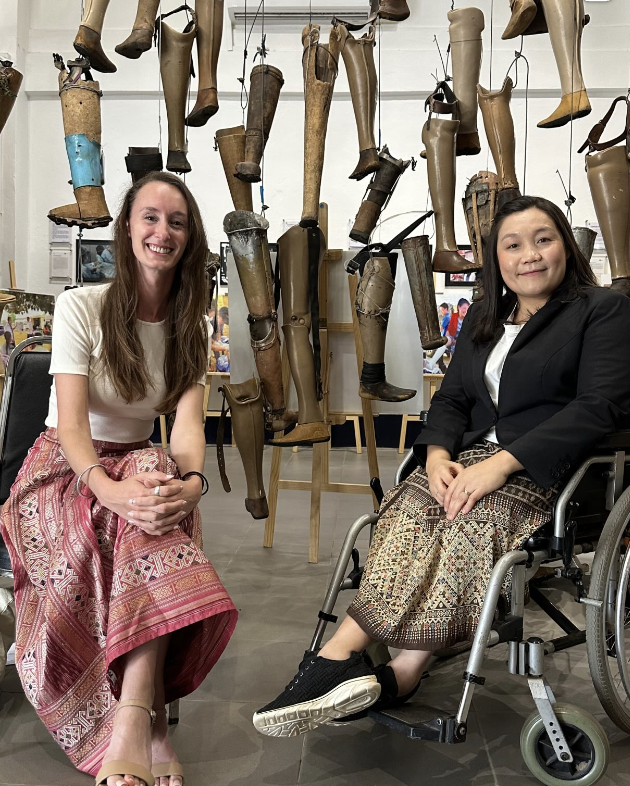
Such assistance goes beyond prosthetics, according to Metta Thippawong, Director of COPE. “It’s about the dignity, the independence, and support of individual victims to regain their confidence to live in the way they want.”
COPE’s programs provide not only rehabilitation, but also peer support and community for survivors of UXO accidents. Metta recalls the story of Mr. Bang, who not only received a prosthetic leg and support in relearning to walk, but was also encouraged by his peers in the clinic to propose to the woman he loved.
Metta also stressed the importance of continued service, and the need for sustained funding for programs like COPE’s village outreach initiatives. Their mobile clinics offer people in remote villages access to prosthetic adjustments and replacements — for people who are depended upon to provide income for their families, traveling for medical access is not an option.
In Xepon, a village in a heavily bombed province in the south of Laos, COPE replaced a prosthetic for a man who had lived with a homemade leg for 14 years after surviving a UXO accident. When they asked him why he had not come to a hospital, he sai d that, while he knew about services for victims, he could not leave his farmland for the days-long journey to a clinic in the capital. Without mobile clinics reaching out to communities like his, victims around the country are left with a similar choice: to forgo crucial income and farm labor for their families, or make do with unsuitable homemade prosthetics.
Beyond individuals, the impact of victims assistance serves entire communities. Organizations like Lao Disabled Women’s Development Centre work to empower women in Laos, as women with disabilities face much higher safety and security threats due to stigma and lack of opportunity. This organization began as pioneer advocates for women with disabilities in the 1990s, and continues to provide opportunities for women around the country to train in handicraft 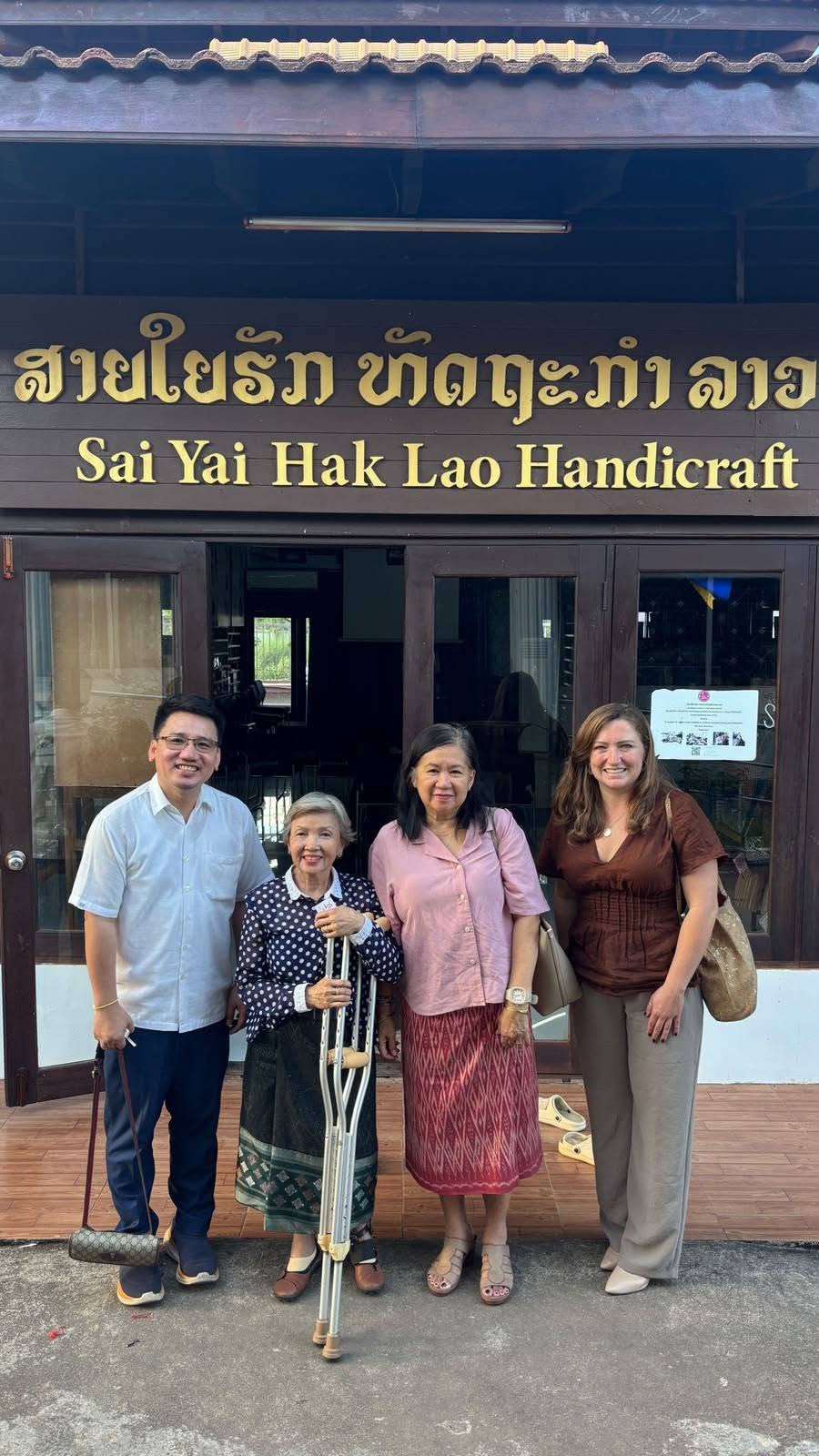 design and creation, as well as technicaland administrative skills. Women leave their vocational training with skills to establish their own business in their home village, as well as with a network of peers around the country advocating for the rights of women with disabilities.
These are the organizations which, even at low operating costs, can have tremendous impact in the lives of war victims in Laos; and the organizations most at risk from funding cuts such as this diversion of US funding. It is the responsibility of the US to provide humanitarian assistance here in Laos; that was agreed by the bipartisan Congress that passed the Leahy War Victims Fund decades ago. $8.4 million in global funding is a minor cost relative to the US’s budget for warfare; the portion of it which can be used for a mobile rehabilitation clinic in Xepon, or for a vocational training program in Vientiane, is the difference in providing lifelong support for hundreds, even thousands of victims.
Posted By Kendall Silwonuk
Posted Nov 14th, 2026