

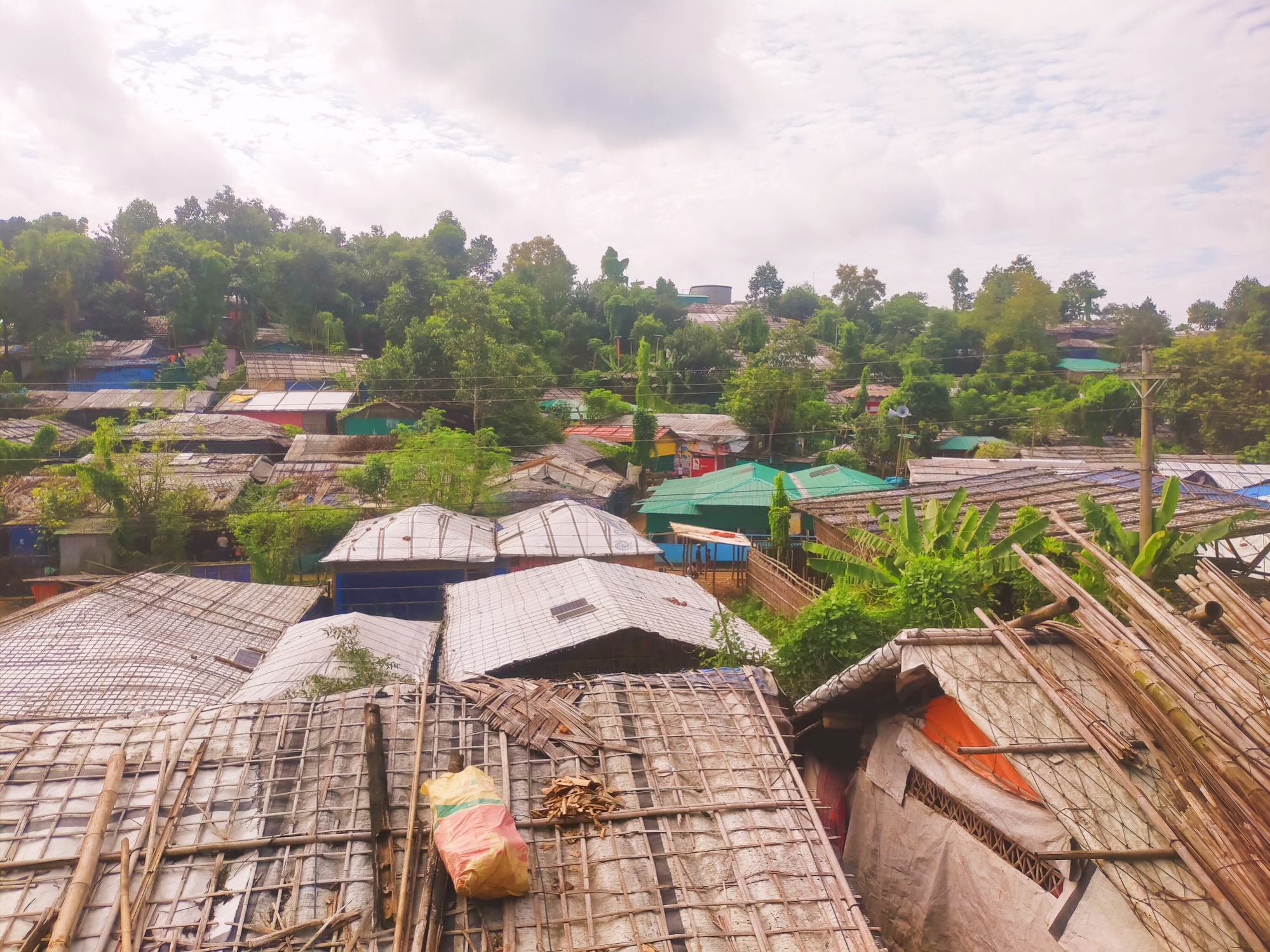
The Rohingya camps in Cox’s Bazar, Bangladesh, stretch across the hillsides
The sprawling landscape of Cox’s Bazar, Bangladesh, is home to a staggering reality: the world’s largest refugee settlement. What began as small, scattered camps has grown into a city of shelters for nearly one million Rohingya people a humanitarian challenge of immense scale. To advocate effectively for the Rohingya, we must first understand the journey that led them here.
A History of Displacement
The Rohingya, a Muslim minority from Myanmar’s Rakhine State, have faced decades of discrimination and violence. Stripped of their citizenship in 1982, they became stateless in their own ancestral land. This denial of identity was followed by restrictions on movement, education, and healthcare effectively institutionalizing their exclusion.
Repeated military crackdowns forced many to flee to Bangladesh in waves during the 1970s and 1990s, each return more fragile than the last.
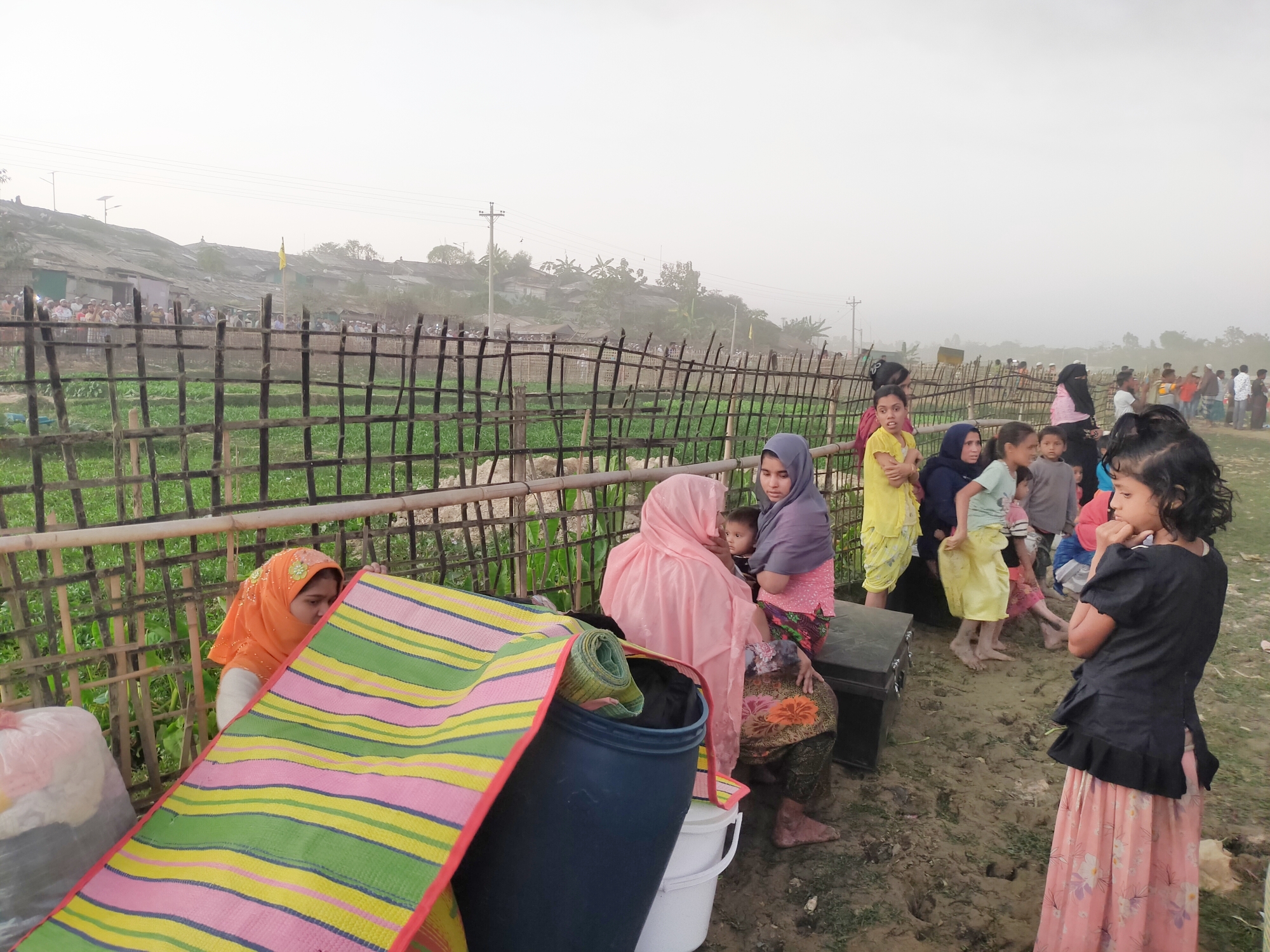
Newly arrived Rohingya families rest after days of walking to reach safety in Bangladesh — a moment of exhaustion, resilience, and hope.
In August 2017, violence escalated to an unimaginable level. Following attacks on security posts, the Myanmar military launched “clearance operations,” marked by mass killings, sexual violence, and the burning of entire villages. Within weeks, hundreds of thousands of Rohingya fled across mountains and rivers, seeking refuge in Bangladesh. The host community welcomed them with compassion, but the sheer scale of the exodus quickly overwhelmed the existing resources.
Life Within the Camps

“Refugees queue patiently for food assistance — a daily reminder of both their dependence on aid and their enduring resilience.”

“A Rohingya woman prepares a meal inside a makeshift shelter — a glimpse of perseverance amid hardship.”
Inside the camps, life is defined by both struggle and resilience. Families adapt to a new rhythm, surviving on aid while trying to preserve a sense of normalcy. Women, in particular, hold their communities together cooking meals, caring for children, and passing down traditions. For them, each act of daily life becomes an act of resistance against despair. Amid overcrowding and uncertainty, dignity endures through these small but powerful moments.
Cooking inside these cramped shelters is not just about food it is about preserving family, culture, and hope in an unfamiliar land.Each ration they receive means another day of survival. Despite the uncertainty of tomorrow, their patience and discipline reflect a quiet strength that defines life inside the camps.
Education: A Ray of Hope
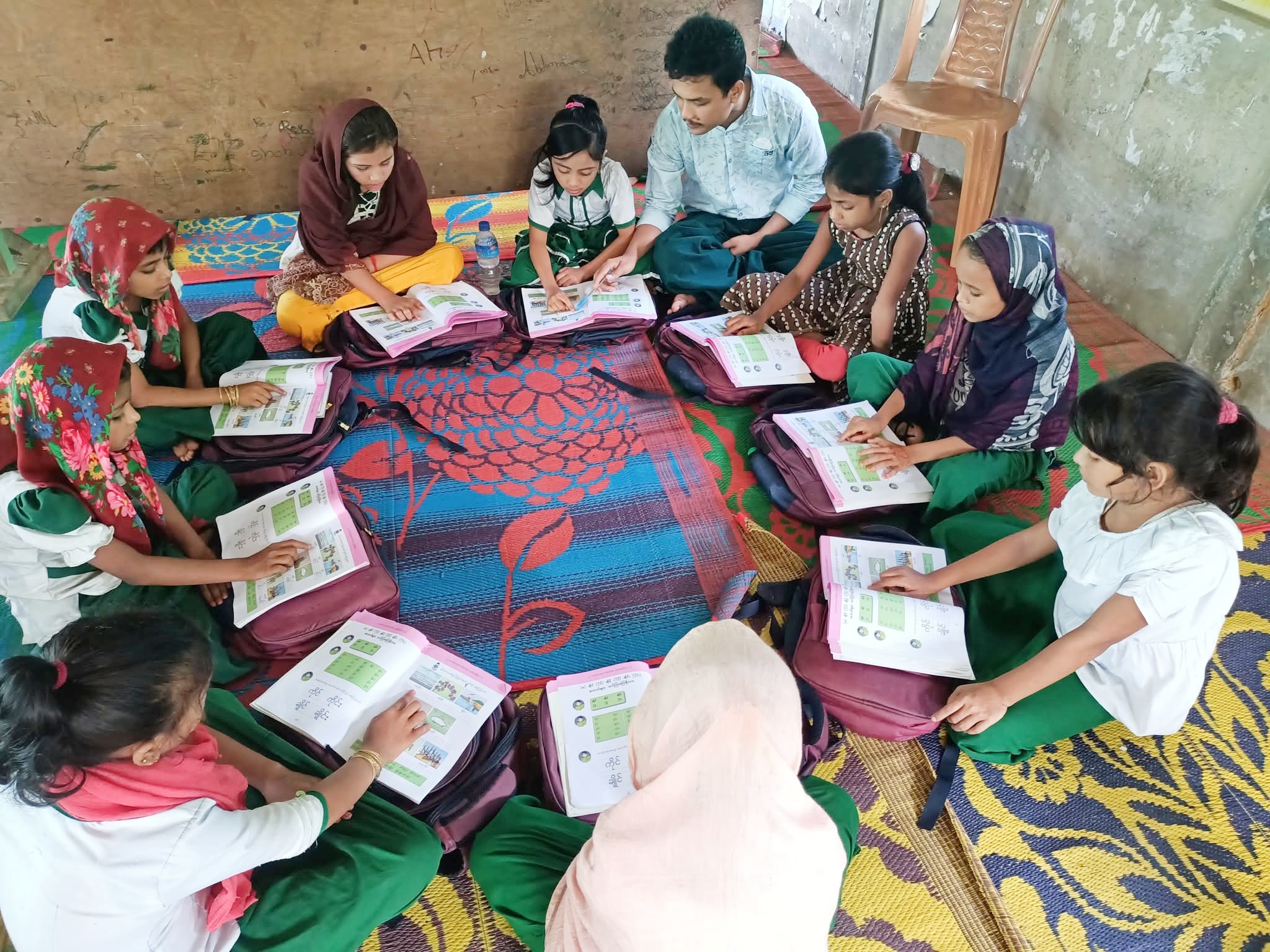
Rohingya children attend a learning centre — education offers light even in uncertainty.
Despite limited opportunities, education has become a beacon of hope for the younger generation. Community-based learning centres offer a chance for children to learn, dream, and imagine a future beyond the fences. Every notebook, lesson, and shared story helps preserve identity and strengthen resilience among the displaced population.
Conclusion
The story of the camps is not only about suffering it is also about endurance, compassion, and humanity. As long as the Rohingya remain stateless, the world must continue to advocate for their right to return home safely, with justice and dignity restored. Their struggle is a reminder that behind every number lies a life, a story, and an unyielding hope for belonging.
Posted By Maung Myint
Posted Oct 11th, 2025
1 Comment
Intern1
November 26, 2025
Thanks for this powerful first blog, Maung. You write very well and the photos are wonderful! I really look forward to seeing how your start-up will contribute and reading your blogs about the process.