

The menstrual health challenges in Uganda are far-reaching and can be complex. However, many initiatives are tackling these issues and are creating long-term, sustainable ways of supporting young girls managing menstruation, and giving hope for the people experiencing the challenge.
HerWorth has taken steps to educate girls in affected communities on how to effectively make reusable pads. Reusable pads take a multifaceted approach to managing menstrual cycles in Uganda, being both sustainable and useful. They can be washed and used multiple times before disposal, reducing the financial burden of constantly purchasing pads or relying on donations for menstrual products. They also reduce the environmental harm caused by disposable products that may end up contaminating bodies of water or are burned, releasing harmful gases and worsening air quality. Environmental damage like this risks shifting public attention away from the issues of female health, even as it adds another reason to care about the solution.

Students learn to make reusable pads
HerWorth’s team trains around 100 girls in one school to make reusable pads, with the hope that these students will then pass on what they learned to their peers. Not only does this education support these students, but also their families, as many bring what they learned back to their female relatives. This knowledge has the potential to impact generations of women and provide a more comfortable and private experience.
Though HerWorth’s work has given resources to so many girls, there are still concerns. With limited resources for clean water, washing reusable pads may be challenging, which could make them less sustainable. Furthermore, because only about 100 students learn to make them, it is difficult to ensure that other girls are being educated and have the resources to create their own products. Girls may be taught incorrectly by their peers and creating these pads may become more challenging and less effective.
Creating reusable pads to manage their periods will improve comfort and help encourage girls in these communities to stay in school. However, girls still have to face issues of stigma surrounding menstrual cycles from their male peers. Recently, initiatives have expanded their education to teach boys as well as girls about menstrual cycles to address this stigma.
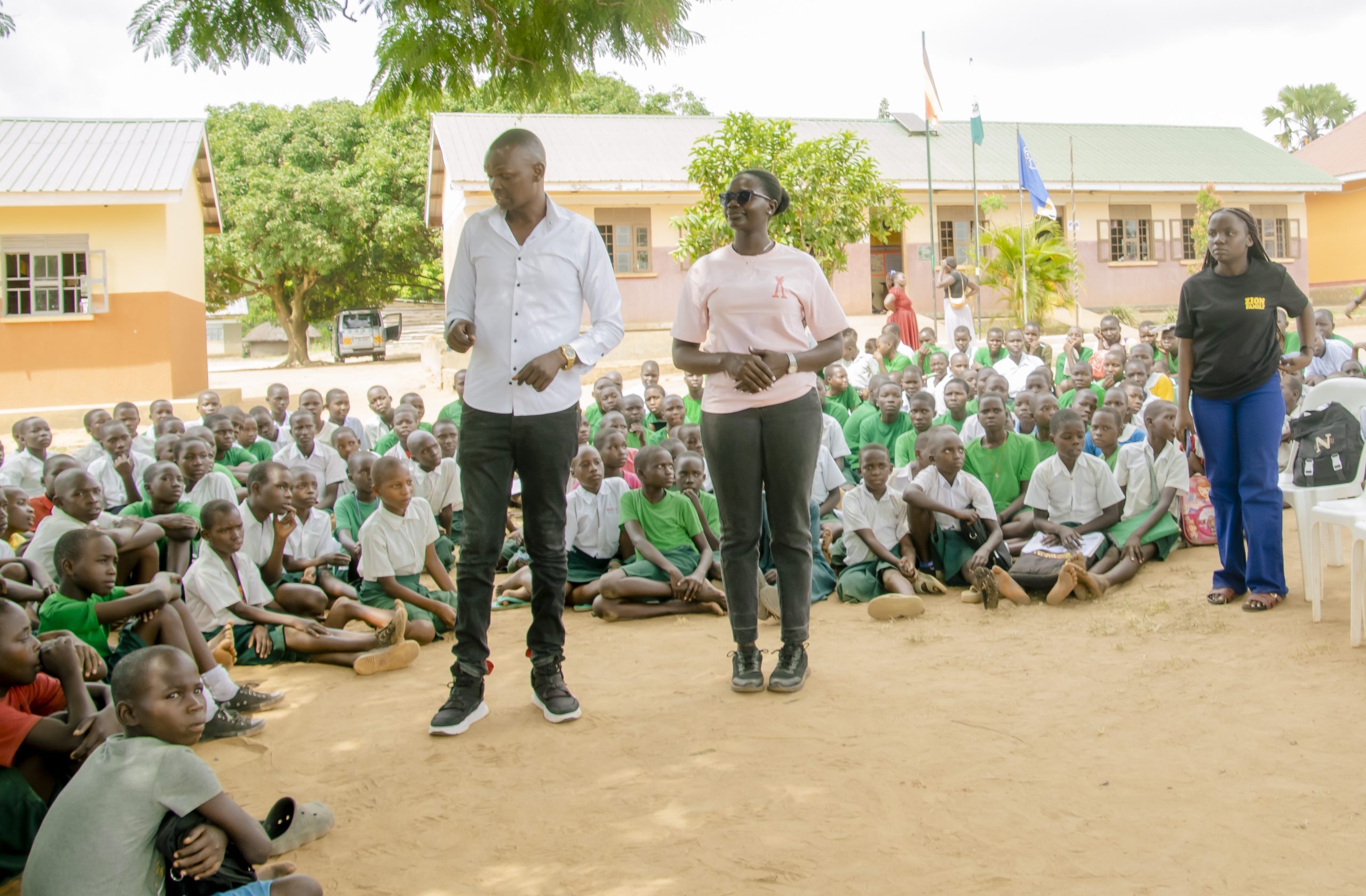
Boys receiving Menstruation education alongside girls, reducing gender stigma
These lessons are designed to end misconceptions that suggest that girls experiencing their menstrual cycle are dirty or unclean, making their peers avoid them, and leading to girls being absent from school. By teaching young boys that menstrual cycles are normal and natural, these programs can significantly reduce the stigma and have done so.
In the United States, menstruation and menstrual products are topics rarely discussed and even avoided by boys completely, with little stigma, but also little awareness. This lack of awareness can cause issues for young girls who rely on male relatives for support during their periods. Older generations in Uganda have also seen this struggle, as many fathers have not received the same education that younger boys are now receiving. It is important for menstruation to be understood across genders and generations.

Advocates raising awareness for free menstruation products for girls in Uganda
As I have been researching this issue, one of the most surprising things was how little attention global menstruation issues receive in the United States. Before working with the Advocacy Project, I had never considered that girls across the world face this issue every day. This shows the need for advocacy to draw attention to this problem. WASH, GDPU, and HerWorth have worked together to raise awareness and advocate for menstrual equality.
Recently, these organizations hosted a 6km race to raise awareness and openly advocate for improved menstrual product access. This demonstration advocated for free menstrual products worldwide and greater knowledge and support for female health. The support was incredible, proving this is an issue that impacts us all, and something we must all work to improve.
Posted By Anna Connors
Posted Jul 15th, 2026
3 Comments
Emma Badach
July 16, 2026
So great to hear about what is being done to combat this issue, well done Anna!
Iain Guest
July 18, 2026
Another great blog, Anna! You’ve clearly read Joe’s blogs from Uganda very carefully, and picked up on the many reasons why this work is so difficult, even when it is led by a wonderful organization like Her Worth. Yes they need water to clean the re-usable pads, and water is in short supply. Yes, parents need to be involved – including fathers. Yes, we only have funding to offer training to 100 girls at a time, even though many more students are interested. But GDPU and Her Worth have made an important start and it’s impressive that they brought out so many adults for their recent run! (Don’t you LOVE the photo of the runners hamming it up!) This work in Uganda deserves to be more widely known, so let’s put our minds to this and figure out how we can spread the word here in the US, particularly among girl students. That’s next on the agenda! I know Joe and Emma will be VERY pleased by your blogs!
Charlie Reed
August 14, 2026
Anna, you are an inspiration. Love what you’re doing <3.