
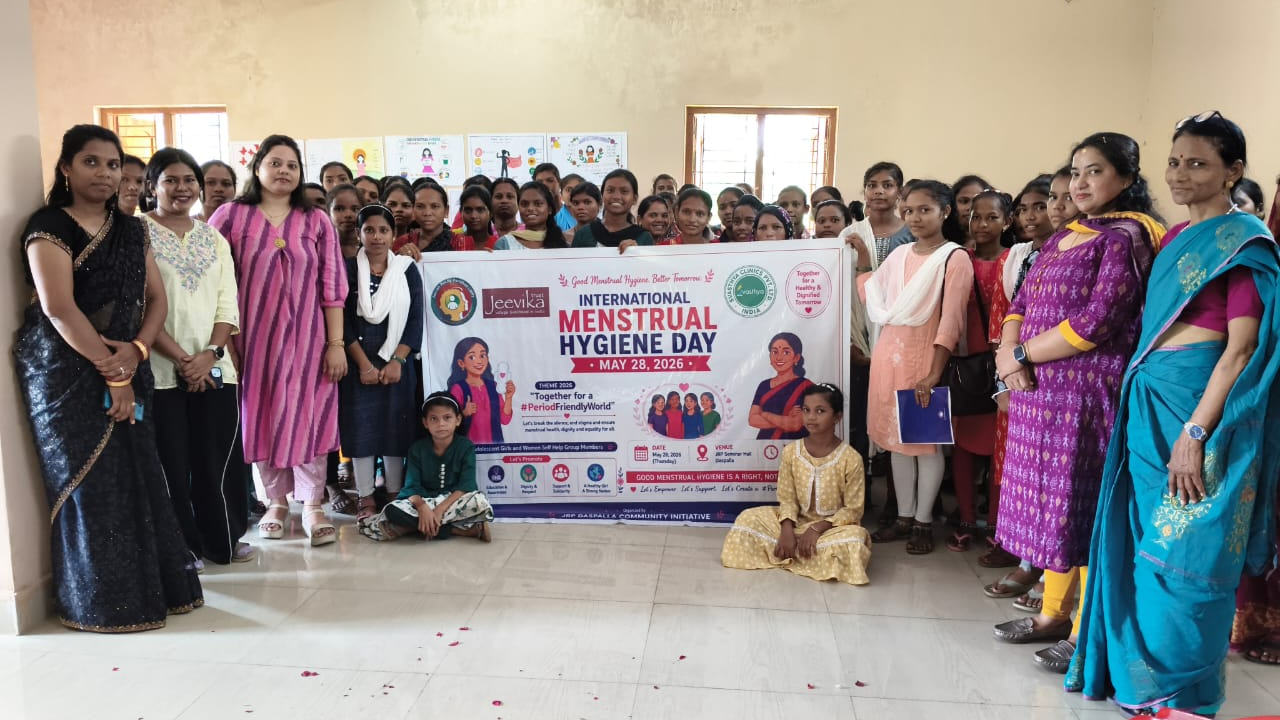
Group Picture for the event. Source: Jeevan Rekha Parishad
Jeevan Rekha Parishad (JRP), a grassroots NGO, in collaboration with the Jeevika Trust and the Advocacy Project conducted a community awareness program for tribal adolescent girls and women on International Menstrual Hygiene Day, May 28, 2026, in Dasapalla, Odisha. More than 12 tribal villages were mobilized over two weeks leading up to the event, which was attended by over 60 women and girls.

A group of girls demonstrating a powerful message through art for – Menstrual Hygiene (written in Odia in center)
This initiative builds on findings from a baseline survey conducted by JRP field staff Madhusmita, for the SNAPs project, which revealed that many tribal women and girls in the region suffer from Reproductive Tract Infections (RTIs). Supported by Jeevika Trust, the SNAPs project addresses these hygiene-related diseases by promoting affordable, high-quality, locally-produced sanitary napkins. In its first four months, the pilot programme has successfully reduced RTI cases and significantly diminished menstrual stigma; consequently, these women have become more outspoken and aware of the importance of holistic preventive health.
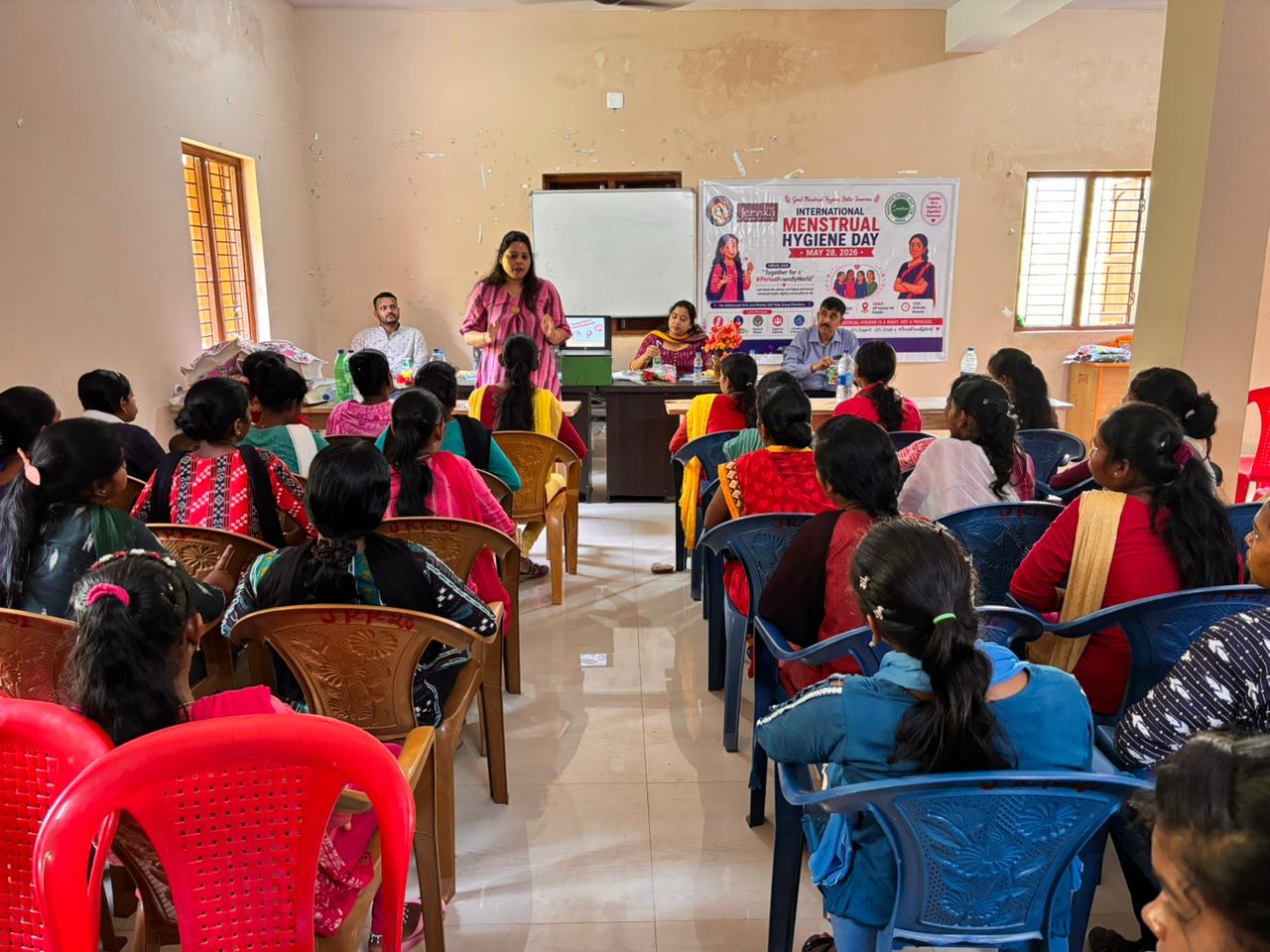
Dr. Pallavi Das giving keynote address
To intensify the discourse around menstrual and holistic health, two experts from Bhubaneswar were invited to the event. Dr. Pallavi Das, a gynecologist, delivered the keynote address, highlighting medically safe menstrual practices, early symptoms of RTI, and methods for early treatment. Dr. Das also educated participants on the health risks associated with a lack of safe and hygienic menstrual practices.

Dr. Prasmita Tejaswini addressing attendees
Dr. Prasmita Tejaswini, a health entrepreneur and hospital administrator, spoke on the necessity of preventive holistic health. She emphasised how adolescent girls can monitor and manage their overall wellbeing to avoid preventable diseases and reduce the financial burden on resource-strained tribal families. Both experts conducted basic health check-ups for the participants and provided individualised advice to improve their long-term health.

Dr. Pallavi Das conducting health check-up for adolescents girls
Madhusmita, a champion community mobilizer from Dasapalla, curated and organized various artistic activities leading up to the event, mobilizing over 100 adolescent girls across 12 tribal villages. Drawings and paintings created by these girls were exhibited during the program, with three girls receiving awards for their creativity. Their work shared a powerful, humble message regarding menstrual health management.

Creativity Felicitation to Winners in Poster Making
This event and the SNAPs pilot represent only the beginning of a monumental drive toward a future of RTI-free, fully informed tribal women who actively contribute to their livelihoods and the betterment of their families, as an equal partner to their husbands.
Posted By Saurabh Bhoyar
Posted Jun 9th, 2026
1 Comment
Iain Guest
June 9, 2026
Thanks for this update, Saurabh! This was obviously a very good event and your two experts seem to have got their message across to their young audience! I love the photo of Dr Das doing a health check up! Lets have more of these close up photos! Also can you add a caption explaining the significance of the hands in photo 2 and translate the message in the middle? That’s a lovely image. As you rightly point out, this menstrual project is very important to JRP and its friends, so I really do hope to see you take a deep dive into the issue in future blogs, Can I also ask you these two questions: What is RTI – and do you have any data on the incidence in the villages? Second – you say there has been a significant decrease in menstrual stigma in the past 4 months. How do you know this, and how are you measuring it? You can add your own answer to this question or – much better – come back to in in a new blog. Keep up the good work!!