

Consistently Inconsistent
In the Army, specifically in the infantry, we are told to expect nothing and be grateful; “every wink of sleep is a restful night. Every paycheck is a fortune. And every meal is a feast.” This mindset has helped me persevere and overcome obstacles in the most austere conditions. It has also made me extremely grateful for my circumstances. As I have grown into a routine in Gulu, I am less troubled by the trivial inconveniences that we in America often take for granted. Rolling with the punches that surprise me in my day-to-day life.
I wake up very early during the week; around 5:45. That is because it takes roughly 20 minutes to walk to the gym. Some days I can catch a boda, but if they’re not around; I’m walking. Instead of taking a pre-workout supplement, I’ve taken to drinking a ‘rock boom’, a local energy drink. If, when, and which convenience stores are open, which varies day to day. The same goes for the refrigeration units in the stores, sometimes they keep drinks cool, others are simply cabinets with transparent doors.
The gym I use is in a hotel complex up the hill. There is supposed to be an attendant to sign me in and hand me a towel. Sometimes they are busy elsewhere, sometimes the attendant is asleep at the desk. In either case I usually just sign myself in, and take a towel when available (without disturbing their rest). The gym itself is a mishmash of equipment and dumbbells, in an area roughly 500 sq ft. Despite the state of the equipment and my size and weights I require I am able to squeeze in a work out. Both literally and figuratively.
My lodging advertises they have air conditioning, internet and food. What they fail to mention is they rarely have all three amenities together. The power, and therefore the internet, goes out at the slightest touch of precipitation (or sometimes even just threatening clouds). Given that I’ve arrived during the rainy season, I’ve grown accustomed to finding my way to the bathroom or descending the stairs in the dark.
The only consistent thing is how inconsistent things here are. This includes whether I’m getting a freezing shower, or a scalding shower after the gym. Or whether a restaurant I order at has any of the food items on the menu. It’s just another thing to shrug off. However this inconsistency is also extrapolated to the seven schools we’ve been visiting.
Clerical Work
It took three days to visit all seven schools. This is not only because of distance and road conditions. Each day the plan is to set out by 9 am sharp, but we have yet to set out before 10:30, for various reasons. Yet having finished our initial tour of the schools for fine-tuning the monitoring and evaluation tool and to gather an estimate for repair work, each school is all over the place in terms of hygiene, disrepair and management.
Each school we visited revealed a different configuration of hygiene standards, structural decay, and administrative capacity. One, however, stood out—Tochi Primary School. It was perhaps the smallest, and home to the oldest GDPO-installed latrine, but it made a lasting impression. Despite its aging buildings and modest grounds, the school had handwashing stations easily accessible to students—something shockingly rare elsewhere. When we asked for data—on enrollment, disability inclusion, cleaning rosters, budget records—it was all there, neatly filed and clearly explained by the school’s headmistress, Sister Lucy Grace, a soft-spoken nun currently slowed by a foot injury
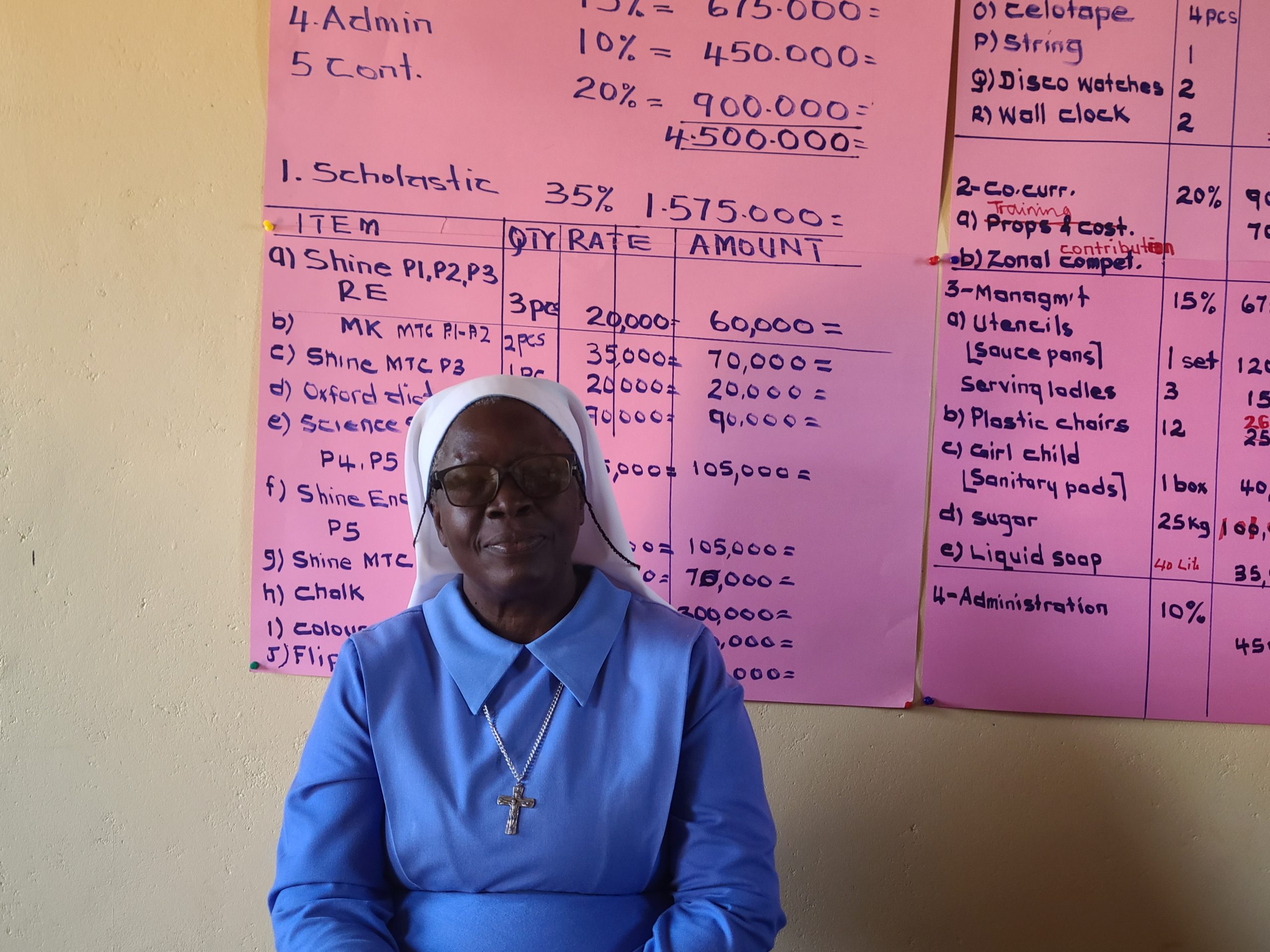
Sister Lucy Grace, Headmistress of Tochi Primary School
No other school was as organized or as transparent. Sister Lucy had multi-year budgets and a forward-looking to-do list. She proudly showed us the improvements made under her tenure: the repaired school sign, consistent water at the wash stations, even wood ash added to the latrines to cut down the smell. But her success only highlighted the limits of determination.
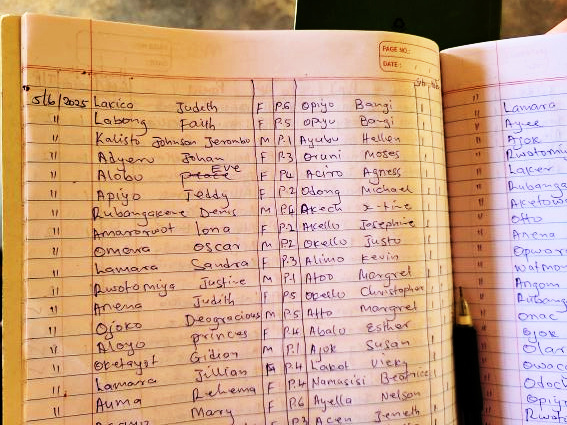
The detailed hand-written records kept by the Sister
The entire school—over 500 students—relied on one latrine with just two stances, one per gender. The other latrines were beyond repair, and the pits beneath them weren’t even designed to be drained. Without sustained community engagement or government support, she had reached a ceiling.
That was the common thread. Every school was distinct in its strengths and shortcomings—some had proactive staff, others barely functioning leadership—but all faced real and immediate need. Each one showed, in its own way, how hard it is to maintain progress when the ground is constantly shifting beneath you.
And while the GDPO’s role matters, it has limits. We can monitor, advise, and support better hygiene practices. But we can’t fund school feeding programs, rebuild collapsing classrooms, or stock clinics with medicine. In a place where even the basics—power, water, transport—can’t be counted on, the scale of what’s needed often far outpaces what we can provide.
Toilet & Embroidery Diplomacy
The week concluded with two meetings, each would shape their respective projects for long after I’d departed Gulu. The first was with the Gulu district official for education. I would be the first member of the AP meeting with the new official and hoped to represent the organization well, so as to facilitate future cooperation. I brought with me the monitoring tool and some graphs I made using the small amount of statistics we were able to gleam for some razzle-dazzle. Everyone loves statistical analysis.

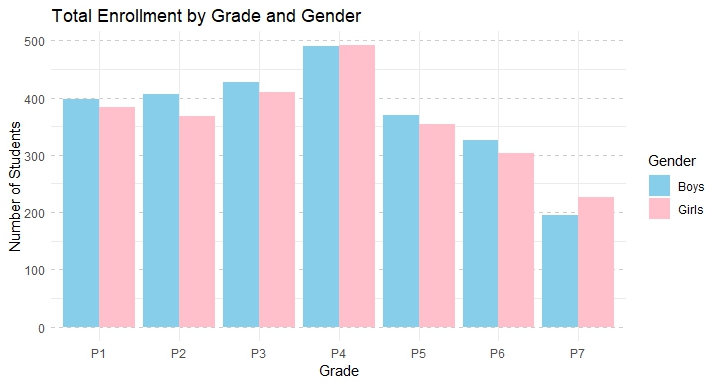
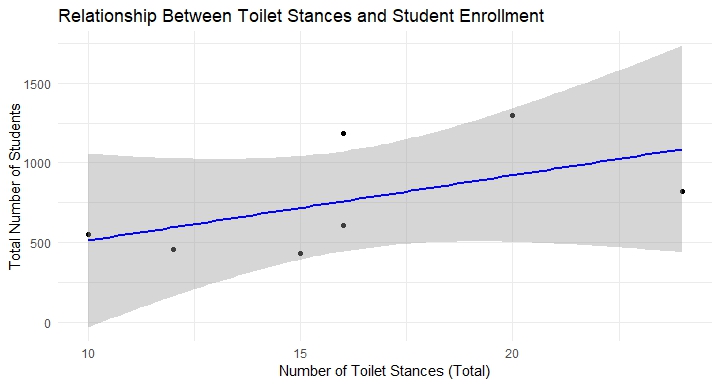
The meeting, I feel, went very well. The DEO (District Education Officer) seemed very impressed with our monitoring tool, and its usefulness moving forward. We also discussed Gulu’s partnerships with other NGOs with more resources such as Save The Children and World Vision, and discussed joining the ‘Education Working Group’ with them, to combine coordination and build the GDPO network to increase longevity and effectiveness. This is a great first step to improve our relationship with the government, as we can offer a more comprehensive and sophisticated monitoring system, and perhaps parlay that into selling of liquid soap for the whole district, and eventually a more robust coordination when it comes to constructing future facilities for the schools.
The second meeting was with the Women in Action for Women’s (WAW) chosen representative Nighty, to begin moving forward with their enterprise.
With Joe helping to translate, she reiterated to me that the women were ready to begin their training with Mama Cave. Understandable, but my goal was to help them establish a business plan and a budget in order for their business to be sustainable. However, people do not plan to fail, they fail to plan, and simply acquiring tailoring skills is not sufficient. I laid out some of the challenges I foresaw the business encountering; things like cash flow, quality control, access to the market and competition. I was taken aback when Nighty relayed to me these issues had actually already been discussed amongst the group. She then informed me of their system of profit sharing and responsibility scheme that they had concocted.
Once again I left the meeting impressed. We had scheduled another meeting, to take place with all of the ladies, plus Victoria and Mama Cave, to hammer out the details and their vision for their business. From there we can move forward, while planning backward; starting with the end goal while setting up intermediary goals that lead into one another a la the US Army Reverse Planning Method (US Army FM 3-21.10). From there, the ladies can establish a training start date.
As the week wound down, I found myself reflecting on the unpredictable rhythm that has come to define my time in Gulu. One day you’re stepping around puddles in the dark because the power’s out—again. Next, you’re in a district office pitching a monitoring tool that might just outlive your time here. It’s a place where things often don’t go according to plan—but where, somehow, things still get done.
That’s what stands out most: not the inconsistency itself, but the people who persist in spite of it. Whether it’s Sister Lucy running a school with grace and grit, or a group of women survivors organizing profit-sharing structures before their first stitch is sewn, there’s a kind of quiet resilience here that mirrors what I learned in the infantry—expect little, appreciate everything, and move forward anyway.
So much of this work isn’t about fixing broken things outright. It’s about finding a way to move through the mess, to build systems that can survive the next power cut, the next rainstorm, the next government reshuffle. If consistency is too much to ask, then maybe consistency in purpose is the next best thing.
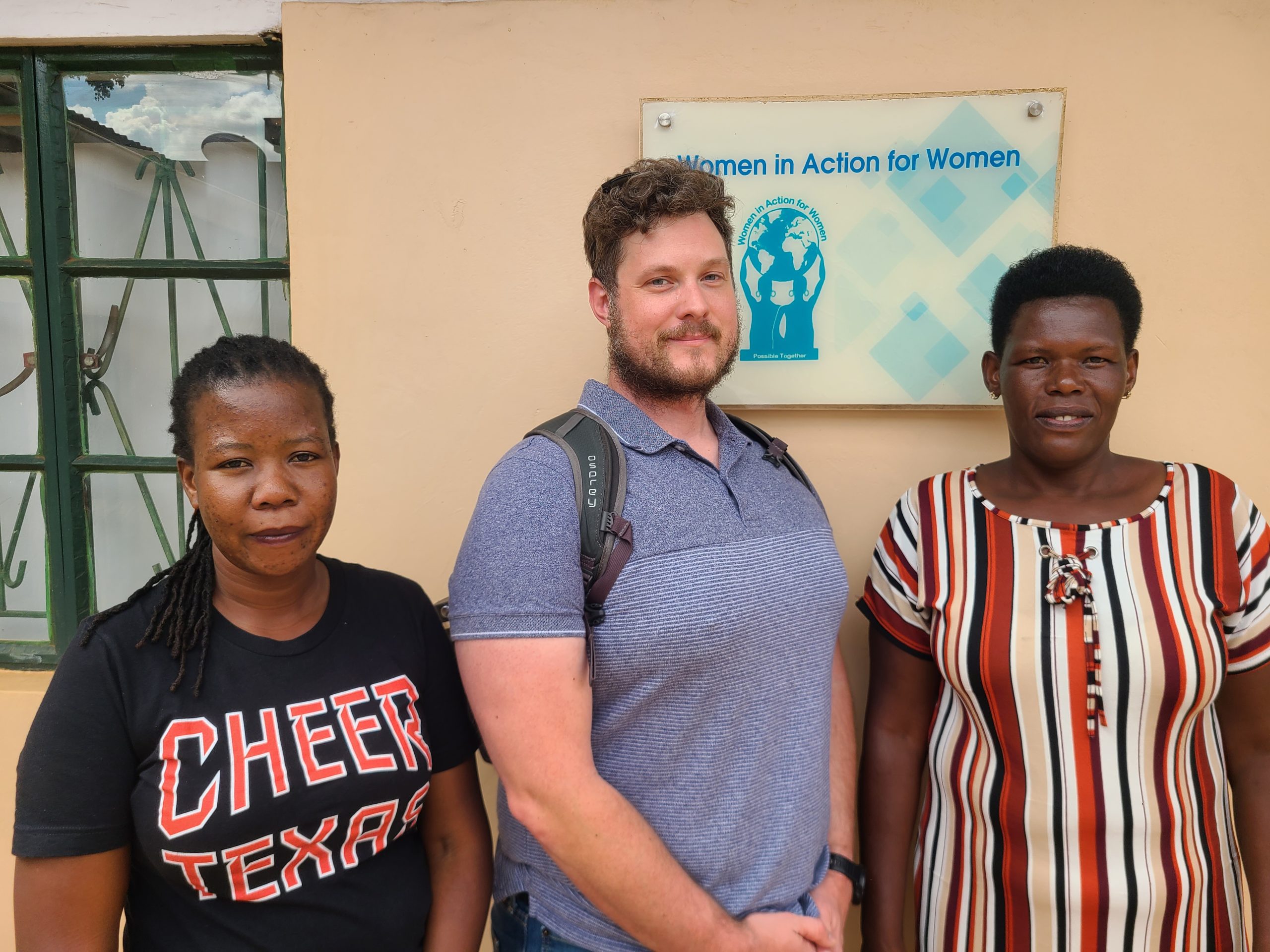
(from left to right) Emma, Aaron and Nighty, prior to the meeting
Posted By Aaron Bailey
Posted Jun 15th, 2025
4 Comments
Beatriz Lloret
June 15, 2025
Loved this post, Aaron. The way you made sense of the consistency within the inconsistency – and how you’re holding onto purpose as a guiding thread in your work, inspired by the way people move forward there – sometimes like you, taking steps forward in the dark – really resonated with me. It made me think about my own work as a therapist, where so much of what I do is about helping people navigate the unpredictability of life while staying flexible and connected to what gives their path meaning and a way forward.
Iain Guest
June 21, 2025
Really good post, Aaron! You’re beginning to dig in to your assignment. Your schools visits are essential and the fact that these schools STILL need support after we went to expense of installing new toilets shows the critical importance of follow-up and monitoring, Well done! Also, it’s so heartening to know that Tochi is in good shape! That’s the first school we did in 2015! Your meeting with the DEO – also essential. He is the key to scaling and sustaining GDPU’s WASH model. Finally, your first encounter with WAW and the butterfly artists! We were exhibiting/auctioning their quilts here in Washington when you met and they WILL have some money for their tailoring business! Your business plan will help to kick-start it all. Those early morning exercises are paying dividends!!
Shuyuan Zhang
June 21, 2025
Aaron, this was such an incredible read! Sister Lucy sounds like such a powerhouse—her organization and care for Tochi despite all the limitations is seriously inspiring. And the meeting with Nighty? Amazing. I love how people had already thought through budgeting and profit-sharing before training even started. The work you’re doing with the monitoring tool and building relationships with both the district and the women’s group is so impressive. Things may be inconsistent, but the determination you’re surrounded by is clearly rock solid.
Alexis Lopez
June 22, 2025
Another incredible blog, Aaron! I have to admit, your optimism, despite all the structural uncertainties like intermittent power and the absence of monitoring systems, is truly contagious! I hope your colleagues continue to apply these statistical methods, as they are not only valuable for strengthening government capacity and collaboration but are also appealing to donors. I think you are absolutely right to celebrate the small steps of progress in a world where so little is consistent. Our time in the field as Peace Fellows may be short, but even the smallest steps toward progress can add up to a big win! Keep up the determination, and may you all continue this wonderful momentum!