

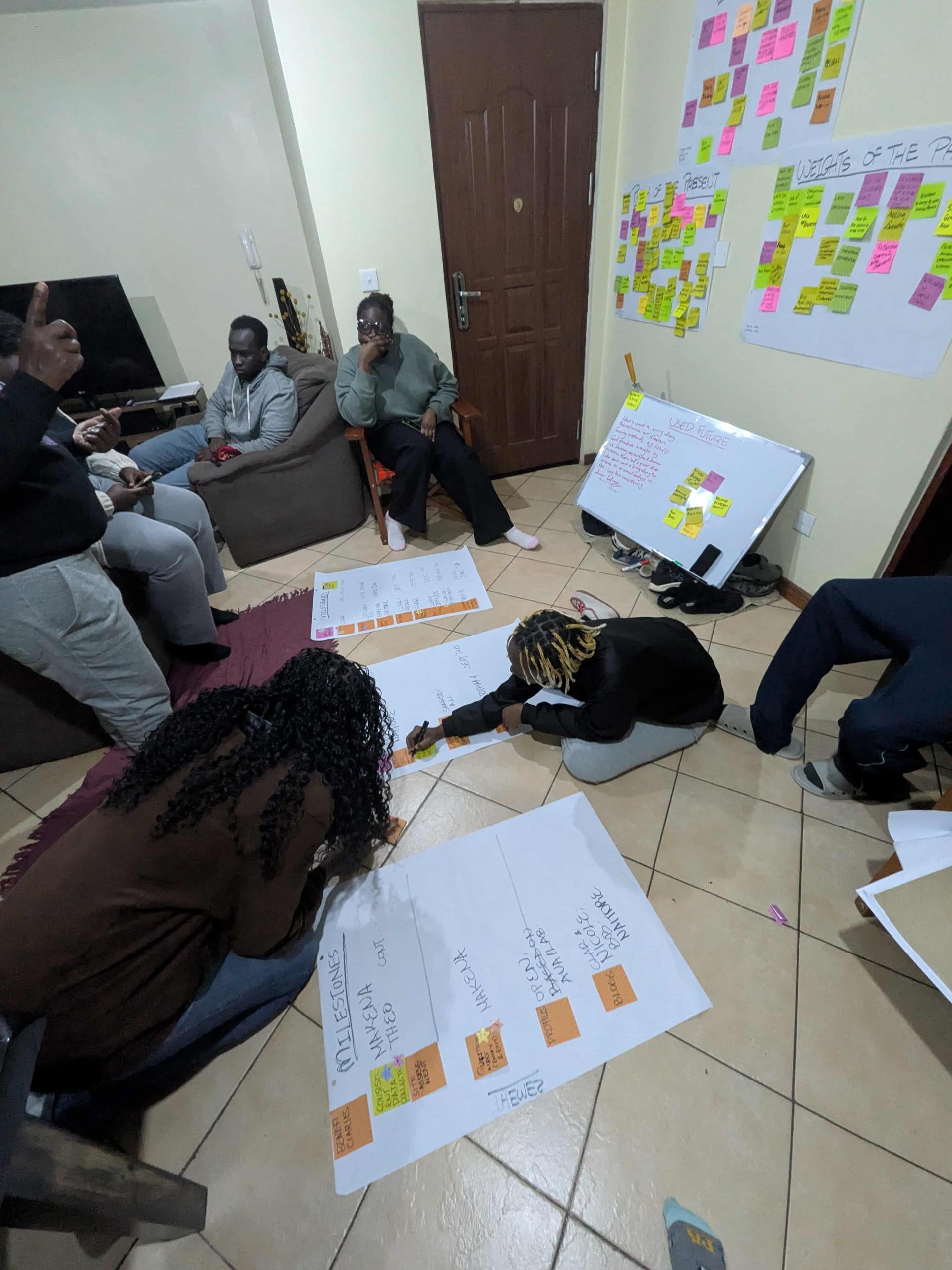
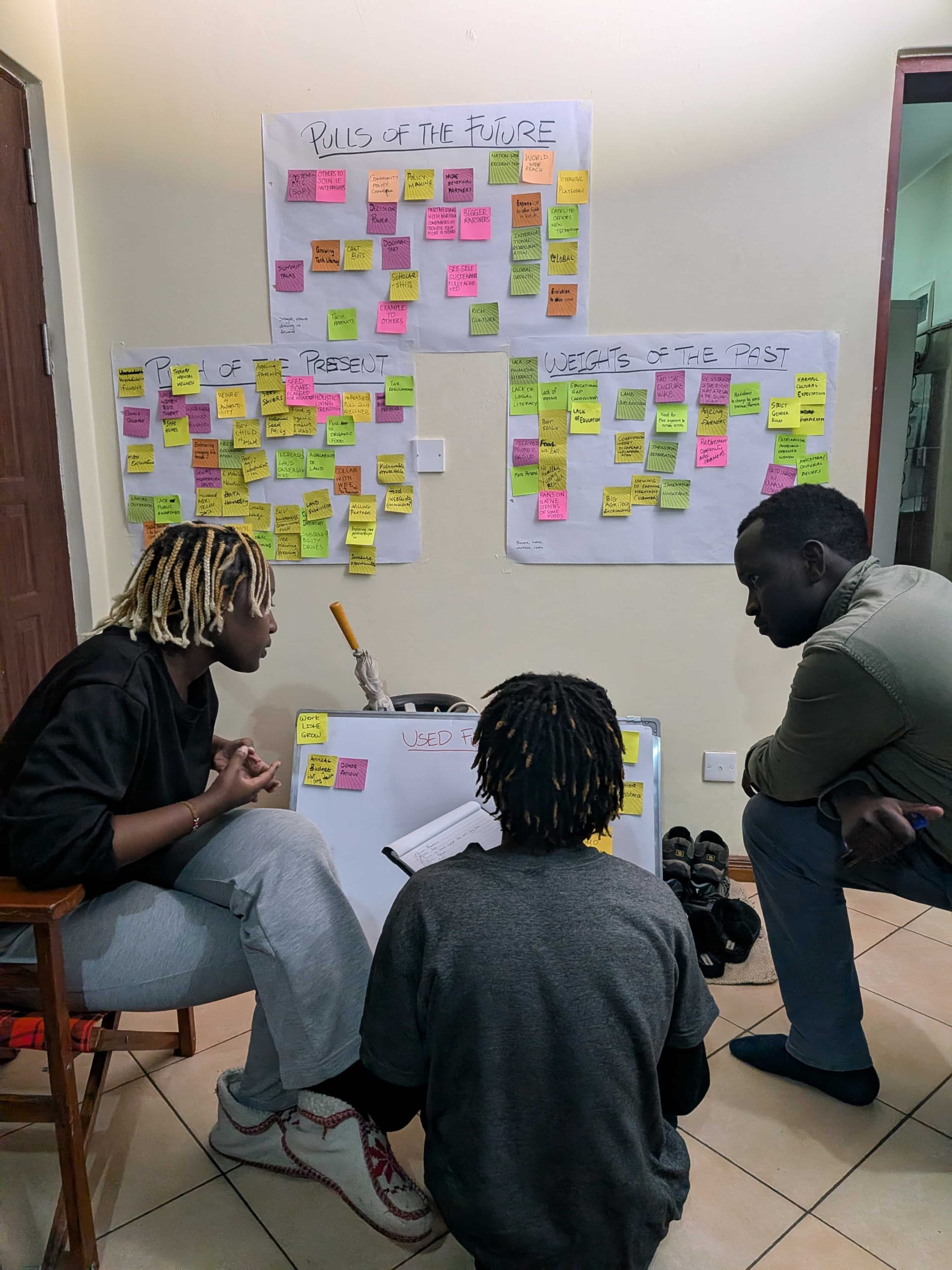
When I offered to facilitate a design thinking workshop for Lishe Grow, I had modest expectations about what the day would look like and what we might accomplish. Six members of the board were present, and they seemed to share one simple goal: they wanted Lishe Grow to prosper.
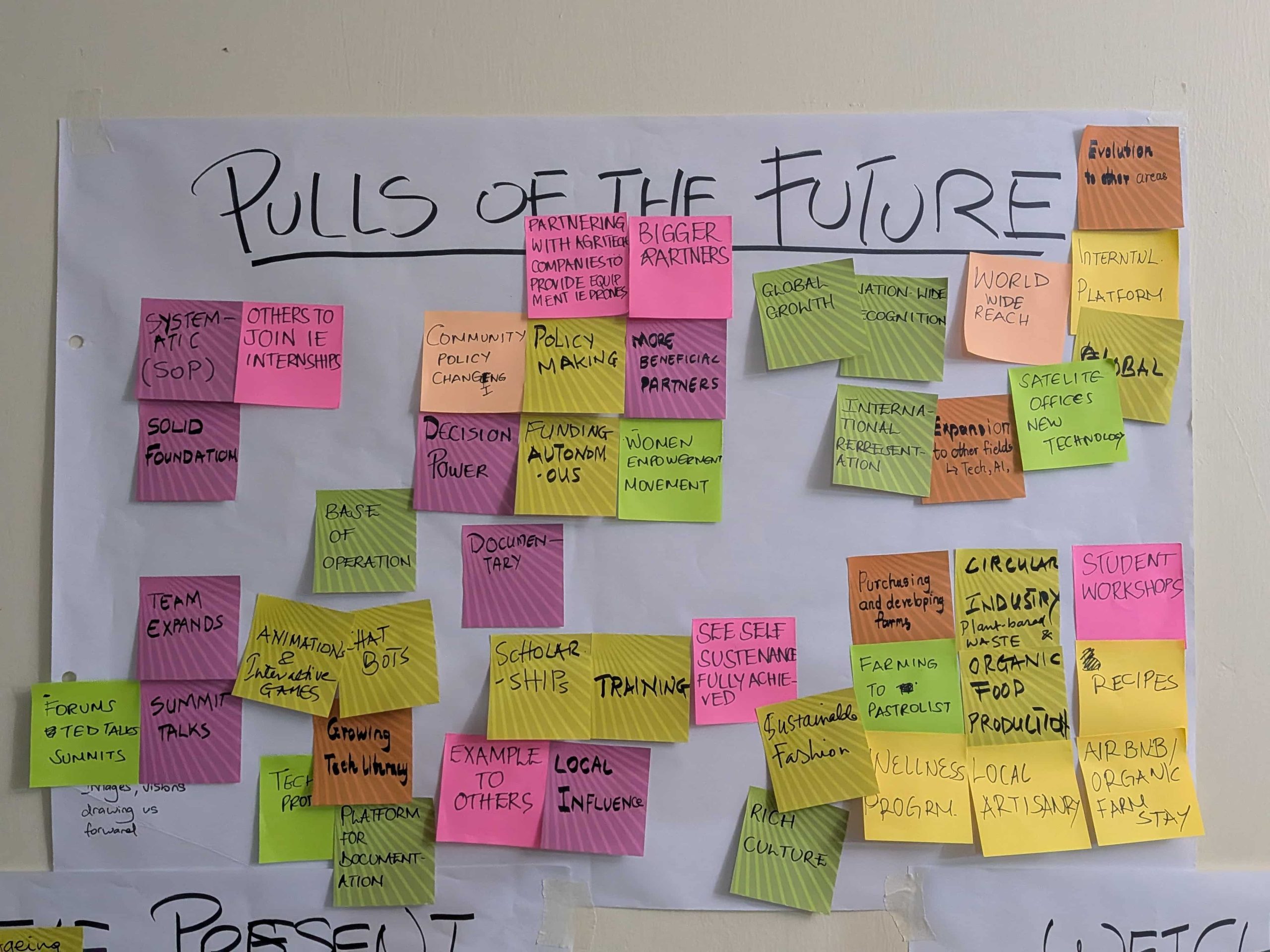
As a young board, they were also full of ideas. Technology, new partnerships, new programs, new ways of reaching people… they had no shortage of possibilities. What became clear throughout the day was that their challenge was not a lack of vision. If anything, it was figuring out which of all these possibilities should come first.
Lishe Grow began as a response to a need during the COVID-19 pandemic. When people in Kibera could no longer afford to buy enough food, Lishe Grow offered an alternative: grow your own. The concept sounds simple, but the assumptions behind it are not. When we think about farming, we often imagine land, equipment, money, and plenty of space. Stella saw something different. With limited resources and determination, she pulled together her first cohort of women in Kibera and showed them that they could grow food in the spaces they already had.
For some of these women, the garden meant being able to provide vegetables for their families without leaving home to buy them. They knew where their food came from because they had grown it themselves. And the gardens became more than a source of food. Through training and support, women began developing entrepreneurial skills and finding new ways to generate income.
As Lishe Grow’s impact became more visible, it expanded into schools. There, the work became as much about behavior change and education as it was about gardening. Children learned about growing food, nutrition, and balanced diets while developing practical skills they could take home.
Then came institutions.
During my practicum, I was fortunate enough to work on one of Lishe Grow’s most ambitious projects yet: the kitchen garden at Lang’ata Women’s Maximum Security Prison. Watching the women build cone gardens, raised beds, and compost systems was a reminder of how far the original idea had traveled. What began as a response to food insecurity in Kibera had grown into a system that could be adapted to entirely different environments.
Lishe Grow now thinks about its work across three broad areas: schools, households, and institutions.
And during our design thinking workshop, I could see that they were already imagining what comes next.
Ideas filled the room: an educational center, a permanent base of operations, gardens, a restaurant, a wellness center, training spaces, technology, international partnerships, and new ways to connect people with sustainable food systems. It was an ambitious vision – perhaps almost too ambitious – but there was no shortage of belief that it could happen.
Of course, the road ahead will not be simple. As a newly registered NGO in 2026, Lishe Grow will have to navigate lots of complex systems, changing behaviors, funding uncertainty, partnerships, marketing, and the challenge of growing an organization without losing the qualities that made it effective in the first place.
But sitting around that table, I realized that the board already understood something important: they know who they are and they know what they care about. And they have a remarkably clear idea of where they want to go.
The design thinking workshop did not give Lishe Grow its vision. It gave the board a space to articulate one that was already there. Perhaps that was the most valuable thing I could have contributed during my time there.
Lishe Grow began with a few gardens and a simple idea: that people can grow food with what they already have. Now that idea is growing too. And after spending twelve weeks watching it take root, I have little doubt that it will continue to find new places to grow.
Posted By Rhonwyn Hagedorn
Posted Sep 21st, 2026