

Every month, hundreds of empty desks tell a silent story across rural classrooms—a story where five days of missed lessons slowly snowball into demised dreams, and a lost future. When our team arrived at Kulu Opal Primary School, we expected to see the familiar toll of this monthly absenteeism, where boys outnumber girls in class simply because inadequate menstrual health management keeps female learners at home for up to five days every month. Instead, we walked into a school community in the middle of a fierce, grassroots turnaround. Total enrollment has surged to 872 learners—up dramatically from 602 in 2025, a year when only 230 pupils made it to the end-of-year exams. Today, over 780 learners fill the classrooms daily.
Kulu Opal Primary School learners proudly display the reusable sanitary pads they hand-crafted during a menstrual health training led by GDPU and Her Worth Foundation.
Digging deeper into this remarkable surge, we discovered that the shift is being powered by extraordinary local sacrifice. Recognizing that hungry children cannot concentrate and overcrowded classrooms stall progress, local leaders, School Management Committees, and parents united to contribute 10,000 UGX per child toward a school feeding program. That pooled community investment has not only kept learners nourished throughout the school day, but also generated the exact funds needed to recruit two additional teachers, expanding the school’s teaching staff from eight to ten.
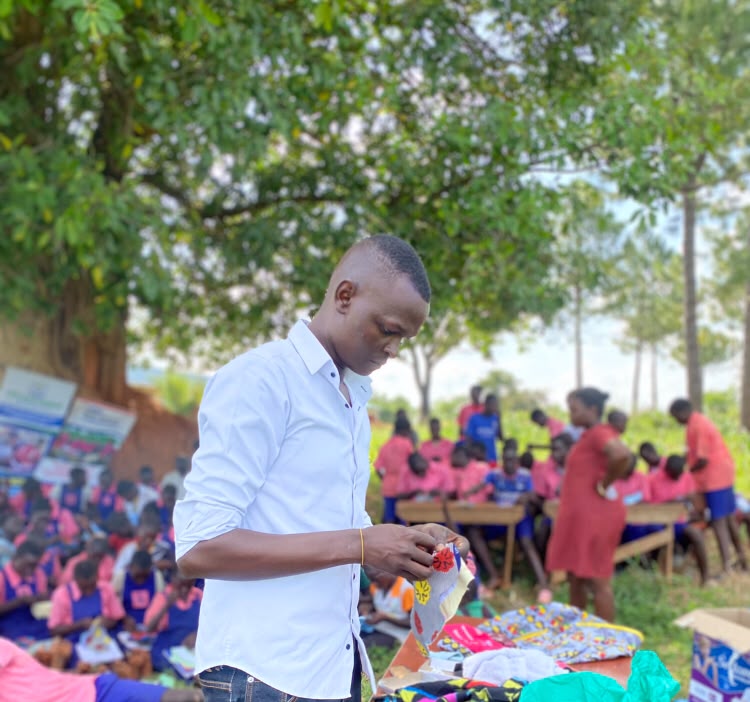
Leading by example, hand-crafting a reusable sanitary pad alongside learners during the menstrual health training at Kulu Opal Primary School.
That same community resolve is being directed squarely at protecting girl-child education. Historically, high rates of teenage pregnancy drove widespread dropouts at Kulu Opal, leaving girls disproportionately absent from the classroom. Refusing to accept this as inevitable, local leaders enacted a strict community bylaw designed specifically to keep learners in school. Backed by serious local enforcement and heightened community vigilance, the rate of teenage pregnancy at the school has noticeably dropped this year—proving that when leaders take a stand, cultural norms can shift.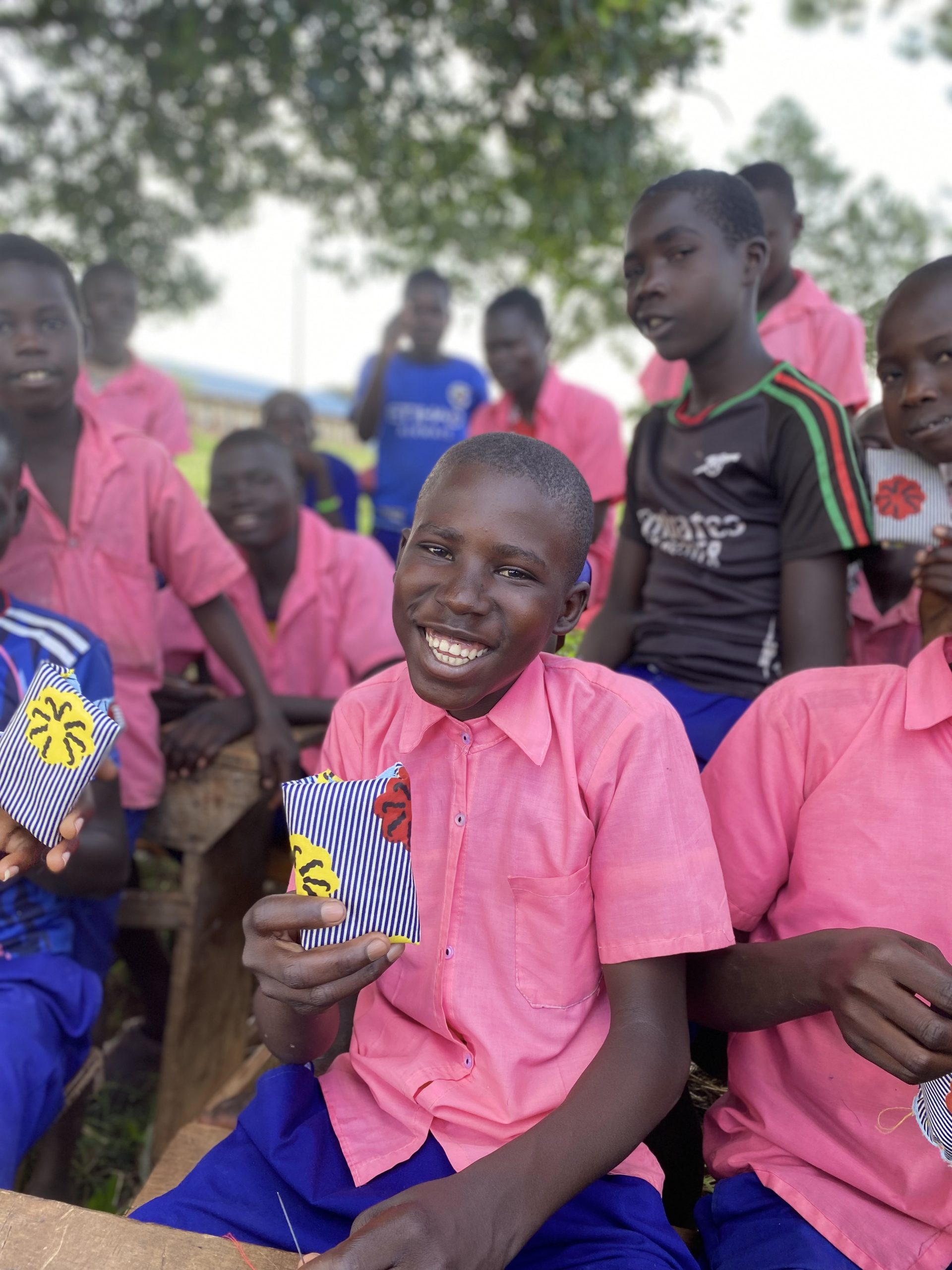
Breaking classroom stigma: A male learner at Kulu Opal Primary School proudly holds up the reusable sanitary pad he neatly hand-crafted during the menstrual health training.
Our team’s visit was designed to match that local momentum with a practical solution to the remaining barrier keeping girls away: access to sanitary supplies. During our hands-on session, we trained 215 girls and boys in menstrual health management, teaching them how to make reusable sanitary pads using materials readily available in the local market. Bringing both boys and girls into the training dismantled classroom stigma while equipping students with a self-sustaining skill. By the end of the workshop, the learners had produced 205 reusable pads—giving girls the protection, comfort, and confidence needed to stay in school throughout the month without dropping out.

Senior Woman Teacher at Kulu Opal Primary School learns hands-on alongside her students, stitching a reusable sanitary pad.
This latest workshop builds directly on an already proven foundation. Today, learner retention at Kulu Opal Primary School is remarkably high—a milestone the head teacher explicitly attributes to the menstrual health training conducted last year by the Gulu Disabled Persons Union (GDPU) and Her Worth Foundation, with support from The Advocacy Project. According to the head teacher, that earlier intervention empowered most of her female students with the practical know-how to craft their own sanitary materials without straining scarce family budgets. She emphasized how vital this kind of hands-on, low-cost training is for a rural community like Kulu Opal, where economic realities often force families to choose between basic household needs and commercial menstrual products.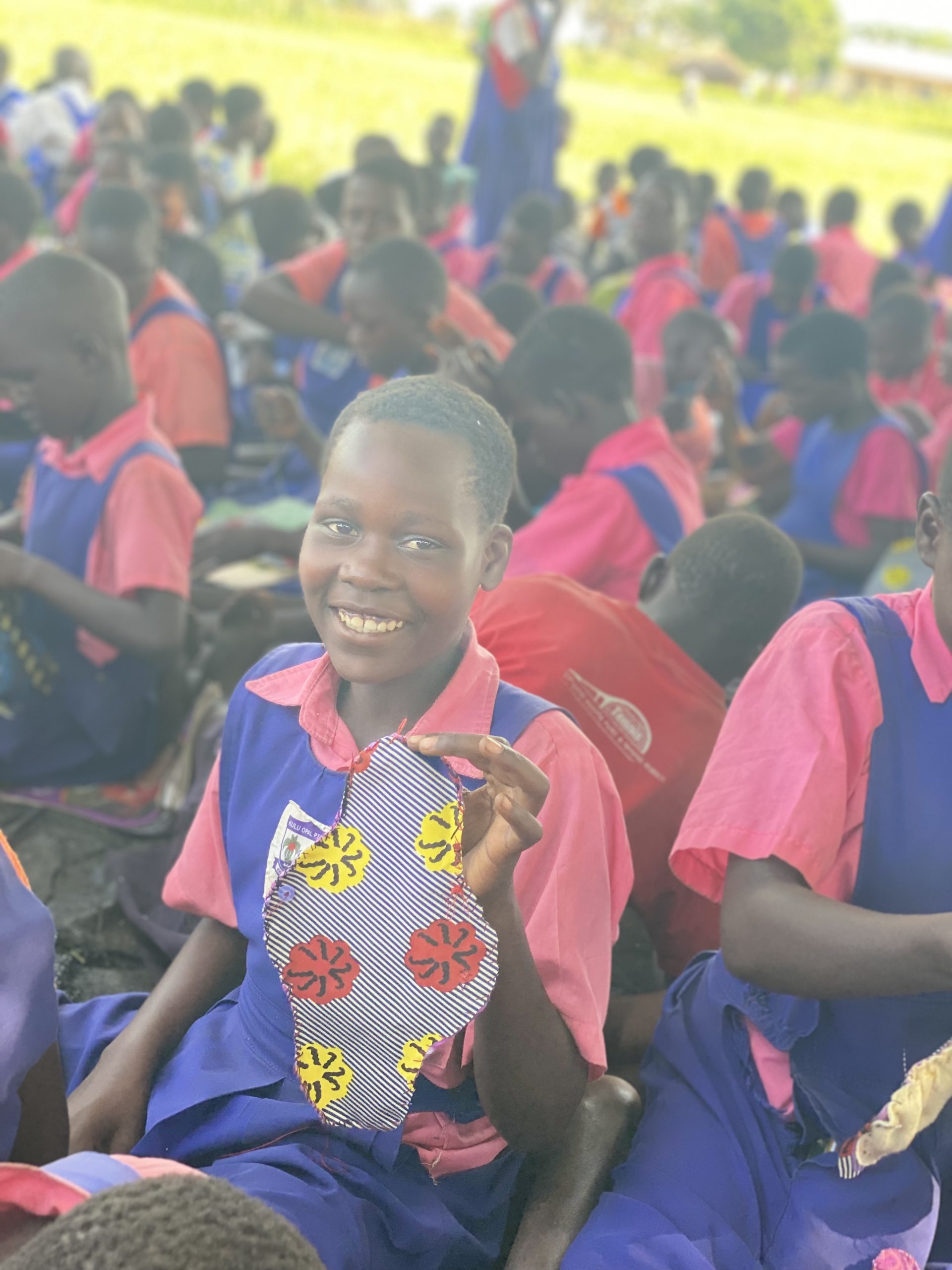
A female learner at Kulu Opal Primary School smiles proudly while displaying the reusable sanitary pad.
As our team packed up and left the school grounds, the momentum at Kulu Opal Primary School felt unmistakable—with 205 new reusable pads in the hands of learners, a proven track record of high retention, and a community actively dismantling economic and cultural barriers. Yet, as enrollment climbs past 870 and the pressure of end-of-year exams closes in, one critical question hangs over the classrooms: can this hard-won grassroots blueprint withstand the weight of its own success, or will the sheer scale of the surge test the limits of what this community can carry alone?
Posted By OKWIR JOSEPH JOHNS
Posted Nov 23rd, 2026