
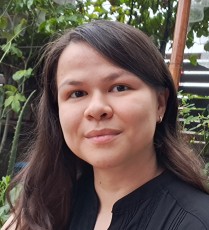
Walking through Kibera, often described as one of Africa’s largest slums, I found myself immersed in the familiar energy of a place that never seems to stop moving. People filled the streets. Cars honked. Music played from shops and homes. Neighbors stood chatting on street corners while vendors sold their goods.
As I walked alongside Stella, taking in the atmosphere, a bright white Lishe Grow T-shirt suddenly appeared in front of me.
“This is Fridah,” Stella said. “One of the women from our previous cohort. She was the best in her class.”
If there is one thing you notice about Fridah immediately, it is her smile. It is impossible to miss. Combined with her confidence and warmth, she has a way of making people feel welcome from the moment they meet her.
Fridah led us through a maze of narrow pathways that twisted through her section of Kibera. After several turns, we arrived at the door of her home.
As part of my fellowship, I had offered to document the stories of Lishe Grow beneficiaries through photography and video. Frida was the very first person Stella suggested I meet.

As we stepped inside, I suddenly felt drops of water landing on my head. My first thought was that it had started raining and that my video plans might be ruined. Instead, we all burst out laughing when I realized it was laundry day and water was dripping down from linens hanging overhead.
Before we began filming, Fridah proudly gave us a tour of her home.
“Here is my couch. My TV. My bed,” she said, smiling. There was a sense of pride in her voice, and rightfully so.
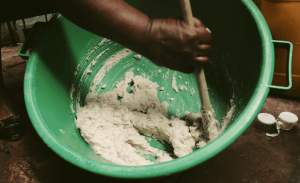
Through training and support from Lishe Grow, Fridah started her own soap-making business. She purchases raw materials, combines them in large buckets, and carefully “cooks” the mixture before bottling the finished product for sale. She even offers different varieties to meet customer preferences. “Some people want the blue soap,” she explained. “Some want the green.”
As I filmed, Fridah prepared a fresh batch. She moved with focus and confidence, clearly someone who had performed this process countless times before. Within twenty minutes, she had produced a new batch of soap ready for bottling and sale to customers throughout her neighborhood.
Through her soap enterprise and involvement with the community farm, Fridah has created an additional source of income for her family. Bottles of ready-to-sell soap lined shelves and containers of her raw materials stood as evidence of her hard work and determination. What started as training had become a business.
Besides her soap, Fridah has also become a community leader in her own right. She actively looks out for others who might benefit from opportunities like the ones she received from Lishe Grow. She encourages participation, shares information, and helps connect people with programs that could improve their lives. It was difficult not to admire that she had built.
Before we went our separate ways, Fridah gave me a big hug. “Come back again to visit”, she said, with her signature warm smile. For her – yes I will.
Many development projects talk about empowerment, and Fridah is what empowerment looks like. Not because someone gave her a business, but because she took an opportunity, worked hard, and transformed it into something of her own.
Because beyond the soap, the training, and the measurable outcomes, it is people like Fridah who remind me why this work matters. The real impact is not found in reports or statistics, but in the confidence, pride, and possibility that people carry forward long after a project ends.

Posted By Rhonwyn Hagedorn
Posted Jul 5th, 2026
1 Comment
Iain Guest
July 7, 2026
Very nice blog, Rhon! If it’s the Fridah I remember, she’s a wonderful mother and a very good businesswomen. I’d like to know more about her soap business and model – ie the cost of ingredients, her marks, sales strategy, team etc. How would she turn a small investment into a profit? Does her business help to support her daughter? Perhaps worth another visit sometime soon?