
“We are questioning, our next generation is questioning, the state about our families.”
On 17 June 2025 (2082/03/03), at the Nepal Academy in Kamaladi, Kathmandu, families of Nepal’s forcibly disappeared came together in an emotional and powerful commemorative program. Organized by the Missing Warrior Family Society Nepal and the Bipin Bhandari Foundation, the event marked 23 years since the enforced disappearance of 1,096 individuals by the state during Nepal’s armed conflict—lives lost in silence, names withheld, memories kept alive by the resilience of those they left behind.

The program to commemorate and honor the missing warriors
This interactive program served as both a memorial and a political statement. It remembered disappeared fighters like Bipin Bhandari, Ramhari Rupakheti, Devraj Paudel, Krishna Bahadur Basnet, and Dil Bahadur Rai—who, like many others, vanished without accountability or truth. In particular, Bipin Bhandari and Dil Bahadur Rai, both disappeared from Kathmandu on the same day in 2002, were given special remembrance.

Faces of the Disappeared
Bipin’s father, who also serves as the chairman of the Bipin Bhandari Foundation, was the first speaker. His voice, unwavering yet sorrowful, spoke not only of his personal loss but of the larger collective injustice suffered by thousands of families across the country. Representatives from different victims’ groups followed, as well as politicians, journalists, intellectuals, and human rights activists—all of whom bore witness to the ongoing struggle for truth and justice.
The event was not just a remembrance but a direct call to action. Victim families reiterated their long-standing demand: no transitional justice commission without consultation and representation of victims. Despite two commissions having been dismantled in the past, the government once again failed to involve victims in the formation of the most recent body. Political parties have repeatedly ignored the pleas of survivors, choosing instead to manage transitional justice as a closed political affair.
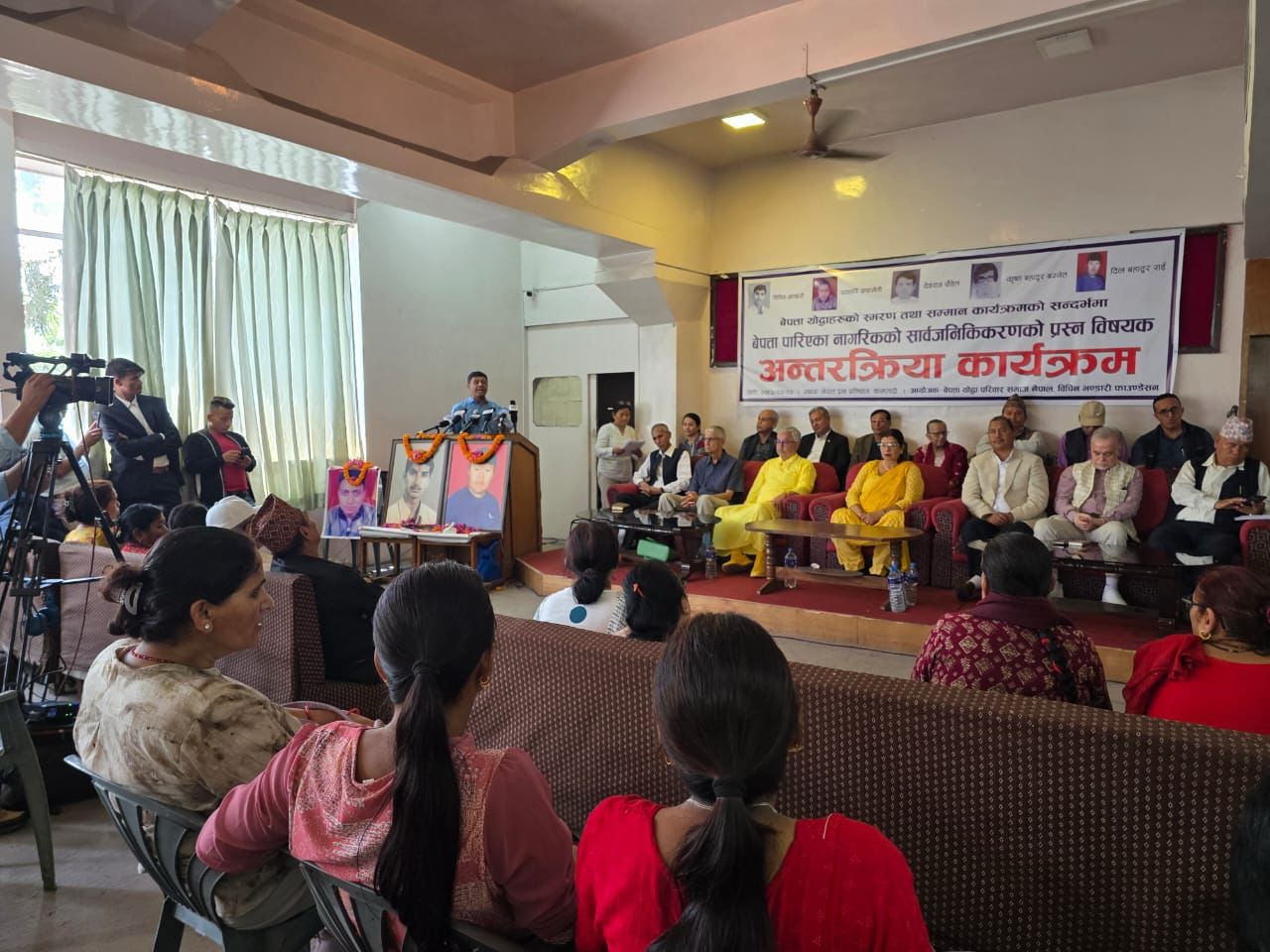
The Victims’ Families Were Present
“This day is for memory,” said Ram Bhandari, a leading transitional justice expert. “For 23–24 years, the government has not listened to our grievances. The disappeared—rebels, activists, political prisoners—are not being heard.” His words struck a chord in a room filled with grief, fatigue, and persistence.
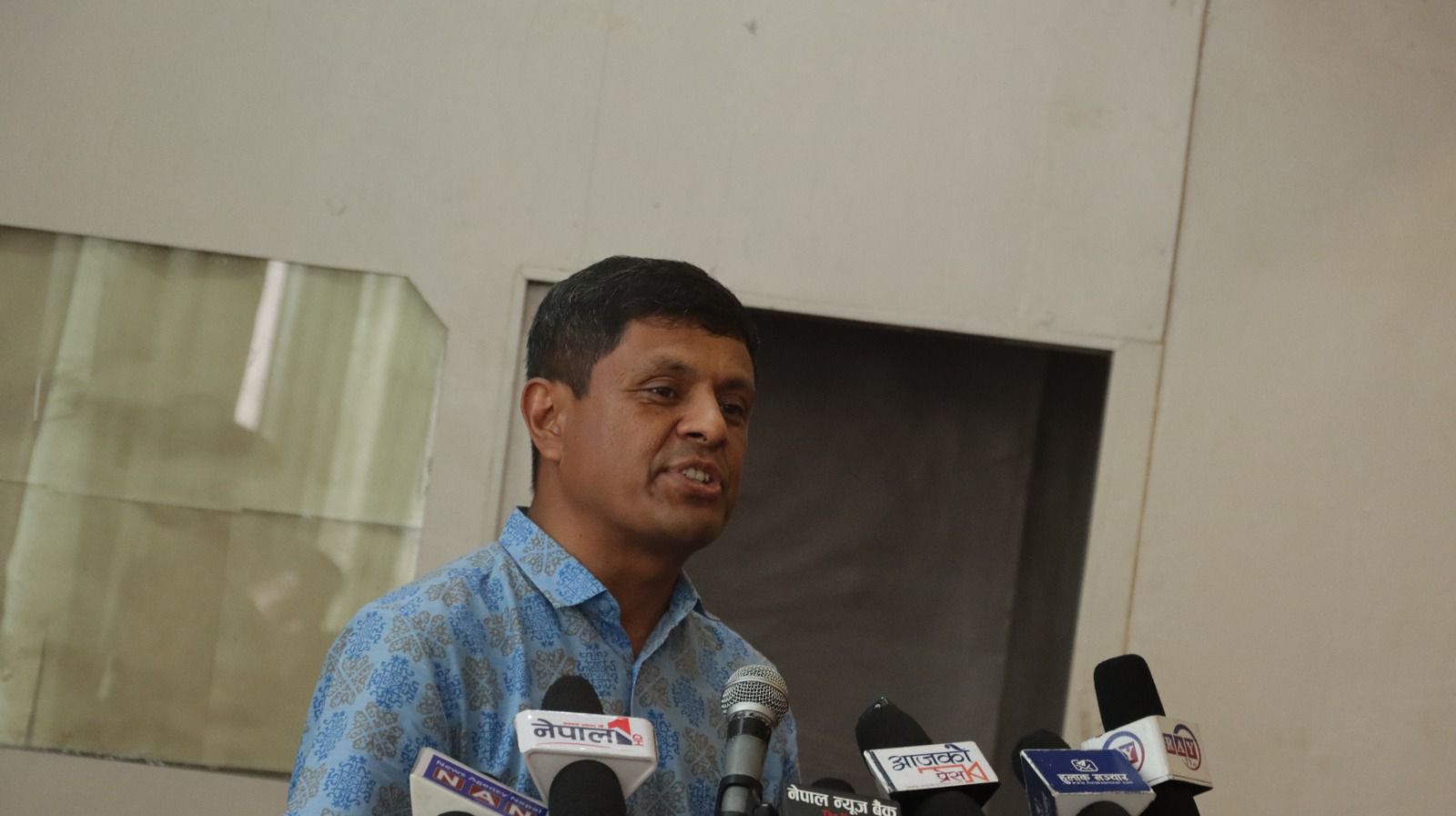
Ram Bhandari Speaking
Dr. Sundar Mani Dixit added a sobering observation: “Leaders are afraid. If a sovereign commission is formed and victims start asking for legal reparations, the issue might move to international courts.” He also remarked on the natural fatigue of the movement, warning that its slowing momentum might be a sign of collective exhaustion rather than reconciliation.
Yet voices like that of Nisha Neupane, representing families of the disappeared, reminded all present why the struggle must continue. “I don’t like to call myself a victim,” she said. “If our families hadn’t risked their lives, we wouldn’t have the federal republic we enjoy today.” Acknowledging the gendered dimension of this loss, she emphasized that the freedoms women have today are built on the sacrifices of the disappeared.
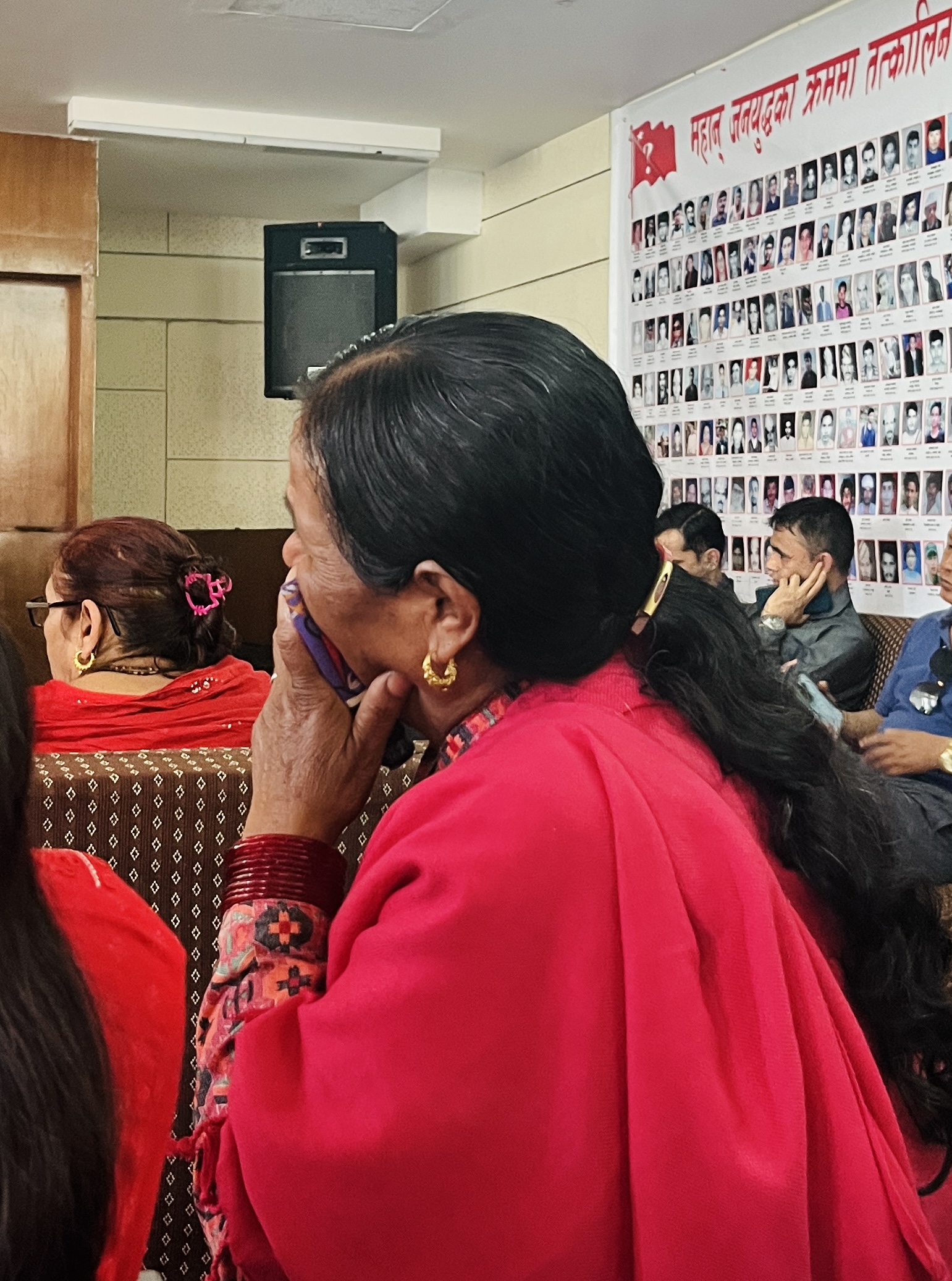
A Mother’s Grief in Song for the Disappeared
The program underscored a painful truth: the trust of the victims’ families has been repeatedly manipulated in political bargains. Transitional justice in Nepal has become a process defined by exclusion—where those most affected are left out of decisions that are supposed to deliver justice for them.
It is worth noting that, while mainstream parliamentary parties continue to ignore this reality, some political leaders are beginning to acknowledge the growing pressure. Notably, a few party leaders were present at the event.
But the event also carried hope: hope rooted in memory, solidarity, and the continued courage of families who refuse to let their loved ones be forgotten. Their demands remain consistent: Public acknowledgment of all disappeared citizens; Full participation of victims’ representatives in transitional justice mechanisms; Genuine, independent, and sovereign truth and justice commissions.
As one father said, “We are questioning. Our next generation is questioning. And we will continue to question until justice is done.”
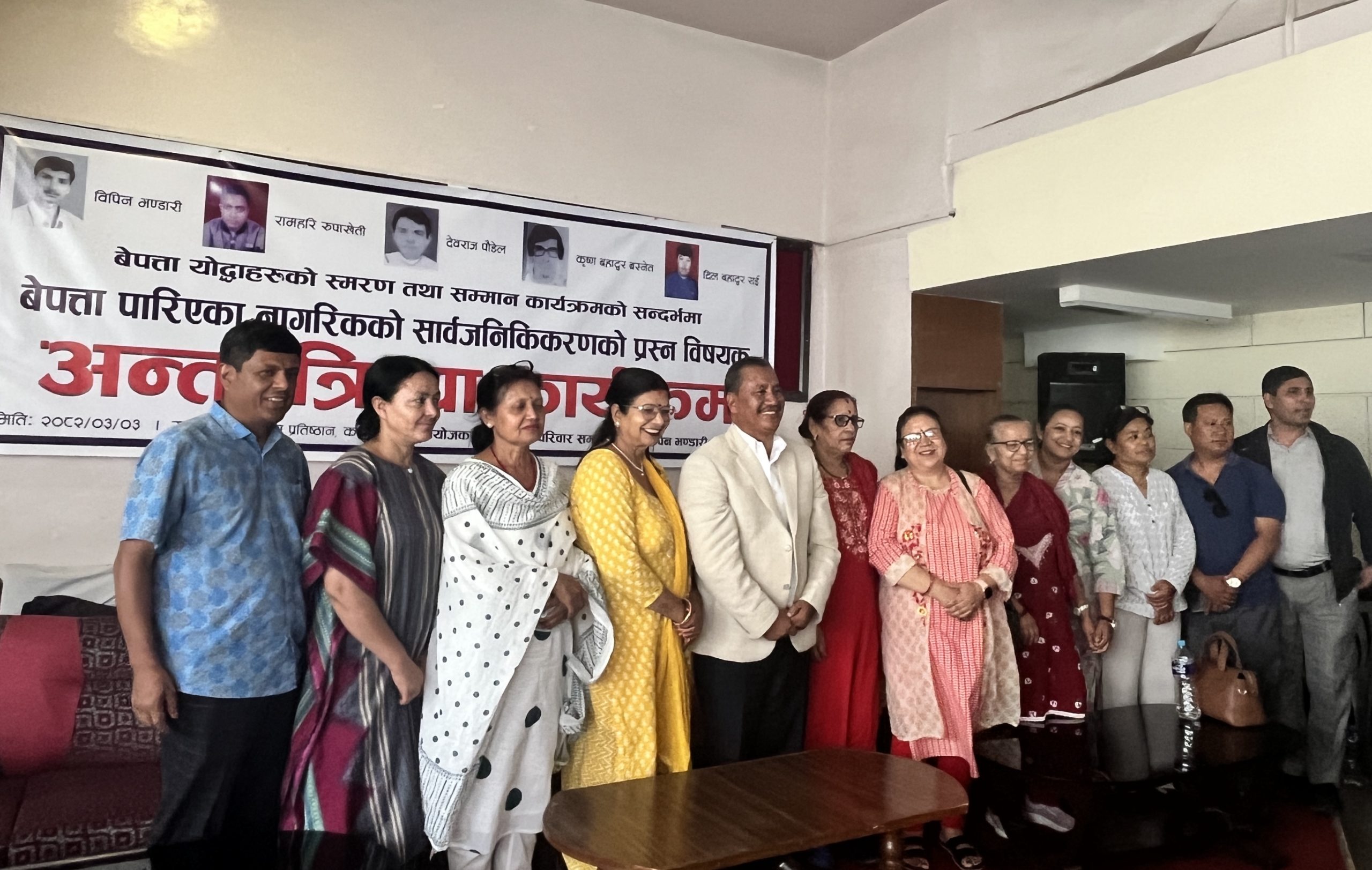
Photo of Victims’ Groups, Political Leaders, and Human Rights Activists at the Event
Songs Dedicated to the Disappeared
Posted By Shuyuan Zhang
Posted Jun 19th, 2025
5 Comments
Alexis Lopez
June 22, 2025
Shuyuan, what another powerful blog! I couldn’t help but reflect on the unwavering demand for representation, justice, and inclusion expressed by Ram and other deeply committed family members affected by the war. You’re absolutely right in that any transitional justice or peace process cannot succeed without the voices of those most affected. Your commitment to working with Ram and supporting Nepal’s transitional justice process is truly admirable! It may be just the momentum the movement needs at a time when progress feels stalled – keep up the good fight!
Shuyuan Zhang
June 23, 2025
Thank you Alexis!!
Aaron Bailey
June 23, 2025
Reading this brought to mind Walter Salles’ I’m Still Here (about a women trying to find her husband who was “disappeared” during the Brazilian dictatorship) the way that film lingers on absence, and the heavy silence left behind by the disappeared. Like the families in Nepal, the people in that film carry grief that’s not passive; it’s political. Memory becomes its own form of resistance. The insistence that the missing are still here — in stories, photos, songs, and protests — makes this blog hit even harder. It’s not just remembrance. It’s a demand.
Iain Guest
June 23, 2025
Such a thoughtful and well written blog – about PEOPLE and not legal principles or NORMS! Hooray! Reading this I felt as it I was meeting the real stakeholders of transitional justice. And you video clip is delightful. One question – has this group only registered 1,096 disappearances? I thought the number was closer to 1,400.
Angie Zheng
August 4, 2025
This was so insightful, and what a rich and moving event! I appreciate how you highlight both the grief that comes from loss and the hope that these families carry in building solidarity, collective memory, and a path to justice.