

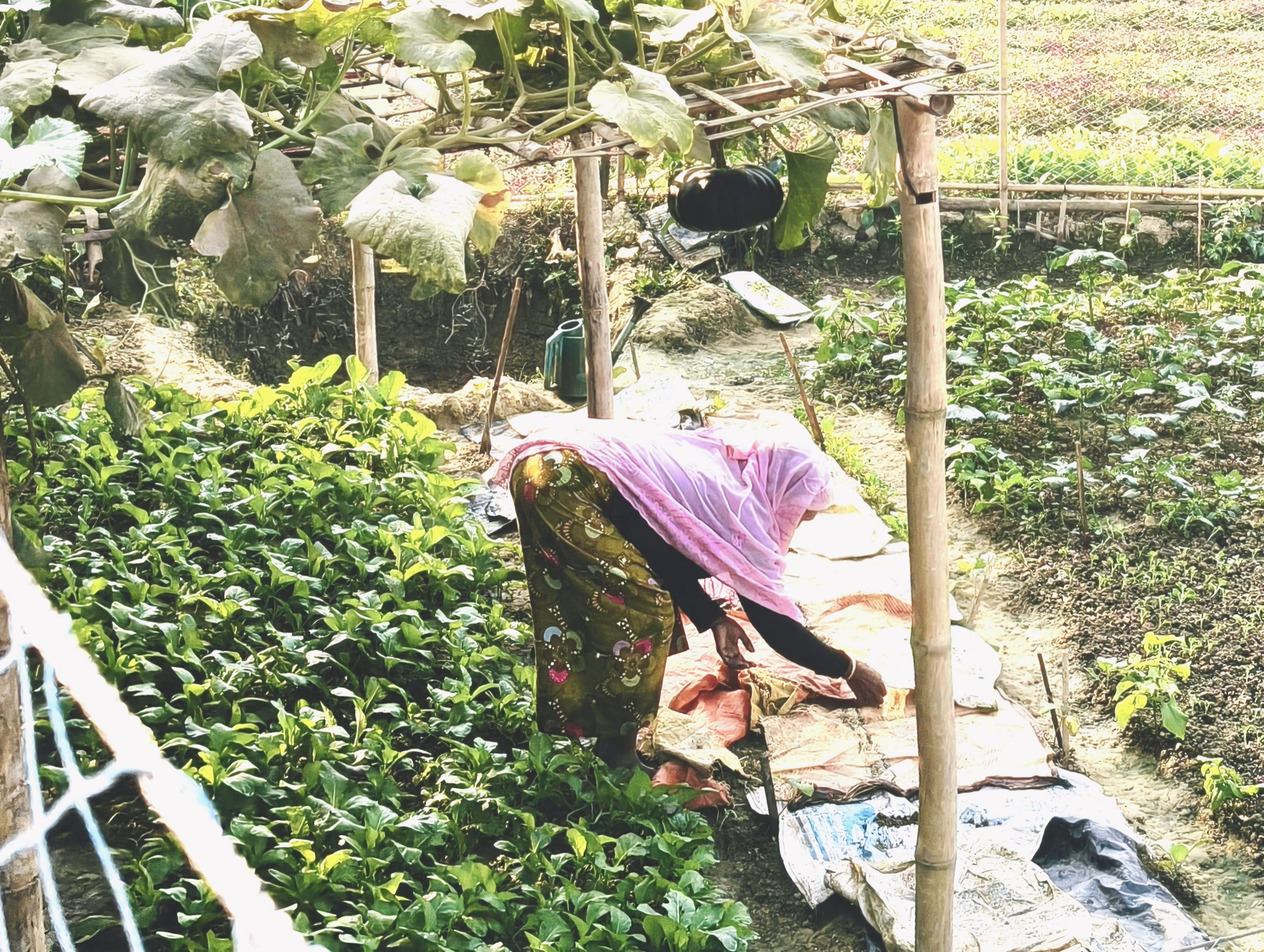
Resilience in action — Rohingya women leading household nutrition through small kitchen gardens.
In the world’s largest refugee Camp 15 Jamtoli, where land is scarce and daily life is defined by restrictions, growing food is an act of quiet resistance and hope.
Just weeks ago, families involved in the REAL (Rohingya Education and Advocacy League) nutrition project received seeds, and simple gardening materials. On 15 November 2025, those seeds were planted in sacks, Beside shelters, and some are in open areas . Today, green shoots are rising across the camp clear proof that even in the most constrained environments, life finds a way.
This third phase of our nutrition project focuses on seed planting and daily care. It marks the transition from preparation to visible impact.
Growing Food Without Land
In refugee camps, traditional farming is impossible. Families live shoulder-to-shoulder, with no access to farmland and very limited space. To overcome this, REAL introduced container and sack gardening, using recycled aid sacks, buckets, and household containers.
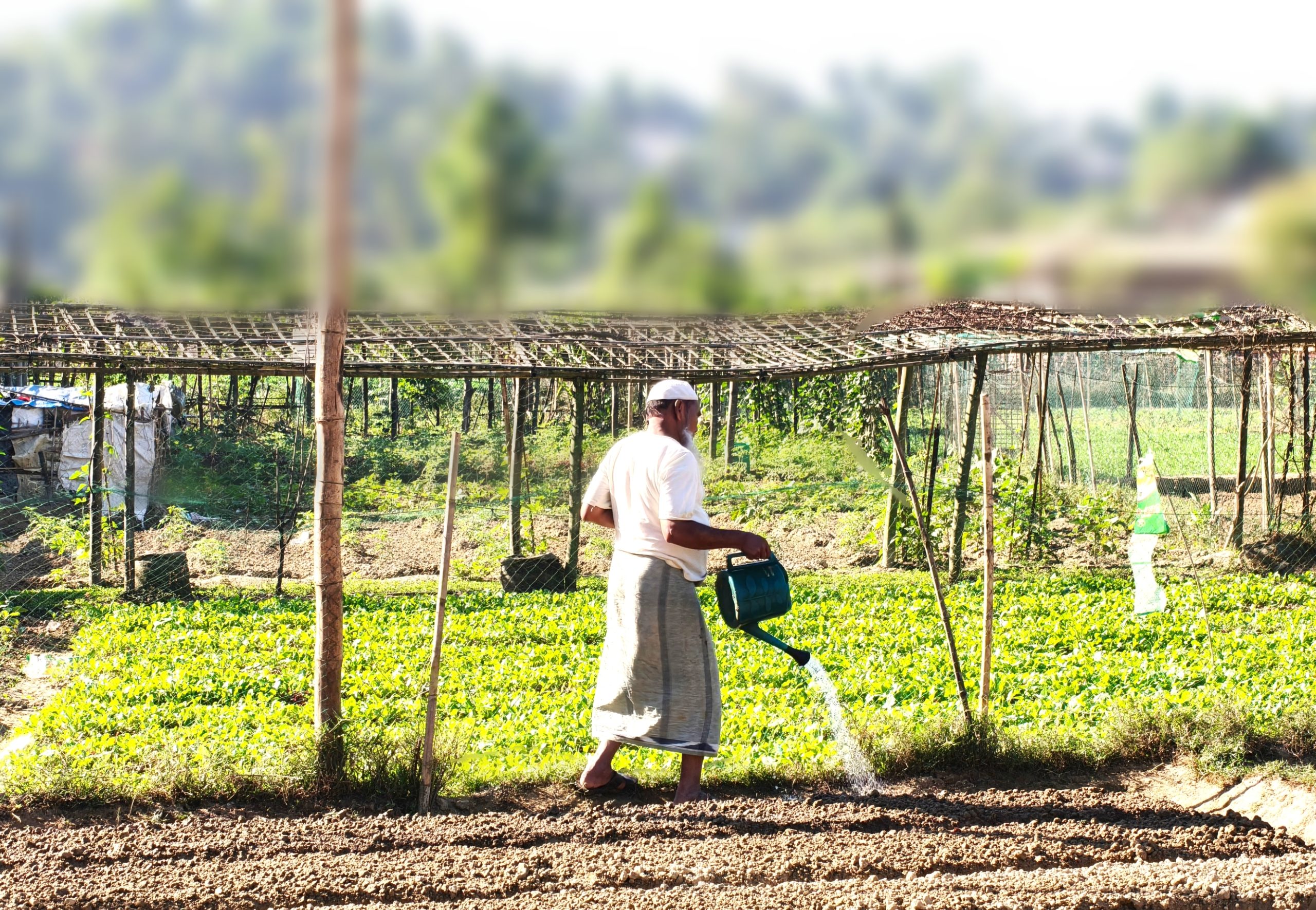
Hands watering young plants in garden
Cucumbers, eggplants, pumpkins, beans, bitter gourd, snake gourd, and bottle gourd are now growing in and around shelters. Some families are planting in tiny open spaces between homes, while others grow directly beside their shelters turning unused corners into food sources.
These gardens are not just practical; they are deeply symbolic. Each plant represents dignity, self-reliance, and care for one’s family.
Women at the Heart of the Project
Women and girls are leading this effort.
Resilience in action — Rohingya women leading household nutrition through small kitchen gardens.
In a context where women’s mobility, education, and economic opportunities are extremely limited, this project brings meaningful work directly to their doorsteps. Women are responsible for planting, watering, and protecting the crops while also passing knowledge to their children.
Beyond nutrition, gardening provides psychosocial relief. Nurturing plants offers calm and purpose in an environment marked by trauma, overcrowding, and uncertainty.
Early Signs of Impact
Just weeks after planting, vegetables are growing strong. Leafy vines are climbing bamboo walls. Seedlings have survived harsh weather and poor soil thanks to composting, careful watering, and daily attention.
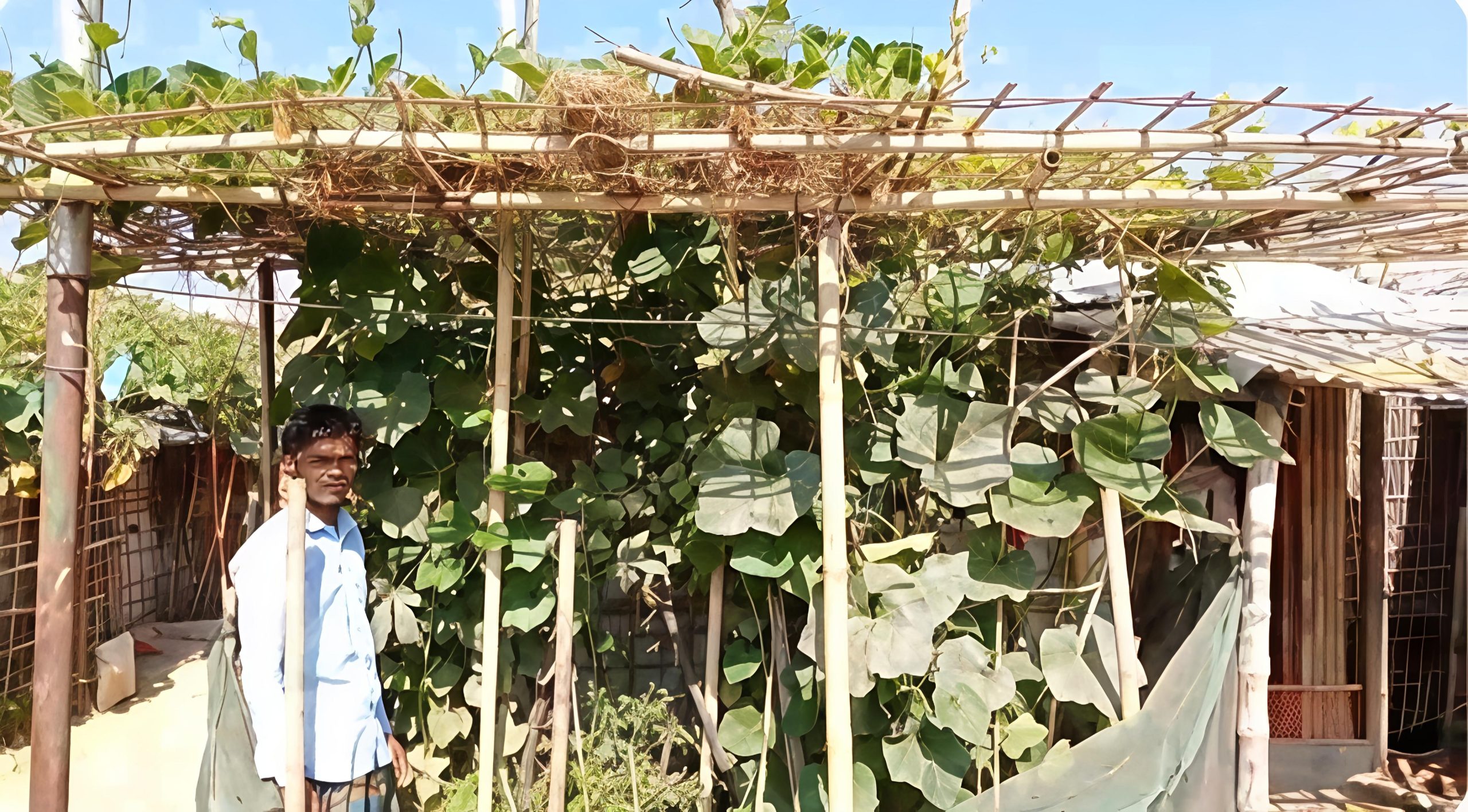
Healthy Leaves and Veins are climbing Bamboo and shelf
The first harvests are expected within the next 3–6 weeks, depending on the crop. Families are already planning how to share vegetables within households, reduce dependence on food rations, and improve children’s diets.
For families who have gone months without fresh vegetables, this change is profound.
This project proves that small investments create lasting impact. With minimal materials and strong community ownership, families are producing food where none was expected.
REAL is a Rohingya-led initiative trusted within the community, cost-effective, and deeply rooted in local realities. With further support, this model can be expanded to reach more households, integrate composting, and strengthen women-led livelihoods.
These gardens are more than vegetables.
They are about nutrition, dignity, and resilience.
As one mother told us, “When I water these plants, I feel I am feeding my children’s future.”
Call to Action
To expand this work through seeds, tools, training, and follow-up support we invite partners and donors to stand with REAL and the families transforming their shelters into sources of nourishment and hope.
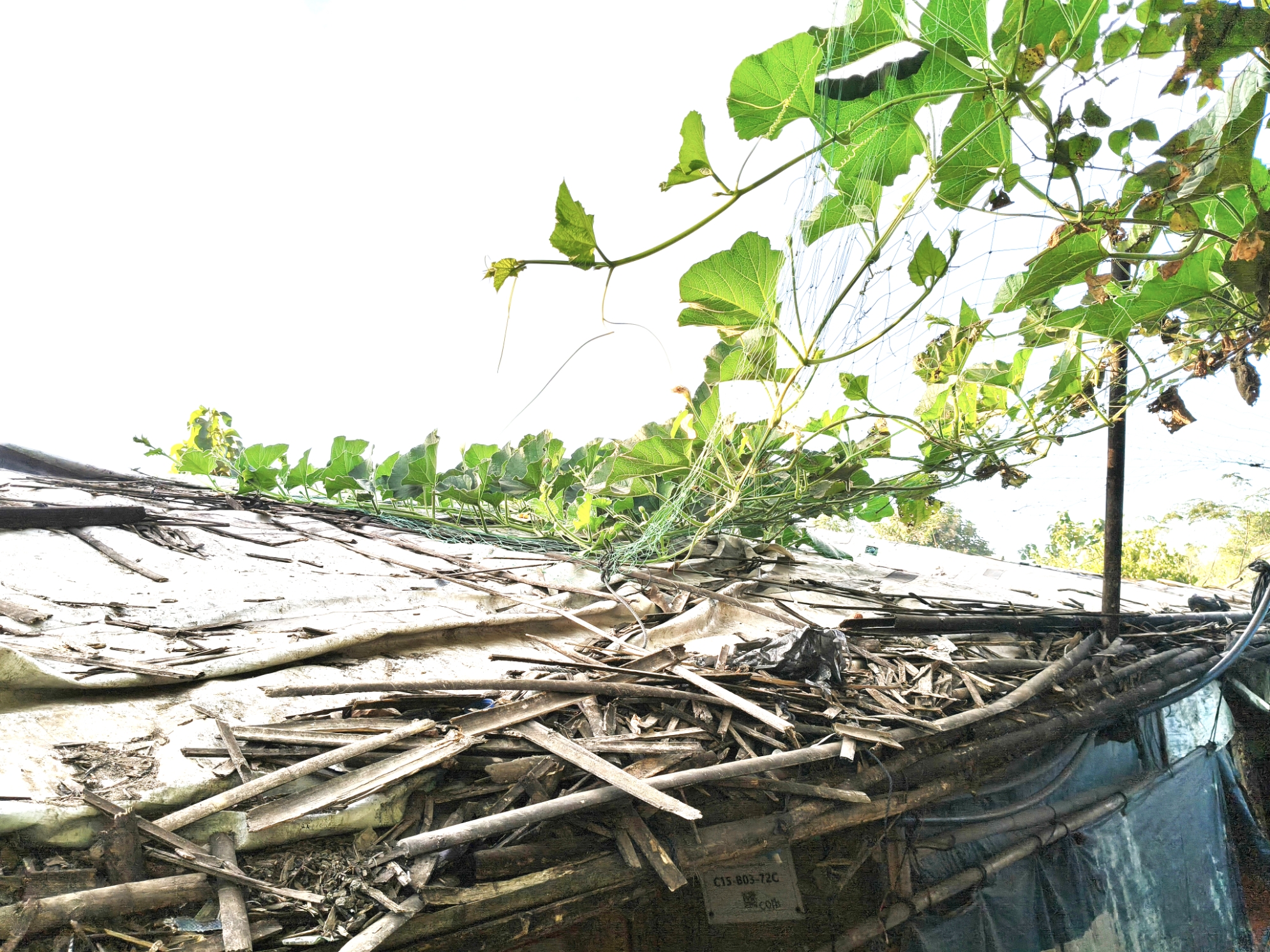
Climbing Bottle gourd vines
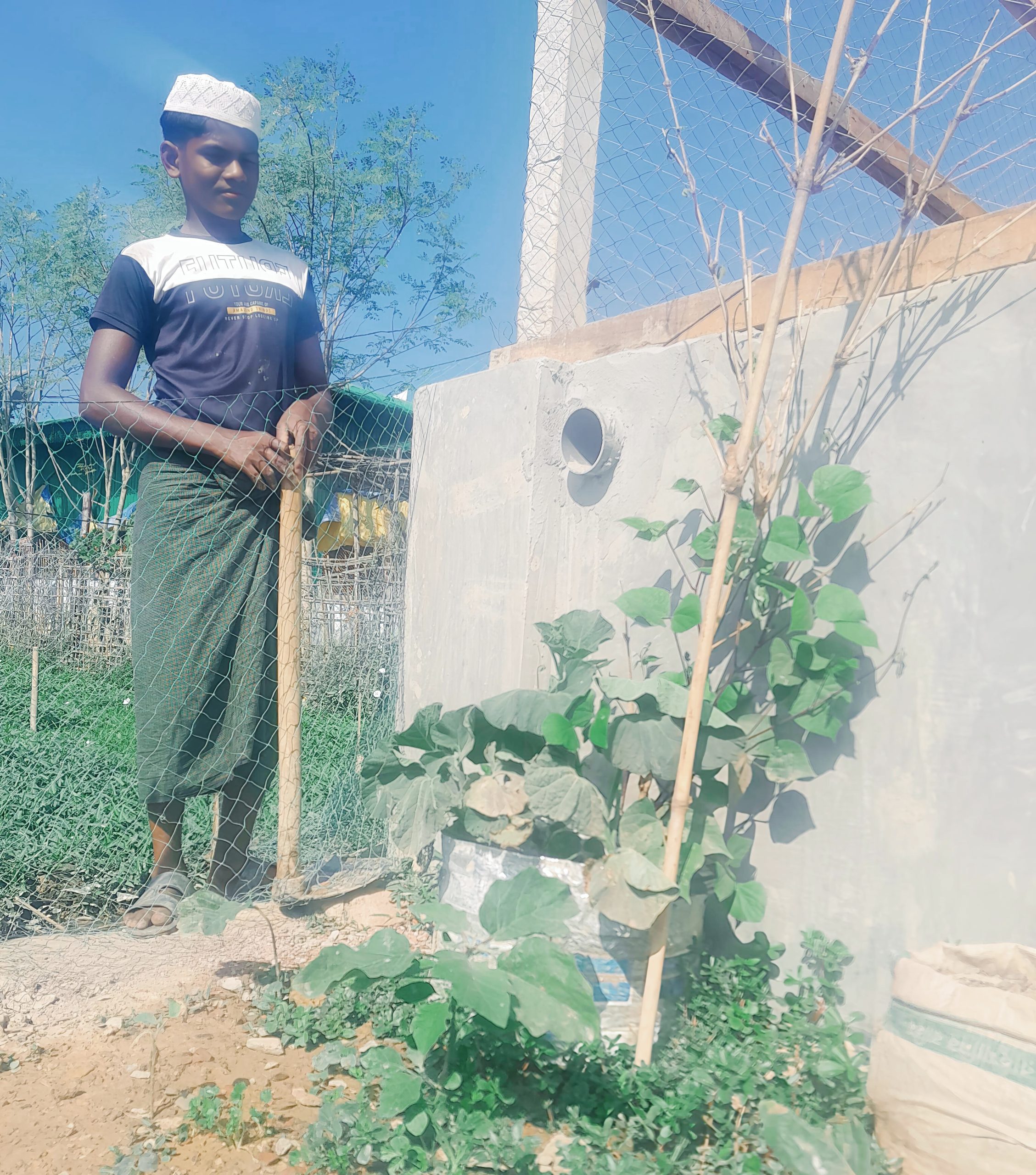
Caring garden

A wide shot of a grow bag or sack garden beside a shelter, with healthy green leaves
Posted By Maung Myint
Posted Dec 17th, 2025
1 Comment
Iain Guest
December 17, 2025
So exciting that you are into the third phase of your nutrition project and planting seeds! It’s also great that families are starting to plan how to use the food. Can’t wait to hear how the harvests come out…