

A dog barked as we arrived in the rain.
Hưng came out to welcome us and quickly urged us inside to take shelter. His wife, Thành, had gone out to get some medicine, so for the moment he was alone with their two children.
Hưng directly took us to meet them. His daughter and son are 34 and 39 years old. Both are bedridden because of severe physical deformities, paralysis and intellectual disabilities. They cannot speak or move independently.
But they can smile. And as we approached their beds, they did. It was a small moment, but one that immediately changed the atmosphere of the visit.
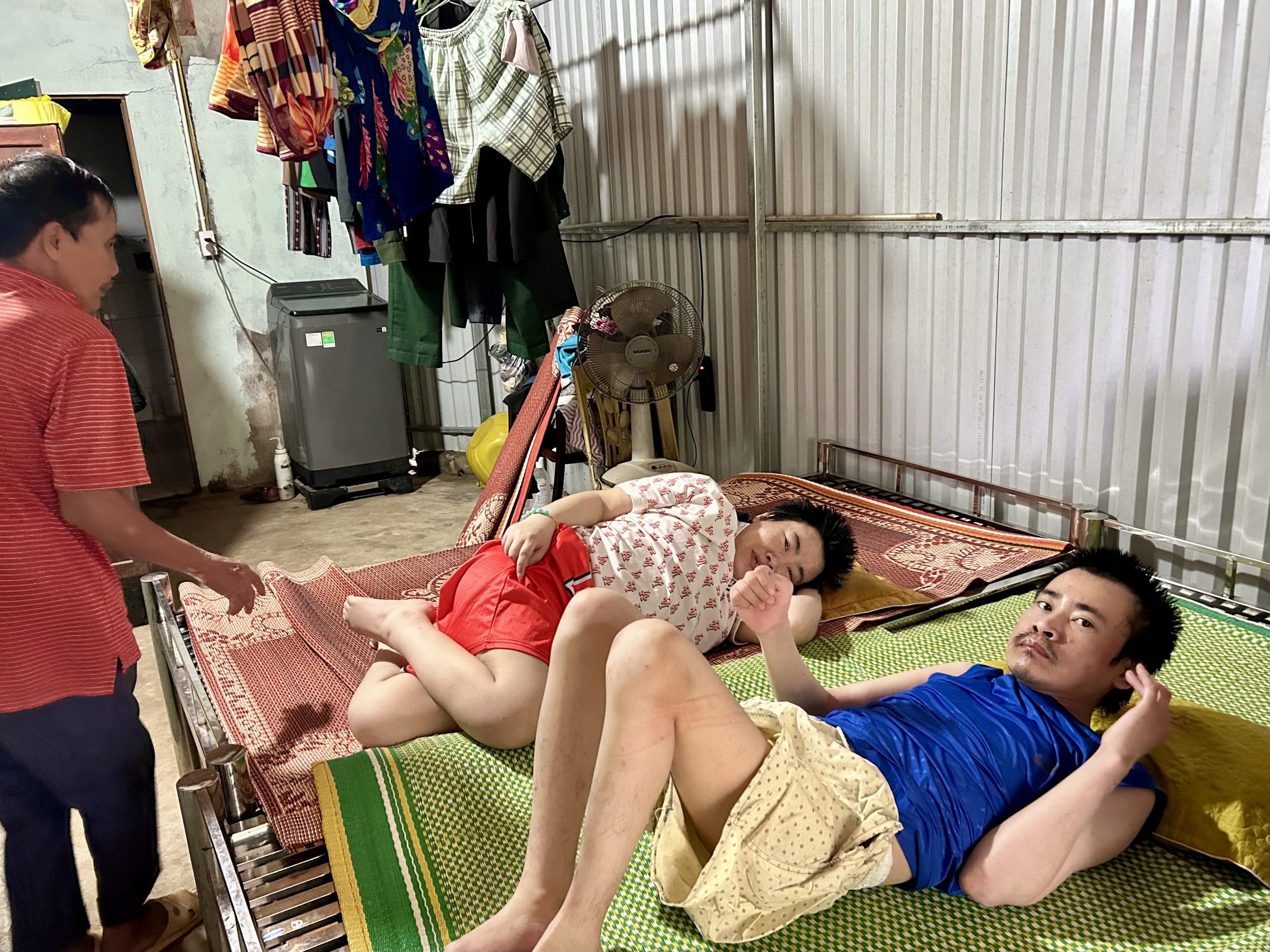
Hưng’s daughter and son
We then sat around a table and Hưng began telling us about his family. He is 67 years old and lives with Thành and their two children in Thanh Bình 2 Village, Bố Trạch Commune.
Hưng and Thành had six children in total. Three were born with severe disabilities and became completely dependent on their parents. One of their disabled daughters died in 2004 at the age of 20 following a seizure. Their three other children are in better health and have since married and started families of their own.
Today, Hưng and Thành continue to care for their two adult children at home.
Caring for two adult children
Hưng is the main caregiver during the day and at night.
His children experience frequent seizures, sometimes as many as four in a single day. When this happens, Hưng massages them to try to calm them.
He rarely leaves them alone for more than two hours. They require diapers, which have become one of the household’s largest regular expenses. They also depend on their parents for almost every aspect of daily life.
The difficulty is that Hưng himself is not well. He has suffered from heart disease for around seven years and also has cirrhosis. His health no longer allows him to work, and once a month he travels to the hospital by taxi or bus to collect medication.
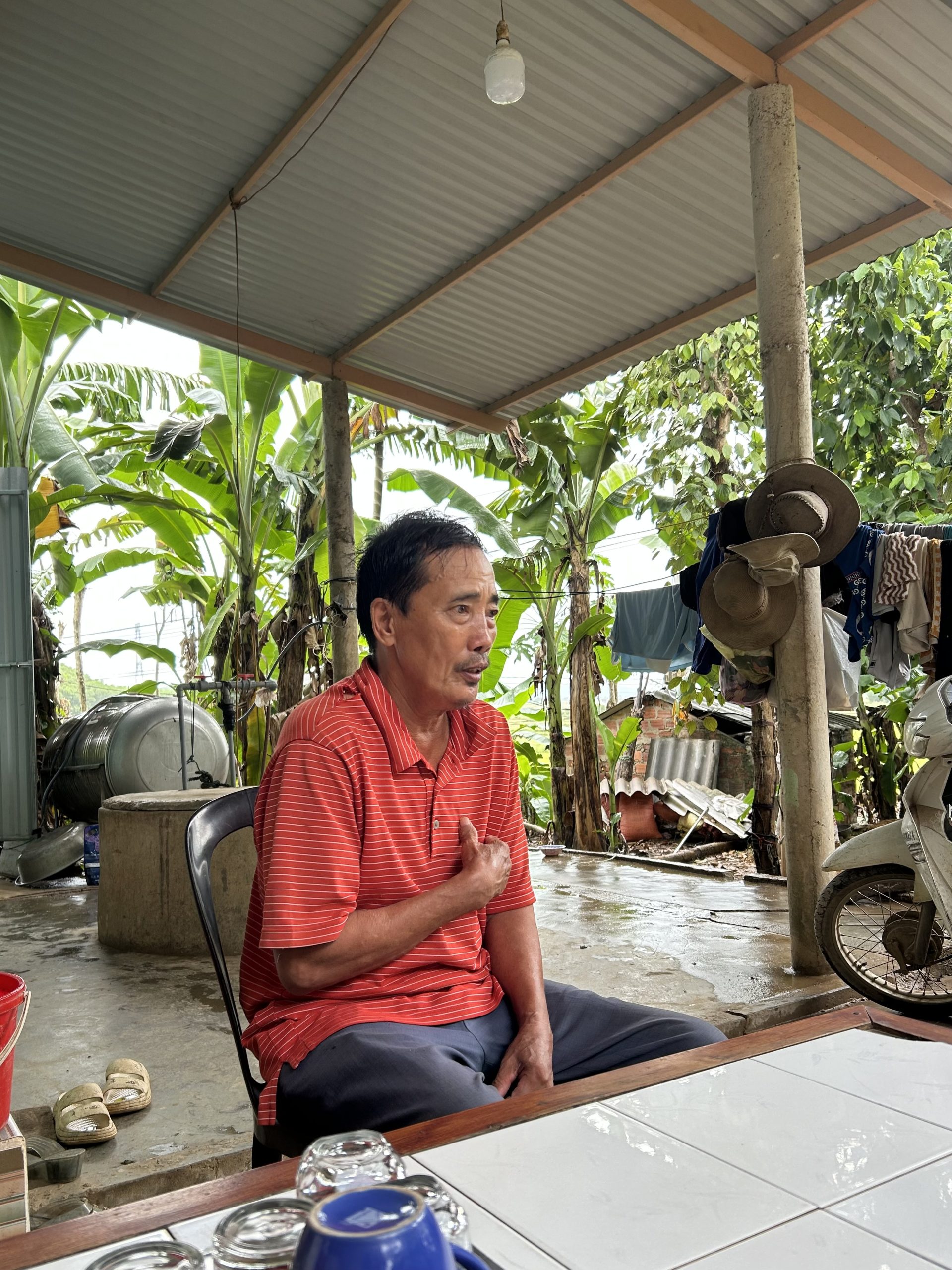
Hưng, father and main caregiver, 67 years old.
During those trips, Thành stays home with the children. She has health problems of her own, including problems with her colon, but she continues to work in the fields during harvest periods. Her seasonal agricultural work is now the family’s main source of earned income.
Their lives therefore depend on a difficult balance. One parent has to remain with the children while the other leaves the house. One needs medical treatment while the other continues working despite her own health problems.
And when money becomes short, Hưng told us that he sometimes spends money intended for his own treatment on his children instead.
For both parents, caregiving carries two kinds of pressure. The first is financial. There is never enough money for every need, so choices have to be made. The second is harder to measure. It is the emotional weight of watching their children suffer and knowing that there is little they can do except continue caring for them.
Hưng’s experience of Agent Orange
As our conversation moved into the family’s history, Hưng began speaking differently. When he talks about the war, his hands move constantly and the tone of his voice changes. At different moments, there is intensity, uncertainty, anger and frustration.
Hưng was a soldier. On April 30, 1975, he was sent for six months to the Khe Sanh area. He was later transferred close to the Cambodian border. By the time he arrived, Agent Orange spraying had already stopped. But Hưng remembers entering areas where the effects of earlier spraying were still visible. There was almost no vegetation. He and the other soldiers knew they were entering heavily affected areas, he told us, but they had orders to follow.
After the war, Hưng attended medical examinations. According to him, doctors suggested that some of his health problems could possibly be associated with exposure to Agent Orange-contaminated environments.
But because his military service in these areas began in 1975, after the period of active spraying, he was not officially recognised by the Vietnamese authorities as an Agent Orange victim. For Hưng, this distinction remains deeply frustrating.
He does not describe his exposure as something that happened while chemicals were falling from aircraft. He describes living and working in an environment where they had already been used.
Because he is not officially recognised, his children are also not recognised as second-generation Agent Orange victims. This administrative distinction has very practical consequences for the family.
Living with limited support
The family receives VND 500,000 per month for each parent as caregiver support. Combined with Thành’s seasonal earnings, Hưng estimates that the household survives on approximately VND 3 million per month, or around $115.
That money has to cover the needs of four people, including two adults requiring continuous care. Medication is one of the most difficult expenses.
Several years ago, the family owned a cow. For a time, it gave them an asset that could help make their income more stable. But when medical costs became too high, they had to sell it.
The decision solved an immediate problem. It also removed one of the few resources the family had that could generate income in the future.
This is why the idea of raising a cow again remains important to them. They already know how to care for one, and it could once again provide a more stable source of income while reducing some of the pressure created by medical and daily expenses.
But income is not their only concern.
The condition of the house
Hưng and Thành also want to make their home safe again.
At first, we were sitting in one of two small annex rooms where the family now spends most of its time. Later, they showed us why.
The main part of the house is in extremely poor condition. There are cracks running through the walls. Some of the walls no longer appear straight. The roof is visibly uneven. Wooden beams are sagging and deteriorating, in part because insects have been eating into the wood.
The structure has become so unsafe that the family has largely stopped using it. A local priest, concerned about their living conditions, helped them build the two small annex rooms where they now live.
Walking through the old house, it was not difficult to understand why. The damage was visible almost everywhere.
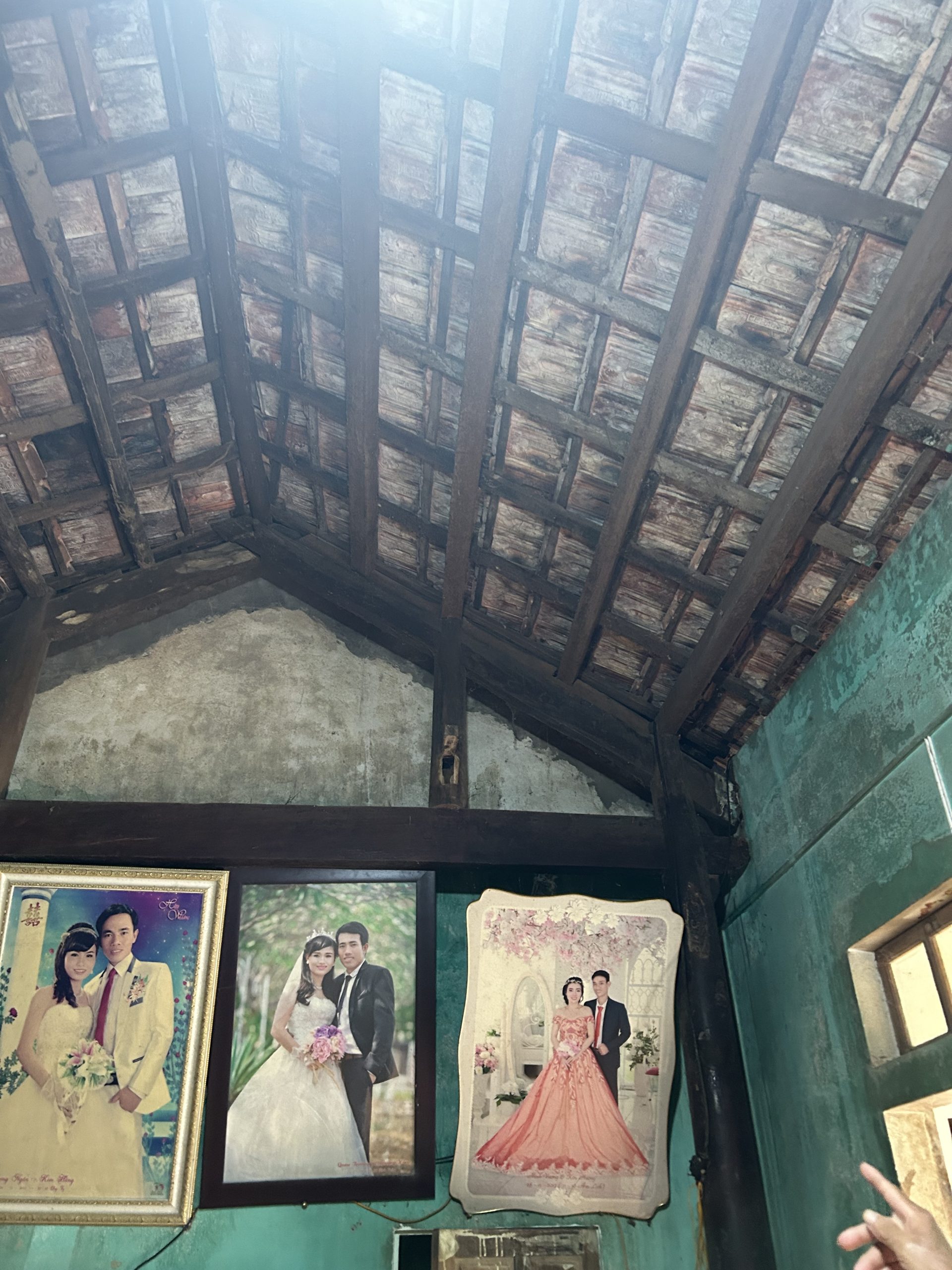
Old house, about to collapse.
For Hưng and Thành, repairing or strengthening the house would mean more than improving their comfort.Their two children cannot simply get up and leave if part of the building becomes unsafe. They cannot independently evacuate during a storm or move themselves to another room. Their dependence makes the condition of the house part of their daily care.
A safer home would therefore also mean a safer environment for the two people who rely entirely on their parents.
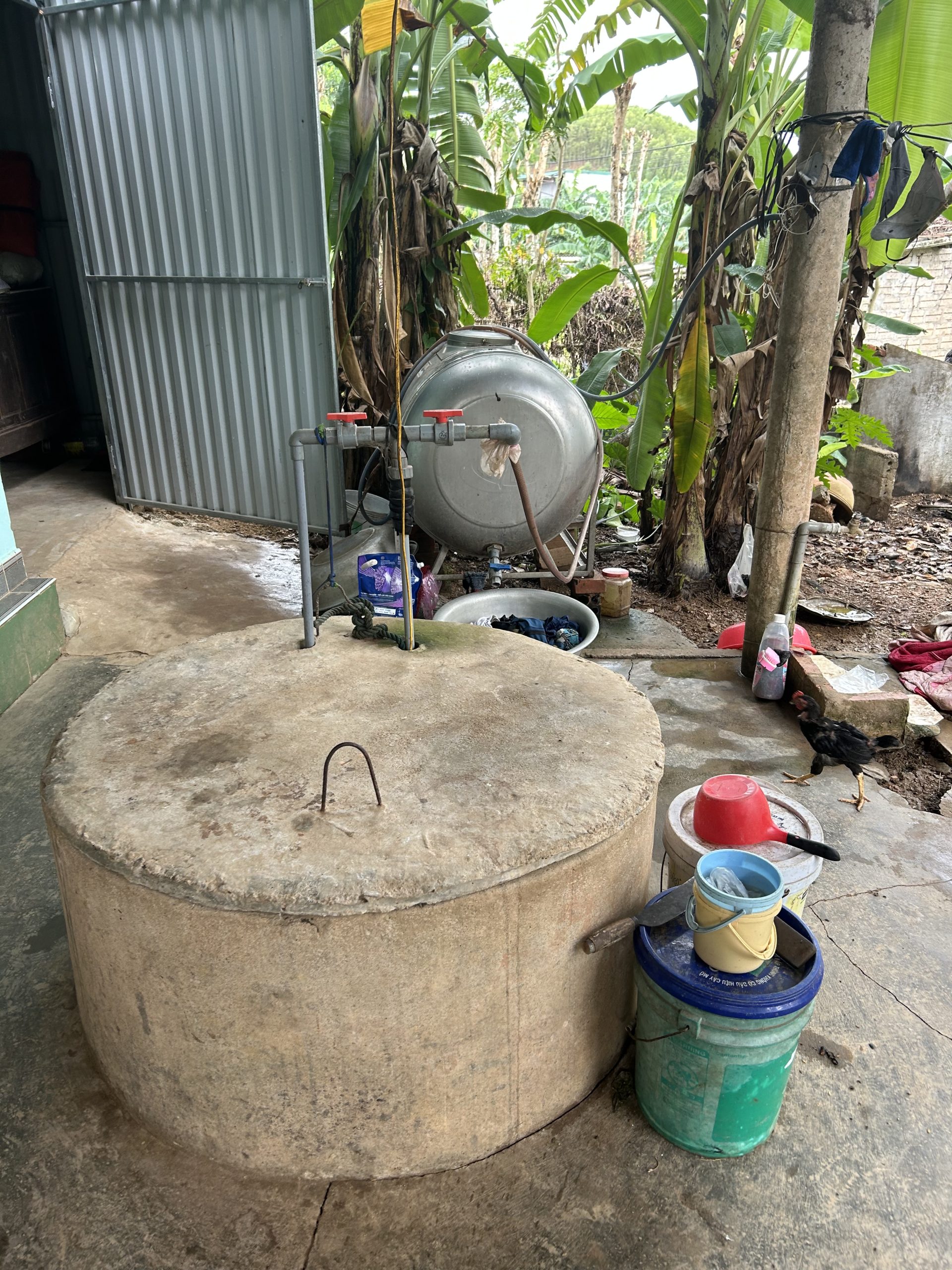
The well, only source of water of the family.
Thinking about the future
The uncertainty about the future sits quietly behind almost everything else.
At first, Hưng and Thành seemed reluctant to imagine a time when they might no longer be able to care for their children. Their instinctive response was to hope that their own health would somehow remain strong enough for them to continue.
After a pause, Hưng mentioned one of their daughters, who lives some distance away. Perhaps one day she could take responsibility for her brother and sister.
Or at least, they hope she could. There is no clear plan.
For now, the entire system of care rests on two ageing parents whose own health is already fragile. Hưng cannot work because of his illnesses. Thành continues working despite her own health problems. Their children require care every day and every night.
The future is therefore not something the family has been able to organise with any certainty. It is something they hope will somehow work out.
What Hưng wants people to understand
By the end of the visit, Hưng’s frustration seemed to extend beyond his own household.
He wants greater attention to be paid to veterans who are not officially recognised as Agent Orange victims but who believe they were affected through exposure to contaminated environments after spraying had ended.
For him, the issue is deeply personal. He spoke about having given his youth to his country and about the feeling that, decades later, families like his remain on the margins of official recognition.
Yet Hưng and Thành are not asking for wealth. What they want is much simpler: enough stability to meet their basic needs, care for their children and live with slightly less pressure.

Hưng and Thành.
Support from AEPD and The Advocacy Project could help them move towards that. A cow could provide a more stable source of income to replace the one they were forced to sell for medical expenses. Support for the house could make the family’s living environment safer for two adults who cannot move themselves out of danger.
For Hưng and Thành, this kind of support would not solve every difficulty they face. But it could give them greater financial security and reduce some of the constant choices they have to make between medical expenses, daily needs and the care of their children.
Their greatest uncertainty, however, remains the future.
For now, Hưng and Thành are still able to care for their son and daughter. They organise their lives around them and have done so for decades. But both parents are getting older, and both already have serious health problems.
Posted By Clothilde Soenen
Posted Sep 21st, 2026