
Sometimes things move at a glacial pace in Gulu. For someone like me, who lives by the belief that good things don’t come to those who wait, but to those who seize them—this can be deeply frustrating. In the Army, we had a saying: “Hurry up, and wait.” It meant moving quickly and decisively, only to end up stuck in limbo, waiting on someone else to act. Whether it’s filling out yet another form or tracking down the right person for a signature, the friction of bureaucracy can grind your momentum to a halt.
I’ve kept that sense of urgency in my civilian life. The speed at which I eat, study, and approach the mundane parts of daily life still hovers somewhere between frantic and breakneck. But this is Africa. TIA—“This is Africa”—as they say (a phrase popularized in Blood Diamond, and one I’ve heard more times than I can count). Things move differently here.

The largest snail I’ve ever seen
On Monday, we scheduled a meeting with a promising new partner for school support: Prudence, the director of a local NGO called Her Worth. Her organization teaches girls to make reusable menstrual pads—even with materials found in the most remote villages. Our meeting was set for 10 a.m. She arrived around 10:30.
Despite the delay, the conversation was productive. Her team had been running workshops in schools on menstruation, hygiene, sexual health, and combating stigma—exactly the kind of support the GDPO wants to expand. By linking her work with local health clinics, we could potentially broaden the program to cover malaria prevention and inclusivity training—both crucial to keeping kids in school.
Of course, we had to talk numbers. Prudence promised to send us a rough budget by the end of the day.
We received it two days later.
Still, it was a start. Her Worth would provide the labor and training; we’d handle materials and transport. We agreed to a one-year pilot at three schools, with a reassessment down the line based on results.
Meetings About Meetings
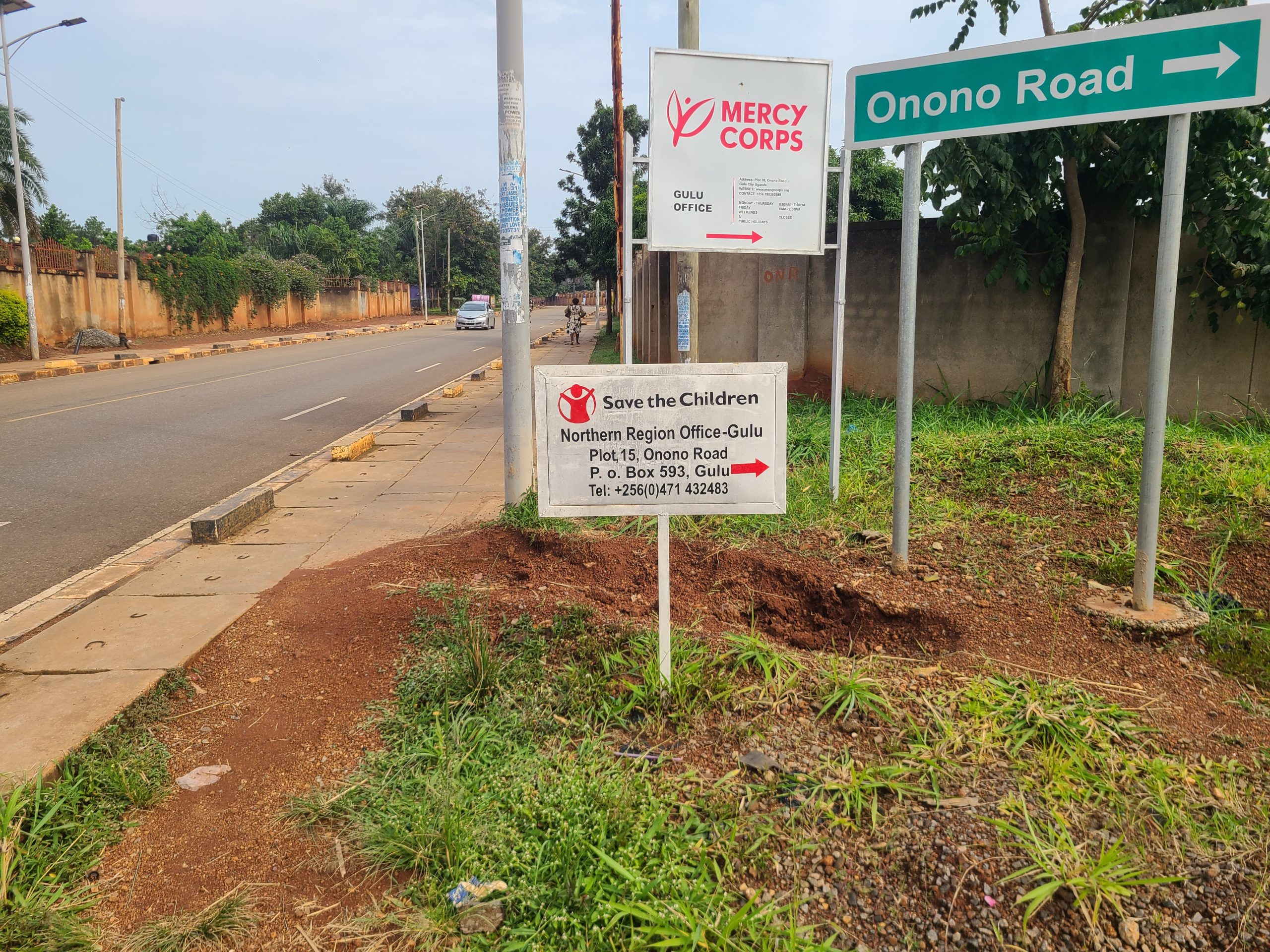
This road had all the NGO headquarters on it
Incremental headway was also being made with the DEO. We were invited to two working groups that meet monthly, in order to coordinate working with other NGOs, and hopefully to further demonstrate our evaluation tool. Well, almost. Before that, we need to have another preliminary meeting with the DEO, and another official. This tedious impediment worked out anyway, as we had missed the meetings for this month.
Prior to this meeting about future meetings, we met with the local representatives of World Vision and Save the Children…
Or at least we would have. The morning of the meeting, rain was falling. Essentially grinding the city of Gulu to a halt. As I sat alone in the office, being the only one to show up at the normal time, I wondered whether the meeting would be postponed or outright cancelled. My co-workers began trickling in around 11:30 and apparently the meeting was still on.
The meeting took place at 3:30, and although it was incredibly belated, it was fruitful. Our working group collaborators was beginning to take shape.
Starting Slow to Start Strong
On Friday, the team and I met with Victoria, Nighty and Margaret of the Survivors sewing group to discuss the next steps to take. I mentioned the need for a mission statement, business model and plan, targeted market, types of products they could make, sales and growth plan, future sustainability and a tentative two-year budget. They countered with their refrain that they wanted to begin training.
I informed them, I don’t see the money coming until these concerns are addressed. If they’re trying to start a business, they need more than training and hope. I could sense their frustration, as I had become their obstacle they had to hurry up and wait on. Understandably so, but my task was to help establish a business and to give them the best avenue to success that I could muster. Only giving the ladies training would simply not suffice.
We compromised, by setting up another meeting, with all 7 ladies that wanted to participate, to address the different points I brought up, while discussing the budget needed for their training.
If this week taught me anything, it’s that progress here doesn’t always arrive on time—but it does arrive. Slowly. Unevenly. Sometimes in half-finished emails or rain-soaked meetings that start six hours late. The work gets done—but not always on my timeline.

Myself, with Joe translating, across from Nighty, Margaret, Emma, and Victoria
Adjusting my watch to Africa time
In the Army, “hurry up and wait” was a source of frustration. Here in Gulu, I’m learning that it’s also a lesson in patience. Because maybe the waiting isn’t a pause in the mission. Maybe it is the mission—forcing us to listen more, assume less, and build trust in a rhythm not our own.
It turns out consistency does exist here. It just wears a different watch.
Posted By Aaron Bailey
Posted Jun 23rd, 2025
6 Comments
Shuyuan Zhang
June 23, 2025
Such a great blog again, Aaron! I always enjoy reading your posts. I totally agree—we’ve been so focused on schedules and goals, but sometimes you just have to go with the flow, and that can lead to unexpected and meaningful moments. I’m learning that too. Also, you’ve already done so much! It really shows in your writing—you’re handling everything so well, and your reflections are always so sharp and punchy. Love it!
Ajok Emma
June 23, 2025
Thanks so much Aaron for supporting Uganda team, everything is moving so well while you are with Gdpu, big ups for the great work towards WASH Project @GDPU, cheers
Emma Cohen
June 23, 2025
Aaron, I really enjoy reading your blogs and this one was no exception. Learning to adjust to a different pace can be really challenging, but, as you point out, fruitful, as well. I hope you continue to experience, like Shuyuan says, the unexpected and meaningful moments that arise out of this unfamiliar rhythm.
Iain Guest
June 23, 2025
Hi Aaron, I was relieved to see your final two paragraphs because everything else about this blog signaled impatience. Remember, there are reasons why meetings don’t happen on time, and you’ve witnessed them – sick kids, power cuts, lack of transport etc. Adding to which, the GDPU staff don’t get a real salary! So a lot of this work by civil society is a real labor of love. Judging from Emma’s comment, you’re making an essential contribution and that’s what will count in the end. By the way, I’d like to know MUCH more about the Her Worth group and your plans with them. Keep up the good work!
Alexis Lopez
June 24, 2025
Hang in there, Aaron! You really are making big strides each week and it shows in your blog reflections. I think the concept of ‘TIA’ (This is Africa) is quite similar to ‘Nepali time’ – in both cases, nothing professional, even social for that matter, ever really happens ‘on time.’ It’s fascinating to me how different regions hold such nuanced and culturally specific views of time, often in stark contrast to Western perceptions. My recommendation would be to lean into it. As you mentioned, this delayed time allows us to think and reflect a little longer, ask the tougher questions, assume nothing, and continue establishing those long-term relationships. After all, this is your summer too and even Aggie grad students need sufficient time off for rest and leisure. This post is a great reminder that we’re just Peace Fellows on short-term assignments this summer but for the communities we work with, this is their everyday reality. We might not change the world overnight, but the small wins do matter, and we should treat them as meaningful milestones, because these moments become the legacies you leave behind in Gulu.
Maddy Pound
June 30, 2025
This is such an interesting read, Aaron. Something I’m also used to in the Army is ‘hurry up and wait’! Frustrating but I’m sure you’ll become more used to it over time. Keep going, you’re doing so well!