

After our first week of training on waste management and introductory gardening techniques, it was time for week two.
Over the previous few days, several men from the neighboring men’s prison had helped complete the heavy work of breaking ground across the garden site. Now it was the women’s turn to begin building the garden itself. Gardening sessions would take place every Tuesday through Thursday morning, and the women had already started organizing themselves to make sure the work continued together.
When we arrived, they were gathered around the very first completed cone garden.
“It looks like a birthday cake!” I laughed as we greeted them.
“No,” one of the women replied with a grin. “It’s your wedding cake!”
The whole group burst into laughter.
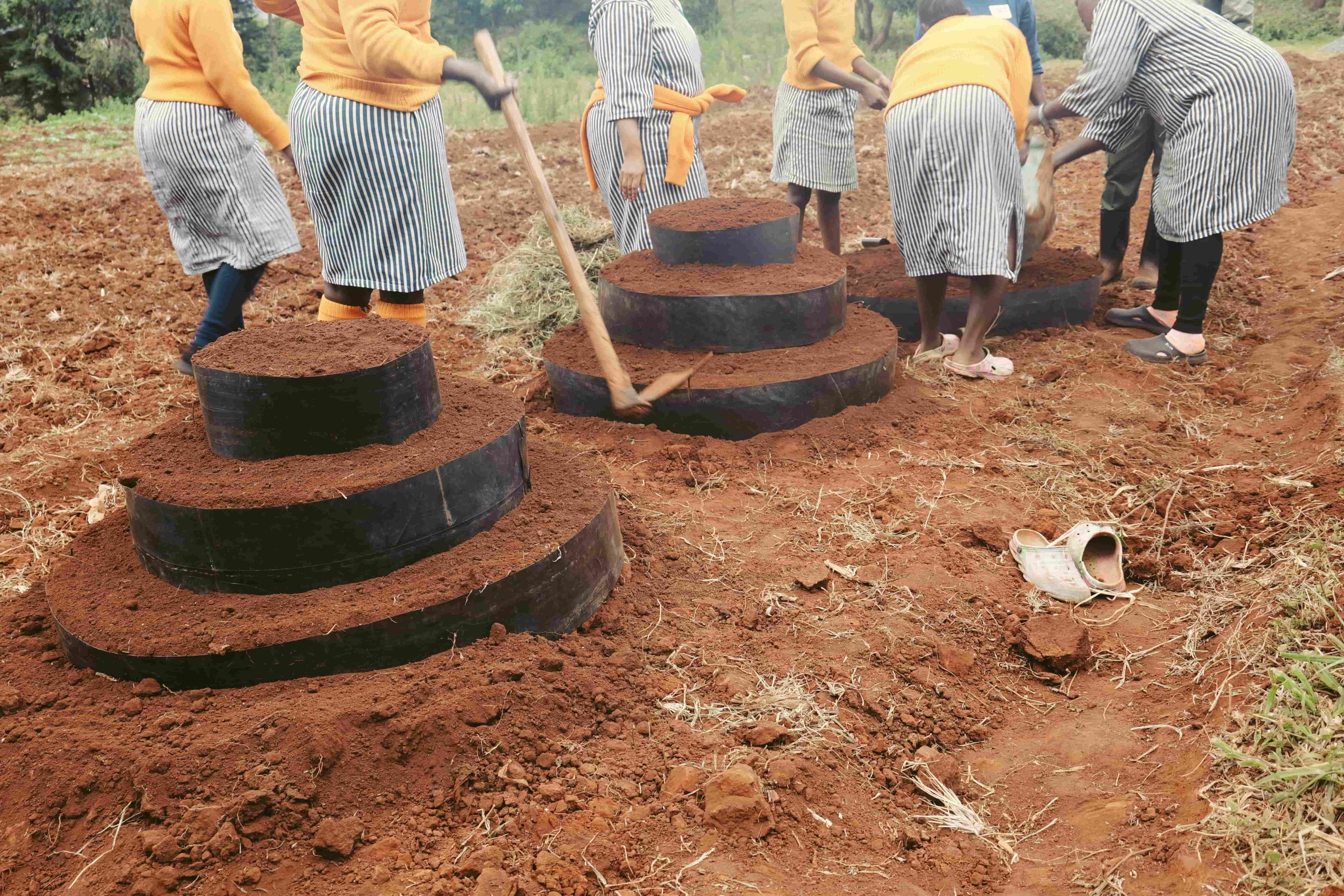
Cone gardens are a space-saving form of gardening, making them ideal for places where land is limited. They require less water than conventional beds, are easier on the body to maintain, and can produce surprisingly high yields from a very small footprint. Combined with raised beds and keyhole gardens on the rest of the one acre, they would become an important part of the overall garden design.
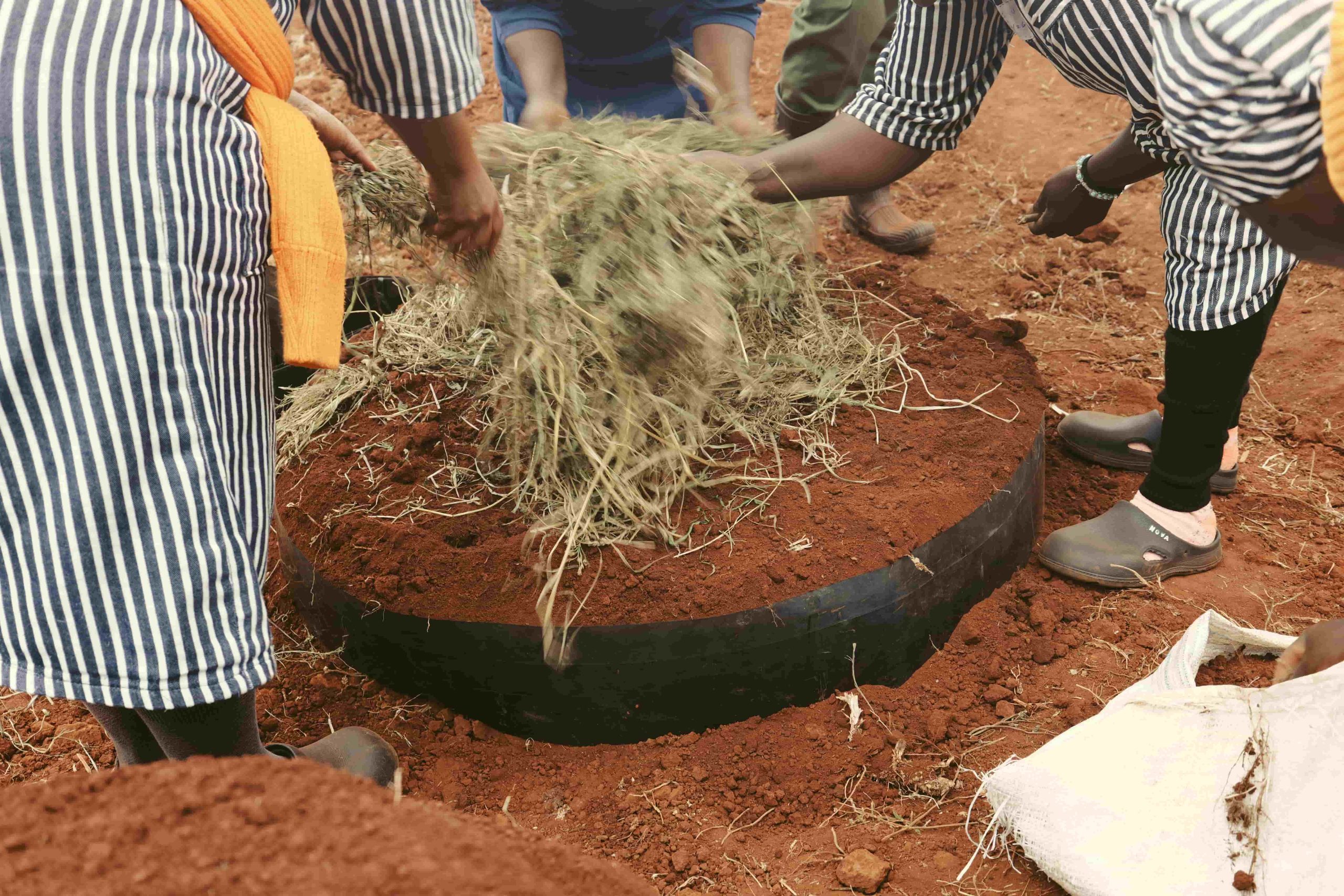
Stella gathered everyone together and demonstrated how to build a cone garden properly – layering mulch, compacting the soil, and using sticks and stones to support the shape. Before long, the women naturally divided the work among themselves. Some searched for rocks and sticks. Others carried soil. Some shaped the cone gardens. Without anyone assigning roles, the group quickly became a well-oiled machine. Throughout the morning, a row of cones started appearing.
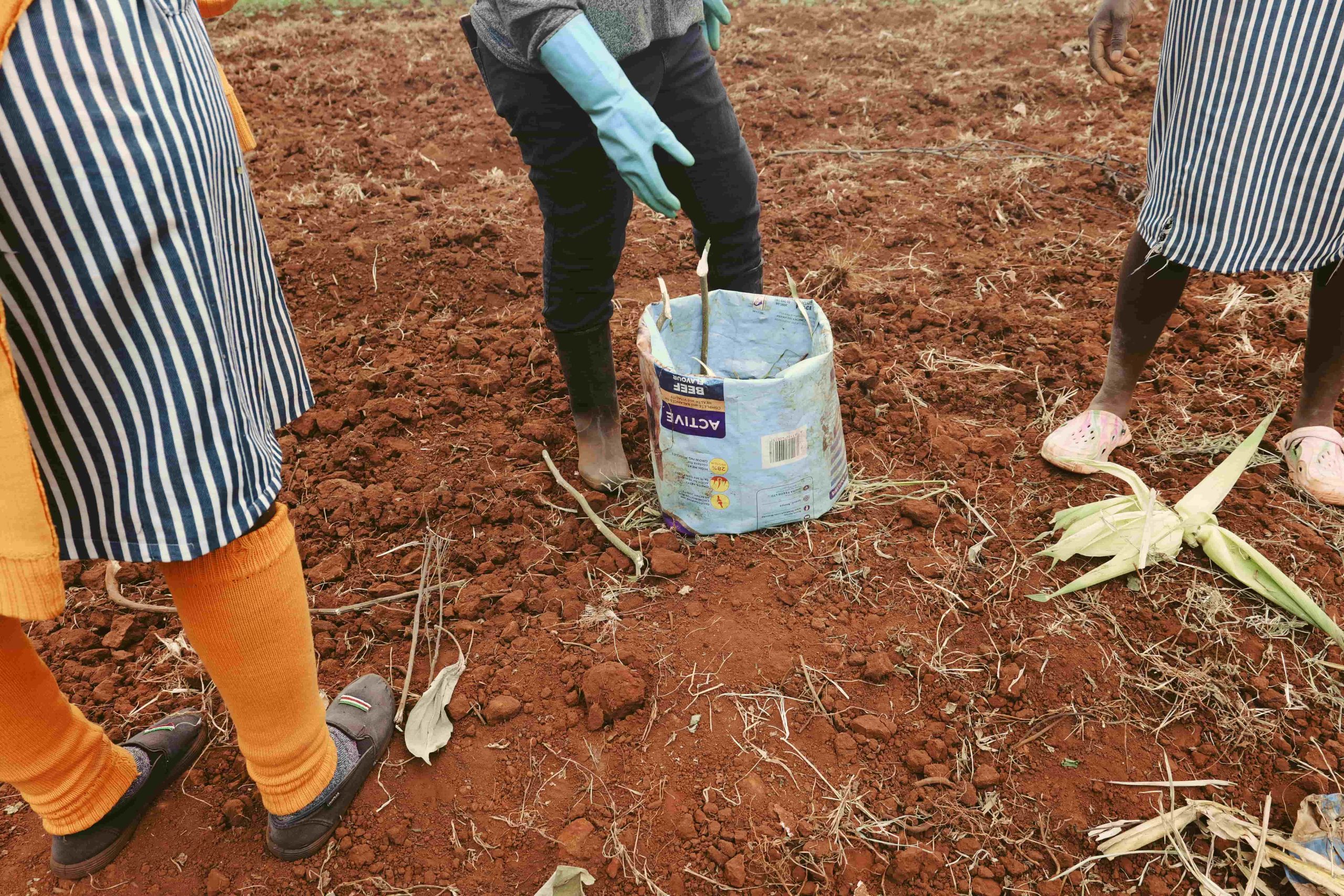
Later, Stella picked up an old dog food sack and showed the group how it could be folded into a planting container. “You don’t need to spend money to have a garden,” Stella explained. “Everything you need is already around you.” That simple idea seemed to resonate.
One woman came over to speak with me. “I’m a chemistry teacher,” she said. “Gardening is a lot like chemistry. You need to know what works with what to get the result you want.” She pointed toward the soil. “Right now it’s too dry. We need more water, and we can fix that.” As she continued digging, she began thinking aloud.
“I can use this at my home, I can even do this at my school.” Then she looked back at the cone garden. “I can’t believe we don’t need so much space. Just one cone can grow enough vegetables to help save money.” “And I can’t believe what she did with the dog food bag!”
When the morning session ended, the women left us with one request: more gardening tools so they could keep working comfortably. As we packed up, we stood looking over the garden. It was still far from finished, but it was beginning to take shape, one corner at a time.
The training was no longer just about building gardens inside the prison. The women were already imagining how these skills could travel beyond the prison walls – back to their homes, their schools, and their communities after release.
As we left for the day, I realized that this is perhaps when a project begins to create lasting impact: when people start imagining how they can carry it forward themselves, even from behind prison walls.
Posted By Rhonwyn Hagedorn
Posted Jul 9th, 2026
1 Comment
ArRaja
July 14, 2026
Well done dear girl! Sometimes making a small difference is what matters and all that has happened in the past now now makesbsnese. Proud of you and the ladies. Keep it up! Real knowledge doesnt dissappear but breeds accordingly!