


Rohingya refugees queue outside a WFP food distribution center in Camp 15, Cox’s Bazar a daily struggle intensified by recent funding cuts.
“I drink water and sleep when I feel hungry”
– a mother in Camp 15
In the vast refugee camps of Cox’s Bazar, hunger has become a silent emergency. For nearly one million Rohingya refugees, the World Food Programme (WFP) has long been the main source of food and nutrition. But following major funding cuts from USAID and other donors, that lifeline has been dangerously weakened leaving thousands of families struggling to survive on shrinking food rations.
Until early 2023, each refugee received a $12 monthly food voucher. Today, that amount has dropped to just $8 per person. Families who once managed two simple meals a day now eat only once often skipping breakfast or lunch to save a little food for the evening. Mothers are eating less so their children can have a small share.
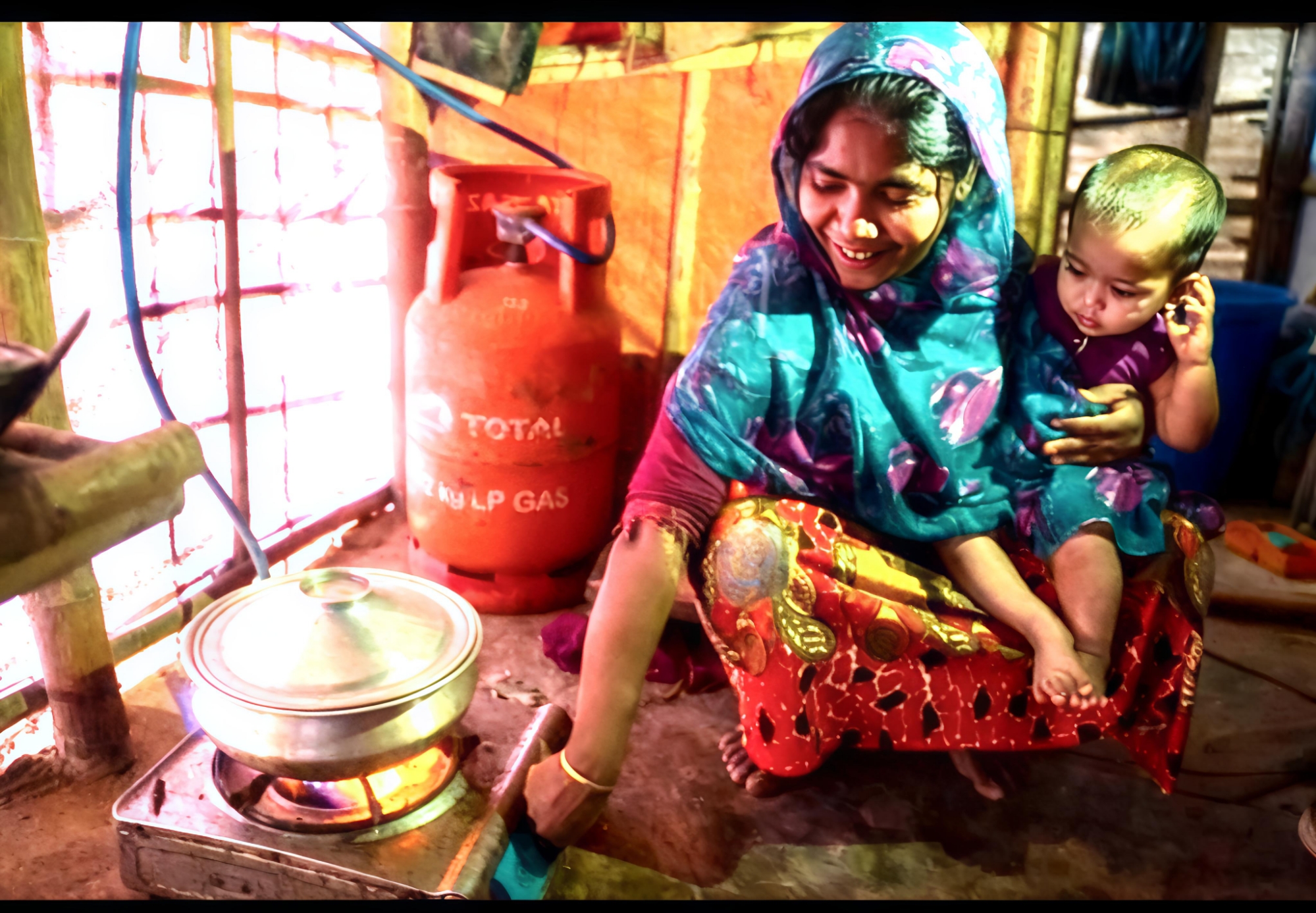
A mother in Camp 15 prepares a small meal for her children with what little she has.
Children are bearing the brunt of this crisis. Health workers report a sharp rise in acute malnutrition, anemia, and stunted growth among children under five. Many are too weak to play or study, with long-term effects threatening their development and future opportunities.
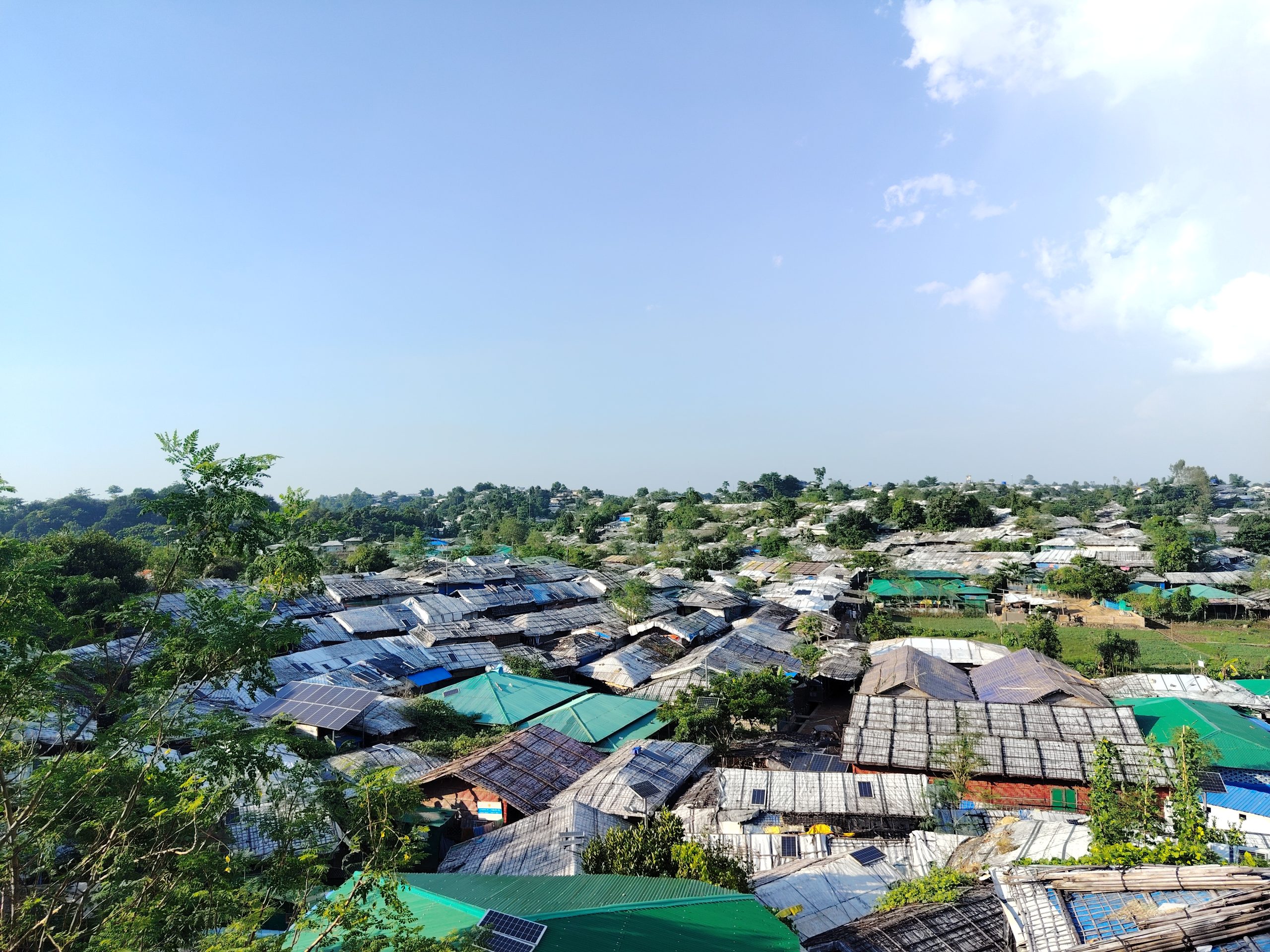
Rows of tightly packed shelters in Camp 14 show the harsh living conditions that worsen hunger and malnutrition.
Overcrowding compounds the problem. Narrow lanes, limited cooking space, and inadequate storage make food preparation and sharing extremely difficult. Families live in cramped conditions, increasing the risk of disease and deepening malnutrition.
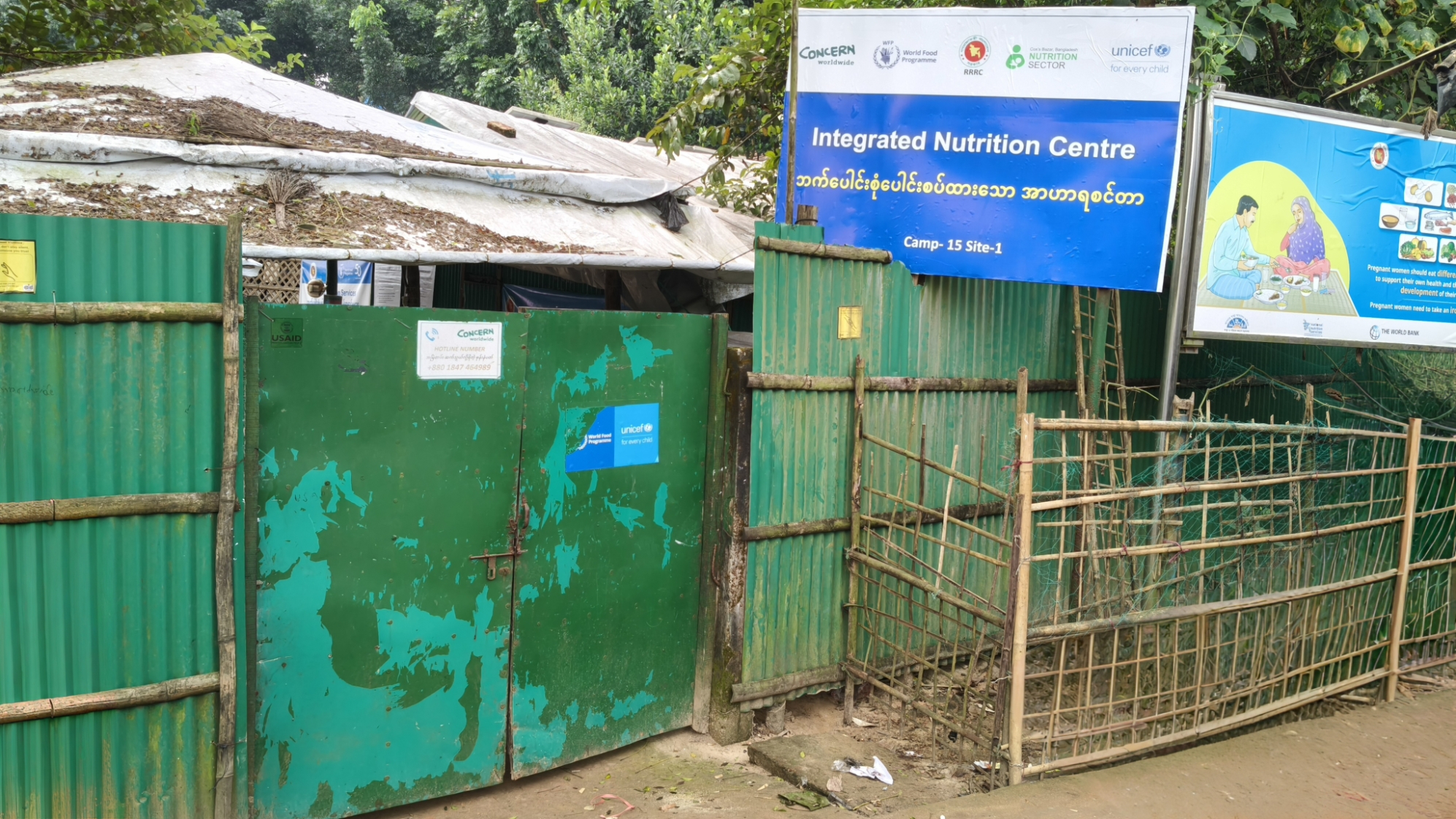
Entrance of the WFP-supported Nutrition Center in Camp 15, where malnourished children receive lifesaving care.
At Nutrition Centers like this one, staff continue to work tirelessly, providing therapeutic food and supplements to the most vulnerable. Yet even these centers are under strain. Programs such as nutrition awareness campaigns, breastfeeding education, and community gardening have been scaled back due to funding gaps. WFP reports that thousands of children under five are now at heightened risk of malnutrition.

Rohingya youth volunteers share nutrition advice and small portions of food within their communities.
As food shortages grow, the pressure within the camps increases. Some young people are taking dangerous risks seeking work outside the camp, getting involved in smuggling, or crossing the border to find food. Families fear that desperation could lead to more child labor, early marriage, or exploitation.
Yet even in this crisis, hope continues to survive. Rohingya youth groups and volunteers are doing their best to raise awareness about nutrition, share small portions of food with neighbors, and promote local solutions like growing vegetables in small pots. These efforts show the strength and solidarity of a community that refuses to give up.
The story of hunger in the camps is not about statistics it’s about human lives. Every cut in aid means another empty plate, another hungry child, another lost dream. The world must remember that food is not charity; it’s a basic right.
And for the Rohingya, hope like hunger has never been easy to silence.
Posted By Maung Myint
Posted Nov 1st, 2025
2 Comments
Makena
November 17, 2025
Really heartbreaking to see how funding cuts directly translate into rising malnutrition among Rohingya children and nursing mothers. The urgency for sustained support can’t be overstated, not just for Rohingya families but for multitudes of vulnerable communities in such fragile situations.
Iain Guest
November 26, 2025
I agree with Stella. It is heartbreaking to read about the impact of food cuts and malnutrition on the Rohingya refugees, particularly at a time when there is so much excessive consumption in so much of the world. Can’t policy-makers in the North understand how important their aid and food is to vulnerable populations like this? Do they even care?