

We first met Gita on a scorching, dry Tuesday afternoon, 22 July, at the Civil Service Hospital of Nepal. It hadn’t been easy to make this meeting happen. Before our trip to Bardiya, we had tried to arrange an interview, but Gita’s days and nights were consumed by the relentless demands of caring for her father. After we returned, we tried again. On 21 July, we thought we had finally secured a time—10 a.m.—and I remember feeling relieved, only to receive a message fifteen minutes before: another medical emergency had arisen. She couldn’t leave her father’s side. With my departure from Nepal just two days away, it felt as though time itself was conspiring against us.
On 22 July, at 1 p.m., we tried again—and this time, it worked. I arrived early, waiting for Niraj at the hospital’s main entrance. The heat clung to the air, and even the shade offered little relief. The hospital buzzed with human need: families sitting on concrete steps, nurses hurrying past, and queues curling like serpents in front of every window—pharmacy counters, payment desks, appointment booths. The Civil Service Hospital is one of only a handful of government hospitals in Kathmandu, and with its relatively low fees, long waits are simply part of the experience of seeking care.
We found Gita in the canteen. Before meeting her, I had read her earlier interviews, thinking I might have to search for her in the crowd. But recognition came instantly. Amid the clatter of metal trays and the din of lunchtime conversations, she stood out—a quiet poise, eyes bright yet tired, hair black as seaweed but tied neatly back. It made perfect sense; when you’re looking after a patient, practicality rules over style.
She greeted us softly, with a kind but weary smile, and asked if she could finish her meal first. We nodded without hesitation. From outside, Niraj and I waited, sipping mango juice while she ate.
When she finally emerged, her steps were unhurried, shoulders gently slumped from sleepless nights, yet her smile returned the moment she saw us. We wandered together in search of a place to sit, but every bench was already occupied. Eventually, we found a small patch of space beside a flower bed. There, the three of us settled on the ground in a rough triangle, and the interview began—forty minutes of conversation that would linger with me long after that day.
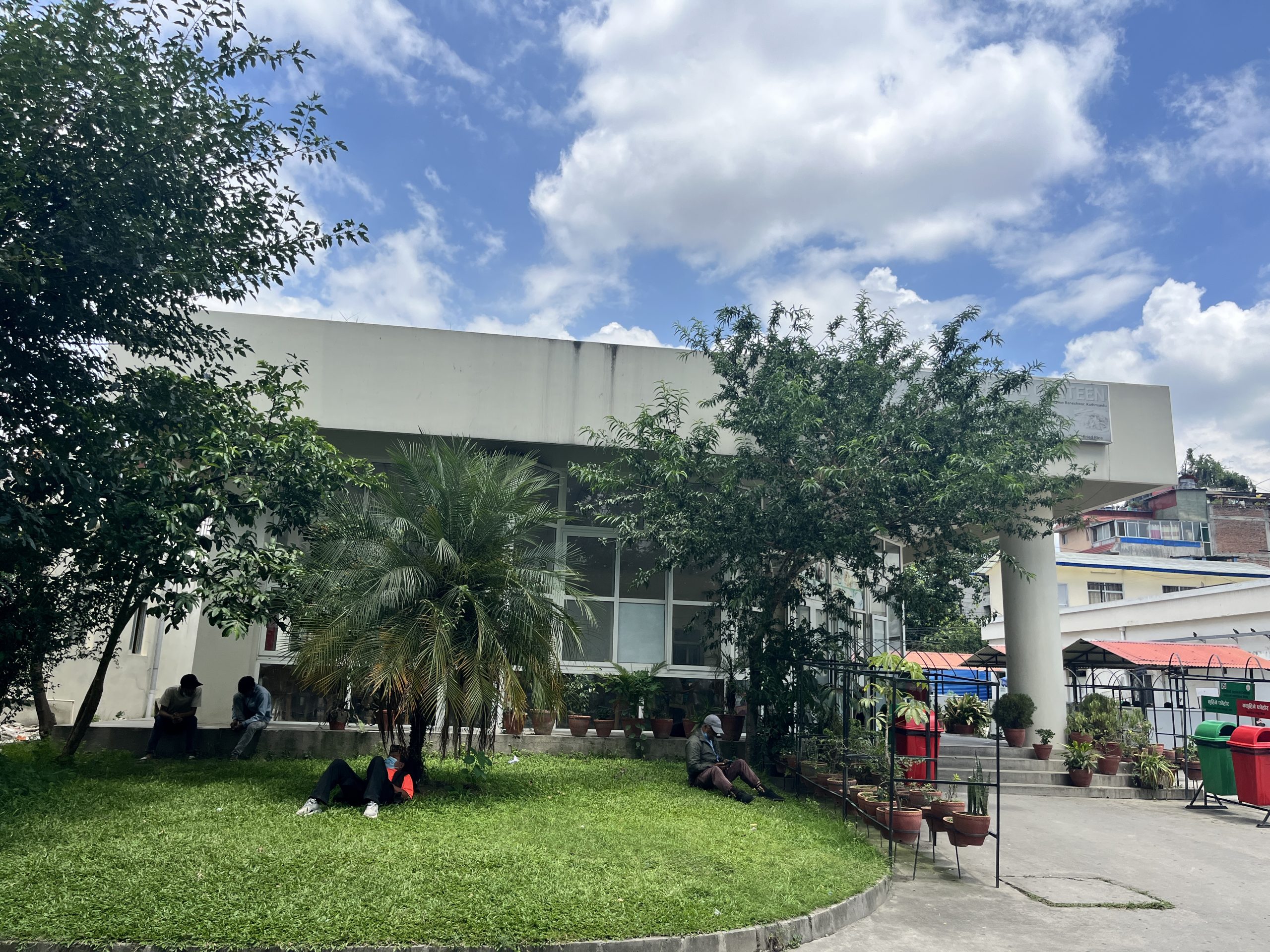
Outside the hospital canteen, while we waited for Gita.
Who is Gita?
Gita Rasaili is a human rights defender in Nepal. She is Dalit. She believes firmly in communism and Marxism. Two months ago, she was elected Chairperson of the Conflict Victim Women National Network (CVWN). Before that, she was its Vice Chairperson.
She comes from a village where, during the 1996–2006 conflict, very few people were not Maoist. Her brother was killed in the conflict. Her sister was abducted, tortured, gang-raped, and killed by state security forces. Her father and brother-in-law were also tortured.
She is now leading a writ petition to be submitted to the Supreme Court of Nepal, challenging the appointment of commissioners to the two transitional justice commissions. She is the first woman to lead this effort. Before, it was always men. And she is Dalit.
These are facts. This is who she is—and what made her who she is. The lines you might read on a CV, a name card, the keywords in an interview. Plain black and white.
But in our conversation, she gave us more. She revealed the vivid, unfiltered person behind those facts:
“When you have political power or economic power, you will find all this caste discrimination, all these cultural rules, are bullshit—because people only care, in that moment, that you have the power.”
While human rights is often questioned and challenged, this unspoken rule—that power determines how most people see you—seems to be far more universal across societies.
Childhood Rebellion and Lifelong Inequality
Growing up in Kavre district, discrimination shaped every corner of Gita’s life. In an earlier interview with Peace Brigades International UK, she recalled that at school there were no chairs or benches—just a thin mat where children sat to study. She remembers watching classmates walk to the teachers’ room to fetch water while she stayed seated, never allowed to do it herself. Friends made plans for overnight study sessions but never invited her. As a child, she didn’t understand why. Only later did she realize she wasn’t even permitted to step inside their homes.
The rules around water were the hardest to bear. “I wondered why I couldn’t go near the communal water tap or touch certain items,” she said. One day, curiosity overcame fear. Walking home from school, she reached out and touched a neighbor’s water pot. She half-believed something terrible would happen to that family because of her touch. But the next day, everyone was fine.
For a month, she kept testing these limits—touching water pots, breaking quiet rules that had defined her life. Nothing bad happened. Slowly, she began fetching water herself at school, using the public tap without asking for help. If anyone questioned her, she stood her ground. These small acts of defiance built her confidence brick by brick. Over six or seven years, this quiet rebellion transformed into resilience—a refusal to accept the status she had been assigned at birth.
Her village was steeped in discrimination and cut off from education. The Maoist movement, promising equality and justice, took strong hold there. “Perhaps because we believed in what the Maoists were after—bringing equality and fighting injustice—my family, including myself, were influenced towards that way of thinking,” she said.
Even decades later, long after education and activism altered her personal trajectory, Gita sees how deeply entrenched caste discrimination remains. “Some behaviors have shifted,” she explains, “but discrimination is passed down through generations. It doesn’t disappear with time or distance.”
This is not limited to Nepal. During her travels abroad, Gita observed similar invisible boundaries: invitations and opportunities often came only from other Dalits, rarely from outside the community.
Marriage practices remain one of the strongest barriers. Inter-caste unions are rare, and Dalit women who marry outside their caste often face domestic violence. “Overcoming these barriers takes enormous courage and a very long time,” Gita says.
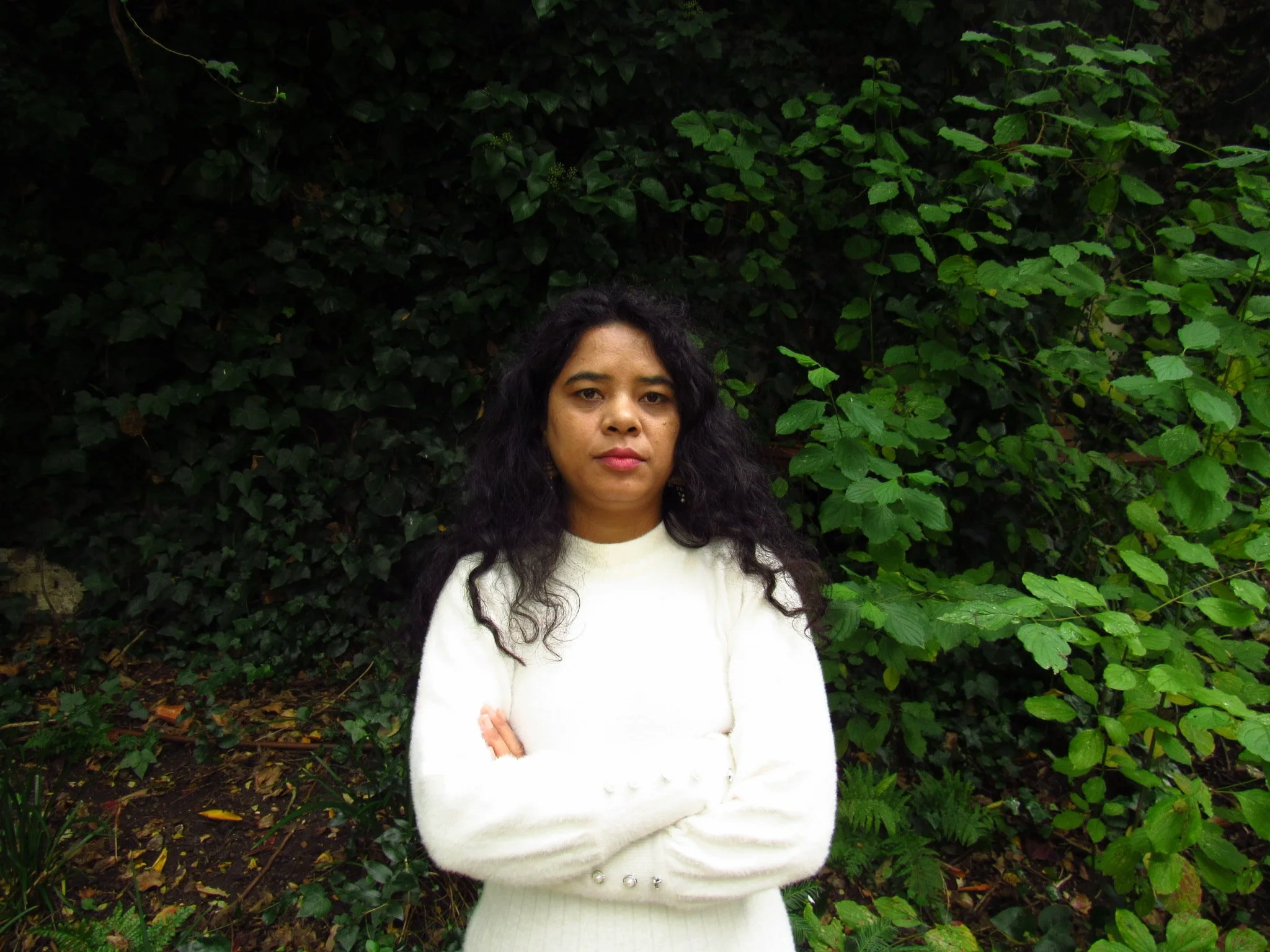
Gita Rasaili: photo from her interview with PBI UK.
Her Leadership
After her sister Reena was gang-raped, shot, and killed by state security forces in front of their parents in Kavre, Gita’s father took the bold step of filing a legal case seeking justice. As the family’s grief unfolded, Gita stepped in to carry the fight forward. She established a foundation in Reena’s name, working mainly in her district to support other victims’ families who had similarly suffered and been silenced.
Because her hometown was close to Kathmandu, NGOs began reaching out to learn about her work. These early interactions exposed her to broader civil society efforts and, eventually, led her to move to Kathmandu. There, both she and the foundation became part of the wider victims’ movement. Over time, her activities shifted from being NGO-supported to more independent, connecting with national and even international advocacy networks.
Through the formation of the Conflict Victims’ Common Platform (CVCP), she helped bring together families and groups from across Nepal. Organizing these efforts, coordinating actions, and listening to the stories of victims helped Gita gradually develop her leadership skills. She built a national network focused on empowering people who had long been denied a voice.
Living in Kathmandu also gave her new perspectives. She saw firsthand how women’s voices were often silenced in decision-making spaces. Determined to change that, she helped establish a women’s committee within the network and later became its chairperson. Leading this committee strengthened her ability to speak publicly, advocate for women’s rights, and push women’s issues into mainstream agendas.
Today, as Chairperson of the CVWN, Gita leads initiatives that train women survivors in leadership and communication skills.
“Women’s voices were silenced in the movement,” she recalls. “I wanted to change that.”
Her goal is not just to provide support but to transform survivors into empowered leaders who can stand and speak for themselves:
“Our goal is to truly empower them to stand on their own.”
Challenging Transitional Justice Failures
Nepal’s transitional justice process has long failed victims of the armed conflict. Political interference, repeated delays, and the absence of victim-centered mechanisms have eroded public trust and left thousands of families without truth, justice, or reparations.
Gita Rasaili has become one of the most prominent voices demanding reform. She is currently leading the drafting of a writ petition to be filed before Nepal’s Supreme Court. The petition challenges the government’s politically motivated selection of commissioners for the two transitional justice commissions. (Read more about this recent development here: Nepal conflict victims to move court against law revision)
Choosing her to lead this legal challenge was a deliberate and symbolic decision:
“It shows solidarity with women victims of conflict-related sexual violence,” Gita explains. “Historically, men always led such actions. Now, we are changing that.”
Beyond legal reform, Gita is outspoken about the urgent need to fix Nepal’s broken approach to reparations. She argues that the state has treated reparations as a tool to bargain with victims rather than recognizing them as fundamental rights:
“The government connects reparation to justice and uses it as a bargaining chip,” she says. “But reparation is a basic, independent right. It should respond to victims’ immediate needs and not be delayed until after legal justice processes are complete.”
She stresses that reparations cannot follow a “blanket formula.” Every victim has faced different harms and losses—ranging from sexual violence and torture to economic displacement and social exclusion—and requires tailored, needs-based solutions. Foundational principles already exist to guide this process, including the CVCP’s 2018 policy paper, Reparative Needs, Rights, and Demands of Victims of the Armed Conflict in Nepal and the International Center for Transitional Justice’s guidance on reparations for survivors of conflict-related sexual violence. Both emphasize that reparations must be individualized, victim-centered, and grounded in dignity rather than offered as uniform or symbolic compensation.
Under the leadership of Gita and other victim group leaders, grassroots consultations are being carried out to build upon the strong foundation of existing guidelines, strengthen them with new insights, and ensure that policies fully incorporate the voices of victims—particularly women and marginalized communities. The goal is to move reparations from a fragmented and often symbolic gesture to a central pillar of transitional justice:
“Reparation is victims’ right. It is not something that can be compromised or negotiated.”
Power Born of Resistance
Education and activism have opened new opportunities for some Dalits since Gita’s childhood. Schools today treat Dalit children with more fairness, and public awareness of equality has grown. Yet when Gita returns to her home village, the old wounds resurface.
“I still feel the same as when I was a child,” she admitted softly. “Back there, that hasn’t changed.”
What has changed is Gita herself. From a young girl silenced by caste and gender discrimination, she has grown into a fearless leader of conflict victims. She embodies resilience, courage, and defiance. She has stood up to powerful institutions, challenged a flawed transitional justice process, and demanded that victims be recognized not as passive recipients of aid but as rights-holders with dignity and agency.
And yet, despite everything she carries, Gita is a delight to be around. Even as her father lay in the hospital, needing daily care after a recent medical emergency, she smiled, laughed, and shared her story with warmth and generosity that lit up the heavy afternoon air. Near the end of our interview, we noticed something that made us all laugh—she and Niraj were wearing exactly the same slippers. A small, unexpected moment of connection. It’s how that day ended, and it’s how I’ll remember it.
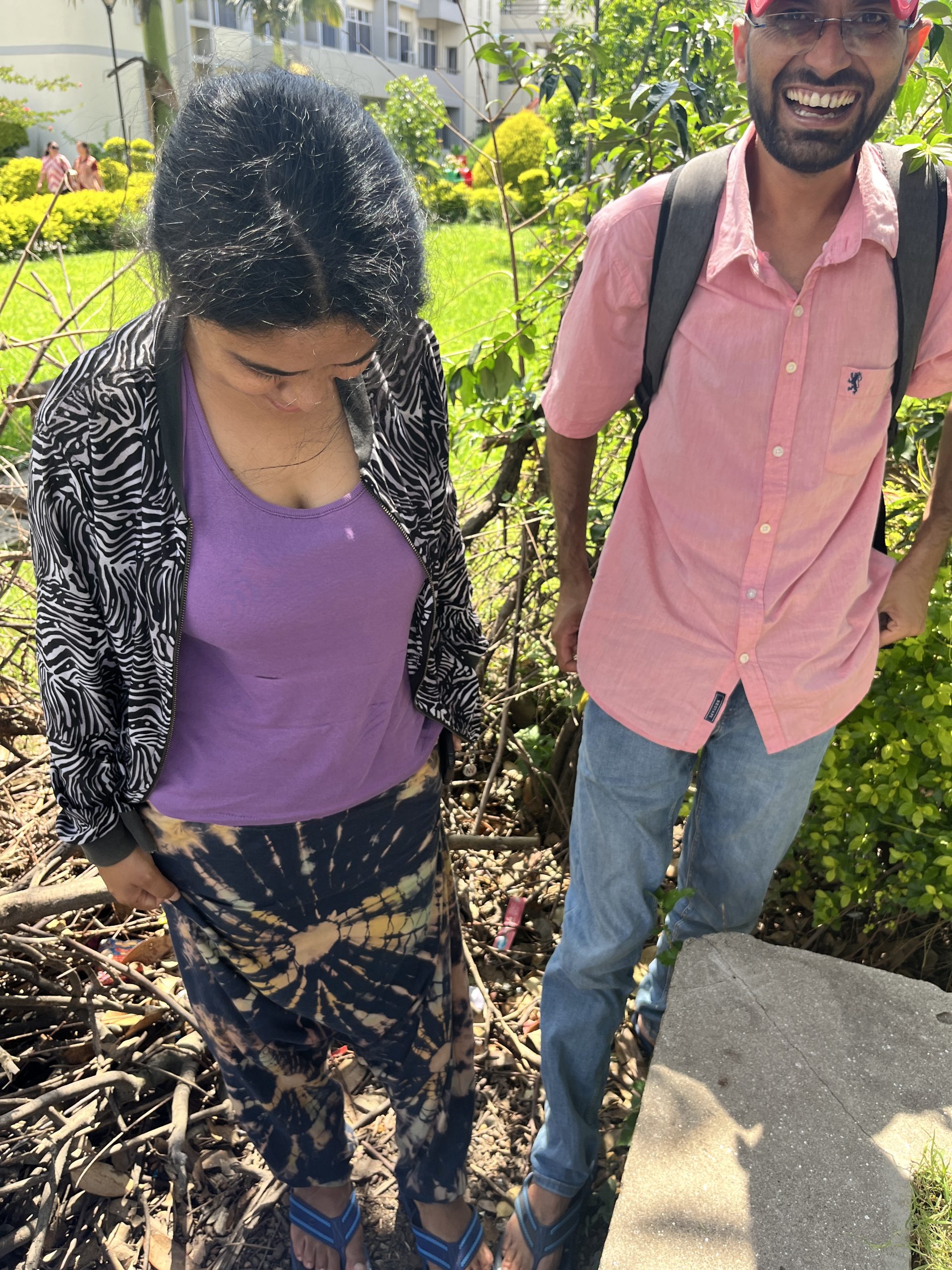
Gita and Niraj discovered they had matching slippers!
Author’s note:
This blog is based on a recent interview with Gita Rasaili and draws upon publicly available information from Peace Brigades International and other sources. Gita Rasaili currently serves as Chairperson of the Conflict Victim Women National Network (CVWN), a women-led organization formed in 2020 within Nepal’s broader conflict victims’ movement. Quotes have been lightly edited for clarity.
Posted By Shuyuan Zhang
Posted Aug 3rd, 2025
1 Comment
Iain Guest
August 5, 2025
Another fine profile, Shuyuan – beautifully written and full of insights. You paint a vivid portrait of Gita with some wonderful personal touches (tired eyes, hair as black as seaweed….) and of course a truly amazing story. You really are giving us an amazing sense of these survivors and victims in Nepal. This is also the first time you’ve taken a dive into the special situation of the Dalit, formerly known as Untouchables. AP has worked with Dalit friends since 2003 and it is certainly true that many Dalit were drawn to the Maoist agenda of social justice. This opened them up to major violence from the State. But should they qualify for special treatment in any new TJ package? That’s not clear from this blog. I’m also struck by Gita’s insistence that every victim’s needs will be different and wonder – once again – whether this will make it harder to agree on a unified package. I’m sure your paper will clarify all!