
On a weekend trip into the mountains surrounding Kathmandu. I kept thinking about memory.
First, was at Bhaktapur Durbar Square. I saw groups of elderly women, filming TikTok dances in unison. Families taking the time to shoot individual solo shots of each of their children, and most incredible to me, were these awkward action walking shots. People were shooting 15 second video clips of themselves walking through the historic city, looking around and breathing rather deeply.
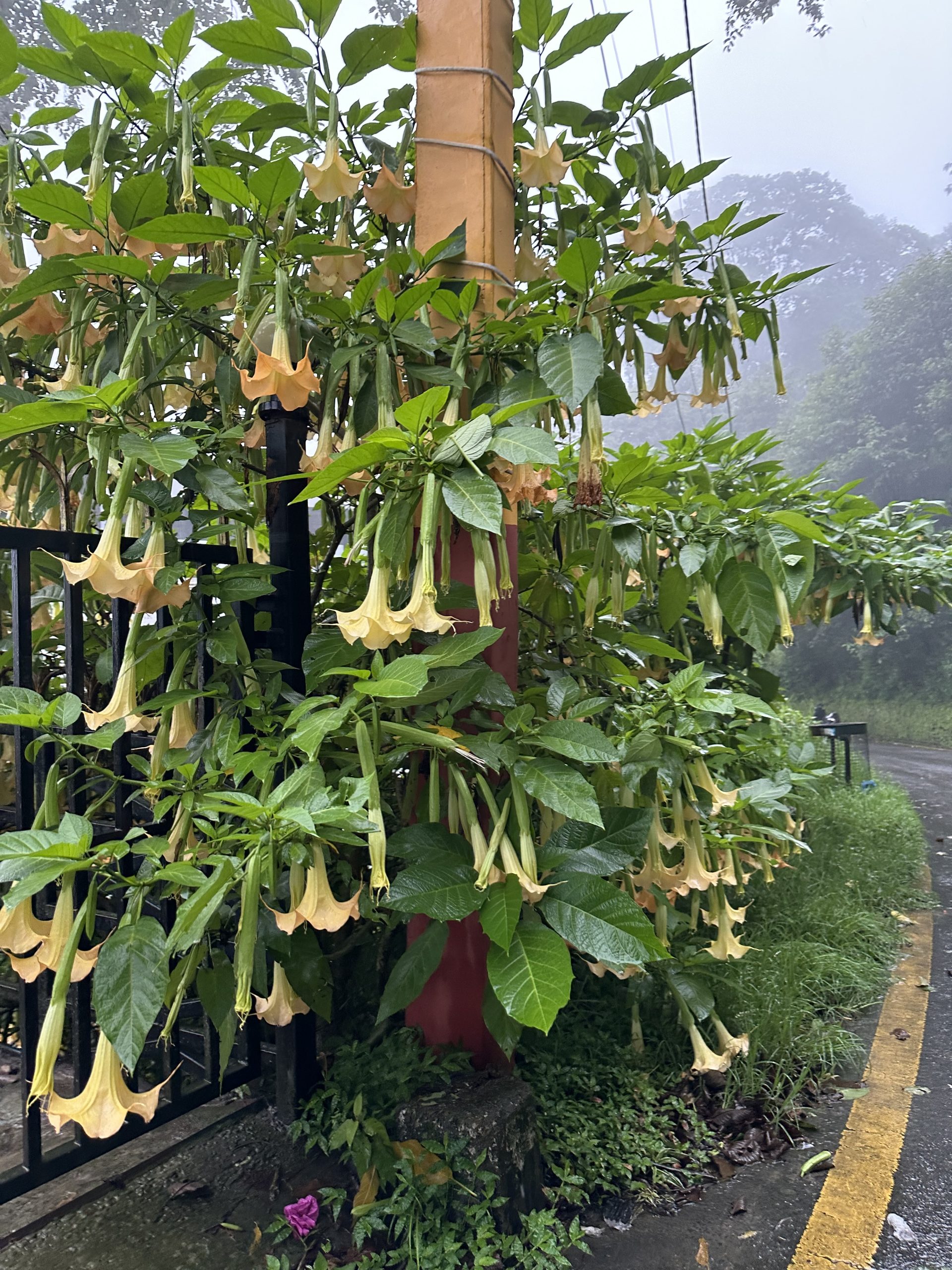
The next experience was with a moto driver, who took me from Bhaktapur to the mountains, in Nagarkot. The ride was beautiful and misty. The roadside was covered with these amazing tea cup shaped flowers, upside down and the size of soda bottles. My new friend spoke only of memory. His friends in America, his old tea shop, his old village, how one year ago he used to be happy, but now he’d fallen into sadness. We stopped at a little tea joint, he mentioned he used to come with his ex-girlfriend and showed me photos of how he was when he was with her. The visual difference was jarring. I almost did not recognize the man on the phone. Higher up, we stopped again to look at the mist roll through the mountains. Eventually, the cloud engulfed us and all we could see was a white abyss. He insisted we stay in the rain for a couple minutes longer, for the memory.
Upon arrival at my hotel I sat down with these wealthy looking guys from Kathmandu. Our conversation was not focused on memory. We talked about our lives, jobs and hobbies. They invited me to cricket. I showed them my music. They continuously plopped pieces of their food on my plate. We took a photo and when they were leaving, one friend said “Thank you for sitting down with us. Thank you for the memory.”

I never think about memory at home. It is one of those actions that just blends into the daily monotony. But, no American would ever thank you for the memory after lunch. If an uber driver back home told me about his ex, I would be scared. And the 15 second video walk is a new form of instagram posing, totally unfamiliar to me.
When traveling, the small differences between cultures make the intricacies of life that we ignore reappear under a new lens. I don’t remember the last time I parked my bike, but I remember the last time this random Nepali guy parked his motorcycle, since he drove it through his living room to my amazement.
Seeing the different way in which Nepali people relive and create memory, has brought it back into my perception.
Posted By Leo Horton
Posted Aug 10th, 2026