
सहारा, sahara - support/reliance/refuge
At the Centre for Human Rights and Victims of Violations (CHRV), we learn from Survivors in a classroom fluid in structure and generous with time. Survivors and students sit together around the table, taking on the intimacy of a small group. In the beginning of class, the students don’t quite know what to expect; neither, it seems, do the Survivors. This is, after all, the first iteration of CHRV’s summer course: a Survivor-led academic program on transitional justice where Survivors teach as experts by experience. The first of its kind in Nepal, and quite possibly, in the world.
When R first told me about this pilot program, I thought back to Geneva, where I was a student in a master’s program on transitional justice. One day, after class, a group of my classmates and I walked down to the shores of Lake Geneva for a drink with our teacher. As we peppered our teacher with questions about life, work in academia and the field, a question returned – Why are you studying transitional justice in Geneva? Why not in the field?
As a field of study, transitional justice appears to attract human beings who believe that once equipped with the right body of knowledge, we could (re)solve the wounds of conflict and repression in society, or at least make a meaningful contribution… be useful. As a prescriptive but also self-scrutinising field of scholarship, transitional justice, for all its aching ambition to streamline the path from authoritarianism to democracy, violent conflict to peace… already espouses that everything is context-specific. The line does not exist. The path each context takes depends on its stakeholders, their positions, and the ways in which they move. So when one enters the transitional justice field, we/they face an inevitable question about being useful. Being useful on whose terms?
This course allows us to reflect upon and develop our positions in relation to Survivors. The classroom is heavy with emotions. It helps to remember that the weight does not compare to what Survivors carry themselves.
Each of our teachers is a Survivor. They have endured horrors, and have created/are creating their own pathways to Survival.
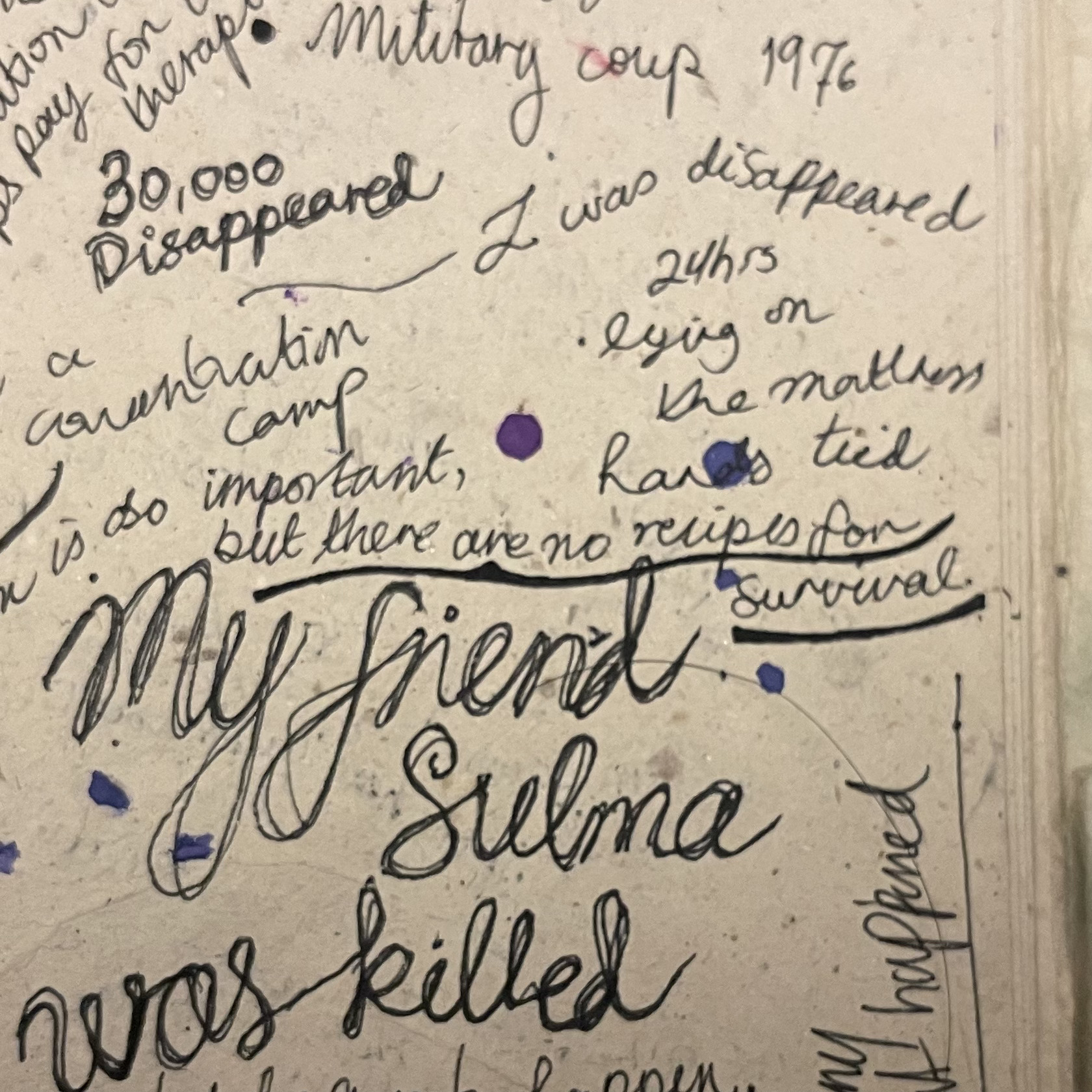
“there are no recipes for survival” – Alicia
In the following blogs, I will attempt to transmit what I have learnt and retained from my teachers about transitional justice as the movement of Survivors for “a dignified justice.”
Posted By Chhime Sherpa
Posted Aug 8th, 2026