Tag Archive: Child Marriage
-
Girls’ Education in Zimbabwe
1 Comment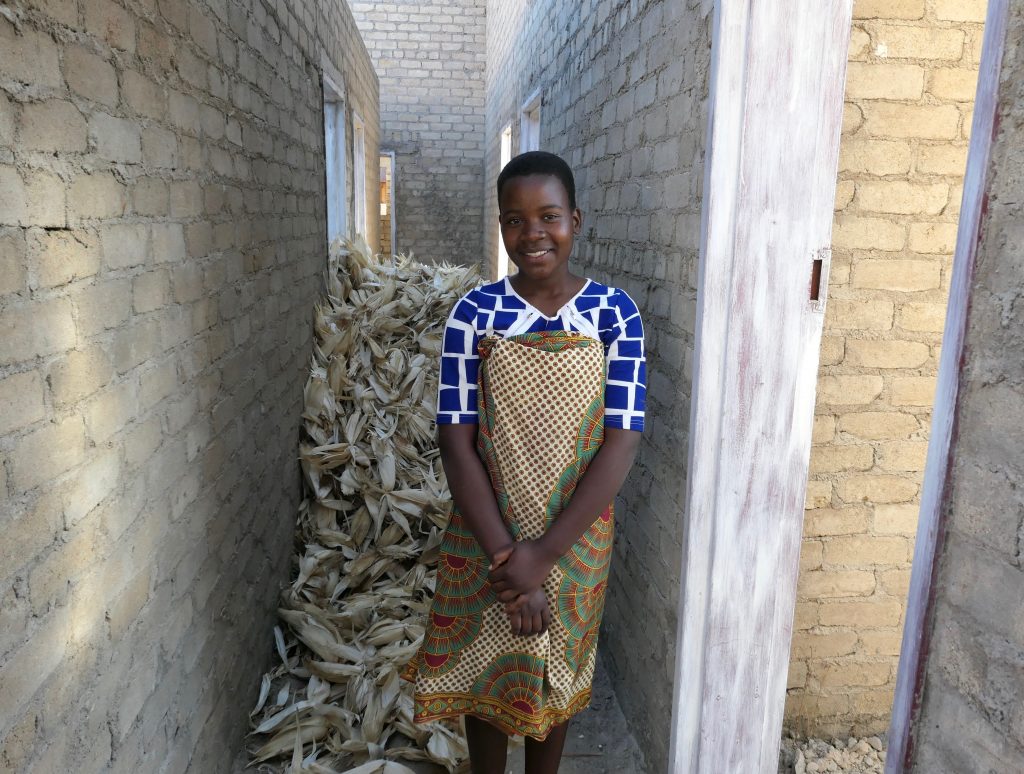
Sixteen-year-old Rose loves reading. When the Woman Advocacy Project (WAP) met her last June in Chitungwiza, Zimbabwe, she was in the middle of a novel from her favorite series, The Hardy Boys. Rose dropped out of school last year because her family was unable to afford her school fees, which amount to roughly $150 per term, including transport. “When I stopped going to school I was so pained. I was so affected because I’m good at school,” Rose told WAP. Now she spends her time reading novels. “Sometimes, I visit my friends who are still in school and ask them what they are learning.”
As a new school term begins this month in Harare, I find myself thinking about Rose and the many girls like her whom WAP interviewed—girls who left school prematurely because they could not afford to continue their educations.
Zimbabwe once boasted one of Africa’s strongest educational systems, but years of economic stagnation have led to a steady decline in the country’s schools and universities, which suffer from overcrowding and a critical shortage of teachers. Many teachers have joined the third of Zimbabweans who have left the country in order to seek out work that earns them higher salaries abroad.
According to the United Nations Girls Education Initiative, the cost of education relative to average household income is extremely high in Zimbabwe. Over the past two decades, dropout rates—particularly for girls—have steadily increased. Zimbabwe’s educational system includes seven grades of primary school and six upper levels (called Forms) of secondary school. Girls and boys are equally likely to complete primary school, but by the time they reach secondary education, the number of girls in attendance relative to boys drops by half. Poor girls in rural areas are particularly likely to leave school, since daughters can bring income into their families through lobola (bride price) if they marry.
Globally, girls with little or no education are three times more likely to marry by the age of eighteenthan girls who reach secondary school. WAP’s research suggests that dropping out of school is both a cause and a consequence of child marriage. When a girl leaves school, she becomes more vulnerable to marriage: this vulnerability can be caused by factors such as family pressure or the fact that being out of school supports the perception that she is of marriageable age. On the other side of the equation, marriage and pregnancy almost always end a girl’s education permanently. In this scenario, a girl’s education can be curtailed because her husband does not permit her to go to school, because she lacks the funds to support her education financially, or because she is needed to stay home to care for children and the household.
For my final post, I’d like to share a small selection of the stories of women and girls who spoke to WAP about their experiences in school, the value of Preschool Program for Toddlers, and their hopes and ambitions for the future.
 Dorcas
Seventeen-year-old Dorcas was one of the first young women I met after arriving in Harare. She burst into tears when I asked if she was in school. Dorcas completed her Ordinary Level but could not afford to sit the final exam. She now owes the school over $1,000 in overdue fees.
Her favorite subject in school was Food and Nutrition; she had hoped to become a journalist after graduation.
 Neneris
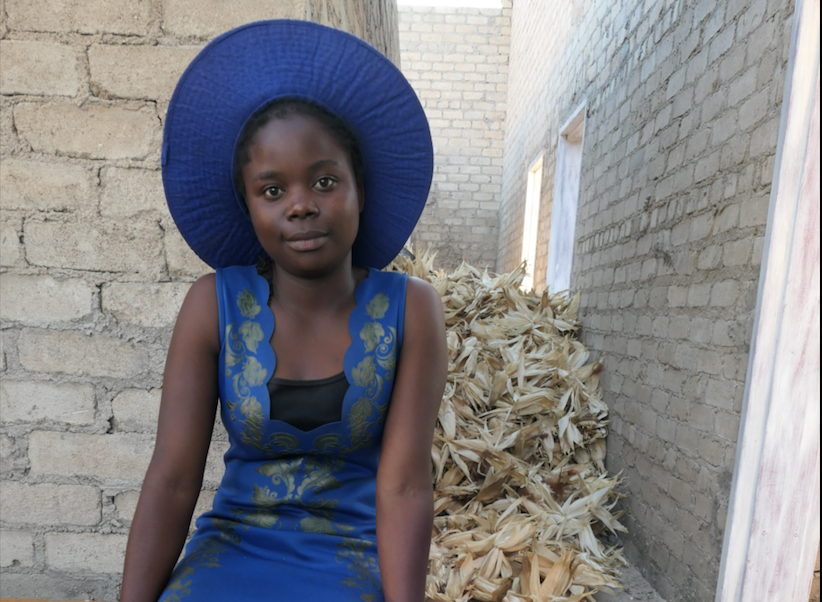
Nineteen-year-old Neneris left school last year after her family became unable to pay her fees. They still owe the school $150. “I was in Form 4; I would like to go back to school,”Neneris told WAP. Her favorite subjects were Commerce and Math; she had hoped to one-day become a bank teller. “It would have been a good job,” she explained. Zimbabwe’s unemployment rate is currently over 85%. Like many of the women with whom WAP works, Nenerisis unemployed. She now spends her time learning to plait hair.
 Penelope
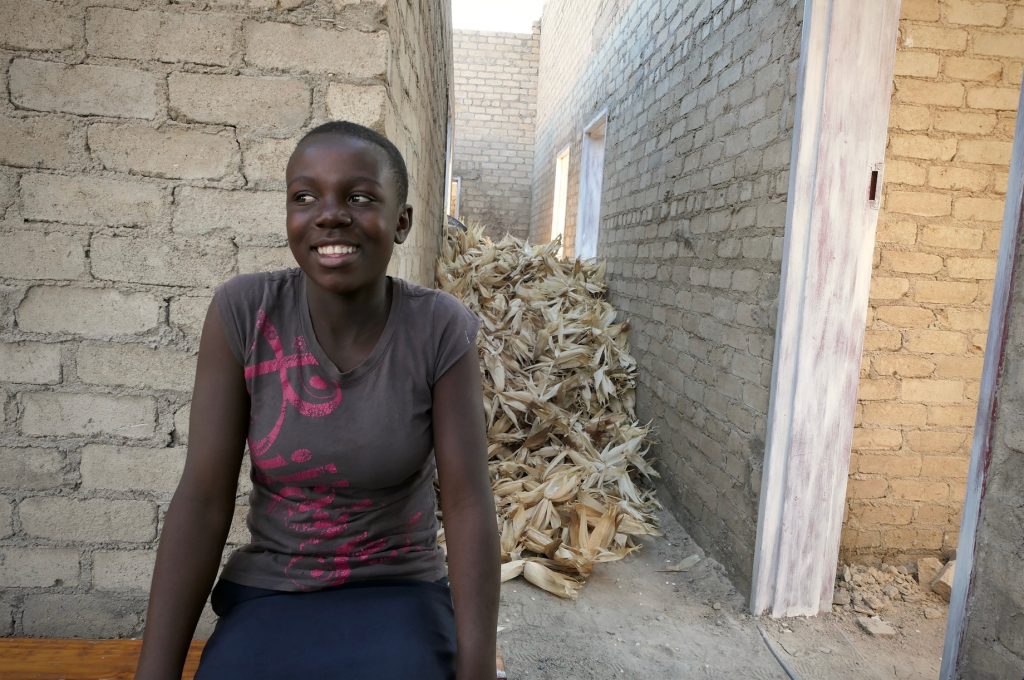
Fifteen-year-old Penelope left school last year, when she was in Grade 7, because her family was unable to afford her school fees. “Now I just sit. I want to go back to school,” she told WAP.
 Anashe
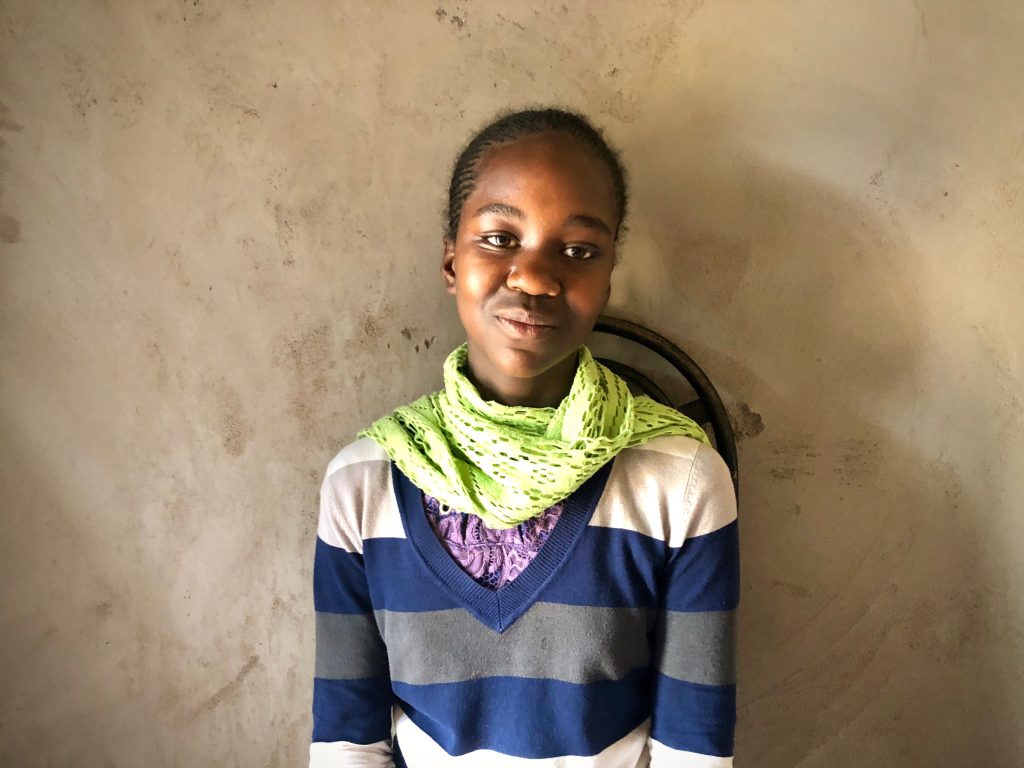
Fifteen-year-old Anashe dropped out of school in June of 2018—a week before this photograph was taken—because her family was unable to pay her fees. “My favorite subject was Science and I had hoped to become a doctor when I graduated,” Anashe told WAP.
 Spiwe
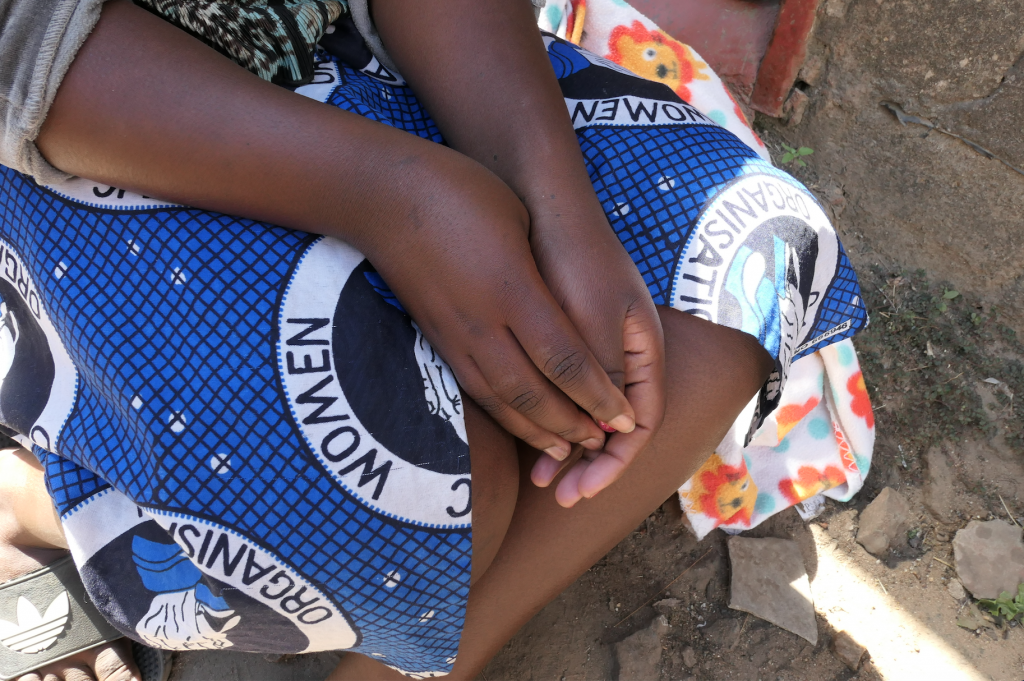
SpiweSeventeen-year-old Spiwe told WAP that she left school after finishing Grade 7 because her family could no longer afford to pay her school fees. Spiwe now lives with her grandmother, who is having trouble supporting her. “I want to go back to school,” she told WAP. “Now I do nothing. I’m feeling so much pain seeing young people my age going to school.”
 Rejoice
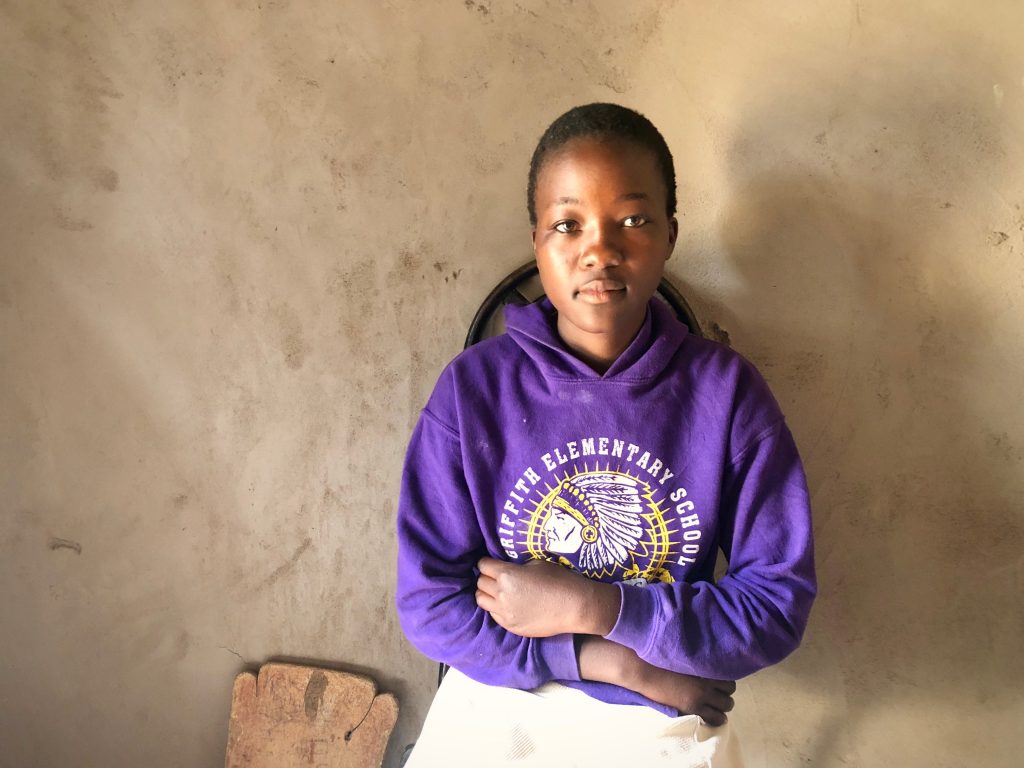
Sixteen-year-old Rejoice dropped out of school during Form 2. “My mother and father divorced. My father is now in South Africa and my mother can’t pay the fees on her own.” Rejoice’s favorite subject was Commerce and she had hoped one day to become a nurse.
She now spends her time at home with her brothers and sisters; her mother buys and sells goods in the market. Rejoice has five siblings and none of them are currently in school.
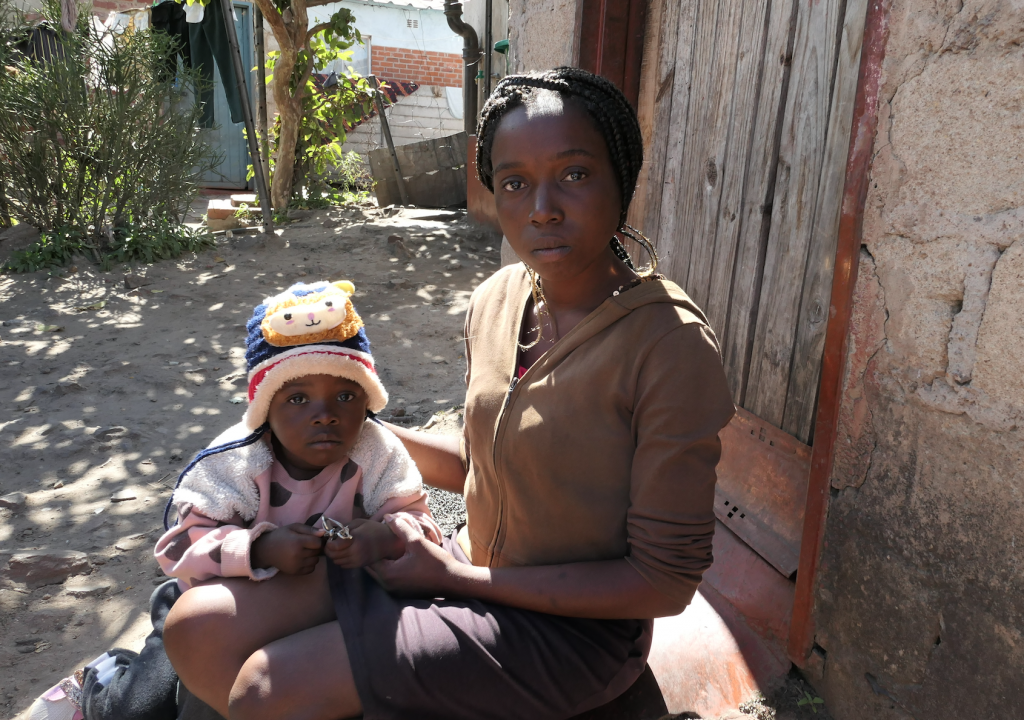 Anodiwa
WAP met eighteen-year-old Anodiwa in Harare’s Mbare suburb. She left school when she was sixteen after discovering she was pregnant.“My favorite classes were History and English. I had wanted to be a human rights personal injury lawyer,” she said. Like so many Zimbabweans, Anodiwacannot find work. She is currently living with her mother and looking for an employment opportunity so that she can save money for her children’s education.
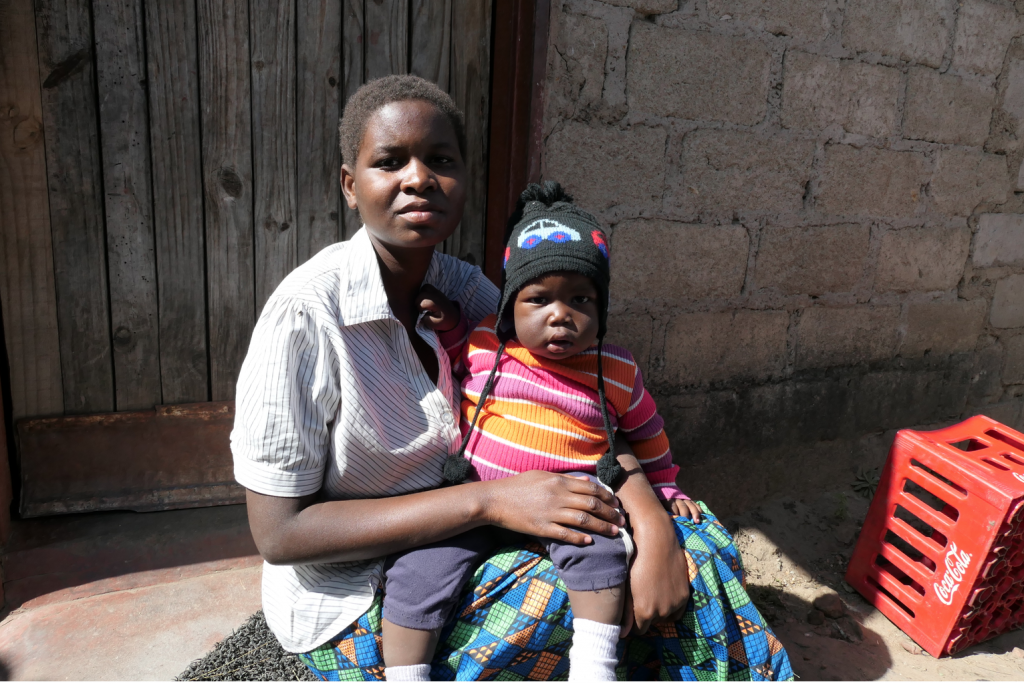 Plaxedes
Eighteen-year-old Plaxedes left school two years ago after she became pregnant. Plaxedes married earlier this year. For many women around the world, marriage means a permanent end to their education. Plaxedes says that she would like to go back to school, but that her husband will not allow it. “He would worry that I would go with someone else if I went back to school,” Plaxedes told WAP.
 Chihedza
Twenty-eight-year-old Chihedza lives in Hopley with her husband and three daughters. Although Chihedza’s husband owns a vegetable stall in the market, they are having trouble raising the necessary $30 each month to pay for their two eldest children’s school fees.
Chihedza says she loved school but had to leave in Form 3 after her father died. “My wish for my children is for them to go to school,” Chihedza told WAP. “My wish for myself is to one day return to school and complete my Ordinary Level.”
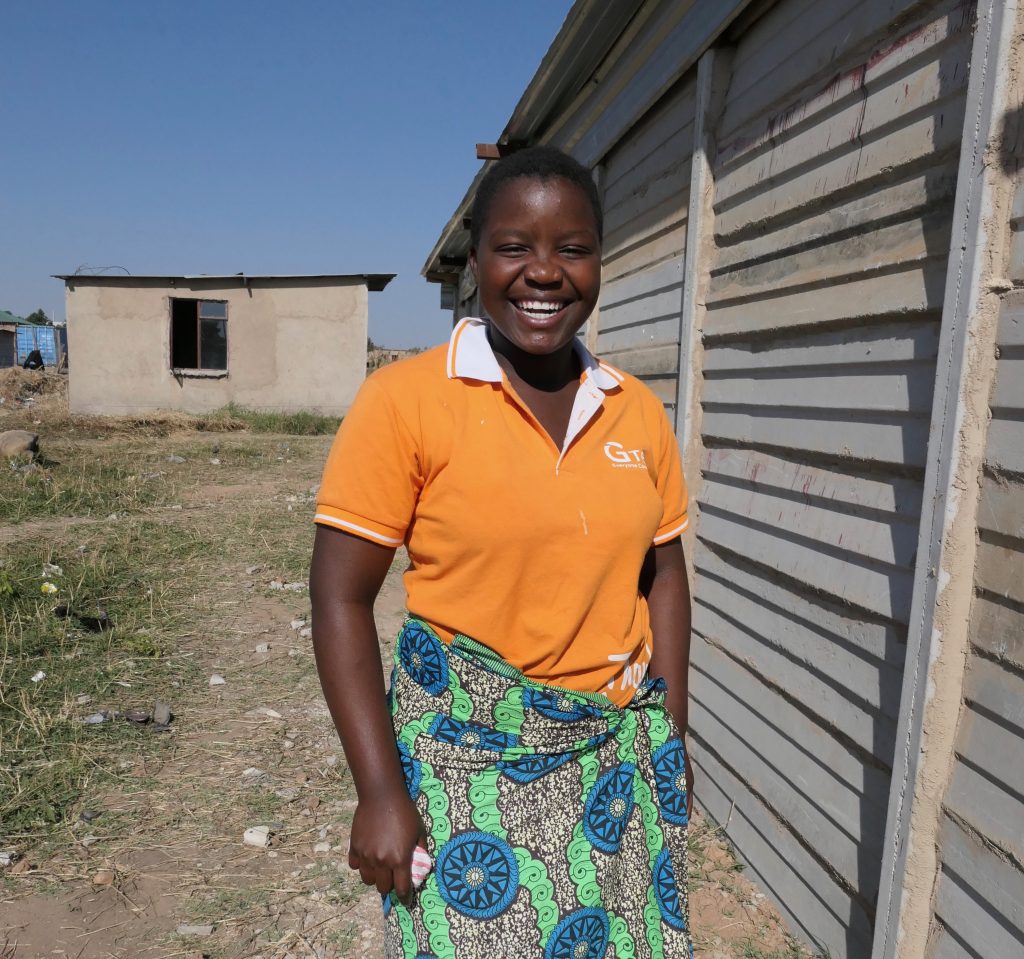 Joy
Joy Joy married at age fifteen after her father died. She and her husband live in Hopley with their one-year old son. Now eighteen, Joy misses school. She recalls that her favorite subjects were math and science. “I had hoped to be a medical doctor, I wanted to help people” she told WAP. “If I’m given an opportunity to go back to school, I know I would do better than all the others. I know I am smart.”
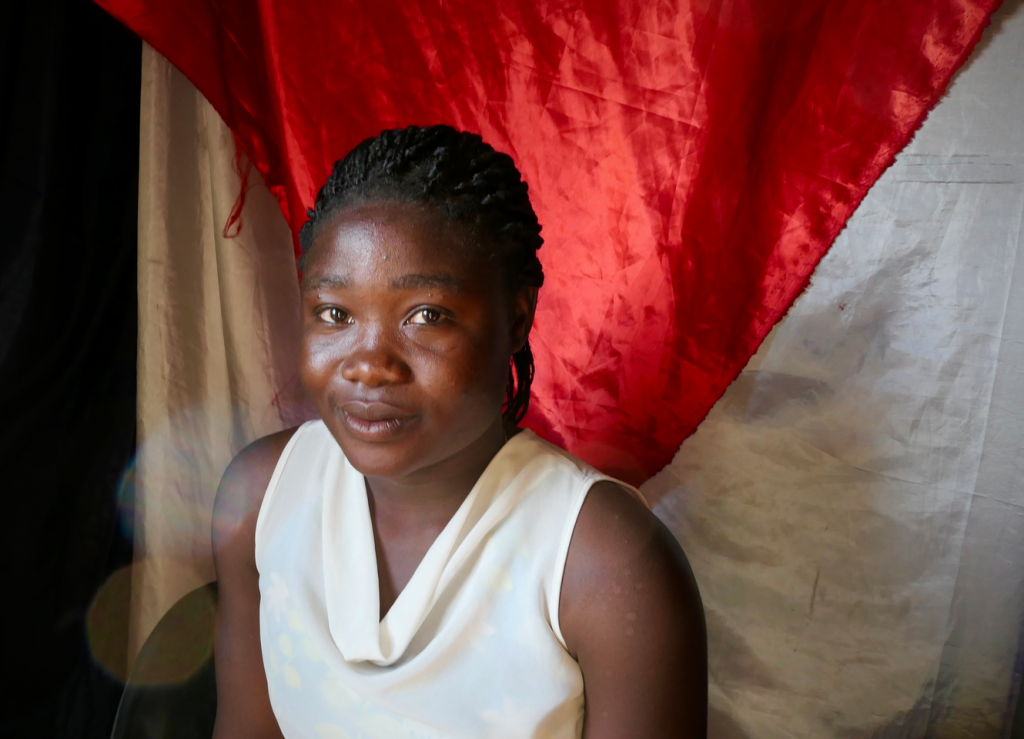 Fadzai
Fifteen-year-old Fadzai left school in Form 2 after her father died and her mother left Zimbabwe to work in South Africa. Fadzai now liveswith her grandmother and they support themselves by selling Freeze-its (frozen popsicles) in the market. Fadzai’s favorite subject was science and she had once hoped to become a doctor. “What is most difficult for me is the issue of my education,” she told WAP. “I want to go back to school like the other children, when I see them going too school I feel such pain.”
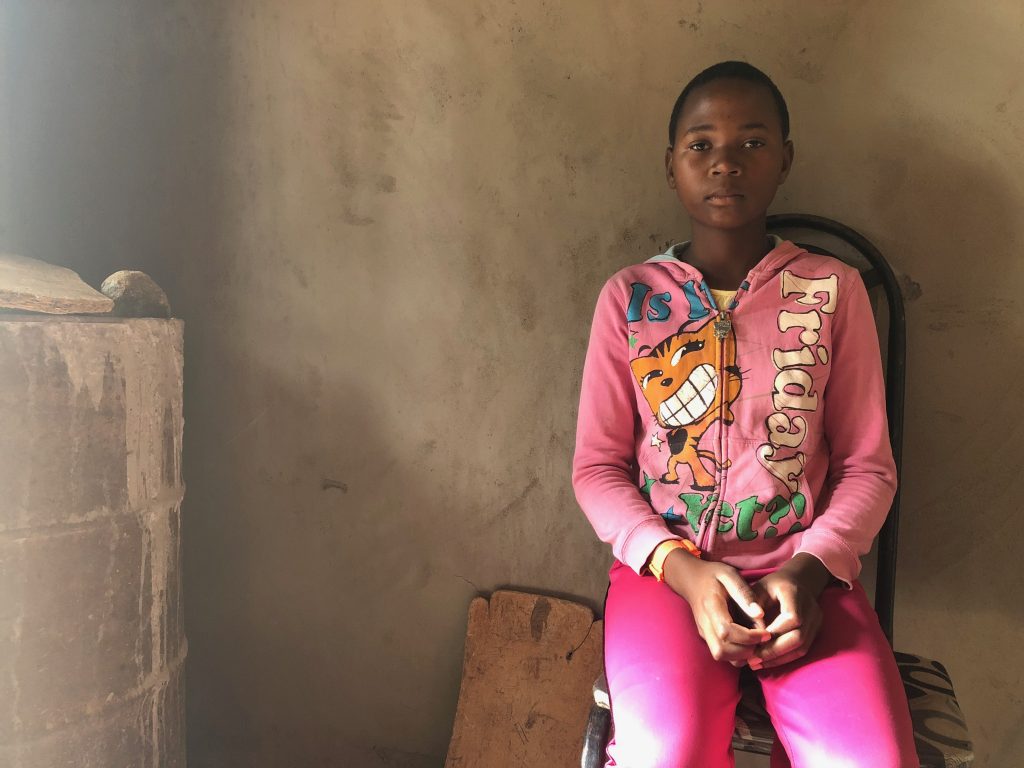 Elizabeth
Fifteen-year-old Elizabeth is currently in Form 2, but says her family is having trouble paying her school fees. When she grows up she hopes to become a flight attendant.
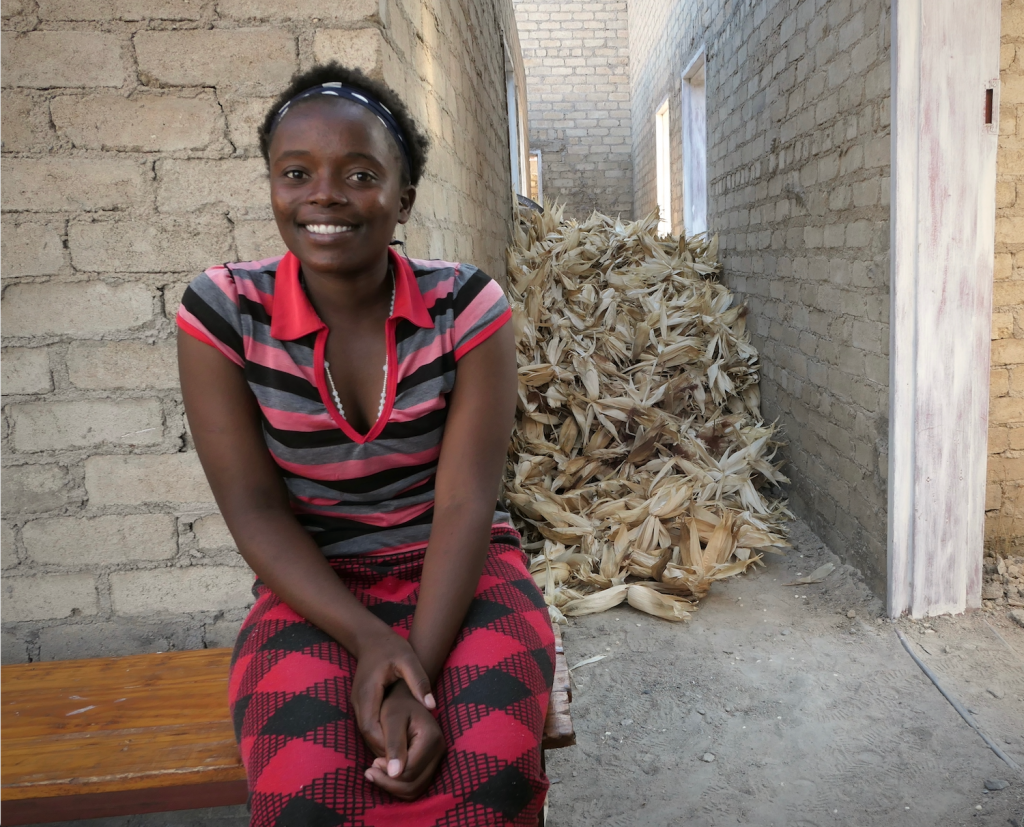 Auyanerudo
Nineteen-year-old Auyanerudo completed her Ordinary Level exam last year but has not been able to collect the results because she owes the school $450 in overdue fees. Auyanerudo’s favorite subjects were History and Shona [Zimbabwe’s primary language]. She hopes to attend university one day. She now spends her time taking care of her niece while her sister sells secondhand clothes in the market.
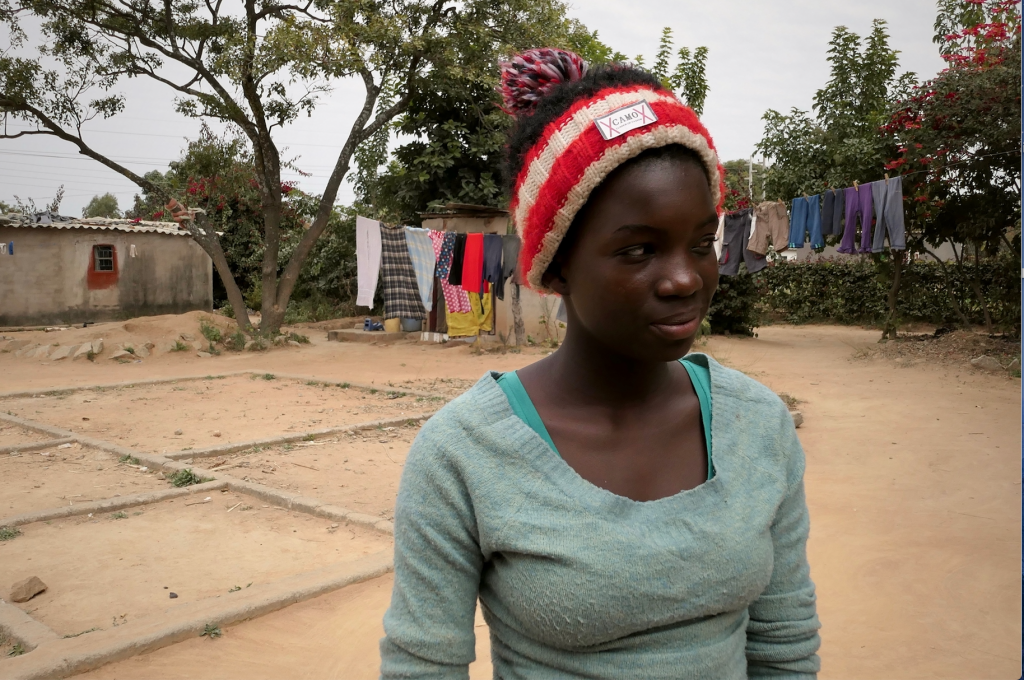 Anokosha
Seventeen-year-old Anokosha left school in 2016 after her father passed away and her mother became unable to pay her school fees. Anokosha had hoped to become a teacher one day. “I loved school,” she told WAP. “I delighted in Maths.” Now she spends her time caring for her grandmother, who is unwell.
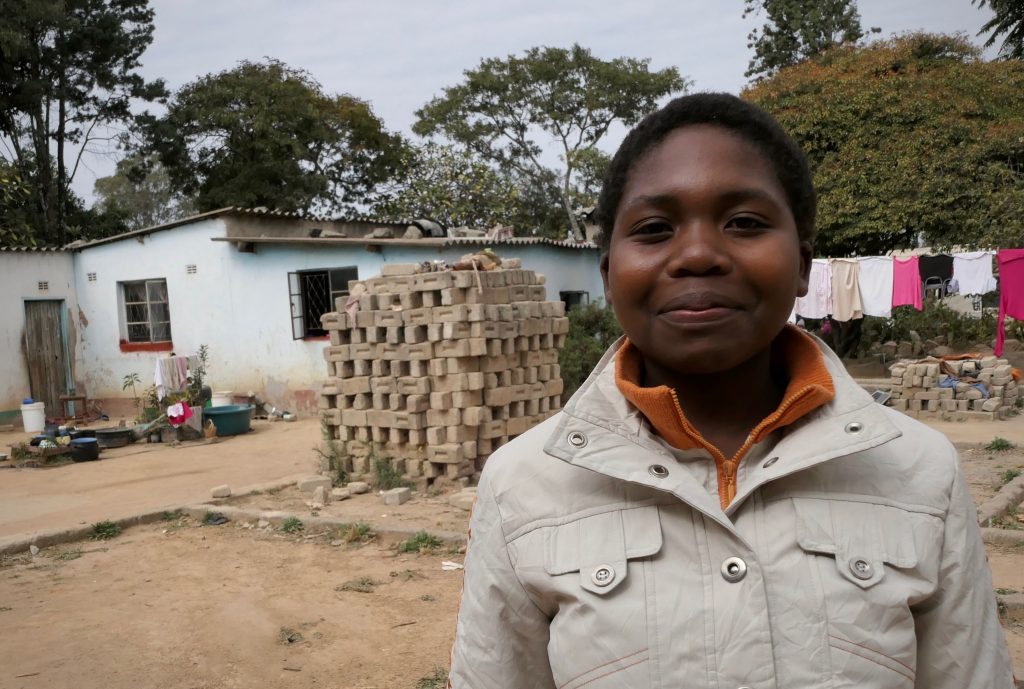 Judith
Fifteen-year-old Judith dropped out of school last April, when she was in Form 3, because her family could not afford her fees. Judith’s favorite subject was Accounts.“Now I am doing nothing, I am just around reading books at home. I’ve been reading exercise books from school,” she told WAP.Names and identifying details in this story have been changed.
-
Abigail’s Story
2 Comments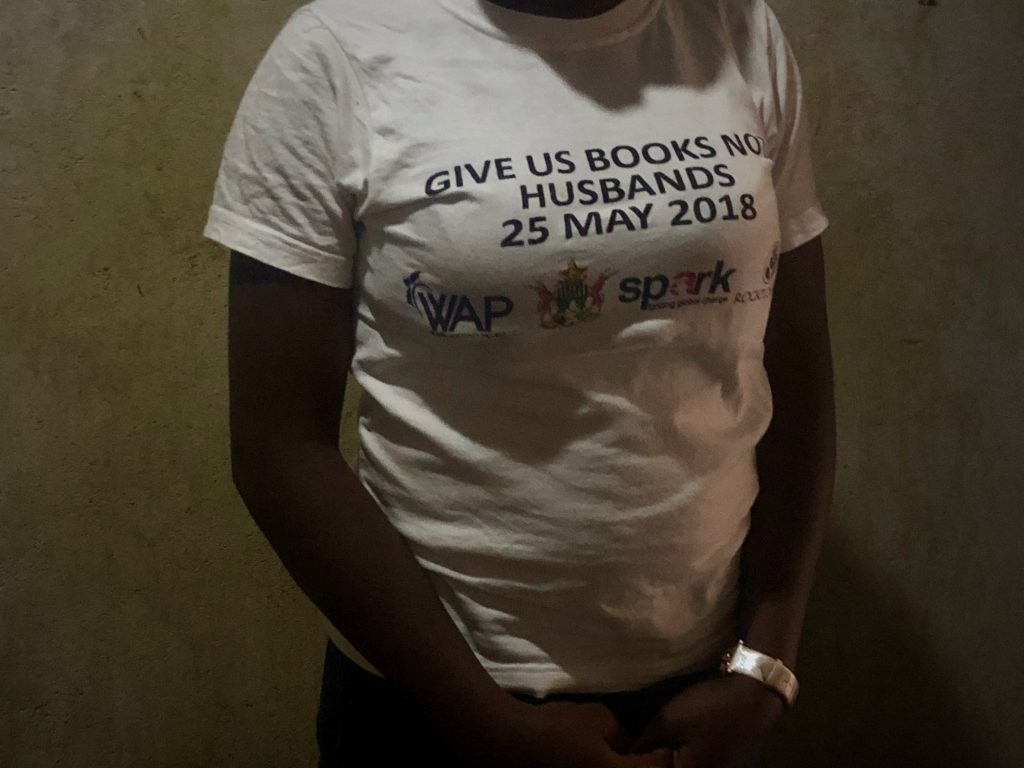
Abagail in her rented room in Harare.
Abigail is soft-spoken but carries herself with a quiet authority far beyond her eighteen years. When we first met at her secondary school in Harare, Abigail was laughing and joking with her friends in between classes. She seemed carefree; she stood out from her peers only in her thoughtfulness and her pointed contributions to class discussions.
But beneath her exterior poise, Abigail was concealing intense hardship. “My situation was very bad at home and I thought I would get married to escape it,” she told the Women Advocacy Project (WAP). Her troubles began last year after her parents divorced. Abigail was close to her father; she was upset when he moved to another neighborhood, while she and her mother went to stay with her aunt.
Abigail was beginning to adjust to the new situation and focusing on her school work when one day, without warning, her mother returned to the rural village where she was born. Her abrupt departure left Abigail alone in Harare. She was only seventeen. “I remained alone for two months,” Abigail told WAP. “When my mother returned to Harare, she said I must go to the village with her. I refused. My school and church were here, and I wanted to stay near my father. My mother had left me alone without telling me, but my father had been coming to school to visit me.”
When Abigail refused to go to the village, her mother was furious. “She called all our relatives and sat me down in front of them. She told them not to take me in again. I was then left alone on the street.” Abigail did not know exactly where her father lived; she knew only that he was downtown and living with a girlfriend. She had some money for transport and managed to find her way to him.
“When I arrived, my father wasn’t home and his girlfriend told me to go back where I had come from. It was late at night and again I was alone on the street,” Abigail said through tears. Harare can be dangerous at night for a girl in an unfamiliar area. Eventually, Abigail found her way back to her aunt and uncle’s home. “When I arrived, they chased me away. They said, ‘you can’t eat our food, you can’t use our plates.’ They told me that to stay with them, I must pay rent, even though I was in school and had no money of my own.”
Abigail’s relatives allowed her to stay for the night but told her that if her father did not come to get her first thing in the morning, they would throw her out of the house. Panicked, she tried to call her father’s phone, but she could not reach him.
“The next morning, my uncle pulled off my blankets and said, ‘get out of this house and do not come back.’ He took my things and threw them outside on the street,” Abigail said. “I had no money, I had no place to stay, I had no one to turn to. This was the first time I considered getting married. I thought I would find a boy I knew, have him get me pregnant, and then he would have to marry me.”
Abigail had participated in one of WAP’s anti-child marriage training programs. “I thought about the seminar I had with WAP where I had learned about child marriage and what it does to girls’ futures. No matter how bad the situation was, I knew it wasn’t the right path.”
Abigail went to a friend from church and asked to stay with her while she looked for a place to live and a way to pay rent. She stopped going to school and started cleaning houses, washing clothes, and selling tomatoes in order to support herself. She found a small room near her church to rent. When her father eventually returned her calls, he was sympathetic, but said that she could not live with him.

Abigail’s room.
Although Abigail had stopped going to school, she continued to attend church, where she sang in the choir. “My school headmaster sings in the choir with me, he asked why I had stopped going to school without telling anyone. I decided to confide in him and tell him about my situation,” she said. Abigail is a promising student and well-liked by both her teachers and her peers. After hearing her story, the headmaster offered to help her and began personally paying her school fees.
Because of the headmaster’s kindness, Abigail has returned to school, but she still struggles to make ends meet. She spends every spare moment working to raise money to cover her living expenses, and the strain has affected her ability to keep up with her class work. “Sometimes my father will send me some money, but it’s too little. Sometimes I can’t come up with enough money and I survive on avocados,” she told WAP.

Abigail’s room.
Last June, during Zimbabwe’s surprisingly chilly winter, Abigail showed WAP her rented room. It is windowless and only slightly larger than a closet, without a bathroom or sink. Abagail bought a small gas stove and a few plates and utensils. She stores water and cooking oil in jugs, which she stacks neatly in a corner. She has two blankets, one she folds on the floor and the other that she uses to cover herself for warmth. “I’m living a lying life,” she says. “I don’t tell people where I live, I don’t want them to know of my situation”
Last month, Abigail failed to make enough money to pay her rent. “The man I am renting from said it would be okay if I went out with him, but I said no. He is ten years older than me and a womanizer,” Abagail told WAP. “I was desperate and afraid of being thrown out, so I called my mother for the first time in many months. She wouldn’t hear anything of my situation. She only wanted to know news about my father, she asked no questions about me.”
Sometimes Abigail says she collapses from stress. Still, she has resolved to be independent. “I’m now working hard to build my own life, so I don’t need to depend on my family or anyone,” she says. “I know my rights as a girl. I have the confidence to stand up for myself, I have the confidence to speak out.”
Names and identifying details in this story have been changed.
-
Girls to the Front: Mentorship to Fight Child Marriage
2 Comments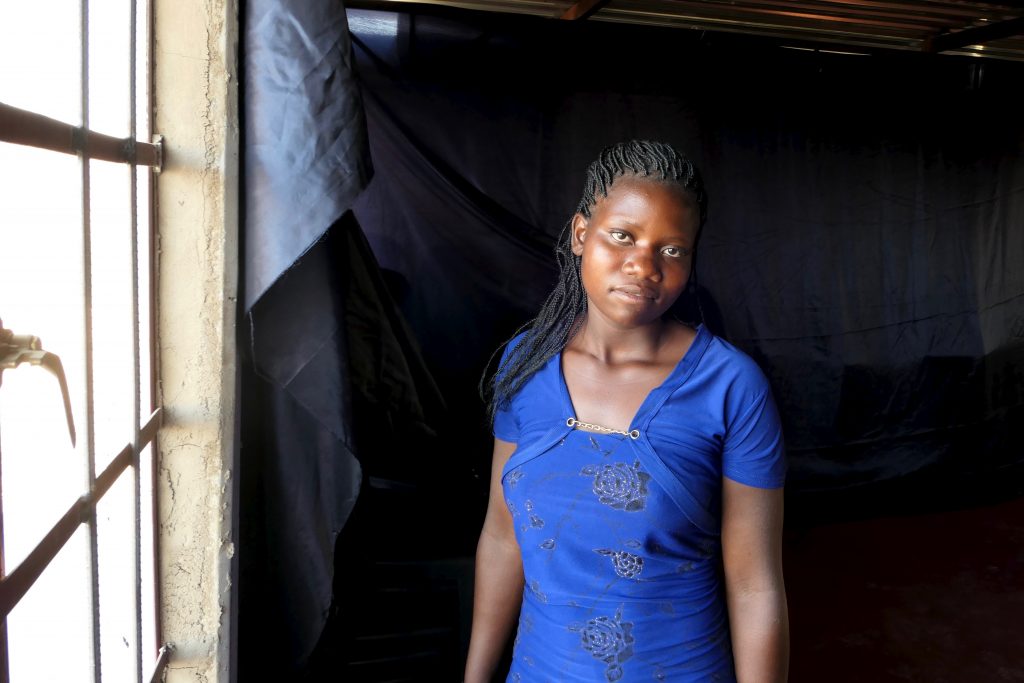
Portia wants to wait to marry because she has seen the hardships faced by friends who married as children.
In June 2018, Girls Not Brides, the international coalition of 1000 organizations working to end child marriage, held their second Global Meeting in Kuala Lumpur. Over the course of a three-day conference, 500 activists (representing 70 countries) presented their work, shared the lessons that they had learned in their endeavors, and discussed strategies to end child marriage.
“Throughout the Global Meeting, youth activists shared examples of how their work has led to concrete changes in the lives of girls. It was clear that if we want to end child marriage, we have to empower youth and youth-led organizations and ensure they have the agency to make decisions about their present and future,” said Girls Not Brides’ Executive Director Lakshmi Sundaram.
The Women Advocacy Project (WAP) is a proud member of the Girls Not Brides coalition. Its experience working at the community level supports Sundaram’s conclusion. Since 2015, WAP has been leading anti-child marriage training programs in and around Harare. Consistently, WAP has seen that girls are the most effective educators about the dangers of child marriage. When they are equipped with knowledge and confidence, they can be powerful agents for change in their communities.
According to UNICEF, 32% of girls in Zimbabwe marry before their eighteenth birthdays. In June and July of 2018, WAP interviewed 136 women and girls in five communities, including fourteen women who married as children and many more at risk of early marriage.When our research team met young women under the age of eighteen, we asked them what they knew about child marriage. Girls who had participated in WAP’s training programs unanimously said that child marriage “causes many challenges” and leaves girls vulnerable to health risks, violence, and poverty. All of these respondents emphasized the importance of waiting to reach adulthood before marrying.
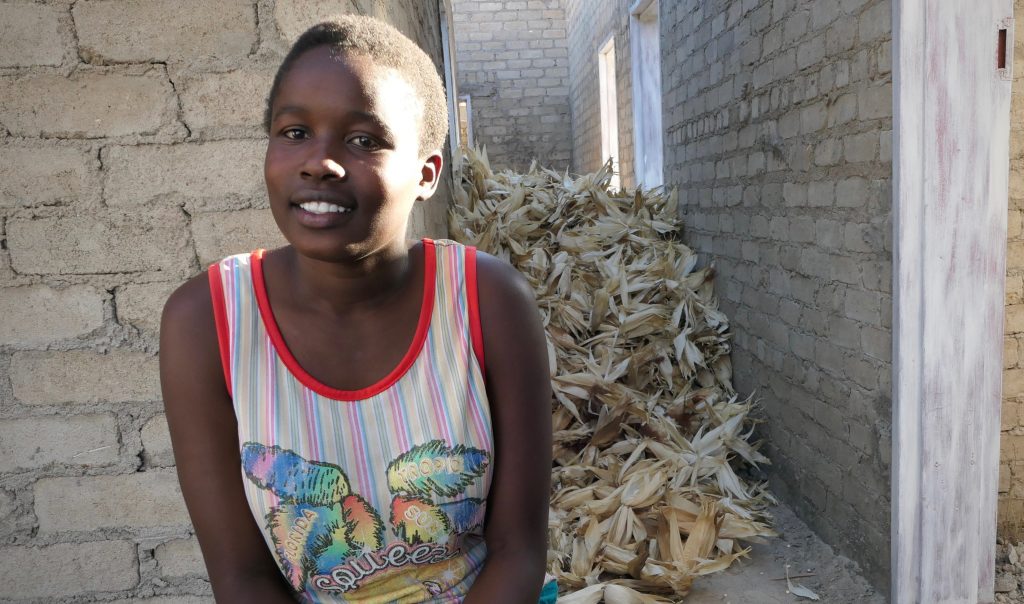
“I’ll only get married when I have completed university and I have worked. I want to be independent first,” says WAP beneficiary Marion.
One girl we interviewed, Nyasha, became pregnant when she was fifteen years old. Unintended pregnancies push many girls to marry in order to preserve their family’s honor, but Nyasha had attended a WAP anti-child marriage training.“I learned about child marriage and was taught how to help others not to become involved in child marriage,” she said. Today, Nyasha and her child are supported by her father, who works as a carpenter. “I don’t want to get married,” she says. “My desire is to go back to school.”
Nineteen-year-old Marion, a WAP beneficiary from Chitungwiza,explained the essential role of WAP’s training programs in preventing child marriages: “WAP’s programs are important because of the knowledge you have gained. When I talk to fifteen-year-olds who are pregnant I feel bad because I know they will face challenges.” Following the training, Marion has been talking to her friends about the dangers associated with early marriage. “We need to be educated as girls. We need to know that early child marriage causes poverty because of a lack of education.” Marion is resolute about her own plans for the future: “I’ll only get married when I have completed university and I have worked. I want to be independent first,” she said.
The vast majority of girls WAP interviewed who had not participated in an anti-child marriage training reported that they knew “nothing” about child marriage. These respondents were unaware that child marriage is illegal under Zimbabwean law and many believed that marriage was a path to remove oneself from poverty, pay school fees, or escape abuse and neglect at home.
There was, however, a significant exception within this group. Girls who had not participated in an anti-child marriage training but who had a close friend or family member who married as a child were overwhelmingly wary of child marriage.
For example, Portia, a young woman we interviewed, told us that she was seventeen years old when her father passed away and she had to drop out of school because her family could no longer afford to pay the fees. The death of a parent, coupled with the financial instability that frequently results from it, often pushes girls into marriage, but Portia did not consider this option. “I’m not yet ready for marriage,” she told WAP. Her opinion was shaped by observing the experiences of several of her friends who married young. “They got married early because of harassment and bad treatment from their families. But there are many challenges for women who marry and give birth at a tender age. Their muscles are not ready.”
Fifteen-year-old Aneni left school when she was eleven. Like Portia, she refused to consider marriage because she had watched the experience of someone close to her.“My older sister got married at fifteen, she’s been married for five years now. Sometimes her husband will leave the house for long periods without telling her. That’s why I dislike the idea of getting married at a tender age,” Aneni told WAP.
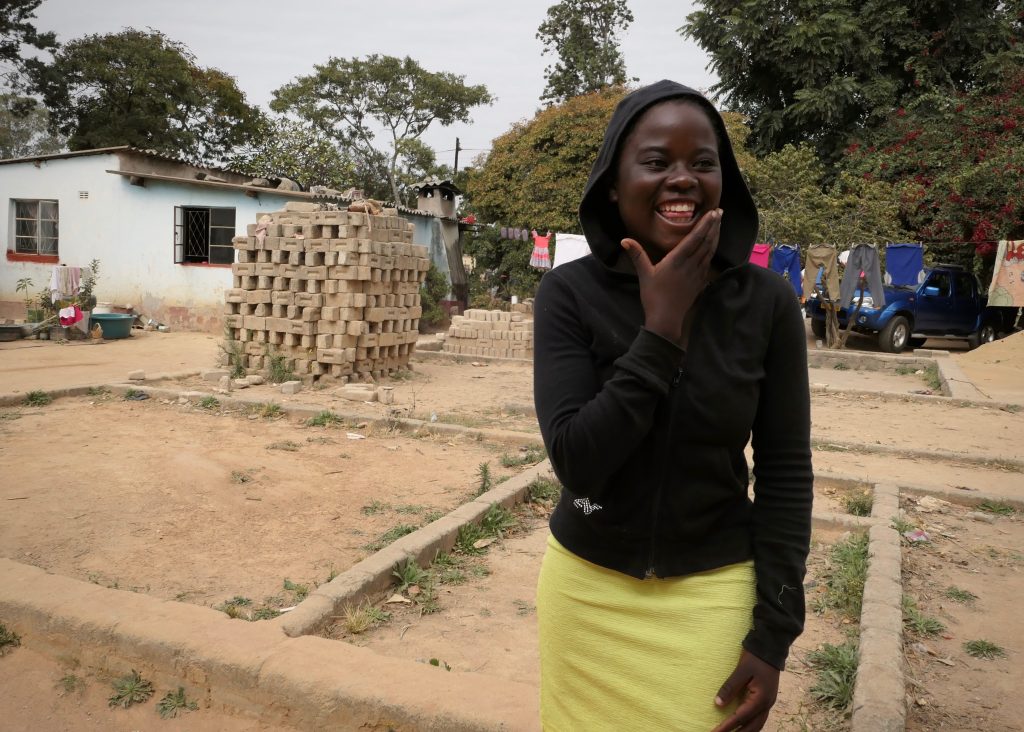
Fifteen-year-old Aneni dislikes “the idea of getting married at a tender age” because she witnessed the experiences of her sister.
“I want to marry at twenty-three,” fifteen-year-old Wonai from Epworth told us. “I had a friend who married at fifteen. Now she is sixteen and with a baby. Her life is very difficult. I learned from my friend.”
WAP recognizes that this data shows that training and community-integrated mentorship can be immensely effective in changing attitudes toward child marriage. The vast majority of WAP’s interviewees who married as children or teenagers reported that they regretted their decisions and hoped that their children would have the knowledge to make different choices.
Venethy Chisanduro, a secondary school teacher, told WAP that she had seen many girls marry because they lacked opportunities to contribute to society and build lives for themselves in other ways, “Every term, at least one of my students would get married,” she said. “Many of these girls don’t have much exposure to nice things, to new experiences. A man comes along, and he is exciting and new.” A government official in Manicaland Province echoed this sentiment, saying that in his District many girls could not afford school and were often left unoccupied because of a lack of employment opportunities. “From what I have seen, idleness is a big cause of child marriages,” he told WAP.
In the coming months, WAP will recruit and train five talented young women to work as Ambassadors Against Child Marriage. Ambassadors will use WAP’s anti-child marriage training curriculum to educate their peers about the long-term harms that are associated with child marriage. This program will provide girls with a strong community and ensure that they do not enter into marriage because of a lack of knowledge or exposure to other options.
“They know best what the other girls are thinking,” Chisanduro said of her students. “They are the best teachers.”
Names and identifying details in this story have been changed.
To read more, or to donate to the Ambassadors Against Child Marriage program: https://www.globalgiving.org/microprojects/help-5-girls-lead-the-fight-against-child-marriage/
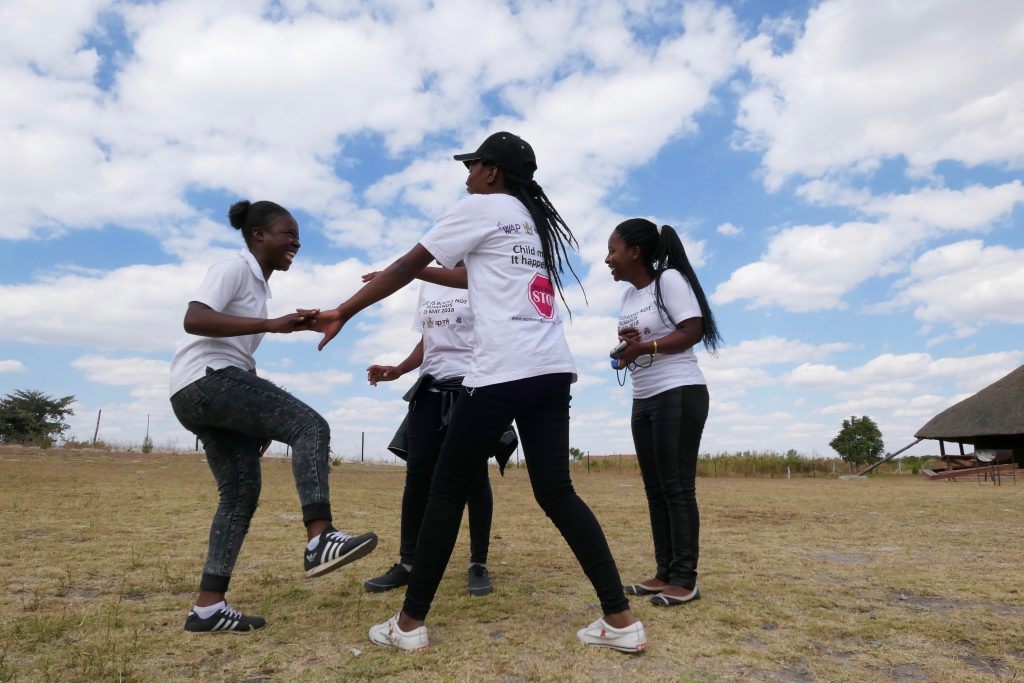
Girls create skits about child marriage at a day-long training in Harare.
-
Child Marriage and Religion in Zimbabwe
3 Comments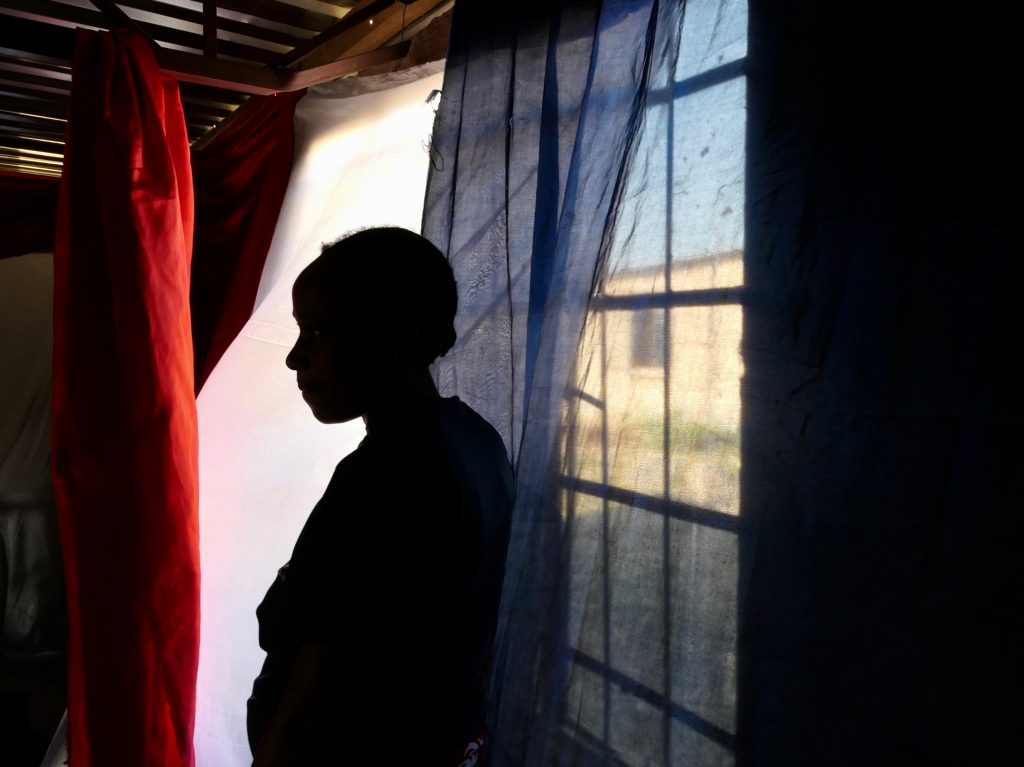
Evelyn photographed in Harare, June 2018.
When Evelyn was thirteen years old, her brother became seriously ill and she went to her village’s Apostolic church to seek help from one of its spiritual healers. The African Apostolic Church mixes evangelical Christian beliefs with traditional culture and has over a million followers in Zimbabwe. Colloquially, it is called the “White Garment Church” because its devotees wear spotless white robes and worship outdoors under white banners. Drive through Harare on Friday, the Apostolic day of worship, and you’ll see groups of white-robed worshipers gathered in open-air churches in fields or under Zimbabwe’s namesake rock formations.
Evelyn prayed fervently at the White Garment Church for her brother’s recovery. After the service, the Apostolic healer asked Evelyn to remain behind and speak with him. She agreed, hoping that he would offer a special prayer for her brother. Once the other worshipers had left and they were alone, the priest raped her.
When Evelyn told her parents about the assault, they confronted the healer, even though he was the son of the local chief and had considerable influence in their village. Evelyn’s attacker offered to marry her, saying that he would pay Evelyn’s father Lobola, or bride price, and compensate him with cattle.
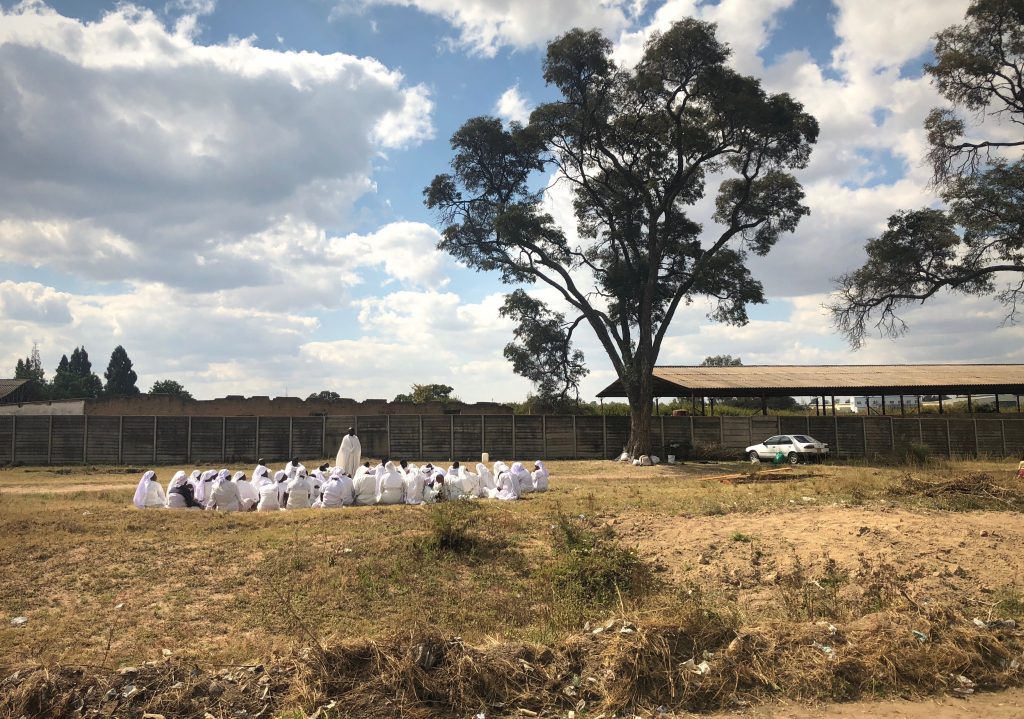
An Apostolic priest and his congregation in Harare.
Evelyn wanted nothing to do with her attacker—he was in his fifties and she was only thirteen—but her parents forced her to marry him because she was no longer a virgin and they believed that her lack of virginity brought shame to the family.
Evelyn’s marriage was not a happy one. Her husband had four other wives, all of whom were young women or girls, and she soon discovered that he was both physically and sexually abusive. Evelyn did not want to have children in this environment and began taking family planning tablets, but her husband discovered them and beat her. Members of the African Apostolic Church often seek to elevate their standing within the congregation by having many children whom they can bring into the church as new followers.
When Evelyn discovered she was pregnant, she attempted to escape, but her husband found her and dragged her home. “Every five months, I would try to run away,” she told the Woman Advocacy Project. “But he would look for me everywhere and find me. I once tried to take my son and run, I went to my brother’s house, but I saw him coming in the distance and I fled. I went to my aunties’ place, but he didn’t have any trouble locating me there.” After one of her attempts to escape, Evelyn’s husband took all of her clothes and hid them in order to prevent her from leaving.
After several years and six unsuccessful escape attempts, Evelyn managed to flee to Harare. Although she was finally free of her husband’s violence, she had to leave her son behind—a choice that she still finds tremendously painful. Evelyn’s husband is now the chief of their village and he has considerable influence over the local courts, which have awarded him sole custody of the child. In secret, Evelyn used to visit her son at school; when her husband learned of the visits, the school banned her from the premises. Her husband has threatened to notify the police if Evelyn tries to contact her son again. It has been more than three years since she last saw the child.

An Apostolic place of worship in the Waterfalls neighborhood of Harare.
My last few posts have discussed how poverty, limited access to education, inadequate knowledge of sexual and reproductive health, and harmful social norms fuel child marriage in Zimbabwe. In this post I’ll take a look at another cause of early marriage: the harmful practices that are common in African Apostolic sects.
Child marriage, forced marriage, and other human rights violations, including virginity testing, are widely practiced among Zimbabwe’s Apostolic groups, and particularly in rural areas. Many of these congregations discourage girls’ education and forbid married girls to attend school. According to a UNFPA report, rates of child marriage are significantly higher among Apostolics: 23% of Apostolicadolescents are married, compared to 9% of adolescents who belong to traditional religious communities.
Apostolic Church doctrine places a high value on virginity. Girls as young as twelve are often pushed into marriages—usually too far older men—in order to ensure that they do not become sexually active out of wedlock. As one woman member of an Apostolic church in Zimbabwe reported to Human Rights Watch, “As soon as a girl reaches puberty, any man in the church can claim her for his wife.”
These marriages are sometimes forced. “Some men in these [Apostolic] churches claim to have dreamt being married to you, they say, ‘you were given to me in spirit’ and you are forced to go to him,” a girl in rural Zimbabwe told UNFPA.
Several young women told WAP that young girls are often lined up and chosen for marriage by White Garment Church elders. This selection usually follows “virginity testing,” or the insertion of fingers into the vagina in order to confirm that the hymen is intact. (The World Health Organization calls this practice a human rights violation that has no scientific grounding.) “If found to be virgins they get marks on their foreheads. Older men in the church will then choose these ‘fresh girls’ to become their wives, often joining polygamous unions. If a man marries a woman who is not a virgin, she is required to find a virgin girl for her husband to marry as compensation,” said Archbishop Johannes Ndanga, president of the Apostolic Churches Council of Zimbabwe.
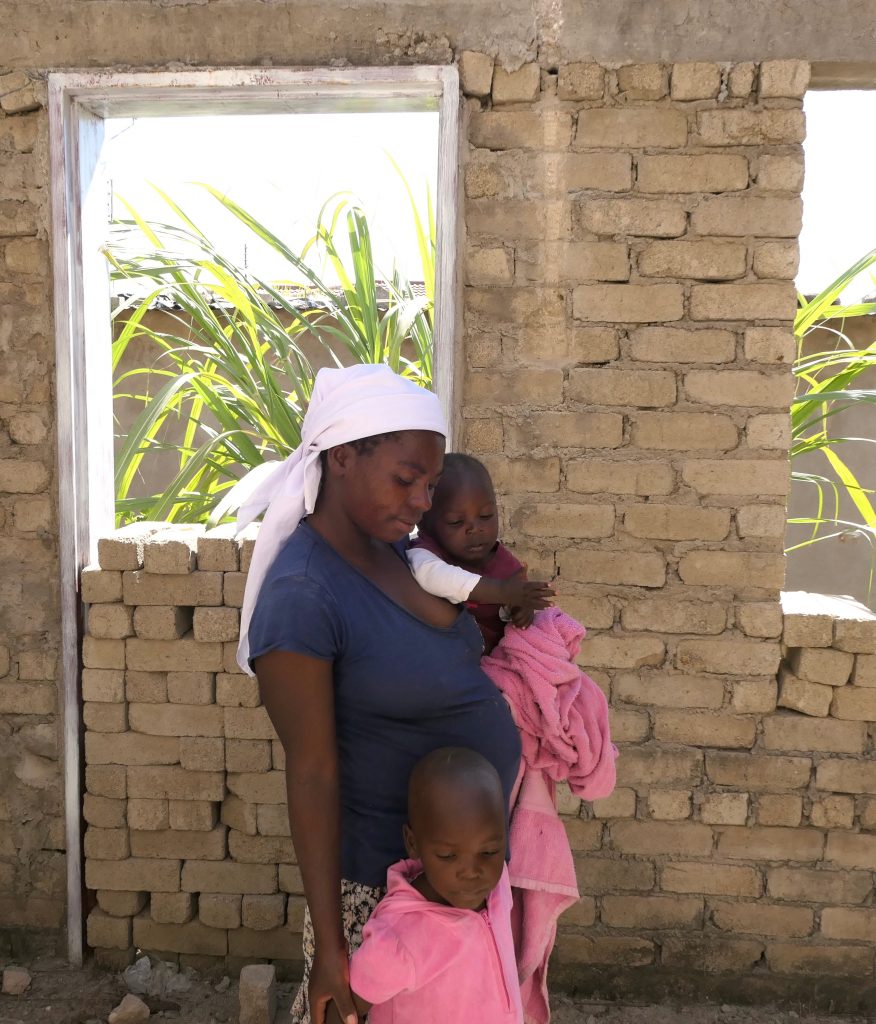
Zivanai and her children in Chitungwiza, Zimbabwe.
Polygamy is common in Apostolic sects. Zivanai, a 28-year-old member of the Apostolic faith, told WAP that when she was eighteen years old, she married a man who had two other wives. “His first wife has six children, his second wife has four,”Zivanai said. “We all stay with him and each night he goes in a circle, from one woman to the next.”Over the past ten years, Zivanai has given birth to four children and is currently pregnant. Her husband does not provide any financial support and none of her children are attending school.
The Apostolic sect rewards men who bring many children into the church as followers. This rewards system incentivizes husbands to have more wives and children than they can support. As a result, these unions often lead to poverty and leave women and children vulnerable to domestic abuse. “My father had six wives and there were twenty-six children,” Rudo, a young woman living in Chitungwiza, told WAP. “My father was praying with the White Garment Church. That is the culture. When you are growing in the church, you have many wives to bring in more followers.”
Rudo’s father was often violent. After several years of abuse, Rudo’s mother and two of the other wives ran away.“After my mother left, there was no one to take care of me, no one cared for me,” she said. Her brother would hit her and Rudo felt alone and helpless. “I sought out a boyfriend because I faced a difficult situation at home,” she told WAP. When she was seventeen, she was seen out with a boyfriend. Worried that she was no longer a virgin, Rudo’s family forced her to marry the boy. Today Rudo and her husband are still together and have five children.“I’m not happy in my marriage. I feel like I’m living my mother’s life,” she says.
In recent years, several Apostolic church leaders have pledged to end child marriage in their congregations, but these efforts have yet to reach many communities throughout Zimbabwe. WAP calls on all Apostolic sects to respect women and girls’ rights by ending child and forced marriages, committing to women and girls’ equality, and discontinuing the degrading and unscientific practice of virginity testing.
Names and identifying details in this story have been changed.
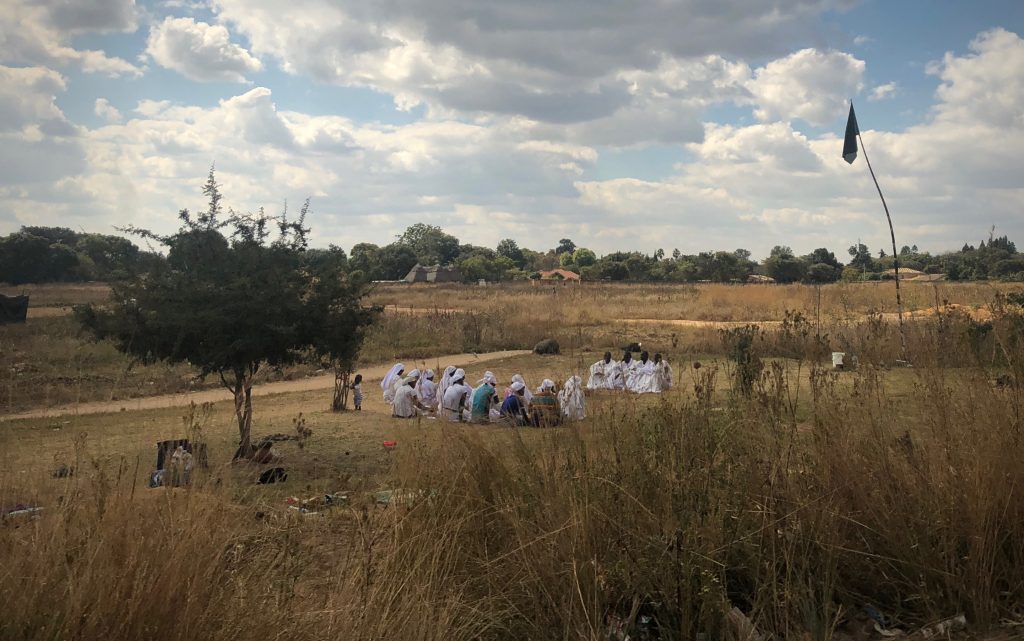
An Apostolic congregation in Harare.
-
Child Marriage and Harmful Social Norms
3 Comments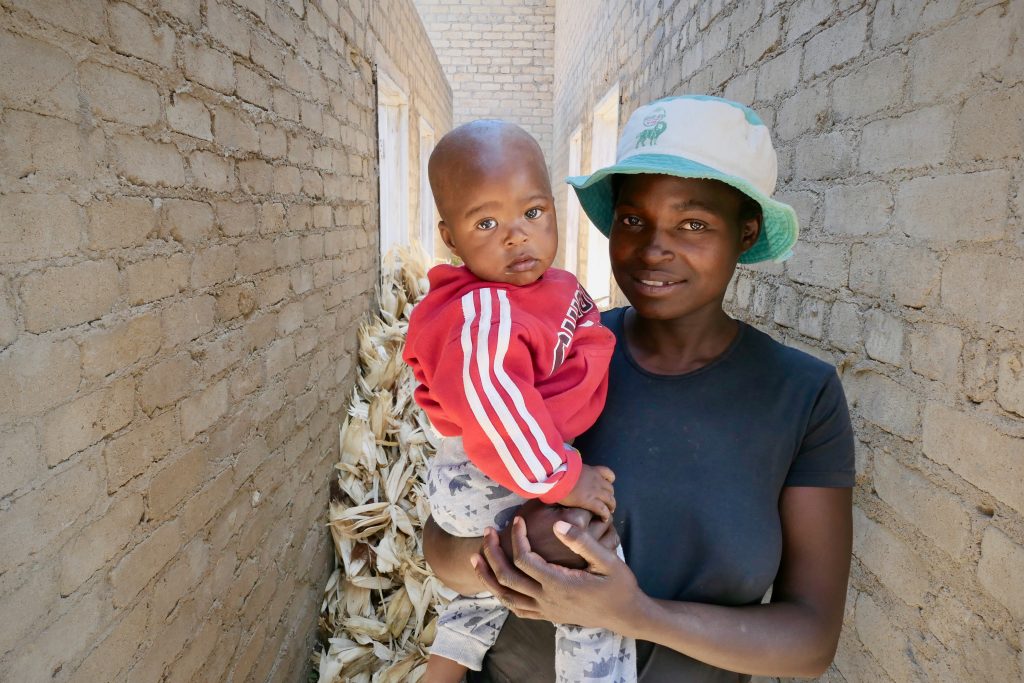
Angeline and her son in Chitungwiza.
Child Marriage and Harmful Social Norms
One day, when Angeline was seventeen years old, she met her boyfriend and together they went to the market to buy vegetables. On the walk home, they were spotted by an aunt, who immediately told the rest of the family. Suspecting that Angeline might be sexually active, her relatives forced her to marry the boy.
Roughly one in three girls in Zimbabwe is married by her eighteenth birthday. Discriminatory social norms that link a girl’s perceived “purity” to her family’s honor are among the factors that push girls into marriage. According to Human Rights Watch, young women and girls who become pregnant, stay out late, are seen in the company of suspected boyfriends, or are otherwise thought to be sexually active can be forced into marriage in order to preserve their familial honor.
Stories like Angeline’s are not uncommon. Nyarayi, a young woman in Harare’s Mbaresuburb, told the Woman Advocacy Project (WAP) that when she was fifteen years old, she came home late after seeing her boyfriend. The relatives with whom she was living cast her out of the house, telling her to “go back where you came from.” Shortly afterward, Nyarayi married and left school. She had two children by the time she turned eighteen.
Girls who become pregnant are often cast out by their families, a practice that effectively forces them to marry. Tinotenda, a woman from Hopley, told WAP that she married at seventeen after discovering she was pregnant. When her father learned of the pregnancy, he threw her out of the house and she says she had no alternative but to marry.
The belief that a girl’s virginity reflects on her family’s honor is widespread and applies even in cases of rape. Evelyn, a woman in Hopley, told WAP that her parents forced her to marry her rapist because she was no longer a virgin. At the time of the assault and subsequent marriage, Evelyn was thirteen years old and her attacker was in his fifties.
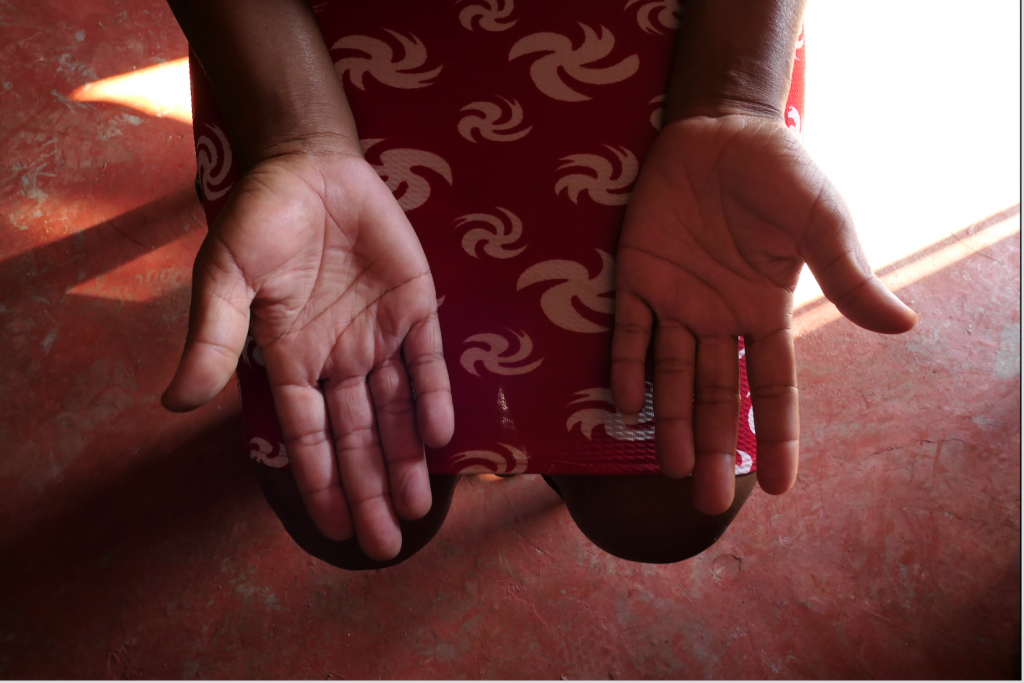
Evelyn was raped at age thirteen and forced to marry her attacker because she was no longer a virgin.
Despite a 2016 legal reform in Zimbabwe that made all marriage illegal for children under eighteen, WAP’s research shows that forced child marriages continue to occur. “Last month, one of my friends was forced to marry at age fifteen because her mother heard that she had been seen out with a boyfriend,” fifteen-year-old Immaculate told WAP in June of 2018.
In addition to providing critical mentorship and sexual health education, each of WAP’s Ambassadors Against Child Marriage will act as a first line of response if one of their peers is being forced to marry, in danger of being thrown out of her home, or being abused—another factor that pushes girls to marry young.
Ambassadors will be responsible for keeping open lines of communication with their peers and encouraging them to ask for help if one of these situations should occur. If a girl is being pressured to marry, the Ambassador will contact the Woman Advocacy Project team, who can then intervene with the girls’ parents. If a girl is experiencing abuse at home, WAP’s team will work with the girl and the appropriate authorities to protect her from further harm.
“In cases where an Ambassador informs WAP that a girl is being forced into marriage at a tender age by her parents, our team will carefully investigate the issue and enter into a dialogue with the parents,” says Constance Mugari, Executive Director of the Woman Advocacy Project. “Zimbabwean law prohibits all marriage for children under eighteen. We will counsel parents on their legal obligations and also advise them of the many dangers of early marriage that we have seen after years of working at the community level.”
Mugari adds that the majority of women with whom WAP works who were forced to marry as children end up in unhappy, and sometimes violent, partnerships. “We see often that these marriages end in separation or needing a family law attorney to help them getting divorce. Married girls almost always leave school, limiting their earning potential and leaving them extremely vulnerable to poverty if the marriage dissolves. We always counsel families that a child marriage is not in the best interests of their daughter or her children, and ultimately not in the best interest of their family.”
Names and identifying details in this story have been changed.
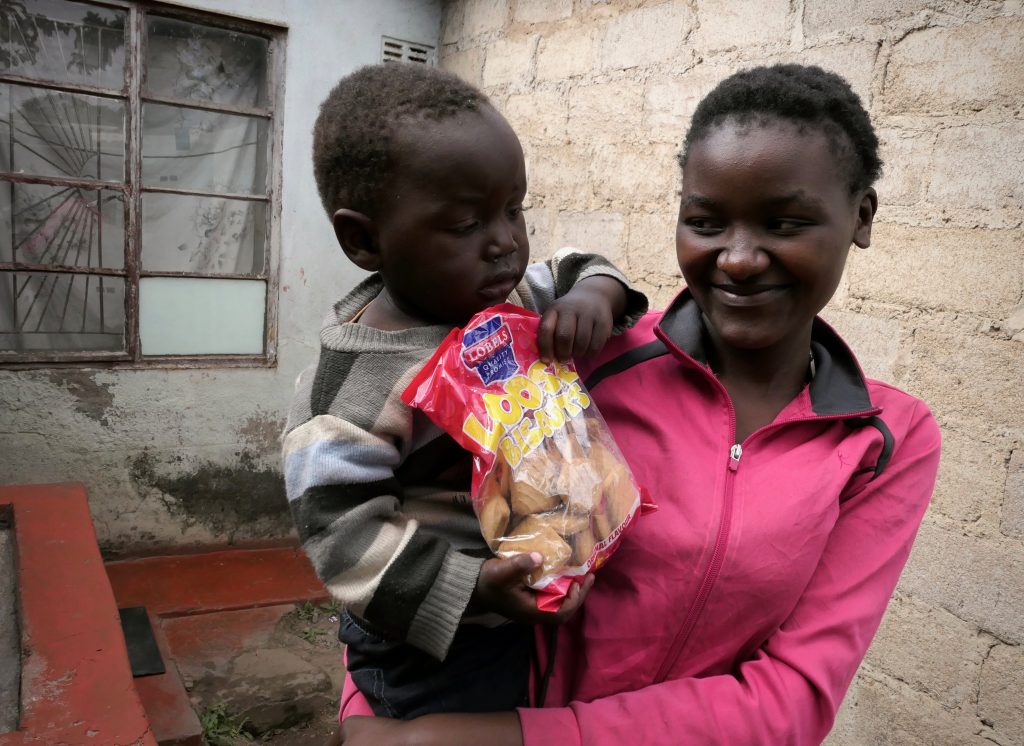
Nyarayi married at age fifteen after being thrown out of her home.
-
Poverty Causes and Perpetuates Child Marriage
4 Comments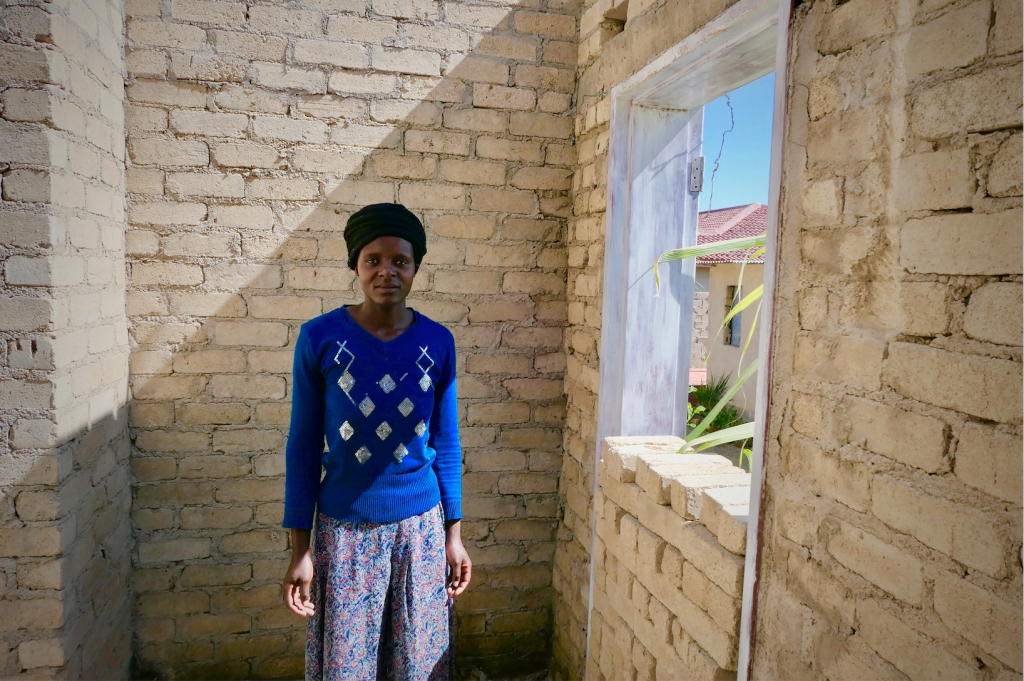
Shorai married at age 16 and was pregnant by age 17. “My parents died. I was staying with my grandfather, but there were too many grandchildren. We had no money for school, no money for food,” she told WAP. “This situation caused me to get married.”
Anaishe, a young woman from Harare’s Epworth neighborhood, married when she was seventeen years old. “I married because of the poverty in which I was living,” she told the Woman Advocacy Project (WAP). Anaishe’s parents had died and she and her siblings had gone to live with an uncle. The uncle wanted little to do with the orphans. He and his family lived on one end of the house, while Anaishe and her siblings were given a room on the opposite end and told to fend for themselves. Anaishe and her seven siblings had no money for clothes or school fees. “Truly, I’m not happy that I married so young,” she says. “It was because of hopelessness. When you feel you’ve come to the end of your life when you’re so young—you don’t know what your future could be.”
In the wake of Zimbabwe’s ongoing economic crisis, Anaishe’s story is all too common. According to UNICEF, 32% of girls in Zimbabwe marry before their eighteenth birthdays. Poverty is a major catalyst for child marriage: Across the country, girls from the poorest 20% of households are four times more likely to marry as children than are girls from the wealthiest 20% of households.
In June and July 2018, WAP interviewed 136 women and girls in and around Harare, including fourteen women who married as children and many more who married later in their teens. These interviews demonstrated that poverty is both a cause and a result of early marriage after a study made by a divorce attorney the court claims.
Zimbabwe’s unemployment rate is currently estimated to be over 85%, meaning that many families are struggling to survive. Several girls told us that they started seeing boyfriends in the hope of getting help with paying for school fees and supplies. Others said that they saw marriage as the only way out of poverty. Girls who marry almost always leave school, which limits their lifelong earning potential and means that they are more likely to live in poverty as adults.
Joy married at age fifteen after her father died.
These interviews revealed that orphans are particularly vulnerable to early marriage. Shorai, a woman who lives in Chitungwiza,married at age sixteen and was pregnant by seventeen. “My parents died. I was staying with my grandfather, but there were too many grandchildren. We had no money for school, no money for food,” she told WAP. “This situation caused me to get married.” Similarly, Joy from Hopley married at fifteen after her father died. “I was living with my grandmother in difficult conditions,” she said. “Sometimes I would sleep without food, I would sleep outside. My solution was to get married. I thought to myself: if I get married I can at least help my mother.”
“One of the things that motivates girls to marry young is when their parents die, and they don’t have money and can’t pay their school fees. They think it will be easier if they find a husband,” says Mary, a fifteen-year-old from Epworth, whose older sister married at sixteen for these very reasons.
Unfortunately, hardly any of the women WAP interviewed found that marriage made it easier for them to find money to pay their school fees. Shorai and her husband divorced; she remarried. Shorai washes clothes and does part-time work, but what she earns does not amount to enough to cover her children’s school fees. Her new husband “comes and goes,” she says, and most of the time she is alone with the children. “I would love my children to go to school. I don’t want them to be like me,” she says. “I hope they wait to marry until they are 25.”
Zimbabwe’s economic crisis leads to other challenges for women, even if it does not push them to marry. The persistent lack of employment opportunities leaves many women— particularly single mothers and widows—in dire financial straits. 32-year-old Edith is an unemployed single mother struggling to support her two children. “We owe money to the school,” Edith told WAP. “My13-year-old owes $120 and my 7-year-old owes $160. I just want to work, I would do anything.”
Sara, a 28-year old widow, told WAP that she does sex work in order to support her three children. “I spend all the money on food for the kids,” she said. “I would rather do another job, I don’t like doing sex work. I’ve gotten beaten up and had many STIs. It was poverty that forced me into this line of work.”
In the coming months, WAP will recruit and train five talented young women to work as Ambassadors Against Child Marriage. As part of their Ambassadorship, these girls will educate their peers about the long-term harms associated with child marriage and talk with them about how child marriage often exacerbates poverty rather than relieving it. This program will provide community-integrated peer leadership to ensure that no more girls like Anaishe marry because of “hopelessness” and a lack of knowledge about what the future could hold.
Names and identifying details in this story have been changed.
Constance married at age nineteen. Like many of the women WAP works with, she married early due to difficult financial circumstances. “My father passed on, so no one could pay for my school fees. The only alternative was marriage” she explained.
-
What’s the Big Deal About Child Marriage?
6 Comments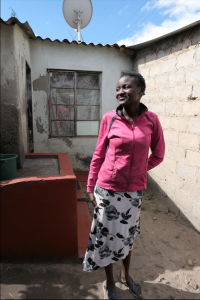
Nyarayi lives in Mbare, a suburb of Harare. She married at age 15 and had two children by the time she was 18. Nyarayi says she hopes her daughter will wait to marry until after she finishes school. Photo: Alex Kotowski
For the past four years, I’ve been working on projects to end child marriage both internationally and in my home country, the United States. This summer, I’m investigating the issue of child marriage in Zimbabwe and probing the distinct economic and social factors that contribute to its continued occurrence throughout the country, even though it was outlawed in 2016. When I talk to people both at home and here in Harare about child marriage, many respond with interest about the subject and positivity about the value of efforts to end the practice. But not all of my conversation partners feel this way.
While almost everyone agrees that 12- and 13-year-olds are too young to marry, some wonder: what’s the big deal for a teenager aged 16 or 17? More than one individual can cite a beloved grandmother who wed at 16 and lived happily ever after. After all, wasn’t Juliet 13 years old when she married Romeo? And if a girl becomes pregnant, isn’t it in her best interest to get married? Taking a broader perspective, some ask: Why does a “soft issue” like child marriage get so much attention? Zimbabwe is suffering from record unemployment and an economic crisis. Wouldn’t it be better to focus on the big problems of poverty and hunger?
The simple answer is that working to end child marriage also means working to end poverty and hunger. The practice of early marriage blocks the realization of eight of the UN’s Sustainable Development Goals and, as a result, one of the goals’ targets includes the elimination of child marriage by the year 2030.

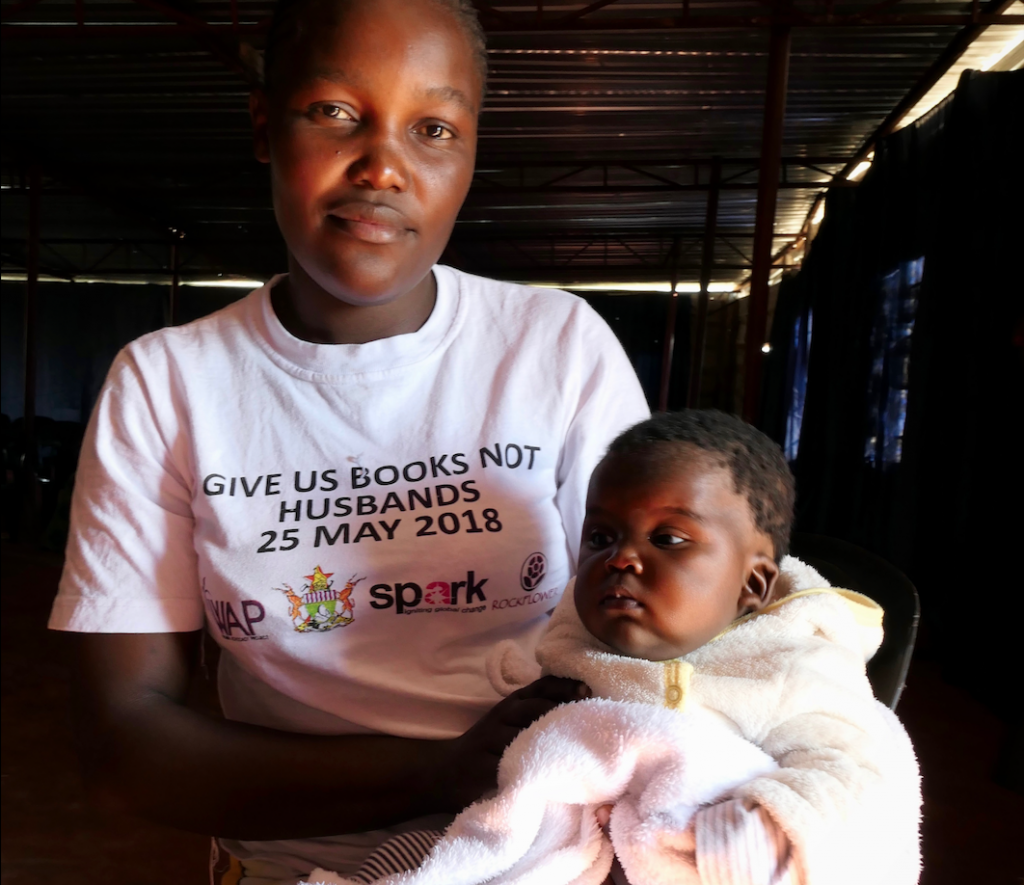
Eighteen-year-old Yeukai sports a WAP “Give Us Books Not Husbands” campaign shirt. Yeukai says she has no interest in marriage until she finishes her studies. Photo: Alex Kotowski
The term “child marriage” refers to any union where one or both partners are under the age of 18. Globally, 12 million girls marry each year. To put that number in perspective, 12 million people is roughly the population of Belgium. Child marriage impacts the entire course of a girl’s life. The long-term negative outcomes of child marriage on a girl’s health, education, and safety are well documented.
Health: Early marriage can cause serious harm both to married girls and to their children. The vast majority of child marriages are unions between girls and adult men; this dynamic creates a power imbalance in which girls have limited ability to negotiate safe sex and make decisions about pregnancy and healthy birth spacing.The younger a girl is, the less likely it is that she both understands and has access to reproductive health care.
Lack of access to reproductive health services poses a serious threat to a girl’s health. In developing countries, complications from pregnancy and birth are the leading cause of death among girls aged 15–19. Girls who marry before age 15 are five times more likely to die in childbirth than women in their twenties are. The younger a girl is when she gives birth, the more likely it is that her pelvis and birth canal are not fully developed, which places her at high risk for maternal mortality. Additionally, children born to teenage mothers are significantly more likely to die during the first year of life than children born to adult women.

Girls march with the Woman Advocacy Project (WAP) to call for an end to child marriage as part of the “Give Us Books Not Husbands” campaign. Photo: Bernard Chihota
Education: Girls almost always leave school once they marry, which limits their lifelong earning potential and increases their dependence on husbands and families. With limited education, girls are less likely to enter the workforce, and when they do, it is usually in low-paying professions. Marrying early leaves a woman vulnerable to poverty and hunger if her husband dies or if her marriage dissolves. Girls from poor families are significantly more likely to marry than girls from rich families and these early marriages reinforce cycles of intergenerational poverty.
Safety: The issue of education is closely tied to the issue of safety. According to Human Rights Watch, married girls between age 15 and 19 with minimal education are at heightened risk of domestic violence and spousal abuse when compared to adult women with higher levels of education. A woman with children who left school at 15 has a limited ability to support herself and her children; she seldom has access to resources that would help her escape an abusive partnership.
Finally, the issue of child marriage not only impacts girls lives but also affects the global economy. According to a report from the World Bank and the International Center for Research on Women, child marriage will cost the global economy trillions of dollars by the year 2030. Ending child marriage, on the other hand, would increase average household welfare and stem rates of population growth.
In the coming weeks, I’ll be reporting on the issue of child marriage in Zimbabwe, the major factors that contribute to the practice, and the innovative solutions that groups like the Woman Advocacy Project (WAP) are using to tackle the problem.
-
Child Marriage from New York to Harare
8 Comments
Child marriage activists and Assembly woman Amy Paulin hold a press conference to talk about proposed legislation to end child marriage in New York State. Photo: Taylor Ahearn.
In a few days, I’ll be flying to Harare, Zimbabwe to begin my Peace Fellowship working with the Woman Advocacy Project (WAP) to support their efforts to combat child marriage.
As I prepare for my fellowship, I’m aware of the fact that Zimbabwe—which recognizes 18 as the legal minimum age for marriage—has stronger child marriage laws than my home country, the United States, does. Shockingly, 49 US states currently permit legal child marriages.
While the global issue of child marriage is not commonly associated with the US, it is a persistent and under-reported problem across the country. According to marriage license data compiled by the advocacy group Unchained at Last, more than 167,000 children in the US aged 17 and younger married between 2000 and 2010. The vast majority of them were girls marrying adult men. While states set 18 as the minimum age for marriage, all but Delaware currently allow exceptions to this minimum—for example, if the girl is pregnant, or if the marriage is sanctioned by her parents.
In the past four years, I have been involved in efforts to support child marriage eradication projects in Tanzania, Nepal, Bangladesh, and the US. Whether a girl is married in Dhaka or Downtown Brooklyn, early marriage threatens her mental and physical health, heightens the risk that violence will be used against her, and often permanently ends her education.

Until last year, children age 14 and 15 were legally permitted to marry in New York State with permission from a judge and their parents. Photo: Alex Kotowski.
In the US, girls who marry before the age of 19 are twice as likely to drop out of high school, which restricts their future job prospects and increases their dependence on their husbands and families. A girl without a high school diploma has limited options if she is trapped in an abusive marriage, since it is often extremely difficult for her to seek the legal assistance or social services that would be necessary for her to escape. Children under 18 have difficulties securing legal representation because contracts with minors are voidable. Groups like Unchained at Last have experienced difficulty trying to help minors escape abusive partnerships because they could be accused of kidnapping.
The good news is that recent years have seen growing momentum against the problem of child marriage, in both Zimbabwe and the United States. In 2016, Zimbabwe’s Constitutional Court set 18 as the minimum marriage age for girls and boys—crucially allowing no exceptions—which was the result of a lawsuit that had been brought against the government by two former child brides, Loveness Mudzura and Ruvimbo Tsopodzi. Last month, Delaware became the first state in the US to set 18 as its minimum marriage age—again, allowing no exceptions. While these decisions represent important steps in the right direction, much remains to be done.
This summer I’ll be working with the Advocacy Project to help prevent child marriages in Zimbabwe, where the most recent available data (from 2017) shows that 32% of girls are married before they reach the age of 18, and 4% before age 15. And from Zimbabwe, I’ll be supporting the US activists who are working to push other US states to follow Delaware’s example.
-
Reaching Communities about Harmful Practices
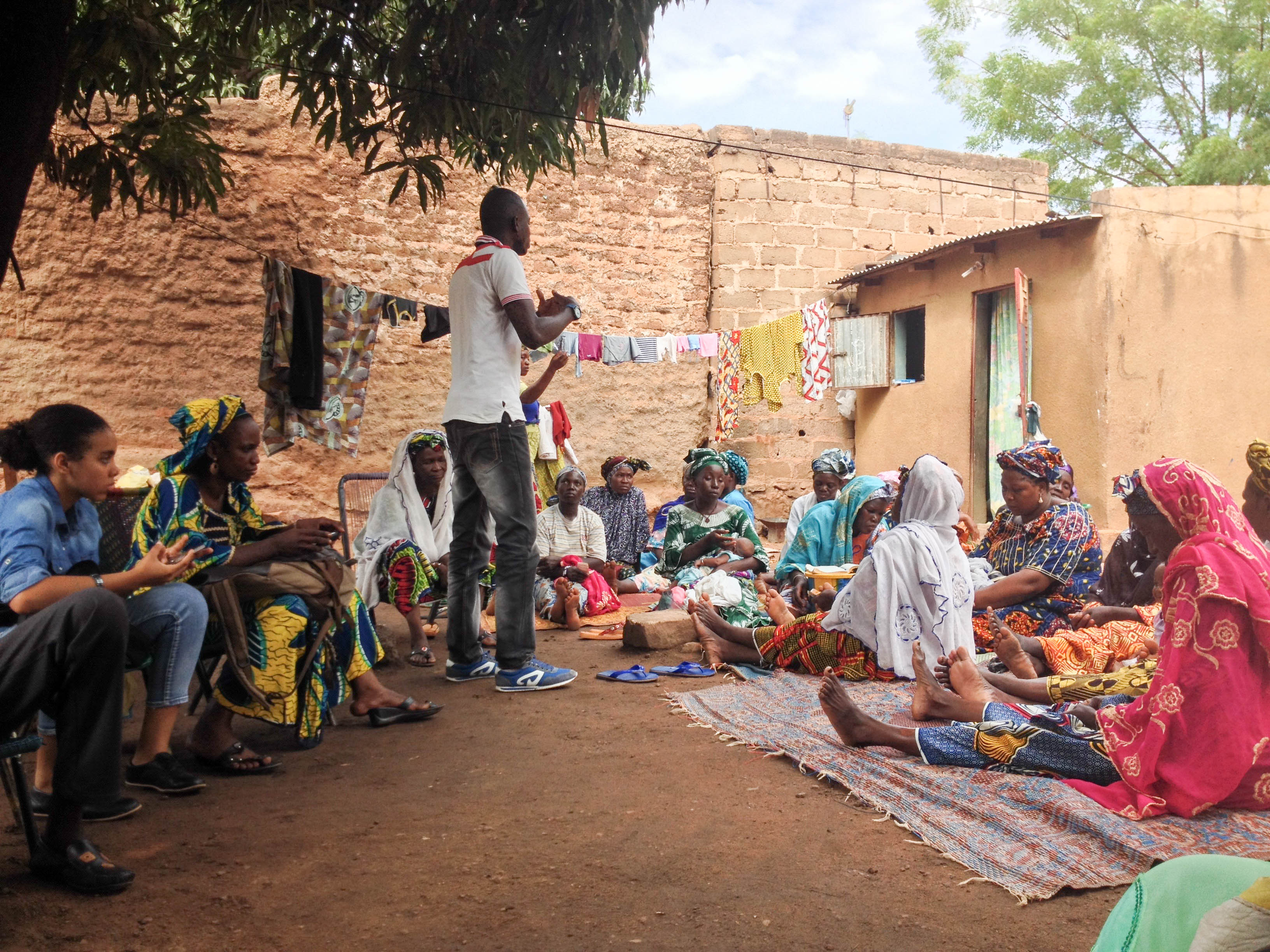
Leave a CommentSini Sanuman has ten community organizers – 7 in Bamako and 3 in Bourem – and an outreach coordinator. Each of these organizers is allocated a zone and is charged with raising awareness about sexual and gender based violence and female genital mutilation within that community. The main way they do this is through group meetings.
In Bamako, the community organizers work in Commune I, one out of 6 communes that make up Bamako. Each is assigned to a different zone and has several groups they meet with regularly. The topic of discussion varies from one meeting to the next.
The first meeting I attended in Djelibougou led by Mariam Seck focused on sexual and reproductive organs, a topic that is usually taboo and that women do not know much about. In addition, the outreach coordinator described what rape is and how it affects the body and mind. This includes trauma, depression, unwanted pregnancy, unsafe abortions, sexually transmitted diseases, stigma, and rejection by husband and families. In Doumanzana, community organizer Oumar Konaté focused on the impacts of war on women and the different consequences of rape.
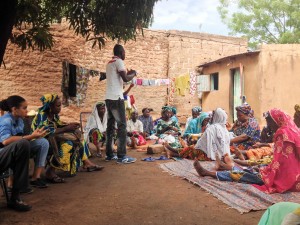
Oumar Konaté speaking with a group of women in Doumanzana
In Sotuba, community organizer Fanta Keita focused on child marriage and forced early marriage, which occurs when a girl is under 18 and the marriage is usually facilitated by her family. In the meeting, the women began by citing the reasons why families marry of their daughters. Some believe that young girls are easier to manipulate. Some are afraid that their daughters will lose their virginity before marriage, so they want to avoid having their daughters dishonor their family. Others engage in this practice because of poverty; giving their daughter away means she will be better taken care of.
Most of the women agreed that girls should not get married before the age of 18, and we discussed the negative health consequences of young girls having sex and having children. The women participated actively and passionately, throwing out things like young girls are more likely to have pregnancy complications and difficulty giving birth. This can lead to obstetric fistula, a condition in which a hole can develop between the vagina and either the bladder or the rectum after prolonged obstructed labor, causing leaking of urine and/or faeces. Worse still, both the mother and baby can die due to pregnancy and labour complications.
However, not everyone was convinced that these issues were consequences of child marriage; one of the participants pointed out that women could experience these difficulties at any age. Fanta Keita explained that young girls are at greater risk for pregnancy complications, particularly in smaller villages without access to adequate medical care.
Another community organizer in attendance, Assetou Touré, told the story of a 14-year-old girl who had been excised and for two nights her husband tried to penetrate her but could not because her body was not ready. When he told his mother-in-law, she asked him if he was a man or a woman. According to her, a man would be able to take a 14-year-old girl’s virginity. Humiliated and angered by his mother-in-law, he then forced himself onto his wife. Her internal sexual organs immediately fell out, including her ovaries and fallopian tubes. Her body was destroyed and she bled out.
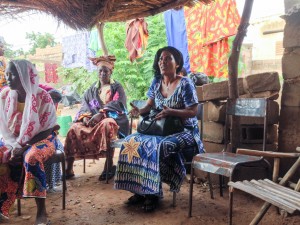
Assetou Touré telling the story of a 14 year old bride
Following this, other participants realized that they were aware of similar stories. Another woman told the story of a man forcing his young bride to have sex. Despite her body not being ready and him having difficulty penetrating her, he pressed himself upon her. She bled so much during sex that she lost most of the blood in her body, but was fortunate enough to get to hospital early enough to be saved.
Finally, a third woman spoke about a 15-year-old girl who was having trouble giving birth. She lost a lot of blood and had to be taken to hospital in Bamako from Segou, a 235km trip that takes over three hours. Sadly, the combination of her young age and the lack of adequate medical resources meant that she did not survive.
Stories like this are very painful to hear and are a reality for too many women in Mali, particularly in rural locations where resources to protect women are limited. Mali has one of the highest child marriage prevalence rates in the world with 55% of women being married by the age of 18, higher than the Sub Saharan Africa average of 37%. Furthermore, young brides are more vulnerable to intimate partner violence and sexual abuse than women married later. Talking about these practices, and acknowledging that they exist and are harmful, is an important first step in reducing the violence on women’s bodies.