
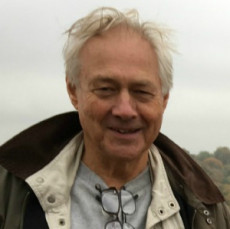
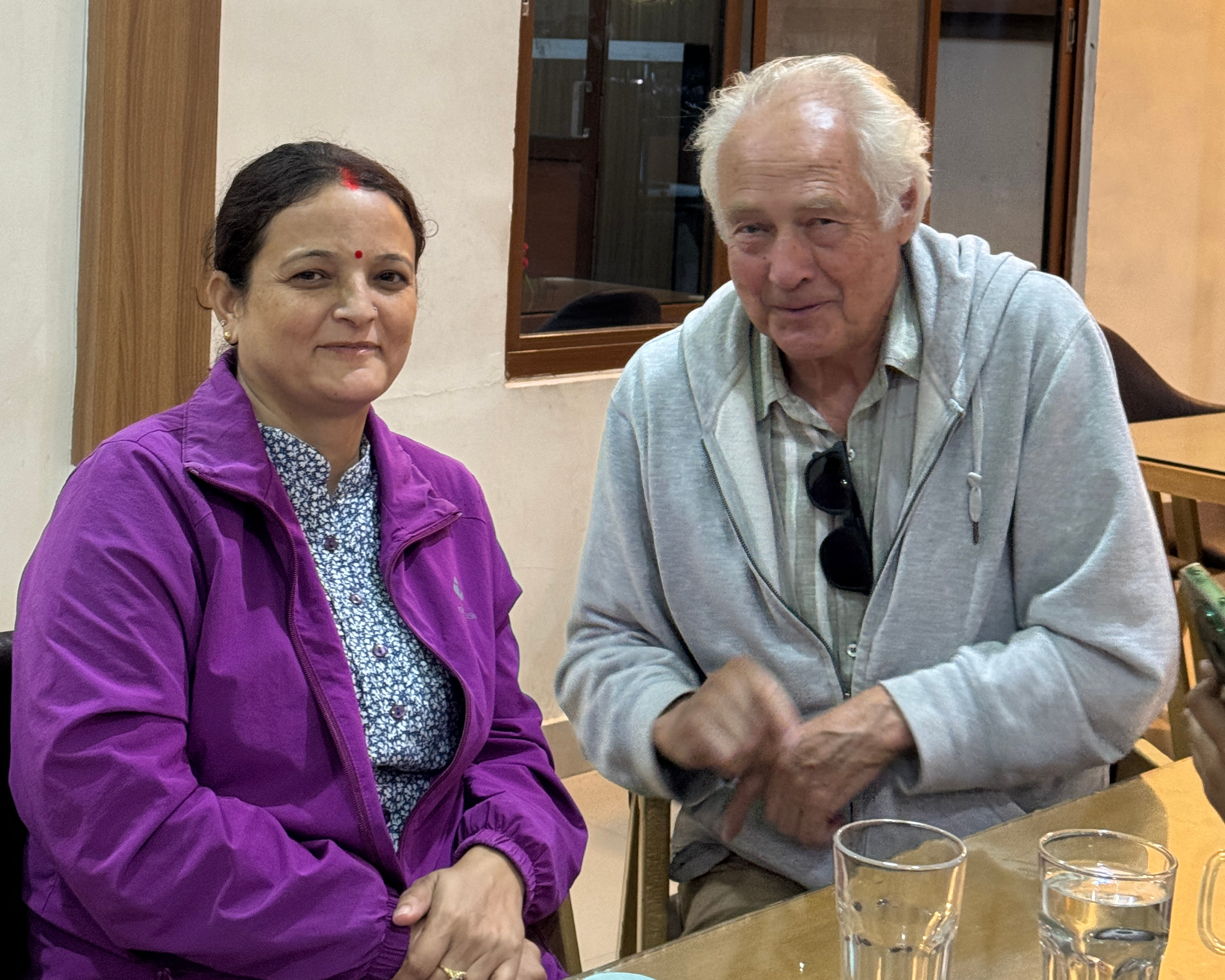
Intrepid travelers: Pinky and Iain in Tulsipor
This is the first blog in a series about the legacy of caste in central Nepal.
I’ve been invited here by Dilli Chaudhary (photo below), a long-time friend and founder of Backward Society Education (BASE), a grassroots movement in Central Nepal that advocates for the Tharu people. Dilli is a legend in Nepal. His parents were both bonded laborers, and he created BASE in 1985 to campaign for the elimination of the practice, known as kamaiya. The result was a law that ended bonded labor in 2001 and is widely considered to be one of the greatest achievements by a Nepali NGO in recent memory.
Dilli himself rose to become Nepal’s Minister of Labor and chief minister of Lumbini province, one of the largest in the country. He has never lost his passion for advocacy and remains committed to social justice. Hence his invitation.
Dilli’s organization BASE is also one of our oldest partners. We sent the first of thirteen Peace Fellows to work at BASE in 2008 and in the years since we have supported BASE campaigns to free domestic slaves (known as kamlaris), end child labor and empower women dishwashers. Some of our earliest Fellows in Nepal wrote perceptive blogs about these issues and their link to caste, which I will no doubt be consulting along the way.
I will be accompanied by Pinky Dangi, senior project manager at BASE, seen with me in the photo above. Pinky and I have been on many trips together into the villages of Central Nepal and I can think of no one better to travel with! We’ll be working in the districts of Dang and Banke and will conduct most of our research in or around the town of Tulsipor, where BASE is headquartered. This is the harvesting season, and the countryside is spectacular as you’ll see from the video below.
At the same time I want to make it clear that the blogs that follow, and any recommendations that they contain, will be mine alone and will not reflect BASE’s position in any way. Pinky and her colleagues may well disagree with my conclusions. My assignment is simply to observe and advise.
These blogs were written in draft form at the end of each visit but I waited to post them until I could present them as a single story and add footnotes, photos and references. One reason was that connectivity in this part of the world can be awful. Another is that if these blogs are to be useful to BASE, they will need to be part of a coherent narrative. But rest assured – each story was drafted soon after it was told to us, sometimes on the same day.
I’m hoping this trip will yield visuals for social media, which I’ll hand over to our talented video editor Gio and our social media expert in the UK, Maddie P. We’ve made a new hashtag #legacyofcaste.

Dilli Chaudhary founded BASE in 1985 to end bonded labor. He is seen accepting the Reebok international human rights award in 1994.
Next: The Origins of Caste
Posted By Iain Guest
Posted Oct 26th, 2024