

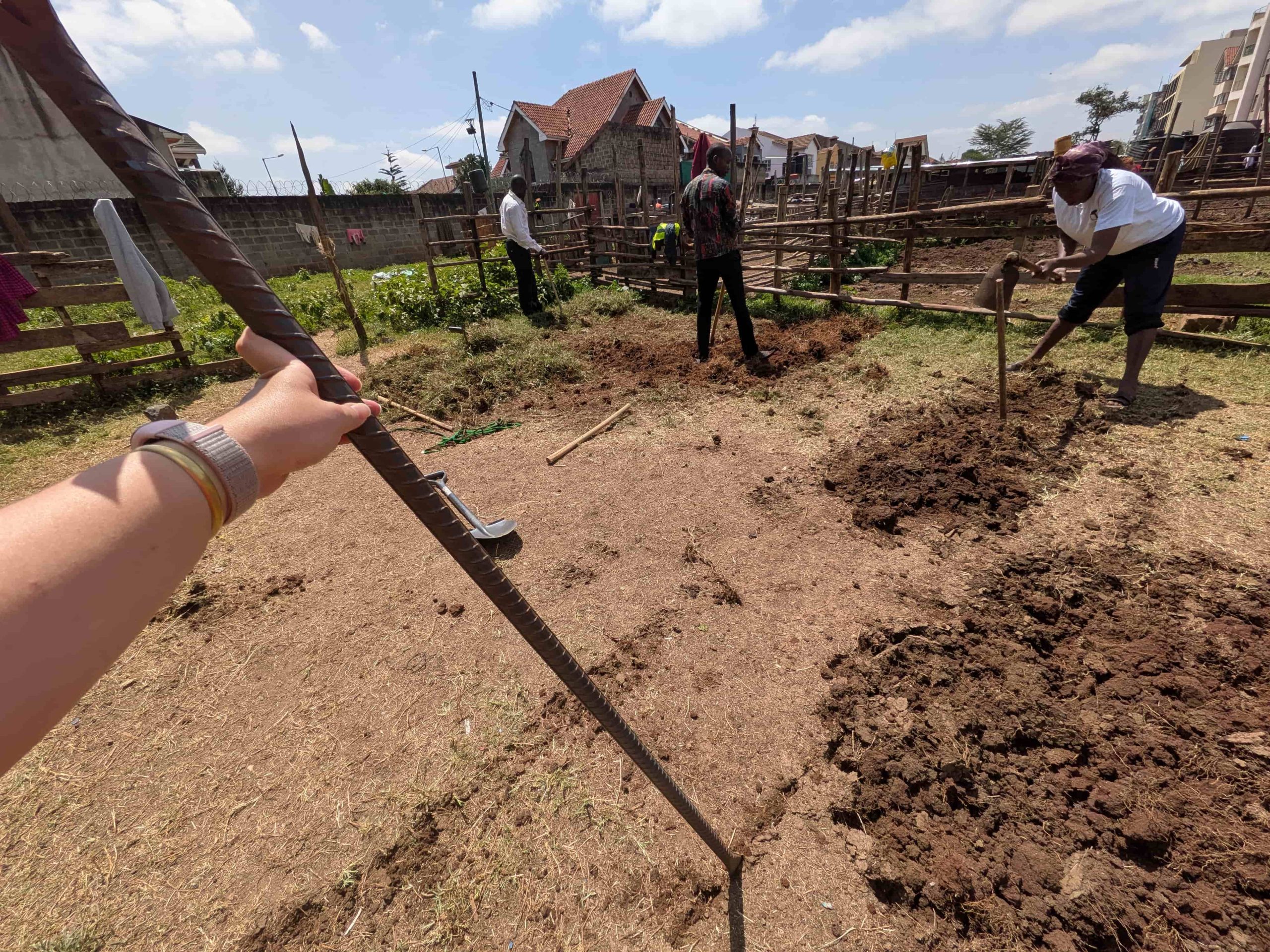
Our first groundbreaking day in the Maasai community was an interesting one.
When we arrived, we found Mabel, the founder of Lily of Hope, alone in the future garden plot. She was the only person there breaking ground. No one else had shown up.
Mabel explained that she had previously gone through the community looking for people willing to help establish the garden. Many had verbally agreed to participate, but when the day arrived, they did not show up. Those who were willing to work often requested wages significantly higher than what would normally be considered a fair daily rate.
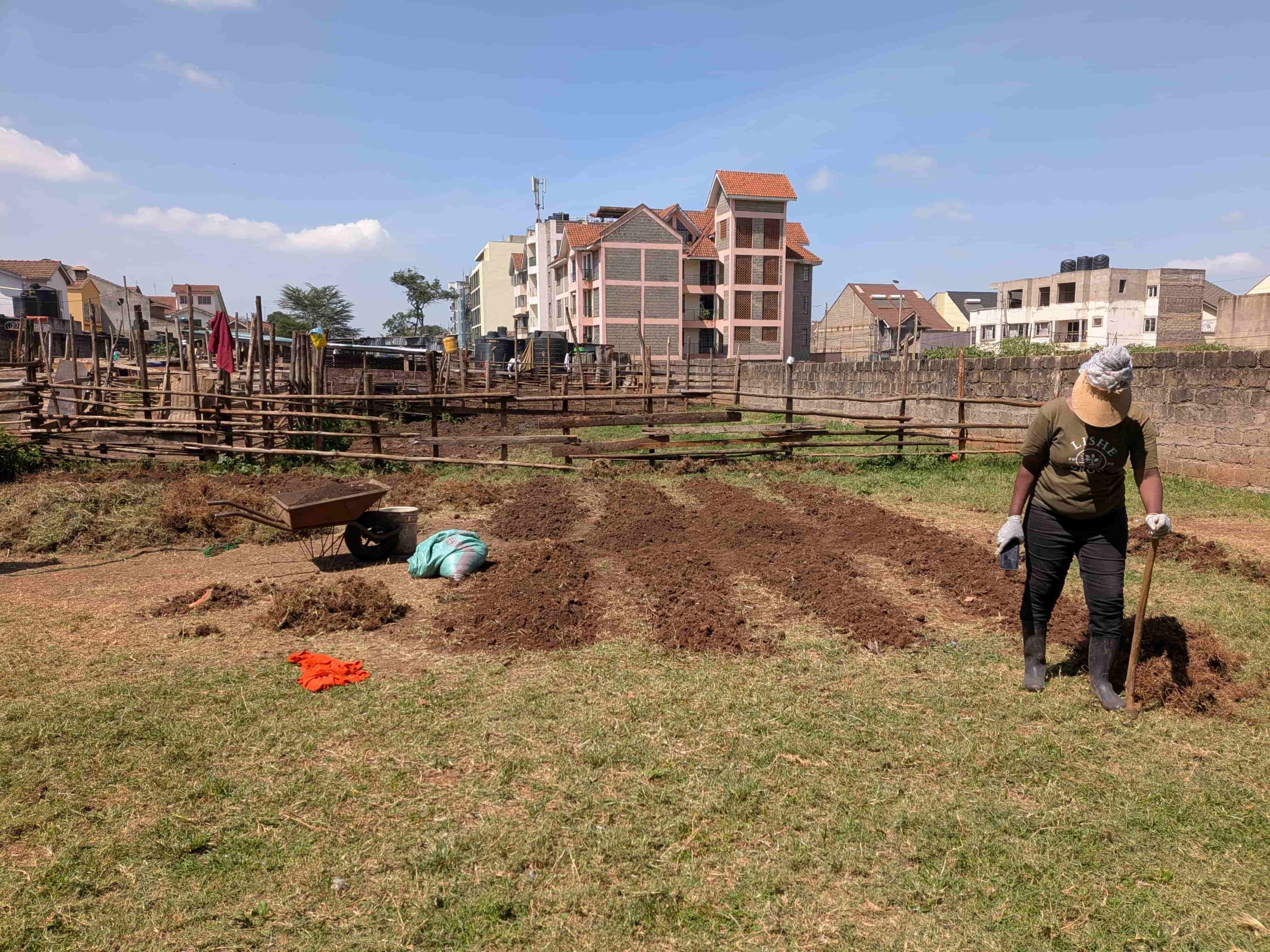
Soldering on, we began by reviewing the project map and marking out the locations for raised beds, keyhole gardens, and plots for crops such as sweet potatoes. It felt strange at first to be working on a community project without the community present. Yet it was also a telling reminder of NGO work and the reality faced by both Lishe Grow and Lily of Hope. Often, it is the founders themselves who must step in and do the work first when no one else is available to do it.
As the morning went on, other community members slowly began trickling in to see what was happening.
One conversation stood out to me. When asked if he could help, one man explained that he had already moved the cows away from the proposed garden site. In his mind, that was his contribution to the project, and he was content to observe the rest from the fence.
Interestingly, some of the women appeared more willing to join the work without asking for payment when encouraged to participate. Although the garden was intended to benefit the entire community, there seemed to be a perception that it would ultimately become a women’s space. Perhaps because women are often responsible for feeding their families, they immediately saw the value in what was being created.
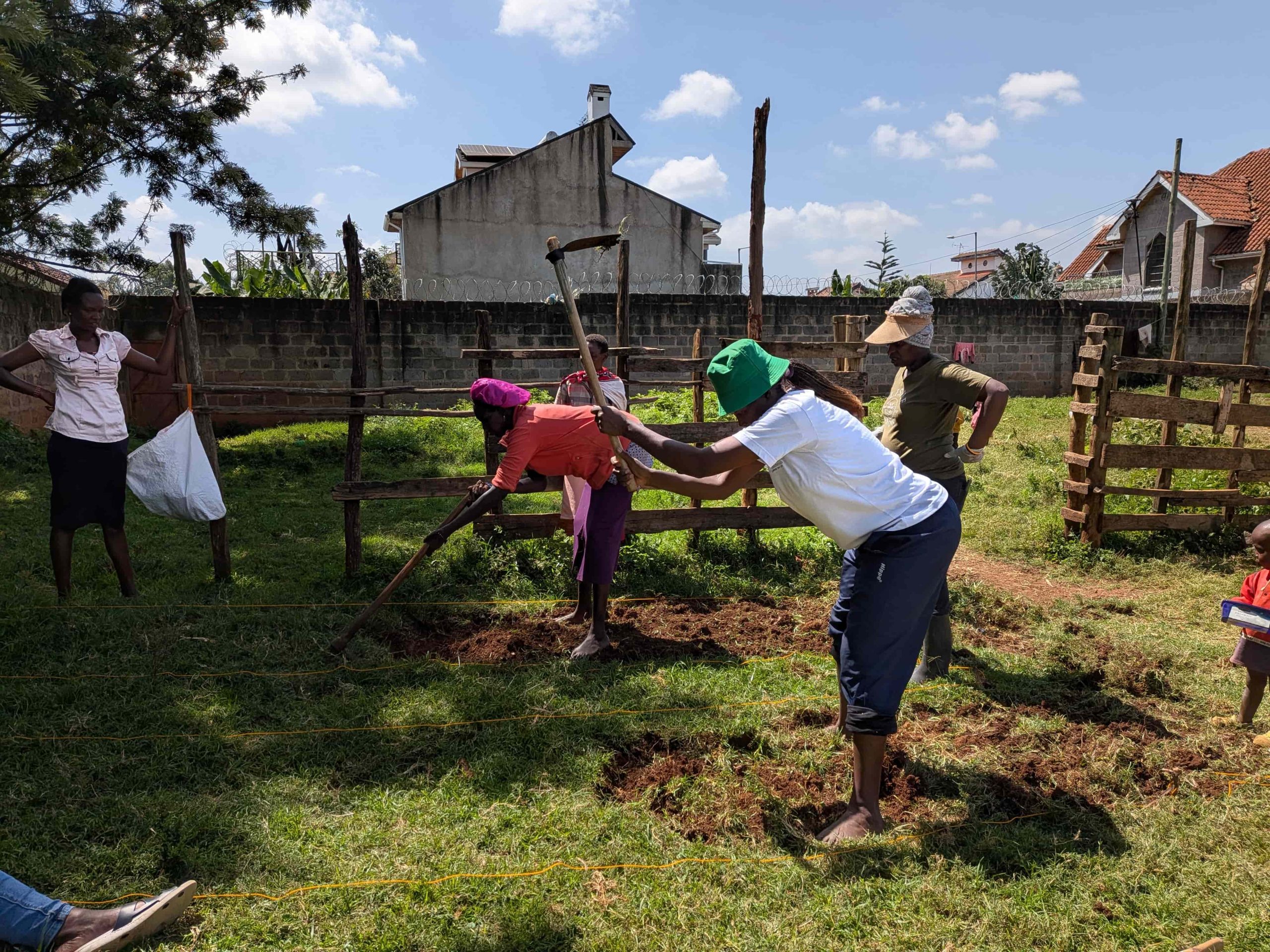 As we continued marking out the garden, we found ourselves literally digging up new issues.
Several corners of the site were being used for open defecation. If this practice continued, the proximity to the future raised beds could increase health risks and potentially contaminate food crops. It was another reminder that community development projects rarely involve solving just one problem. Gardening may have been the entry point, but broader issues of sanitation, health, and behavior were intertwined with everything we hoped to accomplish.
Before the Lishe Grow team left for the day, we discussed solutions with the community and Lily of Hope and suggested that the community construct a pit latrine. A centralized location for sanitation would help keep the settlement cleaner while reducing risks around the future food-growing area. Standing in that plot having this conversation, I was also reminded that gardening itself is not a straightforward process. A garden requires preparation, patience, adaptation, and constant attention. Community development is much the same. There is little point in becoming frustrated by discoveries like these. Development work is rarely straightforward. There are always new layers to uncover the deeper in we go.
Working with communities like this is always unpredictable. You never quite know what challenges oropportunities will emerge. But like cultivating a garden, meaningful behavior change takes time, effort, trust, and foresight. That is why we keep showing up.

Posted By Rhonwyn Hagedorn
Posted Jun 17th, 2026
1 Comment
Iain Guest
July 2, 2026
If you had asked me whether a pit latrine is part of gardening I would have chuckled. Not after reading your blog! Community engagement is the missing link in so much development and your blog raises two questions for me: first, If stakeholders – those who own a project but will also benefit – cannot be bothered to help, can a project be sustained? I could hope this would happen once the community starts to grow/eat/sell vegetables and sees a real benefit. The other question is what sort of engagement do you expect from this community? Obviously, it would help if they picked up a shovel and healed to clear the land. But once the land is cleared, can they also persuaded not to defecate in the same place where you and Lily and growing vegetables? That would require a real change of behavior and an alternative solution to the sanitation issue. Perhaps a pit latrine would do the trick. Will Lishe Grow push ahead if you don’t get clear answers to both of these questions? Certainly, development is not easy…