

The transformation of a school environment begins the moment its learners stop being spectators and start being architects of their own wellbeing. Under the theme “Our School, Our Health, Our Future,” we have launched a movement where 30 to 50 dedicated learners from Primary 4 to Primary 6 have stepped forward as the ultimate custodians of their campus. These School Health Clubs (SHC) are no longer just learning about hygiene; they are enforcing it—ensuring latrines are pristine, handwashing stations are stocked with liquid soap, and clean water is always within reach for every pupil.
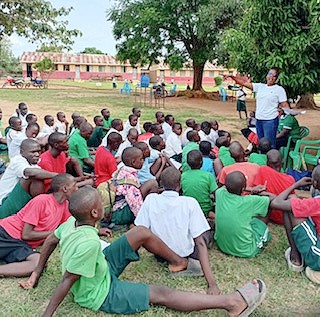
Emma from GDPU meets with members of the Panykworo school health club School Health Club to develop a plan for improving the health and hygiene of students.
Beyond the physical environment, these young leaders are dismantling the barriers of stigma and silence. Mature girls within the clubs have taken on a sacred mantle of mentorship, providing essential support and resources to younger peers who begin menstruating at school. By fostering an atmosphere of dignity and protection, they are ensuring that no girl is intimidated or shamed into staying home, effectively safeguarding the right to an uninterrupted education for every female student.

Awach Central Primary School Health Club After Training Led by Emma.
This leadership extends far beyond the school yard and into the classroom, driven by the belief that a healthy environment is the foundation for a sharp mind. We have challenged these club members to bridge the gap between community service and academic excellence, proving that the discipline required to maintain a healthy school is the same discipline required to top their classes. They are becoming the living evidence that when children take responsibility for their surroundings, they sharpen their potential for a successful future.
As these learners take up the mantle of self-reliance, they are shifting the narrative from dependency to agency. They are proving that the most sustainable solutions to community health challenges do not always come from external aid, but from the hands of the very children who walk these halls every day. This is more than a hygiene program; it is a laboratory for leadership where the next generation of policy-makers and protectors is being forged in the simple act of caring for one another.
Yet, as these clubs take hold and the culture of the school begins to shift, a bigger question looms over the horizon. We have seen what happens when 50 children decide to change their school, but as these empowered leaders prepare to graduate and carry this fire back into their wider villages, the true test begins. The seeds of a silent revolution have been planted in the soil of these schools, and as the first rains of change arrive, the community is left to wonder: what happens when an entire generation refuses to accept the status quo?

Posted By OKWIR JOSEPH JOHNS
Posted Apr 9th, 2026
2 Comments
Iain Guest
June 6, 2026
The creation of these school health clubs represents another HUGE advance in the WASH model! You will now have leaders and stakeholders in the schools who can prepare the way for GDPU’s interventions. Big change! One question, however: what’s in it for these girls? Can you offer them anything else to keep them motivated, or will it be enough that they can enjoy better WASH facilities, along with everyone else at their school? Will they feel upset that they are doing all the hard work, while others are benefiting? Could you offer them a reward, or would that mean they are no longer volunteers? I’m interested to know if they have a REAL commitment to their school and if so, why?
Anna Kate Connors
June 13, 2026
This is an amazing post! I love to see the work done with young leaders who are passionate about creating change and improving school health. It is incredibly inspiring to see young girls dismantling stigmas!